C.S. Lewis On Relationships

All of these quotes from C.S. Lewis appear in the book Yours, Jack.

“The modern tradition is that the proper reason for marrying is the state described as ‘being in love.’ … Doesn’t the modern emphasis on ‘love’ lead people either into divorce or into misery, because when that emotion dies down they conclude that their marriage is a ‘failure,’ though in fact they have just reached the point at which real marriage begins.” 

“There is a terrible comment on this in I Cor VI 16 ‘he that is joined to a harlot is one flesh.’ You see? Apparently, if Christianity is true, the mere fact of sexual intercourse set up between human beings a relation which has, so to speak, transcendent repercussions—some eternal relation is established whether they like it or not.” 

“Agape is best seen, I think, in the words ‘love your neighbor as yourself,’ i.e., by an act of will, aim at your neighbor’s good in the same way as you aim at your own. Now you don’t ‘love’ yourself because of your own ‘lovable qualities.’ You may, in moments of vanity, attribute lovable qualities to yourself, but that is not the cause of your self-love but one of the results of it. At other moments, when you dislike yourself, you still wish for your own happiness. This attitude to one’s own self is dictated by nature: towards other selves it has to be acquired.” 

“The great thing in friendship as in all other forms of love is, as you know, to turn from the demand to be loved (or helped or answered) to the wish to love (or help or answer).” 

“When I have learnt to love God better than my earthly dearest, I shall love my earthly dearest better than I do now. In so far as I learn to love my earthly dearest at the expense of God and instead of God, I shall be moving towards the state in which I shall not love my earthly dearest at all. When first things are put first, second things are not suppressed but increased.” 

“I take it that in every marriage natural love sooner or later, in a high or low degree, comes up against difficulties (if only the difficulty that the original state of ‘being in love’ dies a natural death) which forces it either to turn into dislike or else to turn into Christian charity. For all of our natural feelings are, not resting places, but points d’appui, springboards. One has to go on from there, or fall back from there. The merely human pleasure in being loved must either go bad or become the divine joy of loving.” 

“It is right and inevitable that we should be much concerned about the salvation of those we love. But we must be careful not to expect or demand that their salvation should conform to some ready-made pattern of our own. … God has His own unique way with each soul.” 

“The real trouble about the duty of forgiveness is that you do it with all your might on Monday and then find on Wednesday that it hasn’t stayed put and all has to be done over again.”

You can read my review of Yours, Jack by clicking here. And you can check out some other quotes I shared from this collection of Lewis’ personal correspondence here and here.
Unlearning Limiting Fears

Did you know that you were only born with two fears: the fear of falling and the fear of loud noises? Yet the DSM-5 has a whole section to help mental health professionals diagnosis the specific phobia that may be limiting someone’s life. That might be because some places list upwards of 500 recognized phobias that constrict people’s lives! 

Since only two of our fears are innate fears, that means the rest of the fears that trouble us are learned fears. Since God repeatedly says “Fear not!” throughout Scripture, that must mean He also tells us how to overcome our fears. 

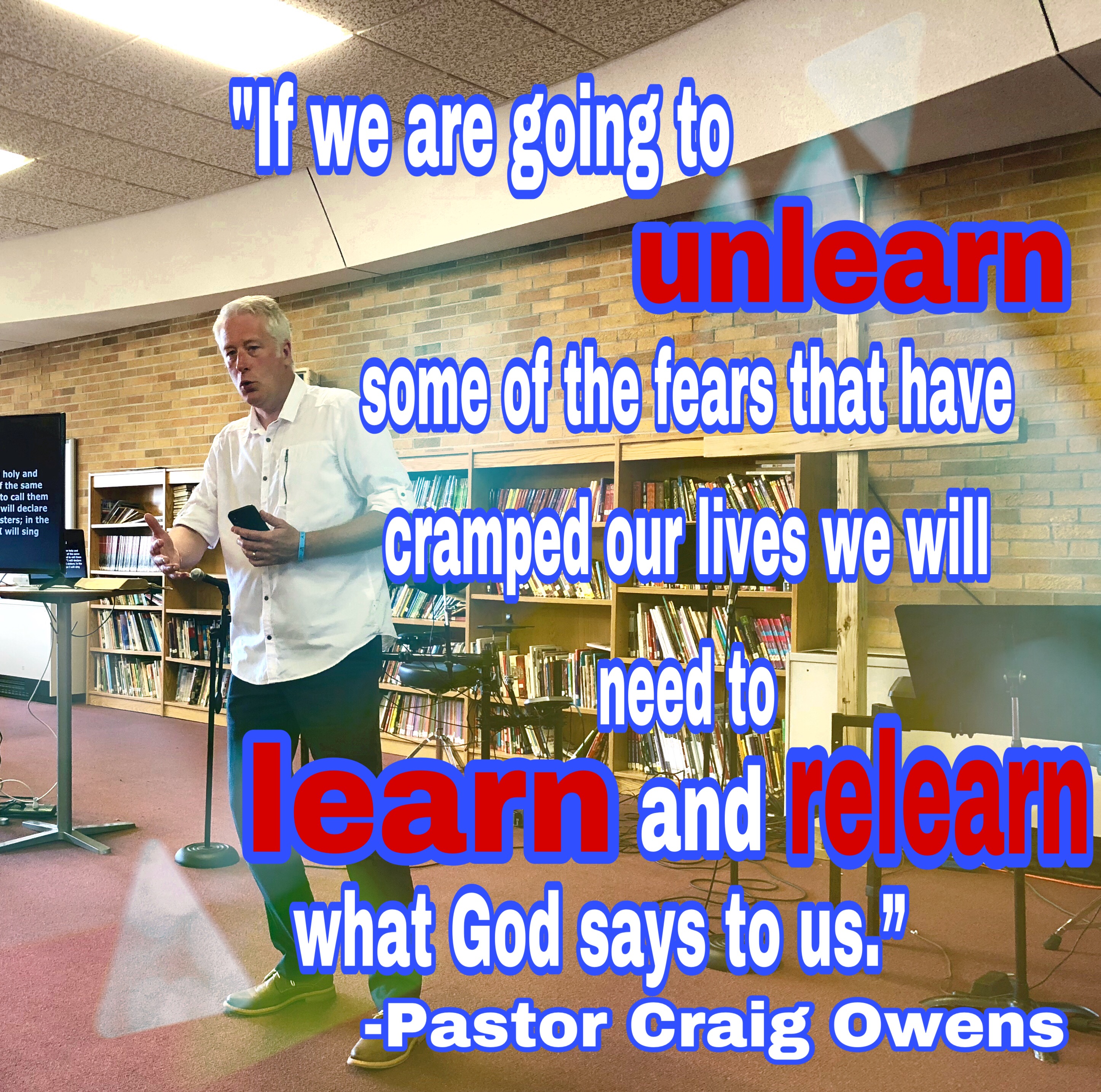
Christians—as aliens and strangers on this Earth—should have an alien response to earthly fears. So if we are going to unlearn some of the fears that have cramped our lives we will need to learn and relearn what God says to us.

Peter asks what might seem like a rhetorical question, “Who is going to harm you if are eager to do good?” Think about it: who wants to punish someone for doing the right thing? Apparently some people do because Peter goes on to add, “But even if you should suffer for what is right, you are blessed. Do not fear what they fear; do not be frightened” (1 Peter 3:13-14). 

So even if people insult Christians for doing things God’s right way, God’s blessing is on them. Sadly, people without God’s blessing on their lives often give in to the FOMO (fear of missing out) and they end up lashing out at those being blessed. That lashing out is directly rooted in their fears. 

Abraham Maslow proposed a hierarchy of needs that humans have, and obviously, there would be fears associated with any of those needs not being met. At least, that would be the Earthling response. Christians need to unlearn those fears by learning and relearning why God tells them to “Fear not!” 

  1. Fear of not having physiological needs met—Jesus tells us why we shouldn’t worry (Matthew 6:25-34). 
  2. Fear of not being kept safe—the psalmist tells us that God is our shield (Psalm 84:11).
  3. Fear of not fitting in with a certain social group—Jesus proudly call His followers His brothers and sisters (Hebrews 2:11-12).
  4. Fear of not being rewarded or recognized—Jesus says there are blessings for those that hang in with Him through persecution, including being called a co-heir alongside Him (Matthew 5:10-12; Romans 8:17).
  5. Fear of our life not having purpose—the apostle Paul reminds us that God chose us on purpose to be His example to the world (1 Corinthians 1:25-27). 

Since Jesus overcame all the things that could cause us fear, Peter counsels us to arm yourselves with this same attitude (1 Peter 4:1). The Greek word for arm yourselves only appears here, and it means for us to repeatedly remind ourselves of God’s truth. The Greek word for attitude is only here and in Hebrews 4:12, where we are reminded that the Word of God helps our minds unlearn, learn, and relearn God’s truth. 

Have the borders of your life been squeezed by your fears? Do you feel like you’re missing out on the “abundant life” that Jesus said you could have? The Word of God can help you unlearn those fears, and fellow Christians would love to come alongside you to help you continue to relearn that truth over and over again until your fears are banished from your life! 

Don’t let fear keep you from being all that God has planned for you to be! 

Please join me on Sunday as we continue our study of how Christians are to live as aliens and strangers while on Earth. If you’ve missed any messages in this series, you may find the complete list by clicking here. 

The Power Of Praying Scripture

I have always been a huge proponent of allowing the Scriptures to help form my prayers. I think there is great value in speaking God’s Word back to Him. 

“Knowing God’s Word helps us pray, and praying helps us know God’s Word.” —Craig T. Owens

I am currently reading Max Lucado’s book Praying The Promises in which he makes the same case. For instance, consider the following passages—

The rain and snow come down from the heavens and stay on the ground to water the earth. They cause the grain to grow, producing seed for the farmer and bread for the hungry. It is the same with My word. I send it out, and it always produces fruit. It will accomplish all I want it to, and it will prosper everywhere I send it. (Isaiah 55:10-11) 

[Abraham] was fully convinced that God is able to do whatever He promises. (Romans 4:21) 

For no matter how many promises God has made, they are “Yes” in Christ. And so through Him the “Amen” is spoken by us to the glory of God. (1 Corinthians 1:20) 

Here’s how Max Lucado turned those passages into a prayer—

Lord, You are the Maker and Keeper of promises. Your Word does not return void. When You say You will do something, You do it. You are able to do whatever You promise. So many years ago You made a covenant with Your people, and You have been faithful to the covenant.

Sometimes it is easier to put my faith in my circumstances rather than in Your promises. I want to rely on myself, my earthly possessions, and the people in my life, but these so often fail me. But Your promises will never fail me!

As I read through Your promises, give me a new passion for them. Show me what promises I have forgotten over the years and need to cling to again. Reveal Your true character to me. Remind me of the power of Your love and Your grace. Strengthen my faith, and teach me to lean on Your Word rather than on myself.

Thank You for keeping Your promises. I’m grateful for the ultimate promise I have in Your Son, Jesus. Amen.

Why don’t you start making this a regular habit yourself.

Thursdays With Oswald—Jeremiah 16

Oswald ChambersThis is a weekly series with things I’m reading and pondering from Oswald Chambers. You can read the original seed thought here, or type “Thursdays With Oswald” in the search box to read more entries.

Jeremiah 16

[These are notes from Oswald Chambers’ lecture on Jeremiah 16.]     

     “All things are lawful… but all things are not expedient,” says Paul, i.e., all things are lawful to me as a natural man, but not expedient to me as a spiritual man because I am under a superior command. … 

     How many of us have begun to realize our privilege of not doing things? The liberty to waive our rights is the great privilege of Christian sanctity. One of the meanest things is to say, “I don’t do certain things because it will damage me.” Paul’s argument is—“I don’t do certain things because it will damage someone else” (see 1 Corinthians 8:9-13). … 

     In the days before you knew God you did any number of things which God overlooked, but try and do them now, and if you persist you will realize what is written in Psalm 106:15—“And He gave them their request; but sent leanness into their soul.” 

From Notes On Jeremiah

A Christian should be able to say a guilt-free, excuse-free “No” to anything that would be inexpedient for themselves OR for others around them. 

God Is The Sun

John Piper said, “We were made to live with God as the all-satisfying center of our lives, with everything else in good, godly, happy orbit. Instead, we have a solar system with competing gravitational centers, and nothing else flying in its right orbit.” 

In Psalm 16:11 David wrote, “In Your presence there is fullness of joy; at Your right hand are pleasures forevermore.” Lasting joy and guilt-free pleasure are found in God’s presence. If He is the “sun” of our universe, everything else stays in its proper “orbit.” How do we make sure God is our sun? The first phrase in Psalm 16:11 is the key: “You make known to me the path of life.”

Did you catch that? Not only is God the sun-center of our universe, but He tells us when our sun-center has become (or is becoming) something other than Himself. That’s why David also prayed, “Search me, O God,” and why Paul told us to regularly examine ourselves.

The Holy Spirit will keep us properly centered and in the place of ultimate joy!

God’s Gift To The World

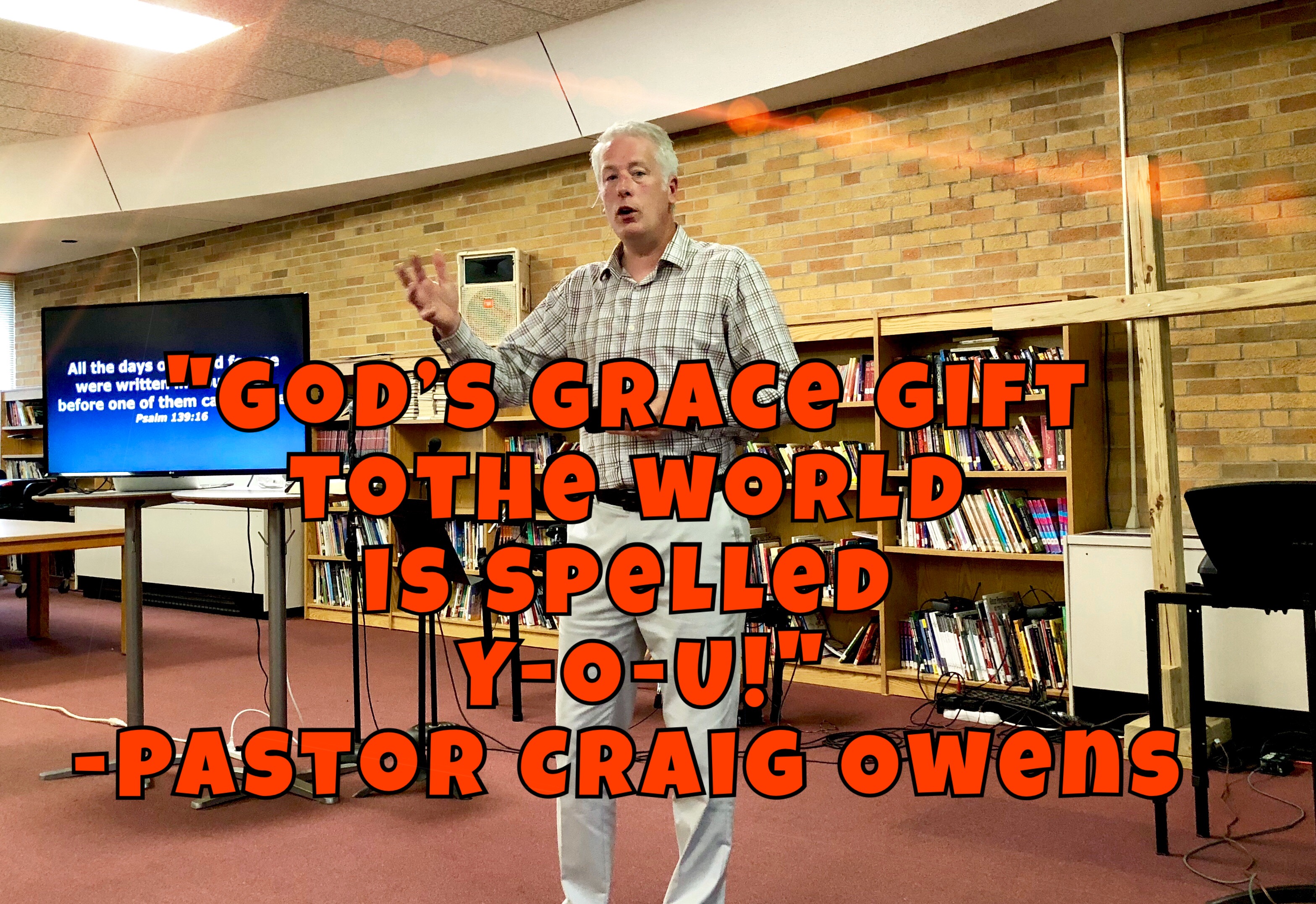
You are a gift. You are God’s grace gift to the world. 

Max Lucado said it this way: “You are you-nique. 

God made you on purpose and for a purpose.

God implanted unique abilities in you from conception (see Psalm 139:13). And check out what God said to Jeremiah, “Before I formed you in the womb I knew and approved of you…” (Jeremiah 1:5). Before you were even conceived, God already knew all about you AND He approved of you! 

Why did God implant these unique abilities in you? Because He knew of the unique opportunities you would face during your lifetime (see Psalm 139:16). Because God is for you, He gave you all that you would need to successfully face every opportunity that came your way. 

Every one of us has been given these grace gifts of unique talents and opportunities. The Bible says, “to each one of us grace has been given as Christ apportioned it” (Ephesians 4:7). If God is for you, and God is for me, then that means that you have been gifted to be a blessing to me and I have been gifted to be a blessing to you (Romans 12:3-6; 1 Corinthians 12:4-7).

Let me state it again: every one of us has been entrusted by God with unique talents in order to successfully face the unique opportunities that He knew we would face. Jon Bloom reminds us, “Some are given more, some are given less, but all are given much.” 

So what do we do with what we’ve been entrusted? There are two possibilities: (1) We can invest our talents and abilities in a way that glorifies God, or (2) We can squander the talents God has given us. 

How do you squander the grace gift of your life? 

  1. Not discovering it—I have a gift?
  2. Devaluing it—I’m nothing special.
  3. Overvaluing it—I’m super-important. I don’t need anyone else.
  4. Laziness—I don’t want to mess it up, so there’s no need for me to invest my gift.
  5. Short-sightedness—My gift is just for me, so it doesn’t matter what I do with it.

I hope we can all say what Erma Bombeck wrote: “When I stand before God at the end of my life, I would hope that I would not have a single bit of talent left but could say, ‘I used everything You gave me.’”

How do you honor God with your you-niqueness? I can tell you in just three simple words—You be you! 

If you will just be who God made you—not downplaying your talents, not wishing you had someone else’s talents—that’s when you will feel fulfilled, and God will be glorified, and the rest of the world will be blessed! So…

YOU BE YOU! 

Pentecost Shows That God Is For Us

I have been trumpeting this truth: God is for you! He’s not looking for opportunities to blast you, but to bless you. 

Yesterday we remembered Pentecost. In Jewish history, Pentecost is simply a celebration that took place fifty (pente) days after the Passover. But the first Pentecost celebration after Christ’s resurrection became the launching point for the Church. On this Pentecost, the followers of Jesus were baptized in the Holy Spirit. This baptism is primarily for two things: 

  1. Christians are empowered to know more clearly that “God is for me.” 
  2. Christians are empowered to tell others more persuasively that “God is for you.” 

We only continue to grow in our understanding of God’s favor by believing what Jesus did for us on the Cross (2 Corinthians 5:21). The Holy Spirit helps us to know this—

Now we have not received the spirit that belongs to the world, but the Holy Spirit Who is from God, given to us that we might realize and comprehend and appreciate the gifts of divine favor and blessing so freely and lavishly bestowed on us by God. (1 Corinthians 2:12 AMP) 

Check this out…

(1) The baptism in the Holy Spirit empowers me to know more clearly that God is for meFor you are becoming progressively acquainted with and recognizing more strongly and clearly the grace of our Lord Jesus Christ—His kindness, His gracious generosity, His undeserved favor and spiritual blessing—in that though He was so very rich, yet for your sakes He became so very poor, in order that by His poverty you might become abundantly supplied (2 Corinthians 8:9 AMP). 

(2) The baptism in the Holy Spirit empowers me to tell others more persuasively that God is for them—You will receive power when the Holy Spirit comes on you; and you will be My witnesses (Acts 1:8). All this is from God, Who reconciled us to Himself through Christ and gave us the ministry of reconciliation: that God was reconciling the world to Himself in Christ, not counting people’s sins against them. And He has committed to us the message of reconciliation (2 Corinthians 5:18-19). 

Because God is for you, He wants to baptize you in His Holy Spirit!

If you haven’t been baptized in the Holy Spirit, ask for that gift that God wants to give you. The more of the Holy Spirit there is in your life, the more you will recognize God’s favor and be equipped to be His witness. 

We will be continuing to explore this topic of God’s favor on Sunday. I hope you can join me either in person or on Facebook Live.

God Is For You!

I’m going to make a statement that might shock some people. 

Some of you who have been around Christianity might have heard this before, and you may even mentally agree with it. But even people who mentally agree with it want to add a “Yeah, but…” to it. Or they mentally agree with it but don’t live like it’s true. 

Ready? Here it is … 

God is for you.

Far too many people mistakenly think God is looking for an opportunity to punish them; He’s trying to catch them doing something wrong; He’s perched on the edge of heaven with lightning bolts of judgment in His hand. God doesn’t want to blast you; He wants to bless you! 

Although the word favor appears quite frequently in Scripture, God’s favor is also implied in the word grace, which means God’s unmerited favor. 

It’s unmerited because none of us is worthy of God’s favor; it’s not something anyone can earn. We have all sinned, and therefore we’re all worthy of the death penalty. Every single one of us! 

I have worshipped idols, I have blasphemed God’s name, I have broken the Sabbath, I have dishonored my parents, I have coveted, I have lied, I have committed adultery, and I have murdered. And so have you (see James 2:10).

Do you understand what Jesus did for us on the Cross? HE SWITCHED PLACES WITH US!

Jesus became my sin, and He made it possible for me to become His righteousness (2 Corinthians 5:21). Check this out: 

For God took the sinless Christ and poured into Him our sins. Then, in exchange, He poured God’s goodness into us!

“It was because of His grace that God the Father sent His only Son to die in our place. To say it another way, Christ’s death was the result of God’s grace; grace is not the result of Christ’s death.” —Jerry Bridges

Don’t allow the devil’s lies of your unworthiness keep you from missing out on this truth. All of us are unworthy of God’s favor. But God demonstrated that He was for us when Jesus died on the Cross in our place. Now there is no more guilt, no more condemnation, absolutely nothing standing in the way of all of God’s unmerited favor because 

GOD IS FOR YOU! 

Join me next Sunday as we continue with our series called God’s Favor. You can either join me in person or on Facebook Live.

A.L.I.V.E.—The “A” Is For Apologetics

This is part 1 of a 5-part series with a simple premise: “I can know Jesus is A.L.I.V.E. because of…” and then I am presenting evidence for each of the five letters. This is a look at the letter A” for Apologetics for the resurrection of Jesus.

For some of my evidence, I am going to use historical texts from the Bible. When I say “historical” I mean that in the scholarly definition: this Book is attested to by historians and literary critics to be an accurate record of actual historical facts. You can read more of the apologetics for the Bible’s authenticity in a post I previously published here.

I would ask you to weigh the evidence for three possibilities concerning the claims of Christians regarding the death and resurrection of Jesus.

(1) Jesus didn’t actually die.

The Romans didn’t invent crucifixion, but they perfected it to be one of the most gruesome forms of torturous death that history has ever known. This leads one to wonder how could anyone go through the torture Jesus did and survive?

A team of medical examiners, after examining the historical account of Jesus’ death concluded: “The difficulty surrounding exhalation leads to a slow form of suffocation. Carbon dioxide builds up in the blood, resulting in a high level of carbonic acid in the blood. The body responds instinctively, triggering the desire to breathe. At the same time, the heart beats faster to circulate available oxygen. The decreased oxygen (due to the difficulty in exhaling) causes damage to the tissues and the capillaries begin leaking watery fluid from the blood into the tissues. This results in a build-up of fluid around the heart (pericardial effusion) and lungs (pleural effusion). The collapsing lungs, failing heart, dehydration, and the inability to get sufficient oxygen to the tissues essentially suffocate the victim. The decreased oxygen also damages the heart itself (myocardial infarction) which leads to cardiac arrest. In severe cases of cardiac stress, the heart can even burst, a process known as cardiac rupture. Jesus most likely died of a heart attack.”

Besides that, the dead body of Jesus was also thoroughly examined by both the Romans who conducted the crucifixion (see Mark 15:43-45) and His friends who prepared His body for burial (John 19:38-40).  In addition, two contemporary historians who aren’t friendly to the cause of Christianity (Tacitus and Josephus) both attested to Christ’s death by crucifixion.

(2) Jesus didn’t actually rise from the dead.

Some say the disciples were delusional from their intense grief. But Jesus was seen on more than one occasion, sometimes by one person, sometimes by twos, and several times by large groups (see 1 Corinthians 15:3-8). Some of Jesus’ closest friends weren’t convinced by second-hand testimony but had to see Jesus for themselves (John 20:19-20, 24-28). All four biblical accounts record women seeing the resurrected Jesus. This is significant because women were not allowed to serve as “legal witnesses,” so this wouldn’t have helped the “delusional” disciples at all.

Some say the disciples stole the body of Jesus. But this is problematic because of the armed guards at the tomb of Jesus (Matthew 27:62-66; 28:11-15). 

(3) Jesus was crucified and resurrected.

Sir Arthur Conan Doyle’s Sherlock Holmes said, “When you have eliminated the impossible, whatever remains, however improbable, must be the truth.” So after looking at the shortcomings and difficulties of the first two options, let’s consider this third possibility: that it happened just as the historical records in the Bible indicate.

Cold-case detective J. Warner Wallace said of this third possibility, “The last explanation (although it is a miraculous, supernatural explanation) suffers from the least number of liabilities and deficiencies. If we simply enter into the investigation without a pre-existing bias against anything supernatural, the final explanation accounts for all of the evidence without any difficulty. The final explanation accounts for the evidence most simply and most exhaustively, and it is logically consistent…. The final explanation is also superior to all other accounts (given that it does not suffer from all the problems we see with the other explanations).”

Check out the video where I discuss all of these points in more detail, and join me either in person or on Facebook Live for the next four Sundays as we continue looking at the evidence supporting the resurrection of Jesus.

Thursdays With Oswald—Passion For Souls

Oswald ChambersThis is a weekly series with things I’m reading and pondering from Oswald Chambers. You can read the original seed thought here, or type “Thursdays With Oswald” in the search box to read more entries.

Passion For Souls

     You hear people say that Paul showed his wonderful breath of mind, his culture and generosity, his gentleness and patience, by becoming all things to all men [1 Corinthians 9:22]. He did nothing of the sort; he said, “I am become all things to all men” for one purpose only—“that I may by all means save some.” He did not say, “I became all things to all men that I might show what a wonderful being I am.” There is no thought of himself in the whole matter.

     The phrase “a passion for souls” is a dangerous one; a passion for souls may be either a diseased lust or a Divine life. Let me give you a specimen of it as a diseased lust—“Woe to you, teachers of the law and Pharisees, you hypocrites! You travel over land and sea to win a single convert, and when he becomes one, you make him twice as much a son of hell as you are” (Matthew 23:15). … 

     But have we got clearly in our minds what the passion for souls as a Divine life is? Read James 5:19-20: “My brothers, if one of you should wander from the truth and someone should bring him back, remember this: Whoever turns a sinner from the error of his way will save him from death and cover over a multitude of sins.” … 

     God grant we may understand that the passion for souls is not a placid, scientifically worked-out thing, it compresses all the energy of heart and brain and body in one consuming drive, day and night from the beginning of life to the end—a consuming, fiery, living passion. … 

     God grant we may understand that the mainspring of our passion for souls must be a personal, passionate devotion to the Lord Jesus Christ. 

From Workmen Of God

The root of our passion really does make a difference in our Christian activity. Is my passion to make converts so that people can say, “Look what a good guy he is”? Or is my passion to save a soul from death so that people can say, “Look what a great God He is”?

Fellow Christian, I pray our passion is always the latter.