Thursdays With Oswald—Fiery Furnace

This is a weekly series with things I’m reading and pondering from Oswald Chambers. You can read the original seed thought here, or type “Thursdays With Oswald” in the search box to read more entries.

Fiery Furnace 

   Faith means, whether I am visibly delivered or not, I will stick to my belief that God is love. There are some things only learned in a fiery furnace.

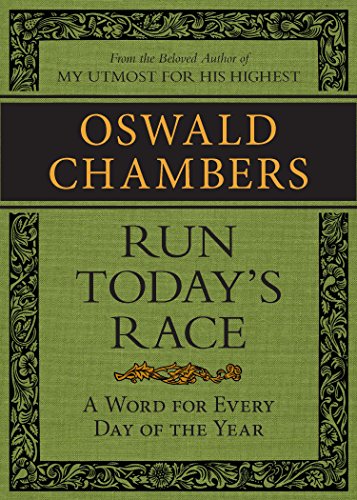
From Run Today’s Race

Run Today’s Race contains short statements from Oswald Chambers intended to stimulate Christians to ponder things like:

  • Do I only believe it because I can see it, or can I trust God even without seeing the reason for my trial?
  • Am I fully convinced of God’s unlimited love for me?
  • Have I learned lessons from my fiery trials in the past?
  • How can I help other brothers and sisters who may be in a fiery trial now?

15 Quotes From “Run Today’s Race”

Oswald Chambers mastered the art of stimulating deep thinking and introspection with just a few short statements. Run Today’s Race is designed to be read each day for a full year. Trust me, the short seed thoughts you read each morning will keep you thinking all day long. Check out my full book review by clicking here.

“It is a great moment when we realize we have the power to trample on certain moods, a tremendous emancipation to get rid of every kind of self-consciousness and heed only one thing: the relationship between God and myself.”

“It is easy to turn our religious life into a cathedral for beautiful memories, but there are feet to be washed, hard flints to be walked over, people to be fed. Very few of us go there, but that is the way the Son of God went.”

“Prayer with most of us is turned into pious platitude, it is a matter of emotion, mystical communion with God. It is no use praying unless we are living as children of God. Then Jesus says—‘Every one that asketh receiveth.’”

“There is only one purpose for your life, and that is the satisfaction of the Lord Jesus Christ.”

“If there is the tiniest grudge in your mind against any one, from that second, your spiritual penetration into the knowledge of God stops.”

“We have judged our fellow men as sinners. If God should judge us like that we would be in hell. God judges us through the marvelous Atonement of Jesus Christ.”

“God delights to put me in a place where He can make me wealthy. ‘Follow Me, and thou shalt have treasure in heaven.’”

“The more complicated the actual conditions are, the more delightfully joyful it is to see God open up His way through.”

“When we try to reserve our strength it works out in weariness. Spend to the hilt all we have got and God’s recreating power is greater than all the expended power.”

“My personal life may be crowded with small, petty incidents altogether unnoticeable and mean [commonplace], but if I obey Jesus Christ in the haphazard circumstances, they become pinholes through which I see the face of God and when I stand and face to face with God I shall discover that through my obedience thousands were blessed.”

“Whenever the insistence is on the point that God answers prayer, we are off the track. The meaning of prayer is that we get hold of God, not of the answer.”

“One of the most amazing revelations of God comes when we learn that it is in the commonplace things that the Deity of Jesus Christ is realized.”

“As long as there is a human being who does not know Jesus Christ, I am his debtor until he does. The mainspring of [the Apostle] Paul’s service is not love for men but love for Jesus Christ.”

“As long as the devil can keep us terrified of thinking, he will always limit the work of God in our souls.”

“By prayer and Bible reading and meditation, the drab life (drab externally) has glorious holiday hours with God in which the soul is restored even in the valley of deep darkness.” 

More quotes coming soon, so stay tuned.

Godly Leaders Can Inspire Everyone To Pursue One Vision

And I told them of the hand of my God which had been good upon me, and also all of the king’s words that he had spoken to me. So they said, “Let us rise up and build.” Then they set their hands to this good work. (Nehemiah 2:18)

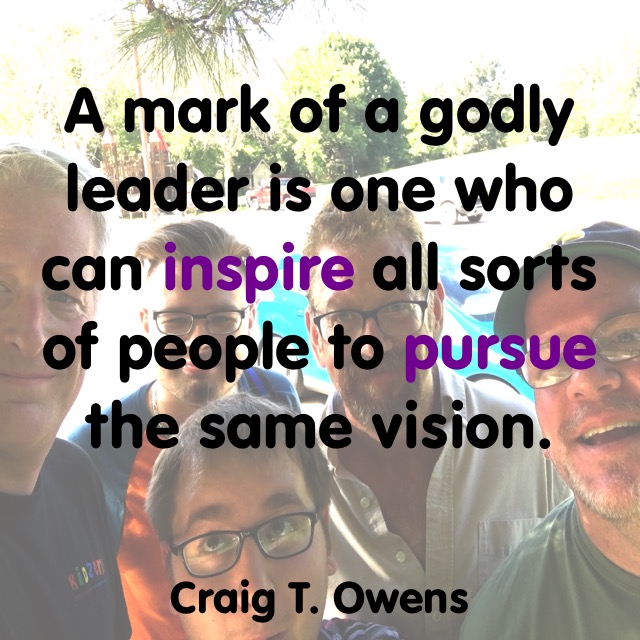
The mark of a godly leader is one who can inspire all sorts of people to pursue the same vision.

Nehemiah did such a good job casting the vision God had given him that people from all professions and persuasions immediately joined in. Although the vision was to rebuild the walls around Jerusalem, most of those who joined Nehemiah in pursuing this vision were anything but builders. They were…

  • Priests
  • Fathers and their sons
  • Fathers and their daughters
  • Natural-born Israelites
  • God-fearing foreigners
  • Goldsmiths
  • Perfume makers
  • Leaders
  • Laypeople
  • Those living within the city
  • Those who lived outside the city
  • Merchants

With one voice they cried out, “Let’s rise up and build!” and they got down to business.

All these different people buying-in to one godly leader’s vision!

This is Part 5 in my series on godly leadership. To read my other posts, please click here.

Run Today’s Race (book review)

It’s amazing the thoughts you can think if only the right “seed thought” is first planted in your mind. In Run Today’s Race that’s exactly what Oswald Chambers does for us.

Run Today’s Race is a 365-day seed-planting book designed to send your mind exploring the applications of each day’s short statement or question. At most, each day’s reading is expressed in three sentences, but many of them are expressed in just a handful of words.

The original publication in 1918 was called Seed Thoughts Calendar. In the introduction we read:

“Oswald Chambers firmly believed in the concept of ‘seed thoughts’—brief, pithy sayings designed to arrest attention and stimulate thinking. The entry for December 9 perhaps best expresses his conviction on how to affect a person’s mind and behavior: ‘Our Lord was never impatient. He simply planted seed thoughts in the disciples’ minds and surrounded them with the atmosphere of His own life….’”

Each day’s entry in Run Today’s Race will take you only a few seconds to read, but you will have some excellent thought material to keep your mind occupied all day long. Make an investment in your spiritual growth by picking up a copy of this excellent book.

As an example from November 14:

“The proof that we are rightly related to God is that we do our best whether we feel inspired or not.”

This might stimulate questions like:

  • Do I do my best only when someone is watching me, or do I do my best because God is always watching me?
  • Do my work ethic and pursuit of excellence make God look good to others?
  • Do I have to wait until I’m “inspired” to do my best, or can simply doing my best make me feel inspired?

One-And-Done? Ongoing? Later?

If I were to ask five different Christians to give me a definition of sanctification, I just might get five different definitions!

Part of this comes from incorrect either-or thinking. However, Jesus seems to tell us that sanctification requires a both-and thinking.

In Christ’s prayer for His followers in John 17, He uses the word sanctified three times (see verses 17-19). Although He is using the same Greek word each time, He uses a different “flavor” of the word to make it really clear what He means.

First of all, the Greek word for sanctified means the process of being made into a saint. So sometimes I like to say the word this way: SAINT-ified.

Check out Christ’s prayer. First He says, “I sanctify Myself,” and then He says, “that they too may be truly sanctified.” Same Greek word, but each time is slightly tweaked.

Jesus uses a “flavor” of Greek which means sanctification is something that He has done completely and totally on His own once and for all. In other words, Christians are completely and totally sanctified at the very moment they surrender their life to Him.

But when He talks about His followers, the “flavor” of Greek means sanctification is something that is an ongoing process. In other words, we are being SAINT-ified.

So which is it? Sanctified once, or sanctified through an ongoing process?

It’s not either-or. It’s both-and!

Think about a married couple. From the moment the pastor says, “I now pronounce you husband and wife” they are married. It is done; fully completed. There is nothing the bride or groom can do to become more married.

However, the groom can begin to look at the marriage through his bride’s eyes. Then he can serve her in a way that helps her feel more joy, more satisfaction, and more fulfillment within the marriage. Neither of them becomes more married, but they can get more enjoyment within the marriage.

The same thing for Christians. At the moment we ask Jesus to be our Lord and Savior we are saved from the penalty of our sins. We can’t be more saved. But through the process of SANIT-ificiation we can experience more joy, more satisfaction, and more fulfillment within our relationship with Jesus.

My paraphrase of 1 Peter 1:15-16—But just as He who called you has paid for your once-for-all saint-ification, so keep on being saint-ified in all you do; for it is written: “Be holy, because I am holy.”

What about you? Are you satisfied with just being saved, or are you striving for a joy-filled, more fulfilling, increasingly satisfied relationship with Jesus Christ? It can truly be a wonderful both-and relationship!

Poetry Saturday—A Good Confession

For years I have borne about hell in my breast;
When I thought of my God it was nothing but gloom;
Day brought me no pleasure, night gave me no rest,
There was still the grim shadow of horrible doom.

It seemed as if nothing less likely could be
Than that light should break in on a dungeon so deep;
To create a new world were less hard than to free
The slave from his bondage, the soul from its sleep.

But the Word had gone forth, and said, Let there be light,
And it flashed through my soul like a sharp passing smart;
One look to my Savior, and all that dark night,
Like a dream scarce remembered, was gone from my heart.

I cried out for mercy, and fell on my knees,
And confessed, while my heart with keen sorrow was wrung;
’Twas the labor of minutes, and years of disease
Fell as fast from my soul as the words from my tongue. —Frederick William Faber

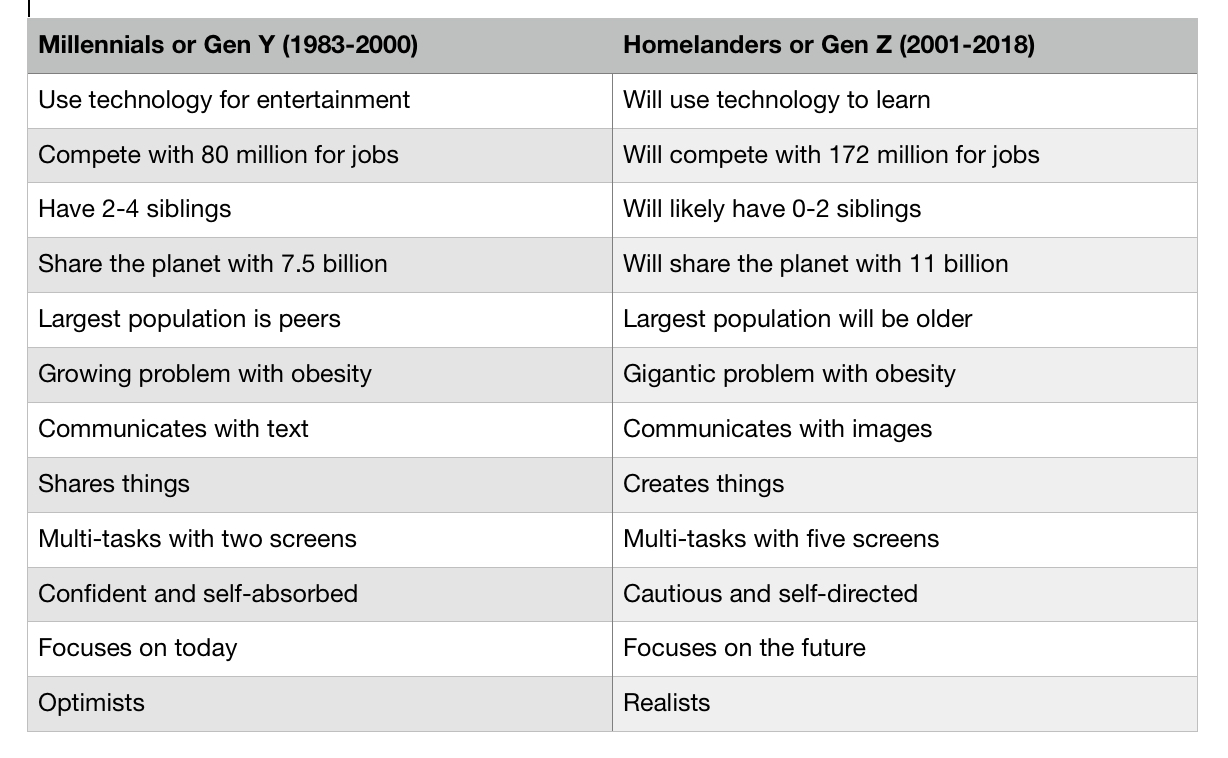
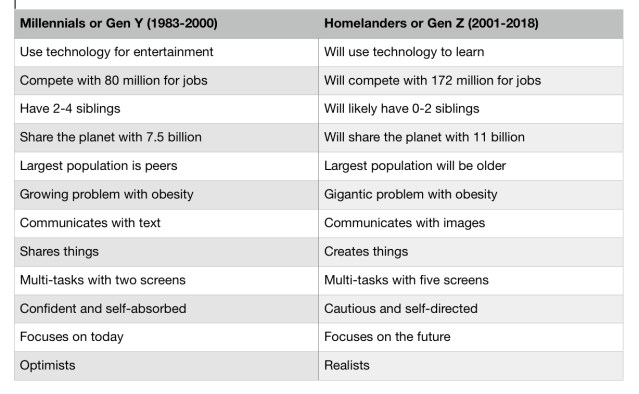
7 Quotes + 1 Infographic From “Marching Off The Map”

Once again, Tim Elmore has given us invaluable insight into the emerging youth culture. If you have kids or work with kids, you must read Marching Off The Map. You can check out my full book review by clicking here. Below is the first set of quotes I want to share with you, but there will be plenty more coming in the future, so stay tuned!

“Thanks to technology, information streams into their lives 24/7 and often has no filter on it, even for young children. When we determined not to censor content in the media, we had no idea (understandably) how it would affect our kids. We’re removing the opportunity for them to experience innocence and wonder. However, because they’re still maturing emotionally, socially, cognitively and biologically in their first 25 years, we have now begun to witness a strange paradox in our young: the extinction of childlikeness and the extension of childishness. …

“Since they are exposed to so much adult information, so early in their lives, they can prematurely lose (1) their sense of innocence, (2) their sense of wonder and (3) their sense of trust …

“Biologically, the graduate is an adult. Emotionally, the graduate may be unprepared for the adult world.” 

“If you think our kids are pitifully impulsive on social media—just look at the adult population. … If you think teens are addicted to Facebook, just study the hours their mothers spend on it. If you think young athletes on the Little League baseball field act childish, just look at their dads. The behavior of adults and children has become more and more similar. Society has baptized ‘youthfulness.’ We want to look young, feel young, dress young, talk young and act young. We argue with our children’s teachers. We push our kid’s coaches to get them special treatment. We are not good at delaying gratification, and we frequently don’t keep commitments we make … very much like children. The result? Adulthood has lost much of its aura and authority.”

“As you stand in front of your classroom or your own children—you are, in a sense, Galileo. You are Magellan. You are Christopher Columbus. You are Lewis and Clark. You are Neil Armstrong. Ready or not, they need you to play this role.

“Our world is both expanding and shrinking. Our past maps and methods are antiquated. Like it or not, we’re moving into unfamiliar territory and many think it’s too difficult to explore. We have fallen in love with our old maps. … 

“For educators, our role must change as we teach a generation of students who don’t need adults to get information.

“For parents, our role must change as we raise kids in a time of terrorism, economic recession, racial unrest, underemployment and ubiquitous technology.

“For coaches, our role must change as we train young athletes who have eight-second attention spans, and may arrive at practice with little resilience or grit.

“For youth workers, our role must change as we mentor students who have few life skills or values because adults either over-functioned or were absent.

“For employers, our role must change as we onboard young employees who may have never had a real job before, and may ask when ‘spring break’ will be.”

“Adults must enable the students to leverage what is new, yet at the same time, hold on to what is ancient, yet valuable. We must be both timeless and timely. So, our job as we serve the next generation is two-fold:

  • To adopt or adapt. We must seize what is new and help kids leverage it well.
  • To explain and equip. We must relate to them the timeless ideals every generation needs.”

“I believe we must cultivate one significant skill set in ourselves: we must be able to either adapt to the new world that’s emerging, or we must explain why a timeless virtue or value is still relevant in our 21st century world.”

“A third of young Americans say they don’t belong to any religion. I’ve found, however, they’ve traded in one God for many gods. They want to ‘feel’ spiritual, so they’ve created a buffet—seeking something to satisfy their soul. I often hear students say, ‘I don’t believe in religion, but I want to be a spiritual person.’ Today—pluralism is expanding across the landscape. It’s easier to say ‘no’ to one and enjoy a mixture of many.”

“A third of young Americans say they don’t belong to any religion. I’ve found, however, they’ve traded in one God for many gods. They want to ‘feel’ spiritual, so they’ve created a buffet—seeking something to satisfy their soul. I often hear students say, ‘I don’t believe in religion, but I want to be a spiritual person.’ Today—pluralism is expanding across the landscape. It’s easier to say ‘no’ to one and enjoy a mixture of many.”

“The Latin root word for ‘educate’ is ‘ducere’ which means to ‘push out.’ … We should not put students in a passive mode as we teach. We must be inspirers of learning. We must help pull ambition out of them, not push information into them.”
I’ll be posting some more quotes from Marching Off The Map next week.

Thursdays With Oswald—Public And Private

This is a weekly series with things I’m reading and pondering from Oswald Chambers. You can read the original seed thought here, or type “Thursdays With Oswald” in the search box to read more entries.

Public and Private 

   My worth to God in public is what I am in private.

From Run Today’s Race

Run Today’s Race contains short statements from Oswald Chambers intended to stimulate Christians to ponder things like:

  • Do I spend enough time alone with God, or am I too quick to run off to accomplish my tasks?
  • Am I listening to what God really wants to tell me in private?
  • Am I applying those private lessons to my public life?
  • Jesus spent much time in solitude with His Father; am I spending enough time in solitude with God?

Marching Off The Map (book review)

In my mind, Tim Elmore stands head-and-shoulders above the rest in giving the most meaningful insights into the minds of today’s youth. Parents, coaches, teachers, and youth pastors will do themselves and the students with whom they work a huge service by using Dr. Elmore’s newest book—Marching Off The Map—as their guiding light in working with this young generation.

Never before have so many youth been exposed to so much information at such young ages. As a result, today’s students are both more prepared and less prepared to take on the future than any generation before them. Does this sound contradictory to you?

Consider the case of Alexander the Great. He conquered territory so quickly that he literally marched off the map; that is to say, there were no known maps for the new territory in to which he took his armies. Alexander’s mapmakers were pressed into duty to draw the maps as they were discovering new lands. They were both more and less prepared to move forward, just like today’s generation of students.

Those who work with today’s students can probably relate! Parents and teachers are attempting to write new maps as they go. They are being called upon to be both timeless and timely; to bring timeless principles into a territory where they’ve never been before in a timely way.

“This book is about moving into unknown territory as caring adults, and leading the way for the younger generations behind us. It’s all about inspiring students to learn in this brand new world. Whether you are an educator, a parent, a coach, an employer, a youth worker or just someone who cares about kids, this book was created to help you chart the course into the future.” —Tim Elmore 

Along the way Dr. Elmore will introduce you to some of today’s youth, help you see the world through their eyes, and give you invaluable insight into how best to educate, train, and equip them to be the leaders of the next generations. All of Dr. Elmore’s books are well-documented with research, statistics, graphics, and suggestions which are guaranteed to open your eyes and your mind.

If you truly care about seeing the next generation of youth be as prepared to face the future as possible, Marching Off The Map has to be a must-read! 

I am a Poet Gardener Publishing book reviewer.

The Cure For Spiritual Fanaticism

“Some time after Pentecost a group of believers met to pray for strength and power to meet the emergency then facing them, and to enlist the help of God on their behalf. ‘And when they had prayed, the place was shaken where they were assembled together; and they were all filled with the Holy Ghost, and they spake the Word of God with boldness’ (Acts 4:31). Some of these were of the original number filled at Pentecost. It is hardly conceivable that God acted contrary to His own will in filling them again after Pentecost. Still other outpourings are recorded in Acts 8, Acts 10 and Acts 19. All these occurred some years after the original act.

“In brief, the teaching of the New Testament is that the outpouring at Pentecost was the historic beginning of an era which was to be characterized by a continuous outpouring of the Holy Spirit. …

“This anti-emotionalism, though it is sponsored by some good people and travels in pretty orthodox company, is nevertheless an unwarranted inference, not a scriptural doctrine, and is in violent opposition to psychology and common sense. Where in the Bible are feeling and faith said to be at odds? The fact is that faith engenders feeling as certainly as life engenders motion. We can have feeling without faith, it is true, we can never have faith without feeling. Faith as a cold, unemotional light is wholly unknown in the Scriptures. …

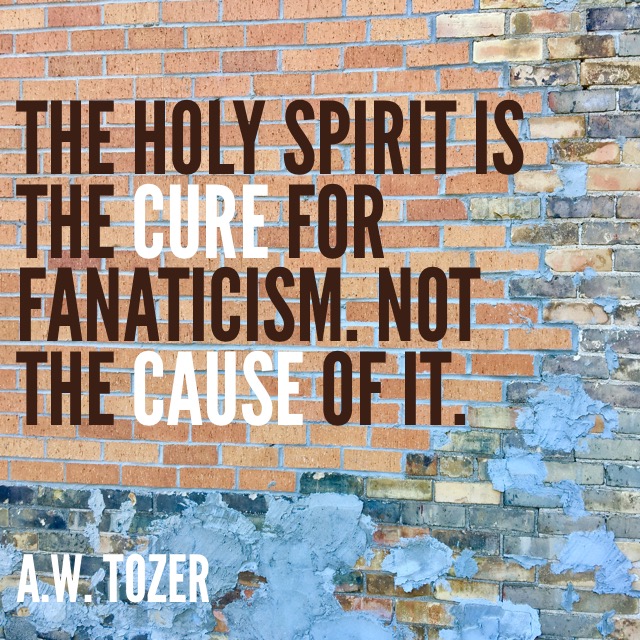
“The Holy Spirit is the cure for fanaticism. Not the cause of it.”

—A.W. Tozer, in Paths To Power