Leaders believe so strongly in what they have been called by God to do, that opposition to God’s plan arouses very strong emotions in a leader!
When Nehemiah was angered at those who either deliberately or unintentionally sinned, his anger brought swift and decisive action—
He threw away people’s stuff
He issued explicit commands
He confronted other leaders
He issued strong threats
He beat people up (really!)
He excommunicated
Yet in all these actions he did not sin. He prayed in between many of these episodes, “God, remember what I have done. Show me mercy. Reward me for this good I have done.” And nowhere after these prayers do we see God rebuking Nehemiah for mishandling his emotional responses.
A mark of a godly leader is one who handles his strong emotions in a God-honoring way.
A leader’s prayer: Father, in my anger keep me from sin. May even my strongest of emotional responses bring glory to You.
This is Part 12 in my series on godly leadership. You can check out all of my posts by clicking here.
Longing For A Changed World will help you (re)establish a prayer focus that could be the beginning of the next great revival! You can check out my full book review here, and then enjoy some of the quotes that especially caught my attention.
“Our age, severed from its Biblical moorings, is neglecting history’s lessons.”
“Another characteristic of today’s Church is a lack of prayer. Instead of communing and listening to God, lifting our needs and concerns to the Lord, we rely on our own abilities and in technology to compensate for any inadequacy we may have. Thus armed, we are confident in taking on the challenges of our day, even those spiritual in nature.”
“True revival impacts all aspects of life, even to the concerns of the last, the least, and the lost. A people who uphold justice and righteousness and seeks to alleviate the plight of the poor and needy, are a people truly gripped with revival. For when we are consumed with God’s holiness and how blessed we are by His grace, we are compelled to take this Gospel to all aspects of our culture.”
“Our propensity is to focus on being doers—to be on the battlefield, sword in hand, fighting for the Kingdom and for righteousness. But as in the battle with the Amalekites, battles are won by God’s people lifting up their arms to the Lord.”
“I have been more focused on what I wanted to say in my prayer than on Whom I am approaching in prayer. This often leads to prayer that amounts to a tallying-up of my wants, without proper regard for the One into Whose presence I have come.”
“Our prayers as a whole, and prayers for revival, should reflect our poverty and powerlessness before a God who is forgiving and gracious.”
“Pray for boldness in the church—boldness to proclaim God’s Word and to firmly stand on it. Pray for boldness to confront sin yet boldness accompanied with humility as the church is aware (painfully aware) of its own sinfulness. And pray for boldness to present Christ as the Way and the Truth.”
“Praying expectantly requires us to pray to God in line with His Word and His promises. Thus a decline in biblical literacy has resulted in our prayer life wavering as well.”
“Our pleas for revival will go unheeded until we stand up for God’s Word, forsake the idols of our age, shake off the trappings of our secular and materialistic age, and embrace God’s truth.”
“As we pray for revival—for changed lives, renewed churches, and a transformed culture—our tendency might be to enlist the charismatic, the eloquent, and those who project confidence and success, traits that so readily appeal to us. But God’s manner of bringing revival has often been through ordinary people who endure affliction, hardship, and suffering, much as he did with Paul and Timothy and the Apostles.”
I’ll be sharing more resourced and thoughts from this book soon, so stay tuned!
“The most Christ-like person in the world is the man who never finds his fellow-man a nuisance. It is easy to feel Christian in the moment of prayer and meditation; it is easy to feel close to God when the world is shut out. But that is not religion—that is escapism. Real religion is to rise from our knees before God to meet men and the problems of the human situation. Real religion is to draw strength from God in order to give it to others. Real religion involves both meeting God in the secret place and men in the market place. Real religion means taking our own needs to God, not that we may have peace and quiet and undisturbed comfort, but that we may be enabled graciously, effectively and powerfully to meet the needs of others.” —William Barclay
I grew up with this axiom ringing in my ears: “The Church moves forward on its knees.” Lately, however, it seems that the Church is attempting to move forward in every way she can think of, and only turning to prayer as a last resort. Ralph Lehman has given the Church a clarion call to return to its only reliable posture for success: Constant, unwavering prayer. Longing For A Changed World will challenge you to return to this dependable supply of prayer once again.
This book is written as a series of short challenges for us to (re)consider how indispensable prayer is for both the individual Christian and the collective Church. Ralph recalls both biblical and historical revivals in which prayer played the vital role of bringing people back to their knees in humble prayer to God for His help.
The subtitle of this book is Meditations on prayer for revival. At the close of each chapter, Ralph has included questions on which you can reflect. I found these introspective questions to be quite confronting as I compared my prayer life to those revival-starting prayers of the past.
Ralph mentions that women have an almost innate desire and propensity to turn to God in prayer, while men typically try to “fix” things themselves before asking for prayer. So Longing For A Changed World is really targeted at the men in our churches, although anyone who desires to see the Church revived will benefit greatly from reading this book.
Please don’t put off prayer any longer! This book will help rekindle your passion for prayer!
There was a story circulating that a physicist once claimed that the bumblebee was defying the laws of physics and aerodynamics in its flight. Apparently, he calculated that the ratio of the bumblebee’s wing size in comparison to his body size just didn’t make the math work.
But entomologists and physicists quickly jumped in to say, “Hey, look, the bumblebee is flying, so clearly it works!” And then they went to work to try to explain it. They figured out that the bumblebee flaps its wings more back-and-forth than up-and-down, creating tiny hurricanes the propel them through the air. But then that created a whole new set of problems, like how does the bumblebee control a hurricane so precisely as it turns, stops, dives, and climbs. So then they had to create a new explanation, which they named dynamic stall.
All the while, the bumblebee is flapping its too-small wings 230 times per second(!), and going about its daily activities without being able to explain tiny hurricanes, the laws of physics or aerodynamics, or even knowing what dynamic stall is. It simply flies!
The ultimate argument for anything is doing something that critics say is impossible.
Peter tells Christians to be prepared to answer anyone for the reason for the hope that they have (1 Peter 3:15-16). The Greek word for “give an answer” is apologia, from which we get our word apologetic. Here are three apologetics for Christians to use for the hope that they have.
It really comes down to this: My hope is based on the resurrection from the dead of Jesus Christ, which I believe because of the Bible AND because of the change in my life.
The Bible’s authenticity
“No other work in all literature has been so carefully and accurately copied as the Old Testament. The particular discipline and art of the Jewish scribes came out of a class of Jewish scholars between the fifth and third centuries BC. They were called the Sopherim, from a Hebrew word meaning ‘scribes.’ The sopherim, who initiated a stringent standard of meticulous discipline, were subsequently eclipsed by the Talmudic scribes, who guarded, interpreted, and commented on the sacred texts from AD 100 to AD 500. In turn, the Talmudic scribes were followed by the better-known and even more meticulous Masoretic scribes (AD 500-900).” —Josh McDowell, God-Breathed
“No other ancient text is substantiated by such a wealth of ancient textual witnesses as is the New Testament. Roughly 5,500 separate manuscripts are available, variously containing anything from the entire New Testament corpus to a slight fragment of a single verse. … This textual support is far superior to that available for any other ancient documents, such as the classical texts from Greek and Roman writers (e.g., Plato, Aristotle, and Cicero). Only partial manuscripts have survived for many works of antiquity, and it is not unusual to find that the only complete manuscript for some ancient writing is a copy dating from 1,000 years after its composition.” —Archaeological Study Bible, “The New Testaments Texts” (page 1859)
“The biblical Dead Sea Scrolls are up to 1,250 years older than the traditional Hebrew Bible, the Masoretic text. We have been using a one-thousand-year-old manuscript to make our Bibles. We’ve now got scrolls going back to 250 BC. … Our conclusion is simply this—the scrolls confirm the accuracy of the biblical text by 99 percent.” —Dr. Peter Flint
I have shared other apologetic evidence for the authenticity of Scripture here and here.
Christ’s resurrection
In1 Corinthians 15:1-8 Paul lists all of the eyewitnesses to Christ’s resurrection, giving critics ample opportunity to challenge these witnesses in person. If these witnesses would have been perpetrating a hoax, skeptics of their day would have been able to uncover the inconsistencies in their story. If the account of Christ’s resurrection was made-up, it’s doubtful the early Christian martyrs would have “stuck to their story” as they were being tortured, but none recanted.
Josh McDowell notes, “By AD 100, the apostles had died, but the Christian Church was still in its infancy, with fewer than twenty-five thousand proclaimed followers of Christ. But within the next two hundred years, the fledgling church experienced explosive multiplication of growth, to include as many as twenty million people. This means the church of Jesus Christ quadrupled every generation for five consecutive generations!”
My personal experience
“I am a changed person. I am not who I was before I met Jesus” and “My life tends to go better when I live by biblical principles” are both excellent apologetics!
Let others argue that God doesn’t exist, or that you shouldn’t have hope, and then you—like the bumblebee—just keep flying with Jesus! (see 2 Timothy 3:14)
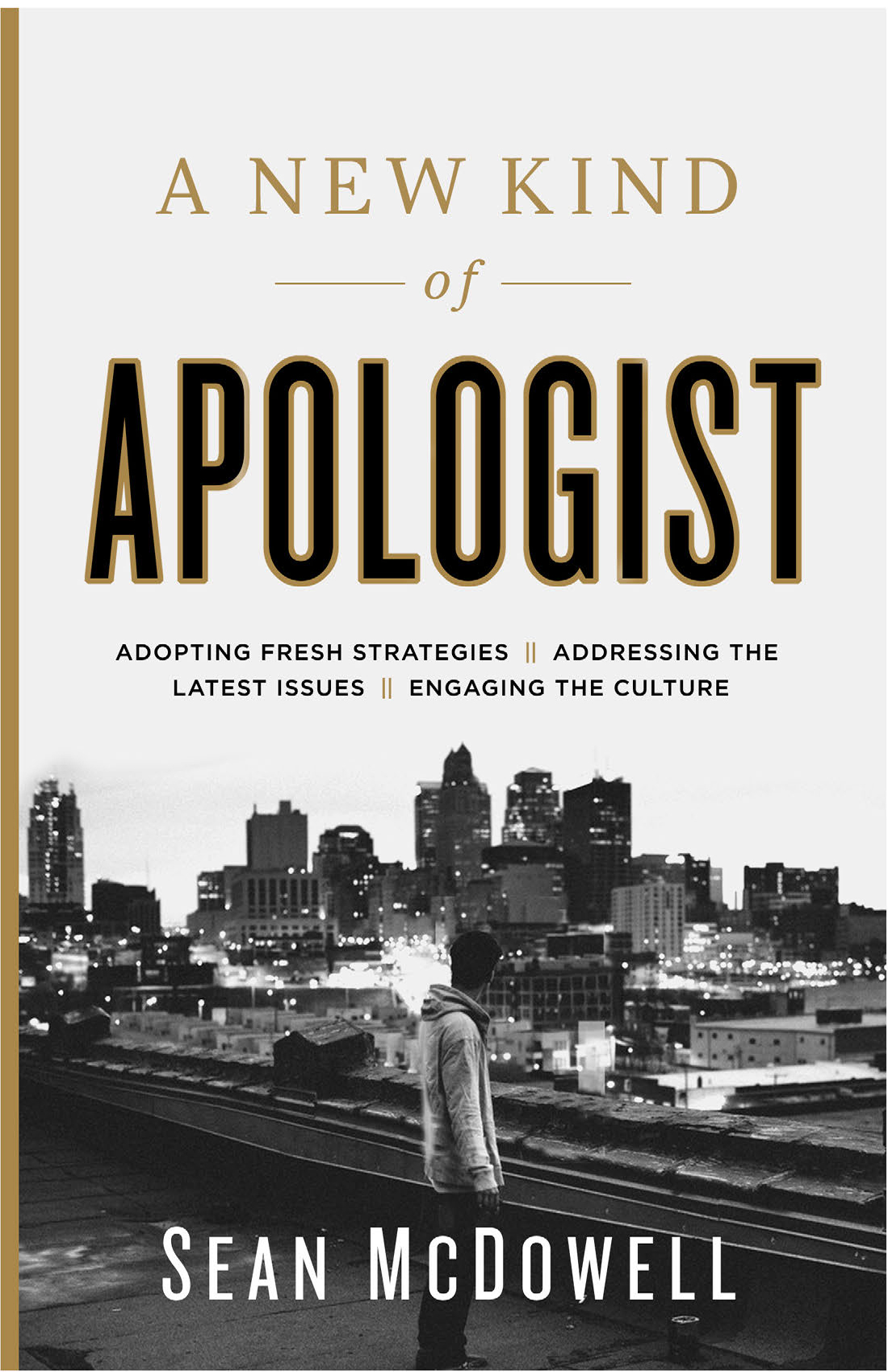
“For people burdened to say and defend the goodness and truthfulness of Christianity, it is tempting to hurriedly skip past the questions in our rush to demonstrate our answers. Such an impulse makes sense. Christianity, after all, has the most profound answers to offer the world’s most difficult questions. But if the work of apologetics involves more than building up the faithful, its primary orientation should be toward helping those who are already traveling to arrive. It is persuasion that apologetics hopes for, not only defenses or justifications of the Christian position as true or reasonable. We should point the way home rather than shout from the balcony of our bedrooms about how good looking it is. We have to care about the means of travel, not just the intellectual destination. We have to attend to the questions if we are going to help people find answers.” —Matthew Anderson, in A New Kind Of Apologist
This is a weekly series with things I’m reading and pondering from Oswald Chambers. You can read the original seed thought here, or type “Thursdays With Oswald” in the search box to read more entries.
Second Mile Christianity
To go the second mile means always do your duty, and a great deal more than your duty, in a spirit of loving devotion that does not even know you have done it. … The supreme difficulty is to go the second mile with God, because no one understands why you are being such a fool. The summing up of Our Lord’s teaching is that it is impossible to carry it out unless He has done a supernatural work in us. …
The interests of the Son of God and of the disciple are to be identical. How long it takes to manifest that identity depends on the private history of the disciple and his Lord. …
We do not need the grace of God to stand crises; human nature and pride will do it. We can buck up and face the music of a crisis magnificently, but it does require the supernatural grace of God to live twenty-four hours of the day as a saint, to go through drudgery as a saint, to go through poverty as a saint, to go through an ordinary, unobtrusive, ignored existence as a saint, unnoted and unnoticeable. The “show business,” which is so incorporated into our view of Christian work today, has caused us to drift far from Our Lord’s conception of discipleship. It is instilled in us to think that we have to do exceptional things for God; we have not. We have to be exceptional in ordinary things, to be holy in mean streets, among mean people, surrounded by sordid sinners. That is not learned in five minutes.
Jesus calls His disciples to go the second mile. Others won’t understand us, and few (if any) people will applaud us for doing so.
Like a novice runner, maybe we can’t go the whole second mile the first time out. Maybe not even the second or third time. But can we go a bit further the second time than we did the first? And a bit further the third time than we did the second? That’s what discipleship is all about: Letting Jesus help us go a bit further each time.
If you stick with it, soon you will be going the second mile and not even realize it. Other may not realize it either, but God always sees when we do, and He is pleased!
God stretches the northern sky over empty space and hangs the earth on nothing. He wraps the rain in His thick clouds, and the clouds don’t burst with the weight. He covers the face of the moon, shrouding it with His clouds. He created the horizon when He separated the waters; He set the boundary between day and night. The foundations of heaven tremble; they shudder at His rebuke. By His power the sea grew calm. By His skill He crushed the great sea monster. His Spirit made the heavens beautiful, and His power pierced the gliding serpent. These are just the beginning of all that He does, merely a whisper of His power. Who, then, can comprehend the thunder of His power? (Job 26:7-14)
Take a look at the majesty of creation. Look at the vastness of space. Marvel at the pounding surf of the oceans. Tremble at the earthquake, the hurricane, the volcano.
Then look through a microscope and see the perfection at the smallest scale. Smell the fragrances, thrill at the beauty. Job reminds us, “These are just the beginning of all that God does, merely a whisper of His power.”
Are things troubling you? They don’t even begin to touch the power of God! No matter what you are facing, God’s power is infinitely stronger. Hide yourself in Him. Cling to His love. Rest in His strength.
Fear not, for far greater is your Father in Heaven than anything troubling you!
As I said in my book review of Amy Carmichael’s book If, this is definitely not a book for everyone. Amy herself said, “It is clear, I think, that such a booklet as this is not meant for everyone, but only for those who are called to be undershepherds.” So the quotes I’m sharing today are just a few of her “If…” statements that especially resonated with me in my role as an under-shepherd pastor.
“If I enjoy a joke at the expense of another; if I can in any way slight another in conversation, or even in thought, then I know nothing of Calvary love.”
“If I can write an unkind letter, speak an unkind word, think an unkind thought without grief and shame, then I know nothing of Calvary love.”
“If I can rebuke without a pang, then I know nothing of Calvary love.”
“If my attitude be one of fear, not faith, about one who has disappointed me; if I say, ‘Just what I expected,’ if a fall occurs, then I know nothing of Calvary love.”
“If I cast up a confessed, repented, and forsaken sin against another, and allow my remembrance of that sin to color my thinking and feed my suspicions, then I know nothing of Calvary love.”
“If I put my own happiness before the well-being of the work entrusted to me; if, though I have this ministry and have received much mercy, I faint, then I know nothing of Calvary love.”
“If I am soft to myself and slide comfortably into the vice of self-pity and self-sympathy; if I do not by the grace of God practice fortitude, then I know nothing of Calvary love.”
“If I do not give a friend ‘the benefit of the doubt,’ but put the worst construction instead of the best on what is said or done, then I know nothing of Calvary love.”
“If I say, ‘Yes, I forgive, but I cannot forget,’ as though the God who twice a day washes all the sands on the shores of all the world, could not wash such memories from my mind, then I know nothing of Calvary love.”
“If the praise of man elates me and his blame depresses me; if I cannot rest under misunderstanding without defending myself; if I love to be loved more than to love, to be served more than to serve, then I know nothing of Calvary love.”
“Let us listen to simple words; our Lord speaks simply: ‘Trust Me, My child,’ He says. ‘Trust Me with a humbler heart and a fuller abandoned to My will than ever thou didst before. Trust Me to pour My love through thee, as minute succeeds minute. And if thou shouldst be conscious of anything hindering that flow, do not hurt My love by going away from Me in discouragement, for nothing can hurt so much as that. Draw all the closer to Me.’”



 Leaders believe so strongly in what they have been called by God to do, that opposition to God’s plan arouses very strong emotions in a leader!








 Craig T. Owens