11 Quotes From “The Last Arrow”

Erwin McManus will get you fired up to make the most of the life God has given you! Check out my full review of The Last Arrow by clicking here. 

“I do not believe anyone is born average, but I do believe that many of us choose to live a life of mediocrity. I think there are more of us than not who are in danger of disappearing into the abyss of the ordinary. The great tragedy in this, of course, is that there is nothing really ordinary about us. We might not be convinced of this, but our souls already know it’s true, which is why we find ourselves tormented when we choose lives beneath our capacities and callings.” 

“Here is the painful reality: we will find ourselves defined by the average if we do not choose to defy the odds. … We can refuse to be average. We must refuse to be average. We must war against the temptation to settle for less. Average is always a safe choice, and it is the most dangerous choice we can make. Average protects us from the risk of failure, and it also separates us from futures of greatness.” 

“Most of us underestimate how much God actually wants to do in our lives and through our lives.” 

“I wonder how many victories are lost before the battle has even begun. I wonder how much more good God desires to usher into the world that has been thwarted by our own lack of ambition.” 

“If one day we are to have a conversation with God about the measure of our lives, I would rather have Him ask me why I tried to do too much than to have Him ask me why I settled for so little.” 

“Many of us keep longing for a new future while holding on to the past. We desperately want God to create something new for us, but we refused to let Him tear away all the old from us.” 

“The tragedy of a life that is never fully lived is not solely the loss of that one life. The tragedy is the endless number of lives that would have been forever changed if we had chosen to live differently.” 

“We do not help the world by choosing to be less or to do less; we help the world by choosing to be more and give more.” 

“Be ready when you get there. Don’t make the mistake of living your life waiting for good things to happen—make good things happen. Be faithful in the small things that do not matter to you as much and treat them with the same level of respect and importance as the big things connected to your hopes and dreams.” 

“The great tragedy would be to live your life waiting for that moment to come instead of living your life preparing for when that moment comes.” 

“If you truly live before you die, your life will have a power that not even death can conquer.” 
15 Reasons Not To Fear

Listen to the podcast of this post by clicking on the player below, and you can also subscribe on AppleSpotify, or Audible.

In the first 39 chapters of Isaiah, there is a lot of doom-and-gloom prophecy about coming judgment. But as the fortieth chapter opens, there is a decidedly more upbeat outlook as prophecies about the Messiah and the coming of God’s Kingdom unfold before us. 

Fittingly, there is a recurring phrase that wasn’t heard in the first 39 chapters of Isaiah—FEAR NOT. 

Why does Isaiah tell us so many times to banish fear? Here are 15 reasons that God gives: 

  1. God says, “I am with you.” 
  2. God says, “I will strengthen you.” 
  3. God says, “I will uphold you.” 
  4. God says, “Those who contended with you shall be as a nonexistent thing.” 
  5. God says, “I will hold your hand.” 
  6. God says, “I am in control.”
  7. God says, “I will make you into something irresistible.” 
  8. God says, “Everyone will see the amazing things I will do for you.” 
  9. God says, “Anything apart from Me is worthless.” 
  10. God says, “I have redeemed you.” 
  11. God says, “You are Mine.” 
  12. God says, “I know you by name.” 
  13. God says, “I will go through floods and flames with you and you will not be drowned or burned.” 
  14. God says, “Nothing ever takes Me by surprise.” 
  15. God says, “I alone am God and everyone else is a mere man.” 

Bottom line: God’s Word gives us ample reasons to root out fear from our heart. 

Read these promises for yourself in Isaiah 41:10, 13, 14; 43:1-2; 44:8; 51:12.

►► Would you please prayerfully consider supporting this ministry? My Patreon supporters get behind-the-scenes access to exclusive materials. ◀︎◀︎

The Last Arrow (book review)

When I read an Erwin McManus book, I always feel like an arrow shot out of a bow: ready to launch into areas where I should be living. So it’s very appropriate that McManus’ newest book is entitled The Last Arrow! 

The premise of the book comes from a story in the Old Testament where King Jehoash has come to the prophet Elisha for help and counsel. Elisha tells Jehoash to strike the ground with his quiver of arrows, Jehoash does so, but only three times and then he stops. Elisha is furious with the king! In essence, Elisha is saying to Jehoash, “Why are you holding back? Why are you trying to store up resources for the next life? Now is the time: keep on striking until the very last arrow is spent!”

Erwin McManus writes, “My intention for this book is that you would never surrender, that you would never settle, that you would save nothing for the next life. May you die with your quivers empty. May you die with your hearts full. … This book is about not underestimating how much God intends for your life.” 

YES!!

In chapter after chapter, Pastor McManus encourages us to keep pressing forward, not letting our past holding us back, getting the right people around us, standing our ground, and living for a greater future. He shares examples from Scripture, his own life, and the lives of some extraordinary “last arrow” people he’s met along his journey. All in all, this book will fire you up! 

Near the last page of the book you will be cheering as McManus writes, “If you truly live before you die, your life will have a power that not even death can conquer”! 

I am a Waterbrook book reviewer.

God Is For You!

I’m going to make a statement that might shock some people. 

Some of you who have been around Christianity might have heard this before, and you may even mentally agree with it. But even people who mentally agree with it want to add a “Yeah, but…” to it. Or they mentally agree with it but don’t live like it’s true. 

Ready? Here it is … 

God is for you.

Far too many people mistakenly think God is looking for an opportunity to punish them; He’s trying to catch them doing something wrong; He’s perched on the edge of heaven with lightning bolts of judgment in His hand. God doesn’t want to blast you; He wants to bless you! 

Although the word favor appears quite frequently in Scripture, God’s favor is also implied in the word grace, which means God’s unmerited favor. 

It’s unmerited because none of us is worthy of God’s favor; it’s not something anyone can earn. We have all sinned, and therefore we’re all worthy of the death penalty. Every single one of us! 

I have worshipped idols, I have blasphemed God’s name, I have broken the Sabbath, I have dishonored my parents, I have coveted, I have lied, I have committed adultery, and I have murdered. And so have you (see James 2:10).

Do you understand what Jesus did for us on the Cross? HE SWITCHED PLACES WITH US!

Jesus became my sin, and He made it possible for me to become His righteousness (2 Corinthians 5:21). Check this out: 

For God took the sinless Christ and poured into Him our sins. Then, in exchange, He poured God’s goodness into us!

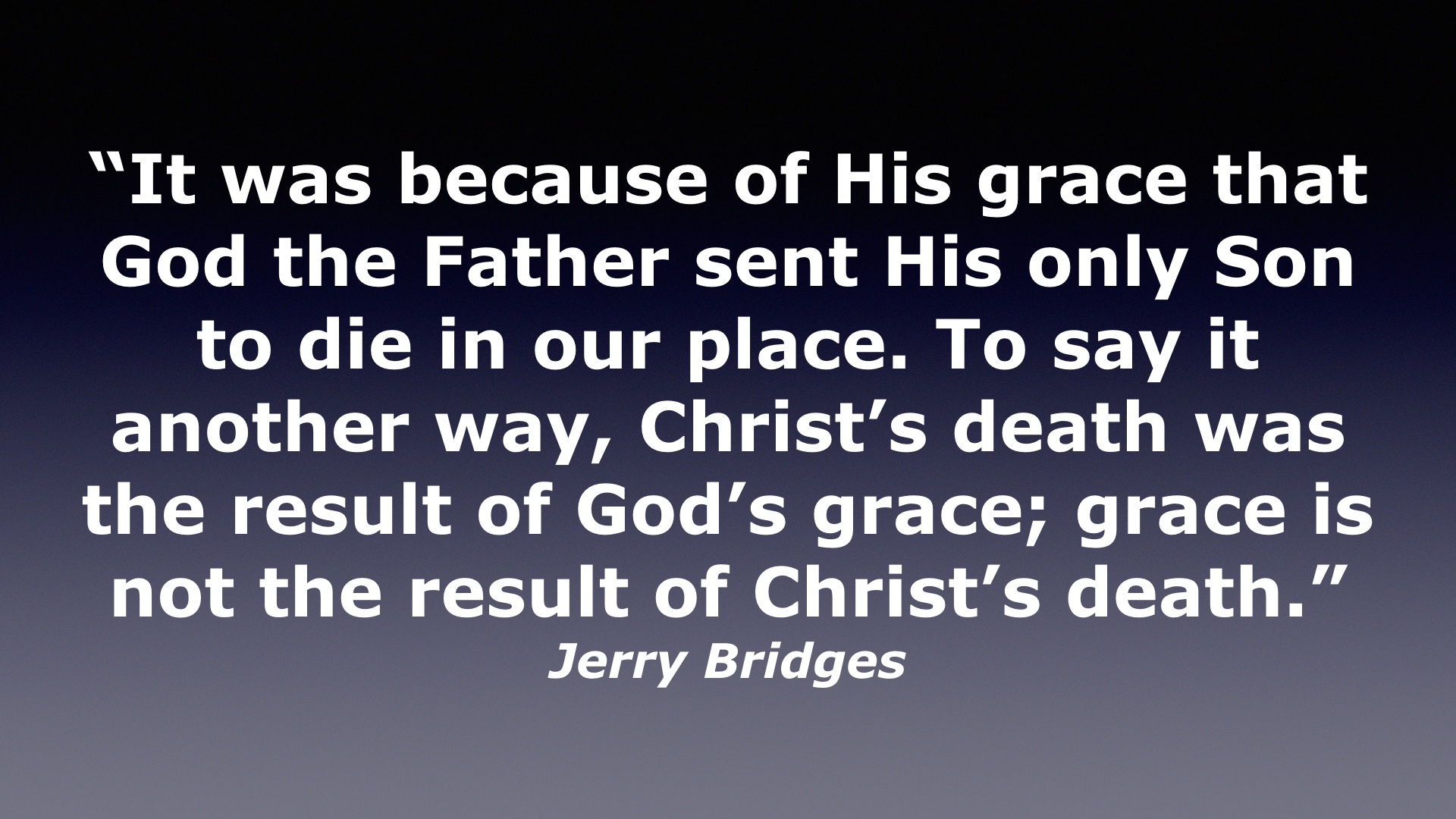
“It was because of His grace that God the Father sent His only Son to die in our place. To say it another way, Christ’s death was the result of God’s grace; grace is not the result of Christ’s death.” —Jerry Bridges

Don’t allow the devil’s lies of your unworthiness keep you from missing out on this truth. All of us are unworthy of God’s favor. But God demonstrated that He was for us when Jesus died on the Cross in our place. Now there is no more guilt, no more condemnation, absolutely nothing standing in the way of all of God’s unmerited favor because 

GOD IS FOR YOU! 

Join me next Sunday as we continue with our series called God’s Favor. You can either join me in person or on Facebook Live.

Saturday In The Proverbs—Don’t Do This … But Do This (Proverbs 3)

[Each chapter in the Book of Proverbs contains thoughts that fit into a theme; they are not just random thoughts gathered together. In this “Saturday In The Proverbs” series, I will share a theme that I see in each chapter. But the cool thing about God’s Word is that you may see an entirely different theme. That’s great! If you do, I would love for you to share it in the comments below.]

My son, do not … but … (Proverbs 3:1).

This chapter of Proverbs is filled with these contrasts—don’t do this, but do this instead—and then Solomon shared the blessings that follow when we do the right thing. 

Don’t forget God’s Word BUT keep it in your heart. Blessing—long life and peaceful days. 

Don’t lose sight of mercy and truth BUT find ways to remind yourself. Blessing—favor with God and man.

Don’t lean on your own understanding BUT lean on God’s wisdom. Blessing—God’s direction.

Don’t become enamored with yourself BUT fear God and avoid evil. Blessing—health and strength.

Don’t hoard God’s gifts to you BUT honor God with your possessions. Blessing—overflowing blessings.

Don’t despise God’s correction BUT learn from it. Blessing—wisdom, understanding, happiness.

Don’t forsake God’s wisdom BUT keep it squarely in front of your eyes. Blessing—grace, safety, security, sweet sleep, no fear, confidence.

Don’t withhold good from your neighbor BUT love your neighbor. Blessing—God’s blessing in your home.

Bottom line: Don’t do it your way, but do it God’s way!

Thursdays With Oswald—Isaiah 24-29

Oswald ChambersThis is a weekly series with things I’m reading and pondering from Oswald Chambers. You can read the original seed thought here, or type “Thursdays With Oswald” in the search box to read more entries.

Isaiah 24-29

[These are notes on Oswald Chambers’ lecture on Isaiah 24-29.] 

     The Bible reveals that the material world has been blighted by reason of man’s sin. … Man was intended by God to govern Nature (see Genesis 1:26); instead, he has infected it with his sin and it has become a partaker of the curse with him, so that “the whole creation groans and travails in pain together until now.”

     Men say “We are going to build a holy city on this earth”—you cannot; the earth is infected, it is a diseased chamber, and the holy city will never be on it until God has purged it with fire and taken the epidemic out of it. … God cannot bring in the Millennium by moral renovation, but only by cremation…. 

     The great note of the Bible revelation is not immortality but Resurrection. The doctrine of the Resurrection is that something comes from God Himself direct into the dust of death. … He has swallowed up death forever, the sovereign Lord will wipe away the tears from all faces; He will remove the disgrace of His people from all the earth. The Lord has spoken. In that day they will say, ‘Surely this is our God; we trusted in Him, and He saved us. This is the Lord, we trusted in Him; let us rejoice and be glad in His salvation’ (Isaiah 25:8-9). … 

     The judgments of God are for another purpose than the vindictive spirit of man would like to make out. … You never find that spirit in the prophets; if there is destruction and death it is for one purpose only—deliverance. God is on the line of salvation, not of damnation; He only damns the damnable things. … 

     In our own day we seem to have come to the conclusion that God has made a number of blunders and we have to put them right; we have private notions of our own which if put down in black and white would prove that we do not believe God is intelligent in allowing the history of the world to go on as it has, in allowing sin and war. … We won’t see that behind the whole thing is the wisdom of God, that neither bad men nor the devil himself can do one thing without the direct permission of God. … 

     The devil likes to make us believe that we are in a losing battle. Nothing of the sort! We have to overcome all the things that try to obscure God. The rugged truths of Isaiah point out not only the appalling state of the world as it is, but that we have to live a holy life in it by the power of God, not a sequestered life in particular temples or rituals, but real genuine magnificent men and women of God, no matter what the devil or the world or the flesh may do.

From Notes On Isaiah 

Are you letting God be God? Are you letting God resurrect you and make you holy? Are you giving in to the lie of the devil that you are losing the battle, or are you letting God speak to your mind that you are one of the real genuine magnificent men and women of God who are shining His light and love in a diseased world? 

God’s Favor

What if I were to tell you that God is for you? 

What if I were to tell you that God wants to bless you? 

What if I were to tell you that God’s favor is constantly pursuing you? 

Well, here’s me telling you that it’s all true! 

“Since God did not spare even His own Son but gave Him up for us all, won’t He also give us everything else?” (Romans 8:32). 

Why would God do this? Because if you feel distant from Him, how can you glorify Him? If you feel disconnected from His love, how will you draw others to Him? If you feel like your relationship with Him is hanging by a thread, how can you happily abide in His presence? 

Knowing God’s favor is the key to living the abundant life Jesus purchased for you on the Cross! 

Join me this Sunday as we begin a new series exploring the wonderful depths of God’s favor. You can join me in person at Calvary Assembly of God, or tune in on Facebook Live at 10:30am Sunday morning.

If you missed any of the messages in this series, you can catch up here:

5 Quotes From “Light And Truth—The Old Testament”

I like to think of Horatius Bonar as a tour guide as I read through the Bible, pointing out themes and insights I might have otherwise missed. Check out my full review of Light and Truth—Old Testament by clicking here. 

The elders [1 Chronicles 21:16]. They acknowledge the stroke and the sin: ‘It is the Lord.’ They clothe themselves in sackcloth, they fall upon their faces. So far as we know, they had not shared David’s sin, yet they at once place themselves by his side in confession and humiliation. David had sinned (v. 8), Israel had sinned (2 Samuel 24:1). They identify themselves with both. It is thus that we should take up a ruler’s sin, or a brother’s sin, or a nation’s sin; not blazoning it abroad in private gossip, or in the newspapers, but taking it on ourselves, and carrying it to God.” 

“We do great injustice to the Old Testament saints and to their privileges, and no less so to the God who made them what they were, when we conceive of them as possessing an imperfect justification, or an imperfect and uncertain knowledge of their justification. Paul’s declaration was explicit on this point: ‘I know Whom I have believed’; and yet it was not a jot more explicit than that of Job: ‘I know that my Redeemer lives.’ When Paul said, ‘It is God that justifies, who is he that condemns?’ he was only speaking what Job had spoken in ages before: ‘I know that I shall be justified. Who is he that will plead with me?’” [Job 13:18-19]

“Everything in God’s character, has by the Cross of Christ been turned into a reason for trusting Him. The more man knows of Him the more he trusts. Trust is the natural and inseparable response of the soul to the divine revelation of the character of God. It is not what man sees in himself, of his good deeds or good feelings, of his graces, or his repentance, or his regeneration, or his faith; but what he sees in God, that calls out confidence.” 

“It is with no distant, unheeding God that we have to do; but with that God who fixes the bounds of our habitation, who counts our hairs, who feeds the ravens, notes a sparrow’s death, clothes the lilies of the field. He is nearer to us than the nearest earthly object or being; more closely in contact with us than we are with one another.” 

“We disjoined God from creation, and so see nothing in it of divine life and power. … The separation of God from His works is one of the awful features of human unbelief. How much more of Him should we know, were we to interpret His works aright. … These skies of His are not bent over us in beauty without a meaning. These seas of His do not roll for nothing. These flowers of His are not fragrant and fair for nothing. They do not say to us, ‘God is your enemy, He hates you’; but ‘God is your friend, He pities you, yearns over you, wishes to make you happy.’ How full a gospel does creation to preach to us, according to its kind and measure!”

Everyone’s A Critic

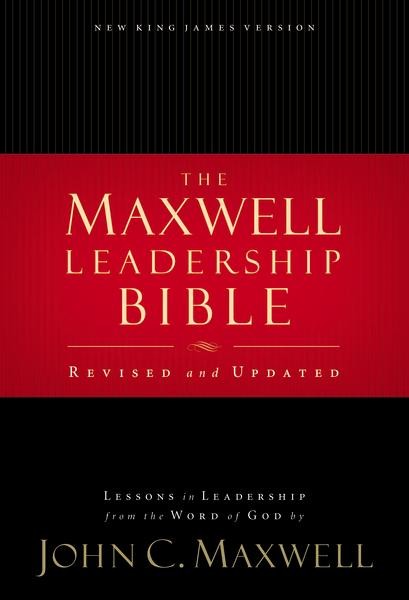
These are wise words from John Maxwell in The Maxwell Leadership Bible

Then Miriam and Aaron spoke against Moses because of the Ethiopian woman whom he had married; for he had married an Ethiopian woman. (Numbers 12:1)

Leaders can bank on two truths. First, they will be criticized. Second, criticism always changes the leader. Unhappy people tend to attack the point person.

Moses’ only family criticized him. Notice what God and Moses teach us on how to handle criticism (Numbers 12):

  1. Maintain your humility. (v. 3)
  2. Face the criticism squarely. (v. 4)
  3. Be specific about the issue. (vv. 5-8)
  4. Lay out consequences. (vv. 9, 10)
  5. Pray for the criticizers. (vv. 12, 13)
  6. Restore them when appropriate. (v. 14)

Beyond that, consider the ways leaders should handle criticism:

  1. Understand the difference between constructive and destructive criticism.
  2. Look beyond the criticism to see the critic.
  3. Guard your own attitude toward the critic.
  4. Keep yourself spiritually in shape. Associate with people of faith.
  5. Wait for time to prove the critic wrong.
  6. Concentrate on your mission; change your mistakes.

You might also want to check out—

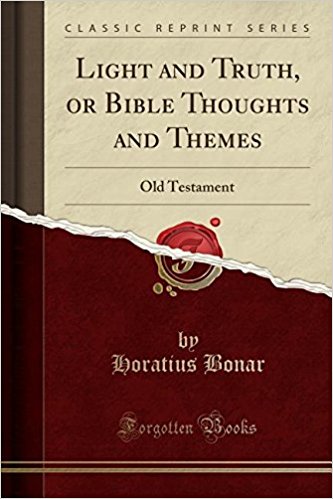
Light And Truth—The Old Testament (book review)

Horatius Bonar is a brilliant commentator on Scripture! His insights are on full display in Light And Truth—The Old Testament. 

But I do have one complaint about this book: it’s too short! Bonar has four volumes of commentary on the New Testament (the Gospels, Acts and the Larger Epistles, the Lesser Epistles, and Revelation), but sadly only one volume for all of the Old Testament. 

Bonar’s style is not an exhaustive verse-by-verse—or even chapter-by-chapter—commentary on Scripture, but more of a theme-by-theme. Having read the four New Testament volumes first, I knew what to expect when I picked up this book on the Old Testament. Although at times he may remain silent on large swaths of Scripture, when he does spot something that moves his pen to action, it is brilliant insight. 

It bears repeating something I noted in a previous review of Bonar’s commentaries: “The Bible is inspired by the Holy Spirit, so He is the best source of illumination when reading Scripture. But Horatius Bonar is clearly a man immersed in the overall message of the Bible, and guided by the Holy Spirit in his writings.” Bonar is an excellent tour guide to help you see items of significance as you journey through the Old Testament. 

If you would like to check out my earlier reviews of Bonar’s Light & Truth series: