Poetry Saturday—The 23 Psalme

The God of love my shepherd is,

             And He that doth me feed:
While He is mine, and I am His,
             What can I want or need?

He leads me to the tender grasse,
             Where I both feed and rest;
Then to the streams that gently passe:
             In both I have the best.

Or if I stray, He doth convert
             And bring my minde in frame:
And all this not for my desert,
             But for His holy name.

Yea, in death’s shadie black abode
             Well may I walk, not fear:
For Thou art with me; and Thy rod
             To guide, Thy staff to bear.

Nay, Thou dost make me sit and dine,
             Ev’n in my enemies sight:
My head with oyl, my cup with wine
             Runnes over day and night.

Surely Thy sweet and wondrous love
             Shall measure all my dayes;
And as it never shall remove,
             So neither shall my praise. —George Herbert

Thursdays With Spurgeon—Why Did Jesus Suffer?

This is a weekly series with things I’m reading and pondering from Charles Spurgeon. You can read the original seed thought here, or type “Thursdays With Spurgeon” in the search box to read more entries.

Why Did Jesus Suffer?

     Think much of all your Lord suffered, but do not overlook the reason for it. If you cannot always understand how this or that grief worked toward the great end of the whole passion, yet believe that it has its share in the grand why. Make a life-study of that bitter but blessed question, ‘Why have You forsaken Me?’ …

     Why, then, did God forsake His Son? I cannot conceive any other answer than this: He stood in our place. There was no reason in Christ why the Father should forsake Him—He was perfect and His life was without spot. God never acts without reason, and since there were no reasons in the character and person of the Lord Jesus why His Father should forsake Him, we must look elsewhere. … 

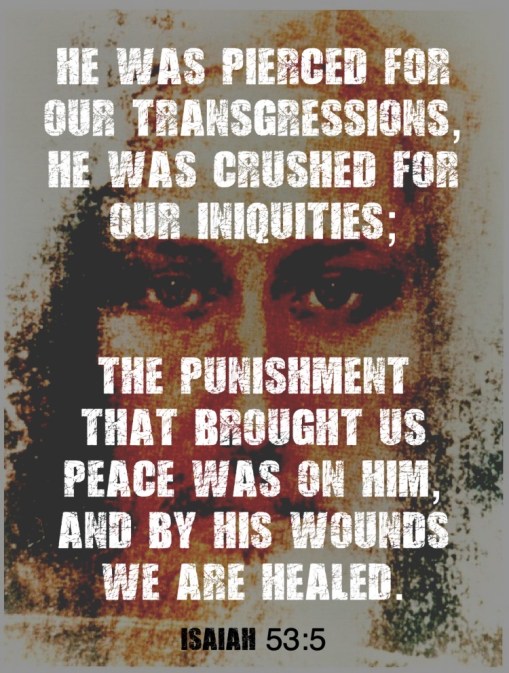
     He bore the sinner’s sin and He had to be treated, therefore, as though He were a sinner, the sinner He could never be! With His own full consent He suffered as though He had committed the transgressions that were laid on Him. Our sin and His taking it upon Himself are the answer to the question, ‘Why have You forsaken Me?’ …

     So long as the smile of God rests on the man, the law is not afflicting him. The approving look of the great judge cannot fall upon a man who is viewed as standing in the place of the guilty. Christ suffered not only from sin, but for sin. If God will cheer and sustain Him, He is not suffering for sin. The judge is not inflicting suffering for sin if He is manifestly encouraging the smitten one. There could have been no vicarious suffering on the part of Christ for human guilt if He had continued, consciously, to enjoy the full sunshine of the Father’s presence. It was essential to being a victim in our place that He should cry, ‘My God, My God why have You forsaken Me?’ … 

     Beloved, see how marvelously, in the person of Christ, the Lord our God has vindicated His law!

From My God, My God Why Have You Forsaken Me?

The great apostle Paul wrote to the church at Corinth about his singular focus—When I came to you, I did not come with eloquence or human wisdom as I proclaimed to you the testimony about God. For I resolved to know nothing while I was with you except Jesus Christ and Him crucified. (1 Corinthians 2:1-2) 

“Think much of all your Lord suffered, but do not overlook the reason for it,” Spurgeon said. 

That earth-quaking, darkness-inducing, temple-rattling, soul-piercing cry of Jesus—My God, My God, why have You forsaken Me?—could only have been uttered by someone perfect. I know plenty of reasons why God could have forsaken me, but Jesus knew only a single reason. 

Jesus did not suffer because of something He had done wrong, but because of all I had done wrong.

That Cross was stained with His blood for my sin. 

Because He was forsaken, I am now accepted in the Beloved Jesus (Ephesians 1:6-7). Think much on this: Jesus was crucified for you and me SO THAT we wouldn’t have to bear the penalty of our sin. Justice was satisfied. Now, by faith in His sacrifice on the Cross, we can come to God not only with our sins forgiven, but we can be accepted by Him as His children. 

My friend, think much on this. Resolve to know the unspeakable value of Christ crucified for you. And then rejoice greatly that you are accepted in the Beloved. If you would like to know more, please contact me.
Child Of God

You are the children of the Lord your God… (Deuteronomy 14:1). 

I am a child of the King of kings.
He is the King of Endless Supply.
He has no lack, no deficiencies, no quotas. 
He IS Abundance! 

So why would I live like a pauper—scraping by and scrambling to provide for myself? Why would I live like an orphan—with a scarcity mindset? 

My Heavenly Father knows what I have need of before I even ask, and He has already promised to supply for all of my needs (Matthew 6:8; Philippians 4:19).

As a child of God, I should have a joy-filled, peace-filled, abundance mentality. With this mindset I can…

I’m not trying to build a bankroll here. My inheritance is secure in Heaven. As a child of the King of kings, I can expect Him to provide all I need. 

I was young and now I am old, yet I have never seen the righteous forsaken or their children begging bread. (Psalm 37:25) 

With the same measure I use to bless others, I will be blessed. A good measure, pressed down, shaken together and running over, will be poured into your lap. (Luke 6:38) 

I need to live as a child of the Abundant King, not as a helpless orphan with no one on whom to call for help! 

The Artisan Collection Bible (book review)

How do “Bible” and “artisan” belong in the same title? They’re more connected than you may have previously thought, and The Artisan Collection Bible is the perfect place to explore this connection. 

If you were to ask someone what occupation Jesus had while He was on earth, it would be a safe bet that most people would say He was a carpenter. Indeed, the Greek word tekton is translated as “carpenter” for both Joseph and Jesus (see Matthew 13:54-56 and Mark 6:2-3). However, the consensus among Greek scholars today is that the word tekton is more likely to mean an artisan than just merely a wood-working carpenter. 

That makes sense, doesn’t it? After all, you would expect boundless creativity from the Creator. The One who fashioned our beautiful universe would certainly still be interested in expressing Himself in creative and beautiful ways. 

For myself, reading the Bible sparks in me a desire to be creative with words, and images, and colors, and designs. This is exactly what The Artisan Collection Bible gives you the space to do. And I literally mean “space.” 

One of the most attractive features to me about this Bible is the extra-wide margins along every single page. As you read God’s Word and the beauty of the Creator is illuminated in your heart and mind, you have readily available space to express your own creativity as worship to the Creator. Try crafting a poem, or turning the passage into a personal prayer, or drawing a picture that captures the vibrancy of God’s love letter written to you. The design of this Bible helps you to do more than just read the Word of God, it invites you to interact with the God of the Word. 

The Artisan Collection Bible would make an excellent gift for your creative friend or loved one. 

I am a Zondervan book reviewer and a member of the Bible Gateway Blogger Grid. As a book reviewer I received a free copy of this book from the book publisher. I am not compensated for my review. Although I may have received the book free of charge, I am under no obligation to write a favorable review. I am free to express my honest opinion about the book’s content. If I say it’s a good book, it’s because I think it’s a good book! 

Refined By The Fire

Where is God in our trials? When we call, Jesus runs to our cry. He is able to help us because He knows exactly what our cries sound like. Aren’t you glad He does?! 

While we are in these difficult times, you might find yourself asking a question I have asked, “Okay, God, I believe You are doing something, but what exactly are You doing?” 

I can’t tell you specifically what God is doing in your life, because your story is unique and special. But I can tell you that during the hard, painful chapters of our lives, God is accomplishing at least five things in all of us.

  1. God is opening our eyes to new paradigms

We will learn lessons in these fiery trials that we couldn’t possibly learn any other way. 

  1. God is building empathy in us which we didn’t have before

One dictionary defines empathy as “the power of understanding and imaginatively entering into another person’s feelings.” It’s only because of our trials that we no longer have to imagine what someone else is feeling, but instead we know exactly what they’re feeling and how we can help. 

  1. God is growing our patience 

It’s been said that patience is the “mother of all other virtues.” Paul said that “these troubles produce patience” (Romans 5:3). As God grows your patience, He will also help you to grow all of the other Christlike virtues. 

  1. God is refining His character in us 

Paul went on to add that not only does trouble produce patience, but “patience produces character” (Romans 5:4). During the times of difficulty and uncertainty, we become more aware of deficiencies in our character. 

  1. God is building in us an unshakable hope in His future grace 

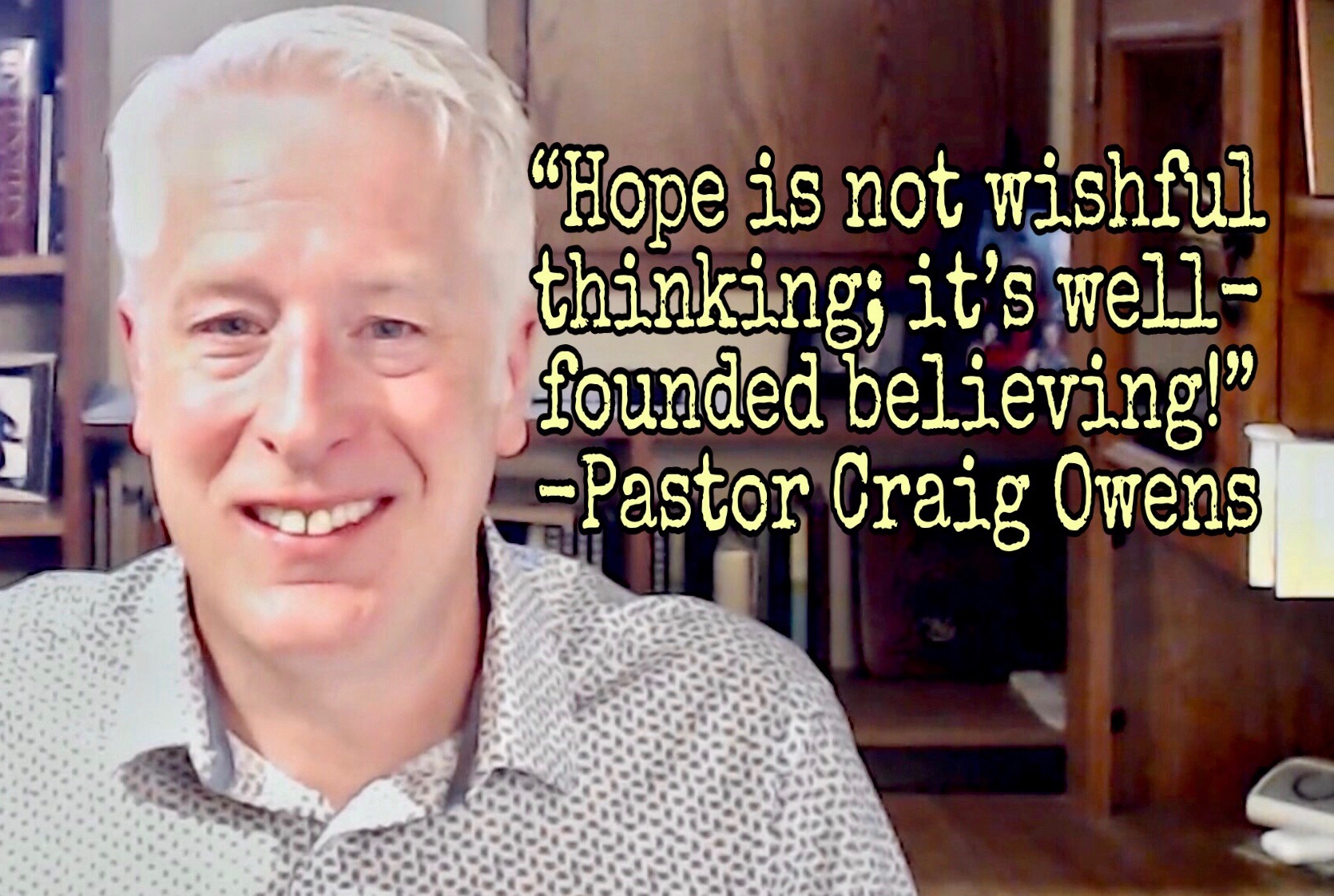
Hope is not wishful thinking; it’s well-founded believing! 

I want to circle back to that word refining because I think that best sums up what God is doing in our painful times. Romans 8 tells us—The Spirit Himself thus testifies together with our own spirit, assuring us that we are children of God. And if we are His children, then we are His heirs also: heirs of God and fellow heirs with Christ—sharing His inheritance with Him; only we must share His suffering if we are to share His glory. But what of that? For I consider that the sufferings of this present time—this present life—are not worth being compared with the glory that is about to be revealed to us and in us and for us and conferred on us! (Romans 8:15-18) 

So where’s God in this time of fire? He is overseeing our trial as a Perfect Refiner. Do you know how the silversmith knows he has purified the impurities from the silver ore? The silver is pure when he can see his own reflection in the silver! 

In the heat of your trial, God is close to you. He knows the perfect temperature and the precise time that it will take to allow His face to be seen in you! 

Sometimes you will see what God is doing through your furnace time, sometimes you won’t. But don’t ever bail out! God IS working! He is giving you a new perspective, a deeper empathy, more patience, an unshakable hope, and most of all—He is removing the impurities that will allow His face to be seen more clearly in you! 

Join me this Sunday as we continue to learn where God is in our darkest times. And if you didn’t catch the previous messages in this series, please check out The God That Runs To You and How Long Will This Last?

Poetry Saturday—O God Of Bethel

O God of Bethel, by whose hand
Thy people still are fed,
who through this weary pilgrimage
hast all our fathers led; 

Our vows, our prayers, we now present
before Thy throne of grace;
God of our fathers, be the God
of their succeeding race.

Through each perplexing path of life
our wandering footsteps guide;
give us each day our daily bread,
and raiment fit provide. 

O spread Thy covering wings around
till all our wanderings cease,
and at our Father’s loved abode
our souls arrive in peace. —Philip Doddridge

Thursdays With Spurgeon—Turn The Scriptures Into Your Cries

This is a weekly series with things I’m reading and pondering from Charles Spurgeon. You can read the original seed thought here, or type “Thursdays With Spurgeon” in the search box to read more entries.

Turn The Scriptures Into Your Cries

     My God, My God, why have You forsaken Me?’ … This cry is taken from ‘the Book.’ Does it not show our Lord’s love of the sacred Volume, that when He felt His sharpest grief, He turned to the Scripture to find a fit utterance for it? Here we have the opening sentence of the twenty-second Psalm. Oh, that we may so love the inspired Word that we may not only sing to its score but even weep to its music! … 

     When you are delirious with pain, think of your Bible. When your mind wonders, let it roam toward the mercy seat. And when your heart and your flesh fail, still live by faith and still cry, ‘My God, my God.’ … 

     Grief has small regard for the laws of the grammarian. Even the holiest, when in extreme agony, though they cannot speak otherwise than according to purity and truth, yet use a language of their own that only the ear of sympathy can fully receive.

From My God, My God Why Have You Forsaken Me?

Grief is a time to get real. As Spurgeon said, “Grief has small regard for the laws of the grammarian.” Grief is not a time to carefully choose our words. 

Get real with God in your prayer closet. Tell Him everything that frustrates you. I promise you, God is not going to fall off His throne and say, “What?! I had no idea you felt that way!” He already knows what’s in your heart, but it will do you much good to get it out. Much like someone with food poisoning needs to vomit out the poison, God will not be offended when you vomit out your “My God, my God, why have You forsaken me?” in His presence. 

Many scholars believe that Jesus probably sang the entirety of the 22nd Psalm from the Cross. Whether He did or not, listen to the assurances that Jesus had from just this psalm alone, even in the midst of His heart-wrenching cry—

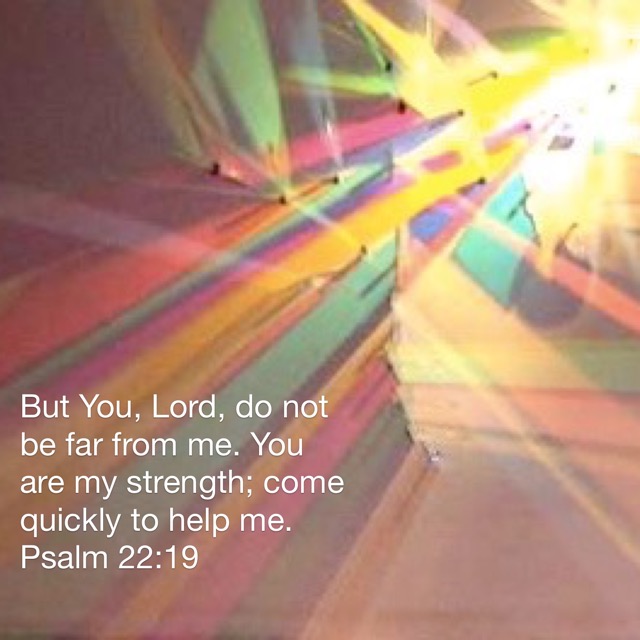
My God, my God, why have You forsaken me? Why are You so far from saving me, so far from my cries of anguish? My God, I cry out by day, but You do not answer, by night, but I find no rest. Yet You are enthroned as the Holy One; You are the one Israel praises. In You our ancestors put their trust; they trusted and You delivered them. To You they cried out and were saved; in You they trusted and were not put to shame. … But You, Lord, do not be far from me. You are my strength; come quickly to help me. … I will declare Your name to my people; in the assembly I will praise You. … From You comes the theme of my praise in the great assembly; before those who fear You I will fulfill my vows. The poor will eat and be satisfied; those who seek the Lord will praise Him. (vv. 1-5, 19, 22, 25-26) 

Jesus turned to the Scriptures to find the words He cried out to His Father in His darkest moment, and He invites you to follow His example. Make the psalms your own—turn them into your own prayers. God is close to you when you cry out, “My God!” to Him.

Hope-Filled Declarations

Whether it’s a doctor’s diagnosis of cancer, or a rapidly-spreading virus, or a painful relationship, Lynn Eib helps us keep these unexpected things in perspective. These may have taken us by surprise, but nothing takes God by surprise. No diagnosis nor prognostication can limit God’s power and love. 

As David learned in his painful time: “God has spoken once, twice have I heard this: that power belongs to God. Also to You, O Lord, belong mercy and loving-kindness” (Psalm 62:11-12). He is All-Powerful and All-Loving. 

Let these declarations Lynn made when receiving her cancer diagnosis help put things in perspective for you—

I refuse to believe my diagnosis is a death sentence.

I believe God is on the side of my healing because His unbreakable Word says so.

I believe treatment is effective against this illness, especially the skillful efforts of scientific medicine with my strategies for replacing lying thoughts with truth.

I believe my hormones and immune system are on the side of my healing and are even now working to overcome this illness.

I believe I am personally responsible for my treatment and for managing it.

I believe hope is a choice. I choose hope, not hopelessness.

My major aim is to have a mind fully submitted to the Spirit of God and His truth, not just to see better lab results or improvement in physical symptoms.

I believe I am on earth to share Christ, hope, and joy with others. I am here only to love others, regardless of my physical condition.

I believe that God’s will is good. 

I believe that He loves me and wants only the best for me—whatever He is allowing me to experience right now.

I can recover from this illness and live a rich, productive life of service. But whether I recover or not, I am going to leave this life someday regardless. Until then I can live a full life of service every day for as long as I am given. 

—Lynn Eib, in Peace In The Face Of Cancer 

On Living In A [COVID-19] Age

In 1948, World War II had come to a close and the nuclear age had dawned. The Cold War was beginning to ratchet up and the fear of nuclear annihilation was gripping people’s hearts. 

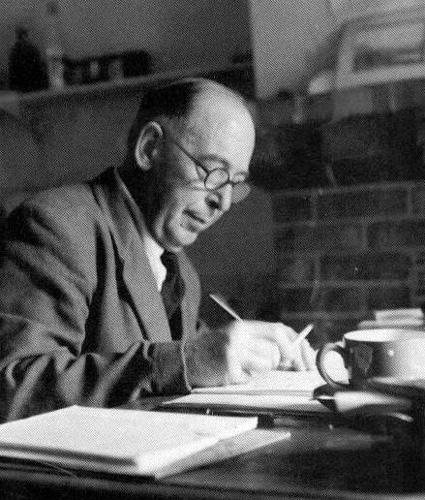
In this environment, C.S. Lewis wrote an essay entitled On Living In An Atomic Age. I have changed the word “atomic” for “COVID-19,” and I think you will see the relevance. 

In one way we think a great deal too much of the COVID-19 virus. “How are we to live in a COVID-19 age?” I am tempted to reply: “Why, as you would have lived in the sixteenth century when the plague visited London almost every year, or as you would have lived in a Viking age when raiders from Scandinavia might land and cut your throat any night; or indeed, as you are already living in an age of cancer, an age of syphilis, an age of paralysis, an age of air raids, an age of railway accidents, an age of motor accidents.”

In other words, do not let us begin by exaggerating the novelty of our situation. Believe me, dear sir or madam, you and all whom you love were already sentenced to death before the COVID-19 virus was invented: and quite a high percentage of us were going to die in unpleasant ways. We had, indeed, one very great advantage over our ancestors—anesthetics; but we have that still. It is perfectly ridiculous to go about whimpering and drawing long faces because the scientists have added one more chance of painful and premature death to a world which already bristled with such chances and in which death itself was not a chance at all, but a certainty.

This is the first point to be made: and the first action to be taken is to pull ourselves together. If we are all going to be destroyed by the COVID-19 virus, let that virus when it comes find us doing sensible and human things—praying, working, teaching, reading, listening to music, bathing the children, playing tennis, chatting to our friends over a pint and a game of darts—not huddled together like frightened sheep and thinking about viruses. They may break our bodies (a microbe can do that) but they need not dominate our minds.

For Christians, I would urge you to think in ways in which I am certain C.S. Lewis would agree: 

Set your minds on things above, not on earthly things. (Colossians 3:2) 

Finally, brothers and sisters, whatever is true, whatever is noble, whatever is right, whatever is pure, whatever is lovely, whatever is admirable—if anything is excellent or praiseworthy—think about such things. (Philippians 4:8) 

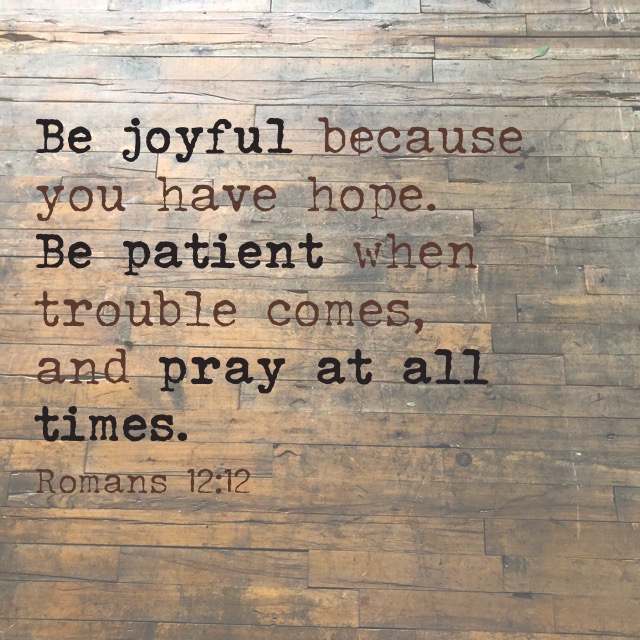
Be joyful because you have hope. Be patient when trouble comes, and pray at all times. (Romans 12:12)

Be Ready

…430 years, to the very day… (Exodus 12:41). 

The end of all things is near. Therefore be alert and of a sober mind so that you may pray. (1 Peter 4:7)

The Old Testament picture of slavery in Egypt is a picture of slavery to sin, with the Passover being the moment of salvation. 

But it is also a picture of the times in which we now live—people rely on their gods, not listening to the Word of God; a time that people live pleasing themselves, “living in debauchery, lust, drunkenness, orgies, carousing and detestable idolatry”; a time that the Judge is approaching and people are ignorant or apathetic about His arrival (see 1 Peter 4:1-6). 

The application of the blood of the sacrificial Passover lamb is a one-time choice (salvation), but the remembrance and lifestyle application is a series of ongoing, daily, even moment-by-moment choices. 

People will think it strange that Christians don’t join them in their worldly-focused lifestyle, but we must be alert and sober and prayerful. The Day is coming when God will fulfill everything “to the very day”—and no one can buy or bargain another moment. 

When God’s clock strikes, we must be ready! 

If you, dear Christian, are ready for The Day of the Lord’s appearing, then I plead with you to also be actively telling others to be ready to meet their King as well. May they be able to meet the very day with rejoicing because their beloved Savior has arrived, not with quaking fear because the All-Righteous Judge has arrived.