My book Shepherd Leadership: The Metrics That Really Matter releases September 28, 2021, and I am looking for some of my fellow bloggers to read an advanced copy of this book and post a book review. You can watch a trailer video we recorded for this book by clicking here.
This book was written to help pastors and leaders of non-profit organizations reevaluate their definitions of “success” in light of the principles seen in the Bible. I also share helpful strategies for these leaders to care for themselves, care for the flocks under their care, and raise up the next generation of shepherd leaders for their organizations. If you feel like you and your blogging audience would be interested in an advanced look at this book, let’s talk!
Obviously, I cannot send out an advanced reader’s copy to everyone, so please email me with your name and your blog’s URL, and I’ll get back in touch with you.
I’m just looking for an honest review and some insightful feedback on what you read. I would like to request that you post your review sometime during the month of September 2021.
Listen to the podcast of this post by clicking on the player below, and you can also subscribe on Apple, Spotify, or Audible.
Do you keep a journal? I’m not talking about a diary of your daily events, but a journal of your ongoing dialogue with God. This is a discipline I began over 25 years ago, and it’s been immensely helpful to me.
Every time you read the history of Israel in the Old Testament, you are really reading a written history—a journal—of what God did for His people.
In Luke 1:46-55, we read Mary’s song about the soon-to-be-born Jesus that someone journaled to record for posterity. The same thing is true for Zechariah’s song about his son John in Luke 1:67-79. I am sure that many people found great comfort in reading and recalling these songs, perhaps even Jesus Himself and John the Baptist.
Journaling has helped me at so many crucial points in my life. Especially when I needed to look back to be reminded of something God had spoken to me. I shared one example of this in my book Shepherd Leadership: The Metrics That Really Matter—
The board was making a major decision. They were considering a change in their leadership to one who had completely different credentials and training from all of their previous leaders. Because this change would be so momentous, the board interviewed me for more than four hours. When they finally felt they had deliberated long enough, they asked me to leave the room while they prayed and voted. I stepped out into the lobby for just a couple of minutes when the door opened again and they asked me to step back inside.
“Well, Craig,” the spokesman began, “we prayed and we feel you are the one God has selected for this position.” I told them I would be happy to accept their offer. After they prayed over me, I began to pack up my things to head home.
“Hold on a minute,” one of the board members said to me, “we’re about to discuss the budget, and we think it would be good for you to be a part of this discussion.” I agreed and resumed my seat at the table.
I was handed both the year-to-date financial report and the projected income and expenses for the remaining quarter of the year. “As you can see,” the treasurer began, “we are projecting a $70,000 loss for this year.” Then he turned to me and asked, “What are you going to do about that?”
I gulped, tried not to show that my stomach was doing flips, and said, “Honestly, I don’t know.” I paused, and since no one else said anything, I continued, “But I’ll let you know what we come up with.”
All the way home, I kept thinking, “What have I gotten myself into? I’m walking away from a successful business to oversee an organization that’s going to go bankrupt before I even get started?!” But then I began to remind myself of something else: God chose me.
When I returned home, I immediately went to my journal. I flipped to the page where I had written down all of the reasons why I had concluded that God chose me for this position. I looked at the way God had spoken to me and to my wife, and the way friends who knew nothing about this decision spoke a confirming word to me. I looked at the pages where I had written down the vision I believed God had given me for this new organization, and how the board chairman’s handwritten vision for the organization matched mine thought-for-thought. Looking at these words—at the specific dates and ways God had spoken, and confirmed, and re-confirmed His direction—gave me the confidence to step into this assignment, even when facing such a huge financial mountain. (excerpt from chapter 5 “A Humble Leader’s Attitude Adjustment”)
If you haven’t journaled in the past, I encourage you to begin this spiritual discipline today. I can tell you from both what I read in the Bible and my own personal experience how valuable this will be for you.
Listen to the podcast of this post by clicking on the player below, and you can also subscribe on Apple, Spotify, or Audible.
When you’ve been at a church service have you ever asked yourself, “What are we doing here? What exactly is ‘church’? What are we supposed to be doing?”
Some people think church is saints going out to tell people about Jesus, and some people think church is saints coming together to hear about Jesus (see Matthew 28:19-20; 1 Corinthians 11:18). I think this is an either-or trap.
I think a better way of looking at this is “both-and” and “so that”: BOTH coming to a gathering of believers so that we can be equipped to go out AND going out to tell people about Jesus so that we can bring new disciples into the church.
Our foundational truth statement says: The Church is the Body of Christ, the habitation of God through the Spirit, with divine appointments for the fulfillment of her great commission. Each believer, born of the Spirit, is an integral part of the General Assembly and Church of the Firstborn, which are written in heaven.
To help us see where we play a vital role in all of this, the Bible gives us three pictures of the church:
All of these pictures speak of multiple parts making up one unified, healthy whole. Remove any part or any function, and the whole thing is diminished. All of these pictures also speak of intentionality. No one becomes healthy by accident, or builds a sound structure by accident, or enjoys a fulfilling marriage by accident. Health, soundness, and fulfillment all result from being intentional about our choices and interactions.
I believe these three pictures also help us see what the church isn’t and is.
A healthy church isn’t about numbers
A healthy church isn’t about the day of the week that we meet
The first Church in the New Testament showed us how they followed the example of Jesus. Before trying to fulfill the Great Commission of going into all the world, they first obeyed the directive from Jesus to stay in Jerusalem until they were empowered by the Holy Spirit. Then we see an intentionality, and an empowerment, and a complete reliance on the Holy Spirit in everything they undertook from that point on.
It’s not about going to “my church” or going to “your church.” It’s about being the Church (with a capital “C”)—the Body of of Christ, the Building of Christ, the Bride of Christ.
Bottom line:
Christians are being the Church when they are intentionally living in a way that makes Jesus known.
This is a weekly series with things I’m reading and pondering from Charles Spurgeon. You can read the original seed thought here, or type “Thursdays With Spurgeon” in the search box to read more entries.
Listen to the podcast of this post by clicking on the player below, and you can also subscribe on iTunes or Spotify.
A Word To Preachers
I planted, Apollos watered, but God gave the increase. So then neither he who plants is anything, nor he who waters, but God who gives the increase. Now he who plants and he who waters are one, and each one will receive his own reward according to his own labor. For we are God’s fellow workers; you are God’s field, you are God’s building. (1 Corinthians 3:6-9)
Paul is a laborer, Apollos is a laborer, Cephas is a laborer, but not so much as a foot of the farm is Paul’s, nor does a single parcel of land belong to Apollos, or the smallest allotment to Cephas. ‘You are Christ’s, and Christ is God’s’ (1 Corinthians 3:23). The fact is that in this case the laborers belong to the land and not the land to the laborers, ‘for all things are yours: whether Paul or Apollos or Cephas’ (3:21-22). …
Brothers, a laborer may work very hard at a whim of his own and waste his labor, but this is folly! Some discourses do a little more than show the difference between a Tweedledum and Tweedledee, and what is the use of that? …
All God’s laborers must go to Him for their seed, or else they will scatter tares. All good seed comes out of God’s granary. If we preach, it must be the true word of God or nothing can come of it. … A sermon is vain talk and dreary word spinning unless the Holy Spirit enlivens it. …
Here we have mention of a personal service and a personal reward: ‘Each one will receive his own reward according to his own labor.’ The reward is proportionate, not to the success, but to the labor! Many discouraged workers may be comforted with that expression. You are not to be paid by results, but by endeavors.
From Farm Laborers
My dear preacher friend, God sees you. He has placed you in the field where He needs you to be, and He has given you the skills you need to have to labor for Him. Never doubt that!
You may be the one breaking up hard ground, or the one sowing seed, or the one watering, or the one bringing in the harvest. Wherever you are and whatever you are doing, rely on the strength God gives you. He will illuminate His Word to your heart first so that you can share a timely word with those under your care. Then He will send the Holy Spirit to enliven all that you preach.
God has given you the tools and skills, now you must diligently supply the effort. Don’t become discouraged by what seems to be a lack of “success.” As God tells us through Paul, He will reward your faithful labor in His field.
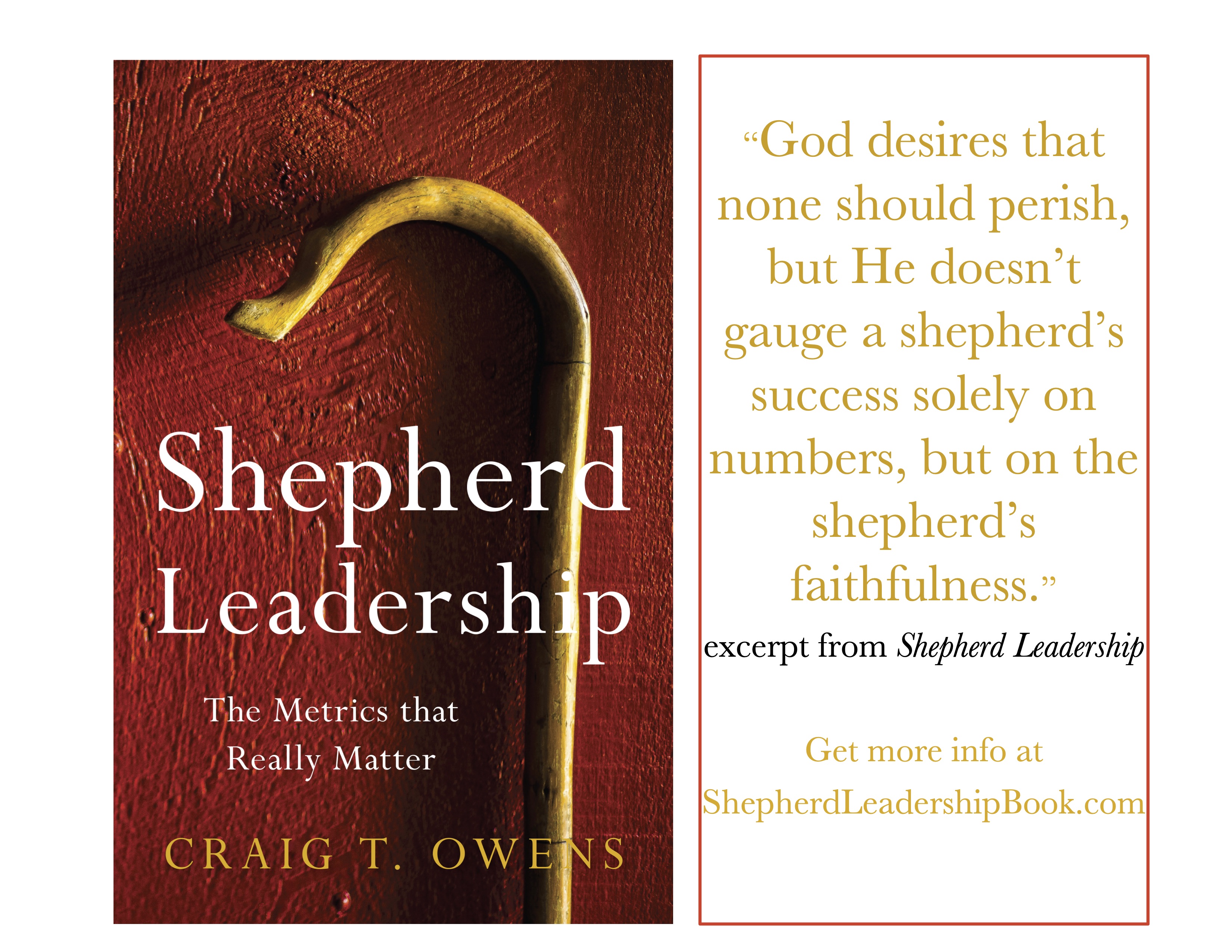
My book Shepherd Leadership: The Metrics That Really Matter elaborates on this point. The thoughts in this book will remove from you the burden of trying to live up to any unbiblical metric of “success” in your ministry. I hope you will get a copy of this book! Check out ShepherdLeadershipBook.com for more details.
Listen to the podcast of this post by clicking on the player below, and you can also subscribe on Apple, Spotify, or Audible.
What does it mean to be a Christian? Or maybe I should ask it this way: what do Christians do to show that they are indeed a Christian?
Lots of people have come up with must-do and must-not-do lists, but is this the way Jesus lived?
I love the simple summary of the life of Jesus that Peter gave: “How God anointed Jesus of Nazareth with the Holy Spirit and power, and how He went around doing good and healing all who were under the power of the devil, because God was with Him” (Acts 10:38). Jesus was so overflowing with love and the Holy Spirit that He couldn’t help but make a difference wherever He went.
It’s simple, but not easy. Look at how people lashed out at Jesus even while He was healing, teaching, loving, and forgiving.
Or what about the simple description Jesus gave of an activity that brought applause from our Master: “You saw someone who was hungry and you fed him” (see Matthew 25:34-40).
Simple, but not easy. Look at the logistical challenges in buying food, preparing it, and getting it to those who are indeed hungry.
The churches of the Cedar Springs Ministerial Association are trying to live out this simple Christianity through our weekend food program. Nearly half of the students in our school district are eligible for free or reduced meals, which means they are having breakfast and lunch provided to them at school Monday through Friday.
That also means that they are in need of food on the weekends. This is where our churches step in. We provide healthy breakfast, snack, and dinner items for these students to eat during the weekend.
It’s simple, but it’s not easy.
We need lots of help—from food and financial donations, to shoppers, to shelf stockers, to small teams who prepare breakfast and snack packs, to larger teams who assemble the whole weekend’s supply, to those who deliver the food to the school buildings. There are so many places to get involved.
If you live in West Michigan, would you please help us? We have set up a separate website to keep people updated on current food needs and volunteer opportunities. We also have a link for online financial gifts. If you would like to make a recurring donation, just $20 per month will provide healthy food for a student for the whole month. Whatever you can do with your time or financial support will be a blessing to so many!
Let’s take advantage of this simple way to show the love of Jesus to these families in our community.
what is the difference between unity and conformity, and how do leaders promote the right thing [7:20]
we need to help independent people choose to be interdependent [8:27]
we unpack a quote Greg shares about trading doing what we want to do for doing what we ought to do [8:54]
we don’t want to be told what to do unless we understand why we need to do it—helping a team grasp this is how leaders get buy-in [10:23]
Greg shares a quote from Francis of Assisi about living out what we are talking about [12:00]
Check out this episode and subscribe on YouTube so you can watch all of the upcoming episodes. You can also listen to our podcast on Spotify and Apple.
Listen to the podcast of this post by clicking on the player below, and you can also subscribe on Apple, Spotify, or Audible.
I call on the Lord in my distress, and He answers me (Psalm 120:1).
What power and love is packed into this short verse! “I call…He answers.” There’s nothing else I need to do—just called to my God. There is no delay or deliberation on His part—He answers me.
“Distress” comes from the root word that can mean a tight spot, or it can mean a hard pebble. The distress we face may be a full frontal assault or it may be a nagging, almost indefinable, annoyance. Since Psalm 120 is a Psalm of Ascent, whatever the distress is, the psalmist feels like it is keeping him from going up into God’s presence. He lists three known distresses:
Deceit—people around him were lying or distorting the truth.
Separation—he wants to ascend into God’s presence but feels held back by those among whom he lives.
Turmoil—he’s looking for peace, but everyone around him wants to stir up trouble and controversy.
What about those annoying, hard-to-identify distresses? In the next Psalm of Ascent the call is for us to trust God and to not worry. But in this psalm, there’s no calling to God for help because no specific threats have been identified. Still we learn that our Heavenly Father, who does not slumber, perpetually watches over us. Our Father knows our needs before we can even perceive them, and He is fully prepared to handle them.
So we are promised:
I can sleep securely
I can travel safely
I can work each day confidently
I can pass through the night unharmed
I can move around without having to look around
The LORD will watch over my coming and going both today and forevermore!
Father, may any distresses I experience today send me ascending into Your presence. Whether I know what the threats are or not, I know that You are watching over me and will answer me whenever I call to You. I thank You for this confidence that I have both today and forevermore!
Listen to the podcast of this post by clicking on the player below, and you can also subscribe on Apple, Spotify, or Audible.
One of the things I enjoy about my Apple Watch is the connection I have with others who also use an Apple Watch. For instance, I get notified when my wife has finished a workout, and one of the pre-set replies I could choose is, “I’ve got questions!” That’s a funny way of me saying, “How did you complete that workout?!”
In Psalm 75 and Psalm 76, Asaph tells us how God will deal with the wicked. But then Psalm 77 begins with Asaph using words like, “My soul refused to be comforted, my spirit is overwhelmed,” and then he launches into the tough questions like: “How long is this going to last? Has God forgotten me? Have I fallen out of favor with God? Has His mercy dried up? Can God keep what He has promised? Is God angry with me?” When I read all this, I feel like saying, “Asaph, I’ve got questions!”
Yet, these complaints of Asaph ring true to real life. Like when a friend called me last week and started our conversation by asking, “Why can’t things just go easy for me?”
Here’s the simple answer: The Story isn’t over yet. We are in a battle, and the enemy of our soul is still trying to take us out, or at least shut us up.
In Psalm 77, Asaph tells his story to Jeduthun (a Levite worship leader whose name means praising) in four chapters, with a Selah for each of the breaks between the chapters.
Chapter 1—Distress (vv. 1-3)
The word distress means confronted by an adversary. Ever been there? Every follower of God has been, so Asaph invites us to Selah: pause to contemplate things like (a) Is this distress causing me to reevaluate the foundation on which I stand? (b) What is it God is shaking in my life? When God shakes things up, it is to cause us to remember and muse about the ONLY sure foundation that can withstand any storm (see Matthew 7:24-27).
Chapter 2—Questioning (vv. 4-9)
Notice the words Asaph uses: thought, remembered, mused, inquired. He is asking those tough questions, but he is asking them in a way that he can carefully consider the answers. That means he is really taking a Selah pause with each question. I think he has come to this conclusion: “Aren’t all these really just rhetorical questions? And isn’t the answer to all of them a resounding ‘NO!’?” If you aren’t sure the answer to all of these questions is no, please read Romans 8:31-39.
Chapter 3—Recalling (vv. 10-15)
Notice the continuation of the words: thought, remember, meditate, consider. He also asks another question in v. 13 which he then answers in the next two verses. His call to Selah here is another pause to reflect: “Has God lost His power? Has He changed His mind?” And once again the answer is a loud and clear, “NO!” (see Isaiah 59:1; Hebrews 13:8)
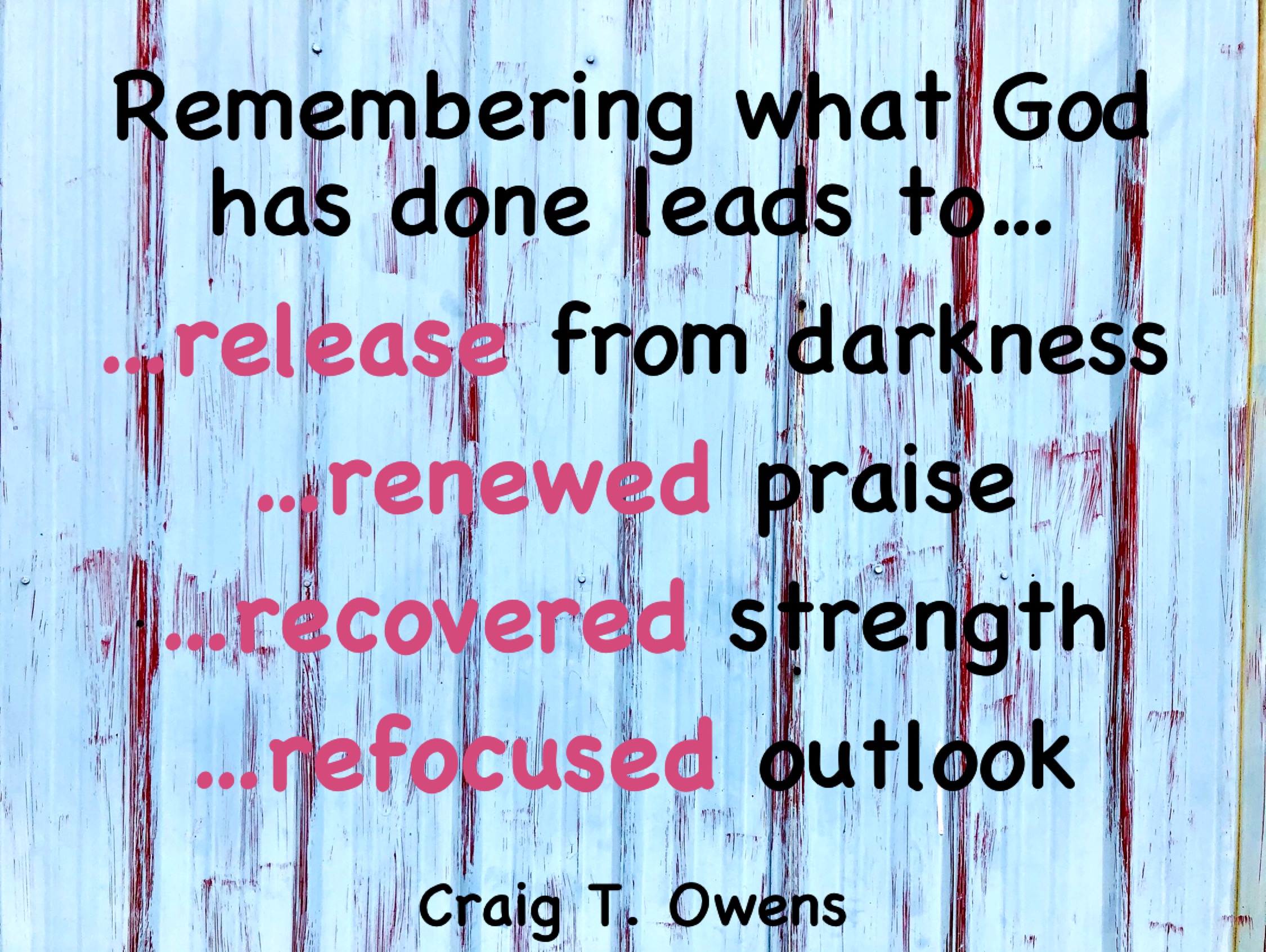
One of the important takeaways from this stanza of Psalm 77 is this: Looking back in gratitude at what God has done allows me to look forward in hope to what He is still going to do. My remembering what God has done in the past leads to:
Release from the darkness
Renewed praise
Recovered strength
Refocused outlook
Chapter 4—Hope (vv. 16-20)
Asaph says, “Look what God did! And since He is the same today as He was yesterday, guess what He’s still able to do!” We know this because the Bible says, “For no matter how many promises God has made, they are ‘Yes’ in Christ. And so through Him the ‘Amen’ is spoken by us to the glory of God” (2 Corinthians 1:20).
Remember I said earlier that God isn’t done telling His story yet? God isn’t done yet, He knows His Story, and His Story is still being told. But He’s also already told us how His story will end (see Revelation 21:4-6). And the end of His story is really just the beginning of the Real Story!
C.S. Lewis said it this way in the closing words of The Last Battle:
“And for us this is the end of all the stories, and we can most truly say that they all lived happily ever after. But for them it was only the beginning of the real story. All their life in this world and all their adventures in Narnia had only been the cover and the title page; now at last they were beginning Chapter 1 of the Great Story, which no one on earth has read; which goes on forever; in which every chapter is better than the one before.”
When you find yourself saying, “I’ve got questions: How long is this going to last,” Selah to remember that the Story isn’t over yet. The Storyteller knows how it ends, and He promises us: But what of that? For I consider that the sufferings of this present time—this present life—are not worth being compared with the glory that is about to be revealed to us and in us and for us and conferred on us! (Romans 8:18 AMP)



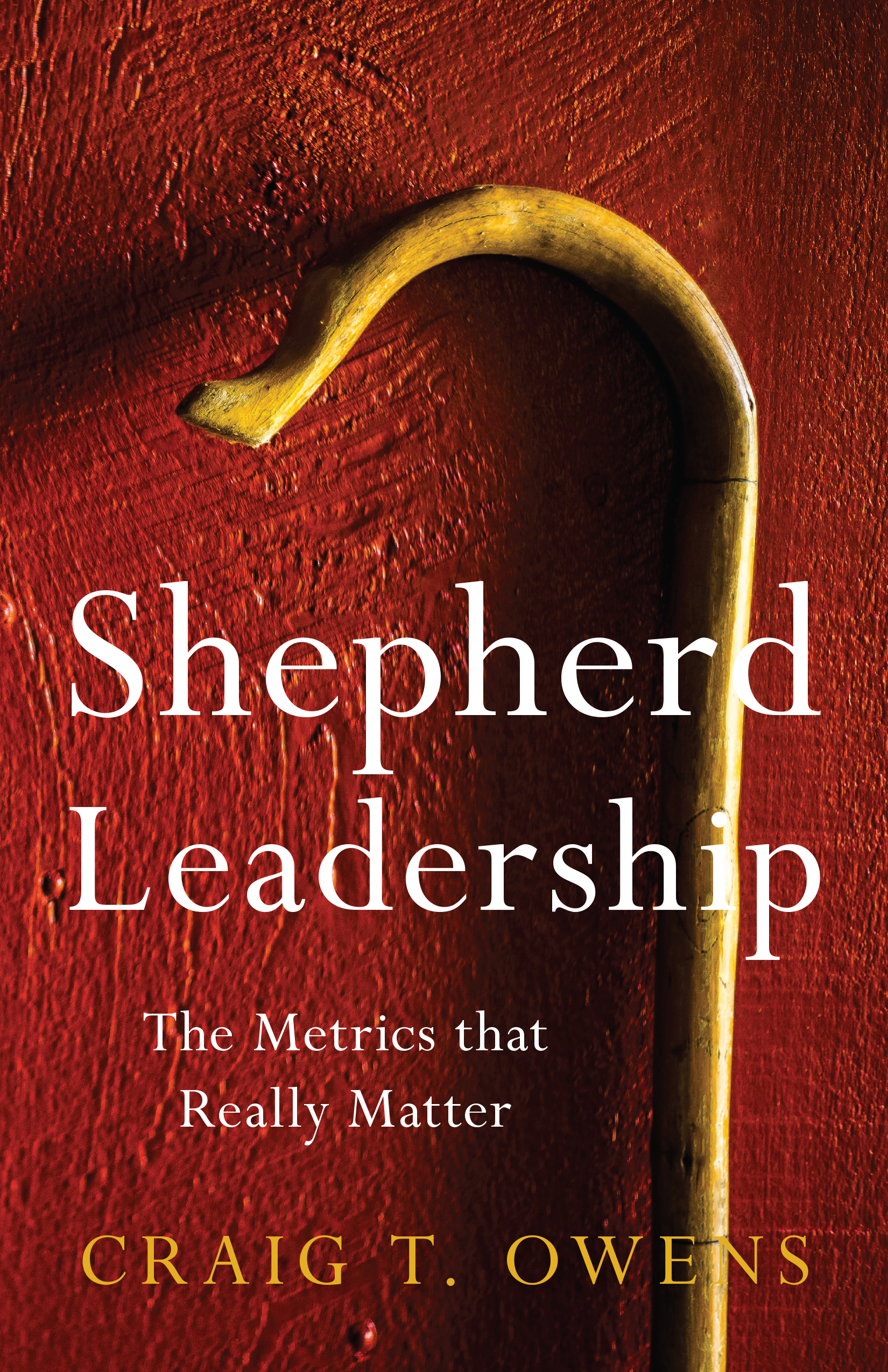 My book Shepherd Leadership: The Metrics That Really Matter releases September 28, 2021, and I am looking for some of my fellow bloggers to read an advanced copy of this book and post a book review. You can watch a trailer video we recorded for this book by clicking here.











 Craig T. Owens