Listen to the podcast of this post by clicking on the player below, and you can also subscribe on Apple, Spotify, or Audible.
I had a great time on the Ailbe Podcast with Rusty Rabon.
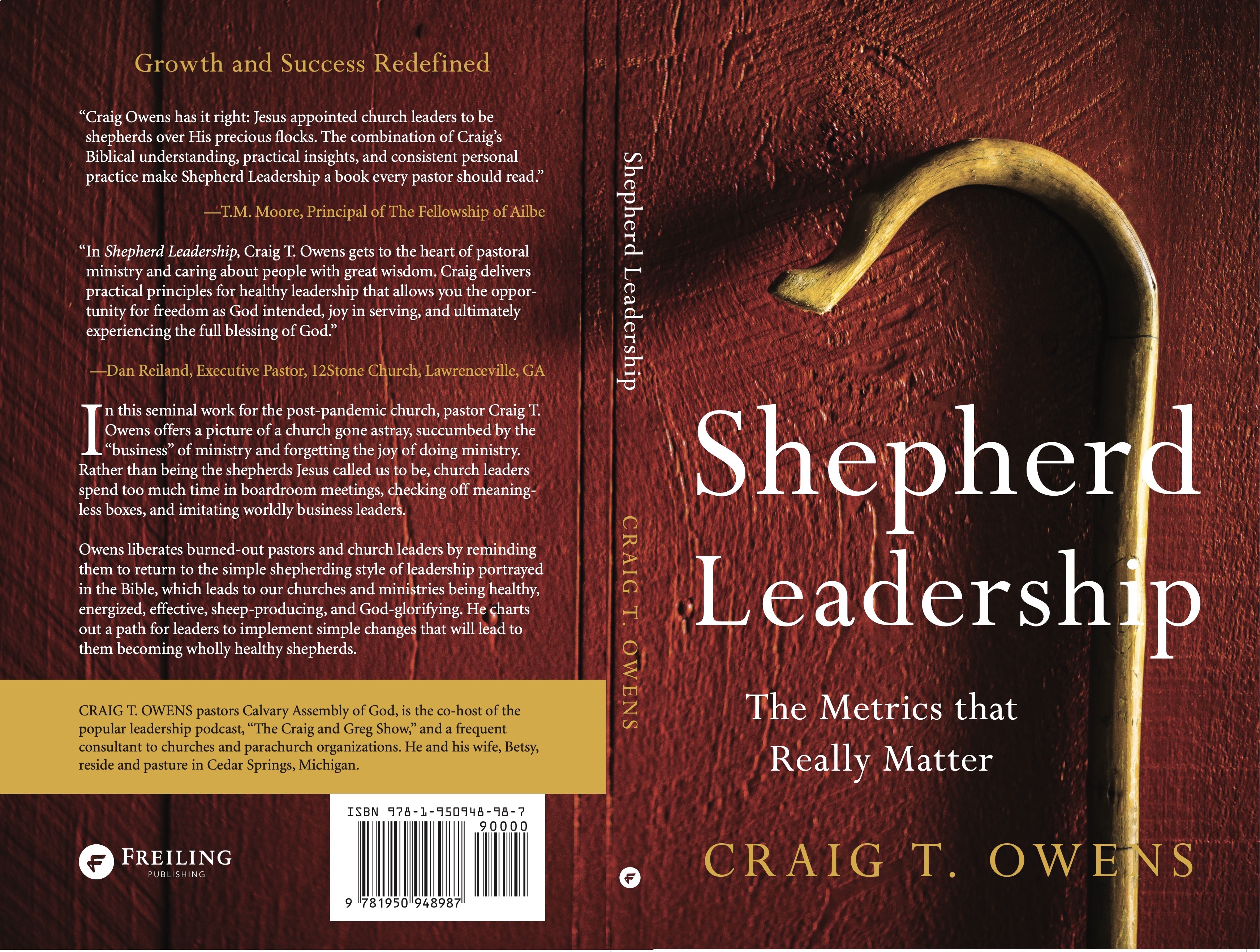
The reason I wrote Shepherd Leadership is because my heart was aching for my fellow pastors who were feeling frustrated maybe even to the point of contemplating resigning their churches. The principles I teach in this book are ones that will get all of us back to a biblical standard of what God says is successful in our ministries.
Toward that end, I love praying for pastors. Every week I send a Sunday morning prayer to my fellow pastors in my hometown to encourage them to find satisfaction in serving the sheep the Chief Shepherd has placed under their care.
As we wrapped up our time together, Rusty referred to a prayer I shared in my chapter entitled ‘Stick-to-it-iveness.’ This prayer is adapted from Psalm 23 and is intended to be a source of strength for pastors.
Take a listen…
I hope this prayer is helpful and energizing to you. I also hope that you will pick up a copy of Shepherd Leadership to infuse some more encouragement into your ministry efforts.
If you would like to check out the other clips I have already shared from this podcast, please check them out here. Shepherd Leadership: The Metrics That Really Matter is available in print or ebook, and in audiobook through either Audible or Apple.
In my book Shepherd Leadership, I tell a humorous but very enlightening story of a student who called me “Pasture Craig.” It was done innocently enough, but it taught me an invaluable lesson.
Check this out…
And since that day, I have never minded being called Pasture Craig because it reminds me of what I’m really supposed to be doing!
If you want to check out another hilarious story about my alter-ego Plungerman, please click here.
Shepherd Leadership: The Metrics That Really Matter is an excellent resource for both pastors and non-profit ministry leaders and is available in print or ebook, and in audiobook through either Audible or Apple.
Question marks invite a conversation; whereas, periods or exclamation points tend to end the conversation. Clearly, God enjoys dialogue.
God sometimes asks questions to get Zechariah to evaluate his surroundings or the prevailing culture. Sometimes God asks Zechariah a question to get him to clarify what he is seeing or thinking.
But without a doubt, most of the questions are posed by Zechariah to either God or to the angelic messenger who sometimes serves as Zechariah’s guide. Not once does God nor the angel tell Zechariah to hold his tongue. Zechariah’s questions are never belittled nor treated as though they were a bother. Nor are his questions ignored.
Rather, every single question is answered.
God enjoyed talking with Adam and Eve in the garden of Eden, He walked and talked with Enoch, He listened to the questions asked by Job and the psalmists, and here He engages Zechariah in conversation too.
Prayer is never designed to be a monologue—with us just speaking to God—nor is Bible reading designed to be a monologue—with just God speaking to us. Both prayer and Bible reading are used by the Holy Spirit to keep a dialogue active and engaging. You and I should never be afraid to approach God with our questions, nor should we be afraid to listen to the questions God asks us.
The dialogue between us and God builds an intimacy that cannot be developed in any other way. So keep asking those questions!
Listen to the podcast of this post by clicking on the player below, and you can also subscribe on Apple, Spotify, or Audible.
I’m a bit of a nut about the exactness of words, so one of my pet peeves is the incorrect use of imply and infer. “Imply” is something I do as the speaker; “infer” is something you do as the listener. Or you might say implying is like throwing and inferring is like catching.
A big problem arises when I infer something that you didn’t imply. Or even worse, when I infer something based on something you didn’t say. People will often say something like this, “Since Jesus didn’t specifically talk about ________ then it must be okay.” In logic, this would be called an argument from ignorance: concluding that an action must be acceptable because it has not been specifically stated to be unacceptable.
Statement #10 in our series asking “Is that in the Bible?” is—Love your neighbor. Is that in the Bible? Yes!
Later on, Jesus would add to this Deuteronomy 6:5—Love the Lord your God with all your heart and with all your soul and with all your strength—to answer the question about the greatest commandment of all.
In Leviticus 19, the Hebrew word for love means love in the broadest sense of the word, and neighbor means a friend or a fellow citizen. Unfortunately, the rabbis inferred that someone not a Jew was therefore an enemy and therefore not worthy of love. They further inferred that the opposite of love was hate.
Matthew Henry commented, “They were willing to infer what God never designed.”
Statement #11 is—Hate your enemy. Is that in the Bible? Yes, in the fact that it appears in print in Matthew 5:43, but it doesn’t appear in the Scripture that Jesus knew. It had become so ingrained in the thinking of people that they now assumed it was in the Bible.
In many ways, the Old Testament laws were easier to live out because they were all external and easy to measure, like don’t murder or don’t sleep with someone who isn’t your spouse. But Jesus made it a heart issue—He said lust is the same as adultery and hate is the same as murder.
Jesus also made love for enemies a heart issue. The word He used for love in the Greek is agape—the same word describing God’s love for His enemies in John 3:16—For God so LOVED the world, that He gave His one and only Son, that whoever believes in Him would not perish but would have everlasting life.
Jesus said our enemies were really our neighbors and were worthy of sacrificial love because they, too, were loved by God.
Matthew 5:44 is shortened in the NIV and has a footnote explaining that the longer verse was not seen in the earlier manuscripts. But given the fact that Jesus demonstrated everything found in the longer version of this verse, I think we are safe in using it. So let’s look at the response Jesus calls us to from the NKJV: But I say to you, love your enemies, bless those who curse you, do good to those who hate you, and pray for those who spitefully use you and persecute you.
Here’s what Jesus says it means for us to love our enemies:
(2) Help the haters. Jesus said we are to do those things that are beautiful and excellent—like the Good Samaritan did for his enemy-turned-neighbor (see Luke 10:25-37).
(3) Pray for the persecutors. Talk to God about them; don’t talk to others about them.
This response from Christians toward people whom others would call an enemy is totally unexpected by the world. This unexpected response will begin to draw enemies toward Jesus (1 Peter 2:12). If we will treat enemies and neighbors, they may soon become brothers and sisters in the family of God!
When the world hits us Christians out of hate, let’s respond with unexpected love: blessing those who curse us, helping those who hurt us, and praying for those who persecute us.
“Years ago, I tried to top everybody, but I don’t anymore. I realized it was killing conversation. When you’re always trying for a topper you aren’t really listening.” —Groucho Marx
A reminder from a class I recently taught: you don’t have to go to a church building to be the Church of Jesus Christ—
“When the Holy Spirit is ignored or rejected, religious people are forced either to do their own creating or to fossilize completely. A few churches accept fossilization as the will of God and settle down to the work of preserving their past—as if it needed preserving. Others seek to appear modern and imitate the current activities of the world with the mistaken idea that they are being creative.” —A.W. Tozer
Dr. Kristin Collier is a professor of internal medicine at the University of Michigan and director of the school’s Program on Health, Spirituality and Religion. In a recent keynote address to medical students, she had some wise words: “The risk of this education and the one that I fell into is that you can come out of medical school with a bio-reductionist, mechanistic view of people and ultimately of yourself. You can easily end up seeing your patients as just a bag of blood and bones or human life as just molecules in motion. You are not technicians taking care of complex machines, but human beings taking care of other human beings. Let’s resist a view, of our patients and ourselves, that strips us of our humanity, and takes away from the very goal of why we went into this profession in the first place: to take care of human beings entrusted to our care in their moments of greatest need.”
This is a short clip from a full-length video I provided exclusively for my Patreon supporters. Would you prayerfully consider supporting this ministry for just $5/month? All new supporters through the end of September will get access to both my content and access to all of the content I have already published.
This is a weekly series with things I’m reading and pondering from Charles Spurgeon. You can read the original seed thought here, or type “Thursdays With Spurgeon” in the search box to read more entries.
Listen to the podcast of this post by clicking on the player below, and you can also subscribe on Apple, Spotify, or Audible.
God Our Healer
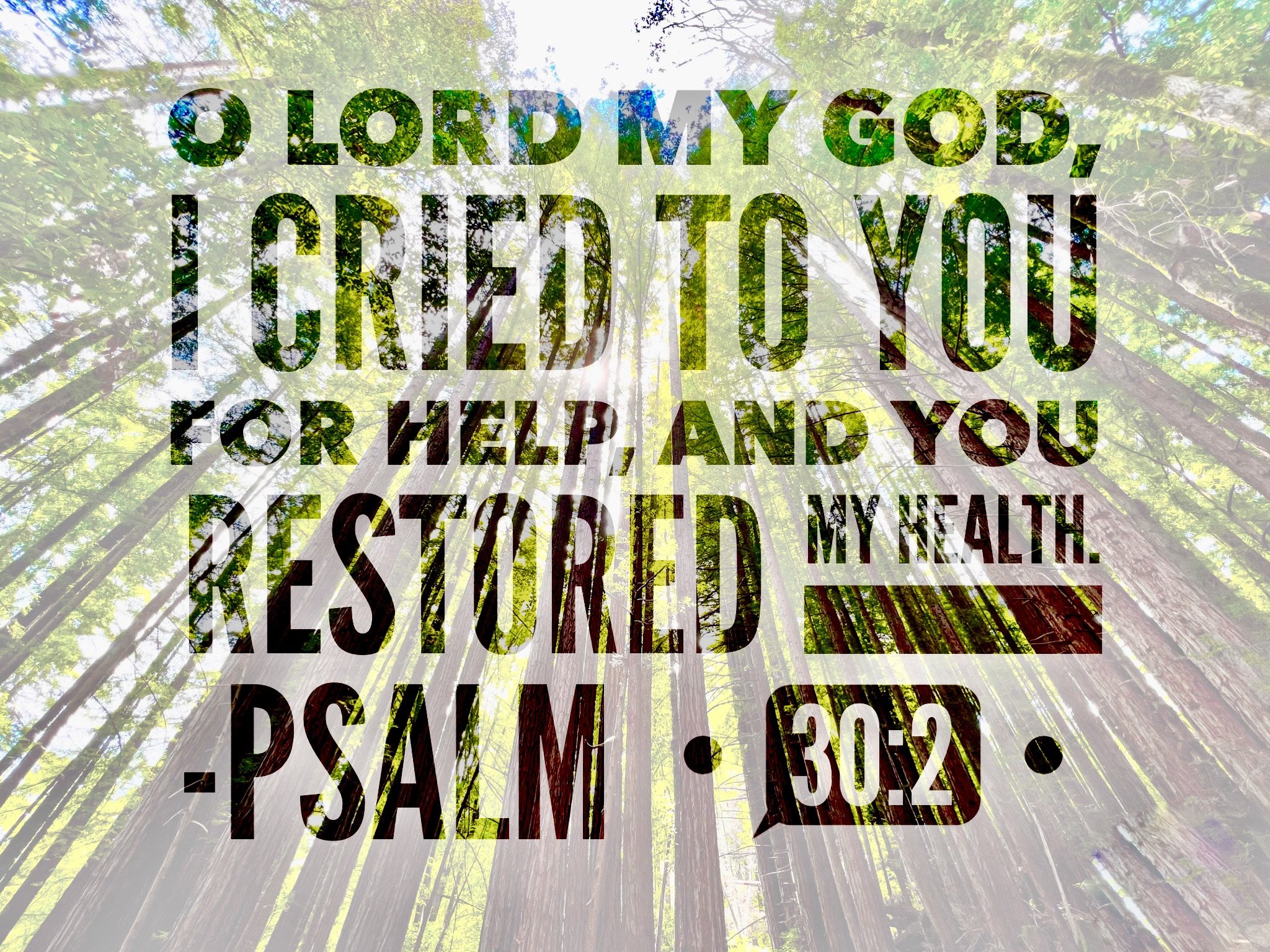
O Lord my God, I cried out to You, and You healed me.O Lord, You brought my soul up from the grave; You have kept me alive, that I should not go down to the pit. (Psalm 30:2-3)
God is the best Physician, even for our bodily infirmities. We do very wickedly and foolishly when we forget God. It was a sin in Asa that he trusted physicians and not God (2 Chronicles 16:12). If we must have a physician, let it be so, but still let us go to our God first of all. And above all remember that there can be no power to heal in medicine of itself; the healing energy must flow from the divine hand. …
If our watch is out of order, we take it to the watchmaker; if our bodies or souls are in an evil plight, let us resort to Him who created them, who has unfailing skill to put them in right condition. As for our spiritual diseases, nothing can heal these evils but the touch of the Lord Christ: if we do but touch the hem of His garment, we shall be made whole….
God has created us as a soul with a body. I believe that physical ailments can be attended to by a medical doctor, emotional distress should be addressed by a counselor, and spiritual issues should have the wisdom of a pastor.
But let’s always remember that since God created our body, soul, and spirit, He is the Ultimate Source of wisdom for any areas that are out of alignment. So as Spurgeon says, seek out a doctor, counselor, or pastor, but go to God first.
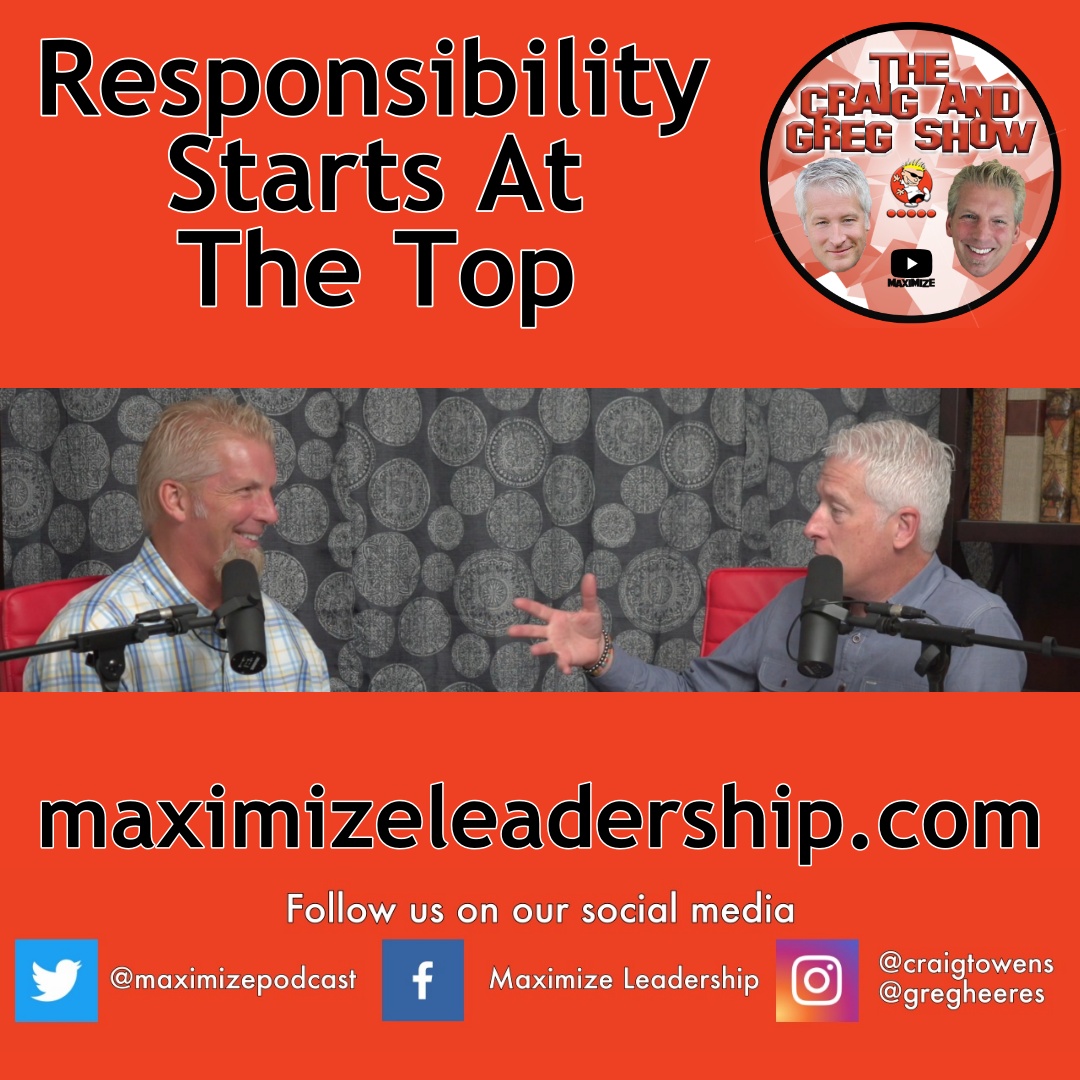
[0:55] What’s one of the biggest attributes that sets leaders apart from their peers?
[1:56] Check out why Stephen Covey’s definition of responsibility is so important in our discussion
[3:02] Why do people like to play “the blame game”?
[4:18] Accountability must be a partner with healthy responsibility
[4:52] Greg learned the blame game early on with his younger sister
[5:57] I worked in an unhealthy organization where the senior leader never accepted personal responsibility
[8:04] How do leaders “own it” in a healthy way?
[9:22] Exemplary leaders demonstrate how to accept consequences in a healthy way
[10:34] Responsibility and coachability strengthen a team and unleash greater potential
[11:27] Blame is “so dang easy” and makes the blamer a laughingstock
[13:27] What things contribute to blaming?
[14:14] How Greg handled the compliments and complaints from his clients
[15:11] Blaming is a spreading cancer in your organization
[15:44] Being a control freak isn’t the same thing as taking responsibility
[17:01] There is a balance for leaders so they don’t “fall on their swords”
[18:49] Team sports give us a good analogy of what shared responsibility looks like
[21:07] What’s on the other side of responsibility and blame?
[21:47] Leaders can enhance the benefits of responsibility through self-reflection
[23:51] Greg has a memorable and disarming way of helping people accept responsibility
[24:27] Our coaching huddles can help you learn to enhance the benefits of responsibility in your personal leadership
Check out this episode and subscribe on YouTube so you can watch all of the upcoming episodes. You can also listen to our podcast on Spotify and Apple.
But there is a chunk of five chapters in Shepherd Leadership that I keep going back to quite frequently. This section is also one that has resonated with other leaders who coach and counsel pastors.
Dr. Luke summarized the wholly healthy development of Jesus in just one verse: And Jesus grew in wisdom, in stature, in favor with God, and in favor with men (Luke 2:52). I think this gives us the perfect pyramid for our healthy growth—
It starts with our mental health (wisdom)
Which helps us make good decisions for our physical health (stature)
Which creates an ideal environment for our spiritual health to flourish (favor with God)
Oftentimes the answers to these questions reveal a deficit in mental, physical, or spiritual health that is preventing a breakthrough in strong, healthy relationships. As soon as health is being restored at the lower levels of this pyramid, positive changes in spiritual and relational health begin to blossom as well.
Pastor, please pick up a copy of my book to help you get into the healthiest place you can be. You cannot give health to the flock under your care if you are not at optimal health yourself.
If you want to catch up on some of the other clips I’ve already shared from this interview, you can find them here. I’ll be sharing more clips from this 200churches interview soon, so please stay tuned. Shepherd Leadership: The Metrics That Really Matter is available in print or ebook, and in audiobook through either Audible or Apple.
The Holy Spirit showed some interesting thoughts from the story of the temptation of Jesus.
Below is a 1-minute clip from a much longer video that I provided exclusively for my Patreon supporters. My blog has 5000+ posts that are all free. In addition, nearly all of my teaching videos on YouTube are free to the public.
To help me continue to provide all of this free content, I ask my friends to support this ministry at just $5 per month. My Patreon supporters get quotes from the books I have read, access to teaching videos that no one else sees, and exclusive teaching content that I don’t make available publicly. This is just my way of saying “Thanks!”
Special offer—Any new Patreon supporters that sign on in the next 30 days will not only get all of my exclusive content going forward, but they will also receive access to all of the content I have already shared. Check it out and sign up here.



 I had a great time on the Ailbe Podcast with Rusty Rabon.








 Craig T. Owens