Love Is Really Love

Love is really love—when we are loving the unlovable.

Forgiveness is really forgiveness—when we are forgiving the unforgivable.

Repentance is really repentance—when we let our wrong loves be broken by the rightness of God’s unbreakable love.

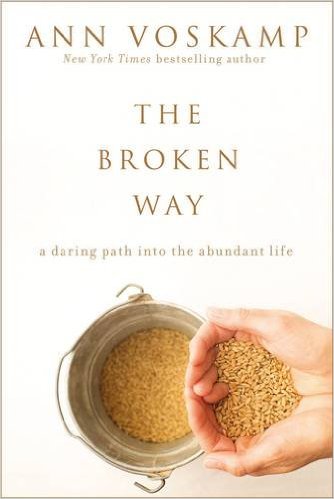
Faith is really faith—when we believe God for the unbelievable.” —Ann Voskamp, in The Broken Way

3 Manger Lessons

Listen to the podcast of this post by clicking on the player below, and you can also subscribe on AppleSpotify, or Audible.

Only Luke uses the Greek word for manger in all of the New Testament, with three of those instances being closely linked with the story of Christ’s birth in Bethlehem (Luke 2:4-16).

Luke is a prolific writer, but also a very specific writer. Luke uses more unique Greek words in his two books of the Bible than any other New Testament author. Because Luke is so precise, we need to pause to ask: what message was Luke trying to highlight in the fact that Jesus was born in a manger.

Here are three manger lessons…

  1. The manger shows us God’s PLAN.

The birthplace of Jesus was predicted 700 years before He was born (Micah 5:2). God moved the heart of the most powerful man in the world (Caesar Augustus) to issue a decree that would bring a nearly unknown Joseph and Mary to Bethlehem, and cause them to cross paths with a bunch of unnamed shepherds.

  1. The manger shows us God’s PRIORITY.

Jesus was not born to a handsome family (Isaiah 53:2), nor was He born to an influential family (Philippians 2:7). If He had been born to the high and mighty class, He would not only be unmoved by the desperate conditions of the least and the lost, but He would also be inaccessible to them.

Think about this—Who would you be more likely to have access to: a King or a peasant? Jesus came not to be served but to serve (Matthew 20:25-28).

  1. The manger shows us God’s PLEASURE.

God is pleased to deliver His good news to the disempowered, the downcast, the over-burdened, the desperate (Luke 2:14; Matthew 11:25-26). And what is this good news? The good news is that Jesus came to make it possible for us to be linked with Him forever! (see Matthew 11:28-30).

Jesus was born in a manger to show us that (1) God’s plans always prevail; (2) His priority is to rescue those who are unable to rescue themselves; and (3) He has immense pleasure to yoking us to Him forever and ever! 

May this good news of Christ in manger bring you joy this Christmas season!

►► Would you please prayerfully consider supporting this ministry? My Patreon supporters get behind-the-scenes access to exclusive materials. ◀︎◀︎

If you’ve missed any of the other Christmas carols we have already looked at, you can check them out by clicking here.

Poetry Saturday—Christmas Fancies

When Christmas bells are swinging above the fields of snow, 
We hear sweet voices ringing from lands of long ago, 
    And etched on vacant places 
    Are half forgotten faces 
Of friends we used to cherish, and loves we used to know— 
When Christmas bells are swinging above the fields of snow.

Uprising from the ocean of the present surging near, 
We see, with strange emotion that is not free from fear, 
    That continent Elysian 
    Long vanished from our vision, 
Youth’s lovely lost Atlantis, so mourned for and so dear, 
Uprising from the ocean of the present surging near.

When gloomy gray Decembers are roused to Christmas mirth, 
The dullest life remembers there once was joy on earth, 
    And draws from youth’s recesses 
    Some memory it possesses, 
And, gazing through the lens of time, exaggerates its worth, 
When gloomy gray December is roused to Christmas mirth.

When hanging up the holly or mistletoe, I wis 
Each heart recalls some folly that lit the world with bliss. 
    Not all the seers and sages 
    With wisdom of the ages 
Can give the mind such pleasure as memories of that kiss 
When hanging up the holly or mistletoe, I wis.

For life was made for loving, and love alone repays, 
As passing years are proving, for all of Time’s sad ways. 
    There lies a sting in pleasure, 
    And fame gives shallow measure, 
And wealth is but a phantom that mocks the restless days, 
For life was made for loving, and only loving pays.

When Christmas bells are pelting the air with silver chimes, 
And silences are melting to soft, melodious rhymes, 
    Let Love, the world’s beginning, 
    End fear and hate and sinning; 
Let Love, the God Eternal, be worshiped in all climes 
When Christmas bells are pelting the air with silver chimes. —Ella Wheeler Wilcox

Thursdays With Oswald—All Christians Are Missionaries

Oswald ChambersThis is a weekly series with things I’m reading and pondering from Oswald Chambers. You can read the original seed thought here, or type “Thursdays With Oswald” in the search box to read more entries.

All Christians Are Missionaries 

     It is easy to forget that the first duty of the missionary is not to uplift the heathen, not to heal the sick, not to civilize savage races, because all that sounds so rational and so human, and it is easy to arouse interest in it and get funds for it. The primary duty of the missionary is to preach “repentance and remission of sins…in His name” [Luke 24:47]. … 

     The key to the missionary message is the limitless significance of Jesus as the propitiation for our sins. A missionary is one who is soaked in the revelation that Jesus Christ is “the propitiation for our sins; and not for ours only, also for the sins of the whole world” [1 John 2:2]. The key to the missionary message is not the kindness of Jesus; not His going about doing good; not His revealing of the Fatherhood of God; but the remissionary aspect of His life and death. This aspect alone has a limitless significance. …  

     Worship is the love offering of our keen sense of the worth-ship of God. … To worship God truly is to become a missionary, because our worship is a testimony to Him. It is presenting back to God the best He has given us, publicly not privately. 

From So Send I You

Everyone who has made Jesus their Lord and Savior is commissioned to be a missionary: to go tell others about the life-changing work Christ did for you.

Are you thrilled with God’s mercy toward you? Are you overwhelmed with gratitude that Jesus took your place on the Cross? Are you filled with joy at the righteousness with which Jesus has clothed you?

If so, then tell the world! Let your worship show your sense of the worth-ship of God. Sure, you can do this privately, but be sure you do it publicly as well. That is what missionaries do!

9 Quotes From Other Authors In “Marching Off The Map”

Tim Elmore’s books are always chockfull of the latest research and insights from multiple sources. Tim does an excellent job of synthesizing mountains of evidence to give parents and teachers actionable steps to help the students with whom they work. Here are just a few of the quotes he shared from other authors in his book Marching Off The Map.

“We all want to progress, but if you’re on the wrong road progress means doing an about-turn and walking back to the right road. In that case, the man who turns back the soonest is the one who is most progressive.” —C.S. Lewis

“Tell me a fact and I will learn. Tell me the truth and I will believe. Tell me a story, and it will live in my heart forever.” —Indian Proverb

“Start where people are before you try to take them where you want them to go.” —Jim Rohn

“Shooting above people’s heads doesn’t mean you have superior ammunition—it means you are a lousy shot.” —Oscar Handlin

“If you think our future will require better schools, you’re wrong. The future of education calls for entirely new learning environments. If you think we’ll need better teachers, you’re wrong. Tomorrow’s learners will need guides who take on fundamentally different roles.” —Dr. Wayne Hammond

“If we continue to develop our technology without wisdom or prudence, our servant may prove to be our executioner.” —Omar Bradley

“For the first time in human history, the majority of people in the developed world are being asked to make a living with their minds, rather than their muscles. For 3000 years, humankind had an economy based on farming: till the soil, plant the seed, harvest the crop. Hard to do, but fairly easy to learn. Then, for 300 years, we had an economy based on industry: mold the parts, turn the crank, assemble the product. Hard to do, but also fairly easy to learn. Now, we have an economy based on information: acquire the knowledge, apply the analytics, use your creativity. Hard to do, hard to learn, and even once you’ve mastered it, you’ll have to start learning all over again, pretty much every day.” —Michael Bloomberg

“He who has a why to live for can bear almost any how.” —Frederick Nietzsche

“Be the person you needed when you were young.” —Ayesha Saddiqi

Be sure to check out my review of Marching Off The Map by clicking here. You can also read some quotes and check out some infographics from Tim Elmore here, here, and here.

The Christmas Candle (book review)

Max Lucado is a storyteller par excellent! His craft is on full display in the engaging short story The Christmas Candle.

Lucado takes us back to Victorian-era England, to the small village of Cotswolds. Nothing much seems to happen in this little village, except for a visit from an angel every 25 years to one specific family. The Haddington family have been candle-makers for as far back as anyone can remember. Every quarter-century, just before Christmas, an angel appears in the Haddington’s shop and points out one special candle. When this unique candle is given away by the Haddingtons to an individual, they can pray for a miracle and expect that God will answer that prayer.

Lucado’s story centers on a time when the angel should be appearing soon. But Mr. and Mrs. Haddington are older now, and worried that they don’t have an heir to which the candle-making trade can be passed on, the townspeople are in more desperate need than ever before, and the village’s new pastor is highly skeptical about the so-called “miracle qualities” of an ordinary looking candle. And all the while, the time of the angel’s appearing is getting closer and closer.

The message Lucado is able to drive home through this story is truly a God-given gift that will encourage your faith. Whether you read this book at Christmas time or not, you will be uplifted in your faith in God’s power to do the miraculous!

Silent Night? Holy Night!

A little boy wanted to do something special for his family, so he thought he would do something he had seen his mother do dozens of times: bake a cake. Quickly he looked through a cookbook and got to work.

Dad was the first one to come home and heard an unusual clatter in the kitchen. Peeking around the corner he saw his son wearing his wife’s apron, slightly dusted in flour, and vigorously stirring a big bowl of batter.

“What are you doing, son” Dad asked.

Without looking up from his work the boy proudly answered, “I’m making a cake, Dad!”

Dad looked around the kitchen and saw all the proper ingredients out, so he was somewhat assured when he asked, “So how’s it going?”

The little boy paused and looked up at him, “Pretty good I think. I’m just having a little trouble with the ‘tbls” and ‘tsps.’”

For those of you who have done any baking, you know that “tbls” are tablespoons and “tsps” are teaspoons. If you get those mixed up, the cake might not turn out very well. For instance, adding a teaspoon of baking powder when the recipe calls for a tablespoon might result in a flat cake. Or adding a tablespoon of salt when the recipe asks for a teaspoon might making a rather salty cake.

Abbreviations only work if everyone is on the same page with you. If they’re not, it could be rather unsavory or maybe even dangerous.

In 1816, Joseph Mohr penned the words to what some have called the best-known Christmas carol in the world: Silent Night! Holy Night!

I’m not really sure how “silent” the night Jesus was born really was: a village so filled with people that no bedrooms were available, a mother in labor, a crying newborn, animals in a stable disturbed by the mother and child, singing angels, and curious shepherds. But let’s leave that part alone for a while.

Although it may not have been a silent night, it most assuredly was a Holy Night! That full title gives us the full impact of what happened at Christ’s First Advent.

Holy means something unlike anything else; someone or something devoted to God; something divine; something with God’s fingerprints all of it. I see at least three divinely holy things in this carol.

  1. The virgin birth of Jesus. 

Not only was the birth of Jesus a fulfillment of prophesy (see Isaiah 7:14 and Matthew 1:18-25), but it was also an indication of God’s miracle-working power. The fact the Luke gives so many specific details about that birth night (see Luke 2:1-2) also lets us know that this isn’t a “once upon a time” myth.

  1. The involvement of angels in the affairs of humans. 

Angels bring messages to key people before the birth of Jesus (Luke 1:11, 26; Matthew 1:20) and on the night of His birth (Luke 2:9-14). John also gives us a peek behind the scenes of the massive spiritual warfare taking place the night of Christ’s birth (see Revelation 12:1-5). Paul tells us that we, too, are involved in this spiritual battle, but that because of Christ’s Advent we’re more than conquerors through Jesus (Ephesians 6:12; Romans 8:37).

  1. The full deity and the full humanity of Jesus. 

Jesus was fully Man and fully God (see Philippians 2:5-7; Matthew 26:63-64; John 8:54-58). This is so important, because without this we would be lost. If Jesus wasn’t fully Man, He wouldn’t know how to help us; if He wasn’t fully God, He couldn’t help us.

So when you hear this carol playing, ask someone if they know the title. More than likely they will say, “Silent Night.” To which you can easily reply, “Actually it’s Silent Night! Holy Night! and I’d like to tell you three amazing, holy things that took place!”

Let’s never abbreviate away the miracles. It may or may not have been a Silent Night, but it most certainly was a Holy Night! These supernatural miracles surrounding Christ’s First Advent provided us freedom from sin, and a rock-solid hope of our eternal reward in Heaven at Christ’s Second Advent.

If you’ve missed any of the other Christmas carols we have already looked at, you can check them out by clicking here.

Poetry Saturday—Bells Across The Snow

O Christmas, merry Christmas,
Is it really come again,
With its memories and greetings,
With its joy and with its pain!
There’s a minor in the carol
And a shadow in the light,
And a spray of cypress twining
With the holly wreath tonight.
And the hush is never broken
By laughter light and low,
As we listen in the starlight
To the “bells across the snow.”
O Christmas, merry Christmas,
’Tis not so very long
Since other voices blended
With the carol and the song!
If we could but hear them singing,
As they are singing now,
If we could but see the radiance
Of the crown on each dear brow,
There would be no sigh to smother,
No hidden tear to flow,
As we listen in the starlight
To the “bells across the snow.”
O Christmas, merry Christmas,
This never more can be;
We cannot bring again the days
Of our unshadowed glee,
But Christmas, happy Christmas,
Sweet herald of good will,
With holy songs of glory
Brings holy gladness still.
For peace and hope may brighten,
And patient love may glow,
As we listen in the starlight
To the “bells across the snow.” —Frances Ridley Havergal

Christ’s Love Is Unstoppable!

“Sometimes our deepest suffering is that voice in our head. And maybe that’s exactly the point—the enemy of your soul wants nothing more at the end of the day than to make you and all your offered years feel like so much wasted effort. …

“How do you survive if you don’t turn on the enemy of your soul and call him by what his ugly name really means: prosecutor? The very name satan literally means ‘prosecutor.’ And his work isn’t ultimately to tempt you, but to try you.

“To try your past, to try your perseverance in believing you’re worth anything, to try your patience with yourself and your whole bent-up world. …

“He would steal our presence, our very knowledge of the Healer’s presence, if he could. If you let satan prosecute you, you will ultimately imprison yourself. …

“The prosecutor of your soul can’t ever nail you. Time can’t wreck your life. You can’t wreck your life. Nothing in all this world can separate you from the love of Christ, and His love is your life. Your life is unwreakable. Because Christ’s love is unstoppable.” —Ann Voskamp, in The Broken Way

**You can read other quotes from The Broken Way here, here, and here.

Thursdays With Oswald—The Power Is In The Solitude

Oswald ChambersThis is a weekly series with things I’m reading and pondering from Oswald Chambers. You can read the original seed thought here, or type “Thursdays With Oswald” in the search box to read more entries.

The Power Is In The Solitude

     If we want to know the universal sovereignty of Christ, we must get into solitude with Him. It is not sufficient for someone else to tell us about Him; we must perceive with our own eyes Who He is, we must know Him for ourselves. … 

     We must get to the place of real solitude with Christ. He is our mountain-height and our sea-calm; He is the recreating power; He is the universal Sovereign. He tells us to consider the lilies; we say—“No, we must consider life.” We mistake the mechanism of life for life itself, and that idea has become incorporated into Christian work. In the active work we do for God we do not really believe that Jesus Christ is sovereign Lord; if we did, we should fuss less and build more faith in Him. We cannot do the Savior’s work by fuss, but only by knowing Him as the supreme sovereign Lord. … 

     Our Lord’s word “go” simply means “live,” and Acts 1:8 describes the “going.” Jesus did not say to the disciples—“Go into Jerusalem, go into Judea, go into Samaria, go into the uttermost part of the earth”; but—“You shall be My witnesses” in all these places: He undertakes to establish the goings. So many people are obsessed with this idea—“What are you going to do?” I hope none of us are going to do anything: I hope we are going to be what He wants us to be. … 

     The key to the missionary is the absolute Sovereignty of the Lord Jesus Christ. We must get into real solitude with Him, feed our soul on His Word, and He will engineer our circumstances.

From So Send I You 

Jesus gave a command to all His followers—including all of us today—All authority in heaven and on earth has been given to Me. Therefore go (Matthew 28:18-19). Jesus is saying to us, “Preach and teach out of a living experience of Myself.” In this respect, we are all missionaries.

Oswald Chambers reminds us missionaries that the only way we will be effective in our goings is by spending adequate time in solitude and worship with Our Lord. If we don’t, then we are trying to do ministry on our own, trying to engineer our own circumstances. But the missionary who is spending time with Jesus finds that He directs all our goings and engineers all our circumstances.

The power to testify about Jesus comes from our time of solitude with Jesus.