Comfort, comfort My people, says your God. Speak tenderly to Jerusalem, and proclaim to her that her hard service has been completed, that her sin has been paid for, that she has received from the Lord’s hand double for all her sins.
That seems unfair! We receive double(!) for our sins! Here’s a 2-minute video where I explain what this means culturally—
Only when invoices were paid-in-full did they get doubled-up.
The Bible tells us that we’ve all sinned, and that the invoice or penalty for our sin is death. We have the IOUs of sin nailed to the door of our heart where God says “You owe Me your life!” But we cannot pay this debt by ourselves.
But Jesus can. And Jesus did! Check this out—
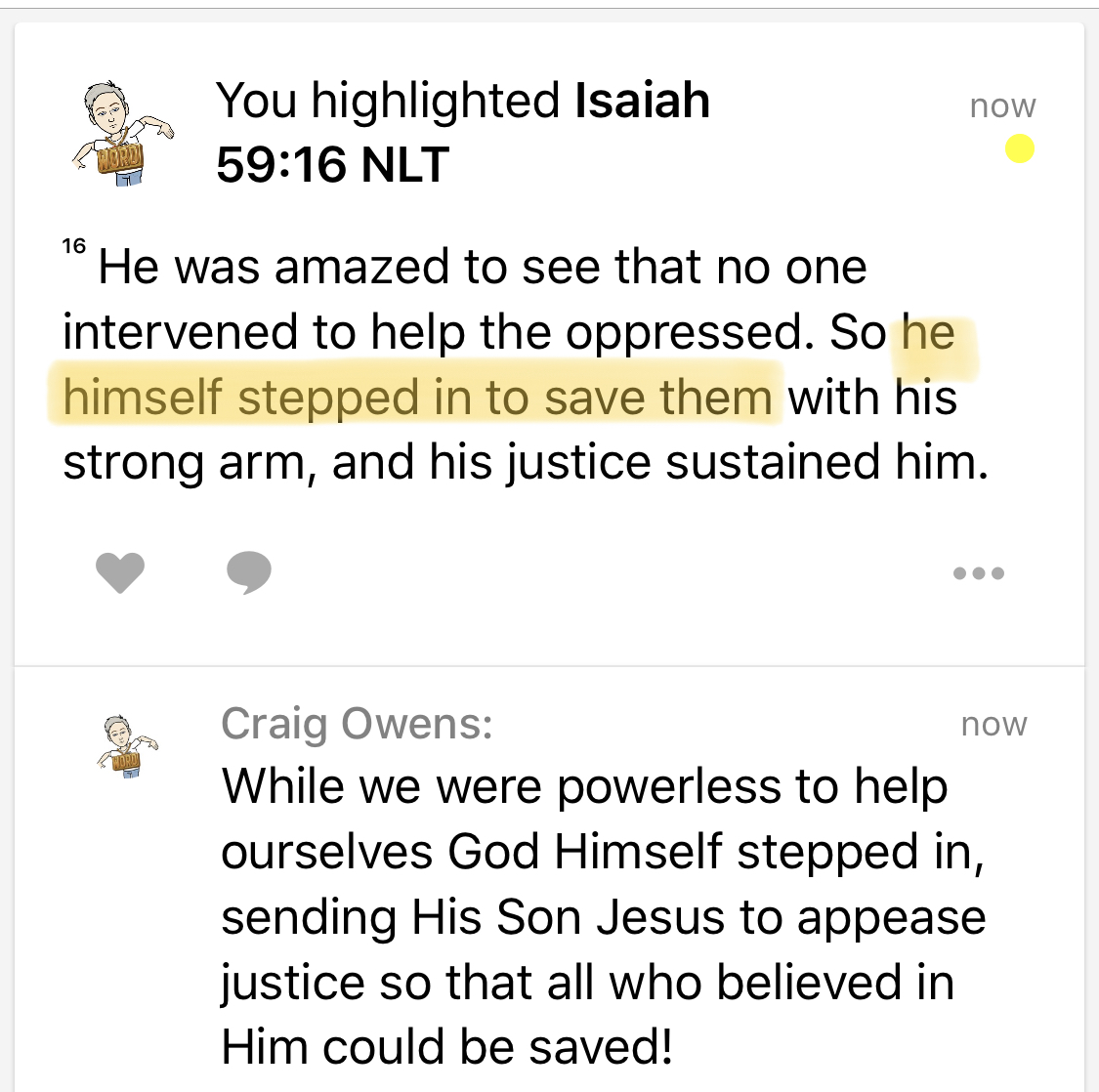
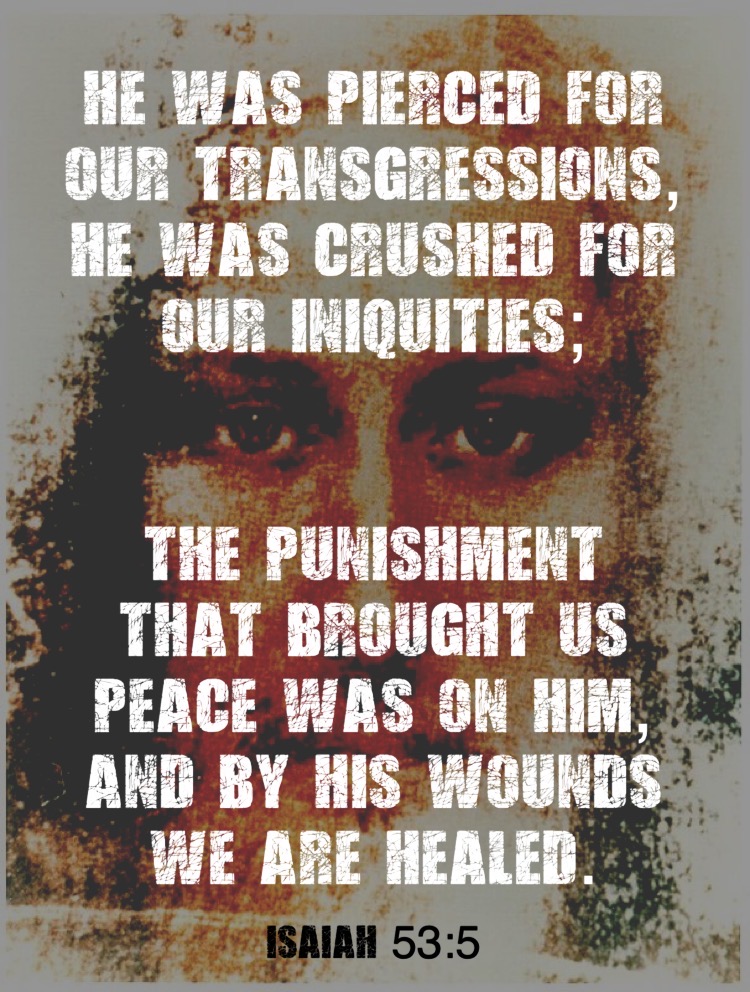
He personally carried our sins in His body on the Cross…. (1 Peter 2:24 NLT)
Having canceled and blotted out and wiped away the handwriting of the note with its legal decrees and demands which was in force and stood against us. This He set aside and cleared completely out of our way by nailing it to His Cross. (Colossians 2:14 AMP)
That’s what is good about Good Friday. Jesus knew that taking our sins on His body, and then allowing His body to be nailed to the Cross, would double-up and nail-down our sin once and for all!
When Jesus said, “It is finished!” He was really saying, “It is paid-in-full!”
This is a weekly series with things I’m reading and pondering from Charles Spurgeon. You can read the original seed thought here, or type “Thursdays With Spurgeon” in the search box to read more entries.
The Assurance In Christ’s Ascension
Our Savior descended when He came to the manger of Bethlehem, and further descended when He became ‘a Man of sorrows and acquainted with grief’ (Isaiah 53:3). He descended lower still when He was obedient to death, even the death of the Cross—and further yet when His dead body was laid in the grave. … Long and dark was the descent. There were no depths of humiliation, temptation, or affliction that He did not fathom. …
The time came for our Lord to continue His homeward, upward journey and return to the glory from which He had come down. From the Mount of Olives, ‘while they watched, He was taken up, and a cloud received Him out of their sight’ (Acts 1:9). The rest of His upward progress we cannot describe. Imagination and faith step in and conceive of Him as rising beyond all regions known to us, far above all imaginable height. …
How high He ascended after He passed the pearly portal Paul cannot tell us, save that he says God ‘seated Him at His right hand in the heavenly places, far above all principality and power and might and dominion’ (Ephesians 1:20-21). He describes our Master as ‘dwelling in unapproachable light’ (1 Timothy 6:16). The Man Christ Jesus has gone back to the place from where His Godhead came! …
We are sure that the purpose of His love is secure or He would not have returned to His rest. The love that brought Him here would have kept Him here if all things necessary for our salvation had not been finished. …
Remember that His assent to the Father is representative. Every believer rose with Him and grasped the inheritance. When He rose up, ascending on high, He taught our feet the way. At the last His people will be caught up together with the Lord in the air, and so will they be forever with the Lord. He has made a stairway for His saints to climb to their bliss, and He has traveled it Himself to assure us that the new and living way is available for us. In His ascension He bore all His people with Him.
From Our Lord’s Triumphant Ascension
Jesus told His Father that He had completed everything He was sent to complete (John 17:4). John also says that Christ’s “It is finished” cry from the Cross also marked the completion of everything that had been prophesied about Jesus (John 19:28-30).
Such amazing love brought Jesus to earth! And His steadfast love also made sure that He left absolutely nothing undone that was needed for our salvation!
There’s now no reason for us to live fearful or anxious or skeptical about what is coming next. When Jesus says, “I will never leave you nor forsake you” and when He promises that He has gone to prepare a place for us to bring us to be with Him, He has demonstrated His authority to make these claims in His death, resurrection, and ascension.
Oh my friends, live every day in that glorious assurance!
… Perhaps the Lord will act in our behalf … The God we serve is able to save us from the furnace…but even if God does not save us… (1 Samuel 14:6 and Daniel 3:17-18).
We often remember and even hold in high regard those leaders who rise up in times of crisis or uncertainty. But I think we might be shocked if we knew exactly how scared these seemingly unflappable leaders actually were!
The Philistines really had the Israelites on the ropes. Israel’s army was slowing melting away, as soldiers one by one were deserting and heading home. The Philistines had captured all of the sword-makers, so that there were only two swords left—one for King Saul and one for his son Jonathan.
And to make matters even more desperate, the Philistines occupied all the strategic high ground, so that even if the Israelites were going to attempt an attack, they would have to scale the cliffs in order to do so.
For Jonathan, this situation was unbearable. So he said to his armor-bearer (keep in mind that this armor-bearer didn’t really have any armor to bear!), “Let’s go attack the Philistines.” And then he adds this line that probably didn’t instill too much confidence in anyone, “Perhaps the Lord will give us victory.”
Perhaps?!
Many years later, when the nation of Israel was in exile in Babylon, three Jewish young men found themselves in a literal hot spot. King Nebuchadnezzar had built an enormous statue of himself and commanded that everyone bow down and worship it. Shadrach, Meshach, and Abednego had been promoted into leadership positions in the capital city of Susa, so there was no hiding in the outreaches of the countryside for them. Their disobedience to the king’s command would make them stand out to everyone. The king had ordered that anyone who disobeyed his edict would be thrown into a fiery furnace.
Shadrach, Meshach, and Abednego were God-fearing men and knew that they could not worship any other god except Yahweh. When the king confronted their disobedience, they also responded with words that didn’t sound very confident, “God can save us, but we’re not sure if He will save us. But even if He doesn’t, we’re not going to bend our knee.”
If?!
“Perhaps” and “if” don’t sound like very confident words, do they?
And yet these godly leaders were totally certain in their uncertain times. They weren’t certain of the outcome, but they were certain of God’s ability to bring the ultimate victory. Even in dark times of crisis, godly leaders are certain that God is greater than their uncertain circumstances.
A mark of a godly leader is one who has a certain confidence in God even in an uncertain crisis.
Jonathan, and Shadrach, and Meshach, and Abednego would all tell us, “Whether God was going to give us victory in the moment of crisis or not, we will remain in God’s presence! We will not compromise. We will not give in to fear. We will not disobey God. We will continue to cling to Him—rescue or not—knowing that He will be glorified in whatever way He chooses to respond.”
These young men teach an invaluable lesson for all of us even today: Trust God no matter how uncertain the times are.
This is part 45 in my series on godly leadership. You can check out all of my posts in this series by clicking here.
As Moses called the Israelites to keep three main feasts each year—Passover, Weeks (or Pentecost), and Tabernacles—he said the purpose was to remember.
Closely linked to all three of these feasts was another important word: celebrate (vv. 10, 13, 15).
This remembering and rejoicing on a regular schedule was to keep God’s people aligned with God’s intimate and ongoing involvement in their lives. As a result, an attitude and an action should become just as ongoing in the lives of God’s people—
The attitude: joyful gratitude (vv. 11, 14)
The action: joyful giving (vv. 10, 15, 17)
These three set times were to be a time of reorientation. They were not supposed to be the only three times God’s people remembered what God had done, celebrated His goodness, let joy overflow their hearts, and let giving overflow to others. These reorientation times should excite us to live like this every single day!
That’s why Paul wrote, “Rejoice in the Lord always. I will say it again: Rejoice!” (Philippians 4:4).
What celebrations can you build into your life that will help you
You stood up for someone, but when you needed someone to stand up for you they disappeared Or you did what was right, but no one recognized you for it? Or you were the encourager, but when you needed encouragement no one was around for you? Or maybe even you obeyed God down to the very last detail, and yet it seemed God abandoned you when you needed Him most?
Jesus knows what every single one of these scenarios feel like! He stood up for the downtrodden, but they screamed, “Crucify Him!” He poured His life into teaching and encouraging His friends, but they all ran when the heat was on, leaving Jesus all by Himself. He obeyed God down to the very last detail, and yet it seemed like God abandoned Him when He needed Him most.
Have you ever felt abandoned by God?
Jesus did.
Hanging from the Cross He cried out, “My God, My God, why have You forsaken Me?!”
I cannot help but notice two things about the state of mind Jesus was in heading to the horrific treatment He would face (see Matthew 26:31-44; 27:27-46).
Jesus knew all of this was going to happen to Him. Notice the phrases “for it is written” and “so that the Scriptures would be fulfilled” and “so that the writings of the prophets might be fulfilled.” Even His cry from the Cross was a literal quotation of Old Testament Scripture (Psalm 22:1).
God was silent. Even though Jesus called out to His Father three times in prayer, “My Father!” there was no heavenly response.
Why would God remain silent during this trial? God didn’t need to speak to His Son during the trial because He had already spoken to Him before the trial!
It’s the same in our trials—
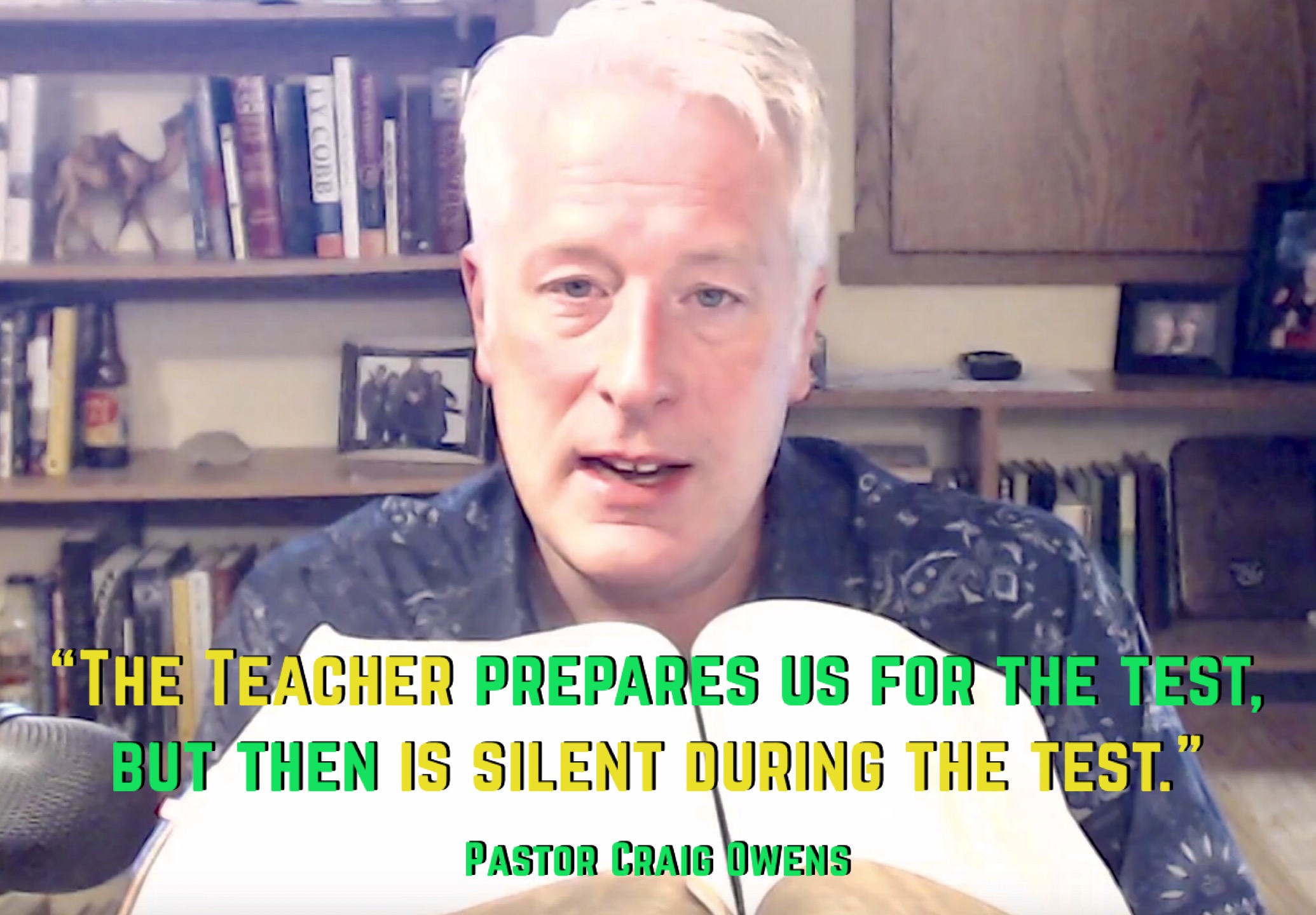
The Teacher prepares us for the test, but then is silent during the test.
God’s silence is not His rejection or abandonment. Just as God provided for Jesus in His moment of trial, God has provided for us in our trials too—For no temptation (no trial regarded as enticing to sin), [no matter how it comes or where it leads] has overtaken you and laid hold on you that is not common to man [that is, no temptation or trial has come to you that is beyond human resistance and that is not adjusted and adapted and belonging to human experience, and such as man can bear]. But God is faithful [to His Word and to His compassionate nature], and He [can be trusted] not to let you be tempted and tried and assayed beyond your ability and strength of resistance and power to endure, but with the temptation He will [always] also provide the wayout (the means of escape to a landing place), that you may be capable and strong and powerful to bear up under it patiently. (1 Corinthians 10:13 AMP)
So let’s learn three invaluable lessons we can learn from Christ’s time of supreme suffering.
1. Be honest in God’s presence
Jesus didn’t hide His feelings, nor did He try to couch His vocabulary in “churchy” sounding words. God already knows what’s in your heart, so pour it out raw and honestly! Go to the Psalms and see raw emotions on full display in prayer.
2. Lean all your weight on Jesus
Jesus prayed, “My Father!” and He cried out from the Cross, “My God!” His death on the Cross took away the barriers that kept up from coming into God’s presence (see 2 Corinthians 5:21). After His resurrection, Jesus sent this message to His friends: “Go instead to my brothers and tell them, ‘I am ascending to MYFather and YOURFather, to MYGod and YOURGod’” (John 20:17).
3. Go to the Word of God
This is what Jesus did. In His moment of abandonment, He quoted Psalm 22 from the Cross. Jesus fulfilled ALL of the Scriptures, so now we can pray with greater assurance—For no matter how many promises God has made, they are “Yes” in Christ. And so through Him the “Amen” is spoken by us to the glory of God (2 Corinthians 1:20).
God’s silence is NOT God’s abandonment. God’s silence is His invitation for us to be honest, to lean on Jesus, and to trust every promise in His Word. Every single promise that is Yes! and Amen!
If you’ve missed any of the other messages in our Where’s God? series, please check out:
This is a weekly series with things I’m reading and pondering from Charles Spurgeon. You can read the original seed thought here, or type “Thursdays With Spurgeon” in the search box to read more entries.
Why Did Jesus Suffer?
Think much of all your Lord suffered, but do not overlook the reason for it. If you cannot always understand how this or that grief worked toward the great end of the whole passion, yet believe that it has its share in the grand why. Make a life-study of that bitter but blessed question, ‘Why have You forsaken Me?’ …
Why, then, did God forsake His Son? I cannot conceive any other answer than this: He stood in our place. There was no reason in Christ why the Father should forsake Him—He was perfect and His life was without spot. God never acts without reason, and since there were no reasons in the character and person of the Lord Jesus why His Father should forsake Him, we must look elsewhere. …
He bore the sinner’s sin and He had to be treated, therefore, as though He were a sinner, the sinner He could never be! With His own full consent He suffered as though He had committed the transgressions that were laid on Him. Our sin and His taking it upon Himself are the answer to the question, ‘Why have You forsaken Me?’ …
So long as the smile of God rests on the man, the law is not afflicting him. The approving look of the great judge cannot fall upon a man who is viewed as standing in the place of the guilty. Christ suffered not only from sin, but for sin. If God will cheer and sustain Him, He is not suffering for sin. The judge is not inflicting suffering for sin if He is manifestly encouraging the smitten one. There could have been no vicarious suffering on the part of Christ for human guilt if He had continued, consciously, to enjoy the full sunshine of the Father’s presence. It was essential to being a victim in our place that He should cry, ‘My God, My God why have You forsaken Me?’ …
Beloved, see how marvelously, in the person of Christ, the Lord our God has vindicated His law!
From My God, My God Why Have You Forsaken Me?
The great apostle Paul wrote to the church at Corinth about his singular focus—When I came to you, I did not come with eloquence or human wisdom as I proclaimed to you the testimony about God. For I resolved to know nothing while I was with you except Jesus Christ and Him crucified. (1 Corinthians 2:1-2)
“Think much of all your Lord suffered, but do not overlook the reason for it,” Spurgeon said.
That earth-quaking, darkness-inducing, temple-rattling, soul-piercing cry of Jesus—My God, My God, why have You forsaken Me?—could only have been uttered by someone perfect. I know plenty of reasons why God could have forsaken me, but Jesus knew only a single reason.
Jesus did not suffer because of something He had done wrong, but because of all I had done wrong.
That Cross was stained with His blood for my sin.
Because He was forsaken, I am now accepted in the Beloved Jesus (Ephesians 1:6-7). Think much on this: Jesus was crucified for you and me SO THAT we wouldn’t have to bear the penalty of our sin. Justice was satisfied. Now, by faith in His sacrifice on the Cross, we can come to God not only with our sins forgiven, but we can be accepted by Him as His children.
My friend, think much on this. Resolve to know the unspeakable value of Christ crucified for you. And then rejoice greatly that you are accepted in the Beloved. If you would like to know more, please contact me.
You are the children of the Lord your God… (Deuteronomy 14:1).
I am a child of the King of kings.
He is the King of Endless Supply.
He has no lack, no deficiencies, no quotas.
He IS Abundance!
So why would I live like a pauper—scraping by and scrambling to provide for myself? Why would I live like an orphan—with a scarcity mindset?
My Heavenly Father knows what I have need of before I even ask, and He has already promised to supply for all of my needs (Matthew 6:8; Philippians 4:19).
As a child of God, I should have a joy-filled, peace-filled, abundance mentality. With this mindset I can…
I’m not trying to build a bankroll here. My inheritance is secure in Heaven. As a child of the King of kings, I can expect Him to provide all I need.
I was young and now I am old, yet I have never seen the righteous forsaken or their children begging bread. (Psalm 37:25)
With the same measure I use to bless others, I will be blessed. A good measure, pressed down, shaken together and running over, will be poured into your lap. (Luke 6:38)
I need to live as a child of the Abundant King, not as a helpless orphan with no one on whom to call for help!
How do “Bible” and “artisan” belong in the same title? They’re more connected than you may have previously thought, and The Artisan Collection Bible is the perfect place to explore this connection.
If you were to ask someone what occupation Jesus had while He was on earth, it would be a safe bet that most people would say He was a carpenter. Indeed, the Greek word tekton is translated as “carpenter” for both Joseph and Jesus (see Matthew 13:54-56 and Mark 6:2-3). However, the consensus among Greek scholars today is that the word tekton is more likely to mean an artisan than just merely a wood-working carpenter.
That makes sense, doesn’t it? After all, you would expect boundless creativity from the Creator. The One who fashioned our beautiful universe would certainly still be interested in expressing Himself in creative and beautiful ways.
For myself, reading the Bible sparks in me a desire to be creative with words, and images, and colors, and designs. This is exactly what The Artisan Collection Bible gives you the space to do. And I literally mean “space.”
One of the most attractive features to me about this Bible is the extra-wide margins along every single page. As you read God’s Word and the beauty of the Creator is illuminated in your heart and mind, you have readily available space to express your own creativity as worship to the Creator. Try crafting a poem, or turning the passage into a personal prayer, or drawing a picture that captures the vibrancy of God’s love letter written to you. The design of this Bible helps you to do more than just read the Word of God, it invites you to interact with the God of the Word.
The Artisan Collection Bible would make an excellent gift for your creative friend or loved one.
I am a Zondervan book reviewer and a member of the Bible Gateway Blogger Grid. As a book reviewer I received a free copy of this book from the book publisher. I am not compensated for my review. Although I may have received the book free of charge, I am under no obligation to write a favorable review. I am free to express my honest opinion about the book’s content. If I say it’s a good book, it’s because I think it’s a good book!
Where is God in our trials? When we call, Jesus runs to our cry. He is able to help us because He knows exactly what our cries sound like. Aren’t you glad He does?!
While we are in these difficult times, you might find yourself asking a question I have asked, “Okay, God, I believe You are doing something, but what exactly are You doing?”
I can’t tell you specifically what God is doing in your life, because your story is unique and special. But I can tell you that during the hard, painful chapters of our lives, God is accomplishing at least five things in all of us.
God is opening our eyes to new paradigms
We will learn lessons in these fiery trials that we couldn’t possibly learn any other way.
God is building empathy in us which we didn’t have before
One dictionary definesempathy as “the power of understanding and imaginatively entering into another person’s feelings.” It’s only because of our trials that we no longer have to imagine what someone else is feeling, but instead we know exactly what they’re feeling and how we can help.
God is growing our patience
It’s been said that patience is the “mother of all other virtues.” Paul said that “these troubles produce patience” (Romans 5:3). As God grows your patience, He will also help you to grow all of the other Christlike virtues.
God is refining His character in us
Paul went on to add that not only does trouble produce patience, but “patience produces character” (Romans 5:4). During the times of difficulty and uncertainty, we become more aware of deficiencies in our character.
God is building in us an unshakable hope in His future grace
Hope is not wishful thinking; it’s well-founded believing!
I want to circle back to that word refining because I think that best sums up what God is doing in our painful times. Romans 8 tells us—The Spirit Himself thus testifies together with our own spirit, assuring us that we are children of God. And if we are His children, then we are His heirs also: heirs of God and fellow heirs with Christ—sharing His inheritance with Him; only we must share His suffering if we are to share His glory. But what of that? For I consider that the sufferings of this present time—this present life—are not worth being compared with the glory that is about to be revealed to us and in us and for us and conferred on us! (Romans 8:15-18)
So where’s God in this time of fire? He is overseeing our trial as a Perfect Refiner. Do you know how the silversmith knows he has purified the impurities from the silver ore? The silver is pure when he can see his own reflection in the silver!
In the heat of your trial, God is close to you. He knows the perfect temperature and the precise time that it will take to allow His face to be seen in you!
Sometimes you will see what God is doing through your furnace time, sometimes you won’t. But don’t ever bail out! God IS working! He is giving you a new perspective, a deeper empathy, more patience, an unshakable hope, and most of all—He is removing the impurities that will allow His face to be seen more clearly in you!



 I posted this 10 years ago on Good Friday.










 Craig T. Owens