One of the best pieces of advice if you’re looking to regulate your emotions is very simple: SLOW DOWN! Constantly having your game face on or being “on a mission” can cause your emotional regulation to suffer, and seriously hurt your leadership. Be sure to check out all of my videos on my YouTube channel.
You may have heard the oft-repeated line that human beings and chimpanzees share 98-99% of our DNA with each other. This simply isn’t true, and yet it will not die. John Stonestreet has an idea of what is behind this claim in his post Of Primates and Percentages.
“The unprepared mind cannot see the outstretched hand of opportunity.” —Alexander Fleming
John Piper asks, “Why is anxiety about the future a form of pride?” Check out this faith-building post that concludes with these words, “The way to battle the unbelief of pride is to admit freely that you have anxieties, and to cherish the promise of future grace in the words, ‘He cares for you.’ And then unload your fears onto His strong shoulders.”
“Hold fast to eternal salvation through the eternal covenant carried out by eternal love to eternal life.” —Charles Spurgeon
“Celebrate what you’ve accomplished, but raise the bar a little higher each time you succeed.” —Mia Hamm
Listen to the audio-only version of this podcast by clicking on the player below, or scroll down to watch the video.
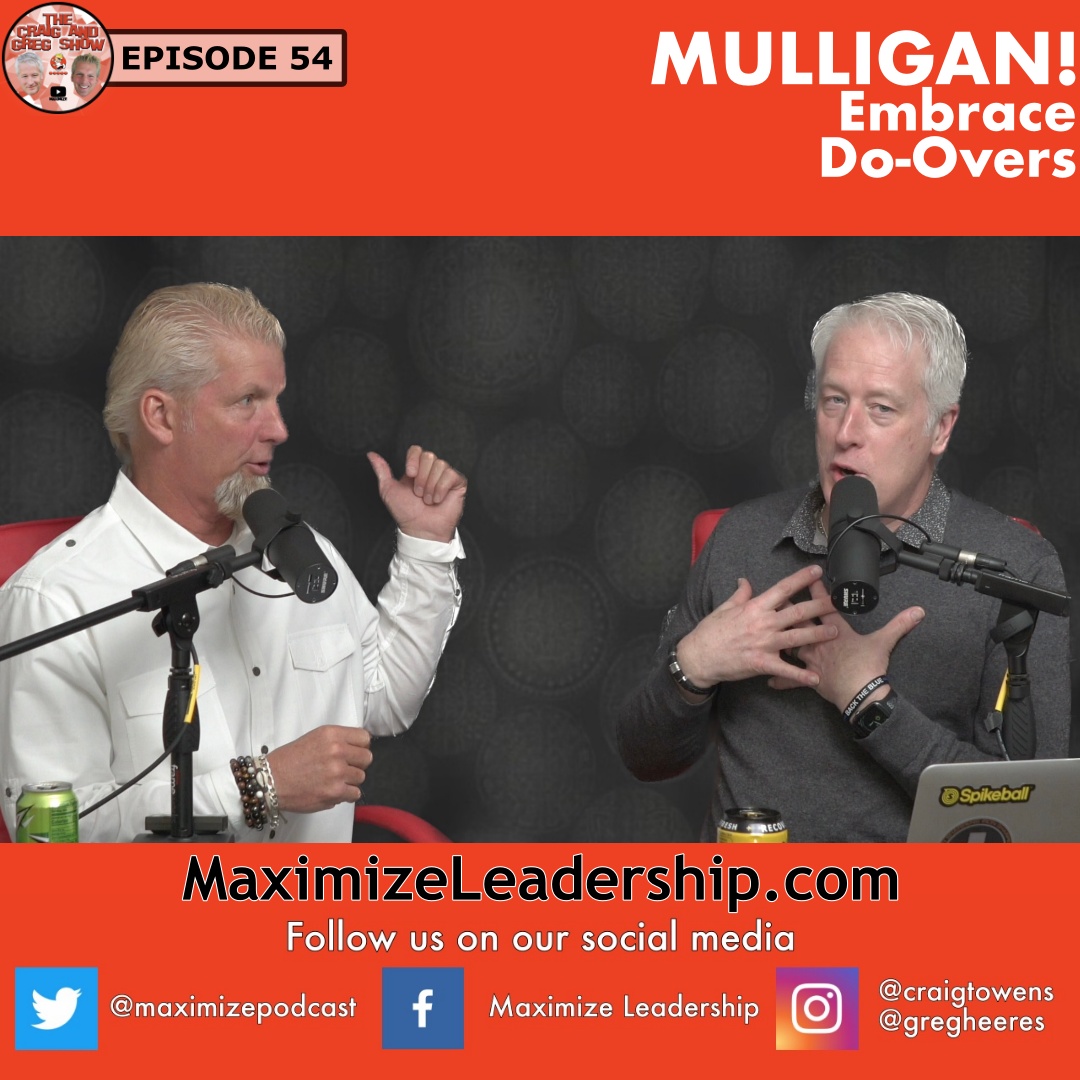
I am not a very good golfer, so when Greg and I hit the course together Greg is generous enough to give me a mulligan—sometimes a lot of them! In the same way, we as leaders need to be willing to give our team members chances to learn from and improve upon their mistakes. In this episode, we discuss how embracing a “mulligan culture” in your organization helps everyone grow and thrive.
[0:22] I explain what Greg gives me that is a huge blessing
[1:25] Leaders need to be gracious.
[2:56] What is the goal of mulligans?
[4:10] Mulligans can cost our business something. How do we calculate that?
[7:18] Success usually goes up with the mulligan attempt.
[9:54] Expect greater success in the second chances.
[11:04] Mulligans need to be given in a safe environment.
[13:06] Second chances and comeback stories are inspiring!
[14:31] Remember that people are the focal point of our mulligans.
[14:55] Greg shares about an unusual phobia with which many people struggle.
[16:50] An important reminder seasoned leaders need to share with emerging leaders.
[18:22] High-performing leaders make it look easy because of the mulligans other people gave them along the way.
Check out this episode and subscribe on YouTube so you can watch all of the upcoming episodes. You can also listen to our podcast on Spotify and Apple.
Listen to the podcast of this post by clicking on the player below, and you can also subscribe on Apple, Spotify, or Audible.
I had such a great time with Karl Vaters on his podcast called The Church Lobby. Right at the beginning of the conversation, Karl wanted to talk about the subtitle of my book: The metrics that really matter.
Listen to the podcast of this post by clicking on the player below, and you can also subscribe on Apple, Spotify, or Audible.
I think the best-known verse in the Bible may be, “For God so loved the world that He gave His one and only Son, that whoever believes in Him shall not perish but have eternal life” (John 3:16). This truly is amazing love!
But on several occasions, the Gospel writers talk about the compassion of Jesus. This is a different word altogether. The root Greek word is “bowels.” To feel this kind of compassion means to feel it in your gut—to ache with the same pain that is afflicting someone else.
But compassion means more than feeling the pain, it also means going into action to alleviate the pain. True compassion aches and then acts.
Look at the compassion of Jesus—
He sees crowds of people “harassed and helpless, like sheep without a shepherd.” His compassionate response is to pray for His Father to send more shepherds to these sheep (Matthew 9:36-38).
He sees people plagued by diseases—paralysis, deafness, blindness, even death—and He places His hands on them and brings complete healing (Matthew 14:14, 20:34; Mark 1:41, 9:22; Luke 7:11-15).
He notices hungry people and He feeds them (Matthew 15:32; Mark 8:2).
He encounters confused people and He teaches them the illuminating truth (Mark 6:34).
This kind of compassion is costly. It cost Jesus time to be alone, it cost the king, the prodigal father, and the Samaritan money to forgive a debt, lose an inheritance, and pay medical bills. But Christ-like compassion knows there is no greater reward than aching and acting like Jesus.
Christ-like compassion must be extended in faith. Like touching someone with unclean disease, or fasting to receive power to release a loved one shackled to a heavy burden, or embracing someone who hurt me, or canceling a debt owed to me, or helping someone who despises me. When we ache and act like this, we show the love of God in irrefutable ways. Our selfless, Christ-like compassion paints a vivid picture for a skeptical world to see and embrace the love of God that sent His Son to ransom us.
Let’s make it our prayer that we would ache with the needs of the people around us, and then to move in faith-filled, Christ-honoring, selfless action to alleviate that need. Then let us believe that our compassion will show others the love of a Savior.
Listen to the podcast of this post by clicking on the player below, and you can also subscribe on Apple, Spotify, or Audible.
We’ve just looked at two back-to-back bold statements of Jesus. To the Sanhedrin, He said, “I am the I AM,”and to Pontius Pilate, He said, “I am a king.” Christ’s third bold claim essentially amounts to, “And I don’t have to prove either of these to you; I don’t have to argue with you about it.”
After He was arrested, there was a back-and-forth shuttling of Jesus from the Sanhedrin to Pilate, then from Pilate to King Herod, and then back to Pilate again. Pilate told the Sanhedrin, “I find no basis for a charge against Him.” But the Sanhedrin countered, “But He is stirring up trouble all the way from Galilee to here in Jerusalem!” (see Luke 22:67-23:11).
Pilate was looking for “an out”—a way he could safely discharge or punish Jesus that would keep both the Sanhedrin and his Roman superiors happy. So when Pilate heard that Jesus was from Galilee, he was more than happy to pass this “hot potato” to King Herod. When Jesus was hauled before Herod, we read that he was greatly pleased to see Jesus.
Why was that? To answer that question, we need to understand who Herod was. His name is Herod Antipas, and he was the son of Herod the Great. Herod the Great was king when Jesus was born, and he was the one who attempted to kill Jesus.
Herod Antipas was infamous for having seduced his sister-in-law Herodias, whom he married after divorcing his wife. Shortly after this, Herod arrested John the Baptist for calling out this marriage as sinful. Herodias especially was embarrassed by this and wanted John killed, but Herod feared the backlash from the people if he did this. Eventually Herodias got her way and Herod was forced to have John beheaded (Matthew 14:5; Mark 6:17-28).
When news about Jesus began to reach his ears, Herod thought that Jesus was John reincarnated and he wanted to see him (Luke 9:9). So now when Jesus is brought before him, Herod is looking for a magic trick—Jesus remains silent. Then the religious leaders resume their accusations against Jesus, and still He remains silent. Then Herod and his soldiers began mocking and ridiculing Jesus, and amazingly, He still doesn’t say a word.
Jesus knew the Scriptures that make it clear that there is nothing to be gained by bantering with fools. For instance, Solomon wrote,
Do not answer a fool according to his folly, or you yourself will be just like him. … Don’t waste your breath on fools, for they will despise the wisest advice. (Proverbs 26:4, 23:9).
So here is the next bold claim from Jesus: {Eloquent silence.}
Even in the face of accusation, ridicule, and mocking, Jesus refused to engage in meaningless arguing with Herod or the Sanhedrin’s false witnesses. His silence was so eloquent that it got the attention of Governor Pilate:
“Then Pilate asked [Jesus], ‘Don’t You hear the testimony they are bringing against You?’ But Jesus made no reply, not even to a single charge—to the great amazement of the governor.” (Matthew 27:13-14)
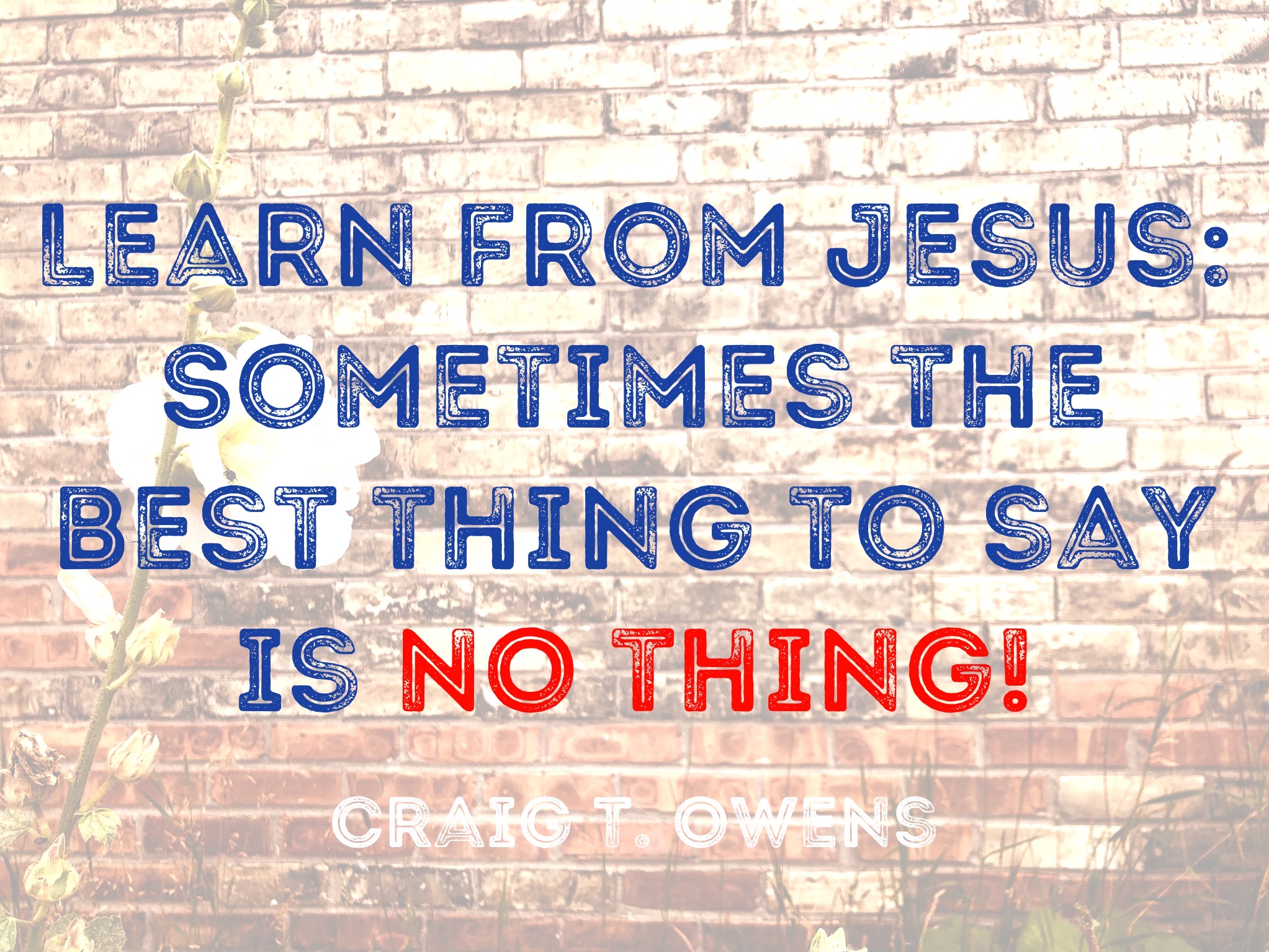
Let’s learn from Jesus: Sometimes the best thing to say is NO thing!
Peter pointed Christians to this example of Jesus when he wrote—
To this you were called, because Christ suffered for you, leaving you an example, that you should follow in His steps. “He committed no sin, and no deceit was found in His mouth.” When they hurled their insults at Him, He did not retaliate; when He suffered, He made no threats. Instead, He entrusted Himself to Him who judges justly. (1 Peter 2:21-23)
Jesus called us to let our good deeds shine brightly to bring glory to God. Fools will ridicule and mock and accuse us, just as the religious crowd did to Jesus. Let’s not let our bantering with fools put out the light of our testimony.
When I was a little kid in Sunday School, we used to sing a song called This Little Light Of Mine. We would hold up our pointer finger like a candle as we sang.But holding up our pointer finger across our lips is also a way to let our light shine too. Your silence in the face of foolish ridicule will speak so eloquently!
Let’s learn this lesson from Jesus. Instead of bantering with fools, entrust yourself to the perfect Judge who is perfectly keeping track of every word. He is the One who can add eloquence to your silence as you shine brightly for Him.
When you say, “I don’t know how to do this,” your mind stops looking for answers. But if we simply add one word—“I don’t know how to do this yet”—your mind will stay active. Adding this one word will unleash the creative, solution-finding part of your mind.
“Our preaching ought to have a voice for all classes, and all should have an ear for it. To suit our word to the rich alone is wicked sycophancy, and to aim only at pleasing the poor is to act the part of a demagogue. Truth may be so spoken as to commend the ear of all, and wise teachers seek to learn that acceptable style.” —Charles Spurgeon, Spurgeon And The Psalms
“How did Jesus live among us? He was different things to different people. See if you find yourself on this list.
This is a pretty long article, but it’s quite fascinating to see the engineering behind the artificial intelligence (AI) of ChatGPT.
“God is not afraid of my questions. Am I afraid of His answers?” —Betsy Owens
C.M. Ward was the speaker for the Revivaltime radio broadcast for a quarter of a century. Dan Betzer, who was also involved in these broadcasts, once said that he heard Rev. Ward preach on the story of the prodigal son in Luke 15 more than a dozen times without ever repeating himself. Here is a quick biographical sketch of this influential man’s ministry. I have also shared before my brief encounter with Rev. Ward when I was a young man.
A bonus quote from Charles Spurgeon: “‘No God’ means no law, no order, no restraint to lust, no limit to passion. Who but a fool would be of this mind? What a bedlam, or rather what a battleground, would the world become, if such lawless principles came to be universal!” —Charles Spurgeon, commenting on Psalm 53:1
Listen to the podcast of this post by clicking on the player below, and you can also subscribe on Apple, Spotify, or Audible.
I had a great time on the Thriving In Ministry podcast with Kyle Willis while his podcast partner Dace Clifton was on sabbatical.
There is a profound truth in a simple observation about how Jesus grew: “And Jesus grew in wisdom and stature, and in favor with God and man” (Luke 2:52). Jesus was healthy in all of these areas. That means He had the proper work-rest balance in each of these areas too.
We should learn from this example and find different ways to rest and recover mentally, physically, spiritually, and relationally, just as Jesus did.
I encourage you to take a listen to this part of our conversation.
How can you take a mental rest? Perhaps by reading or listening to something uplifting, or maybe simply taking time to think about what you’ve been thinking about.
For physical rest, you might take a nap, schedule a vacation, or contemplate changing something in your diet.
For spiritual rest, you could sing a worship song or quietly meditate on a passage of Scripture.
For relational rest, you could have breakfast with a good friend or go for a walk with your spouse.
And don’t forget to tap into the wisdom and expertise of others in these areas. Talk with a mental health professional about your mental health, see a doctor about your physical health, visit with a wise mentor to discuss your spiritual health, or see a counselor about your relational health. You don’t have to come up with all of the answers on your own.
The first mental health strategy we learned was asking the Holy Spirit to help us see a new path. Instead of thoughtlessly, automatically allowing our minds to go down the well-worn paths they have always gone down before, the Spirit of Truth can help us see a new path. Let me share our second strategy with you.
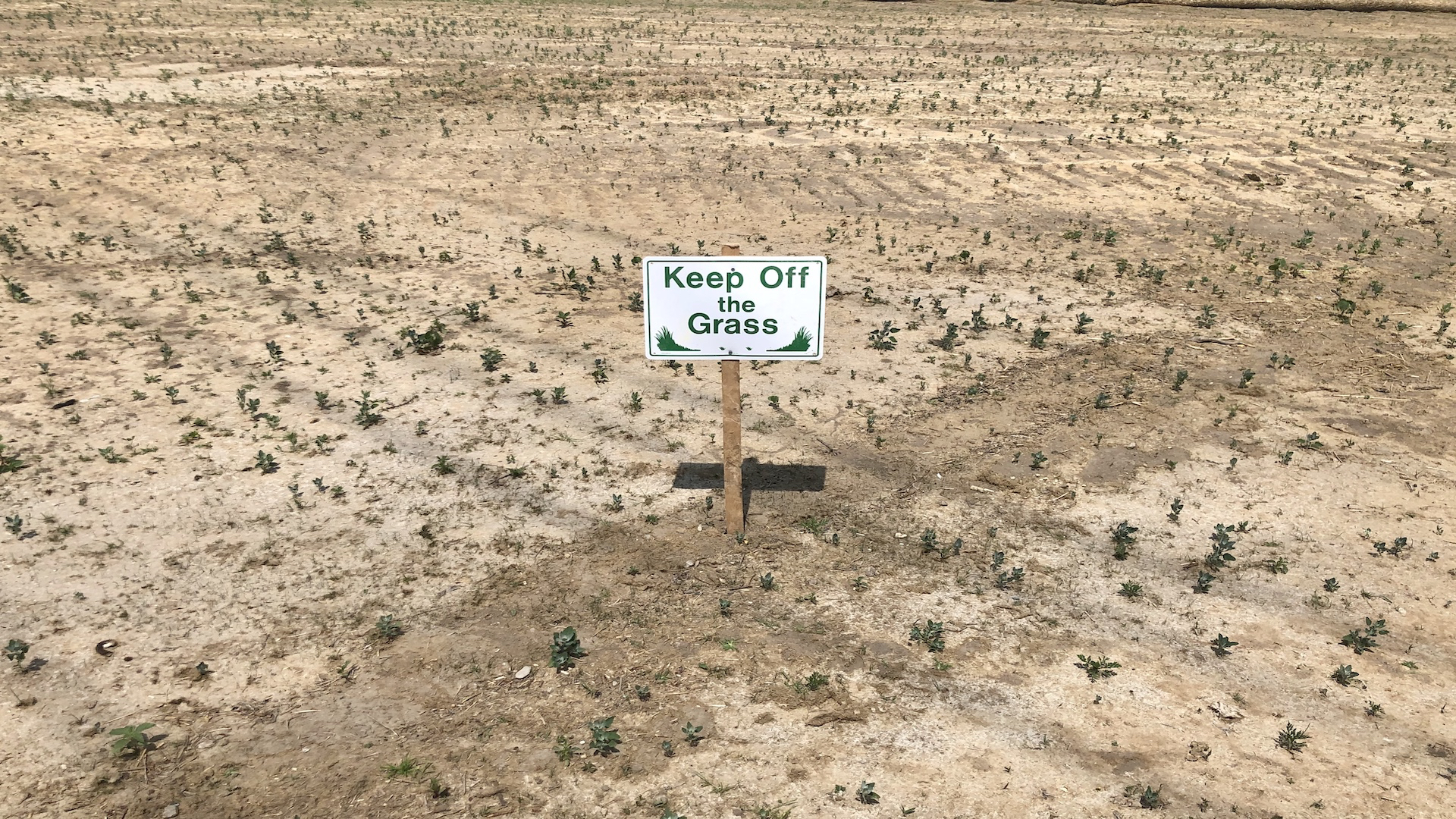
My wife and I had traveled to a neighboring community and when we got out of our car we saw an unusual sight. First of all, there was dirt and a few weeds where there used to be grass, and then there was this sign in the middle of that dirt field: Keep off the grass. That seemed like really wishful thinking to me! I may not have a green thumb—truthfully I probably have a “black thumb” when it comes to keeping plants alive—but I know enough to say that their grass wasn’t going to grow without a lot of effort.
Weeds grow by apathy, they are removed with continual effort. Fruit-bearing plants grow by careful attention, fertilization, and pruning. So if we don’t put in any effort at all, it’s the same thing as fertilizing the weeds.
Solomon made this observation: I went past the field of a sluggard, past the vineyard of someone who has no sense; thorns had come up everywhere, the ground was covered with weeds and the stone wall was in ruins (Proverbs 24:30-31).
Without effort on our part, weeds take over, sap the nutrients, and take up the space that could be used for fruit-bearing plants.
A farmer went out to sow his seed. As he was scattering the seed, some fell along the path, and the birds came and ate it up. Some fell on rocky places, where it did not have much soil. It sprang up quickly, because the soil was shallow. But when the sun came up, the plants were scorched, and they withered because they had no root. Other seed fell among thorns, which grew up and choked the plants. Still other seed fell on good soil, where it produced a crop—a hundred, sixty or thirty times what was sown. (Matthew 13:3-8)
When Jesus says that the thorns grew up and choked the plants, He uses a Greek word that means overwhelmed or suffocated. It’s the same word that is translated as drowning (see Luke 8:33). What weeds do to our gardens, weed thoughts do to our minds.
We all know that when we see a weed pop up above the ground, there is a root below the ground that is supporting it. The sooner we pull that weed, the more likely we are to remove the troublesome root as well.
What about our minds? What are the roots? Jesus identified the roots this way: For out of the heart come evil thoughts—murder, adultery, sexual immorality, theft, false testimony, slander (Matthew 15:19). Jesus taught that we murder, commit adultery, lust, and slander in our hearts long before it ever happens in our words or physical actions.
So when a “weed word” pops out, what do we do? If we do nothing, we fertilize that weed. If we ignore it, we allow that weed to strengthen its hold and begin to choke out the fruitful plants. If we simply say, “Oops, that was a slip of the tongue; I’ll do better to control it next time,” we haven’t pulled the weed, but we’ve fertilized it.
Remember that weeds flourish by apathy, but fruitfulness requires effort.
Back in the parable of the sower, what is the difference between the seed among weeds and the seed in fertile soil? It’s simply the presence of weeds or thorns! If we allow the Holy Spirit to help us pull the weeds, we’ve increased the amount of ground that can be fruitful and produce a crop—a hundred, sixty or thirty times what was sown.
Jesus concludes by reminding us that our ears need to hear—we need to hear His words, and we need to hear our own weed words that don’t align with His words. Then we have a choice: apathetically let the weeds remain, or allow them to be pulled up.
Allow me to share my paraphrase of a passage in Hebrews 12—
My son, do not make light of the Lord’s pruning, and do not lose heart when He weeds your mind, because the Lord prunes the one He loves, and He weeds the garden of everyone He accepts as His son so they can be more fruitful. (my paraphrase of Hebrews 12:5-6)
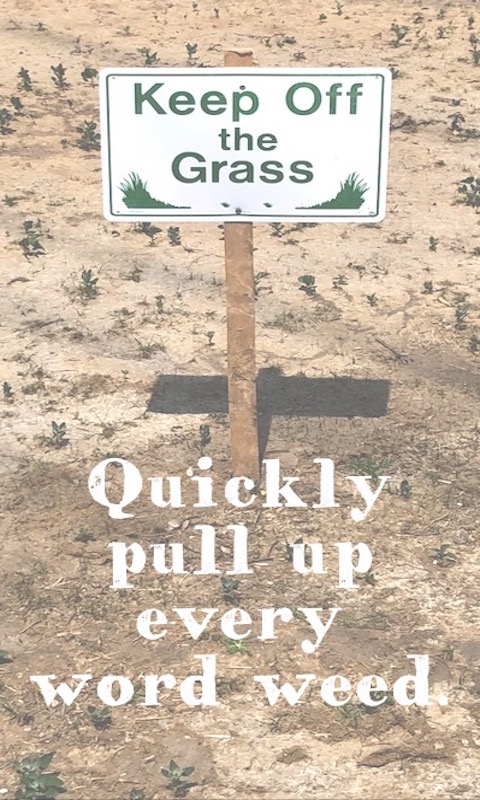
Our mental health matures when we acknowledge the word weeds we are shown, and then quickly allow the Father to prune those. The Holy Spirit can continue to help us weed the soil of our minds so that it remains a fertile growing place for the seed of God’s Word. By doing this, we will grow in God-pleasing fruitfulness.
If you would like to download the graphic of this reminder for your phone, simply leave me a comment with the model of the phone, and I’ll get the right-sized graphic right out to you. And if you missed the first message in this series, you can review that lesson by clicking here.
Pastors, on Monday morning, as you debrief how things went on Sunday, if you are feeling a bit discouraged, I want you to consider something Jesus said. Your success in ministry is not exclusively seen in the harvest you reap, but in the seeds you are sowing. Keep sowing good seed faithfully and then let God help it grow.
Many people turn to pornography when they are feeling bad about themselves. Sadly, watching porn can actually diminish a person’s self-esteem. Check out this post from Fight The New Drug.
“We ought above all things to desire a heavenly happiness; to be with God and dwell with Jesus Christ. Though surrounded with outward enjoyments, and settled in families with desirable friends and relations; though we have companions whose society is delightful, and children in whom we see many promising qualifications; though we live by good neighbors, and are generally beloved where known; we ought not to take our rest in these things as our portion. We should be so far from resting in them, that we should desire to leave them all, in God’s due time. We ought to possess, enjoy and use them, with no other view but readily to quit them, whenever we are called to it, and to change them willingly and cheerfully for heaven.” —Jonathan Edwards
“Jesus didn’t preach to tell you to turn over a new leaf, but to turn you to a new life.” —Reinhard Bonnnke
Steven Lee has an excellent post entitled Good leaders are easy to follow. I wholeheartedly concur! “A church’s willingness to obey and submit affects the joy and the care they receive from their leaders. But the reverse is true as well. Leaders can lead in a way that makes obedience and submission easy and happy, or difficult and frustrating. Shepherds shape the habits of the sheep.”
T.M. Moore has a series of posts on apologetics, which I encourage you to check out. In one post he writes, “God is not a capricious Deity. He does not act in ways that make it difficult to know Him or His will. His purposes are carefully considered and prudentially engaged, and in such a way that human beings can understand what He is about. … God shows us that He Himself is reasonable in that He makes known Himself and His will in a wide range of rational ways—through types and symbols and teachings and verbal exchanges of many different sorts. Anyone who takes the time to read the Bible can understand it. Its stories are stories about people like us. The teachings of Scripture are not shrouded in arcane or mystical language. What God has done and what God requires can be clearly discerned by any reasonable person, because God reveals Himself and His will in terms amenable and accessible to reason.”










 Craig T. Owens