Links & Quotes

Doug Clay, the General Superintendent of the Assembly of God wrote, “Our nation needs revival! 

“Culture may well be at a deeply dark moment, but that’s when the Church can shine the brightest as Christ’s witness to the world. I’m reminded of Romans 8:19 (Message), ‘The created world itself can hardly wait for what’s coming next.’ 

“A.W. Tozer once said, ‘The world is waiting to hear an authentic voice, a voice from God—not an echo of what others are saying, but an authentic voice.’ Let’s rise and be that authentic voice to a generation that is desperately in need.”

“What satan put into the heads of our remote ancestors was the idea that they could ‘be like gods’—could set up on their own as if they had created themselves—be their own masters—invent some sort of happiness for themselves outside God, apart from God. And out of that hopeless attempt has come nearly all that we call human history—money, poverty, ambition, war, prostitution, classes, empires, slavery—the long terrible story of man trying to find something other than God which will make him happy.” —C.S. Lewis

Meet Piper. She was abandoned with her mother and one other sibling. The mother then left the two kittens behind, who were hiding in a storm pipe. We were able to rescue this little calico and named her Piper as a reminder of where she was rescued from.

John Stonestreet asks, “Why are pro-abortion activists so committed? Because of lies built upon centuries of bad ideas….” Check out some of those bad ideas that have such devastating consequences.

Physicist Brian Cox discusses where God fits into scientists’ understanding of the universe. Two statements that are interesting to me—“we don’t know all the laws of science” (at 1:17), and “science is only an observational framework” (at 2:40). Both of these statements fit well with my biblical creationist paradigm.

Thursdays With Spurgeon—Encouragement For Preachers

This is a weekly series with things I’m reading and pondering from Charles Spurgeon. You can read the original seed thought here, or type “Thursdays With Spurgeon” in the search box to read more entries.

Listen to the podcast of this post by clicking on the player below, and you can also subscribe on AppleSpotify, or Audible. 

Encouragement For Preachers

…For the mouth of the Lord has spoken (Isaiah 1:20).

     We preach because ‘the mouth of the Lord has spoken.’ It would not be worth our while to speak what Isaiah had spoken if in it there was nothing more than Isaiah’s thought—neither should we care to meditate hour after hour upon the writings of Paul, if there was nothing more than Paul in them. … The true preacher, the man whom God has commissioned, delivers his message with awe and trembling because ‘the mouth of the Lord has spoken.’ … 

     Woe unto us if we dare to speak the Word of the Lord with less than our whole heart and soul and strength! Woe unto us if we handle the Word as if it were an occasion for display! If it were our own word, we might be studious of the graces of oratory. But if it is God’s Word, we cannot afford to think of ourselves. … Because the mouth of the Lord has spoken the truth of God, we therefore endeavor to preach it with absolute fidelity. …  

     Believing that ‘the mouth of the Lord has spoken,’ it is my duty to repeat God’s Word to you as correctly as I can after having heard it and felt it in my own soul. It is not mine to amend or adapt the gospel. …  Again, dear friends, as ‘the mouth of the Lord has spoken,’ we speak the divine truth with courage and full assurance. Modesty is a virtue, but hesitancy when we are speaking for the Lord is a great fault. …  

     We preach not the gospel by your leave. We do not ask tolerance nor court applause. We preach Christ crucified, and we preach boldly as we ought to speak because it is God’s Word not our own. … We cannot use ‘ifs’ and ‘buts,’ for we are dealing with God’s ‘shalls’ and ‘wills.’ If He says it is so, it is so. And there is the end of it. Controversy ceases when Jehovah speaks [Jeremiah 1:17-19].

From The Infallibility Of Scripture

Preaching God’s Word is not for the faint of heart. It takes one who is confidently humbled—confident that God has spoken and humbled that He would choose someone like me to speak His Word to His people. 

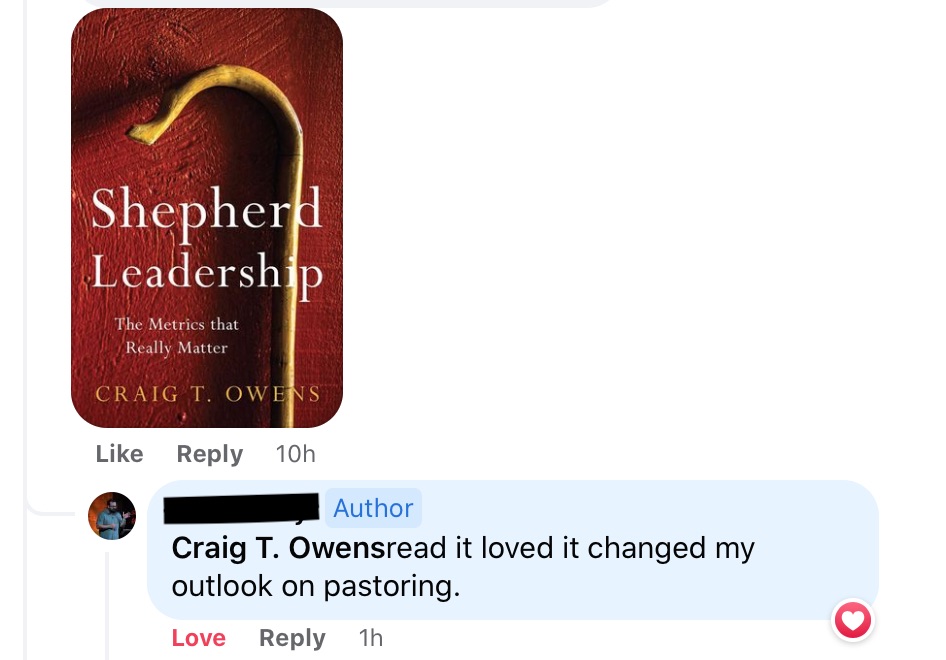
In my book Shepherd Leadership: The Metrics That Really Matter I wrote: 

Check this out: “Now Moses was a very humble man, more humble than anyone else on the face of the earth” (Numbers 12:3). Who wrote the book of Numbers? If you answered “Moses,” you are correct. Doesn’t that sound a bit brash to declare that you are more humble than anyone else on the earth? Yet, God allowed Moses to pen those words, making that a Holy Spirit-inspired statement of fact. Humility is a double-edged sword: it can serve a leader well when it is balanced with appropriate confidence, but it is a detriment to an organization’s health if it is self-de-basing humility that undercuts a leader’s credibility. 

The God-honoring preacher gets his message from the mouth of the Lord, and then confidently endeavors “to preach it with absolute fidelity.” Whether others praise of criticize, the humble leader says, “I am only God’s servant speaking God’s Word.” 

Preachers, let’s make sure that everything we confidently and humbly share from our pulpits is the whole counsel of what has been spoken by the mouth of the Lord.

►► Would you please prayerfully consider supporting this ministry? My Patreon supporters get behind-the-scenes access to exclusive materials. ◀︎◀︎

Idolatry

Listen to the podcast of this post by clicking on the player below, and you can also subscribe on AppleSpotify, or Audible. 

Right at the beginning of his book of prophecy, Micah asks four penetrating questions—

What is Jacob’s transgression? Is it not Samaria? What is Judah’s high place? Is it not Jerusalem? (Micah 1:5)

Idolatry is the elevation of anyone or anything to a place of adoration. Any place, person, or practice can become my god if I give it more attention than I give Jehovah. 

In Micah’s prophetic warning, idolatry had become symbolized by the capitol cities of Samaria and Jerusalem. The people were looking to the leaders and cultural practices in those cities instead of looking to God. 

I wonder if we do the same thing today?

  • Do we look to Washington DC for political help? 
  • Do we find our financial wisdom on Wall Street? 
  • Does the culture of Hollywood inform how we should live? 
  • Does the music of Nashville determine the song in our hearts? 
  • Do Harvard, Berkeley, or Stanford tell us how to think? 

When I’m in trouble, when I need answers, when I’m looking for comfort, where do I turn first? My first reaction—my go-to source—is a good indication of who my deity is. When Micah became aware of the idolatry of his people, his response was to weep, wail, howl, and moan over their sin (v. 8). This should be our response as well whenever we see idols replacing Jehovah in our heart or in the hearts of others. 

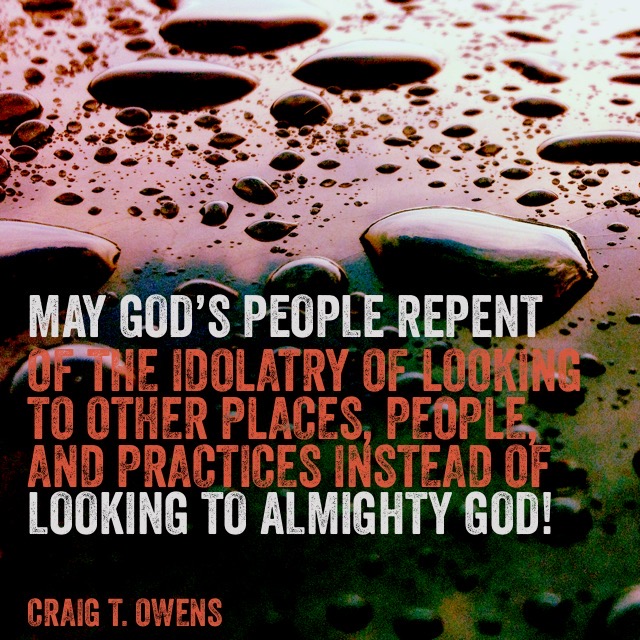
May God’s people repent of the idolatry of looking to other places, people, and practices instead of looking to Almighty God! 

►► Would you please prayerfully consider supporting this ministry? My Patreon supporters get behind-the-scenes access to exclusive materials. ◀︎◀︎

The Craig And Greg Show: Generous Leaders Unleash Potential

Listen to the audio-only version of this podcast by clicking on the player below, or scroll down to watch the video.

On this episode of “The Craig And Greg Show” we talk about: 

  • [0:15] I adapt a verse from the Bible to talk about generosity and Greg agrees with me. 
  • [1:00] Generosity is so much more than donating money.
  • [2:15] Generous leaders are proactive, and have appropriate boundaries.
  • [2:48] Leaders cannot fake generosity.
  • [3:42] Generosity isn’t in the big things, but the everyday things.
  • [4:25] Time, talent, treasure are all important components in generosity.
  • [6:00] Greg shares a telling statistic about how Americans give to charities.
  • [6:45] Greg says giving your network can be one of the most generous things a leader does. 
  • [7:37] Generosity requires an abundance mindset.
  • [8:52] What holds us back from being generous?
  • [10:00] Comparisons kill generosity.
  • [10:27] Being generous expands our influence, but stinginess strangles it.
  • [12:55] Our teammates are looking for places to be generous.
  • [13:53] Generosity opens doors for new opportunities.
  • [14:51] Greg shares an insightful quote from Anne Frank 
  • [15:17] I make a connection to the change in Ebenezer Scrooge’s life.
  • [16:11] How we define a generous leader.
  • [17:38] Our leadership challenge: how can you view generosity differently?

Check out this episode and subscribe on YouTube so you can watch all of the upcoming episodes. You can also listen to our podcast on Spotify and Apple.

Spurgeon And The Psalms (book review)

Listen to the podcast of this post by clicking on the player below, and you can also subscribe on AppleSpotify, or Audible. 

Spurgeon And The Psalms hits a sweet spot for me: Charles Spurgeon is one of my favorite preachers and the Psalms are my go-to resource when I need encouragement, perspective, or vocabulary for my heartfelt prayers. The combination of the Prince of Preachers and the Psalter grabbed my attention before I even opened the cover.

After I opened the cover, I was not disappointed. I love the format of each chapter. For each chapter your eyes go to Charles Spurgeon’s commentary first, and then you can read the chapter itself. The reason why I like this layout is because Spurgeon has a tendency to tell us not what the psalmist says, but what we should look for as we read that psalm. This remains true to what Spurgeon himself felt about biblical commentaries.

I always make my Bibles my own. By that I mean that I underline, highlight, circle, and write margin notes throughout my Bible. The wide margins in this book make it ideal to use as a prayer companion. I believe the Bible is not a Book to be read through, but a Book to be prayed through. Nowhere is that more true than in the Psalms, where such deep emotions are poured out in God’s presence, helping us give voice to our deepest prayers.

If you have never read anything from Charles Spurgeon, this is an excellent place to get started. After you have read his insights here, I’m confident that you will want to read more. Even if you are familiar with Spurgeon’s sermons and books, this book is going to be an excellent addition to your library.

I am a member of the Bible Gateway Blogger Grid and I reviewed this book at their invitation 

►► Would you please prayerfully consider supporting this ministry? My Patreon supporters get behind-the-scenes access to exclusive materials. ◀︎◀︎

Expecting Miracles

Listen to the podcast of this post by clicking on the player below, and you can also subscribe on AppleSpotify, or Audible. 

Last week we saw the in-ness of the Holy Spirit guiding us, teaching us, and empowering us to overcome evil. For what purpose? Why does the Holy Spirit lead us this way? Because the Spirit desires to draw everyone into this in-ness. His work in and through our lives is always unmistakable and irrefutable. 

A good word to describe the unmistakable and irrefutable work of the Spirit is: Miracles. 

Miraculous signs characterized the earthly ministry of Jesus, and they also should to the hallmark of Spirit-baptized Christians today who are sharing the Gospel with others (Acts 10:38; 2:43; Mark 16:20). 

Some may ask, “Why don’t we see as many miracles today?” And some skeptics even point to a decrease in miracles as proof of their cessationist paradigm. But consider this: Has God’s power been diminished? Have all needs been met? Are there no more sickness or unsolvable problems of human suffering? Is everyone free of the power of the devil? 

No, of course not! 

So that would mean if there is any diminishment in miracles, the diminishment would seem to be in us! Particularly I think it is that we no longer expect miracles to happen.

Not only should we expect miracles, but we should also expect to be the vessel through which the Holy Spirit demonstrates the miracle. 

Here are 8 miracles that we should be expecting:

  1. Minds opened that were blinded to the Gospel message—2 Corinthians 4:4-6 
  2. Thoughts transformed—Romans 12:2-3; Philippians 2:5 
  3. Invincible words spoken by us to others—Acts 6:10 
  4. Love tangibly expressed through our spiritual gifts—John 13:34-35; 1 Corinthians 12:1, 31—13:3 
  5. Gifts of the Spirit used constructively in the church to both evangelize the sinner and edify the saint—1 Corinthians 14
  6. Compassionate actions constantly initiated to address areas of human suffering—Philemon 4-7, 17
  7. Powerful prayers prayed and answered—Acts 3:6, 4:31, 13:2-3 
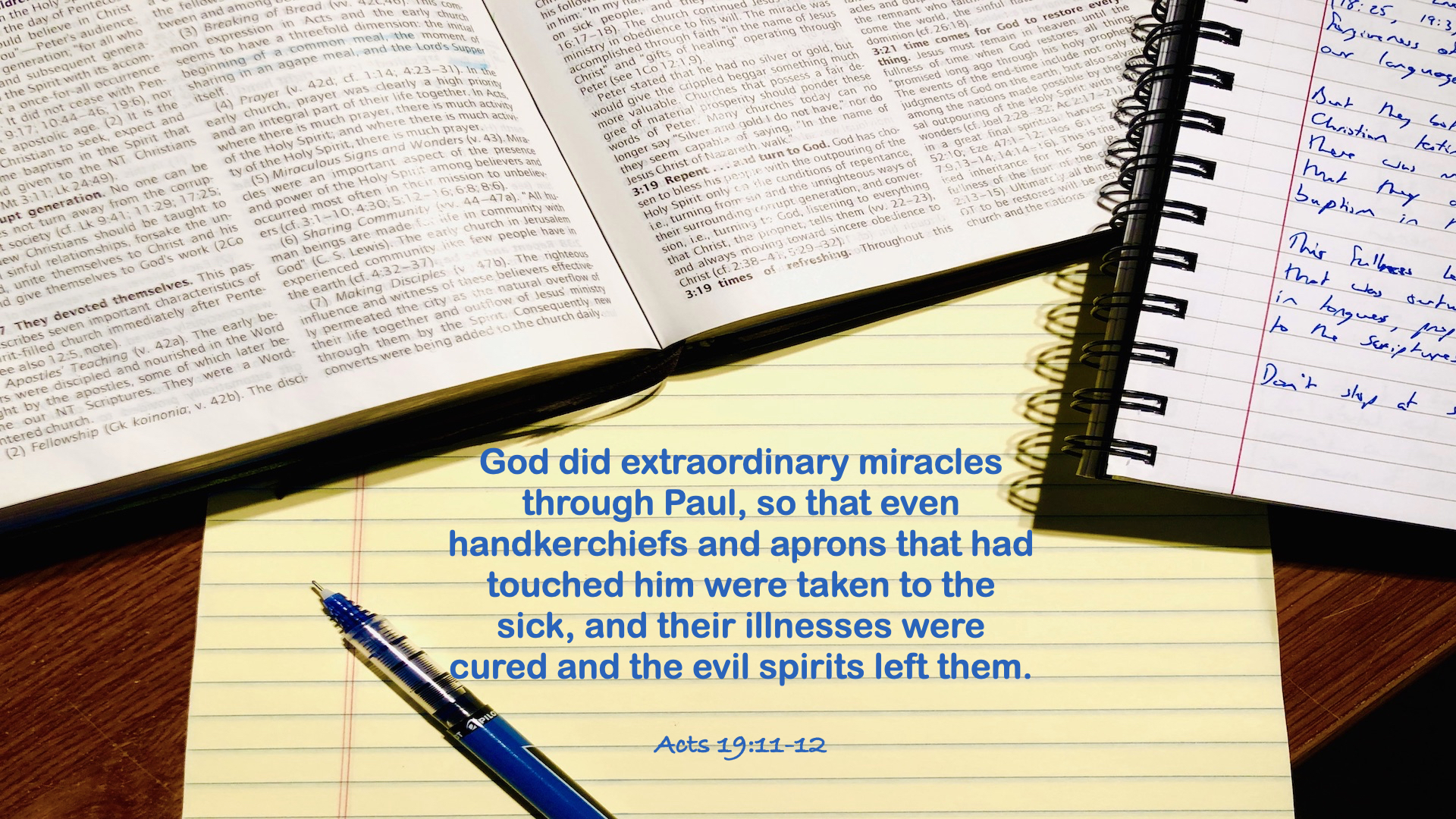
  8. Miracles consistently seen as authenticating the Gospel message—Acts 10:38, 19:11-12 

(Check out all of the above scripture verses by clicking here.) 

Don’t limit the Supernatural power of the Holy Spirit in you to only natural expressions. Constantly expect miracles! 

If you’ve missed any of the messages in our series We Are: Pentecostal, you can find them all by clicking here.

►► Would you please prayerfully consider supporting this ministry? My Patreon supporters get behind-the-scenes access to exclusive materials. ◀︎◀︎

Poetry Saturday—Prayer I

Listen to the podcast of this post by clicking on the player below, and you can also subscribe on AppleSpotify, or Audible.

Prayer the Churches banquet, Angels age,
     Gods breath in man returning to his birth,
     The soul in paraphrase, heart in pilgrimage,
The Christian plummet sounding heav’n and earth;

Engine against th’ Almightie, sinners towre,
     Reversed thunder, Christ-side-piercing spear,
     The six-daies world transposing in an houre,
A kinde of tune, which all things heare and fear;

Softnesse, and peace, and joy, and love, and blisse,
     Exalted Manna, gladnesse of the best,
     Heaven in ordinarie, man well drest,
The Milkie way, the bird of Paradise,

Church-bels beyond the starres heard, the souls bloud,
     The land of spices; something understood. —George Herbert (**spelling is 1663 English**)

►► Would you please prayerfully consider supporting this ministry? My Patreon supporters get behind-the-scenes access to exclusive materials. ◀︎◀︎

“Doing” Church

Listen to the podcast of this post by clicking on the player below, and you can also subscribe on AppleSpotify, or Audible. 

I had a great time on the 200churches podcast with Jeff Keady. 

Jeff and I talked about some of the changes pastors and churches were forced to confront during the COVID shutdowns. For me, this was a time for my leadership team to examine why we “do church” the way we do. These shutdowns helped us identify the things that were biblical and non-biblical. 

One of the reasons I gave the subtitle “The Metrics That Really Matter” to my book was because of the frustration I saw in so many pastors who were feeling unsuccessful. I discovered that their frustration was largely due to trying to live up to metrics that simply aren’t found in the pages of Scripture. As I wrote in the preface of my book—

My larger concern is that churches, parachurch organizations, and nonprofit ministries that are largely founded to fulfill a biblical mandate are straying from the simple, freeing truths found in the Bible. Or maybe I should say that they are adding things to their ministries that aren’t in the pages of Scripture. Whichever way you want to say it, the result is the same: We are using the wrong metrics to define “success” for our ministries. I fear that in our focus on unbiblical practices, we are missing the joy of really doing ministry. 

Our ministry should be joyful to us as leaders and joy-giving to those to whom we are ministering. If it’s draining instead of fulfilling, that may be an indication that we are trying to gauge success by monitoring non-biblical metrics. 

If you want to dig into this a bit more, check out two previous posts I wrote: 

I’ll be sharing more clips from this 200churches interview soon, so please stay tuned. Shepherd Leadership: The Metrics That Really Matter is available in print or ebook, and in audiobook through either Audible or Apple. 

►► Would you please prayerfully consider supporting this ministry? My Patreon supporters get behind-the-scenes access to exclusive materials. ◀︎◀︎

Links & Quotes

Dan Reiland shares 5 reasons leaders stumble and fall.

Max Lucado addresses the sickening news of sexual abuse coverups in the church. He wrote, “[Jesus] defended the weak, stood up for the forgotten. The idea that His church would be unsafe for His sons and daughters disturbs Him deeply. And you can bet your Bible that He’ll turn a few tables. If history teaches us anything it is this: Jesus will not sit idle while His church drifts from His cause. ‘I will rescue My flock from their mouths,” He declared through a prophet. ‘It will no longer be food for them’ (Ezekiel 34:10). 

“Repentance is necessary; heartfelt, tear-stained, face-on-the floor repentance. By all of us in positions of leadership. Will we see it? I pray so. Regardless, I pray that you will pursue the difficult path of seeking Christ in spite of Christians who have let you down. His pastors have failed to pastor. But when they don’t, He still does. Let Him pastor you.”

Darren Carlson wrote, “Healthy pastors experience the fullness and complexity of their emotions, and then hold them up against the sinlessness of Christ. How might Jesus respond to the pain and loss and victory and neediness in front of me? We grow emotionally as leaders by studying the heart of Jesus as he walks among sinners and sufferers.” His post ‘Healthy Pastors Have Emotions: How to Test and Cultivate Your Feelings’ is an excellent read. I explore the emotional health of shepherd pastors in my book.

Nicky Cruz’s story is a fascinating one. His message for America today should be heeded!

My friend Greg Heeres and I had a helpful discussion about leaders and forgiveness on our Craig And Greg Show podcast. Here is a brief snippet:

Thursdays With Spurgeon—Prayer Preparation And Prayer Expectation

This is a weekly series with things I’m reading and pondering from Charles Spurgeon. You can read the original seed thought here, or type “Thursdays With Spurgeon” in the search box to read more entries.

Listen to the podcast of this post by clicking on the player below, and you can also subscribe on AppleSpotify, or Audible. 

Prayer Preparation And Prayer Expectation

In the morning, Lord, You hear my voice; in the morning I lay my requests before You and wait expectantly. (Psalm 5:3) 

     Do we not miss very much of the sweetness and efficacy of prayer by a want of careful meditation before it, and hopeful expectation after it? … We too often rush into the presence of God without forethought or humility. We are like people who present themselves before a king without a petition, and what wonder is it that we often miss the end of prayer? We should be careful to keep the stream of meditation always running, for this is the water to drive the mill of prayer. … Prayer without fervency is like hunting with a dead dog, and prayer without preparation is hawking with a blind falcon. Prayer is the work of the Holy Spirit, but He works by means. God made man, but He used the dust of the earth as a material. The Holy Ghost is the Author of prayer, but He employs the thoughts of a fervent soul as the gold with which to fashion the vessel. Let our prayers and praises be not the flashes of a hot and hasty brain but the steady burning of a well-kindled fire.

From Spurgeon And The Psalms

Sadly, I think we’ve become so accustomed to instant-everything in our society that it has seriously limited our prayer life. We walk into our prayer closet without an idea of what we’re going to pray, rattle off a few requests, say “Amen,” and walk out of our prayer closet exactly the same as we walked in. 

There is certainly help for us when we are so distressed—so at our wits’ end—that we don’t even know what to pray, but this is not what David is saying in Psalm 5. David is making it a regular practice to come into God’s presence with his requests at the ready, and he is walking away from his prayer time in eager expectation of God’s soon-to-be-realized answers. 

The Amplified Bible says, “I prepare a prayer…and watch and wait for You to speak to my heart.” 

I think it is a good idea for us to:

As Spurgeon said, “Let our prayers and praises be not the flashes of a hot and hasty brain but the steady burning of a well-kindled fire.”

►► Would you please prayerfully consider supporting this ministry? My Patreon supporters get behind-the-scenes access to exclusive materials. ◀︎◀︎