Links & Quotes

Christians should run their entire race with joy—we should soar across the finish line! Check out this full sermon on Psalm 132.

I have lots of new content every week, which you can check out on my YouTube channel. 

“Joy is never in our power and pleasure often is.” —C.S. Lewis

John Piper points out that thinking and knowing are essential for Christian maturity, but there is also a danger in knowledge. How do we find the correct balance?

I talked about a Christian’s self-examination this week, and then I came across this from T.M. Moore: “Christians do not fear to examine themselves. Especially when it seems something may be lacking in our walk with and work for the Lord, we need to heed the words of the apostle Paul and do some serious soul-searching and altering of our life course (2 Corinthians 13:5). Examining ourselves involves carefully considering how we use our time (Ephesians 5:15-17) as well as what’s going on in our soul and our life. We must not fear to examine ourselves nor resent when others may encourage us to do so.”

Darryl Cooper’s revisionist history of Winston Churchill and World War II is flawed on so many levels. John Stonestreet does a great job debunking most of Cooper’s points, but we should also read history for ourselves and be able to answer those who would twist it for their own purposes.

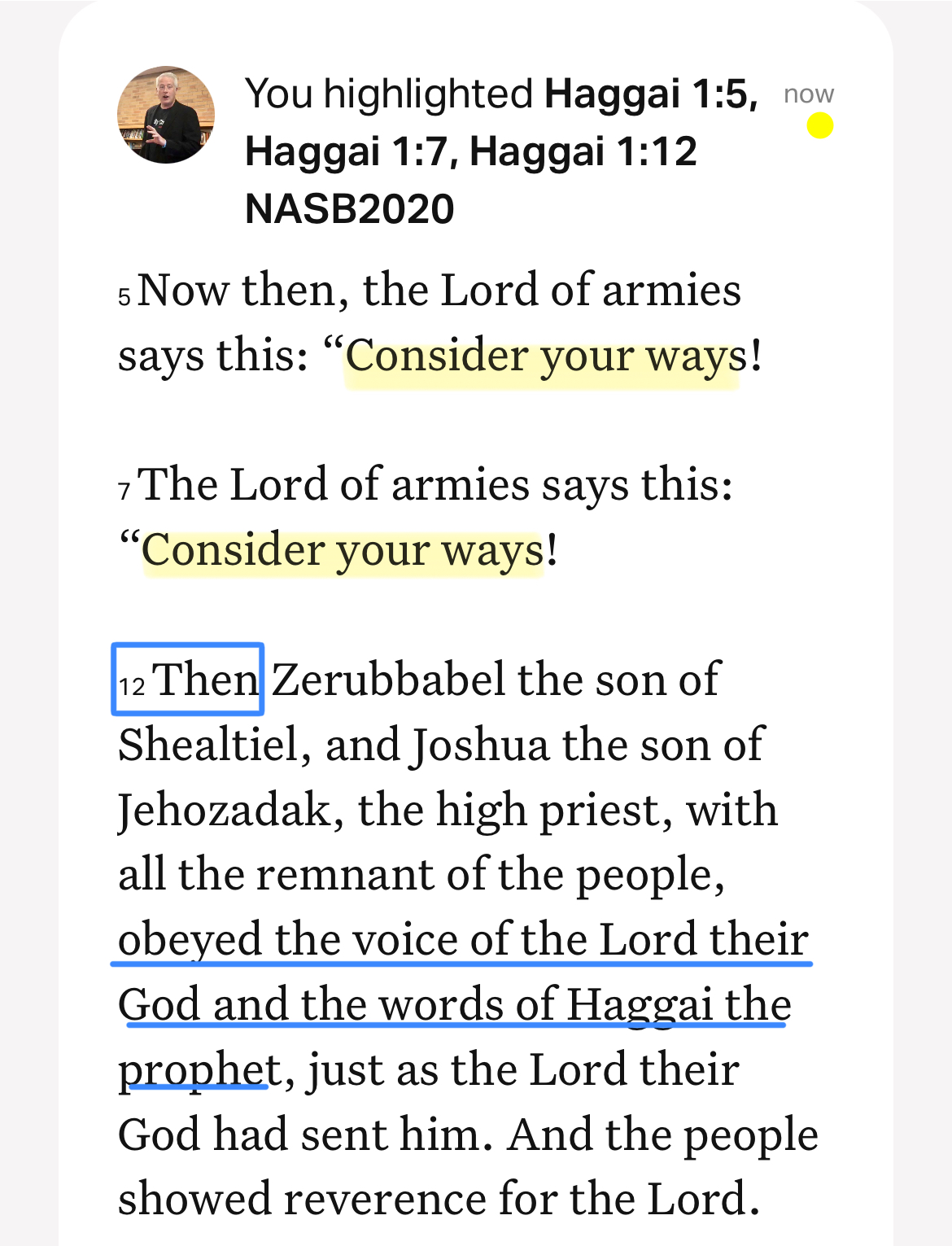
God’s messengers call people to consider the way they are currently living in comparison to the way God has called them to behave. Wise people will heed this call and repent from any ways that deviate from God’s way. I talked in more depth about Haggai and his message of considering our ways in my series on the minor prophets.

“Come to Jesus by quitting every other hope, by thinking of Him, believing God’s testimony about Him, and trusting everything to Him. If you thus come to Him, the rest which He will give you will be deep, safe, holy, and everlasting.” —Charles Spurgeon 

One more from T.M. Moore: “We will only hunger and thirst for more of the Lord and His promises as we consider how far short of that might and greatness we fall. … I suspect that most Christians today are fairly satisfied with the state of their faith. They have a ‘good enough’ experience of Jesus and they’re not really thirsting for much more. But the work of shepherds is to help people realize that splashing around in the mud puddle of faith is not to be compared with sailing on the ocean of God’s grace and power.”

Book Reviews From 2021

Listen to the podcast of this post by clicking on the player below, and you can also subscribe on AppleSpotify, or Audible.

I love reading, and I love sharing my love of good books with others! Here is a list of the books I read and reviewed in 2021. Click on a title to be taken to that review.

24

AC/DC

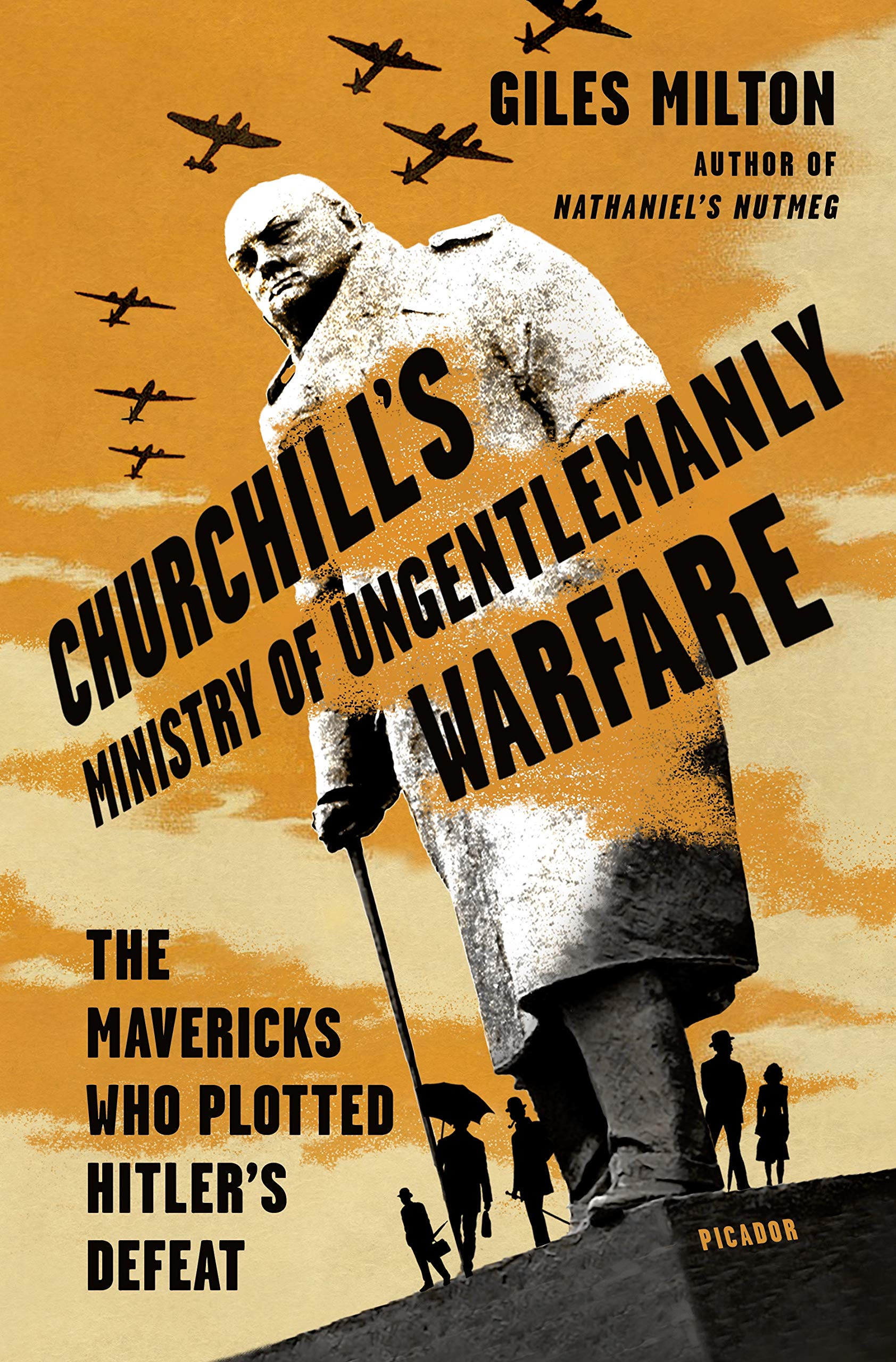
Churchill’s Ministry Of Ungentlemanly Warfare

Faithlife Illustrated Study Bible

George Whitefield

Hal Moore On Leadership

His Last Bow

Holy Sexuality And The Gospel

How Christianity Changed The World

How I Got This Way

How To Bring Men To Christ

Jesus On Trial

John Adams

Miracles Out Of Somewhere

My Lucky Life

Out Of The Silent Planet

Perelandra

Pilgrim’s Progress

Prayer

Prophet With A Pen

QB

Reading The Bible With The Founding Fathers

Secrets Of Dynamic Communication

Seeing Beauty And Saying Beautifully

Shepherd Leadership

Star Struck

Talking To GOATs

That Hideous Strength

The Art Of Writing And The Gift Of Writers

The Hidden Smile Of God

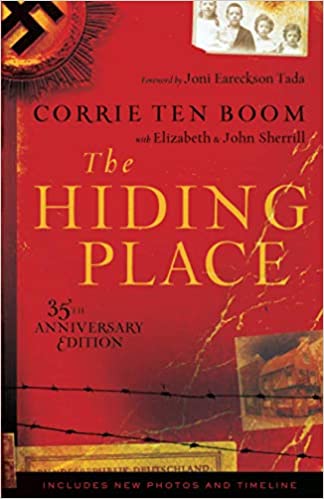
The Hiding Place

Thompson Chain-Reference Bible

To The Work!

Voice Of A Prophet

Washington’s Immortals

Word-For-Word Bible Comic: Jonah

Here are my book reviews for 2011.

Here are my book reviews for 2012.

Here are my book reviews for 2013.

Here are my book reviews for 2014.

Here are my book reviews for 2015.

Here are my book reviews for 2016.

Here are my book reviews for 2017.

Here are my book reviews for 2018.

       Here are my book reviews for 2019.

Here are my book reviews for 2020.

►► Would you please prayerfully consider supporting this ministry? ◀︎◀︎

Churchill’s Ministry Of Ungentlemanly Warfare (book review)

Listen to the podcast of this post by clicking on the player below, and you can also subscribe on Apple or Spotify.

This book was a complete and pleasant surprise! I have read so many books about Winston Churchill, including a number of books that Churchill himself wrote, and I never knew about the prime minister’s special group that played such havoc with the Nazi war machine. Giles Milton unpacks the fascinating tale in Churchill’s Ministry Of Ungentlemanly Warfare. 

This book reads like a classic spy novel, but it is the actual historic record of saboteurs, weapons makers, and out-of-the-box plotters who absolutely frustrated Adolph Hitler’s war plans at nearly every turn. The start of World War II caught so many by surprise that they were woefully unprepared to confront what appeared to be the invincible German military. Some in the British government hit upon the idea of fighting a guerrilla-style war to slow down the Germans’ advance. 

Mr. Milton does a marvelous job of following six key gentlemen in the way they created new weapons, new training regimens, and new fighting styles. Everything they did was so unconventional that the traditional leaders in the British government and military hesitated to give their support to this special ministry, and even went out of their way to thwart their efforts. Fortunately, Mr. Churchill was all-in on this group and cleared out the roadblocks for them. 

Whether you enjoy fictional spy novels or non-fictional accounts of historical events, I’m confident you will thoroughly enjoy Churchill’s Ministry Of Ungentlemanly Warfare. 

►► Would you please prayerfully consider supporting this ministry? ◀︎◀︎

The Hiding Place (book review)

Listen to the podcast of this post by clicking on the player below, and you can also subscribe on Apple or Spotify.

In The Problem of Pain, C.S. Lewis writes, “Suffering is not good in itself. What is good in any painful experience is, for the sufferer, her submission to the will of God, and, for the spectators, the compassion aroused and the acts of mercy to which it leads.” This sentiment was never more fully displayed than in the lives of the ten Boom family. Corrie ten Boom relates her story in The Hiding Place. 

The ten Boom family had lived in Holland for a couple of generations at the time the Germans occupied their country during World War II. Immediately, their family home and watch repair shop became a hub for underground resistance activity. But the start of this war was not the start of their compassionate activity in their city. The ten Booms lived out their Christian faith in tangible, compassionate ways every single day, and their neighbors reaped the benefits. 

The entire ten Boom family was actively involved in the efforts to protect at-risk people during the Nazi oppression of their country, including the elderly and sick, their Jewish neighbors, the mentally disabled, and the young men that were being pressed into duties to support the German war effort. As The Hiding Place progresses, the story begins to zoom-in on two sisters: Betsie and Corrie, especially their activities inside the German prisons and concentration camps in which they were imprisoned. 

The miracles that God performed for these women are too many to recount here, but it seems like hardly a page in the story passes before another miracle is seen. These Christian women took full advantage of each miracle and used them to continue to bring light and love into one of the most dark and hateful times in human history. Even after the war has ended and Corrie has returned to her Holland home, the ministry of healing, forgiveness, and reconciliation continued unabated through her tirelessly loving activities. 

The Hiding Place is truly a heroic tale! I highly recommend parents and grandparents reading it aloud to their children and grandchildren. May all Christians follow the example of the ten Boom family in finding ways to daily share the love of Jesus to their neighbors-in-need. 

►► Would you please prayerfully consider supporting this ministry? ◀︎◀︎

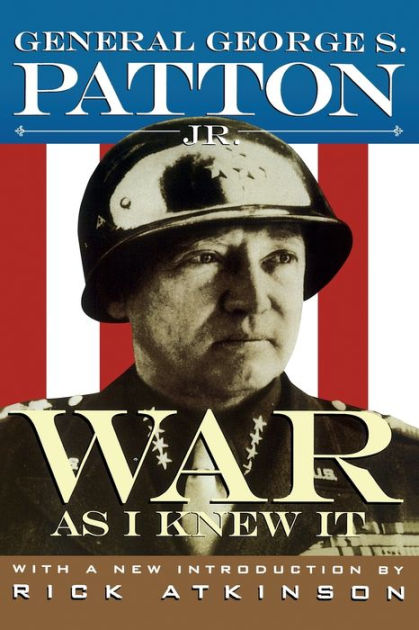
War As I Knew It (book review)

Throughout my life, I’ve had the privilege of meeting World War II soldiers who fought in the Third Army in Europe. I’ve said to them, “Oh, so you were Patton’s man.” And the response is always the same, “Yes sir!” they proudly respond with a smile. General George Patton was a unique military leader, and his memoirs called War As I Knew It capture his uniqueness. 

George Patton lived as if he were always in pursuit of something big. He always pushed himself, those under his command, and even those in leadership over him, to keep moving forward. His memoirs cover the final 2+ years of World War II, from the time he landed his troops in Africa until Germany surrendered. 

Patton’s Third Army was an unstoppable force! They covered more ground, took more territory, captured or killed more enemy combatants, liberated more cities, and destroyed more enemy material than any other army in US history! This was because of Patton’s drive, and because of his strenuous personal preparation before the war even started. 

These memoirs record Patton’s successes, but he also is transparent enough to list where he miscalculated and where he was simply a beneficiary of good fortune. 

For students of leadership, US history, or military history, War As I Knew It is a very insightful book. 

What Christians Believe (book review)

C.S. Lewis remains my all-time favorite author. His ability to explain concepts of theology is unparalleled in both his own time and into modern times. What Christians Believe is a classic case in point. 

During World War II, the BBC was looking for something both inspirational and educational to carry on their airwaves to the British troops abroad and the war-weary British citizens on the home front. They discovered a little-known professor of literature that presented something so fresh and revitalizing that his notoriety immediately skyrocketed throughout England! Part of what he presented as a series of audio essays for the BBC is captured in this book What Christians Believe

One of the things I enjoy about Lewis is his ability to simplify complex topics without feeling like he is “talking down” to you. What theologians had made so complex and out-of-reach to many of the uneducated, Lewis made accessible to a vast audience.

If you have a friend or family member that has asked you about your Christian faith, but doesn’t see to “get it” when you explain it, the short essays in this book may be just the thing to get the conversation started again. Better yet: read the chapters along with them and then get together for a time of discussion. I think you will be pleased with the doors that C.S. Lewis may open for deeper understanding and more productive conversations about your Christian faith. 

10 More Quotes From “When A Nation Forgets God”

Erwin Lutzer shares valuable history lessons in his book When A Nation Forgets God. In this book, he reveals some scary parallels between Nazi Germany and the current trends in the United States. To help bolster his case, Dr. Lutzer shares many historical quotes. Here are a few of them.

“The gas chambers of Auschwitz were the ultimate consequence of the theory that man is nothing but the product of heredity and environment—or as the Nazis like to say, ‘Of blood and soil.’ I’m absolutely convinced that the gas chambers of Auschwitz, Treblinka, and Maidanek were ultimately prepared not in some ministry or other of Berlin, but rather at the desks and in the lecture halls of nihilistic scientists and philosophers.” —Victor Frankl, psychologist and Holocaust survivor

“It would be misleading to give the impression that the persecution of Protestants and Catholics by the Nazi state tore the German people asunder or even greatly aroused the vast majority of them. It did not. A people who had so lightly given up their political and cultural and economic freedoms were not, except for a relatively few, going to die or even risk imprisonment to preserve freedom of worship.” —William Shirer, in The Rise And Fall Of The Third Reich

“Any society that would give up a little liberty to gain a little security will deserve neither and lose both.” —Benjamin Franklin

“We all declare for liberty; but in using the same words we do not all mean the same thing. With some the word liberty may mean for each man to do as he pleases with himself, and the product of his labor; while with others the same word may mean for some men to do as they please with other men, and the product of other men’s labor. Here are two, not only different, but incompatible things, called by the same name—liberty. And it follows that each of the things is, by the respective parties called by two different and incompatible names—liberty and tyranny.” —Abraham Lincoln

“This generation is not accidental; each step logically follows from what has preceded: the loss of the Bible leads to the loss of God, for in the Bible God is most clearly revealed; the loss of God leaves man at the naked mercy of his fellows, where might makes right.” —John Warwick Montgomery

“How fortunate for governments that the people they administer don’t think!” —Adolf Hitler

“Create a critical mass of people who cannot discern meaning and truth from nonsense, and you will have a society ready to fall for the first charismatic leader to come along.” —Richard Terrell

“The desire to believe something is much more persuasive than rational argument.” —Winston Churchill

“The magnitude of a lie always contains a certain factor of credibility, since the great masses of the people in the very bottom of their hearts tend to be corrupted rather than consciously and purposely evil, and that, therefore, in view of the primitive simplicity of their minds, they more easily fall a victim to a big lie than to a little one, since they themselves lie in little things, but would be ashamed of lies that were too big.” —Adolf Hitler, in Mein Kampf

“There is no problem in the wider culture that you cannot see in spades in the Christian Church. The rot is in us, and not simply out there. And Christians are making a great mistake by turning everything into culture wars. It’s a much deeper crisis.” —Os Guinness

You can read my review of When A Nation Forgets God by clicking here. And I also shared some quotes from Dr. Lutzer, which are posted here.

5 More Quotes + 2 Graphics From “The Beauty Of Intolerance”

This is the fourth set of quotes I’ve shared from Josh McDowell and Sean McDowell’s book The Beauty Of Intolerance. You can check out the other quotes here, here, and here; and if you missed my review of this book, please click here to read that.

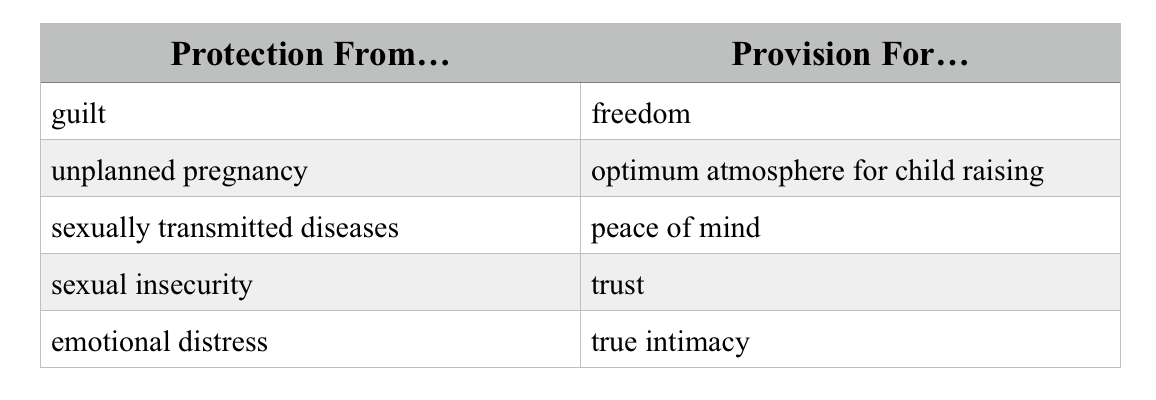
“Respecting the boundaries of sexual morality and prohibitions for extramarital and premarital sex does bring protection and provision. Here are just a few ways it does this:

boi-protection-and-provision

“Although sin has separated us from God, His original intent for us and the reality that we were created in His image have not changed. What we do or don’t do may distort that image, but our worth to God as human beings never changes.”

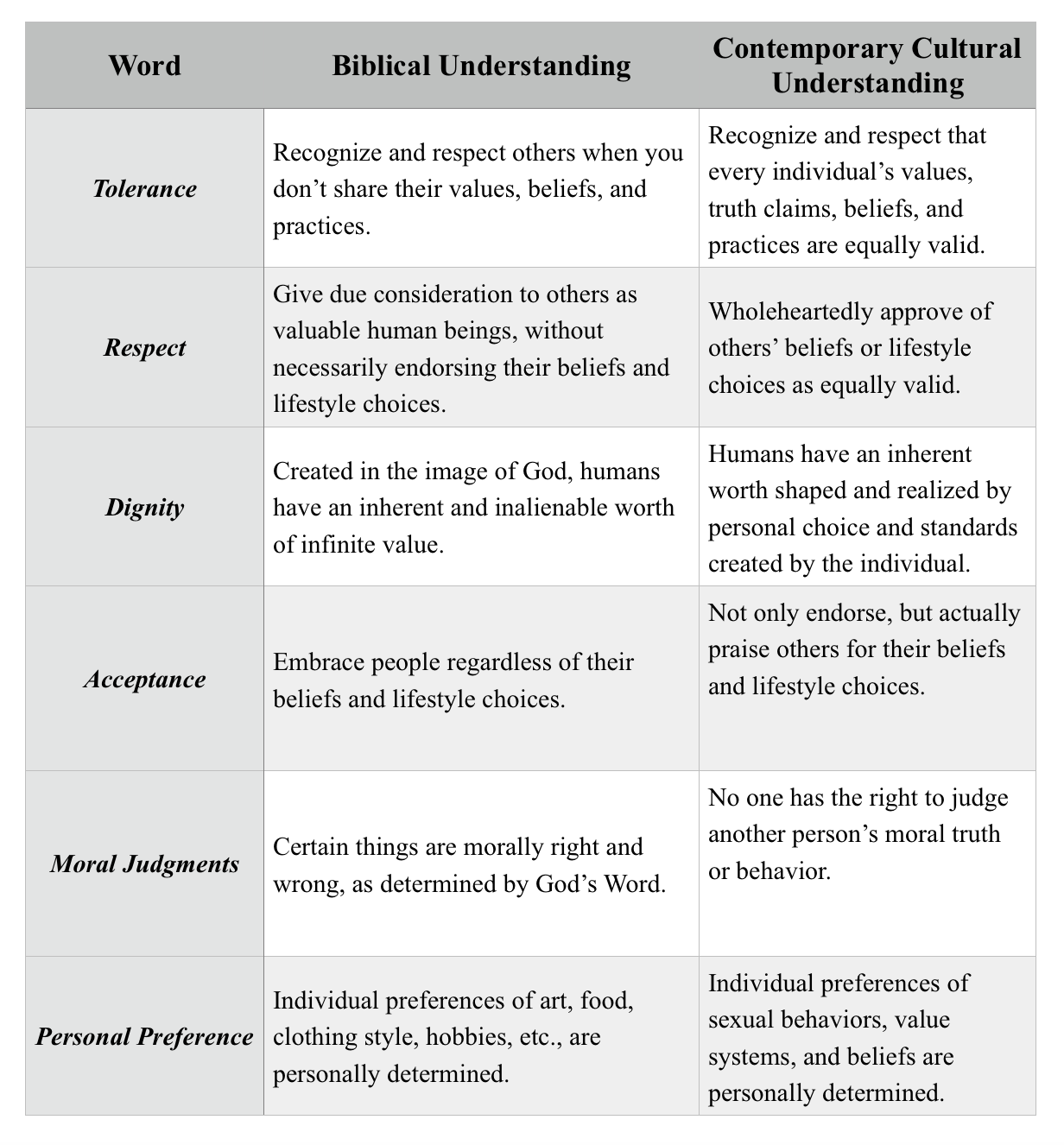
 “So how has Christ loved you? He values all people for their inherent worth and offers grace freely to all people without exception. Cultural tolerance, on the other hand, claims to accept everyone’s differing beliefs, values, and lifestyles, yet it qualifies that acceptance. …  What distinguishes God’s unconditional acceptance from that of our culture is authentic love. His love is intended to make the security, happiness, and welfare of another as important as His own. It is other-focused, not performance-focused. … Real valuing of another’s personhood expressed in the context of authentic love separates doing from being and sees the acts of sin distinct from the sinner (which, by the way, is all of us).”

“The beauty of intolerance is its opposition to wrong and evil in the world—in alignment with God’s righteous and perfect standard of justice, equality, human rights, and caring for others. Intolerance of evil is not mean-spirited and condemnatory; it is actually the only way to be loving and caring. Far from being judgmental, it advances God’s righteous kingdom.”

“Most people in America subscribe to a view of morality called ‘cultural ethics.’ In other words, they believe that whatever is acceptable in that culture is moral; if the majority of people say a thing is right, then it is right. … But there’s a problem with that. If that is true, then how can we say the ‘aborting’ of six million Jews in the Holocaust was wrong? In fact, the Nazis offered that very argument as a defense at the Nuremberg Trials. They argued, ‘How can you come from another culture and condemn what we did when we acted according to what our culture said was acceptable?’ In condemning them, the tribunal said that there is something beyond culture, above culture, that determines right and wrong.”

“We are all entitled to our own beliefs, but this doesn’t mean each of us has our own truths. Our beliefs describe the way we think the world is. Truth describes the objective state of the world regardless of how we take it to be. Beliefs can be relative, but truth cannot. … Moral truth was never meant to be spoken or understood outside of a loving relationship. Being like Christ and speaking the truth in love are synonymous.”

boi-definitions

Book Reviews From 2016

BookshelfHere are the books I read and reviewed in 2016. Click a title to read the review…

#struggles

Alive

An Angel’s Story

Answering Jihad

Archeological Study Bible

Chase The Lion

Churchill’s Trial

Culture

Hope … The Best Of All Things

How To Read A Book

I Stand At The Door And Knock

Jesus Always

Letters To A Birmingham Jail

Light & Truth—Acts & The Larger Epistles

Light & Truth—Revelation

Light & Truth—The Lesser Epistles

More Than A Carpenter

Of Antichrist And His Ruin

On This Day

One Of The Few

Our Iceberg Is Melting

Shaken

So, Anyway…

Streams In The Desert

The American Patriot’s Almanac

The Bad Habits Of Jesus

The Beauty Of Intolerance

The Blessing Of Humility

The Dawn Of Indestructible Joy

The Duty Of Pastors

The Gospels Side-By-Side

The Mathematical Proof For Christianity

The Philosophy Of Sin

The Place Of Help

The Porn Circuit

The Psychology Of Redemption

The Seven Laws Of Love

The Shadow Of An Agony

The Tabernacle Of Israel

Think On These Things

Today’s Moment Of Truth

Useful Maxims

Your Sorrow Will Turn To Joy

Here are my book reviews for 2011.

Here are my book reviews for 2012.

Here are my book reviews for 2013.

Here are my book reviews for 2014.

Here are my book reviews for 2015.

Chocolate Or Bullets?

Corrie ten Boom tells a short story with a profound lesson in her book I Stand At The Door And Knock.

Corrie ten Boom“At the beginning of World War II there was a young man in one of my clubs who had to serve in the military. He and his father ran a bakery and confectionery. He was a cheerful lad. One night he and the other soldiers were called to march out immediately. ‘War has broken out,’ they said. He didn’t believe it at all and thought, ‘It will be another of those boring maneuvers.’ So he quickly put some bars of chocolate in his ammunition bag instead of ammunition. That’s how he wanted to cheer up his comrades, because they had been called out in the middle of the night. In the fields he realized that it really was war. Fortunately his superiors never heard what he had done. There is a heavy battle on its way and maybe it has already started: the battle between Jesus Christ and the Antichrist. And each child of God will be at the frontline. Do we want to fight with chocolate or with bullets?”

If you would like to read other quotes from this book, check them out here.