


My book Shepherd Leadership: The Metrics That Really Matter releases September 28, 2021. This is just one of the topic I address…
My book Shepherd Leadership: The Metrics That Really Matter releases September 28, 2021. This is just one of the topic I address…
On this episode of “The Craig And Greg Show” we talk about:
 “burning the midnight oil” is not healthy for a leader [0:45]
Check out this episode and subscribe on YouTube so you can watch all of the upcoming episodes. You can also listen to our podcast on Spotify and Apple.
Listen to the podcast of this post by clicking on the player below, and you can also subscribe on Apple, Spotify, or Audible.
 In the Foreword to my book Shepherd Leadership: The Metrics That Really Matter, Dick Brogden observes, “God plucked David from the sheepfold. God chose a sheep to be a shepherd. And though we all are stupid sheep, when God plucks us out of obscurity to serve others, we can have the humble confidence for as long as we are asked to lead that God has chosen us. That confidence both faithfully drives us to our knees and fearlessly propels us against our giants. It is good to be a sheep; it is good to be an under-shepherd. Just remember you are stupid, chosen by the Wise One, and as long as you serve as a shepherd, you and your flock will be safe.”
How true it is that all of us are sheep. The role of the shepherd is to care for the sheep and create a healthy environment for them. The role of healthy sheep is to reproduce more sheep. In this, both shepherds and sheep are ministers—we all minister to those God has placed around us.
God calls all Christians to be ministers. The Church is the sheepfold that equips us, but then we must go out to minister in a way that will bring lost sheep to a personal relationship with Jesus.
Our foundational truth statement about church ministry says: A divinely called and scripturally ordained ministry has been provided by our Lord for the fourfold purpose of leading the Church in evangelism, worship, sanctification, and compassion.
(1) Evangelism. When we looked at the foundational belief about the Church, we noted that it’s not either-or—evangelism or discipleship—but it’s both-and. Christians are being the Church when they are intentionally living in a way that makes Jesus known (Matthew 10:1, 7-8; 28:18-20).
(2) Worship. We shouldn’t have the mindset of, “Let’s go to church to meet with God.” Instead, we need to live in a way where we are always abiding in God’s omnipresence. This worship-centric lifestyle empowers our evangelism, changes our hearts, and fuels our compassion (John 4:23-24; Romans 12:1; Acts 2:46-47).
(3) Sanctification. Remember that we are all in-process of becoming saints (I like to remember this by calling it saint-ification). We need each other to do this, which is why God gives gifts to bring out Christ-like maturity in us (Ephesians 4:1-7, 11-16).
(4) Compassion. Compassion is feeling turned into action. This opens the door for evangelism, creates more opportunities for worship, and matures Christians (Mark 6:34-37; Luke 10:33; Acts 2:45).
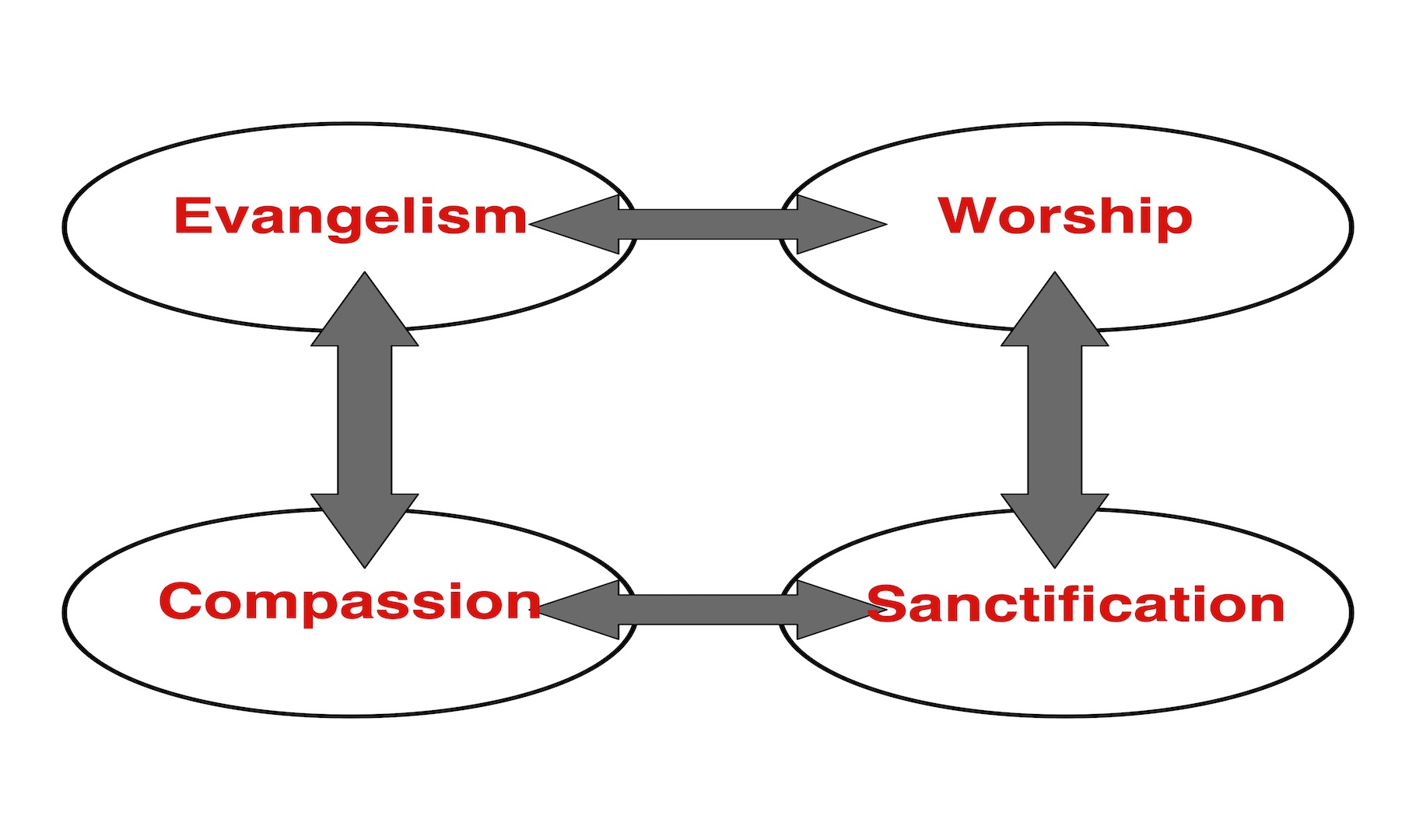 Notice that each of these ministries are interdependent with all the other ministries.
In a blog post nearly 10 years ago, I questioned: “How do we know if our church is successful?” The apostle Paul uses two words to help answer these questions: Quality and Faithfulness (1 Corinthians 3:13, 4:2).
So here are two important questions we need to ask ourselves: (1) Am I doing quality work? (2) Am I faithfully doing my work?
To help answer those questions, I like this thought from Leonard Sweet’s book I Am A Follower: “The most important metrics we must rely on, the crucial ‘deliverables’ we can present, must focus on the newly formed lives of the disciples we are making, the followers who are following Christ into a place of serving Him by serving others. The most important measure of our faithfulness to Christ must be the extent of transformation into the living image of Christ Himself. … The quantifiable fruit of our church is not found in the number of people we can gather on a weekly basis. What counts is what is happening in the lives of those who have gathered.”
These are questions we should all ask the Holy Spirit to reveal to us:
Our individual answers to those questions will determine the success of our individual churches, which will ultimately determine the effectiveness of the global Church of Jesus Christ. I hope you will take some time to consider these questions for yourself.
If you’ve missed any of the other messages in our series exploring our foundational beliefs, you can access the full list by clicking here.
►► Would you please prayerfully consider supporting this ministry? ◀︎◀︎
This is a weekly series with things I’m reading and pondering from Charles Spurgeon. You can read the original seed thought here, or type “Thursdays With Spurgeon” in the search box to read more entries.
Listen to the podcast of this post by clicking on the player below, and you can also subscribe on iTunes or Spotify.

Present Communion With Jesus
The desire of a renewed soul is to find Christ and to be with Him. … Past communion with Christ is very well: ‘Therefore I will remember Thee from the land of Jordan…’ (Psalm 42:6). But these are only stale meats, and a loving soul wants fresh food every day from the table of Christ. …
A true loving soul, then, wants present communion with Christ. So the question is, ‘Tell me where You feed. Where do You get Your comfort from, O Jesus? I will go there. … Where do You feed Your flock? In Your house? I will go there, if I may find You there. In private prayer? Then I will not be slack in that. In the Word? Then I will read it night and day. Tell me where You feed; wherever You stand as the Shepherd, there will I be, for I want You. I cannot be satisfied to be apart from You. My soul hungers and thirsts to be with You.’
From The Church’s Love To Her Loving Lord
There are so many pictures in the Bible about our continual reliance on God’s presence—from the manna that was only good for each day, to Jesus teaching us to pray for “our daily bread,” to the vivid example of Christians being as dependent on Jesus as a branch is dependent on the vine (see Exodus 16:4-5, 14-17; Matthew 6:11; John 15:1-8).
All of these mean that we need to constantly abide with our Savior.
In my book Shepherd Leadership: The Metrics That Really Matter, I spend two chapters talking to leaders about the need to rest—or sabbath. In fact, I call it sabbathing to give it the emphasis on the ongoing nature of this activity. I wrote—
“Without building in sabbath breaks, we run down emotionally, spiritually, mentally, and physically, which means loving God becomes a chore, not a delight (Mark 12:30). This then means loving your neighbor becomes nearly impossible (Mark 12:31). Ultimately, this means that we aren’t able to be the compassionate, wise, strong shepherds that the sheep under our care need us to be. …
“The goal of sabbathing is to infuse more vitality into the shepherd leader for the purpose of pasturing the sheep under that leader’s care. You cannot give hope to others unless you are hope-filled; you cannot give health to others unless you are healthy; you cannot consistently speak wisdom to others unless you are growing in wisdom. All of this healthy growth for the shepherd leader takes place while sabbathing….”
To reiterate what Pastor Spurgeon said: “A true loving soul, then, wants present communion with Christ.” I hope you will always seek that for yourself.
►► Would you please prayerfully consider supporting this ministry? ◀︎◀︎
Listen to the podcast of this post by clicking on the player below, and you can also subscribe on Apple, Spotify, or Audible.
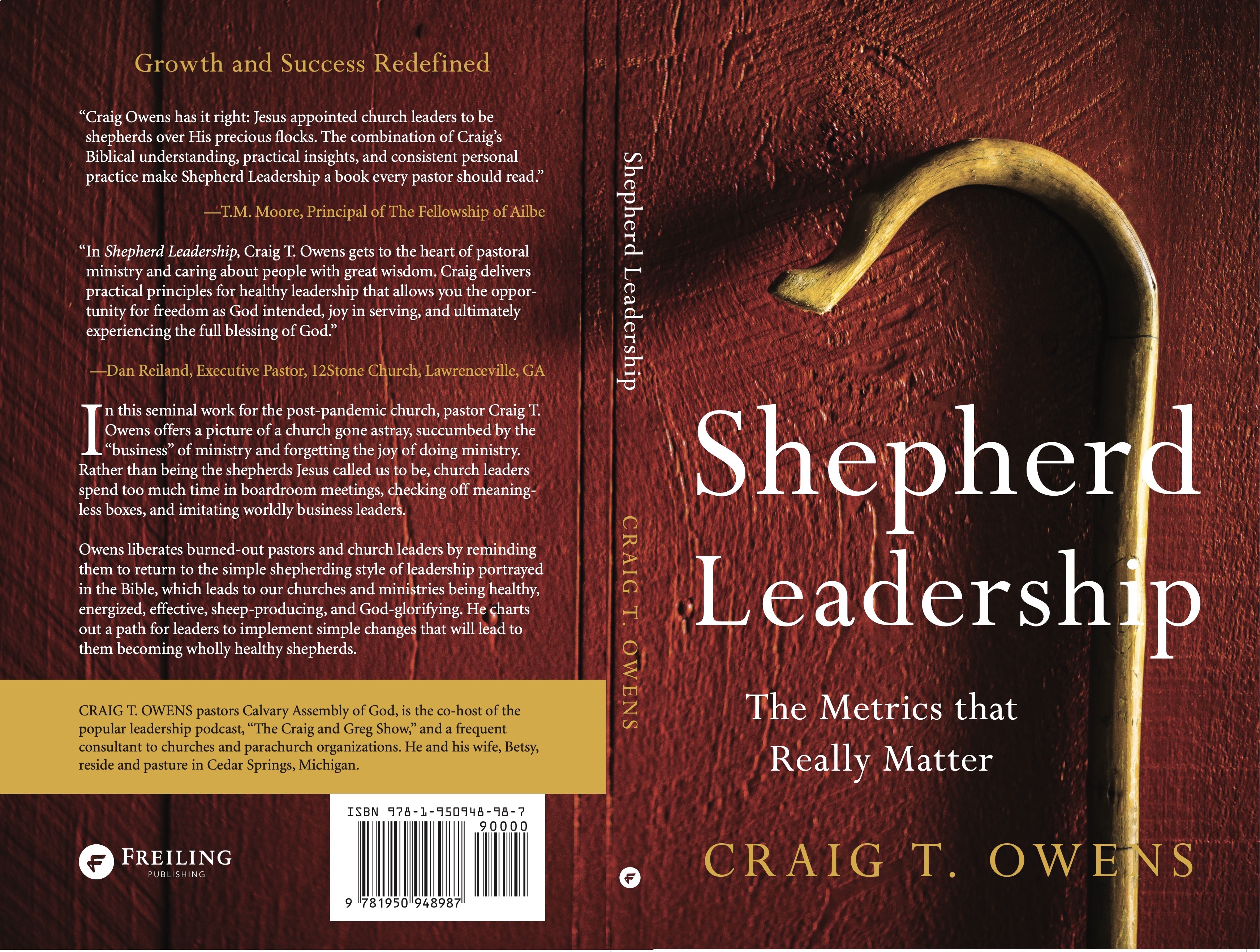
 In my book Shepherd Leadership: The Metrics That Really Matter, I take two chapters to talk about a leader’s confidence and a leader’s humility. Effective shepherd leaders are learning to balance their confidence and their humility.
In chapter 4, I tell a true story about an alter-ego superhero I created as a way to remind myself of the importance of adding humility to my confidence. I hope you’ll watch the video featuring the artwork of Adam Comrie and the excellent production work of my son-in-love Ian Murphy. And I also hope that you will pick up a copy of Shepherd Leadership for yourself or for a ministry leader in whom you would like to invest.
Now, here is Plungerman!
►► Would you please prayerfully consider supporting this ministry? ◀︎◀︎
Listen to the podcast of this post by clicking on the player below, and you can also subscribe on Apple, Spotify, or Audible.
 Why do Christians say things like, “Let’s go to church” or “Let’s go meet with God”?
Do we forget that Jesus said He would never leave us, or that He sent the Holy Spirit to be our constant Companion, or that our very heart is the temple of God’s presence (Matthew 28:20; John 14:16; 1 Corinthians 3:16)? We are naturally self-focused creatures. It takes discipline on our part to keep reminding and re-reminding ourselves that God is always with us.
Psalm 84 and its two Selahs is one way of re-reminding ourselves of God’s abiding presence. The Selahs are reminders to pause and consider, “Where am I?” and to know that the answer can always be, “Surely I am in God’s presence!”
This psalm is divided into three 4-verse stanzas. Stanzas 1 and 2 end with the call to Selah, and all three stanzas feature a powerful name for God: LORD Almighty. When we see LORD in all capital letters, that is God’s covenant name: Yahweh or Jehovah, which means that He is the “I AM that I AM.” Almighty signifies that He is the invincible, un-defeatable Captain of angel armies.
In these two combined titles, we have the personal intimate God of love and the unstoppable God of limitless power! If He were just the God of love, we may not be able to trust His power. If He were just the God of power, we may not be able to approach Him. He is the All-Loving, Ever-Approachable Power.
Another important recurring theme in Psalm 84 is the word blessed. It’s used three times in this psalm, more than in any other single psalm. This word means God’s unmerited favor, and the word either begins or ends each of the three stanzas.
In stanza 1 (vv. 1-4), twice we have that combined title of LORD Almighty. But we must always remember that our God is not distant and unapproachable, but the sons of Korah call Him “my King” and “my God.” At the end of this first stanza, we are invited to Selah—a pause to praise our glorious King!
Stanza 2 (vv. 5-8) begins with that reminder that we are blessed. The psalmists tell us that God’s blessings flow even in my Valley of Baca (or weeping). With God’s presence surrounding me, I can go from “strength to strength” because the LORD Almighty hears my prayer and responds to my prayer! So at the end of this stanza, we are again invited to Selah—this time it’s a pause to pray to our listening God.
In stanza 3 (vv. 9-12), another important word is featured that reminds us that our God is not a stingy King, but One who delights in His children and wants to lavishes them with His blessings: the word is favor. We read, “look with favor on Your anointed one” and “the LORD bestows favor and honor; no good thing does He withhold from those whose walk is blameless.” God’s favorable blessings flow toward us as eternally as He exists!
This psalm is circular: it begins as it ends, so it invites us to continue to praise, continue to pray, and continue to abide in His presence. We’re called not just to know about God’s presence, but to rejoice in His presence.
This isn’t something that happens overnight. Brother Lawrence reminds us that this is a progressive revelation for Christians: “One does not become holy all at once. … The more one knows Him, the more one desires to know Him. And as knowledge is commonly the measure of love, the deeper and more extensive our knowledge shall be, the greater will be our love: and if our love of God were great we should love Him equally in pains and pleasures.”
I encourage you to Selah frequently so that you can move from mere head knowledge of God’s presence to becoming intimately aware of His closeness!
If you’ve missed any of the messages in our series looking at the Selahs in the Psalms, you may find the full list by clicking here.
►► Would you please prayerfully consider supporting this ministry? ◀︎◀︎
On this episode of “The Craig And Greg Show” we talk about:
 some people wear the cliche “It’s lonely at the top” like a badge of honor, but it’s not [0:40]
 Check out this episode and subscribe on YouTube so you can watch all of the upcoming episodes. You can also listen to our podcast on Spotify and Apple.
Listen to the podcast of this post by clicking on the player below, and you can also subscribe on Apple, Spotify, or Audible.
 Around the world we hear of Christians being persecuted for their faith in Jesus: Afghanistan … N. Korea … China … even in the USA, Christians like Jack Phillips and Barronelle Stutzman are being persecuted for standing up for what they believe.
Here’s an important principle to keep in mind: In times like these, we need to remember there have always been times like these. Especially because the psalmist Asaph, Jesus, and the apostle Paul all forewarned us about persecution (Psalm 83; Mark 13:9, 12-13; 2 Timothy 3:12-13).
Jesus said that our persecution should only come “on account of Me.” And Asaph notices the same thing in his prayer, using phrases like “Your enemies,” “Your foes,” “they conspire against Your people,” and “they form an alliance against You.”
Asaph also recognized that times like these call for a Selah pause—a pause to calmly consider. (You may also be interested in this flowchart on persecution.)
I think the first thing we need to consider is our part in bringing on the persecution. I need to ask the Holy Spirit to reveal if I may have been the trigger to the anger of these wicked people. If I have done something, I need to repent, ask forgiveness, and see what I can do to make restitution.
Next, we need to Selah to consider this: It might look desperate, but God has handled these kinds of evil people before. Asaph mentions several enemies of God’s people whom God decisively defeated in the past. Our Selah pause will help us recall that God is the same today as He was yesterday—He is more than able to handle these persecutors.
With all of these bullies ganging up on Israel, you can understand why Asaph cries out for God’s strong action against them. But I want you to notice that the call for judgment is NOT vindictive but redemptive. Asaph asks for punishment “so that men will seek Your name, O LORD” and that they may “know that You, whose name is the LORD—that You alone are the Most High over all the earth.”
In other words, this isn’t a “Get ‘em, God” prayer, but a “Save ‘em, God” prayer!
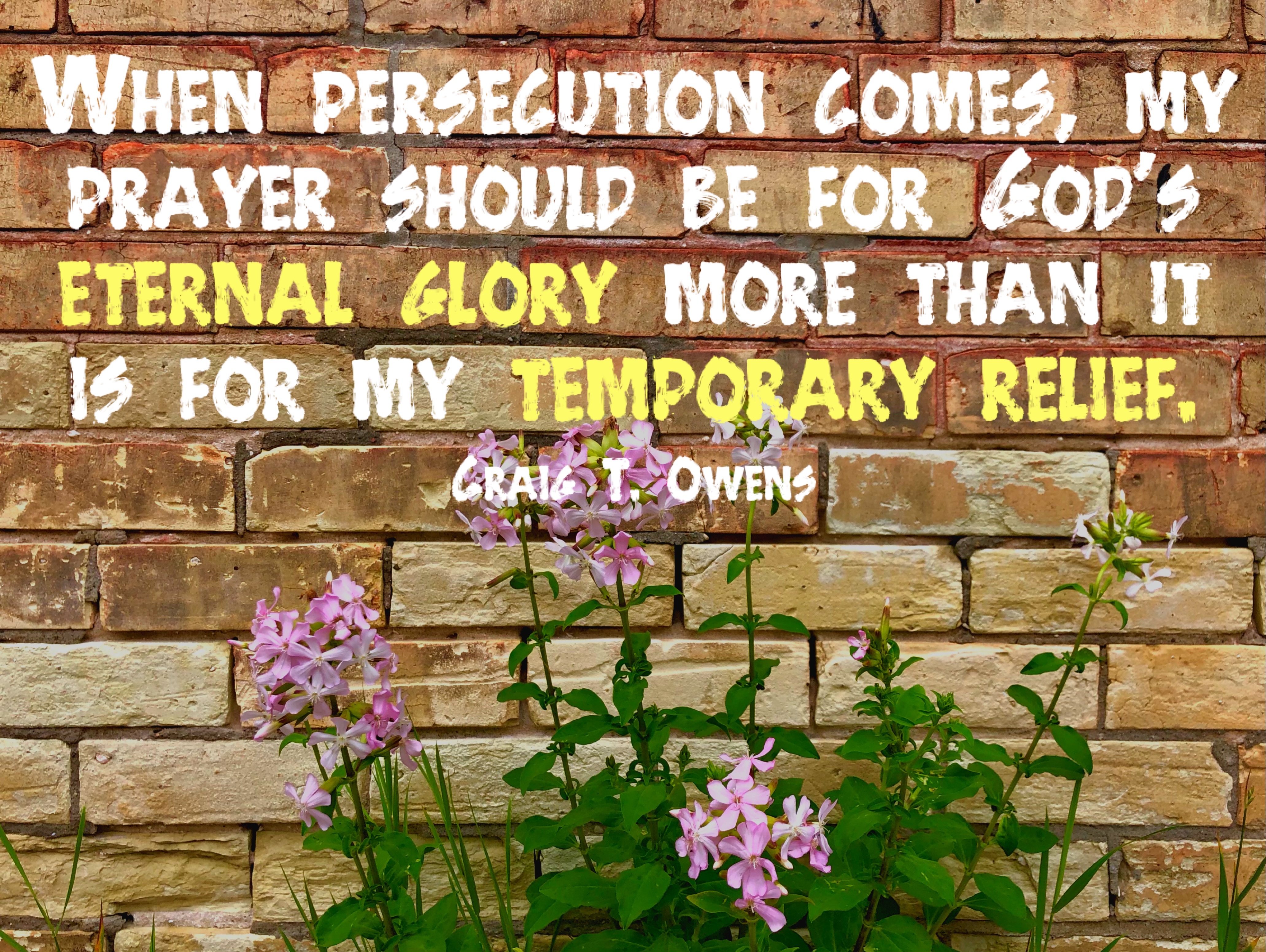
We’re not looking for relief for ourselves—that’s only temporary—but we’re looking for glory for God—that’s eternal!
Jesus and the apostle Peter both tell us that God’s desire is for no one to perish apart from a relationship with Him through Jesus Christ (John 3:16-17; 2 Peter 3:9).
 The reason we need to Selah and ask that introspective question about our words or actions triggering our persecutor’s anger is because God will use our righteous response to persecution as a testimony.
Jesus said our persecution should be because of Him, but He also told us that there would be a blessing in it (Matthew 5:11-12; Mark 13:13; Luke 21:17-19). And Paul tells us that this reward isn’t just a silver lining to a dark cloud, but a reward beyond compare (Romans 8:18).
Asaph went to prayer when Israel was attacked, and that should be our first response too.
But let’s Selah in that prayer to make sure we’re not the trigger, and then may our prayer be more for God’s eternal glory than it is for our temporary relief.
If you’ve missed any of the messages in our series looking at the Selahs in the Psalms, you can access the full list by clicking here.
►► Would you please prayerfully consider supporting this ministry? ◀︎◀︎
Listen to the podcast of this post by clicking on the player below, and you can also subscribe on Apple, Spotify, or Audible.
 I may have heard more confusion, bad preaching, and even heresy based on Psalm 82 than almost any other passage! Most of the confusion comes from just verses 1 and 6, but if we read the entire psalm, I think confusions are quickly cleared up.
The biggest point of confusion is the use of the word “gods.” The Hebrew language doesn’t have capital and lowercase letters like we do. So the word God (with or without a capital “G”) is the same Hebrew word—el (singular) or elohiym (plural)—which means mighty One or mighty ones. Humans can be mighty ones, but only Yahweh is the Mighty One.
Further adding to the confusion for some people is that Yahweh God is sometimes referred to in the plural in Hebrew: elohiym. This is understandable because we believe God is Three-in-One. Not three gods, but one God in three Persons.
Bible translators have to use context clues to determine whether the biblical authors are referring to Yahweh or a pretend deity. Thankfully, English Bible translators have helped us out:
When we were looking at the Selah in Psalm 81, I pointed out the importance of remembering that context is king. Clearly, from the context in Psalm 82, these are false gods (lowercase “g” and inside quotation marks).
Asaph only speaks in the first and last verses of this psalm, but notice his commentary that “God presides…He gives judgment.” As in, God gets the final and decisive word. In fact, God does the most speaking in this psalm (in verses 2-7). God indicts wicked people for…
Now notice what the Selah pause connects. This is a pause for us to contrast two things: the righteous way and the wicked way. Or maybe we could say the contrast is between the way of the righteous Mighty One and His followers, and the way of wicked mighty ones.
The Selah really begs an important question, “How long will your pride keep you doing these wicked things?” Notice what God calls on people to do in opposition to what the wicked are doing:
The Selah is intended to prompt us to ask ourselves: “Which are we? What am I doing or not doing?”
The word for rendering a judgment is used four times in Psalm 82:
God wants us to exercise His righteous judgment on the earth. We have to Selah to examine ourselves first (see Matthew 7:1-5 and this short video), but then we need to act boldly and righteously (see Micah 6:8; Leviticus 5:1; Proverbs 31:8-9).
We can judge like we are “gods,” or we can judge, defend, and speak up like ambassadors of the Mighty One—the Ultimate Judge.
Wicked people are punished for judging like “gods.” Righteous people are rewarded for judging like God.
If you’ve missed any of the messages in our series exploring the Selahs in the Psalms, you can access the full list by clicking here.
►► Would you please prayerfully consider supporting this ministry? ◀︎◀︎
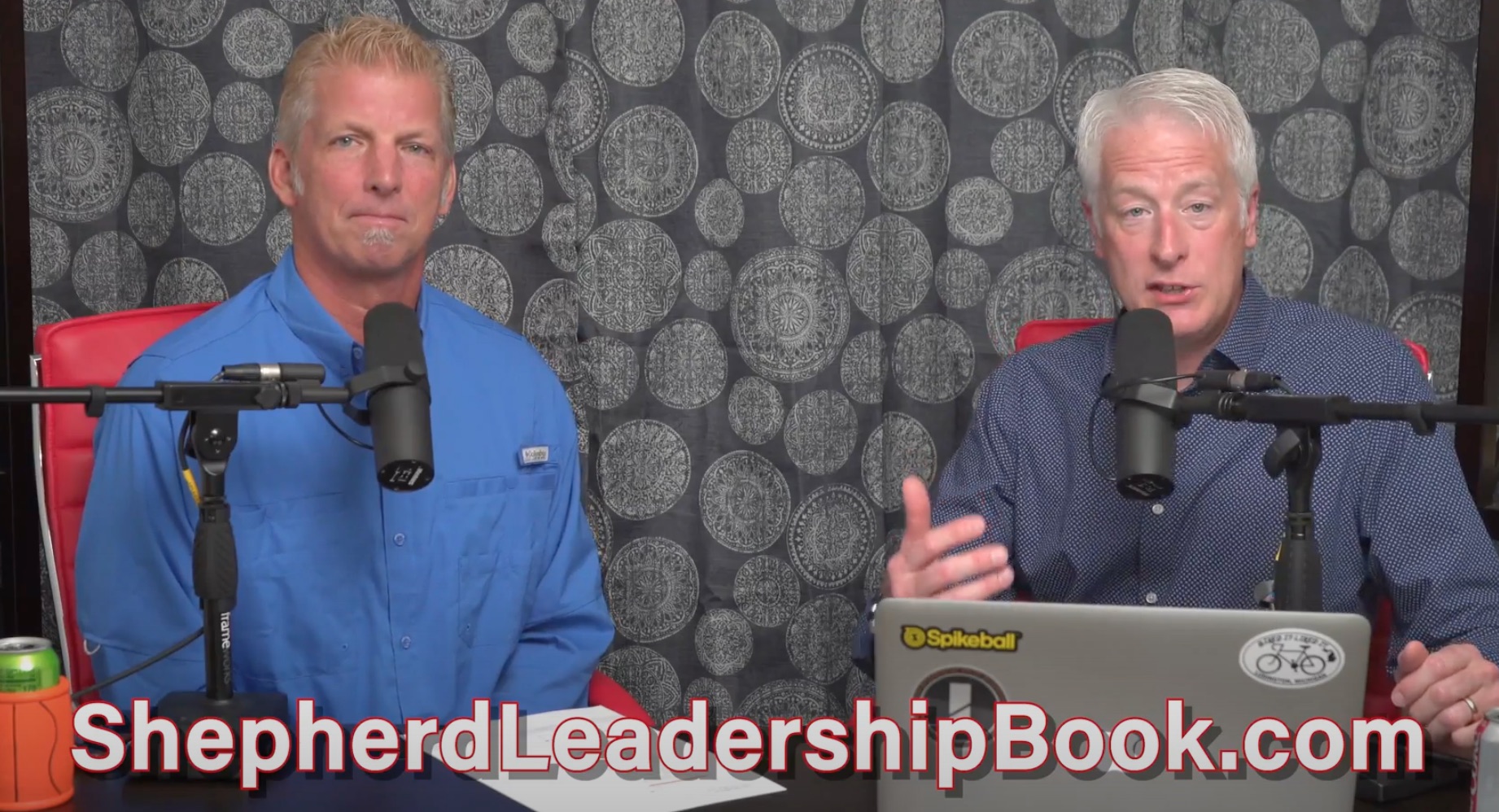 I have known Greg Heeres for almost 30 years. During that time we have grown as close as brothers, partnering on numerous projects, both personally and professionally. One of our shared passions is developing leaders. Out of this passion we began a video and audio podcast called The Craig And Greg Show.
We switched up our format just a bit in a recent episode so that Greg could interview me about my book Shepherd Leadership: The Metrics That Really Matter.
I was also thrilled to receive an endorsement from another church leadership blogger that I greatly admire:
“In his new book, Shepherd Leadership, Craig T. Owens gets to the heart of pastoral ministry and caring about people with great wisdom. Jesus sets the example for us as the good shepherd, and Craig delivers practical principles for healthy leadership that allows you the opportunity for freedom as God intended, joy in serving, and ultimately experiencing the full blessing of God.” —Dan Reiland, Executive Pastor, 12Stone Church, Lawrenceville, GA
You may listen to the audio-version of Greg’s interview of me on the player below, and I’ve also shared the link to watch the video of this interview.


 Craig T. Owens