The Holy Spirit showed some interesting thoughts from the story of the temptation of Jesus.
Below is a 1-minute clip from a much longer video that I provided exclusively for my Patreon supporters. My blog has 5000+ posts that are all free. In addition, nearly all of my teaching videos on YouTube are free to the public.
To help me continue to provide all of this free content, I ask my friends to support this ministry at just $5 per month. My Patreon supporters get quotes from the books I have read, access to teaching videos that no one else sees, and exclusive teaching content that I don’t make available publicly. This is just my way of saying “Thanks!”
Special offer—Any new Patreon supporters that sign on in the next 30 days will not only get all of my exclusive content going forward, but they will also receive access to all of the content I have already shared. Check it out and sign up here.
Listen to the podcast of this post by clicking on the player below, and you can also subscribe on Apple, Spotify, or Audible.
There is a sportswear company called ActiveFaith. I have a warmup shirt I wear sometimes in preparing for my workout. The front of the shirt says, “I can do all things,” and on the back it says, “through Christ.” I think that phrase is supposed to help me muscle through when I want to back off in my workouts. Perhaps reminding myself, “I can do all things through Christ” will help me persevere.
As we continue our series asking, “Is that in the Bible?” we have come to statement #8—I can do everything through Christ. Is that in the Bible? Yes, but.…
Yes, this verse is in the Bible in Philippians 4:13, but we need to as what exactly is the “everything” Paul is referencing.
Remember that context is king, so we need to look at this whole letter to the church at Philippi, and especially the verses surrounding this statement. Let’s consider verses 10-19.
In verse 10, Paul says he is glad that the Philippian Christians have had an opportunity to meet his material and financial needs again. This church was famous for its generosity (see 2 Corinthians 8:1-4), and when they heard Paul was in prison, they wanted to help.
Prison was actually house arrest for Paul. He wasn’t allowed to leave the house, but he was responsible for all of his living expenses. Quite simply put: no money, no food. Epaphroditus brought the necessary funds from Philippi to Rome. He so invested himself in this mission to help Paul that he nearly died in the process (Philippians 2:25-30).
Paul expresses his gratitude for the way these friends supplied for his needs, and he tells them twice that he has learned contentment during this ordeal. He says that he knows what it is to have plenty, and he knows what it is to have nothing.
Did you catch that: Paul says that contentment is a learned attitude. It is learned through appetites satisfied and appetites thwarted, it is learned by looking back to recall God’s past mercies and then reassuring an anxious mind—that may become a discontented mind—that God is still God and that His future grace has not diminished one iota (see Philippians 4:4-7).
Bottom line: Contentment is learned by being assured (or reassured) that I can get through this season of life by my unwavering faith in Christ’s ability to supply my needs. So Paul concludes, “I can do everything through Him who gives me strength.”
I like the way the Amplified Bible translates this verse: I have strength for all things in Christ Who empowers me—I am ready for anything and equal to anything through Him Who infuses inner strength into me; I am self-sufficient in Christ’s sufficiency.
Contentment is keeping my eyes on Jesus regardless of the circumstances. Contentment brings an assurance to my heart to keep trusting God regardless of my circumstances. And contentment then helps me pray for others.
How does contentment help us pray—or intercede—for others?
Before I answer that, let me have you consider another “Is that in the Bible” statement. Statement #9—My God will meet all my needs according to His glorious riches in Christ Jesus. Is that in the Bible? No!
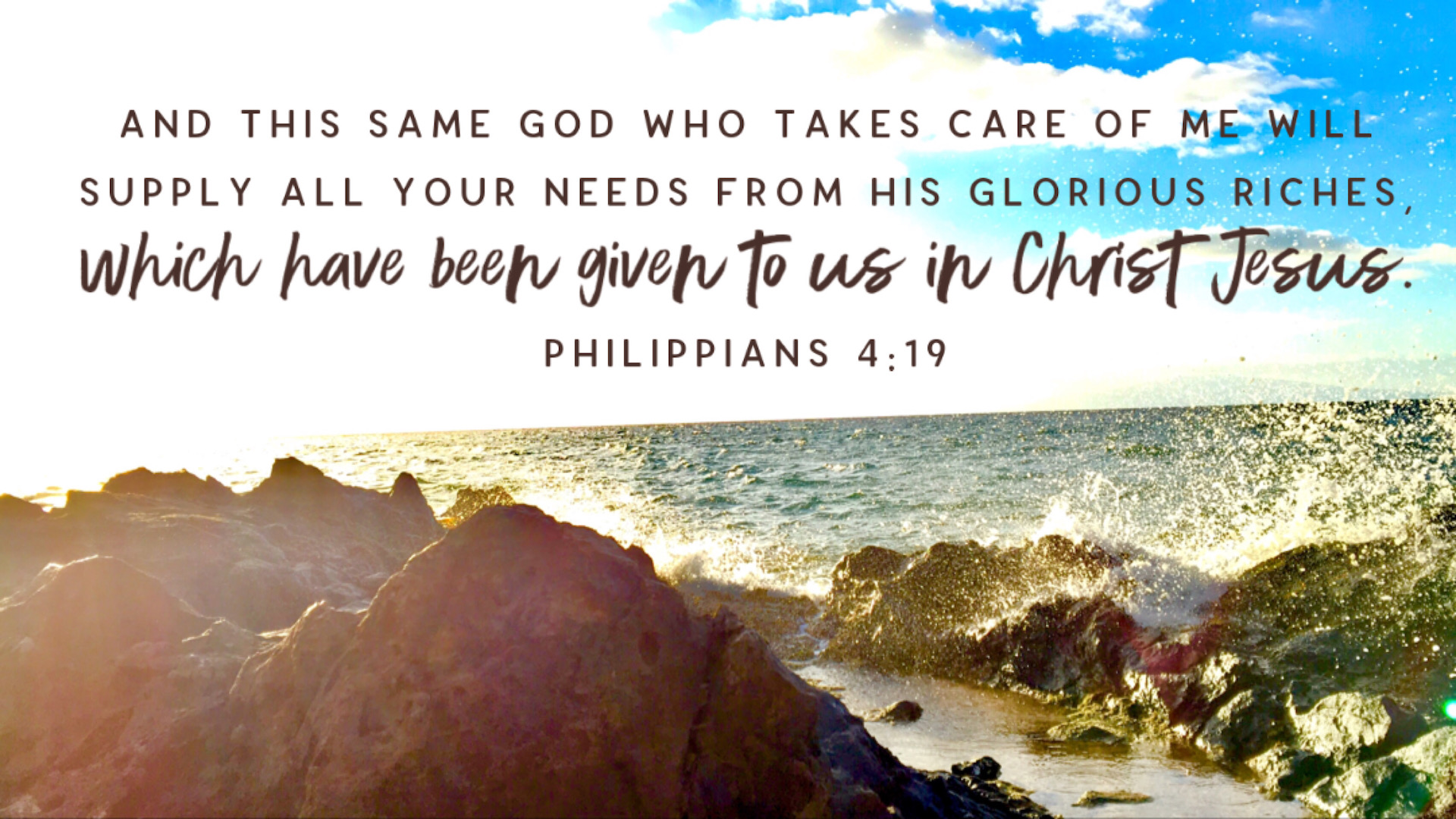
Paul is not praying for himself, but for his friends. Listen carefully to the pronouns in this verse: And my God will meet all YOUR needs according to the riches of His glory in Christ Jesus (Philippians 4:19).
So back to my earlier question: How does contentment help us intercede for others?
It’s hard for me to pray for others to be blessed and have their needs supplied when my heart is discontented, isn’t it? When I have learned contentment—especially when I learned it by having all my needs supplied in a time of want—then I know how to both empathize with my friends who are in need and how to intercede for them.
To the church at Corinth Paul said, “Praise be to the God and Father of our Lord Jesus Christ, the Father of compassion and the God of all comfort, who comforts us in all our troubles, SO THAT we can comfort those in any trouble with the comfort we ourselves receive from God” (2 Corinthians 1:3-4).
The Holy Spirit teaches me contentment through these difficult circumstances SO THAT I am strong, and SO THAT I can pray for that strength for others in their difficult circumstances. My contentment helps me empathize and intercede for my brothers and sisters.
“…and let us all hasten to approach to perfect manhood, to the measure of the completed growth of the fullness of Jesus Christ, in Whom let us love one another, praise one another, correct one another, encourage one another, pray for one another, that with Him in one another we may reign and triumph.” —Columbanus, Letter to Certain Bishops, Irish, early 7th century
Have you ever wondered how the laws of the Old Testament era should be applied to New Testament Christians? Theologian T.M. Moore has an excellent series of articles on this, but I think his post The Church is not Ancient Israel is especially informative.
Here is one way the Holy Spirit can speak to us—
“It is not the body of truth that enlightens; it is the Spirit of truth who enlightens. If you are willing to obey the Lord Jesus, He will illuminate your spirit. He will inwardly enlighten you. The truth you have known intellectually will now be known spiritually. Power will begin to flow up and out, and you will find yourself changed—marvelously changed.” —A.W. Tozer
“The greatest tragedy of life is not unanswered prayer, but unoffered prayer.” —F.B. Meyer
This is pretty cool: some fossilized human footprints in the salt flats of Utah. “Both creationist and uniformitarian scientists agree that these tracks were made during the Ice Age, although they disagree about when the Ice Age occurred. Creationists think these footprints are just a few thousand years old. However, evolutionists think the tracks are more than 10,000 years old, because they believe the wet conditions needed to form and preserve the footprints have been absent from the Great Salt Lake area for at least that long. … wet Ice Age deserts are extremely difficult for evolutionary scientists to convincingly explain. However, the Bible’s real history makes much better sense of both these wet deserts and preserved Ice Age footprints.”
Don’t cut corners to get more. Instead, be faithful, do your best work, and the “more” will follow at the right time—
According to 1 Corinthians 12-14, the Holy Spirit operates in nine different gifts to both evangelize the sinner and edify the saints. The apostle Paul says that these gifts are available to all Christians who will allow the Holy Spirit to operate through them.
Listen to the podcast of this post by clicking on the player below, and you can also subscribe on Apple, Spotify, or Audible.
A meme that makes me chuckle every time I see it is a “quote” attributed to Abraham Lincoln in which he says, “The problem with quotes found on the internet is that they are often not true.”
(Not to spoil the joke for you, but unless Lincoln knew how to time travel to the future, I don’t think he knew about the modern internet! 😂)
I love this meme because it captures something that so many people fall into: a quick acceptance of a statement without verifying its source or thinking through the implications of the statement’s truthfulness.
Some insightful comments sound Shakespearean, but William never wrote them.
Some pieces of wisdom sound Socratic, but Socrates never taught them.
Some religious maxims sound godly, but the Bible never recorded them.
I would like to invite you to join me as we relaunch this series called Is That In The Bible? I think you may be surprised to discover just how many phrases we call biblical aren’t, and how many phrases there are that we never realized are actually in the Bible.
By the way, if you have a phrase that you would like to have us explore in this series, please leave it in a comment below. You may want to check out the questions we addressed in both the first installment and second installment of this series.
In this installment of this series, we asked: Is this in the Bible…
This is a weekly series with things I’m reading and pondering from Charles Spurgeon. You can read the original seed thought here, or type “Thursdays With Spurgeon” in the search box to read more entries.
Listen to the podcast of this post by clicking on the player below, and you can also subscribe on Apple, Spotify, or Audible.
Blessed Discipline
Blessed is the man whom You instruct, O Lord, and teach out of Your law, that You may give him rest from the days of adversity, until the pit is dug for the wicked. For the Lord will not cast off His people, nor will He forsake His inheritance. But judgment will return to righteousness, and all the upright in heart will follow it. (Psalm 94:12-15)
First, I will ask you to notice that God’s children are under instruction. Other children may run about and take holiday. They may wander into the woods, gather the flowers, and do very much what they like, but God’s own children have to go to school. This is a great privilege for them, although they do not always think so. Children are not often good judges of what is best for themselves. …
Some of us have learned much from the Lord’s chastening rod! For instance, we have learned the evil of sin. ‘Before I was afflicted I went astray, but now I keep Your Word’ (Psalm 119:67). … Do we not also learn by affliction our own frailty and our own impatience? We are wonderfully patient when we have nothing to suffer, and we are all great heroes and very courageous when there is no fighting to be done. …
Do we not, then, learn also the value of prayer? … Do we ever pray in such dead earnest as when everything seems to be sinking from under our feet and our sweetest cups are full of bitterness? … And then how precious the promises become! As we only see the stars when the shadows gather at night, so the promises shine out like newly kindled stars when we get into the night of affliction! …
And, oh, dear friends, how should we ever know the faithfulness of God if it were not for affliction? We might talk about it and theoretically understand it, but to try to prove the greatness of Jehovah’s love and the absolute certainty of His eternal faithfulness—this comes not except by the way of affliction and trial! …
O Lord, still use the rod if You see that it is necessary. But go on teaching us out of Your Word! We are slow to learn and poor scholars at best, but You may yet make something of us.
In one of my darkest times of affliction, I stumbled upon this poem from Robert Browning Hamilton:
I walked a mile with Pleasure—
She chattered all the way
But left me none the wiser
For all she had to say.
I walked a mile with Sorrow
And ne’er a word said she,
But, oh, the things I learned from her
When Sorrow walked with me.
If you’re going through a difficult time, don’t try to get out of it, but get closer into God’s presence. He is teaching you invaluable lessons during this trial.
Listen to the podcast of this post by clicking on the player below, and you can also subscribe on Apple, Spotify, or Audible.
I have been involved in church ministry in one form or another for most of my life. Even when I was involved in the business world, I frequently helped non-profit organizations, offering my time, finances, and wisdom.
To this day, I remain a huge supporter of what our front-lines non-profit organizations are doing, especially our local churches.
However, there is often a fundamental disconnect between the board of these ministries and the director or pastor. This disconnect can easily escalate into a full-blown clash—believe me, I’ve seen it firsthand when I’ve been called in as a consultant—if this issue isn’t quickly addressed.
The main issue is the mindset of measuring success by quality or by quantity. Both have their place, but often times the board members are thinking primarily in terms of quantity while the director or pastor is thinking primarily in terms of quality.
Here’s how I addressed this topic when I taught a group of ministry interns…
This is a common disconnect in nonprofit organizations and churches. Many of the boards of these organizations are wonderful, godly people who fully believe in the mission of the organization. These board members are often successful business people who have both wisdom and wealth to contribute to the organization. But here’s the problem: the way we define success in a for-profit organization isn’t the same way we define success in a nonprofit organization. And often the way we define success in any of our ministries doesn’t line up with the Bible’s definition.
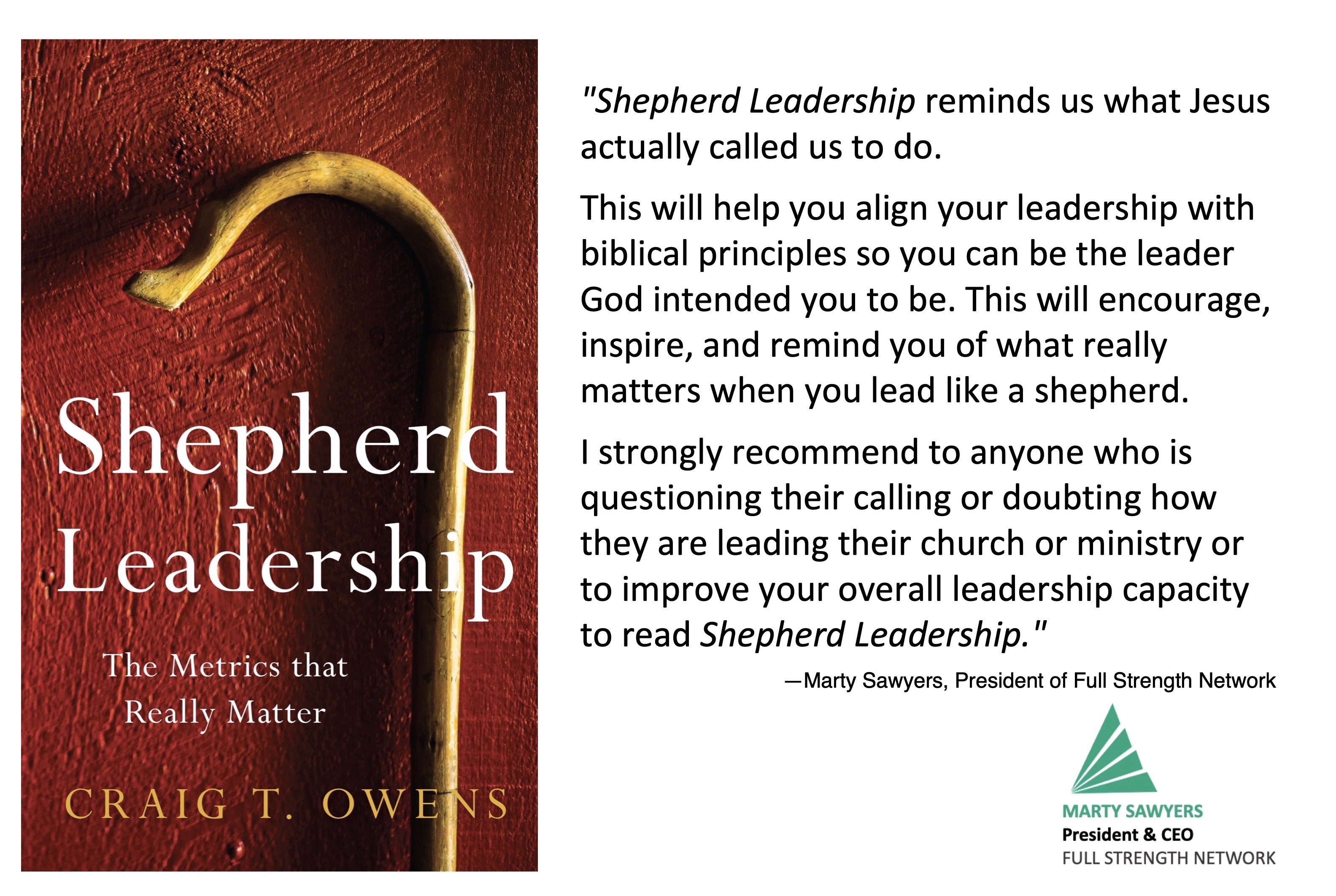
For both pastors of churches and directors of non-profit organizations, and for their respective board members, I would recommend using Shepherd Leadership as a discussion-starter to address this potentially ministry-derailing topic. Shepherd Leadership: The Metrics That Really Matter is available in print or ebook, and in audiobook through either Audible or Apple.
Tomorrow I will release a new full-length video exclusively for my Patreon supporters. This video will tell us how and why we can live as peaceful influencers in a culture that is dark and confused.
For just $5 per month, you can have access to all of my exclusive content as well. Get all the details here.
Listen to the podcast of this post by clicking on the player below, and you can also subscribe on Apple, Spotify, or Audible.
We have looked at all of the psalms with a Selah pause, but there is one bonus message that we need to consider, and I think it’s a perfect wrap up to this series.
Outside the book that bears his name, there is no other mention of Habakkuk anywhere else in the Bible. The author himself gives us no biographic information, nor does he give us dates as most of the other prophets do. However, there is enough information inside his short book that allows us to make some solid inferences:
based on his instructions in 3:19 we can infer he is a Levite and a worship leader—notice that he says “my instruments”
we know for certain he is a song writer and a prophet (1:1; 3:1)
he is a prophet with a heavy message—the word oracle in in the opening verse is probably better translated a “burden”
he is a contemporary of Jeremiah, who spoke to backsliders, but Habakkuk speaks to the godly remnant to help them make sense of what’s happening in their crumbling culture
Habakkuk does something that isn’t seen anywhere in the Bible except in the Psalms: he calls godly people to Selah—not once, but three times!
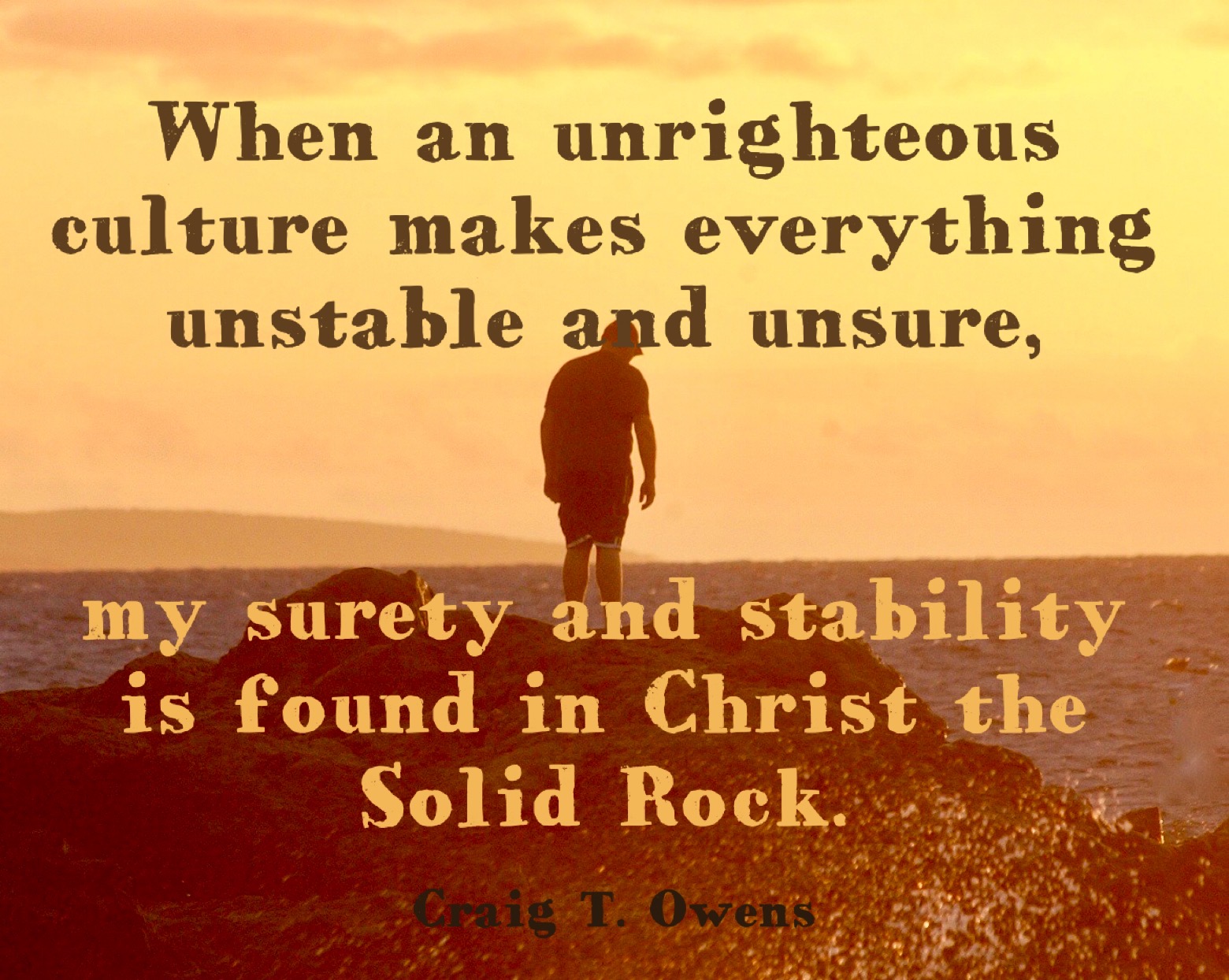
In our look at the Selahs of Psalm 55 we noted how David’s Selahs almost came as an interruption of his anxious thoughts. Habakkuk’s Selahs follow this same theme. That’s because Habakkuk’s culture (like ours today) was increasingly unrighteous, unstable, and unsure. This prophetic worship leader wants righteous people trying to stand strong in their unrighteous culture to know that our surety and stability must come from our unshakable relationship with our righteous God.
We’ve said that one of the definitions for Selah is “pause and calmly think of that,” but for Habakkuk’s Selahs I want to modify it slightly: Pause to interrupt your doubtful thoughts and consider this…. What he wants us to consider, I believe, comes from the opening words of his song in chapter 3—
Lord, I have heard of Your fame; I stand in awe of Your deeds, O Lord. Renew them in our day, in our time make them known; in wrath remember mercy (v. 2).
We are to pause to consider that God has already shown His unrivaled power in the past, and then we stand firm to see Him move again “in our day, in our time” so that the unrighteous will have an opportunity to repent and turn to Him.
The first Selah is after v. 3 in which Habakkuk references Mount Paran. How did God show His fame there? Moses recorded it this way:
The Lord came from Sinai and beamed upon us from Seir; He flashed forth from Mount Paran, from among ten thousands of holy ones, a flaming fire, a law, at His right hand. (Deuteronomy 33:2)
Selah—pause to interrupt your doubtful thoughts and consider this: God did this before and He can do it again. His glory will cover the heavens, His praise will fill the earth, His power will be so evident that the earth will quake and nations will tremble (vv. 4-6). All of this to reassure the righteous and arrest the attention of the wayward unrighteous.
The second Selah is after v. 9 where Habakkuk is still describing all that God will do personally to rescue His righteous ones. Selah—pause to interrupt your doubtful thoughts and consider this: God did this before—see the almost identical language David uses in Psalm 18:3-17—and He can do it again. All of this to reassure the righteous and arrest the attention of the wayward unrighteous.
The final Selah is at the end of v. 13 where Habakkuk describes what God will do to the enemies of His people. He uses words of decisive victory—crushed, stripped, pierced, trampled.
Once again, Selah—pause to interrupt your doubtful thoughts and consider this: God did this before and He can do it again. More specifically, Jesus is the Decisive and Ultimate Victor over sin and death! Check this out:
Then the end will come, when [Jesus] hands over the kingdom to God the Father after He has destroyed all dominion, authority and power. For He must reign until He has put all His enemies under His feet. The last enemy to be destroyed is death. (1 Corinthians 15:24-26)
And having disarmed the powers and authorities, He made a public spectacle of them, triumphing over them by the Cross. (Colossians 2:15)
Do not be afraid. I [Jesus] am the First and the Last. I am the Living One; I was dead, and now look, I am alive for ever and ever! And I hold the keys of death and Hades. (Revelation 1:17-18)
When our culture is becoming increasingly unrighteous, unstable, and unsure, what an unshakable surety and security we have standing on Christ the Solid Rock. As the old hymn reminds us—when all around my soul gives way, He then is all my hope and stay!
My wife and I just celebrated our anniversary. We enjoyed the many words of congratulations we received, but that got me thinking about marriages where only one spouse is a Christian and I then recorded this thought—
I was so honored to receive another great endorsement for my book Shepherd Leadership: The Metrics That Really Matter.
“It is not your business to succeed, but to do right; when you have done so, the rest lies with God.” —C.S. Lewis
“Homosexuality is not about some issue to debate; it’s about people to love.” —Dr. Preston Sprinkle, Living In A Gray World
“It is better to fail in originality than to succeed in imitation.” —Herman Melville
More fascinating news for creationists. Plants know how to defend themselves. “There are two main types of threat-detection mechanisms in plant cells—the ability to recognize distinctive chemical patterns that signify an invader, such as components of a bacterial cell, and the ability to recognize a disruption caused by invading pathogen.” Check out the full article here.
I shared an important reminder with my fellow pastors—
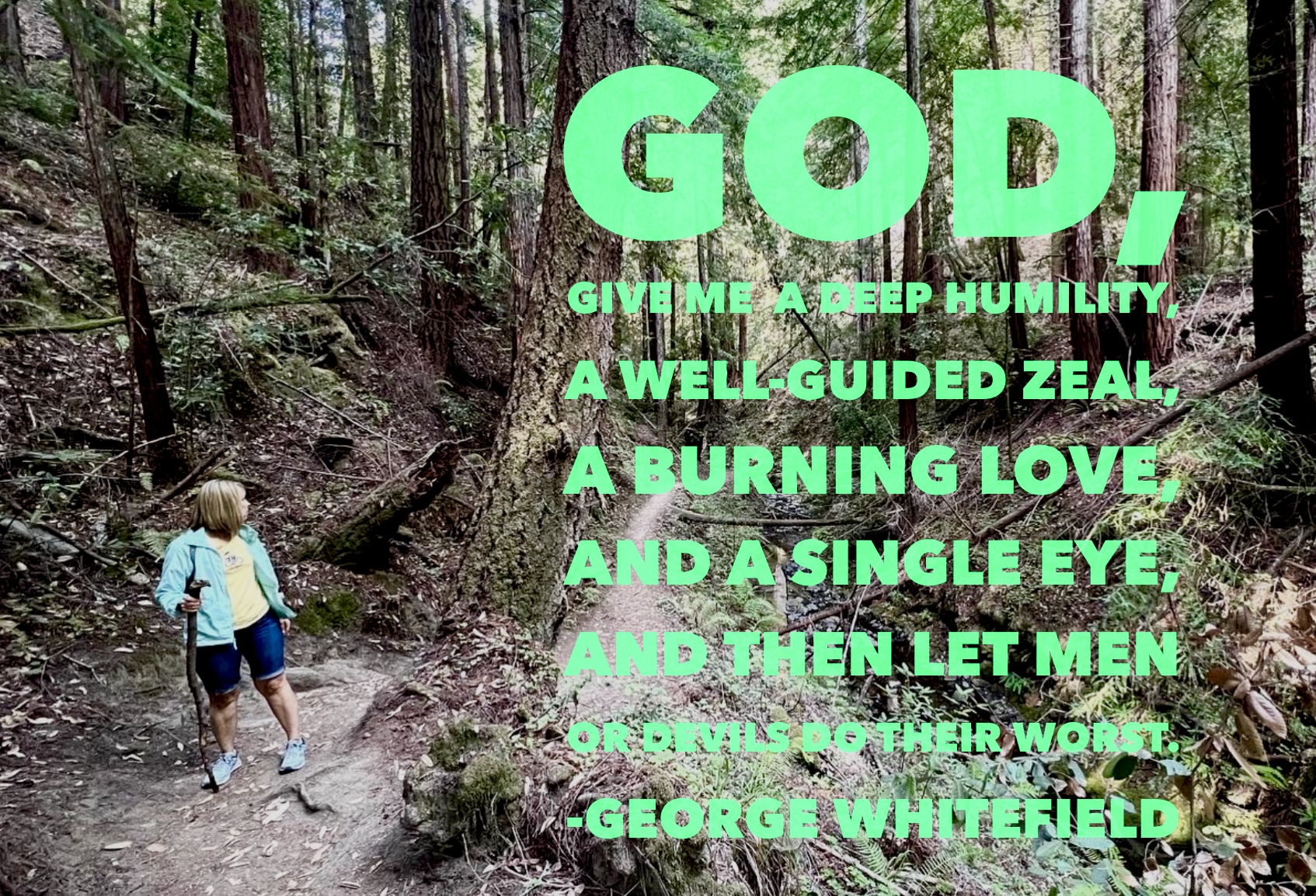
“God, give me a deep humility, a well-guided zeal, a burning love, and a single eye, and then let men or devils do their worst.” —George Whitefield, prayer when sailing for Georgia, December 30, 1777



 The Holy Spirit showed some interesting thoughts from the story of the temptation of Jesus.