Listen to the podcast of this post by clicking on the player below, and you can also subscribe on Apple, Spotify, or Audible. Check out the video content in this post by clicking here.
Charles Spurgeon, the man called the Prince of Preachers, knew how important it was for his congregation to be praying for him. He said,
“It is for your own benefit to remember in your prayers those who preach the Word of God to you, for what can they do without divine assistance and how can you be profited by them unless they are first blessed of God?”
If you love your pastor, please check out my book Amen Indeed. This is a book for prayers for pastors to pray for themselves, and you can also learn how to pray for your shepherd along the way.
Amen Indeed has topical prayers, weekly prayers for each Sunday morning, and some classic quotes about the important link between prayer and effective pastoring.
Praying for your pastor has huge benefits for you too!
Spurgeon went on to say, “The man who comes up to God’s house, having prayed for God to bless the preacher, is not likely to go away unprofited.”
Order a copy of Amen Indeed today for your favorite pastor.
Listen to the podcast of this post by clicking on the player below, and you can also subscribe on Apple, Spotify, or Audible. Check out the video content in this post by clicking here.
The baptism in the Holy Spirit brings an empowerment that nothing else can—You will receive POWER to be My witnesses (Acts 1:8).
I remember sitting with a group of leaders who were discussing personnel issues that was slowly becoming nothing more than a gripe session. I shared a story from the Book of Acts about some disagreements between some saints, and then made an application that caused all of these leaders to look at me in wonder. One said, “I had no idea that was in the Bible,” and another added, “I knew that story was there, but I never thought of applying that to this situation.” That wasn’t me, but the Holy Spirit who opened up His Word to that situation.
My friend Greg and I are writing a series of books for the business community called Business by the Book, where we are applying biblical insights to every “box” of a typical corporate flowchart. People who have already reviewed sections of our book are having a similar response: “I had no idea these examples and applications were there!”
We are surrounded by messages right now—messages we cannot hear. There are some persuasive arguments, some angry rants, some happy tunes, and some special sporting events. But we cannot tune into those messages with having a radio receiver set to the precise frequency. The Holy Spirit does the same thing for Christians.
Check out David talking about the speech of Creation in Psalm 19:1-4.
Jesus used Creation too—telling us to look at the birds and flowers (Matthew 6:26, 28) or to consider the farmer sowing seeds (Matthew 13:3-9).
In Romans, Paul tells us that Creation is enough (1:19-20) but that God also gave us His Law (2:12) and a conscience (2:15). When men rejected these things, God sent prophets and then His One and Only Son.
Those without the Holy Spirit are deaf to this speech, unable to understand it nor apply it to their lives, as Jesus goes on to tell His audience in Matthew 13:10-12.
We have already talked about the Holy Spirit as the Spirit of Truth (John 16:7-15), but notice that one of the first things He does is convict us of sin (v. 8). Without this conviction, we are unable to repent of the things which are keeping us spiritual blind and deaf (Ezekiel 12:1-2).
Oswald Chambers noted, “Spiritual insight is in accordance with the development of heart purity.” How true! And that’s exactly what Jesus went on to say in Matthew 13:13-15. Paul echoes this—
But people who aren’t spiritual can’t receive these truths from God’s Spirit. It all sounds foolish to them and they can’t understand it, for only those who are spiritual can understand what the Spirit means. (1 Corinthians 2:14 NLT).
One of the prophecies about Jesus included His reliance on the Holy Spirit—not His natural mind—to discern what God was doing and how Jesus would fulfill Scripture (Isaiah 11:1-5).
This Spirit-empowered insight was anticipated by Solomon: If you will turn (repent) and give heed to My reproof, behold, I Wisdom will pour out My Spirit upon you, I will make My words known to you. (Proverbs 1:23 AMPC)
We can then know the sayings of the wise and be able to understand and apply these truths (Proverbs 24:23, 32). See how Peter did this in Acts 10:17, 28.
Happy (blessed, fortunate, enviable) is the man who finds skillful and godly Wisdom, and the man who gets understanding—drawing it forth from God’s Word and life’s experiences.(Proverbs 3:13 AMPC)
The Spirit-baptized Christian is empowered to understand God’s speech through His Word, His Creation, and their life experiences, and then to make Christ-honoring applications of that understanding!
Why would we settle for anything less than this?! So don’t stop at salvation, but press on to be baptized in the Holy Spirit.
Quality leaders empathize with their teammates, but struggling leaders use their teammates’ stories as a lead-in to tell their own stories. Don’t be a one-upper! Check out our full conversation about the power of a leader’s empathy.
“Personal devotion to a friend or a pursuit means that they will always hold a place in our heart, even when other people and things occupy our attention. Personal devotion to Jesus means that we allow nothing to separate us from Him for a moment. To abide in Him and His love, to be kept by Him and His grace, to be doing His will and pleasing Him—this cannot possibly be an irregular practice if we are truly devoted to Him.” —Andrew Murray
“Let us all seek out the good points of our brethren, and consider them, that we may afterwards be the means of guiding them to those peculiar good works for which they are best adapted.” —Charles Spurgeon, commenting on Hebrews 10:24
AI deepfakes are a very real and present concern. This is a long article from Fight The New Drug about how innocent photos and videos are being manipulated into sexualized content. Parents: “A practical rule: before posting, ask, ‘Could this image embarrass my child later, reveal personal information, identify their location, or be misused if copied?’ If the answer is yes, do not post it publicly.” This post also lists several resources to remove AI-generated photos and videos that have been shared online.
“Have a heart that never hardens, and a temper that never tires, and a touch that never hurts.” —Charles Dickens
“Not all who wander are lost forever. By the mercy of God, even now, may your wanderer return home.” Jill Noble has encouraging words for parents who are praying for their prodigal child.
“Servant leadership is all about the person you serve. To grow in effectiveness, you must value what is valuable to that person. It is not enough to just ‘get better.’ We must get better in the areas that are important to the ones we serve. As a leader, do you possess what your team members need, specifically in the areas that can benefit your people?” —John Maxwell
“How many preachers mimic Achan with his stolen plunder? Contraband discourses, borrowed knowledge, unlawful paragraphs copied and pasted because a quick AI prompt was easier than doing the work themselves. To me, these have the glimmer of cursed objects, gold and silver under the ban. …What is a studied and well-expressed sermon built largely on the foundations of artificial intelligence? Is it not stolen plunder? What value is that orthodox teaching, conjured with a few keystrokes, when bereft of orthodox affection? Is this the blessing that Jacob wrestled all night for, the blessing that marked him the rest of his days? Men’s sacred trains of thought ought never run on AI search engines. There may be gold in their orthodoxy or oratory, but too often these are nuggets taken by the hand of laziness, inexperience, and lack of prayer. A lifetime of AI-produced sermons, Bible studies, and Sunday school lessons will not honor God and will end in defeat. …What is the point? Ministers must never replace their reliance upon God and His Spirit with any tools. The warrior of God does not trust in his spear or his chariots or his ChatGPT.” Greg Morse has more to say to preachers about the reliance on AI.
“The work of a Beethoven and the work of a charwoman become spiritual on precisely the same condition, that of being offered to God, of being done humbly “as to the Lord.” This does not, of course, mean that it is for anyone a mere toss-up whether he should sweep rooms or compose symphonies. A mole must dig to the glory of God and a cock must crow. We are members of one body, but differentiated members, each with his own vocation.” —C.S. Lewis, in The Weight of Glory
Listen to the podcast of this post by clicking on the player below, and you can also subscribe on Apple, Spotify, or Audible. Check out the video content in this post by clicking here.
Have you ever heard the phrase, “Choose work you love, and you will never have to work a day in your life”? I’m not sure that is totally accurate. Work that is meaningful and fulfilling will be draining, hard work. We see Jesus taking time away from His work to be replenished from the activities that drained Him.
Instead, I think we need to find joy in our work. That joy comes from knowing why we are working. If we know the answer to the question, “Why do I do what I do, even if what I do is hard and demanding work” (and we can stay focused on that), then I think there is a joy that makes our duty a delight.
Jesus knew His duty from the very beginning. We see this in the story Luke shares with us about 12-year-old Jesus visiting Jerusalem (Luke 2:41-50). The phrase “I had to be in My Father’s house” (NIV) is rendered “must be” (NLT, KJV), and “I had to be here dealing with the things of My Father” (MSG). And I think the AMPC version is especially telling: Did you not see and know that it is necessary as a duty for Me to be in My Father’s house and occupied about My Father’s business?
Jesus came to Jerusalem every year for the festivals of Passover, Unleavened Bread, and Firstfruits (see Leviticus 23:4-6, 9-14). Now at “twelve years old” He has had His bar mitzvah and is considered a Man in the eyes of the Jewish community. Eighteen years later, we see Jesus still focused on this same duty (Luke 3:23, 9:18-22).
Jesus found delight and fulfillment in doing His duty (Luke 10:21; John 4:31-34).
Jesus calls His followers to this same food that sustained Him (John 4:35-38). He calls this “hard work” that allows us to “be glad together.” Our joy is the joy of Jesus. Notice in Luke 10:21 that His joy was because His followers found joy in doing their duty for Him (Luke 10:1-3, 17).
Don’t look for the wages or your reward here, but do your duty joyfully in expectation of future and eternal rewards (Luke 17:7-10; John 3:27-30).
Let’s go back to 12-year-old Jesus in the temple. He was there during three Old Testament feasts that all pointed to Him and were fulfilled in Him:
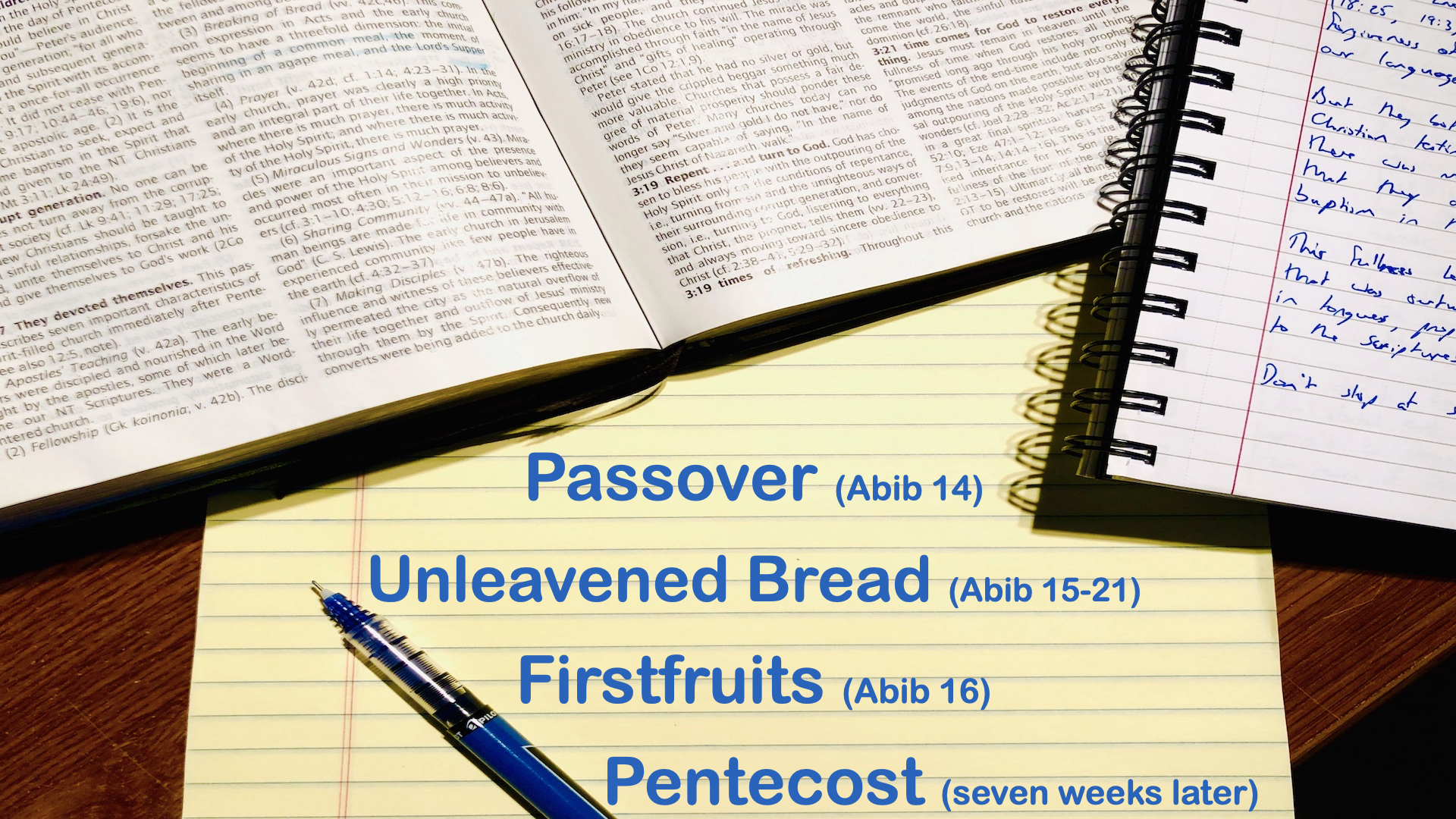
Passover (Abib 14)—the day Jesus was crucified
Unleavened Bread (Abib 15-21)—when Jesus was in the grave
Firstfruits (Abib 16)—the day Jesus was resurrected (see James 1:18)
Pentecost (50 days after Firstfruits)
Twenty-one years after this story in Luke 2, in the very same place where Jesus is interacting with these religious leaders, the followers of Jesus would be baptized in the Holy Spirit! He is the One Who makes our duty a delight.
We get a foreshadowing of the joy in the Holy Spirit in Luke 1:41-44 when just a greeting from Mary—who was pregnant with Jesus by the Holy Spirit—causes the baby in Elizabeth’s womb to leap with joy in the Holy Spirit. We, too, live in joy when the Spirit is actively at work in us (John 15:11; Romans 5:3-5). The Spirit reminds us of the rewards for our joyful duty (Matthew 25:34; Luke 12:35-37).
You can stick with your have-to-do duties if you have a get-to-do attitude that comes from the joy the Holy Spirit gives.
Which is why Jesus prays for our joy to be complete, and Paul prays, “May the God of hope fill you with all joy and peace as you trust in Him, so that you may overflow with hope by the power of the Holy Spirit” (Romans 15:13).
Check out all of the messages in this series about the power of the Holy Spirit in our lives by clicking here.
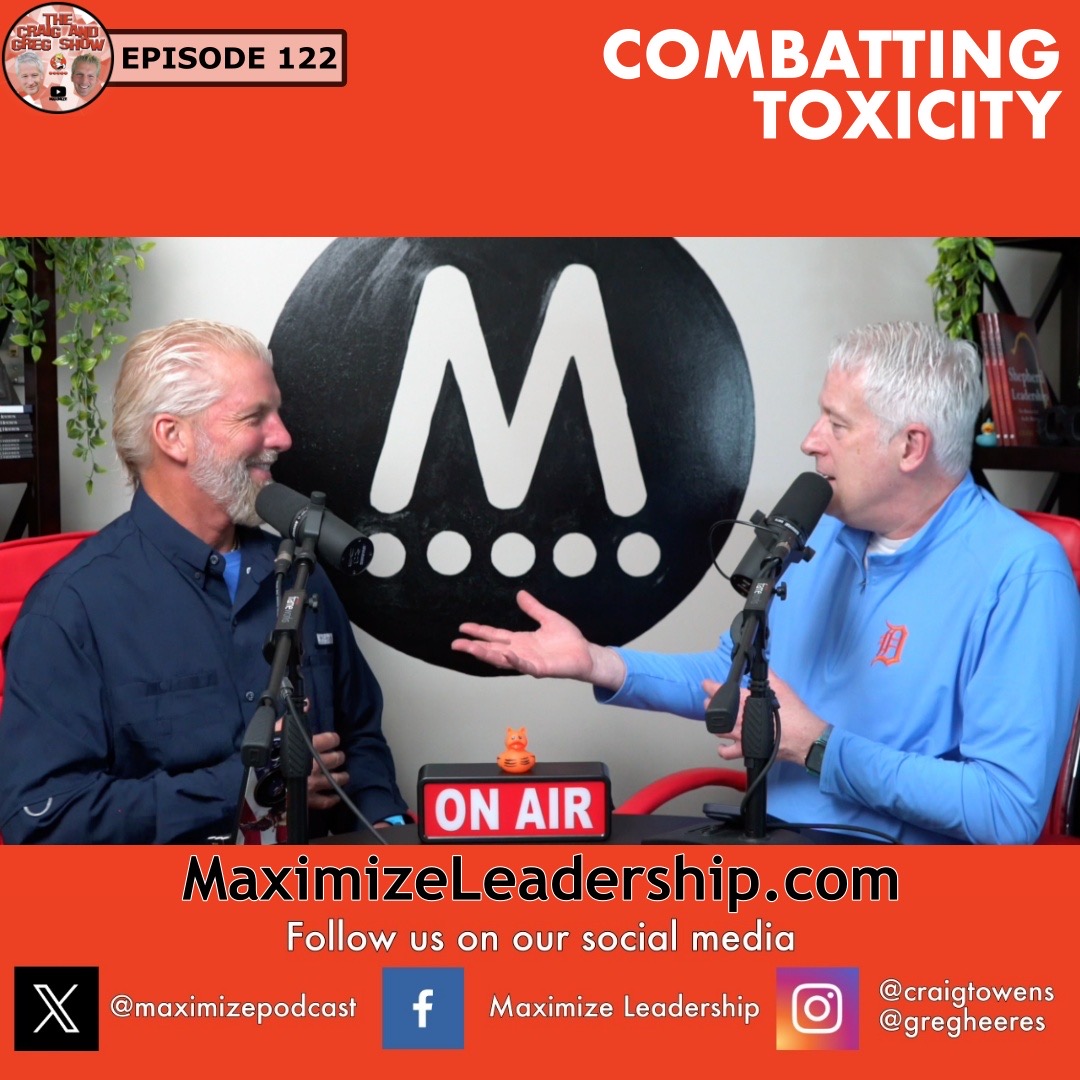
Sometimes leaders will have to part ways with a staff member. The way this is done can either bring resolution or it can create lingering problems. Check out this clip from our conversation on combatting toxicity in the workplace.
I thoroughly enjoyed this commentary from John Piper on the power of silence in the face of critics and revilers. Pastor John noted, “Both the teachings and the sufferings of Jesus are meant to teach us how to respond when we are treated badly, unjustly. We are to glorify God by finding in Him the reward that satisfies our heart deeply enough that we don’t need to return evil for evil.” I really leaned into this supernatural response to critics in my book When Sheep Bite.
“To preach Christianity meant primarily to preach the Resurrection. … The Resurrection is the central theme in every Christian sermon reported in the Acts. The Resurrection, and its consequences, were the ‘gospel’ or good news which the Christians brought: what we call the ‘gospels’, the narratives of Our Lord’s life and death, were composed later for the benefit of those who had already accepted the gospel. They were in no sense the basis of Christianity: they were written for those already converted. The miracle of the Resurrection, and the theology of that miracle, comes first: the biography comes later as a comment on it.” —C.S. Lewis, Miracles
“We all know that exercise makes us feel better, but most of us have no idea why. We assume it’s because we’re burning off stress or reducing muscle tension or boosting endorphins, and we leave it at that. But the real reason we feel so good when we get our blood pumping is that it makes the brain function at its best, and in my view, this benefit of physical activity is far more important—and fascinating—than what it does for the body. Building muscles and conditioning the heart and lungs are essentially side effects. I often tell my patients that the point of exercise is to build and condition the brain.” —Dr. John Ratey
“When it comes to leadership, attitude becomes even more important. You need to see possibilities when others don’t, encourage people when they are feeling defeated, and demonstrate commitment when others want to quit.” —John Maxwell
J. Warner Wallace not only makes the case that original accounts in the Gospels haven’t been changed over time, but he also shows how the corroborating sources affirm the original account—
Listen to the podcast of this post by clicking on the player below, and you can also subscribe on Apple, Spotify, or Audible. Check out the video content in this post by clicking here.
If you are reading the Gospels with the words of Jesus printed in red, there is one place where the red ink virtually disappears: When Jesus is on trial before Pilate, Herod, and the Sanhedrin. There’s an important lesson here for us.
Listen to the podcast of this post by clicking on the player below, and you can also subscribe on Apple, Spotify, or Audible. Check out the video content in this post by clicking here.
The first temptation of mankind was to doubt the God was good and that He was trustworthy. That’s why satan tempted Adam and Eve by saying they could become “like God.” Every Christian faces temptation, and one of the biggest is still satan’s same strategy: to try to get us to handle things on our own.
The baptism in the Holy Spirit is to help us realize that we cannot rely on ourselves, but we must rely totally on His power.
David Wilkerson said, “This is an ongoing problem with many Christians. We look to the Holy Spirit as some kind of booster shot to empower or energize our human will. We expect Him to build up our supply of grit and determination, so we can stand up to temptation the next time it comes. We cry, ‘Make me strong, Lord! Give me an iron will, so I can withstand all sin.’ But God knows this would only make our flesh stronger, enabling it to boast.”
Overcoming temptation is not about willpower but Spirit-power. Paul said this in 2 Corinthians 12:9.
Being tempted to sin is not a sign that God has abandoned me or that I am living apart from Him. Jesus was perfect and yet we are told He was tempted in every way (Hebrews 4:15). So we can easily determine that temptation is not a sin because Jesus was tempted (Luke 4:3-13). This story is told in all three synoptic Gospels (Matthew 4:1-10; Mark 1:13).
Look at what preceded this temptation: Jesus was baptized in the Holy Spirit (Matthew 3:13-17; Mark 1:9-12; Luke 3:21-22, 4:1-2). The Spirit was the One Who led Jesus into the wilderness specifically to face temptation.
Temptation comes the the Latin word meaning “to stretch.” Oswald Chambers noted, “Every temptation of satan is perfectly wise. The wisest, shrewdest, subtlest things are said by satan, and they are accepted by everybody as the acme of human philosophy; but when the Spirit of God is at work in a man, instantly the hollow mockery at the heart of what satan is trying to do, is seen. When we understand the inwardness of the temptation we see how satan’s strategy is turned into confusion by the Spirit of God.”
Temptation is not a sin, but a stretching. It is a call for us to give up our willpower and trust the Spirit’s power.
When Jesus came to earth, He gave up His rightful prerogatives as God. The stretching test here was this: Would He continue to rely on the Spirit’s power or would He try to reclaim the power He surrendered?
It’s the same question for us when we are tempted: Will we take matters into our own hands, or will we leave ourselves in the Spirit’s hands? In one paragraph, James tells us both the blessing of overcoming temptation and where temptations originate—
Blessed is the one who perseveres under trial because, having stood the test, that person will receive the crown of life that the Lord has promised to those who love Him. When tempted, no one should say, “God is tempting me.” For God cannot be tempted by evil, nor does He tempt anyone, but each person is tempted when they are dragged away by their own evil desire and enticed.Then, after desire has conceived, it gives birth to sin; and sin, when it is full-grown, gives birth to death. (James 1:12-15)
The Spirit shows us the way to have the mind of Christ in overcoming temptation (1 Corinthians 10:13).
Just before Jesus was tempted, we see the help that is promised to all of us through the baptism in the Holy Spirit (Matthew 3:11; Mark 1:8; Luke 3:15-16).
There are some things we will learn about ourselves in a time of temptation that we cannot learn in any other way. Being baptized in the Holy Spirit is about empowerment, but it is really the power to submit—full and unconditional surrender to the only One who can bring me safely through (Hebrews 4:15; 5:7-9; 2:17-18).
As we talked about last week, the Spirit of Truth gives us the mind of Christ (John 16:13, 15; 1 Corinthians 2:16).
We, just like Jesus, can be victorious over these temptations by doing what Jesus did. (1) He was fully submitted to His Heavenly Father, (2) He was sensitive to go where the Holy Spirit led Him, and (3) He uncovered the shrewd and subtle arguments of satan by using the Word of God.
Instead of saying, “I gave in to temptation,” we can say, “I gave in to the Holy Spirit, Who helped me defeat temptation!”
Check out all of the other messages in our series We Are: Pentecostalby clicking here.
Doing the duty God has commission you to do isn’t about making you happy. It’s about helping others and glorifying God. Don’t look for the easy way out, but trust that God has empowered you to do your duty!
“We must see that we are no good unless God takes charge of us. When God has real control of us, our future takes on a new outlook. What a wonderful open door of opportunities for God to use us!” —Smith Wigglesworth
“Great men may make despotisms; but democracies make great men. The other main factory of heroes besides a revolution is a religion. And a religion again, is a thing which, by its nature, does not think of men as more or less valuable, but of men as all intensely and painfully valuable, a democracy of eternal danger. For religion all men are equal, as all pennies are equal, because the only value in any of them is that they bear the image of the King.” —G.K. Chesterton
Fossils show some creatures being much larger in the past. This report from ICR reminds us, “This is just one more example of the widespread phenomenon of fossil giantism. Many pre-Flood fossil creatures were gigantic. These include not just extinct giants like dinosaurs but also the ancestors of creatures that are still alive today. … Obviously, the staggering size of many fossil creatures suggests they had access to abundant food and lived in an environment that was, even after the Fall, still “very good” in many ways (Genesis 1:31).”
“One of the greatest diseases is to be nobody to anybody.” —Mother Teresa
“I can be changed by what happens to me. But I refuse to be reduced by it.” —Maya Angelou
“What was the pitch that covered the Ark? Many have wondered what this could have been. Was it oil or some type of tree resin? A newly discovered Roman shipwreck has revived this debate. But this time, maybe it offers a resolution.”
Listen to the podcast of this post by clicking on the player below, and you can also subscribe on Apple, Spotify, or Audible. Check out the video content in this post by clicking here.
When some sort of chemical or toxin is spilled in the environment it doesn’t just stay put, it spreads, corrupting everything around it. The same principle is true in our organizations—toxic behaviors that are allowed to fester will spread until they consume your entire team. So put on your hazmat suit and join Greg and me as we address common toxic behaviors and offer strategies on how to root them out before they can take hold.
[0:00] Introduction
[1:00] A quick list of some toxic behaviors leaders will have to address.
[3:09] Let’s think about the analogy of our organizations as a human body that’s nursing an injury.
[5:50] How should leaders treat toxicity in their organizations?
[9:38] Greg wants to know how I have addressed toxic teammates.
[11:20] Greg shares how moving the problem instead of dealing with the problem actually multiplies the problem.
[15:17] At some point leaders might have to admit that a toxic teammate isn’t a good fit for the organization. Now what do we do?
[17:42] There was an important part of my book When Sheep Bite that Greg helped me to see more clearly.
[18:54] Being too quick to deal with problems is just as dangerous as being too slow to deal with it.
[25:28] It’s easy to get swayed by your emotions when dealing with these toxic topics, but an outside coach isn’t emotionally invested like you are, so they can give you a much more objective viewpoint.
[27:00] The behavior you accept will determine the culture of your organization.
Listen to the podcast of this post by clicking on the player below, and you can also subscribe on Apple, Spotify, or Audible. Check out the video content in this post by clicking here.
Last week we said that Spirit-baptized Christians should live in the normalcy of extraordinary power! Our normative should be extraordinary because we have the Holy Spirit in us (John 14:16-17). One bad habit that keeps us from extraordinary living is that we frequently seek counsel from flawed sources—like fellow humans—when Jesus intends for the Holy Spirit to give us extraordinary insight (John 16:12-19).
I work with middle schoolers every day. I love them but they can be frustrating at times. They are at the age where you would expect to see some maturing, but sometimes I have to ask them, “How old are you?” I think you can hear this loving frustration in Paul’s tone in 1 Corinthians 3:1-4. He refers to their spiritual immaturity as worldly (3x), calling them mere infants and mere humans (2x).
This immaturity means they are missing out on deeper truths (you were not yet ready for it … still not ready), which reveals itself in their jealousy and quarreling, and factions.
The phrase “mere humans” tells us that there is a lifestyle that is deeper. Which Paul outlines in 2:11-16. When he says some are “without the Spirit” (v. 14), he uses a Greek word that means the animal life which humans have in common with the brutes. That’s why some Bible translate this word “natural man” (NKJV). In other words, people living by reactions without forethought or insight.
This word for “mere Humans” or “natural man” occurs two other times in the New Testament, and it is a very sad picture (James 3:15; Jude 19)!
By contrast, Paul says that those who rely on the Holy Spirit have spiritual discernment (v. 14) to make good judgments (v. 15). Both of these English words are the same Greek word which is probably best translated as Spirit-breathed insight.
Why does the Holy Spirit give us this deeper insight? So that we may have the mind of Christ (2:16). The psalmist echos this longing: I am Your servant; give me understanding (discernment and comprehension), that I may know—discern and be familiar with the character of—Your testimonies (Psalm 119:125 AMPC).
This psalmist knew the power of God’s Word to help us to continue to mature in our walk with our Savior. Especially in the section in Psalm 119:97-104, we read that this Spirit-breathed insight gives us an advantage over our enemies, our teachers, and even our elders.
Solomon picks up this same theme. Notice his “if…then” connections in Proverbs 2:1-6 as he talks about the immense value of the divine insight the Holy Spirit gives us.
Guillermo Maldonado said, “God never intended for us to walk aimlessly, trying to please Him without guidance or direction. Instead, He sent us the Holy Spirit and equipped us with the ability to hear, feel, intuit, and discern His atmosphere.”
Remember what Jesus said in John 16:12-15. In short: the Holy Spirit gives us the mind of Christ. With His mind we have discernment into how to apply the Scripture to our life, which will give us extraordinary insight. With this insight, our lives will be transformed and we will be His witnesses, drawing others to Jesus.
Let’s make this our prayer—
And this is my prayer: that your love may abound more and more in knowledge and depth of insight, so that you may be able to discern what is best and may be pure and blameless for the day of Christ, filled with the fruit of righteousness that comes through Jesus Christ—to the glory and praise of God. (Philippians 1:9-11)