Vegetables And Dessert

a-testimony-to-othersHave you ever noticed that kids would prefer to eat dessert more than vegetables? Well, maybe you’re an adult and you still feel the same way! But “veggies before dessert” is still a good motto to live by.

Why?

What happens if you eat only dessert? Do you eventually get healthier or are you setting yourself up for some unfavorable health conditions? What about if you only eat vegetables? The flavor may not be as good, but at least you’ll be getting healthier.

Jesus told His followers to expect the “veggie” times in time. He said, “In this world you will have trouble.” And He told us, “Then you will be handed over to be persecuted and put to death, and you will be hated by all nations because of Me.” There were no ifs or maybes in those statements!

As Christians living on Earth, the Apostle Peter calls us “aliens and strangers.” That means that both our attitude and our lifestyle should be, well, alien compared to Earthlings. Especially when we’re in a veggie time of life.

Jesus was the Perfect Man. He never said anything wrong, and He never did anything wrong. Yet He was insulted, persecuted, and eventually killed in the most horrific way imaginable. But here’s the amazing thing: Jesus went through all of this without retaliating or threatening judgment on His persecutors. Peter said that the way Jesus went through this was intended to be an example for us.

The writer of Hebrews agreedLet us fix our eyes on Jesus, the Author and Perfecter of our faith, Who for the joy set before Him endured the Cross, scorning its shame, and sat down at the right hand of the throne of God. Consider Him Who endured such opposition from sinful men, so that you will not grow weary and lose heart

Notice it says, “for the joy set before Him.” Other translations say “because of the joy awaiting Him” or “He never lost sight of where He was headed” or “He never lost sight of the joy ahead of Him.” In other words, Jesus knew what God’s plan was from before the beginning of time, so He—as Peter said—kept on entrusting Himself to God.

We have to do the same thing!

I have to confess something. When I quoted the “veggie” part of a couple of verses earlier in this post, I left off the “dessert” part…

  • “I have told you these things, so that in Me you may have peace. In this world you will have trouble. But take heart! I have overcome the world.” (John 16:33)
  • Blessed are those who are persecuted because of righteousness, for theirs is the kingdom of heaven. Blessed are you when people insult you, persecute you and falsely say all kinds of evil against you because of Me. Rejoice and be glad, because great is your reward in heaven….” (Matthew 5:10-12)

The way you handle your vegetable times—disease, insults, financial setbacks, outright persecution—can be a testimony to others. The way you go through these trials could help others turn to the Shepherd and Overseer of their souls.

Are you in a trial now? Keep on entrusting yourself to Him Whose plans cannot be thwarted

It might seem all “veggies” now, but you are getting healthier, and the “dessert” you cannot even imagine is on its way!

If you’ve missed any messages in this series, you may find the complete list by clicking here.
Ken Blanchard & Phil Hodges On Forgiveness

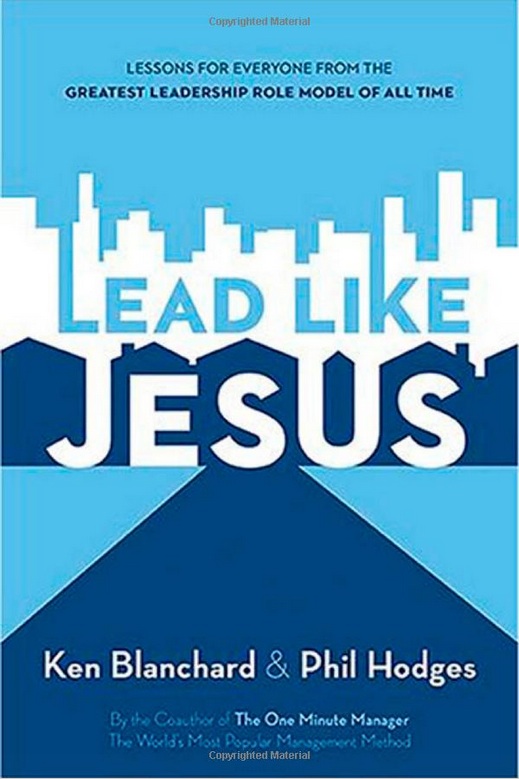
lead-like-jesus“Forgiveness is the way for a heart grounded in the unconditional love of God to respond to the imperfections of others. … EGO-driven leaders, impatient for results, are quick to judge and discount less-than-perfect efforts as failure rather than to forgive and redirect. Forgiveness is a supernatural act, not a natural response to being hurt or let down. It is an act of the will, a choice, of one who has surrendered control to a higher court of judgment. …

“The opposite of forgiveness is judgment. Your motivation for doing something is as important as what you do. In theological terms, judgment is pointing out a fault with a view to condemnation. On the other hand, discernment is pointing out a fault with a view to correction or restoration. When we withhold forgiveness, is it because we are sincerely trying to correct or restore—or is it because there is some benefit to us in condemning?” —Ken Blanchard & Phil Hodges

Religious Liberty In School

free-to-speakAs our students are heading back to their schools, it is a great time to be reminded of the religious liberties they have while in school. With all of the talk of so-called “separation of church and state,” I think many parents and students are reluctant to say anything that sounds remotely Christian, for fear of getting in trouble with the powers-that-be.

But we don’t have to tread so carefully!

Gateways To Better Education has some great resources. I ordered a couple hundred of their “Free To Speak” pamphlets. I gave them to our school superintendent, and as many parents as as I could. This short pamphlet summarizes the US Department of Education’s guidelines on what is allowed in school. In short, the Seven Freedoms are:

  1. Students can pray, read their Bibles or other religious material, and talk about their faith at school.
  2. Students can organize prayer groups and religious clubs, and announce their meetings like any other club.
  3. Students can express their faith in their class work and homework.
  4. Teachers can organize prayer groups with other teachers.
  5. Students may be able to go off campus to have religious studies during school hours.
  6. Students can express their faith at a school event.
  7. Students can express their faith at a graduation ceremony.

Don’t be intimidated. Don’t be uninformed. Know your rights as a US citizen.

5 Ways To Be A Christlike Employee

Work like JesusHave you ever had a bad boss? One who was harsh, unreasonable, overly demanding, or just a plain meany? Do you think working for a “bad boss” means that you get to lower your standards?

Not if you are a Christian!

Christians are on Earth to represent Jesus. We are aliens and strangers here for a short time, but here to also point people toward Heaven. One place we have tremendous opportunity to do this is on our jobs.

Think about it: most people will work 30-40 hours per week, and probably work 40-50 years of their life. That’s a lot of hours in which to show that living for Jesus makes all the difference in the world. 

Peter addresses our work situation in his first epistle. In essence he says, “You may not be able to control your boss’s actions, but you can control your reactions. A Christian has a different attitude about workplace employers than Earthlings do.”

The two things that set Christian employees apart is their submission and their respect.

Submission means understanding the proper order. This isn’t just showing up on time, wearing the right uniform and checking off the right things on your job description. All of those things can be done with a lousy attitude, with an attitude that’s nothing like Christ’s attitude.

Submission means viewing our employers differently—

  • Obeying them like we would obey Jesus (Ephesians 6:5).
  • Being sincere when we say, “Yes, I’d be happy to do that” (Ephesians 6:5).
  • Working hard even when our employer isn’t watching us (Ephesians 6:6).

With that in mind, here are five ways to be an “alien employee.” That is, someone who honors God on-the-job…

  1. Work for God.
  2. Trust God to be your Provider, not your employer.
  3. Trust God to keep perfect records of your faithful service.
  4. Pray for God’s blessing on your employer.
  5. Pray for your employer to see Jesus in your work ethic.

Here’s a great question to ask yourself: If Jesus were filling out my employee evaluation, what would He say about my work ethic? 

If you’ve missed any messages in this series, you may find the complete list by clicking here.

Thursdays With Oswald—The Value Of Temptation

Oswald ChambersThis is a weekly series with things I’m reading and pondering from Oswald Chambers. You can read the original seed thought here, or type “Thursdays With Oswald” in the search box to read more entries.

The Value Of Temptation

     Temptation is not sin…. Temptation is something that exactly fits the nature of the one tempted, and is therefore a great revealer of the possibilities of the nature. … A good illustration of temptation is the way steel is tested. Steel can be “tired” in the process of testing, and in this way its strength is measured. … Temptation trains innocence into character or else into corruption. … 

     If the power to disobey were removed, our obedience would be of no value, for we should cease to be morally responsible. It is gloriously possible not to sin, but never impossible to sin, because we are moral agents. Morality must be militant in this order of things, but we can be “more than conquerors” every time. …

     Spiritual life is attained…by moral choices, whereby we test the thing that presents itself to us as being good. … Health is the balance between my physical life and external nature. If the fighting force on the inside begins to dwindle or is impaired, I get diseased, things outside begin to disintegrate my vital force. … The same is true spiritually; if I have enough spiritual fighting capacity, I will produce a character like Jesus Christ’s. Character must be attained, it is never given to us.

From The Philosophy Of Sin

It is interesting to think that what tempts us is a revealer of what’s really inside of us. We need to watch carefully what is enticing us toward sin, because that will help us see the areas of weakness in our lives.

God allows temptation to occur as a means of helping us submit that area of revealed weakness to His control. Lust is wanting something my way, and sin is when I give in to that lust. What I should do instead of giving in is submit that area of weakness to Christ’s Lordship.

I can develop the same character that Jesus Christ exhibited on earth, IF I will allow the Holy Spirit to develop that “vital force” in me. The Holy Spirit doesn’t give me character, but He gives me strength to overcome temptation and thus develop that Christ-like character.

Don’t confuse temptation with sin. But don’t treat temptation lightly either. See temptation for what it really is: (1) a revealer of an area of weakness in your heart, and (2) an opportunity for you to develop Christ-like character.

4 Tips For Making Better Goals

1 Corinthians 10.31I have noticed a lot of similarities between the September back-to-school rush, and New Year’s Day. Except instead of resolutions, in the fall most people set new goals, or try to readjust their schedules to take advantage of a new season.

This is an excellent idea, and the perfect time to do it.

In a psalm written by Moses, he tells us to understand the value of our days, and be as wise as we can with what we do with each day God has given us (Psalm 90:12).

The Apostle Paul echoes these thoughts:

Be very careful, then, how do you live—not as unwise but as wise, making the most of every opportunity, because the days are evil. Therefore do not be foolish, but understand what the Lord’s will is. (Ephesians 5:15-17)

One way for us to make the most of every day is to wisely set some goals. Here are four tips that I’ve discovered to help me.

(1) The fewer the goals, the better.

Craig Groeschel said, “To do more things, do less things better.” I totally agree. I would suggest limiting yourself to just 1-2 goals at a time. Then put these one or two goals on your calendar first. In other words: Don’t prioritize your schedule, but schedule your priorities.

(2) Don’t fall into the sacred/secular trap.

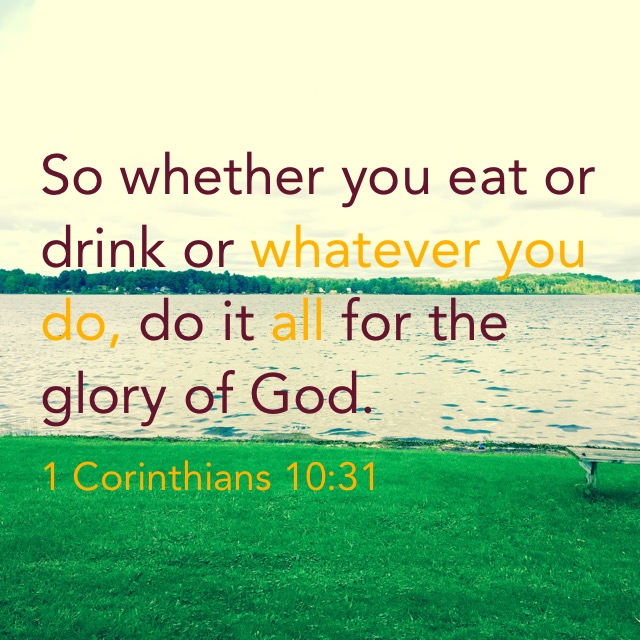
So many people—even Christians—think that there are spiritual goals and non-spiritual goals. But the Bible says, “So whether you eat or drink or whatever you do, do it all for the glory of God” (1 Corinthians 10:31). Every goal you set is a spiritual goal, because every goal should help you live your life wisely, in a way that honors and glorifies God.

(3) Make your goals S.M.A.R.T.

You may have heard these before, but I really like to use them. Make your goals:

  • Specific—not “I want to eat better” but “I want to eat two servings of fruits or vegetables each day.”
  • Measurable—have a way to track your progress toward your goal. How many pages did you read? how many calories did you eat? how many minutes did you work out?
  • Achievable—don’t set a goal to run 5 miles a day if you’ve only been a couch potato. Ramp your goals up little by little in a way that’s achievable for you.
  • Relevant—I like to ask a “so that?” question about each of my goals in make sure it’s moving me forward. “I want to exercise for 20 minute three times per week, so that my blood pressure comes down, so that I can live medicine-free, so that I can….” I think you get the idea. Keep going to make sure your goal is relevant for your life.
  • Time to review—set a date to revisit your goals and see if you need to adjust anything.

(4) Make a “stop doing” list.

You cannot do everything, so focus on the important, not the urgent. And remember not everything can stay on your calendar. For instance, if you want to read more in the evenings, you may have to eliminate some TV time; if you want to exercise in the mornings, you may have to eliminate that second cup of coffee.

Just a couple of verses after Moses challenges us to make the most of every day God has given us, he asks God for His helpMay the favor of the Lord our God rest upon us; establish the work of our hands for usyes, establish the work of our hands.

May God give you wisdom as you make new goals, and may He bless the work of your hands as you implement your new strategies.

I Love My “Job”

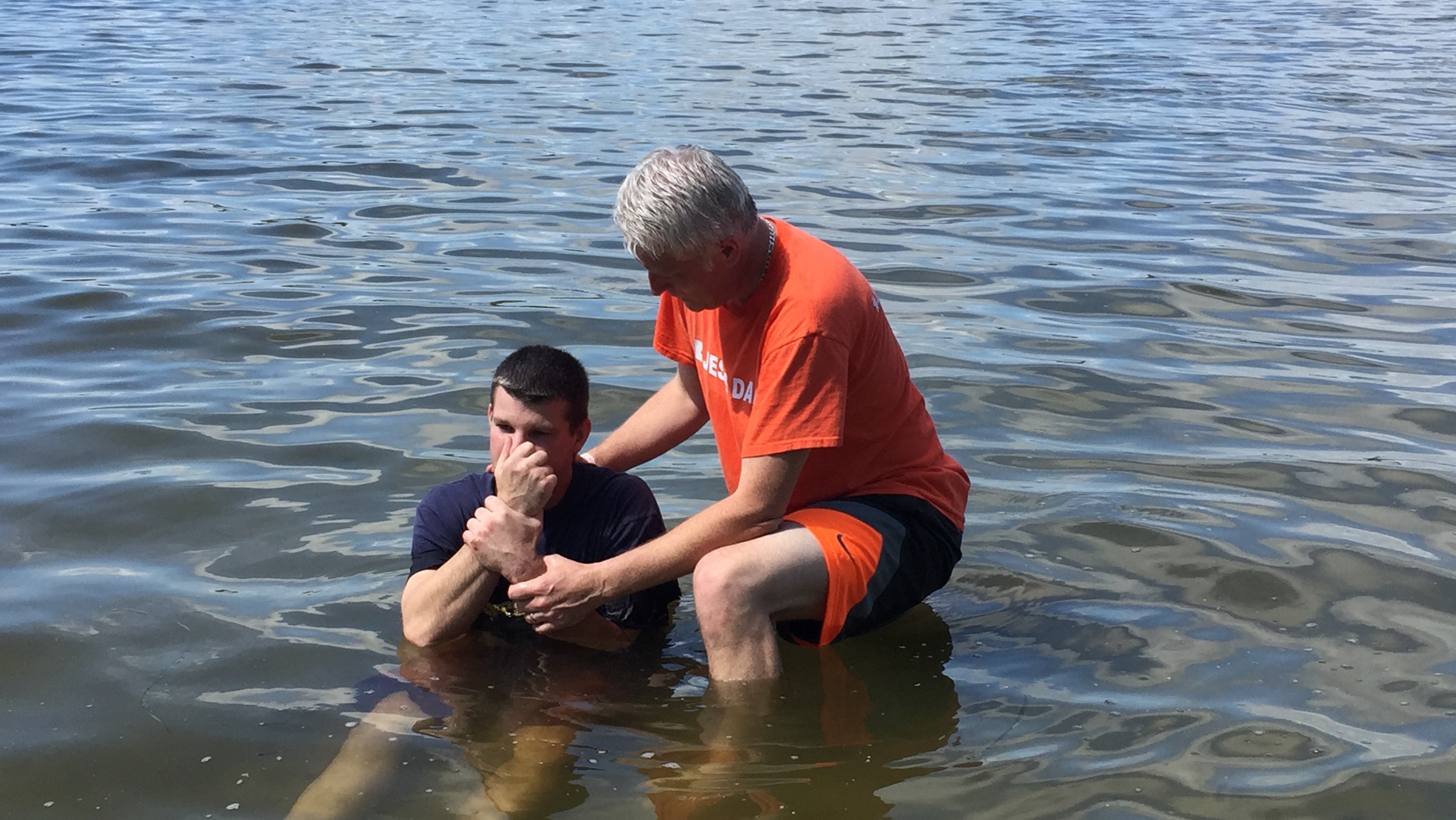
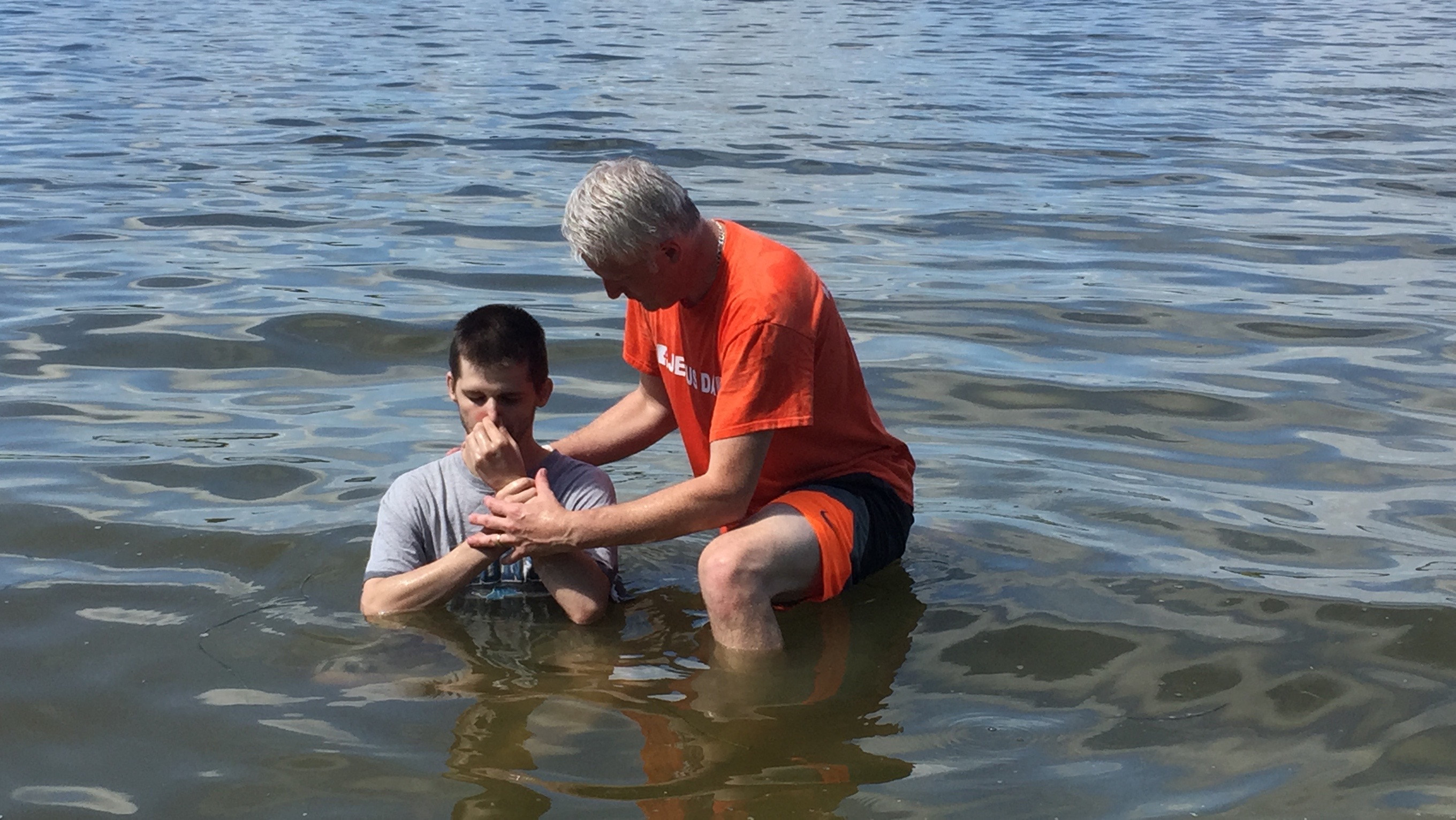
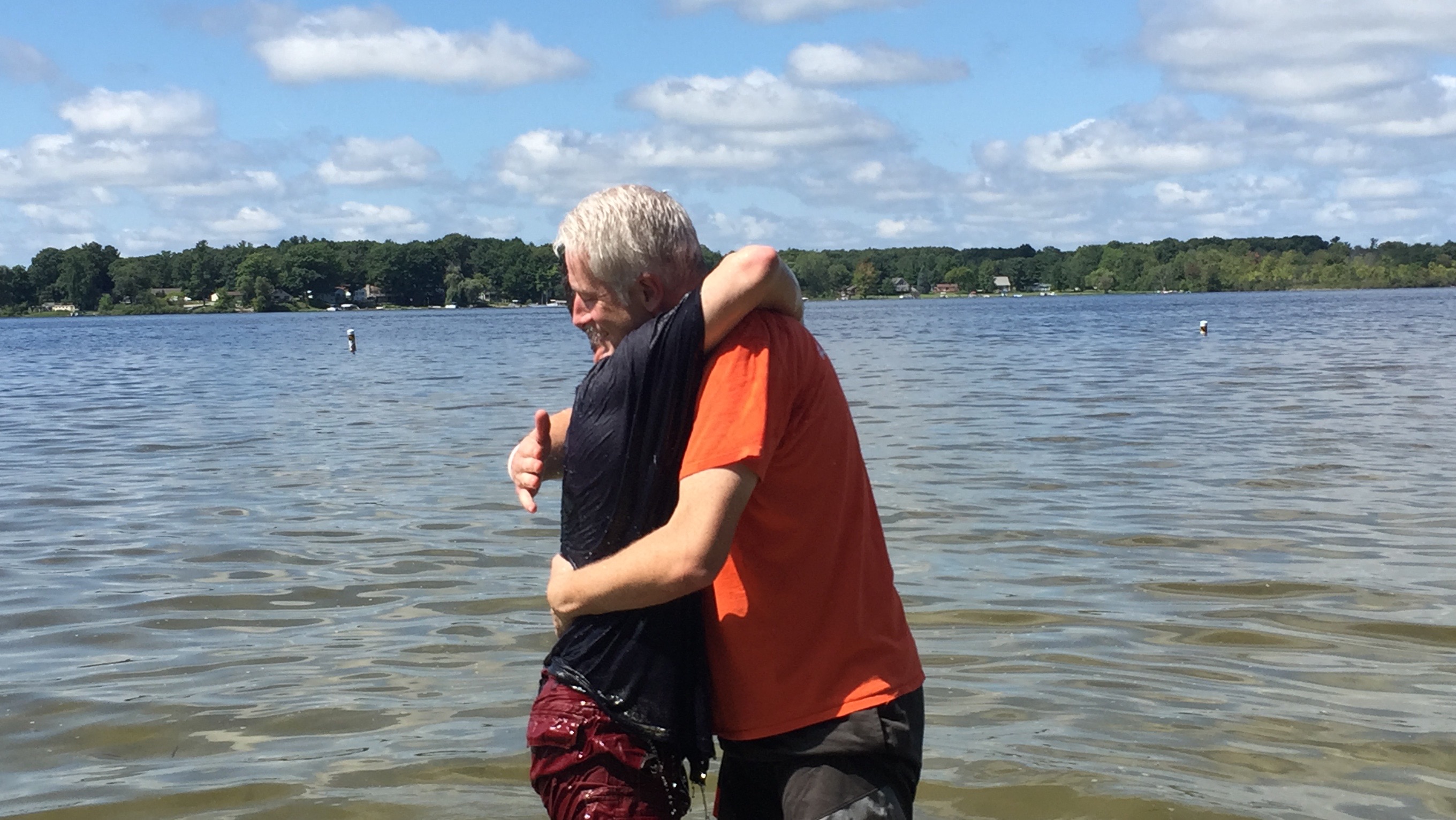
I cannot even begin to tell you how thrilled I am when I get to baptize folks in water who have made the decision to follow Jesus Christ as their Lord and Savior. Today it was even sweeter when I got to baptize a father and son!

IMG_7582IMG_7592 IMG_7589 IMG_7585


Rethinking Addiction

AddictionThis is a fascinating video that may just revolutionize the way you think about addictions and addicts.

Near the 4:45 mark of the video the statement is made about a new way of interacting with others. This, I believe, is what the Christian church should be doing. If we aren’t, I doubt we are living out the good news that Jesus taught. If you want to do an interesting study, check out how many times the phrase “let us” is used in the New Testament. Also note that the word saint never appears in the New Testament in the singular, but it is always saintS. This tells me that we were designed to be together.

“Human beings have a deep need to bond and form connections. It’s how we get our satisfaction. If we can’t connect with each other, we will connect with anything we can find—the whirr of a roulette wheel or the prick of a syringe…. We should stop talking about ‘addiction’ altogether, and instead call it ‘bonding.’ A heroin addict has bonded with heroin because she couldn’t bond as fully with anything else.” —Johann Hari

What do you think? Please share your thoughts in the comment below?

7 Tips For A Better Night’s Sleep

Psalm 4.8It’s no secret that being tired can lead to a lot of not-so-nice consequences. Everything from automobile crashes, to poor work performance, to foot-in-mouth statements, to giving in to temptations, to health issues are all traced back to not getting enough peaceful sleep.

But did you know that sweet sleep is something God wants to give you?

Psalm 127 says, “God grants sleep to those He loves.” Guess what? God loves you, and wants you to have a peaceful night’s sleep!

Here are some benefits to getting solid sack time:

  1. Muscles are repaired—the body “turns off” muscles during sleep so they can repair themselves.
  2. The hormone leptin, that regulates your appetite, is adjusted.
  3. Your blood pressure is lowered.
  4. Your heart rate is lowered.
  5. The energy-producing cells we all need are restocked.
  6. Your immune system is re-energized.
  7. Memories are consolidated from short-term memory banks to long-term memories.
  8. The hormones that allow you to concentrate are replenished.
  9. Your “database” of decision-making options is re-calibrated.
  10. Bottom line—you get healthier physically, mentally, emotionally, relationally, and spiritually.

All of this God wants to give to those He loves. “God loves me, so I’m going to sleep peacefully tonight!”

The problem is we often sabotage God’s blessing of sweet sleep by our own poor decisions during the day. So here are seven things you can do to cooperate with God’s blessing of sleep:

  1. Reduce stress. Stress causes your body to release cortisol, which prepares your body for fight-or-flight. This means when you’re trying to quiet down for the night, your body is still screaming, “Go, go go!” Stress is mainly triggered by worrying over things outside of our control, so check out what Jesus said to us about not worrying—Matthew 6:25-34.
  2. Reduce late-day caffeine. Caffeine has a half-life of six hours, so if you are pouring it into your body late in the date, you might fall into bed exhausted but the caffeine is keeping your brain buzzing. As a result, you don’t have the normal deep sleep patterns.
  3. Eliminate emotional caffeine. Arguments with other people release cortisol and adrenaline in your bloodstream. If these disagreements are happening later in the day, your body is fighting against God’s plan for your tranquil sleep. So take care of any disagreements quickly (Ephesians 4:26).
  4. Exercise. Getting some movement into your daily routine flushes cortisol and adrenaline from your bloodstream.
  5. Go to bed and get up at the same time. There’s a reason God made the sun to rise and set at predictable times. Your body also functions best on a predictable schedule.
  6. Reduce “blue lights” close to bed time. The blue light waves of dawn tell our bodies to stop releasing melatonin, the sleepy hormone. The red light waves of dusk tell our bodies to increase melatonin so we can go to sleep. But when we’re staring into the blue light of our phones and tablets, our body is being sent a conflicting signal.
  7. Pray. Two great passages you can pray before bedtime are Psalm 4:8 and Proverbs 3:24. Claim those promises of sweet sleep!

God loves you. He wants to give you the blessing of peaceful sleep. If you’re going to sleep peacefully tonight, make sure you are not sabotaging what God wants to give you.

If you’ve missed any of the messages in this series, you can access the complete list by clicking here

Jim Daly On Forgiveness

Jim Daly“Have you noticed? It can be a challenge to say, ‘I’m sorry.’ Oh, it’s not hard to speak the words, but it can be tough to say them with sincerity. Why? Probably because we understand that to apologize is to accept responsibility for ill-spoken words or misbehavior. It requires humility on our part, which can often be confused with giving someone else the upper hand over us. That’s why apologies tend to be viewed as a weakness.

“It’s also why people offer apologies that have been stripped of any real meaning. We minimize the severity of our actions; we blame our behavior on others; or maybe we say all the right words, but dilute them with sarcasm or humor. Whatever the method, we recognize a false act of contrition when we see it because the result is always the same: the appearance of an apology without the substance of one. And rather than healing, shallow platitudes often deepen a loved one’s wounds. Like a doctor’s empty syringe, an empty apology pierces the soul but offers nothing that can bring healing.

“That’s why, far from being a weakness, a heart-felt apology requires strength because it demands deep sincerity on behalf of the person offering it. That inner strength and humility often requires God’s grace to express. The Lord’s role is crucial because mending a relationship-gone-wrong has little to do with the specific words we use to express our contrition. The healing comes from the authenticity we pour into our words and actions.” —Jim Daly