Links & Quotes

On our 100th episode, Greg and I talk about how important it is for leaders to let people learn through their struggle, so we need to reject the temptation to jump in to help them too soon. Check out the full conversation The Struggle is Real (but Necessary).

I have a lot of new video content on my YouTube channel every week. Please check it out and subscribe so you don’t miss anything.

John Piper was asked how to identify false teachers or prophets, and he gives four biblical tests to determine this. But I also appreciate this admonition: “Don’t set the bar so low that you only stop listening to people if they can be properly called false teachers. Lots of people are teachers who are simply misguided and unhelpful in many ways but might not come under the ban of being called a false teacher. Set your standards high. Listen to people who are truly God-centered, Christ-exalting, Bible-saturated, Spirit-dependent, who bear the marks in their lives of authenticity.” 

In imploring Christians to not shrink back from difficult trials but to rise and conquer in the strength of the Spirit, Greg Morse makes this observation: “When the risen Christ walked among His early churches (as He walks among them still), His eye was very keen to observe and His heart very ready to address a particular kind of person in every assembly: ‘the one who conquers’ (Revelation 2:7, 11, 17, 26; 3:5, 12, 21). To each of the seven churches, He summons and strengthens the one who would overcome, prevail, hold fast, keep strong, stand firm, and move forward—the victors in Christ amid a larger group in the church who only profess to know Him.”

Two separate geological studies found a period in history where rock formations were impacted by massive amounts of water. ICR adds, “Because conventional geologists deny the historical accuracy of Genesis, they operate at a loss. They see evidence of massive erosion and tremendous water flow at the end of the Tejas Megasequence and just prior to the Ice Age but are hampered by their uniformitarian thinking to explain it. But the Bible gives us answers. Genesis describes a global flood that peaked on Day 150. The sedimentary rocks across all of the continents confirm this peak occurred at the end of the Zuni Megasequence (at the K-Pg). And the rocks confirm that the Tejas Megasequence records the subsequent receding phase.”

There was a Man who
dwelt in the east centuries ago,
And now I cannot look at a
sheep or a sparrow,
A lily or a cornfield,
a raven or a sunset,
A vineyard or a mountain,
without thinking of Him. —G.K. Chesterton


Clinton Manley addresses the place of physical exercise in the life of a Christian. Before sharing three astute observations about this interaction, he notes, “Body or soul is a false dichotomy. As Paul makes clear in 1 Corinthians 9:24–27, physical fitness and spiritual fitness don’t have to be either-or; they’re best as both-and. The body and soul have an inseparably reflexive relationship: the body affects the soul, and the soul affects the body. God created us to glorify Him by enjoying Him, and the body is the soul’s training partner in the pursuit of spiritual pleasures.”

“Who will trust me with a spiritual body if I cannot control even an earthly body?”  —C.S. Lewis 

The Craig And Greg Show: The Struggle Is Real (But Necessary)

Listen to the podcast of this post by clicking on the player below, and you can also subscribe on AppleSpotify, or Audible.

Do you enjoy struggling? Odds are the answer to that is a resounding “No!” because struggling is difficult, uncomfortable, and frustrating. However, without struggle it is impossible for us to develop to our full potential in our personal and professional lives. In this episode Greg and I encourage you to embrace struggle, and allow your team to struggle as well so that you all can grow to your very best.

  • [0:20] The struggle is real, but leaders help people know that struggling ≠ failing.  
  • [2:07] Failure is not permanent, and leaders need to help people slow down to see this.
  • [3:38] Here’s how leaders can inspire their teammates to reframe failure.
  • [5:54] Greg shares some reflections from his sports background that can help us see our productive struggle in a positive light.
  • [6:40] I talk about using Six Sigma initiatives in one of my organizations to help them learn each time they missed a benchmark.
  • [8:25] The struggle is what helps us ultimately succeed.
  • [11:42] We rob others of the joy of a breakthrough if we don’t allow them to struggle.
  • [14:19] Leaders need to differentiate failures from mistakes.
  • [16:09] Greg pulls out a movie analogy for us.
  • [18:17] The struggle helps us enjoy the future wins.
  • [21:14] Two leadership lessons we need to keep in mind.
  • [25:26] Greg transformed a couple of organizations by asking people what they learned from mistakes.
  • [27:15] Leaders need to change their own mindset about failing before they can change the mindset of their team. If you need help with this, we would love to help coach you to that next level.

Check out this episode and subscribe on YouTube so you can watch all of the upcoming episodes. You can also listen to our podcast on Spotify and Apple.

The Divine Jesus

Listen to the podcast of this post by clicking on the player below, and you can also subscribe on AppleSpotify, or Audible. 

I was teaching a class for my team members, and at one of the breaks a new employee came up to me to say how much he was enjoying the day, and to tell me that he would like to do what I was doing. I asked him, “But do you want to do what I did in order to do what I’m doing?” When I explained that I read about 10-12 books for this training time, and that it took me about 40 hours to prepare for our 4-hour class, he didn’t seem as interested. 

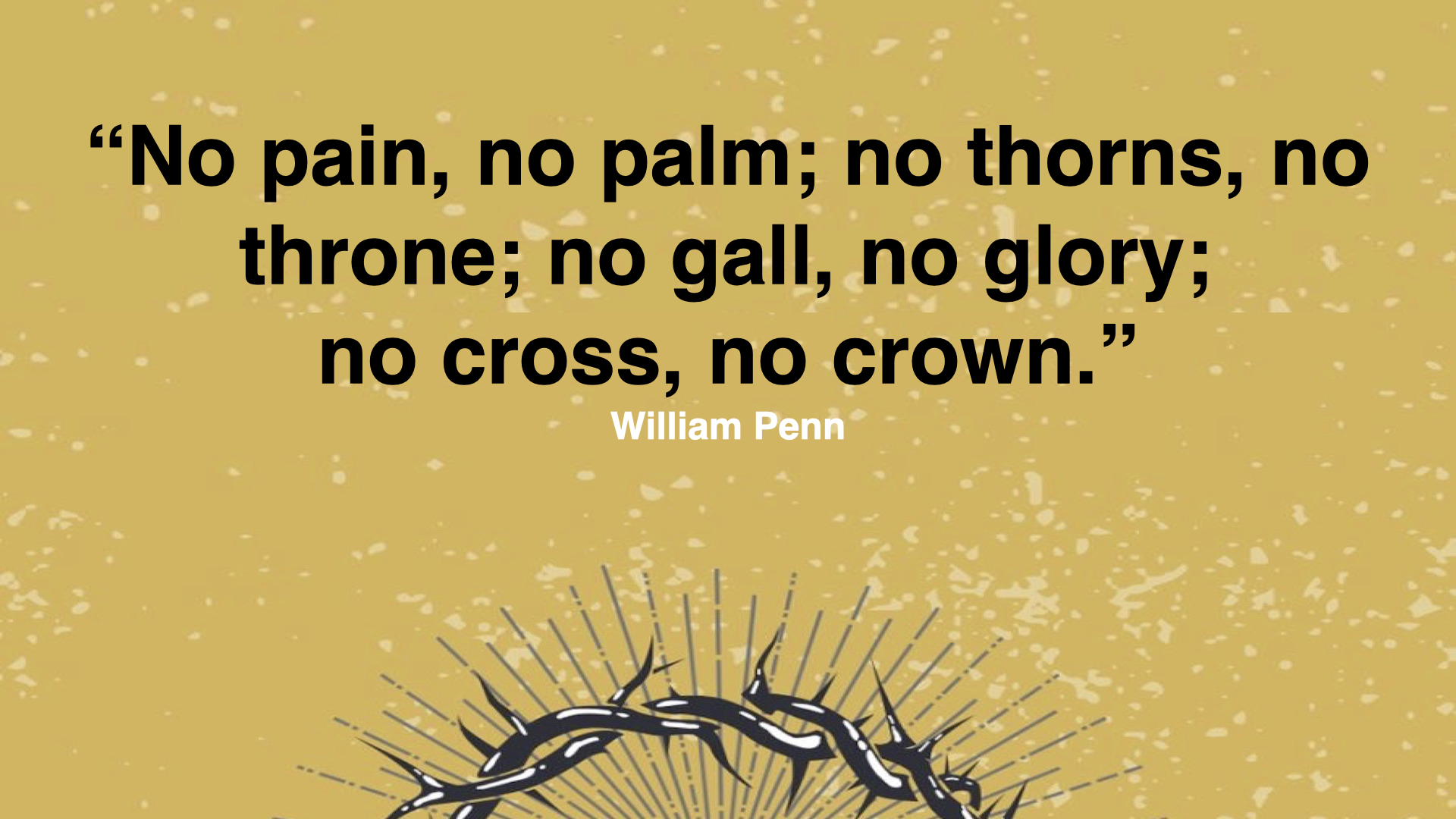
Most people don’t want to put in the work, but they just want the results. As Christians we need to remember these words from William Penn: “No pain, no palm; no thorns, no throne; no gall, no glory; no cross, no crown.” 

The human Jesus understands and empathizes with our painful struggles, and the divine Jesus helps us endure through these painful struggles to get the rewards on the other side. 

What do we mean by divine? The dictionary simply defines it as things relating to God or gods, so we need to use some context to help us understand who this divine Jesus is. After all, the New Testament refers to both Jesus and Artemis as divine (Romans 1:20; Hebrews 1:1-3; Acts 19:27). 

One way we can distinguish is by doing what the writer of Hebrews advised: “Remember your leaders, who spoke the word of God to you. Consider the outcome of their way of life and imitate their faith” (Hebrews 13:7). We see that the so-called worshippers of Artemis were more interested in their own financial gain than they were her divinity (Acts 19:23-27). In contrast, the apostle Paul demonstrated a totally Jesus-focused lifestyle: “However, I consider my life worth nothing to me; my only aim is to finish the race and complete the task the Lord Jesus has given me—the task of testifying to the good news of God’s grace” (Acts 20:24). 

Paul was following Jesus, and called all Christians to do the same. He noted that Jesus gave up all of His divine privileges to become our human Jesus, but because of this obedience, God made the divinity of Jesus shine more gloriously than anything else in creation! Then Paul transitioned to a word specifically for Christians: 

Therefore, my dear friends, as you have always obeyed—not only in my presence, but now much more in my absence—continue to work out your salvation with fear and trembling, for it is God who works in you to will and to act in order to fulfill His good purpose. (Philippians 2:12-13) 

In essence this is like Jesus saying, “I want you to have what I have, but you will have to do what I did to get it: That is, go through the painful struggles of life. But I will be right here with you every single step of the way!” 

The writer of Hebrews echoes this idea by reminding us that Jesus was made perfect through suffering, and so are we. So he calls us to “not throw away your confidence; it will be richly rewarded.” He also reminds us that although the times of suffering are not pleasant, there is an unimaginable reward on the other side (Hebrews 2:9-11; 10:35-39; 12:1-11).

I especially like this conclusion: “No discipline seems pleasant at the time, but painful. Later on, however, it produces a harvest of righteousness and peace for those who have been trained by it” (Hebrews 12:11).

The divine Jesus has made it possible for us to be rewarded as He was rewarded! His divine power leads to our divine nature. And His divine power helps us defeat the world’s weapons (2 Peter 1:3-4; 2 Corinthians 10:4) 

Jesus asks, “Do you want to do what I did in order to do what I’m doing?” The power of the divine Jesus can help us be perfected, but we only get to this perfected place by suffering as He suffered. That’s why we need to know our human Jesus understands, empathizes, and helps. 

Most people don’t want to put in the work, but they just want the rewards. Our divine Savior helps us work out what God has worked in us. He helps us get the rewards! 

If you’ve missed any of the messages in our series on prayer called Awesome: Learning to pray in the awesome name of Jesus, you can find all of the messages by clicking here. 

►► Would you please prayerfully consider supporting this ministry? My Patreon supporters get behind-the-scenes access to exclusive materials. ◀︎◀︎

The Church Needs To Foster Community

“Amid the confusion of Christians mistreating people with gender dysphoria to prop up their sense of self-righteousness, and progressives mistreating them to advance their agenda of autonomy, those with real identity struggles are forgotten. Christ alone understands who we are through and through. And because of that each one of us in our fractured states needs to come to Him. …

“The need of the hour is for biblically faithful compassion. The church needs to open its doors and Christians need to open their hearts so that those struggling to find resolution to their dysphoria—and those who are struggling to find clarity amidst other confusions—can find community and, ultimately, their true identity in Christ. In Christ, they can be understood. …

“God’s original intent is for harmony between one’s soul and one’s body. This is why Christians, of all people, should be compassionately concerned with helping people find mind-body congruence. For the Christian, the mind and the body are both important and were meant to work harmoniously. … This biblical perspective defends our integrity as whole human beings in contradistinction to the secular effort to reduce us to our chemistry and jettison any idea that we have an immaterial mind or soul. …

“That is why the invitation of Christ has come in this order: recognition, repentance, redemption, regeneration. When we recognize our need for the Savior (because of our sins in general, not because of our dysphoria), repentance happens and then we are redeemed. But that redemption works itself out in our lives over time. It is the Holy Spirit who lives and works in us to conform us to Jesus’ likeness. It is not an overnight process, which means the church must do a better job of helping that process along. The church needs to foster community.” —Abdu Murray

12 Quotes From “The Strenuous Life”

Teddy Roosevelt believed firmly that a nation rose or fell as individuals exercised strong character or lived a slothful life. He not only preached it, he lived it! The Strenuous Life is a collect of TR’s speeches that emphasized what he called “the manly characters.” Check out my full book review by clicking here. 

“We do not admire the man of timid peace. We admire the man who embodies victorious effort; the man who never wrongs his neighbor, who is prompt to help a friend, but who has those virile qualities necessary to win in the stern strife of actual life.” 

“A man’s first duty is to his own home, but he is not thereby excused from doing his duty to the State; for if he fails in this second duty it is under the penalty of ceasing to be a freeman. In the same way, while a nation’s first duty is within its own borders, it is not thereby absolved from facing its duties in the world as a whole; and if it refuses to do so, it merely forfeits its right to struggle for a place among the peoples that shape the destiny of mankind.” 

“If we stand idly by, if we seek merely swollen, slothful ease and ignoble peace, if we shrink from the hard contests where men must win at hazard of their lives and at the risk of all they hold dear, then the bolder and stronger peoples will pass us by, and will win for themselves the domination of the world. Let us therefore boldly face the life of strife, resolute to do our duty well and manfully; resolute to uphold righteousness by deed and by word; resolute to be both honest and brave, to serve high ideals, yet to use practical methods. Above all, let us shrink from no strife, moral or physical, within or without the nation, provided we are certain that the strife is justified, for it is only through strife, through hard and dangerous endeavor, that we shall ultimately win the goal of true national greatness.” 

“Scant attention is paid to the weakling or the coward who babbles of peace; but due heed is given to the strong man with sword girt on thigh who preaches peace, not from ignoble motives, not from fear or distrust of his own powers, but from a deep sense of moral obligation.” 

“Strive manfully for righteousness, and strive so as to make your efforts for good count.” 

“We are in honor bound to put into practice what we preach; to remember that we are not to be excused if we do not; and that in the last resort no material prosperity, no business acumen, no intellectual development of any kind, can atone in the life of a nation for the lack of the fundamental qualities of courage, honesty, and common sense.” 

“If a man permits largeness of heart to degenerate into softness of head, he inevitably becomes a nuisance in any relation of life. If sympathy becomes distorted and morbid, it hampers instead of helping the effort toward social betterment.” 

“The quality of self-help is so splendid a quality that nothing can compensate for its loss; yet, like every virtue, it can be twisted into a fault, and it becomes a fault if carried to the point of cold-hearted arrogance, of inability to understand that now and then the strongest may be in need of aid, and that for this reason alone, if for no other, the strong should always be glad of the chance in turn to aid the weak.” 

“The Bible always inculcates the need of the positive no less than the negative virtues, although certain people who profess to teach Christianity are apt to dwell wholly on the negative. We are bidden not merely to be harmless as doves, but also as wise as serpents. It is very much easier to carry out the former part of the order than the latter; while, on the other hand, it is of much more importance for the good of mankind that our goodness should be accompanied by wisdom than that we should merely be harmless. If with the serpent wisdom we unite the serpent guile, terrible will be the damage we do; and if, with the best of intentions, we can only manage to deserve the epithet of ‘harmless,’ it is hardly worth while to have lived in the world at all.” 

“The boy who is going to make a great man, or is going to count in any way in after life, must make up his mind not merely to overcome a thousand obstacles, but to win in spite of a thousand repulses or defeats.” 

“Softness of heart is an admirable quality, but when it extends its area until it also becomes softness of head, its results are anything but admirable.” 

“A man is worthless unless he has in him a lofty devotion to an ideal, and he is worthless also unless he strives to realize this ideal by practical methods. He must promise, both to himself and to others, only what he can perform; but what really can be performed he must promise, and such promise he must at all hazards make good.” 

More quotes from TR are coming soon, so stay tuned! 

7 More Quotes From “Jesus Always”

jesus-alwaysIn Jesus Always by Sarah Young, we hear Jesus speak the words of Scripture to us in His first-Person voice.

“I am training you to view your life from a heavenly perspective—through eyes of faith. When things don’t go as you had hoped to, talk with Me. Seek My face and My guidance. I will help you discern whether you need to work to change the situation or simply accept it.”

“The more you keep your gaze on Me—in quiet times and busy times—the better you can reflect My glory to other people. … When you are aware that I am present with you, you’re less likely to do or say something that’s displeasing to Me. When you’re struggling with difficult circumstances or painful feelings, awareness of My presence offers courage and comfort.”

“If you aspire to reach the heights—especially the high places of achievement and recognition—be prepared to shoulder the responsibilities that accompany success. But don’t forget to enjoy the satisfaction of accomplishing good things with Me, through Me, and for Me.”

“Pursuing a close walk with Me is the best way to live in the present. Keep bringing your thoughts back to Me whenever they wander. Return to Me joyfully, beloved. I will take great delight in you and rejoice over you with singing.”

“You tend to waste energy trying to determine whether your resources are adequate for the day. You keep checking your ‘power gauge’ instead of looking to Me for My provision. How much better to simply acknowledge your insufficiency when you awaken! This frees you to rely on My boundless sufficiency.”

“Your becoming a Christian was only the beginning of the work I’m doing in you. You need to be made new in the attitude of your mind and to put on the new self—becoming increasingly godly, righteous, and holy. This is a lifelong endeavor, and it is preparing you for heaven’s glory.”

“See Me smiling on you in radiant approval. My limitless love falls continually upon you, like heavenly snowflakes that melt into your upturned face. No matter how distressing your circumstances, this love is sufficient to sustain you. Someday you will even ascend to Heaven on it. I eagerly anticipate the time when I will take you into glory—to be with Me forever!”

Be sure to check out my review of Jesus Always by clicking here, and you can read the first set of quotes I shared from this book here.

If you’d like to be notified immediately when I post more quotes, please subscribe to my blog, and be sure to follow me on Twitter and Tumblr, where I share inspiring quotes every day.

Charles Spurgeon On Quiet Confidence

C.H. SpurgeonIn quietness and in confidence shall be your strength (Isaiah 30:15).

“It is always weakness to be fretting and worrying, questioning and mistrusting. What can we do if we wear ourselves to skin and bone? Can we gain anything by fearing and fuming? Do we not unfit ourselves for action and unhinge our minds for wise decision?

“We are sinking by our struggles when we might float by faith. Oh, for grace to be quiet!

“Why run from house to house to repeat the weary story which makes us more and more heart-sick as we tell it? Why even stay at home to cry out in agony because of wretched forebodings which may never be fulfilled? It would be well to keep a quiet tongue, but it would be far better if we had a quiet heart. Oh, to be still and know that Jehovah is God!

“Oh, for grace to be confident in God! The holy One of Israel must defend and deliver His own. He cannot run back from His solemn declarations. We may make sure that every word of His will stand though the mountains should depart. He deserves to be confided in; and if we would display confidence and consequent quietness, we might be as happy as the spirits before the throne.

“Come, my soul, return unto thy rest, and lean thy head upon the bosom of the Lord Jesus.” —Charles Spurgeon

Commissioned = Struggling

As I like to do on Fridays, this post is especially for my fellow pastors.

I have become [the church’s] servant by the commission God gave me to present to you the Word of God in its fullness. (Colossians 1:25)

Let’s be honest: What pastor wouldn’t say he/she wants to “serve” the church?

But look at Paul’s definition of a servant of the church (Colossians 1:24-2:5):

  • Suffering
  • Rejoicing in that suffering
  • Proclaiming the gospel
  • Admonishing the saints
  • Teaching with all wisdom
  • Maintaining a passion for everyone’s perfection
  • Laboring
  • Struggling

That’s quite a list!

Paul also says, “I want you to know how much I am struggling for you” (2:1). The word here and in 1:29 come from the same root word meaning: A contest (whether sports or a courtroom trial) in which there is a large audience, and in which one contestant is representing a larger group.

It’s like an Olympic athlete competing for his country, or an attorney speaking on behalf of her clients.

Then Paul adds, “I tell you this so that no one may deceive you by fine-sounding arguments” (2:4). In other words, actions speak louder than words. As Teddy Roosevelt famously said—

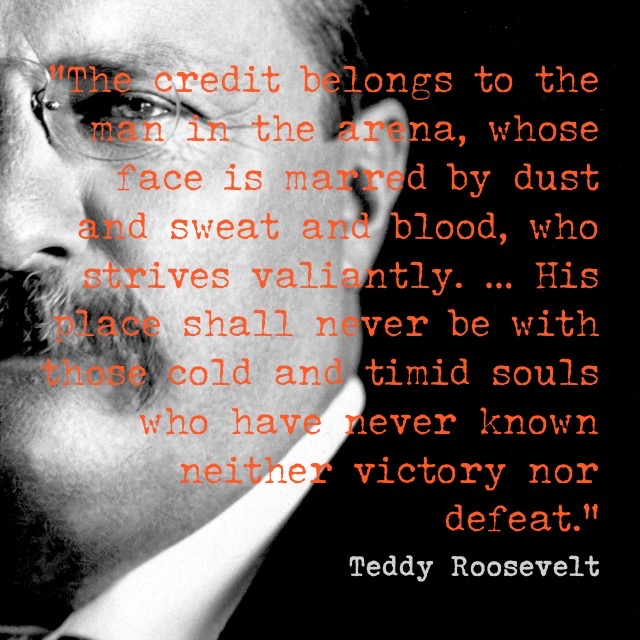
“It is not the critic who counts; nor the many who point out how the strong man stumbles, or where the doer of deeds could have done them better. The credit belongs to the man in the arena, whose face is marred by dust and sweat and blood, who strives valiantly…who knows the great enthusiasms, the great devotions, who spends himself in a worthy cause, who at the best knows in the end the triumph of high achievement, and who at the worst, if he fails, at least fails while daring greatly, so that his place shall never be with those cold and timid souls who have never known neither victory nor defeat.”

Pastor, stay in the arena!

Don’t walk away from the struggles!

Persevere through the difficulties!

People are watching you. What people? Specifically those sheep whom God has commissioned you to shepherd in His pasture. So stay in the fight!

I’m praying for you!