7 Quotes + 1 Infographic From “Marching Off The Map”

Once again, Tim Elmore has given us invaluable insight into the emerging youth culture. If you have kids or work with kids, you must read Marching Off The Map. You can check out my full book review by clicking here. Below is the first set of quotes I want to share with you, but there will be plenty more coming in the future, so stay tuned!

“Thanks to technology, information streams into their lives 24/7 and often has no filter on it, even for young children. When we determined not to censor content in the media, we had no idea (understandably) how it would affect our kids. We’re removing the opportunity for them to experience innocence and wonder. However, because they’re still maturing emotionally, socially, cognitively and biologically in their first 25 years, we have now begun to witness a strange paradox in our young: the extinction of childlikeness and the extension of childishness. …

“Since they are exposed to so much adult information, so early in their lives, they can prematurely lose (1) their sense of innocence, (2) their sense of wonder and (3) their sense of trust …

“Biologically, the graduate is an adult. Emotionally, the graduate may be unprepared for the adult world.” 

“If you think our kids are pitifully impulsive on social media—just look at the adult population. … If you think teens are addicted to Facebook, just study the hours their mothers spend on it. If you think young athletes on the Little League baseball field act childish, just look at their dads. The behavior of adults and children has become more and more similar. Society has baptized ‘youthfulness.’ We want to look young, feel young, dress young, talk young and act young. We argue with our children’s teachers. We push our kid’s coaches to get them special treatment. We are not good at delaying gratification, and we frequently don’t keep commitments we make … very much like children. The result? Adulthood has lost much of its aura and authority.”

“As you stand in front of your classroom or your own children—you are, in a sense, Galileo. You are Magellan. You are Christopher Columbus. You are Lewis and Clark. You are Neil Armstrong. Ready or not, they need you to play this role.

“Our world is both expanding and shrinking. Our past maps and methods are antiquated. Like it or not, we’re moving into unfamiliar territory and many think it’s too difficult to explore. We have fallen in love with our old maps. … 

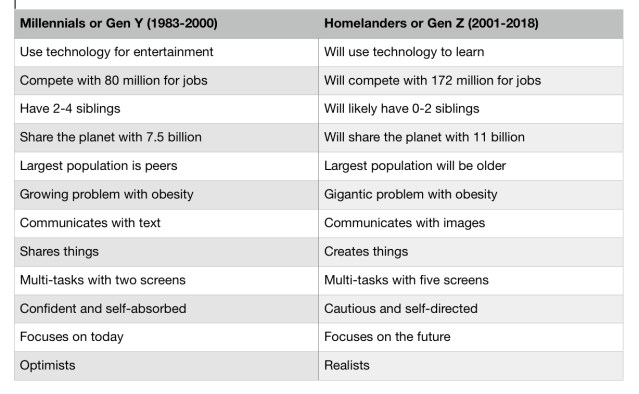
“For educators, our role must change as we teach a generation of students who don’t need adults to get information.

“For parents, our role must change as we raise kids in a time of terrorism, economic recession, racial unrest, underemployment and ubiquitous technology.

“For coaches, our role must change as we train young athletes who have eight-second attention spans, and may arrive at practice with little resilience or grit.

“For youth workers, our role must change as we mentor students who have few life skills or values because adults either over-functioned or were absent.

“For employers, our role must change as we onboard young employees who may have never had a real job before, and may ask when ‘spring break’ will be.”

“Adults must enable the students to leverage what is new, yet at the same time, hold on to what is ancient, yet valuable. We must be both timeless and timely. So, our job as we serve the next generation is two-fold:

  • To adopt or adapt. We must seize what is new and help kids leverage it well.
  • To explain and equip. We must relate to them the timeless ideals every generation needs.”

“I believe we must cultivate one significant skill set in ourselves: we must be able to either adapt to the new world that’s emerging, or we must explain why a timeless virtue or value is still relevant in our 21st century world.”

“A third of young Americans say they don’t belong to any religion. I’ve found, however, they’ve traded in one God for many gods. They want to ‘feel’ spiritual, so they’ve created a buffet—seeking something to satisfy their soul. I often hear students say, ‘I don’t believe in religion, but I want to be a spiritual person.’ Today—pluralism is expanding across the landscape. It’s easier to say ‘no’ to one and enjoy a mixture of many.”

“A third of young Americans say they don’t belong to any religion. I’ve found, however, they’ve traded in one God for many gods. They want to ‘feel’ spiritual, so they’ve created a buffet—seeking something to satisfy their soul. I often hear students say, ‘I don’t believe in religion, but I want to be a spiritual person.’ Today—pluralism is expanding across the landscape. It’s easier to say ‘no’ to one and enjoy a mixture of many.”

“The Latin root word for ‘educate’ is ‘ducere’ which means to ‘push out.’ … We should not put students in a passive mode as we teach. We must be inspirers of learning. We must help pull ambition out of them, not push information into them.”
I’ll be posting some more quotes from Marching Off The Map next week.

10 More Quotes From “Shade Of His Hand”

In Shade Of His Hand, Oswald Chambers is giving us his insight on the biblical book of Ecclesiastes. I typically share longer passages from Oswald Chambers’ works in my weekly “Thursdays With Oswald” posts. Here are a few shorter quotes from this book.

“In personal life, in church life and in national life, we try Jesus Christ’s teaching, but as soon as it becomes difficult we abandon it, or else we compromise.”

“Jesus Christ says, ‘Come unto Me… and I will give you rest,’ i.e., I will put you in the place where your eyes are open. And notice what Jesus Christ says we will look at—lilies and sparrows and grass. … The salvation of Jesus Christ enables a man to see for the first time in his life, and it is a wonderful thing.”

“The essential element in moral life is obedience and submission. If you want spiritual truth, obey the highest standard you know. ‘If any man will do His will, he shall know of the teaching, whether it be of God or whether I speak from Myself’ (John 7:17). Intellectually, curiosity is the thing; morally, obedience is what is needed.”

“Whenever our spiritual life is unsatisfactory it is because we have said to God—‘I won’t.’ … If Jesus Christ has done no mighty works for me it is either because I don’t believe He can, or I don’t want Him to. … Get to the place where you make the thing inevitable, burn your bridges behind you, make retreat impossible, then go ahead. Solomon’s counsel is wise—‘Trust in the Lord with all thine heart; and lean not unto thine own understanding.’ It is leaning to our own understanding that keeps the bridges behind.”

“When you are joyful, be joyful; when you are sad, be sad. If God has given you a sweet cup, don’t make it bitter; and if He has given you a bitter cup, don’t try and make it sweet; take things as they come. … Suffering, and the inevitable result of suffering, is the only way some of us can learn, and if we are shielded God will ultimately take the one who interferes by the scruff of the neck and remove him.”

“For a man to have doubts is not a sign that he is a bad man.”

“If your religion does not make you a better man, it is a rotten religion. The test of true religion is when it touches these four things—food, money, sex and mother earth. These things are the test of a right sane life with God, and the religion that ignores them or abuses them is not right. … A man needs to hold a right attitude to all these things by means of his personal relationship to God.” 

“We do not think on the basis of Christianity at all. We are taught to think like pagans for six days a week and to reverse the order for one day, consequently in critical moments we think as pagans and our religion is left in the limbo of the inarticulate.”

“It is only when a man is born from above of the Spirit of God that he finds the ‘want to’ is altered.”

“If you are the servant of men for their sake you will soon be heartbroken; but if you serve men for the sake of Jesus Christ, nothing can ever discourage you (cf. 2 Corinthians 4:5).”

To read more quotes from this book, click here. To check out my review of Shade Of His Hand, click here.

Becoming Spiritually Fit

To me this sounds weird: Jesus grew spiritually strong. Think about that: Isn’t He already God?!

When Jesus came to Earth as a man, the writer of Hebrews says He was made like us humans in every way. So just as you and I have a spiritual health to maintain, so did Jesus while He was on earth.

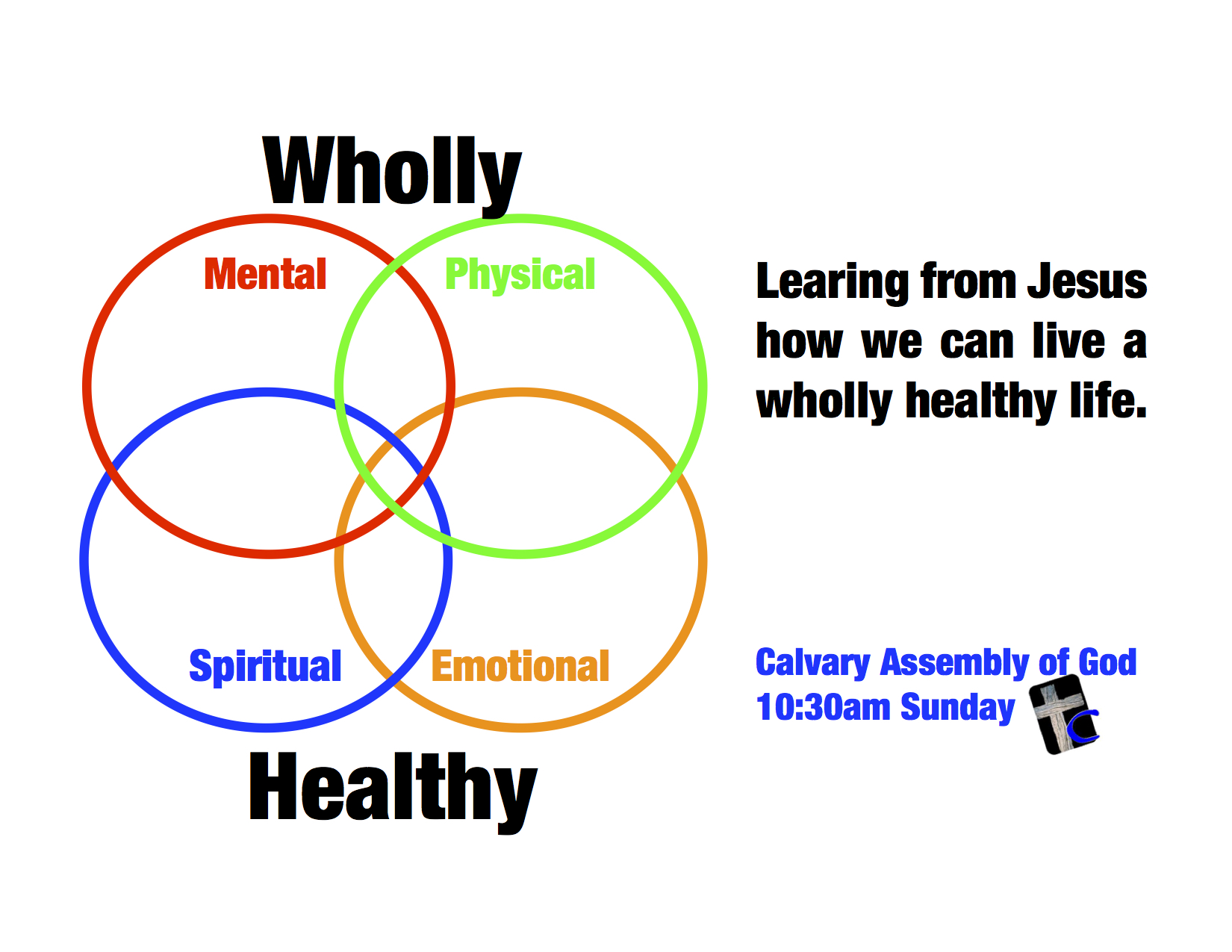
Dr. Luke noticed this as well when he noted that Jesus grew mentally, physically, spiritually and emotionally. Luke notes His spiritual growth by saying Jesus “grew…in favor with God.” In other words, God was more and more pleased by what He saw developing in His Son.

Yesterday I listened to Pastor Josh Schram explain the parallels between our physical health and our spiritual health. He said that we all know what we need to do to grow physically strong—eat the right food, exercise, get proper rest, and have some way of monitoring our health.

It’s exactly the same way spiritually! We need…

…a good dietMan does not live on bread alone but on every Word that comes from the mouth of the Lord (Deuteronomy 8:3). Jesus repeated this truth when He was confronted by the devil, and lived it out every day.

…proper exercise—All the health food in the world won’t do us a bit of good if we just sit around. It’s the same with the Bible: we can read it, memorize it, and talk about it, but if we don’t exercise it we won’t get spiritually fit. Be doers of the Word, and not hearers only (James 1:22).

…the right amount of rest—We can’t be in perpetual “go” mode if we want to be healthy physically or spiritually. Jesus knew the value of rest, and frequently He would “withdraw to deserted places and pray” (Luke 5:16).

…to monitor our progress—James talks about the Word of God being a mirror for us, and Paul advises us to “examine yourselves to see whether you are in the faith” (2 Corinthians 13:5).

But here was the most important takeaway for me in Josh’s message…

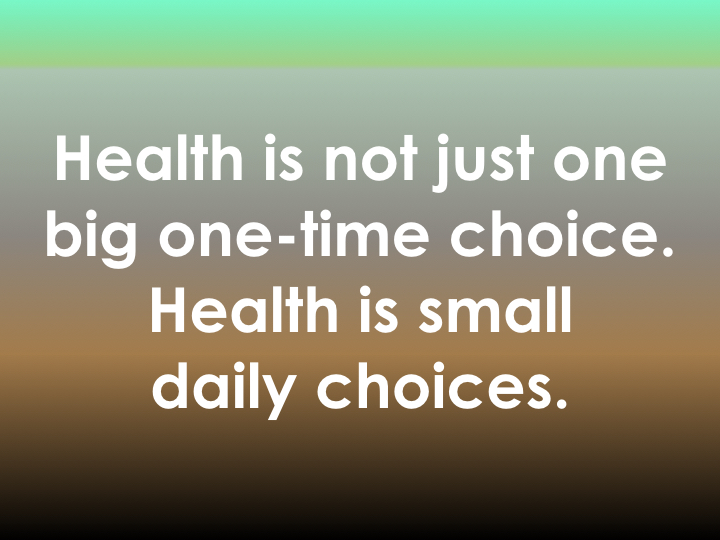
Health is not just one big one-time choice. Health is small daily choices.

A good question for all of us to ask ourselves: Am I making good daily choices which will help me grow spiritually fit like Jesus.

I so enjoy sharing the teaching duties with a couple of really solid pastors-in-training in our church. They have helped me develop this series called Wholly Healthy, and have taken part in sharing messages in various aspects of this series. Please watch how Josh lays out the plan for our spiritual fitness.

How To Be Wholly Healthy

healthy-growthA man named Luke recorded a couple of amazing things about the life of Jesus. As both a doctor and an historian, Luke was an excellent “noticer.”

In first-century biographies, a person’s early life usually wasn’t mentioned. So it’s not uncommon that two of the four Gospel writers don’t pick up Jesus Christ’s life story until He was about 30 years old. Even Matthew, who did record something about the birth of Jesus, didn’t go into much detail.

Luke, however, notices two important things.

First, in covering the first 12 years of Christ’s life Luke says, “The Child grew and became strong…” (Luke 2:40).

healthy-growth-001The Greek word Luke uses for grew means a continual process of increasing. Sometimes we mistakenly think this means a continual movement on a graph upward and to the right. But I’ll give you one instance where this is not the case—when we record someone’s height, we do so in feet not in years. In other words, we say someone is 6’4” tall, but we don’t say they are 6-years and 4-months fall. We understand there is a limit to that sort of growth.

What Luke is referring to is a different kind of continual increasing. All of us go through four quadrants as we learn:

  • unconscious incompetence—we’re no good in an area but we don’t even know it
  • conscious incompetence—we know that we’re no good in an area
  • conscious competence—we’re good in an area but we still have to think about what we’re doing
  • unconscious competence—we’ve gotten so good in an area that we no longer need to think about it

healthy-growth-003When Luke said Jesus grew, he meant not upward and to the right, but a continual cycle of learning what He didn’t know and increasing His competence in that area. When Luke said Jesus grew and became strong, he was saying that Jesus learned how to apply the lessons He was continually learning.

Second, in covering Christ’s next 18 years Luke says, “Jesus grew (Luke 2:52), but he uses an entirely different word. This Greek word means to be hammered out, as a blacksmith hammers metal into shape. Notice that Jesus is not the One doing the hammering, but He is the One submitting to His Father’s hammering. He is letting God the Father shape Him into what He needs to be.

Luke says that Jesus grew in…

  1. …wisdom—mental health
  2. …stature—physical health
  3. …favor with God—spiritual health
  4. …favor with men—emotional (or social) health

In other words, Jesus was growing in a wholly healthy way. God wants us to be wholly healthy too. He wants us to continually allow Him to point out areas where we are lacking, and then submit to His guidance on how we can improve in those areas.

I’ll be exploring these four areas—mental, physical, spiritual and emotional—over the next few weeks. But in the meantime, why don’t you pray the prayer David prayed and ask God’s Spirit to search out any areas where you are falling short of optimal health. And then submit to God’s work of helping you get wholly healthy in every area of your life.


Wholly Healthy

wholly-healthyHave you ever been tiptoeing through your house in the dark and stubbed your pinky toe? When that happens, is it only your pinky toe that hurts? No! It seems like your whole body gets into the action!

This is a simple way to understand that what affects one part of our life affects all parts of our life. We can’t simply quarantine one part that is having difficulty because that one part will eventually spread its pain everywhere else.

Humans were created as beings with several integrated parts. We have a physical body, we have a mind, we have emotions, and we have a God-breathed soul. If one of these parts becomes diseased, eventually all of the other parts will be affected, unless something is done to bring healing.

If we are dis-eased in any area, our health will be compromised in all areas.

Fortunately for us, Doctor Luke noted something about the health of Jesus during His earthly life. What Luke shows is how God intends for all of us to live—wholly healthy.

Modern medical science and psychology show us what the Bible pointed out long ago: We are integrated beings, and every part needs to be functioning optimally so that our whole being can function optimally.

Join us this Sunday as we begin a new series called Wholly Healthy. You will not only learn the importance of being aware of your health in four key areas, but you will also learn some practical thoughts for maintaining your optimal health.

If you missed any of the messages in this series, check them out here:

Thursdays With Oswald—The Harmony Of Health

Oswald ChambersThis is a weekly series with things I’m reading and pondering from Oswald Chambers. You can read the original seed thought here, or type “Thursdays With Oswald” in the search box to read more entries.

The Harmony Of Health

     Health, or physical harmony, is a perfect balance between our organism and the outer world. … The great error of the healthy-minded cult is that it ignores a man’s moral and spiritual life. … The attitude to sickness in the Bible is totally different from the attitude of people who believe in faith-healing. The Bible attitude is not that God sends sickness or that sickness is of the devil, but that sickness is a fact usable by both God and the devil. 

   Happiness or moral harmony is a perfect balance between our inclination and our environment. … The Bible reveals that a man can have physical health at the cost of his moral welfare, and happiness at the cost of spiritual welfare. 

   Holiness, or spiritual harmony, is a perfect balance between our disposition and the law of God. … 

   The devil tries to make us think that when we have entered into the sanctified life, all is done; it is only begun. We have entered into Jesus Christ’s finished work, but remember, says Paul, you have attained to nothing yet; everything is perfectly adjusted, now began to attain and to “grow up into him in all things. These three things develop slowly together: first, the basis of spiritual holiness; second, the building of moral happiness; and third, the decoration of physical health. A full-grown man in Christ Jesus is one who has become exactly like Christ Jesus. “Till we all come…unto the measure of the stature of the fullness of Christ” (Ephesians 4:13). 

From The Philosophy Of Sin

Quite simply Oswald Chambers identifies health as a perfect balance:

  • Physical health balances outside germs against inside defenses.
  • Emotional health balances outside circumstances with inside coping mechanisms.
  • Spiritual health balances God’s law (outside) with our obedience to that law (inside).

Furthermore, Chambers says that Jesus Christ is our measuring stick. We must study God’s Word, and watch Jesus closely to see how He lived out the perfect balance of the Scriptural principles so that we can attain “unto the measure of the stature of the fullness of Christ.”

Spiritual Cross-Training

Several years ago the term “cross-training” became more popular in physical fitness circles. The idea was that training or working out in a secondary sport better prepared the athlete for their primary sport. For example, a long-distance cyclist playing basketball would help develop some of the fast-twitch muscles needed for quick bursts on the bike. This was valuable insight and has helped many athletes excel.

It’s just as true spiritually.

The Apostle Paul encourages us to, “Carry each other’s burdens.” No small task in itself. In fact, that usually requires some very heavy lifting. But if I’m going to be prepared for the heavy lifting, I’ve got to put in some spiritual cross-training time.

It’s no secret that if I don’t eat right, my body doesn’t have the fuel to burn. If I don’t sleep enough hours, my body doesn’t have the stamina to function properly. If I’m not handling stress right, my mind and emotions will be clouded in their processing capabilities.

All of these areas are just as true spiritually. If I’m not getting the right spiritual food, rest, and peace, I’m going to break down. I won’t be any good to myself or others.

In the same burden-carrying / cross-training passage, Paul says, “Brothers, if someone is caught in a sin, you who are spiritual should restore him gently. But watch yourself, or you also may be tempted.”

Yesterday I did some cross-training. I was having lunch with a B.T.D.T. pastor friend (been there, done that). I was soaking up his counsel on vision-casting for my church, enjoying his encouragement for the road ahead of me, and just generally being filled up.

As our lunch was wrapping up, I received a call from another friend who needed help. This friend was in trouble and needed me to help shoulder a burden. I spent the next three hours doing some very heavy lifting.

Here’s the deal: if I hadn’t been doing some spiritual cross-training to prepare myself, I may not have been able to lift that burden. Or, worse yet, I may have been tempted to take shortcuts and fall into the same trap as my struggling friend.

It doesn’t always happen back-to-back like this. But I know the joy of being able to carry a heavy burden for a brother because I have done my cross-training time, and I (unfortunately) also know the heartache of not being a very effective lifter because I didn’t make the time for cross-training.

We never know when we’ll be called upon by a friend. So we need to stay in tip-top spiritual fitness all the time. Your spiritual cross-training regime should include time with God’s Word and time in prayer; reading good books; spending time with encouraging, uplifting people; plenty of rest, good food, and physical exercise; and an attentive ear to those in need.

Cross-train regularly so you can be a great burden-lifter when a friend-in-need calls on you.

Diet + Exercise = Healthy Growth

The right diet will start you on the road to excellent health, but to keep growing in a healthy way you will need to incorporate some regular exercise too. This is true physically, spiritually, and emotionally.

If I just eat the right foods but don’t exercise, my physical metabolism will not be stoked to the proper levels. To put it another way, a good diet may lower my LDL (bad) cholesterol, but it takes exercise to raise my HDL (good) cholesterol. I need both to be healthy.

So, too, for my heart and mind. If I hear good preaching and think good thoughts (diet), but never put those words or thoughts into action (exercise), I’m not going to grow in a well-balanced, healthy way.

Here’s a couple of things I have learned for body, spirit, and mind exercise.

Set challenging but realistic goals

  • I don’t run without a goal. (1 Corinthians 9:26 CEV)
  • “You must have long-range goals to keep from being frustrated by short-term failures.” —Charles N. Noble

Exercise a little bit when you can

  • There’s no need to jump into lengthy workouts.
  • Exercise daily in God—no spiritual flabbiness, please! Workouts in the gymnasium are useful, but a disciplined life in God is far more so, making you fit both today and forever. (1 Timothy 4:7, The Message)
  • “Let him then think of God the most he can; let him accustom himself, by degrees, to this small but holy exercise; nobody perceives it, and nothing is easier than to repeat often in the day these little internal adorations.” —Brother Lawrence, in The Practice Of The Presence Of God

Make exercise a fun habit

  • Remember that you may not feel like exercising, but you will feel better after you exercise.
  • “Life goals are reached by setting annual goals. And annual goals are reached by reaching daily goals. And daily goals are reached by doing things which may be uncomfortable at first but eventually become habits. And habits are powerful things. Habits turn actions into attitudes, and attitudes into lifestyles.” —Charlene Armitage

For a healthy body, a healthy heart, and a healthy thought life, watch the diet you consume and then exercise for maximum benefit. Feel free to share any exercise tips you have learned.

Heart Food

I was running from meeting to meeting, and when I got done I was hungry. So a quick stop into a gas station for a Diet Pepsi and… well, my first impulse was to grab candy or chips. It took no small amount of willpower to make myself grab a healthier alternative.

One of the top rules for healthy dieting: don’t let yourself get too hungry.

Seriously, I know it sounds backward but it works. If you eat three smaller meals with three healthy snacks in between meals you will lose weight. Why? Because keeping the good stuff in you makes the bad stuff less tempting. Try it and let me know how it works for you, but it’s been working well for me.

But what about “heart food” or “thought food”? The Bible says, “Guard your heart above all else, for it determines the course of your life” (Proverbs 4:23, New Living Translation).

If you don’t keep the good stuff in your heart and thoughts, the bad stuff becomes more tempting. And just like the junk food aisle in the convenience store is front-and-center, so are the “junk food headlines.” Swine flu … economic woes … earthquakes … war … these junk food headlines dominate and it’s so easy to snack on them unless you have some healthy stuff in your heart and thoughts.

Health experts say that breakfast is the most important meal of the day. What about some healthy heart/thought food each morning? How about some healthy conversation time with God: “In the morning, O LORD, You hear my voice; in the morning I lay my requests before You and wait in expectation” (Psalm 5:3).

Then you could make sure you have a healthy heart/thought diet throughout the day: “Whatever is true, whatever is noble, whatever is right, whatever is pure, whatever is lovely, whatever is admirable—if anything is excellent or praiseworthy—think about such things” (Philippians 4:8).

And then how about a healthy bedtime snack: “I set Your instructions to music and sing them as I walk this pilgrim way. I meditate on Your name all night, God, treasuring your revelation, O God” (Psalm 119:54-55, The Message).

How’s your heart/thought diet doing? Are there any changes you need to make? Best of all, how about sharing with us some heart/thought diet tips that have worked for you.