Links & Quotes

link quote

10 facts on the great commissionJeffrey Kranz from The Overview Bible Project has a nice post called 10 Things I Wish Everyone Knew About The Great Commission.

“The purpose of the salt in the steak is to do its work so quietly that it changes the nature of what it invades without calling attention to itself. … Salt must get into something in order to have effect, where it indelibly stamps its own character upon what it invades.” —George O. Wood

Good counsel for my fellow pastors: “One great and general rule is, ask advice of Heaven by prayer about every part of your preparatory studies; seek the direction and assistance of the Spirit of God, for inclining your thoughts to proper subjects, for guiding you to proper Scriptures, and framing your whole sermon both as to the matter and manner, that it may attain the divine and sacred ends proposed.” —Isaac Watts

Culture’s Big Lie About Marriage addresses head-on the way culture wants to bend and redefine marriage.

February 27 is the day to shine a light on slavery and sex trafficking around the world. Check out the END IT movement and mark your red “X.”

“I hope the doctrine that Christians ought to be gloomy will soon be driven out of the universe. There are no people in the world who have such a right to be happy, nor have such cause to be joyful as the saints of the living God.” —Charles Spurgeon

…And Then A Miracle Occurs

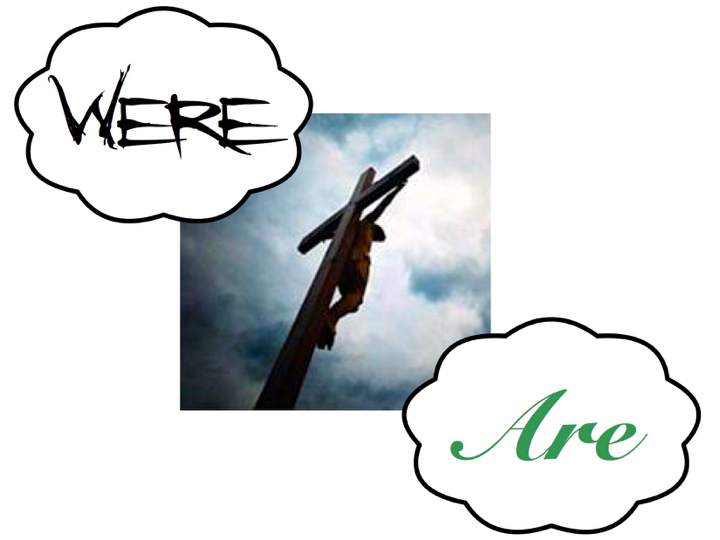
The Miracle of JesusLast week I shared how important it is for us to remember what we were before meeting Christ, and what we now are after meeting Him (you can click here to read that post). But we need to spend some time looking at how we went from “were” to “are.”

First, we need to recall how bad we really were without Christ. We were…

  • …dead (Ephesians 2:1)—this is a rotting corpse.
  • …separated (2:12)—we faced a gaping, unbridgeable, uncrossable chasm.
  • …alienated (4:18)— we were completely shut-out from fellowship with God.
  • …given over (4:19)—this implies an open betrayal which resulted in us running the opposite direction from God.

“The man on the street would simply shrugged his shoulders at this charge and say, ‘Sure, no one’s perfect.’ Even we Christians talk about failures and defeats, but the Bible uses other terms. It speaks of wickedness and rebellion (Leviticus 16:21). The Bible speaks of King David as despising God (2 Samuel 12:9-10). It charges another man of God with defying the word of the Lord… (1 Kings 13:21). It is evident by these descriptive synonyms for sin—rebellion, despising, defying—that God takes a far more serious view of sin than the man on the street or even most Christians.” —Jerry Bridges, in Transforming Grace (bold font added)

…and then a miracle occurs! You who once WERE far away [dead, separated, alienated, disgustingly sinful] HAVE BEEN brought near through the blood of Christ (Ephesians 2:13). Jesus Himself becomes our salvation … He IS the miracle! Notice the wording here—

  • He Himself IS our peace (v. 14a)
  • HE has made the two one (v. 14b)
  • abolishing IN His flesh (v. 15a)
  • create IN Himself (v. 15b)
  • IN this one Body…by which HE put to death their hostility (v. 16)
  • THROUGH Him we both have access to the Father (v. 18)

Jesus Himself IS (1) our peace, (2) our reconciliation, and (3) our atonement.

Not only must we always remember what we WERE and what we ARE, but remember the MIRACLE whereby this transformation could happen: The blood of Jesus spilled for us on the Cross!

We’ll be continuing our walk through the Book of Ephesians next Sunday, and I’d love to have you join us.

But Now

But nowRemembering our past is so important. Forgetting where we’ve come from can make us insensitive to the feelings of others, it can make us falsely proud of what we assume we’ve accomplished for ourselves, and it can make us fearful that God cannot handle what’s coming next.

So God want us to remember two things: what we were, and what we are. In Ephesians the verb tense Paul uses literally says, “Keep on calling this to mind; keep on keeping it fresh in your thoughts” (Ephesians 2:11 & 12).

Keep on remembering what you WERE:

  • separate from Christ
  • excluded from citizenship
  • foreigners to the covenants of the promise
  • without hope
  • without God in the world (v. 12)

And then come two amazing words―BUT NOW (v. 13) keep on remember what you ARE:

  • brought near through the blood of Christ (v. 13)
  • able to access to the Father (v. 18)
  • no longer foreigners and aliens, but fellow citizens with God’s people (v. 19)
  • members of God’s household (v. 19)
  • a dwelling in which God lives by His Spirit (v. 22)

Constantly calling this to mind should produce three attitudes―

  1. Thankful to God for His grace gifts to me.
  2. Graceful to others who are separated from God now like I used to be.
  3. Hopeful of the help Christ can bring through me to others.

We are continuing our study of the Book of Ephesians this coming Sunday. Please join us!

10 Quotes For Pastors From “Living A Prayerful Life”

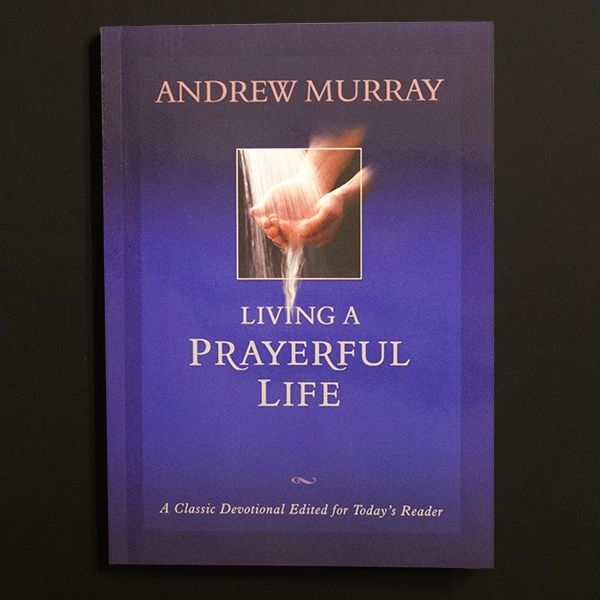
Living A Prayerful LifeAs I mentioned in my book review of Andrew Murray’s A Prayerful Life, this book was written as a response to pastors who were concerned about the lack of effectiveness in their ministry. Pastor Murray called out the sin of prayerlessness as the main factor in their struggles. Here are some quotes from this book specifically to pastors.

“The enemy uses all his power to lead the Christian—and above all, the minister—to neglect prayer. satan knows that however admirable the sermon may be, however attractive the service, however faithful the pastoral visitation, none of these things can damage him or his kingdom if prayer is neglected.”

“The pastor’s highest calling is not preaching, or speaking, or church visitation, but it is to cultivate the life of God in himself daily, and to be a witness of what the Lord teaches him and accomplishes in him.”

“Here on earth I may expend my time in exchange for money or learning. The minister exchanges his time for divine power and the spiritual blessings to be obtained from heaven. That, and nothing else, makes him a man of God and ensures that his preaching will be in the demonstration of the Spirit and power.”

“Many pray for the Spirit that they may make use of Him and His power for their work. This is an entirely wrong concept. It is He Who must use you. Your relationship toward Him must be one of deep dependence and utter submission. The Spirit must have you completely and always and in all things under His power.”

“When the Lord promised the apostles that they would receive power when the Holy Spirit came upon them, and commanded them to wait for Him, it was as though He said: ‘Do not dare to preach without this power. It is the indispensable preparation for your work. Everything depends on it.’”

“Little time in the Word together with little prayer is death to the spiritual life. Much of the Word but little prayer yields a less than healthy spiritual life. Time spent in prayer with little time in the Word yields life, but without steadfastness. A full measure of the Word and much prayer each day produces a healthy and powerful life.”

“The preacher must come to see that his preaching is comparatively powerless to bring new life until he begins to take time for prayer.”

“All you who long for blessing in your ministry, He calls you to abide in Him. Let it be the greatest delight of your life to spend time with God; it will be the surest preparation for fruitful service.”

“As a minister of the gospel, have you ever considered why you have a salary and a place to live, and so are freed from the need of holding a regular job? The reason is so that you can continue in prayer and the ministry of the Word. These will give you the necessary wisdom and anointing for your work. And that is the secret of a fruitful ministry. No wonder there are often complaints about the ineffective spiritual life of a minister and his congregation. That which is of prime importance—perseverance in prayer—does not occupy its rightful place.”

“The great question is: Shall we earnestly set ourselves to win back again the weapon of believing prayer that satan has, at least in a measure, taken away from us? Let us set before ourselves the serious importance of this conflict. As far as each minister is concerned, everything depends on whether or not he is a man of prayer—one who in the inner room is clothed each day with power from on high.”

To read some of the other quotes I shared from this book, please click here. And to read my full book review of Living A Prayerful Life, click here.

Sit Walk Stand [re-launch]

Sit Walk StandThis coming Sunday we re-start a series at Calvary Assembly of God which we began last year called Sit Walk Stand: A Study In The Book Of Ephesians.

Why Ephesians? Dr. Martin Lloyd-Jones, who preached 232 sermons on this book to his packed-out church, said, “It is very difficult to speak of Ephesians in a controlled manner because of its greatness. Many have tried to describe it. One writer has described it as the crown and climax of Pauline theology. Another has said that it is the distilled essence of the Christian religion, the most authoritative and most consummate compendium of our holy Christian faith. What language! And it is by no means exaggerated.”

It is my desire that our congregation be as biblically literate as I can encourage and resource them to be. So Tom Kaastra, a 38-year veteran pastor, is going to co-teach with me again this year as we continue our attempt to master this powerful epistle.

The name of our series—Sit Walk Stand—comes from Watchman Nee, who wrote, “Of all Paul’s epistles, it is in Ephesians that we find the highest spiritual truths concerning the Christian life. The letter abounds with spiritual riches, and yet at the same time is intensely practical.”

Please join us this Sunday at 10:30am.

Whether you were with us last year or not, I posted some sermon recaps each week which will help prepare you as we re-launch this series. Click on the links below:

3 Reasons Why We Don’t Ask Largely Of God

Ask LargelyI don’t have a clever introduction for this post, so let me just give you the conclusion right up front―God has more desire to give than most of us have desire to ask.

Elisha told King Jehoash that God was ready to give him complete victory over Israel’s enemy, but Jehoash had a hard time grasping this (see 2 Kings 13:14-19). He was hesitant to ask God for too much, so he only asked for a little. This made Elisha mad!

I think the reasons why Jehoash was timid in his asking of God are some of the same reasons we wrestle with today.

(1) Elisha was dying, so maybe he thought God’s Spirit would depart with him.

Maybe you’ve had a spiritual giant in your life, and when they died you thought, “Who is going to be able to pray for me now?” God doesn’t have favorites. He desires that all of us come to Him.

(2) Jehoash was sinful and didn’t think God would want to help him.

You can’t increase your value in God’s sight because you live perfectly. God loves you perfectly just as you are. Don’t get me wrong: the Holy Spirit will speak to you if you need to repent, but God doesn’t only listen to “perfect” people.

(3) Jehoash thought God had a limited supply, or he thought he had a quota in how many requests he could make of God.

The whole genie-in-the-lamp concept has crept into the mindset of too many Christians. We think our genie-God will grant us a limited number of wishes, or we think He will try to find a loophole to get out of a difficult request. God desires that we keep on asking Him, keep on seeking Him, and keep on knocking on His door (see Matthew 7:7-11).

God is glorified when we ask Him to do what only He can do.

God is pleased when we keep asking of Him largely.

Again. And again. And again. AND AGAIN!

I’ll say it again―

God has more desire to give than most of us have desire to ask

If you would like to read some other thoughts on prayer from our series The Prayers Of Elishaplease click here and check out all the links in the comments.

Fill-In-The-Blank Differently

God gives backHow would you fill in this blank: “The Lord gives, and the Lord ________  _________.”

I had some misconceptions about God when I was a kid. I didn’t want to pray, “God, You can use me however You see best” because I just knew He would send me to do something gross. Or we would sing a song like I Have Decided To Follow Jesus and one of the verses said, “Though none go with me still I will follow.” I didn’t really like that because I liked my friends and family; I liked my life just as it was.

Job was a righteous man, and some really bad things happened to him. He’s the one who said things like, “Naked I came from my mother’s womb, and naked I will depart. The Lord gave and the Lord has taken away; may the name of the Lord be praised.” (Job 1:21), and, “Shall we accept good from God, and not trouble?” (Job 2:10).

But there was still another 40 chapters to go! In the very last chapter of his story we read this―

After Job had prayed for his friends, the Lord restored his fortunes and gave him twice as much as he had before. (Job 42:10)

In hindsight, I think Job might have said something different: “The Lord gives, and the Lord gives back!” But this insight would have come only after “Job had prayed.” Getting into God’s presence helps us capture the heart of God.

  • A grieving mother learned this when God gave her a son and gave back her resurrected son to her (2 Kings 4:8-37).
  • And then again when God gave her their family land and gave back the lost income (2 Kings 8:1-6).
  • The apostles learned this when Jesus gave them His presence and gave back a position of authority (Matthew 19:27-28).
  • We can also know that Jesus will give us a hundred times what we’ve given up for Him, and give us eternal life too (Matthew 19:29).

God never takes anything from us unless He intends to give back something even greater, something eternal, something unbreakable, something un-losable!

You will only begin to see this better when you get in His presence. “The object of secret prayer is to unite us to God that we may know His abiding presence with us” (Andrew Murray). It’s time to fill-in-the-blank differently! 

I’ll be continuing our series on The Prayers Of Elisha this coming Sunday, and I would love to have you join me!

Links & Quotes

link quote

“We all have the sneaking idea that we are the favorites of God—‘It’s alright for me to do this, God will understand.’ If I as a child of God commit sin, I will be as sternly dealt with as if I were not His child.” ―Oswald Chambers

“I did not think that I had done anything when I hear them [his congregation] applauding, but when I saw them weeping.” —Augustine

“God uses our struggles for His glory!” Read more from Max Lucado in his post A Season Of Suffering.

“Pain is terrible, but surely you need not have fear as well? Can you not see death as the friend and deliverer? It means stripping off that body which is tormenting you: like taking off a hair-shirt or getting out of a dungeon. What is there to be afraid of?” ―C.S. Lewis

“You can blame your unhappiness on poor health, being misunderstood, or having an uncaring mate, boss or friend. In fact, you can blame it on anything you choose. But the truth is that there is no excuse for a Christian to live as a slave to the devil.” Read more from David Wilkerson in his post The Lack Of Victory.

Pastor Dave Barringer shares 7 prayers you may be the answer for.

Great question, great post: What Keeps Us From Having Deeper Friendships?

Instant Gratification

Links & Quotes

link quote

“O I would beloved, that the Holy Spirit would make you feel the promise as being spoken to you; out of this vast assembly forget the rest and only think of yourself, for the promises are unto you, meant for you. O grasp them. It is ill to get into a way of reading Scripture for the whole church, read it for yourselves, and specially hear the Master say to you, ‘Let not your heart be troubled: ye believe in God, believe also in Me.’” —Charles Spurgeon

“Freedom from greed comes from faith in God’s future grace.” —John Piper

John Piper has a great reminder in his post What God Can Do In Five Seconds.

Seth Godin suggests another story for “failure” in his post Failure Imagined (24 Variations).

History buffs will love this―The Real Story Of George Washington’s Christmas Attack At Trenton.

“My grand point in preaching is to break the hard heart, and to heal the broken one” —John Newton

[VIDEO] John Maxwell and Nick Vujicic on the uniqueness that is you―

Pray & Dig

Pray & DigThe fact is far too many of us get ourselves into hot water all on our own, and then we want to call on God like an insurance policy to bail us out. We usually have some reasonable-sounding excuses:

  • “It seemed like a good idea at the time”
  • “It was so practical and common sense I didn’t think I needed to pray about it”
  • “I’ve done this dozens of times before and never had any trouble.”

There’s a story in 2 Kings where three kings got together for a battle. To them it seemed like a pretty good idea―there were three of them going to war against just one king, they knew the terrain, so it would be an easy victory.

Except it wasn’t.

The Bible says that after a 7-day roundabout march, the three armies were out of food, out of water, stranded in the desert, and about to be defeated without the enemy ever firing an arrow or swinging a sword.

One king wanted to blame God. The king of Israel said, “Bad news! God has gotten us three kings out here to dump us into the hand of Moab.” (2 Kings 3:10, MSG). But fortunately the king of Judah thought to ask, “Isn’t there a prophet of God around that can call on God for us?” (v. 11).

Here’s one of the most amazing things: Elisha―the representative of God’s presence―was right there with them! Think about that … these kings hadn’t asked God for help, and hadn’t invited Elisha along, but there was the prophet right in their midst!

It’s a good reminder for us: God is ALWAYS with us. But it’s up to us to recognize Him and go to Him in prayer.

When these kings finally asked God for help with their water problem, Elisha said, “It’s an easy thing for God to provide water for you. You’ve prayed, now it’s time to prepare for His supply.” The armies were called on to dig lots and lots of ditches. God would send a supply of water without rain to take care of the troops. And if that wasn’t enough, God also said He would give them victory over their enemy. As Matthew Henry wrote, “God’s grants out-do our requests and expectations.”

Pray first. Pray continually. Pray always. And then when God tells you to dig ditches, get ready for His abundant blessings. But get the order right: Don’t dig and then pray; pray first, then dig!

If you’re in the Cedar Springs area, please join me next Sunday as we continue our series The Prayers Of Elisha.