Spurgeon: Speak Up For Your Master

C.H. Spurgeon“The servants of satan shame me; they shame me! There comes at night a message to some of you who are the servants of satan—‘The master is come, and calleth for thee.’ You leave your wife and your children without a tear, you go to your master’s house, and there are foul cups passing round, and you will drink, and drink still on; never denying your master; confessing him with many an oath; saying to your comrades many things which injure your poor souls; and yet you do it so bravely. You hardly know how you get home at night, but when the morning comes, and you wake, there is the redness of the eyes, the headache, and the sickness; but the next night when your master wants you, you go again; and so you will do year after year, even though delirium tears you like a whirlwind.

“But here am I, a servant of God, and when my Master calls for me and bids me go and confess Him, I am tempted to be still, and when He tells me to speak to yonder man I would wickedly avoid the task; and whereas you confess your master and imprecate a curse upon your head, how often do some of us confess our Master as timidly as if we feared a curse, when instead thereof it is by confession that the curse is turned away! It is enough to make us Christians ashamed to think how sinners will confess their god! Hear them at night, as they reel home through the streets; they are not ashamed of their lord and master. Hear how they swear, and defy heaven! They are ashamed of nothing for their lord; and yet we, who have heaven for our reward, and such a Christ to serve, and One so good and gracious to us—look at us! What poor lovers of our Savior are we! What poor lovers of the souls of men!” —Charles Spurgeon (emphasis added)

I am convicted by this. How about you?

Tears And Humility

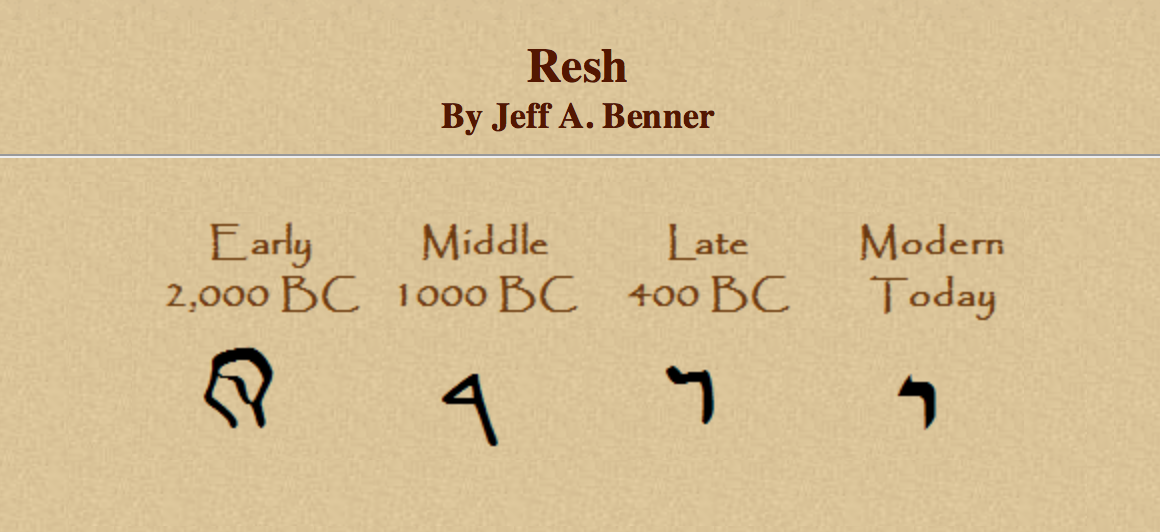
History of ReshJust has God sent His holy Son “below the line” to rescue us, so we who are in Jesus have been sent below the line to those who are staggering to death. If we are going to be effective rescuers, what must our attitude be?

John Bradford, when he saw a convicted criminal on his way to the gallows said, “There, but for the grace of God, go I.” He also said to those who questioned his deep emotional response when preaching, “You blame me for weeping, but how can I help it when you will not weep for yourselves, though your immortal souls are on the verge of destruction?”

Isn’t a humble, empathetic rescuer going to be more effective in reaching those staggering to their eternal demise than one who stands aloof, saying, “You got yourself into this mess”?

Resh (Psalm 119:153-160) shows us our posture: It signifies a head bowed; it means we are confidently humble. Confident that God delivers us, defends us, redeems us, preserves us, and saves us (vv. 153-154); but humble enough to know that we could never have earned this!

We have to have this confidently humble posture in order to be effective as His holy rescuers. We grieve for those who are without God because of what they face—

  • “Salvation” is only gibberish to the wicked because they’ve never looked it up in Your dictionary. (v. 155, MSG)
  • They don’t know His compassion is great (v. 156), nor how great is Your tender mercy and loving-kindness (AMP).
  • They become the foes who persecute Christians (v. 157). How they will grieve on Judgment Day, if they don’t repent!
  • Their actions are loathed (not them as a person!). What God said of the Israelites who went into captivity will be true for those who don’t accept Jesus before they die—Then in the nations where they have been carried captive, those who escape will remember Me—how I have been grieved by their adulterous hearts, which have turned away from me, and by their eyes, which have lusted after their idols. They will loathe themselves for the evil they have done and for all their detestable practices. (Ezekiel 6:9, emphasis added)

Tears and humility will keep us in the proper position to reclaim these lost treasures for our King! 

I will be continuing our series on Psalm 119 in our P119 Spiritual Workout next Sunday. Hope you can join me!

If you are interested in watching the entire message, the video is below—

If you have missed any of the messages in our P119 series, you can access them all by clicking here.

Throw Down!

In the spiritual battle Christians face, the enemy lies and slanders. Here is wise counsel from Charles Spurgeon on how to throw down against his onslaught!

C.H. Spurgeon“What multitudes of foes has our faith had to meet with; but how it has swallowed them all up. There were our old sins. The devil threw them down before us, and they turned to serpents. What multitudes! How they hiss in the air! How horrible are their deadly poison-fangs, the gaping jaws, their forked tongues! But the Cross of Jesus, like Aaron’s rod, destroys them all. Faith in Christ makes short work of all our sins, for it is written, ‘The blood of Jesus Christ His Son cleanseth us from all sin.’

“Then the devil stirs up another generation of vipers, and shows us our inbred corruptions, our neglects of duty, our slackness in prayer, our unbeliefs, our backslidings, our wanderings of heart; and sometimes you and I get so tormented by these reptiles, that we grow alarmed, and are half inclined to flee. Do not run, brother, but throw down Aaron’s rod, and it will swallow up all these serpents, even though they were poisonous as the cobra, or fierce as the rattlesnake. You shall overcome through the blood of the Lamb. Jesus is able ‘to save them to the uttermost that come unto God by Him.’ The battle is the Lord’s, and He will deliver them into your hands.

“The old enemy will throw down another host of serpents in the form of worldly trials, diabolical suggestions, temptations to blasphemy, ill thoughts of God, hard thoughts of His providence, rash thoughts of His promises, and such like, till you will be almost distracted. You will wonder how you can meet such a host as this. Remember to stand fast, and throw down Aaron’s rod—your simple trust and faith in Jesus Christ—and it must and shall swallow up all these rods.” —Charles Spurgeon, commenting on Exodus 7:12 (emphasis added)

14 Quotes From “The Printer And The Preacher”

The Printer And The PreacherI loved this book! It’s a great historical story of how Benjamin Franklin and George Whitefield’s lives intertwined at such a pivotal time in history. America exists the way it does politically and religiously today because of the influence of these two titans. You can read my full book review here. Below are a few quotes from this remarkable book.

“The Faith you mention has doubtless its use in the world…. But I wish it were more productive of good works than I have generally seen it: I mean real good works, works of kindness, charity, mercy, and public spirit; not a holiday-keeping, sermon-reading or hearing, performing church ceremonies, or making long prayers. … Your great Master thought much less of these outward appearances and professions than many of His modern disciples. He preferred the doers of the Word to the mere hearers…and those who gave food to the hungry, drink to the thirsty, raiment to the naked, entertainment to the stranger, and relief to the sick.” —Benjamin Franklin, in a letter to pastors

There are many who “perhaps fear less the being in Hell, than out of the fashion.” —Benjamin Franklin

“The alteration in the face of religion here is altogether surprising. Never did the people show so great a willingness to attend sermons, nor the preachers greater zeal and diligence in performing the duties of their function. Religion is become the subject of most conversations. No books are in request but those of piety and devotion; and instead of idle songs and ballads, the people are everywhere entertaining themselves with Psalms, hymns and spiritual songs. All of which, under God, is owing to the successful labors of the Reverend Mr. Whitefield.” —Benjamin Franklin, in a newspaper article

The Body of
B. Franklin
Printer;
Like the Cover of an old Book,
Its Contents torn out,
And stript of its Lettering and Gilding,
Lies here, Food for Worms.
But the Work shall not be wholly lost:
For it will, as he believ’d, appear once more,
In a new& more perfect Edition,
Corrected and Amended
By the Author. —Benjamin Franklin, the Epitaph he wrote for himself at age 22

“I have seen your Epitaph. Believe on Jesus, and get a feeling possession of God in your heart, and you cannot possibly be disappointed of your expected second edition finally corrected, and infinitely amended.” —George Whitefield 

“You blame me for weeping, but how can I help it when you will not weep for yourselves, though your immortal souls are on the verge of destruction?” —George Whitefield

Those who hear the gospel “have more need of heat than light. Would to God we had as much warmth in our hearts, as light in our understandings!” —George Whitefield

“If we are truly converted, we shall not only be turned and converted from sinful self, but we shall be converted from righteous self. That is the devil of devils: For righteous self can run and hide itself in its own doings, which is the reason self-righteous people are so angry with gospel preachers.” —George Whitefield

“Let your practice correspond to your profession.”—George Whitefield

“Oh pray, dear Mr. H., that God would always keep me humble, and fully convinced that I am nothing without Him, and that all the good which is done upon earth, God doth it Himself.” —George Whitefield, in a letter to Gabriel Harris, when his popularity was growing

“Will it not in the end destroy brotherly love, and insensibly take from us that cordial union and sweetness of soul, which I pray God may always subsist between us? … How glad would the enemies of the Lord be to see us divided? How many would rejoice, should I join and make a party against you? And in one word, how would the cause of our common Master every way suffer by our raging disputes about particular points of doctrines? … I write not this, honored Sir, from heat of spirit, but out of love. At present, I think you are entirely inconsistent with yourself, and therefore do not blame me, if I do not approve of all that you say.” —George Whitefield, in correspondence with John Wesley over doctrinal differences

“I find that you grow more and more famous in the learned world. As you have made a pretty considerable progress in the mysteries of electricity, I would now humbly recommend to your diligent unprejudiced pursuit and study the mystery of the new-birth. It is a most important, interesting study, and when mastered, will richly answer and repay you for all your pains. One at Whose bar we are shortly to appear, hath solemnly declared, that without it, ‘we cannot enter the kingdom of heaven.’ You will excuse this freedom. I must have aliquid Christi [something of Christ] in all my letters.” —George Whitefield, in a letter to Benjamin Franklin

“satan is angry. I am now mimicked and burlesqued upon the public stage. All hail such contempt! God forbid that I should glory, save in the Cross of Jesus Christ.” —George Whitefield, in a letter after a play was produced in London making fun of him

“Whitefield and Franklin were not just the two most famous people in America in their time—they were also the most significant. The effects of their lives and their work are still being felt today … If America was born as a Christian nation, it’s because many of its people were genuinely, powerfully Christians. It had less to do with the language in any founding documents and more to do with the fact that George Whitefield had been tromping from town to town, inviting people to hear the call of God. It had even less to do with church membership. God was grabbing lives. People’s hearts were flying open. No one was imposing Christianity on society. The power came from within.” —Randy Peterson

Holy Rescuers

QophThe Hebrew Aleph-Bet is nothing like the English alphabet. First of all, in English, letters are just letters; they don’t really mean anything. In Hebrew, every letter has its own definition and imagery. Second, in the English alphabet, the order of the letters doesn’t have any significance; but the order in Hebrew is of vital importance.

It is significant that qoph (vv. 145-152) comes after tsadhe (vv. 137-144) in Psalm 119. Tsadhe tells us about God’s righteousness, and how the Word gives us a reliable way to approach All-Righteous God as a humble, obedient servant. This must come before qoph, which encourages us to stay in the presence of Holy God for a specific reason.

Qoph is the second of two Hebrew letters that has two pen strokes that don’t touch. This is a reminder for us to stay close to God. But qoph is the only Hebrew letter that goes below the line. This is a reminder that God came down to rescue us!

Qoph is the first letter in the Hebrew word for holy. When Isaiah saw God, and heard the angels shouting, “Holy, Holy, Holy is the Lord God Almighty,” he saw himself unworthy to come into God’s presence, until his sin had been atoned for. After that, he was ready to be sent out as God’s messenger. (see Isaiah 6:1-8).

In the last book of the Bible, the picture in Heaven is similar, with angels still crying, “Holy!” (Revelation 4:8). As Christians, Jesus Christ has become our Atonement, so we can approach holy God’s throne with humble confidence.

Not only that, but Jesus sent us out as holy witnesses. He sent us “below the line.” Just like He came down to rescue us, He has commissioned us as holy rescuers (Proverbs 24:11-12; Jude 21-25).

As you stay close to God’s holiness, you become a more effective witness for Christ, a holy rescuer! What a privilege to be used by God in this way.

If you would like to watch the message I delivered yesterday on being holy rescuers, check this out—

If you have missed any of the messages in our P119 series, you can access them all by clicking here.

A Brief Bio Of Smith Wigglesworth

WigglesworthTo say that Smith Wigglesworth was a unique minister of the Gospel is an understatement! I doubt that you can find anyone else in history quite like Wigglesworth, but what an amazing example he left for us of someone totally sold-out to God!

This video biography by Roberts Liardon is a fairly accurate picture of this great man’s life. You can also get to know Smith Wigglesworth by reading his sermons. I have posted several reviews of books which contain his sermons, as well as extensive quotes from his those sermons:

You may also be interested in checking out my family’s connection to this amazing evangelist.

Enjoy this video—

10 Blessings From Obeying God’s Word

Listen to the podcast of this post by clicking on the player below, and you can also subscribe on Apple, Spotify, or Audible. 

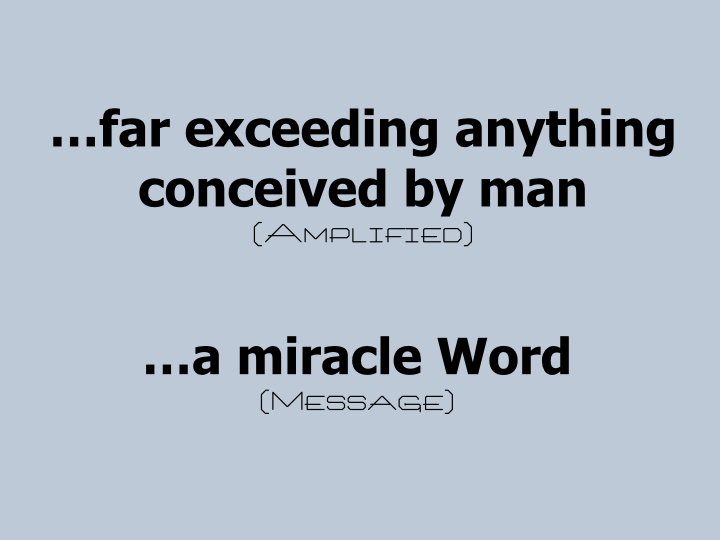
The entire 119th Psalm is a love song to God for His amazing Word. Quite simply it is “far exceeding anything conceived by man” (v. 129, AMP) and “a miracle Word” (v. 129, MSG).

In the 8-verse section called Pe, the psalmist says, “I can’t think of any better response to Your Word than to obey it!” In Pe, here are ten blessings that come with that obedience—

  1. Light … this is the discernment that allows for the “Aha!” revelations of the Holy Spirit.
  2. Understanding … the blessing of comprehending what God is saying to us.
  3. Longings fulfilled … nothing but God’s Word will ever satisfy like God’s Word!
  4. More clearly seeing God’s face as He shines upon us.
  5. God’s mercy and favor.
  6. A greater understanding of God’s love.
  7. Secure paths that keep us from sin’s snares.
  8. Freedom from satan’s extortions … this is literally what the phrase redeem me from the oppression means in verse 134.
  9. Greater obedience.
  10. Learning God’s Word so that I can teach it to others.

The psalmist also gives us good insight into how to respond to those who reject God’s Word: “Rivers of tears gush from my eyes because people disobey Your instructions” (v. 136). With all the blessings that come from obeying God’s wonderful law, why would you ever want to try to live any other way?!

If you have missed any of the messages in our P119 series, you can access them all by clicking here.

►► Would you please prayerfully consider supporting this ministry? ◀︎◀︎

The Counselor Makes Us Childlike

ChildlikeJesus loved being around kids! In fact, it still is the childlike nature that Jesus wants to see in all of us, and that’s one of the roles of the Holy Spirit as our Counselor.

There is a huge difference between being childish and childlike. Childish is being aware that what you’re doing is foolish; childlike is being innocently unaware.

Jesus was childlike.

  • He knew the kid’s songs in the street—Luke 7:32.
  • He wanted to have lot of kids around Him—Mark 10:14.
  • Most of His teaching examples were basic—farmers, birds, flowers, wedding parties.
  • Some were downright obvious—Matthew 15:16-17.
  • Some of His interactions with His adversaries were playful—Mark 11:27-33.

And when He described the way to Heaven—

He called a little child to Him, and placed the child among them. And He said: “Truly I tell you, unless you change and become like little children, you will never enter the kingdom of heaven. Therefore, whoever takes the lowly position of this child is the greatest in the kingdom of heaven. (Matthew 18:2-4)

Humbly loving God and innocently serving others. Isn’t that the essence of what Jesus taught us the Kingdom of Heaven was? Loving God and loving others in a childlike way.

Here’s how The Counselor trains us to be childlike:

  • Think of everyone as your friend—Matthew 5:9, 44.
  • Laugh more often because you have no burdens weighing you down—Matthew 11:28-30.
  • Don’t use double entendrés—…be innocent (harmless, guileless, and without falsity)… (Matthew 10:16, AMP).
  • Be fascinated by nature—Luke 12:27.
  • Exercise your imagination—Matthew 18:10; Acts 6:15; 7:55-60.

The Counselor will teach us Christ-like childlikeness; He will reprove us when we are too “adult” in our thinking; He will continually correct us when we cross the line into childishness; and He will train us to love God and love others in a childlike way.

The Counselor Brings Reproof

Search meNo one likes being rebuked, but it is necessary. In fact, it is vital for healthy growth. As a Dad, I didn’t look forward to the times I had to rebuke my children. But what’s the alternative? What happens if I just let misbehavior slide? We must rebuke those we love if we want them to mature.

The Counselor—the Holy Spirit—not only teaches us, but He reproves us as well because of His love for us. And we all need it!

  • The human heart is the most deceitful of all things, and desperately wicked. Who really knows how bad it is? (Jeremiah 17:9)
  • For I know that in me (that is, in my flesh,) dwelleth no good thing… (Romans 7:18)

This knowledge of my wickedness becomes even more painful when I think that Jesus calls us to perfection (Matthew 5:48). I can’t “do” perfect on my own. But thankfully Jesus didn’t tell us to “do” perfect things, but to BE perfect.

The Holy Spirit reproves us—that is, He shows us where we are deviating from the mark—so that we can BE perfectly at one with Jesus, with our lives demonstrating Christ’s perfect nature.

Warning: the enemy wants to pervert The Counselor’s reproof. He wants to whisper to you that God is mad at you, that you’ve blown it too many times, that you’ll never be good enough.

Just like Jesus countered all of satan’s temptations with the Spirit-breathed Scripture, you need to do the same thing. You tell him, “My Father loves me so much that He sent His One and Only Son to die on a Cross for me! He wants me to display the glory of Jesus in my life because that’s what brings Him pleasure. He only reproves me because He loves me. If He didn’t care about me, He would leave me alone!”

Because He loves you and wants the very best for you, here’s what you can boldly pray:

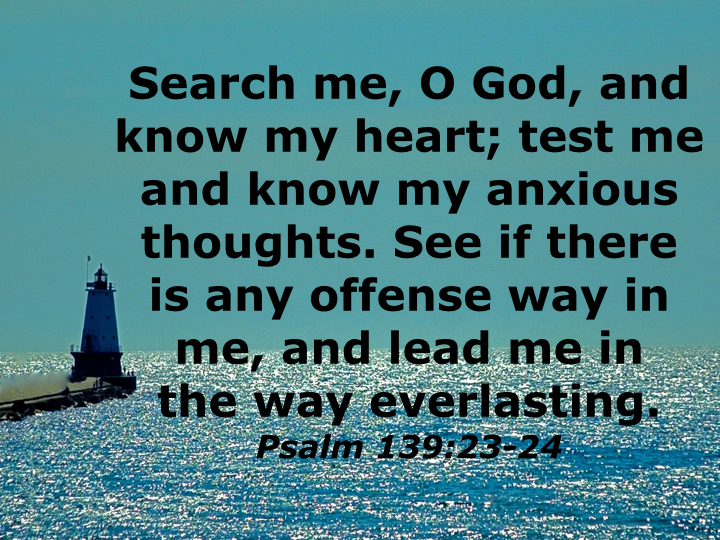
Search me, God, and know my heart; test me and know my anxious thoughts. See if there is any offensive way in me, and lead me in the way everlasting.

I will be continuing my series on the Holy Spirit as our Counselor this Sunday. If you are in the Cedar Springs area, please come join us!

Charles Spurgeon On The Day Of Pentecost

This is from Charles Spurgeon’s Pentecost Sunday message in 1863.

C.H. Spurgeon“How absolutely necessary is the presence and power of the Holy Spirit! It is not possible for us to promote the glory of God or to bless the souls of men, unless the Holy Spirit shall be in us and with us. Those who were assembled on that memorable day of Pentecost, were all men of prayer and faith; but even these precious gifts are only available when the celestial fire sets them on a blaze. They were all men of experience; most of them had been preachers of the Word and workers of miracles; they had endured trials and troubles in company with their Lord, and had been with Him in His temptation. Among them were the apostles and the seventy evangelists, and with them were those honored women in whose houses the Lord had often been entertained, and who had ministered to Him of their substance; yet even these favored and honored saints can do nothing without the breath of God the Holy Spirit. Apostles and evangelists dare not even attempt anything alone; they must tarry at Jerusalem till power be given them from on high. It was not a want of education; they had been for three years in the college of Christ, with perfect wisdom as their tutor, matchless eloquence as their instructor, and immaculate perfection as their example; yet they must not venture to open their mouths to testify of the mystery of Jesus, until the anointing Spirit has come with blessed unction from above. Surely if so it was with them, much more must it be the case with us.” —Charles Spurgeon