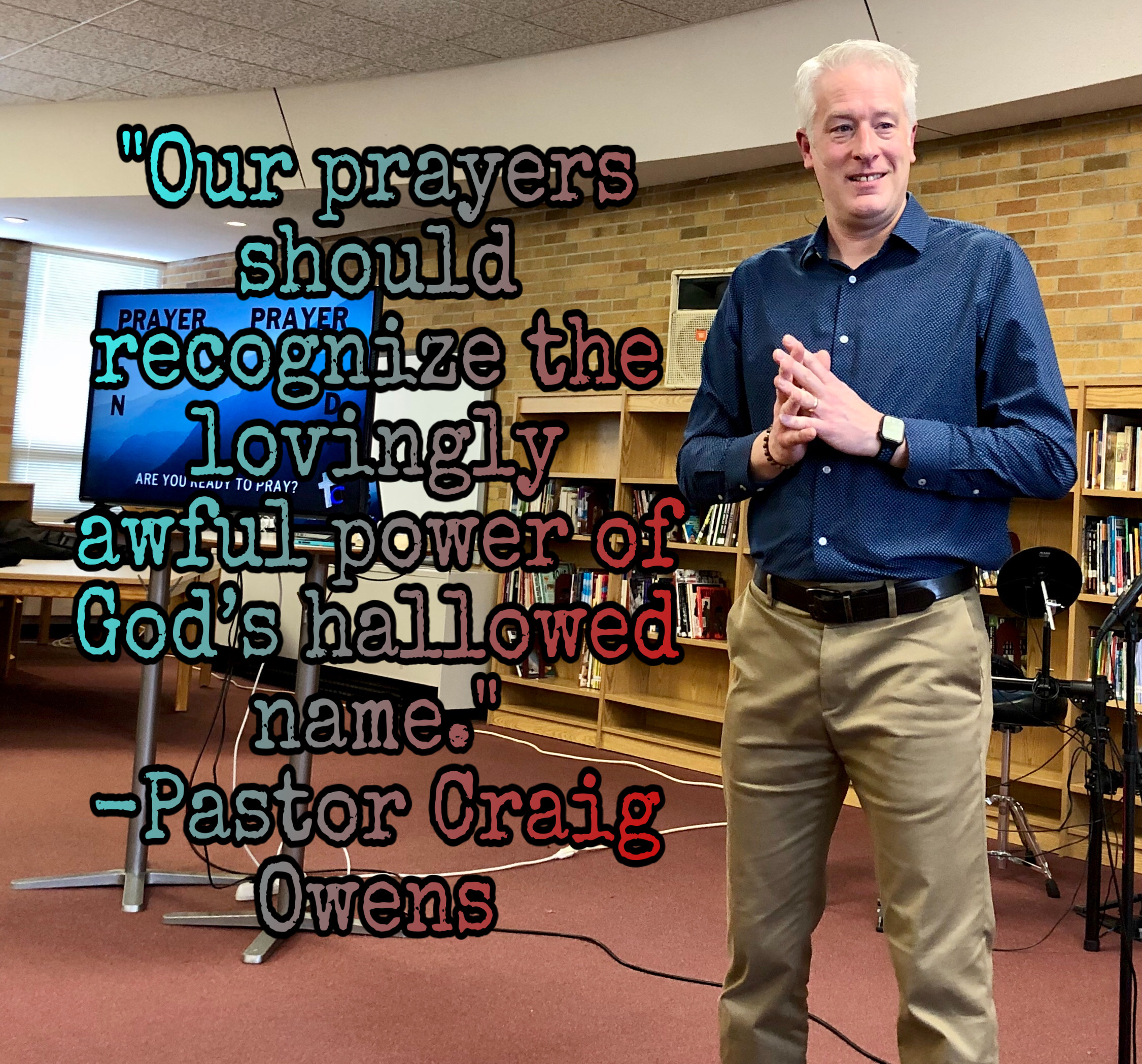
Ultimate Wisdom

Last week I posted a quote on some of my social media channels that simply stated: “Our opinions don’t matter if they don’t square with God’s Word on the matter.” This seemed to me to be a fairly uncontroversial statement, but one anonymous reader really took me to task for using the hashtag #objectivetruth. Apparently, he thinks there is no such thing. 

But don’t we all rely on objective, external standards all the time? For instance, a gallon of gasoline is a gallon regardless of where you buy it, or whether you feel like it’s a gallon or not. And when you go to pay for your gasoline, the price isn’t based on how the gas station attendant is feeling at that moment, but on the objective amount posted. 

Psalm 49 is somewhat unusual in that it is a “wisdom psalm.” This psalm feels a lot more like something we would read in Proverbs or Ecclesiastes than it does a prayer or song in the Psalms. 

For instance, the first four verses of this Psalm sound a lot like the opening verses of the Book of Proverbs. And verses 5-13 of the Psalm echo what Solomon wrote in Ecclesiastes 2. 

This psalmist—like Solomon—wants us to understand how important it is to get wisdom. So we are urged to listen intently to those who have hard-won insight, to those who have “been there, done that” so that we don’t have to repeat their folly. 

What is that wisdom? It can be broken down into two profound statements:

(1) Everyone dies. 

That can be a really depressing truth IF your focus is building your own kingdom. If all there is to life is what you can earn and build before you die, only to realize that your “kingdom” ends at your last breath, that can be very depressing. 

However, this realization that everyone dies can be a very liberating truth IF your focus is on the eternal kingdom that is awaiting you in Heaven. When you realize that Jesus is preparing a place for you to experience ultimate joy and unending pleasure forever and ever, then you will live here for what’s coming next! 

(2) Our eternal destination after we die is determined before we die.

If someone told me that he had discovered the secret to immortality, and then he died and came back to this life to tell me that his theory was correct, it would be wise listen to him. 

That’s exactly what Jesus did for us!

He told us that He would die on a Cross and that He would be raised back to life. AND HE DID IT! His hard-won insight, His “been there, done that” wise words to us are this—“Believe in Me. I died to pay the penalty for the sins that will keep you out of Paradise. So place your faith in what I did, and ask my Father to forgive your sins. Then I promise you that you will spend forever and ever with Me in Paradise!” 

THIS objective truth determines everything else about our lives. 

So I’ll repeat it again—

“Our opinions don’t matter if they don’t square with God’s Word on the matter.” —Craig T. Owens

Join me next Sunday as we continue our series looking at the Selahs in the Psalms. 

12 Quotes From “The Autobiography Of Charles Spurgeon”

Charles Spurgeon lived exactly as he preached. What a delight that is! Check out my full book review of his Autobiography by clicking here. Also, be sure to check out my weekly Thursdays With Spurgeon series, where I share longer passages from this Prince of Preachers. 

“My sole hope for heaven lies in the full atonement made upon Calvary’s Cross for the ungodly. On that I firmly rely. I have not the shadow of a hope anywhere else.” 

“While my brief term on earth shall last, I should be the servant of Him who became the Servant of servants for me.” 

“For I am persuaded there are more delights in Christ, yea, more joy in one glimpse of His face than is to be found in all the praises of this harlot-world, and in all the delights that it can yield to us in its sunniest and brightest days.” 

“I have found, in my own spiritual life, that the more rules I lay down for myself, the more sins I commit. The habit of regular morning and evening prayer is one that is indispensable to a believer’s life, but the prescribing of the length of prayer, and the constrained remembrance of so many persons and subjects, may gender unto bondage and strangle prayer rather than assist it.” 

“There is nothing that more tends to strengthen the faith of the young believer than to hear the veteran Christian, covered with scars from the battle, testifying that the service of his Master is a happy service, and that, if he could have served any other master, he would not have done so, for His service is pleasant and His reward everlasting joy.” 

“I went to my chamber and told my little griefs into the ears of Jesus. They were great griefs to me then, though they are nothing now. When on my knees I just whispered them into the ear of Him who had loved me with an everlasting love, oh, it was so sweet! If I had told them to others, they would have told them again, but He, my blessed Confidant, knows all my secrets, and He never tells again.” 

“That God predestined, and yet that man is responsible, are two facts that few can see clearly. They are believed to be inconsistent and contradictory to each other. If, then, I find taught in one part of the Bible that everything is foreordained, that is true; and if I find, in another Scripture, that man is responsible for all his actions, that is true. And it is only my folly that leads me to imagine that these two truths can ever contradict each other.” 

“It was said of an old Greek philosopher that he wrote over his door, ‘None but the learned may enter here.’ But Christ writes over His door, ‘He who is simple, let him turn in hither.’” 

“I used to think, sometimes, that if they had degrees who deserved them, diplomas would often be transferred and given to those who hold the plow handle or work at the carpenter’s bench; for there is often more divinity in the little finger of a plowman than there is in the whole body of some of our modern divines. ‘Don’t they understand divinity?’ someone asks. Yes, in the letter of it, but as to the spirit and life of it, D.D. often means Doubly Destitute.” 😀

“When I came to New Park Street Chapel, it was but a mere handful of people to whom I first preached; yet I can never forget how earnestly they prayed. Sometimes they seemed to plead as though they could really see the Angel of the covenant present with them, and as if they must have a blessing from Him. More than once, we were all so awestruck with the solemnity of the meeting that we sat silent for some moments while the Lord’s power appeared to overshadow us. All I could do on such occasions was to pronounce the benediction and say, ‘Dear friends, we have had the Spirit of God here very manifestly tonight; let us go home and take care not to lose His gracious influences.’ Then down came the blessing; the house was filled with hearers, and many souls were saved. I always give all the glory to God, but I do not forget that He gave me the privilege of ministering from the first to a praying people.” 

“It is the extremity of unwisdom for a young man, fresh from college or from another charge, to suffer himself to be earwigged by a clique, and to be bribed by kindness and flattery to become a partisan, and so to ruin himself with one half of his people.” 

“It is of no use to rise before an assembly and hope to be inspired upon subjects of which one knows nothing. If anyone is so unwise, the result will be that, as he knows nothing, he will probably say it, and the people will not be edified. But I do not see why a man cannot speak extemporaneously upon a subject that he fully understands. Any tradesman, well versed in his line of business, could explain it without needing to retire for meditation, and surely I ought to be equally familiar with the first principles of our holy faith. I ought not to feel at a loss when called upon to speak upon topics that constitute the daily bread of my soul.” 

The Autobiography Of Charles Spurgeon (book review)

For a man who preached up to 10 times per week for nearly 40 years, you would think that people knew all about Charles Spurgeon’s personal life. Although he frequently used some small personal examples in his sermons, he still kept much of his personal life personal. In reading Spurgeon’s Autobiography, I expected to get an inside look, but that was not what I found. 

Like his sermons, Spurgeon’s Autobiography was fascinating. Like his sermons, his recollections of his past are thoroughly steeped in Scripture. I love this! This shows us that this Prince of Preachers didn’t just put on a performance when he stepped into his pulpit, nor did he simply teach Christian principles for others to apply only to their lives; instead, we see a man who truly patterned his life after the Bible. 

I also love the honesty in Spurgeon’s stories. He tells of his struggles before and after his conversion. He talks openly of his disagreements with some “church” people that didn’t behave very Christ-like. He discusses his battles with depression, and with those who were outright critics of his ministry. In other words, Spurgeon reveals himself without putting himself on some sort of pedestal. 

Charles Spurgeon’s sermons are always a delight to read, but I think you will find in his Autobiography a living sermon that we can all emulate. 

City Of God

With “LONG LIVE THE KING!” still reverberating in our ears from Psalm 47, the sons of Korah ask us to zoom out a little farther to see how things begin to change now that the King has assumed His rightful place on the throne.

So Psalm 48 opens with the same praise with which Psalm 47 closed—Great is the Lord and most worthy of praise! The Hebrew word for great means massiveness! God is great beyond comprehension. He is larger than any problem. He is unique. He is uncontainable, unlimited, utterly beyond description. His glory is so bright that no sun is needed (see Revelation 21:23).

His glorious light reveals God’s beauty all around us. As C.S. Lewis noted, “I believe in God as I believe the sun has risen. Not because I can see it, but because by way of it I can see everything else.” Indeed, the psalmist reminds us that the city of our God has become “beautiful in its loftiness”(v. 2).

Look at how majestic our King is, and how majestic He makes His city, with phrases like the city of our Godthe city of the Great King, and the city of the Lord Almighty. 

God makes His city secure forever. 

Selah—pause and consider that. 

About 1200 years after this psalm was written, Augustine would write his book called The City of God in which he contrasted the City of God with the City of Man. He noted how the Romans had gods they trusted in, but the Romans had to “rescue” their gods from the invading barbarians. Rome ultimately fell to those invading barbarians, but, Augustine said, the City of God can never fall because it isn’t a tangible place. The City of God resides inside God’s people. 

So notice that after the Selah the word “city” doesn’t appear anymore. Instead, we read about:

    • God’s temple (v. 9; the Hebrew word is heykal) means the palace of God the King
    • the villages of Judah (v. 11) is translated daughters in the KJV, but it actually means “the beloved apple of My eye” 
    • her towers (v. 12) are something that has grown up because it’s been nourished, not something built up by brick and mortar
    • her citadels (v. 13) are the highest and strongest places, which recalls God’s massiveness that we read in verse 1 

Here’s the question for all of us to ask—Is my heart a City of God or a City of Man? 

God does not dwell in palaces made by men.

God dwells where He is enthroned! 

When people look at the “city” of my life, can they tell God is on the throne? The telling characteristics of a City of God are a city where…

  • … thoughts continually turn to my King and His unfailing love (v. 9)
  • … praise, rejoicing, and gladness are constantly rising to God (vv. 10, 11)
  • … the King is able to freely walk around His kingdom—anywhere He likes (v. 12)
  • … others can walk around and see what a God-enthroned life looks like (vv. 12, 13)

I’ll ask it again—Can people clearly see that God is the unrivaled King of your heart? 

Join me next Sunday as we continue our look at the Selahs in the Psalms. 

Awesome God, Awesome Praise

Last I week I told you how Hebrew poetry often puts the climax in the middle. In Psalm 47 that middle climax is in verse 5—God has ascended. This is one of seven “psalms of enthronement” in the Psalter. Since all of the Scripture points to Jesus, let’s look at the definition of this word ascend and see how it fits with Jesus: 

When a king is coronated—when he is heading toward his throne—we can expect the people to be happy. So the psalmist tells us that in God’s case the people are clapping and shouting (v. 1), telling God how awesome He is (v. 2), thanking Him for subduing their enemies (v. 3), and expressing their gratitude that He has established them as His people (v. 4). 

Then comes the Selah / Pause—what is happening during this pause? The King is being crowned. He has ascended to His rightful throne. So this is selah/pause is really a deep breath that’s about to explode in a crescendo of praise! 

Now there are shouts of joy (v. 5a). In our earthly understanding, it would be something like: “LONG LIVE THE KING!!” There is also a sounding of trumpets (v. 5b) which literally means a thundering of trumpets. And then there’s the singing—lots and lots of singing. In fact, the word sing appears five times in the next two verses. 

From The Infographic Bible (click the image for more)

There are so many ways to say LONG LIVE THE KING—singing, dancing, raising our hands, falling down on our knees. shouting.  

Our God is praise-worthy. He is clap-worthy! He is sing-worthy! He is dance-worthy! He is shout-worthy! He is bowing-worthy! 

Our awesome God deserves awesome praise! 

Why does it seem that we are prone to worship so quietly? Perhaps we need to take it up a notch or two (or three or four). Perhaps we haven’t gazed into His awesome beauty enough to realize just how incredible He is! 

Do you think shouting praises to the King of kings is too undignified? Did you know that when the King of kings returns, He is going to shout and there is also going to be a thundering trumpet? For the Lord Himself shall descend from heaven with a shout, with the voice of an archangel, and with the trumpet of God (1 Thessalonians 4:16)! 

Here are 4 important lessons from this Psalm of Enthronement—

  1. God is the King of all kings, enthroned on the Throne above all thrones. He is worthy of your “undignified” praise and acclamation. 
  2. God should always get your best praise. In verse 7 the phrase sing praises with understanding really means to sing with insight and skill. 
  3. God deserves a holy vocabulary. We see the word awesome in verse 2. Every time this word is used in the Scripture, it’s speaking of God. So why would we use a word like this for something like a hamburger!?!
  4. All nations and kings and peoples and tribes will bow before God at the end. They will bow in either acclamation for their King, or in abject terror of the All-Righteous Judge. Let’s remain missional so more people in the end are crowning Him as their All-Merciful King. 

I hope you can join me this next Sunday as we continue our series looking at the Selahs in the Psalms. 

God’s Preference Is You

My dear friend Josh Schram relaunched our summertime series looking at the Selahs in the Psalms. “Selah” (or “Interlude” in some Bible translations) can mean either a time of reflection, a deep breath to go into something stronger, or a time to weigh the contrasts. 

Psalm 44 is a classic example of a Selah calling us to weigh the contrasts! The first 8 verses of this psalm celebrate the recollections of God’s past victories, declarations of God being our King, and crescendoing to a note of continual praise—O God, we give glory to You all day long and constantly praise Your name!

Then comes the Selah—pause. 

And after the pause, the scene turns dark. The psalmist now recounts how bad his situation is, descending to the low note of “we collapse in the dust, lying face down in the dirt” (v. 25). 

Josh reminded us how our preferences change over time. Consider the telephone—we’ve gone from push-button corded phones, to phones with longer cords, to cordless phones, to bulk bag phones, to smaller cell phones, to smartphones. It’s very human for our preferences to want more and better. 

But God’s preference never changes. God’s preference is YOU! 

He can never love you any more than He already does. Nor can He love you any less. 

The apostle Paul quotes Psalm 44:22—yet for Your sake we face death all day long; we are considered as sheep to be slaughtered—when he explains that absolutely nothing can separate us from God’s love (see Romans 8:31-39).

In marriage vows, we usually promise to love our spouse “for better or for worse, for richer or for poorer, in sickness or in health.” True love goes through it all! 

God’s love goes through it all with us. That’s why the psalmist’s last words are so hopeful: Rise up and help us; rescue us because of Your unfailing love. His unfailing love is our assurance of His presence and His ultimate rescue. Paul also reminds us “indeed we share in His sufferings in order that we may also share in His glory” (Romans 8:17). 

Josh said, “I want you to remember one thing: Nothing!” Nothing can separate you from God’s love. Ever!  

Hillsong United has some memorable words in their song Highlands—“I will praise You on the mountain, and I will praise You when the mountain’s in my way. … You’re the heaven where my heart is, in the highlands and the heartache all the same.” 

No matter what you’re facing, God’s preference is you. He loves you, and He wants you to grow closer to Him through this trial. Praise Him for His unfailing love on the mountain and in the valley, and then wait in eager expectation for Him to come to rescue you. 

The Devil Isn’t Scared Of You

This is part 2 in our series looking at phrases that sound biblical and then asking, “Is that in the Bible? 

Statement #2—Resist the devil and he will flee from you. Is that in the Bible? Yes, those words are there, but we need some perspective. 

First of all, demons are real and they are dangerous. No, the devil and his henchmen are not behind every calamity we face. C.S. Lewis explained it well—

“There are two equal and opposite errors into which our race can fall about the devils. One is to disbelieve in their existence. The other is to believe, and to feel an excessive and unhealthy interest in them. They themselves are equally pleased by both errors and hail a materialist or a magician with the same delight.” —C.S. Lewis 

Some people think there is a struggle between Jesus and satan that has an uncertain outcome, almost like Jesus and satan are locked in an epic arm wrestling duel. But the victory is already assured—Jesus has already won (Acts 10:38; 1 Corinthians 15:26, 54-58)!  

But while we are on Earth, we are living in a battle zone. Jesus said the devil’s agenda was pretty straightforward—steal, kill, destroy. He tries to accomplish this in a number of ways: everything from lying to us, to intimidation, to misquoting Scripture. 

And that’s where we need to be aware. Yes, the words “Resist the devil and he will flee from you” are in the Bible, but they are only valid when spoken in light of the first part of the verse—“Submit yourself to God.” 

“satan is not scared of your show of force toward him, but of your show of submission to God.” —Craig T. Owens 

There were some guys who tried to invoke the name of Jesus in a spiritual battle, and they ended up running out of the house bleeding and naked (Acts 19:11-16)! 

Last time I said that God helps those who cannot help themselves. The prayer He loves to respond to is, “God, help!” If ever we face a situation that we cannot help ourselves, it’s dealing with demons. We can’t, but God can! 

So before anything else submit yourself to God. Hide under the shadow of His wings, let Him be your shield and your defender. Only then will the devil flee from you (see Psalm 91). 

Remember: the devil lies. He can even use Scripture to lie. His lie is getting you to believe you can resist him on your own. The truth is he’s not afraid of who you are, but he flees when he sees Whose you are!

Does Self-Help Get God’s Help?

This is part 1 in our series looking at phrases that sound biblical and then asking, “Is that in the Bible? 

Statement #1—God helps those who help themselves. Is that in the Bible? No, it is not! 

The reason why I think people have accepted this as biblical is an incorrect view of God. 

  1. Humanism says God is us, which makes us believe, “If it’s going to be, it’s up to me.” 
  2. Fatalism says there is no God and therefore no meaning to life, which makes us believe, “The outcome is what it is and no one has any say in the matter.” 
  3. Deism says there is a God, but it’s hard to get His attention, which makes us believe “He is either disinterested in me or unapproachable. He’s only available for the ‘big’ things.” 

The Bible flat-out rejects all three of these isms. 

Instead, we see a loving, approachable God. One who is both all-powerful and all-loving. He says things like…

  • I made you and know everything about you, and I remain infinitely interested and intimately involved in your life 
  • Come to Me and I will give you rest
  • I want you to cast all your anxieties on Me
  • Don’t be anxious about anything, but tell Me about everything that troubles you (Psalm 139:1-18; Matthew 11:28-29; 1 Peter 5:7; Philippians 4:6)

Not only is “God helps those who help themselves” untrue, but the exact opposite is also true—God helps those who cannot help themselves! 

In Isaiah 40:28-29, we read that God gives strength to the weary and increases the power of the weak. 

“Yes, it is our strength, not our weakness, that is our hindrance and stumbling block.” —Horatius Bonar 

God gives power to the weak. He gives strength to those with no might of their own. God does NOT help those who think they can help themselves! God helps those who cannot help themselves! This is what Jesus came to do, and why we should rejoice in the fact that He does indeed help those who could never rescue themselves (Isaiah 53:4-5; 2 Corinthians 12:9)!

It is our can’ts that God uses as His opportunities to show how limitless He is. Our limitations magnify His love and His power. 

One of the best prayers you could ever pray is simply, “God, help!” This simple prayer acknowledges in just two words that you can’t but He most assuredly can! 

But those who wait for the Lord—who expect, look for, and hope in Him—shall change and renew their strength and power; they shall lift their wings and mount up close to God as eagles mount up to the sun; they shall run and not be weary, they shall walk and not faint or become tired. (Isaiah 40:31 AMP) 

Join me next week as we continue to explore various statements and ask, “Is that in the Bible? 

4 Holy Spirit-Enhanced Habits

According to Paul, there are only two ways people can live: in the flesh or in the Spirit. That is—(1) operating separate from God, or (2) with a soul/body that is operating with God’s full involvement. 

The trouble is: we’re always—as long as we’re alive—still in the flesh because we need these bodies to carry around our soul and spirit. But changes begin to occur first at salvation (when the connection of our spirit to God’s Spirit is reestablished), and even more so after being baptized in the Holy Spirit (when we are not trying to work out things on our own). 

As a result, we have the same brain, but a mind that is being renewed; the same eyes, but insight that is being expanded; the same ears, but learning new ways to hear what the Holy Spirit is saying. 

Remember that Jesus promised that the baptism in the Holy Spirit would empower us TO BE His witnesses (Acts 1:8). Not just to do things differently, but to have our spirit so enlivened by the Holy Spirit that we are living, breathing, walking, talking witnesses of a life transformed.

Have you noticed that there wasn’t a steep “learning curve” for the disciples of Jesus following Pentecost? Part of that is due to four key habits that the Holy Spirit helped form in their lives. 

  1. Correct biblical application—We immediately see people going from “They didn’t understand from the Scriptures” to quickly applying biblical texts to their current situations. This is exactly what Jesus promised would happen (John 20:6-9; Acts 2:16, 25, 34; John 14:26). 
  1. Intercessory prayer—To intercede is to take someone else’s needs to God on their behalf. The Holy Spirit can help us apply Scripture to our prayers, and can even help us without words at all (Acts 4:24-26; Romans 8:26-27). 
  1. Creative thinking—Christians should be the most creative thinkers in the world (Psalm 119:99; Jeremiah 33:3; 1 Corinthians 2:10). 
  1. Healthy conflict resolution—We’re all different, so not seeing eye-to-eye is bound to happen, but Spirit-empowered Christians will be able to resolve conflicts faster and with better results (Acts 6:1-8; Acts 15:1-31). 

“Your life as a Christian should make unbelievers question their disbelief in God.” —Dietrich Bonhoeffer

Amen! Your life as a Christian that is living out daily habits that have been empowered by the Spirit should make everyone around you want to go deeper and deeper into all that the Holy Spirit has in store for them too. 

If you missed any of the messages in this series, you can access the full list of messages by clicking here

The Unmistakable Evidence

That Pentecost Sunday immediately following Christ’s resurrection forever changed what Pentecost stood for. From this point forward, Christians who have encountered the Holy Spirit as those 120 followers of Jesus did now call themselves Pentecostal. (Check out Acts 2:1-12, 16, 22-24, 37-39.)

If you had been present on that day, there were three pieces of evidence you would have noticed:

  1. Wind—this is the Greek word pneuma, which is the same as the Hebrew word ruach. This is the impartation of the Spirit that brings a true life connection to the Trinity (Genesis 2:7). This power was foretold by Jesus when He promised, “you will receive power when the Holy Spirit comes on you…” (Acts 1:8a). 
  1. Fire—this was foretold by John (Luke 3:16). This fire was to light up our witness to a dark world (Matthew 5:14-16). Again Jesus promised, “you will receive power to be My witnesses…” (Acts 1:8b). 
  1. Tongues—this fulfilled the promise of Jesus, “to be My witnesses…to the ends of the earth” (Acts 1:8c). 

Some have tried to call this speaking in tongues an “ecstatic utterance,” or just nonsensical gibberish. But notice the descriptions Luke gives: each one heard them speaking in his own language (v. 6), each of us hears them in his own native language (v. 8), and declaring the wonders of God in our own tongues (v. 11). Luke lists visitors from over 15 different places around the world that heard their native tongue being spoken by these native Galileans. Luke pointed out that these Spirit-baptized Christians spoke like this as the Spirit enabled them (v. 4b). 

Two types of vocabulary are happening here—language (vv. 6, 8), which is the Greek word dialektos, and tongues (vv. 4, 11), which is the Greek word glossa. 

Dialektos is a learned language. Glossa can also be learned, but it’s not something that one just casually picks up. The Greeks said glossa is “not a word of everyday speech but one belonging to dignified and elevated discourse.” The Greeks called glossa the language of prophets, wisemen, and philosophers.

“But,” you might say, “speaking in tongues sounds weird!” Yes, it does. As N.T. Wright said:

“God acts completely unexpectedly—as He always said He would.” 

Remember this—God is God. He is uncontainable, indefinable. If we can define Him, He is not God, but we are. He always does things “out of the box”—at least out of our box, not His! Like sending His Son born of a virgin, and empowering Jesus to restore sight to one born blind, and enabling Jesus to cure someone who contracted leprosy, and even reversing the laws of biology to bring Jesus back to life! 

So it’s not unexpected that the baptism of the Holy Spirit is accompanied by someone praising God in a dialect they have never learned. Speaking in tongues as the Spirit enables you is the unmistakable, objective, outward, initial physical evidence of the baptism in the Holy Spirit. 

Jesus wants us to have rivers of living water flowing—bursting!—out of us. This living water can flow out of anyone who has the Spirit IN them! Don’t wait another day: be baptized in the Holy Spirit.

If you missed any of the messages in this series, you can access the full list of messages by clicking here.