God Bless America?

Listen to the podcast of this post by clicking on the player below, and you can also subscribe on AppleSpotify, or Audible. 

On this 4th of July weekend, is it right for us to pray for God’s blessing on America? I have blogged before about being careful with our terms that are biblical, unbiblical, or non-biblical. Clearly, the phrase “God bless America” is non-biblical—that is, this phrase doesn’t explicitly appear in the Scripture. But are there principles in the Bible that can make that phrase biblical? 

Yes, I believe so IF we recognize why we have been blessed by God. 

In God’s perfect timing, the next psalm in our series looking at the Selahs in the Psalms is one that addresses this topic. 

Notice the very first word in Psalm 87 is the personal pronoun “He.” There is an assumption the sons of Korah make that their readers will know that “He” is The Creator and Sustainer of the Universe. In fact, they see God as the Prime Mover in this psalm, putting His words at the very middle of the psalm (v. 4). 

Just before these quotation marks, we are invited to Selah—pause and carefully listen to God. He announces heavenly citizenship for age-old enemies of Israel: Rehab, Babylon, Philistia, Tyre, Cush. Peoples from all of these nations are identified as: “those who acknowledge Me” and three times He says they are “born in Zion” (vv. 4-6). 

God desires that none should perish. He wants people from every nation, tribe, and language to enjoy His presence forever in the eternal Zion. 

The sons of Korah remind us of just how blessed Zion truly is (vv. 1-3) and how God establishes all who have Zion citizenship (v. 5). God does this so that all people will see God’s blessing on those people who acknowledge Him as their Lord and King. 

So let’s return to my earlier question: Is it right and biblical for Christians to pray for God to bless America? 

Let me ask it another way: Has God blessed America? I believe He has and we should be eternally grateful. I believe this nation was founded on biblical principles, and recognized as a place where people could have the freedom to worship God.

Will God continue to bless America? Psalm 87 says the blessing will last only as long as we Americans acknowledge, “All my fountains are in You” (v. 7). This is a call for us to continually recognize God as our Foundation and Source. We also have to remember that the blessing is only to us so that it can flow through us to all peoples, languages, and tribes. 

The blessing stops when we dig our own wells, or we try to hoard the blessing. 

There are two phrases in this psalm that stand out to me as prophetic. 

  1. Selah (listen to this) and then “I will record” (vv. 3-4) 
  2. The Lord will write in the register” (stop to celebrate) Selah (v. 6)

God keeps perfect records of those who are citizens of Zion because they have acknowledged Jesus as the One who paid the price for their sins to be forgiven. So when John gives us a glimpse of the eternal Zion, he tells us about the rejoicing over those who are there “from every tribe and language and people and nation” (Revelation 5:9-10, 7:9-10, 21:22-27). 

Just as Revelation records spontaneous praise to God, the sons of Korah build in those Selah pauses to worship too:

  • Glorious things are said of God—praise Him! 
  • He has blessed us by His presence in our midst—praise Him! 
  • People from all tribes are entering Zion—praise Him! 

May God continue to bless America so that we can use those blessings to tell the world about His love as we invite them into a personal relationship with Jesus! 

If you’ve missed any of the messages in our Selah series, you can find the full list by clicking here.

►► Would you please prayerfully consider supporting this ministry? My Patreon supporters get behind-the-scenes access to exclusive materials. ◀︎◀︎

Thursdays With Spurgeon—Accepting It For What It Is

This is a weekly series with things I’m reading and pondering from Charles Spurgeon. You can read the original seed thought here, or type “Thursdays With Spurgeon” in the search box to read more entries.

Listen to the podcast of this post by clicking on the player below, and you can also subscribe on AppleSpotify, or Audible. 

Accepting It For What It Is

…For the mouth of the Lord has spoken (Isaiah 1:20).

     In the Word of God the teaching has unique dignity. This Book is inspired as no other book is inspired, and it is time that all Christians avowed this conviction. …  

     Where are we if our Bibles are gone? Where are we if we are taught to distrust them? If we are left in doubt as to which part is inspired and what is not, we are as badly off as if we had no Bible at all. I hold no theory of inspiration. I accept the inspiration of the Scriptures as a fact.

From The Infallibility Of Scripture

I, too, accept the inspiration of the Scriptures as a fact. Every single word is perfectly inspired by the Holy Spirit. Even the order in which the words are spoken.

During the summer months, I like to lead my congregation through a study of the Book of Psalms. Currently, we are looking at the psalms that contain the word Selah. 

It is distressing to me to see how many “modern” translations of the Bible either relegate the word Selah to a footnote (like the NIV which says, “The Hebrew has Selah [a word of uncertain meaning] here”), or completely disregard this word (e.g. The Message, The Contemporary English Version, and The Living Bible, to name a few). 

Why? Do we think we are so much smarter now that we know which words the Holy Spirit truly inspired, and which ones we can leave out?

Once we start down this path, what is to stop us from modifying any word in the Bible? Many liberal-minded people want to tell us “what God really meant” in some passages, or to water down the inspiration so much to try to make it “culturally relevant” that they end up destroying its very meaning. This is not only a slippery slope, but it is something that God has already warned us against doing: 

I warn everyone who hears the words of the prophecy of this scroll: If anyone adds anything to them, God will add to that person the plagues described in this scroll. And if anyone takes words away from this scroll of prophecy, God will take away from that person any share in the tree of life and in the Holy City, which are described in this scroll. (Revelation 22:18-19)

Let us accept the Word of God for what it is: Words that the mouth of Almighty God has spoken, not words that we think can be modified, improved, or eliminated. 

►► Would you please prayerfully consider supporting this ministry? My Patreon supporters get behind-the-scenes access to exclusive materials. ◀︎◀︎
The Path To Revival

Listen to the podcast of this post by clicking on the player below, and you can also subscribe on AppleSpotify, or Audible. 

As we rejoin our series looking at the Selahs in the Psalms, let me remind you of the definition of Selah: (a) a pause to reflect—or “pause, and calmly think of that,” as the Amplified Bible says; (b) notice the contrasts; or (c) get ready for a crescendo. 

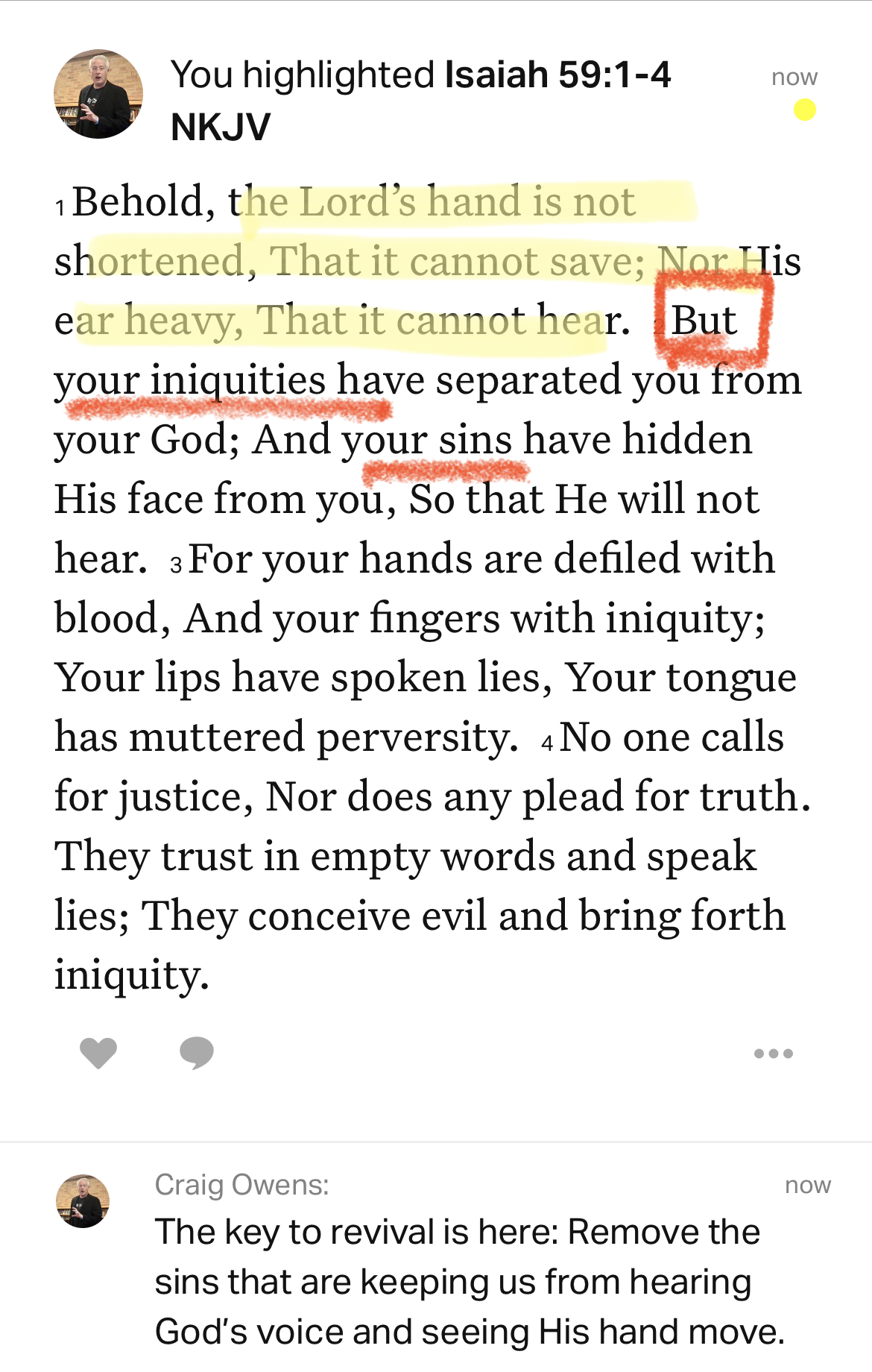
Psalm 85 is a longing for revival. Not only longing for it but giving us the path to revival. 

Many Christians say they want revival, but I’m not so certain they have the biblical definition in mind. When most people define revival, they use descriptions about exuberant worship, manifestations of the gifts of the Holy Spirit, the church reenergized for ministry, and non-believers flocking to see what’s happening and then accepting Jesus into their hearts as a result. 

But those are actually the results of revival, not the revival itself. 

Take a look at this overview of Psalm 85: 

  • a look back (vv. 1-3) 
  • a look around (vv. 4-6) 
  • a look ahead (vv. 8-13) 

I am aware that I skipped verse 7 in that overview. That is the middle verse of this psalm, so it is presenting us with the main idea. It’s a longing to see the path forward, the path to revival. It’s not about “getting saved” again because verses 1-3 already thank God for His salvation. 

But let’s notice the Selah. It seems to come mid-thought in the backward look. I think this is both a pause to consider deeply, and also a pause to look at the contrasts. It’s almost as if the sons of Korah, who wrote this psalm, have their breath taken away as they consider the immensity of God’s love that covers our sins! 

That word “cover” means to cover our nakedness, conceal our shame, and hide us from our forgiven sins. The alternative is to live in fear of God’s righteous judgment on our unforgiven sin. 

The sons of Korah long for this again. They long for a crescendo of righteousness, which is why in the “look around” section we see the phrases “restore us again” (v. 4) and “revive us again” (v. 6). 

This Hebrew word for “restore” always means a turning:

  • men turning back from God (apostasy) 
  • men turning away from God (backsliding) 
  • men turning away from evil (repentance) 
  • men turning back to God (revival) 

The ball is in our court. God has remained faithful; we are the ones who have sinned and turned away from Him. God hasn’t gone anywhere; we have! 

So revival begins with the recognition of our sin and profound repentance from that sin. Revival is a recognition that I have turned back from God, and now I need to turn away from evil and turn wholeheartedly back to God. 

Immediately following that middle verse notice the personal, singular pronoun “I” in verse 8. Revival starts with my recognition of my sin and then my repentance of that sin quickly follows. 

The “show us the way” prayer of verse 7 is answered in verse 13: “Righteousness will go before Him, and shall make His footsteps our pathway” (NKJV). God Himself shows us the way! His footsteps mark the path for us to walk! 

Just as Jesus told us He was the way (John 14:6). 

When we repent from following any other path, revival and restoration happen. The fruit of revival is then a life sustained, quickened, and equipped by God’s presence that will draw others to Him too! 

Let us SELAH—pause and consider the forgiving love of God, the need for my repentance, and then let us enjoy the crescendo of living in daily revival! 

If you have missed any of the other messages in our Selah series, you can find all of those messages by clicking here. 

►► Would you please prayerfully consider supporting this ministry? My Patreon supporters get behind-the-scenes access to exclusive materials. ◀︎◀︎
Selah

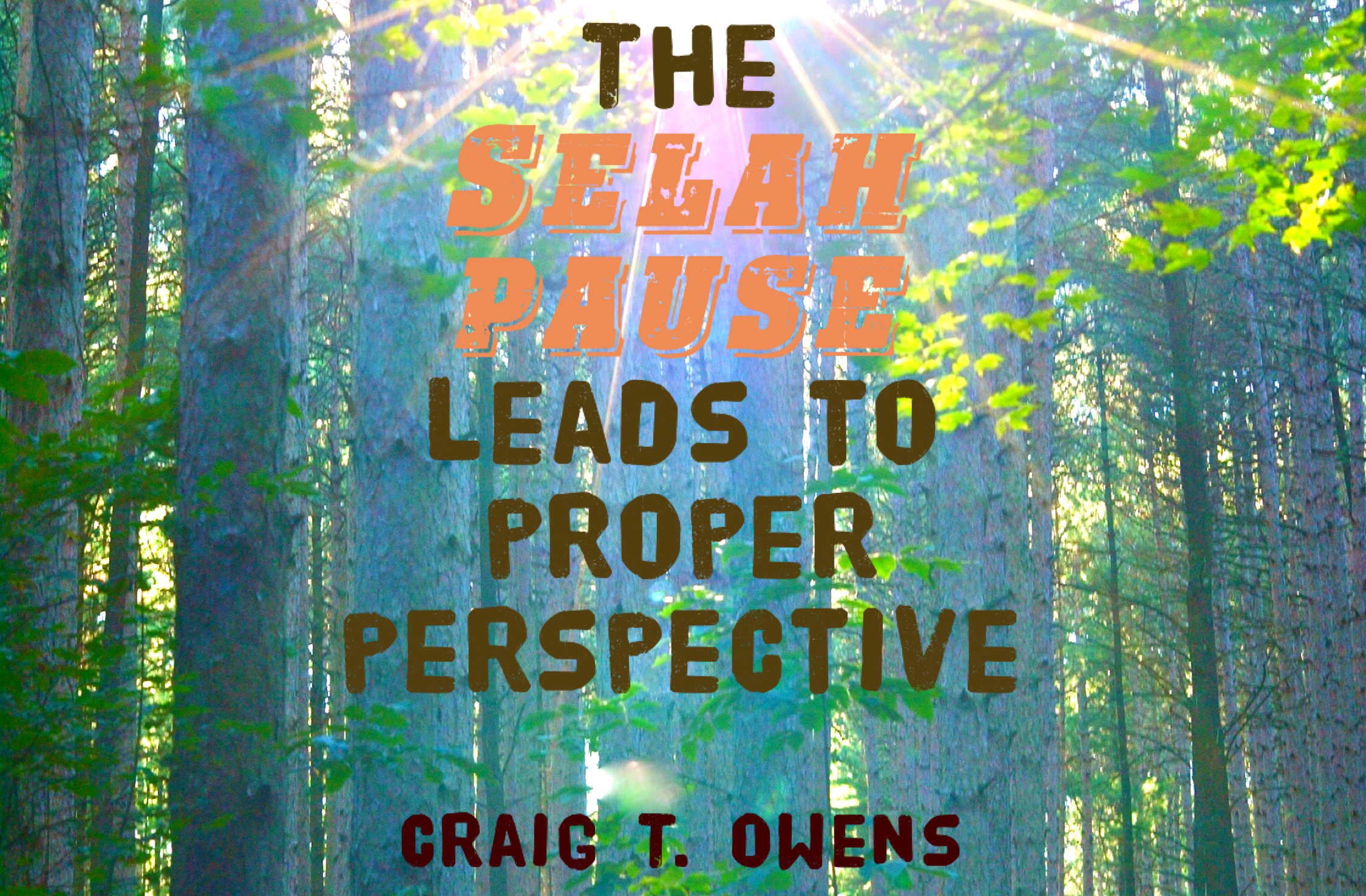
The word Selah appears nearly 70 times in the Bible, almost exclusively in the Psalms. Although it is primarily a musical term, it applies beautifully to our summer series. 

Selah can mean…

  • a pause from the noise to reflect;
  • a preparation for an exciting accent; or 
  • a reflective time of consideration

Throughout the Psalms, Selah appears at the end of a verse, at the end of the psalm, or sometimes even mid-sentence. But each one of them is perfectly placed by the Spirit-inspired authors to get us to take a breath and deeply contemplate what we just read or sang. 

Summertime is typically a time for us to pause from our regular routine. Perhaps it’s a vacation, time with friends and family, driving around with the windows down and the music blasting, or just a quiet walk through woods or along a beach. In any case, whether we realize it or not, we’re actually doing Selah in these break-from-the-routine activities. 

Join me this Sunday as we continue our summertime look at each of the Psalms that ask us to Selah. I think you will find that this Sunday summertime pause will be both refreshing and encouraging. You can join me either in person or on Facebook or YouTube.

Since this is a continuation of our summer series, you can check out the Selahs we discussed by clicking here for the 2018 messages, here for the 2019 messages, here for the 2020 messages, and here for the 2021 messages.

The messages this summer include:

Year-End Review (2021 Edition)

I have the privilege of pastoring Calvary Assembly of God. One of the things I am honored to do is share a message from God’s Word with our church each week. And nor just teaching, but reminding folks of whatwe have learned too. The apostles Peter and Paul both saw the value in this as well.

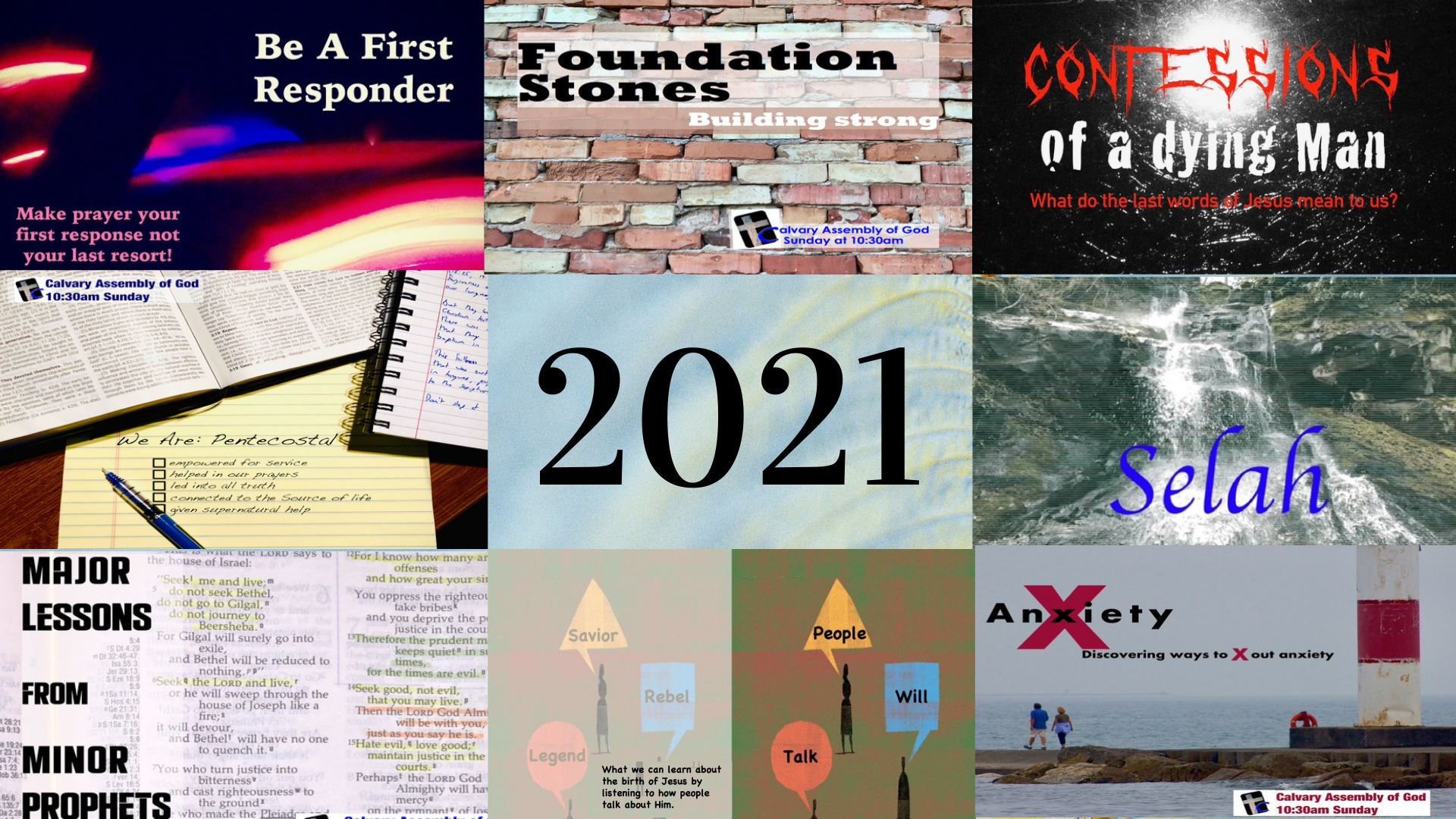
So here are all of the sermon series that I shared in 2021. Clicking on each series title will take you to a list of all of the sermons in that series. 

Foundation Stones—Any architect will tell you: You can’t build a great building on a weak foundation. This is just as true in the spiritual realm, which is why John Calvin warned, “Those who are strong only in fervor and sharpness, but are not fortified with solid doctrine, weary themselves in their vigorous efforts, make a great noise…[and] make no headway because they build without foundation.” We have had on the Calvary website since Day 1 a link to “What we believe,” but more than just having them listed there, it is important to discuss them.

Be A First Responder—There is a line in an old hymn that convicts me every time I sing it: “Oh, what peace we often forfeit; Oh, what needless pain we bear all because we do not carry everything to God in prayer.” Why are we so slow to drop to our knees in prayer when trouble strikes? It seems we fool ourselves into thinking the problem is small enough to handle on our own, or we think God isn’t concerned with something that may seem trivial, or we’ve been-here-done-this before and know the way to go. But this isn’t what our Heavenly Father desires; instead, He wants us to come to Him before we try anything else. Instead of making prayer our last resort, why don’t we strive to make it our first response!

Confessions Of A Dying Man—In our justice system, rarely will a judge allow hearsay testimony to be introduced in court. But there is one notable exception: a dying declaration. A dying declaration is the statement of a mortally injured person who is aware he or she is about to die. This statement is admissible testimony in court on the theory that a dying person has no reason not to tell the truth. Jesus was nailed to a Cross. Mortally injured, unable to escape, He had no reason to lie. In His dying moments, struggling to get enough air in His lungs to be able to speak, Jesus choked out seven statements that still have a profound impact on us today.

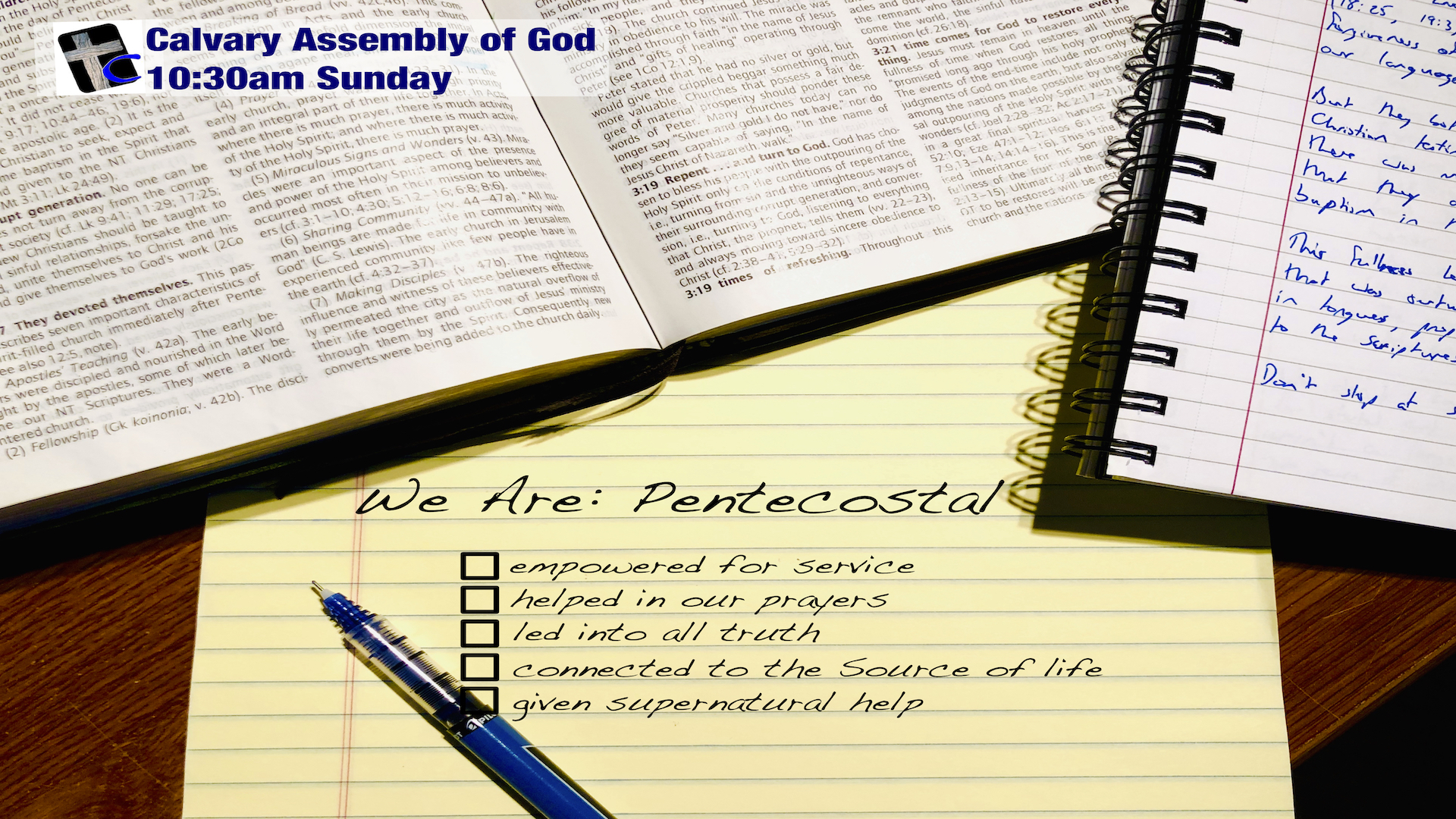
We Are: Pentecostal—Pentecost for over 1500 years was a celebration in Jerusalem that brought in Jews from all over the world. But on the Day of Pentecost that came just ten days after Jesus ascended back into heaven, the meaning of Pentecost was forever changed! Followers of Jesus—now empowered by an infilling of the Holy Spirit—began to take the good news of Jesus all over the world. These Spirit-filled Christians preached the Gospel and won converts to Christ even among hostile crowds, performed miracles and wonders, stood up to pagan priests and persecuting governmental leaders, and established a whole new way of living as Christ-followers. We, too, can be Pentecostal followers of Jesus Christ today. 

Selah—The word Selah appears nearly 70 times in the Bible, almost exclusively in the Psalms. Although it is primarily a musical term, it applies beautifully to our summer series. It means a pause. Throughout the Psalms, Selah appears at the end of a verse, at the end of the psalm, or sometimes even mid-sentence. But each one of them is perfectly placed by the Spirit-inspired authors to get us to take a breath and deeply contemplate what we just read or sang. 

Major Lessons From Minor Prophets—Sometimes the naming of things gives us an inaccurate picture of the thing being named. For instance, many people think the “old” in Old Testament means outdated or perhaps updated by the “new” in the New Testament. When in fact, both Testaments are needed to give us the full picture of God’s love and glory. A similar thing happens with the headings “major prophets” and “minor prophets.” It makes it sound like the major prophets have something major to say to us, while we could take or leave the minor messages of the minor prophets. In reality, they were given these headings simply because of the volume of writing—the five major prophets consist of 182 chapters, whereas the 12 minor prophets only have 67 chapters. The volume of their writing may be minor, but their content carries major messages of meteoric power! 

X-ing Out Anxiety—Two brothers—one a doctor and one a pastor—addressed the prevalence of anxiety in our culture. They wrote, “A recent survey of primary care physicians in the United States revealed that at least one-third of office visits were prompted by some form of anxiety.” Anxiety can negatively impact our relationships, our ability to think creatively, our physical health, and even our relationship with God. Thankfully, one of the titles given to Jesus is The Prince of Peace. Join us for this freeing series called X-ing Out Anxiety, where we will be learning what God’s Word says about getting free from the anxiety that is robbing us of life, and replacing that anxiety with His peace.

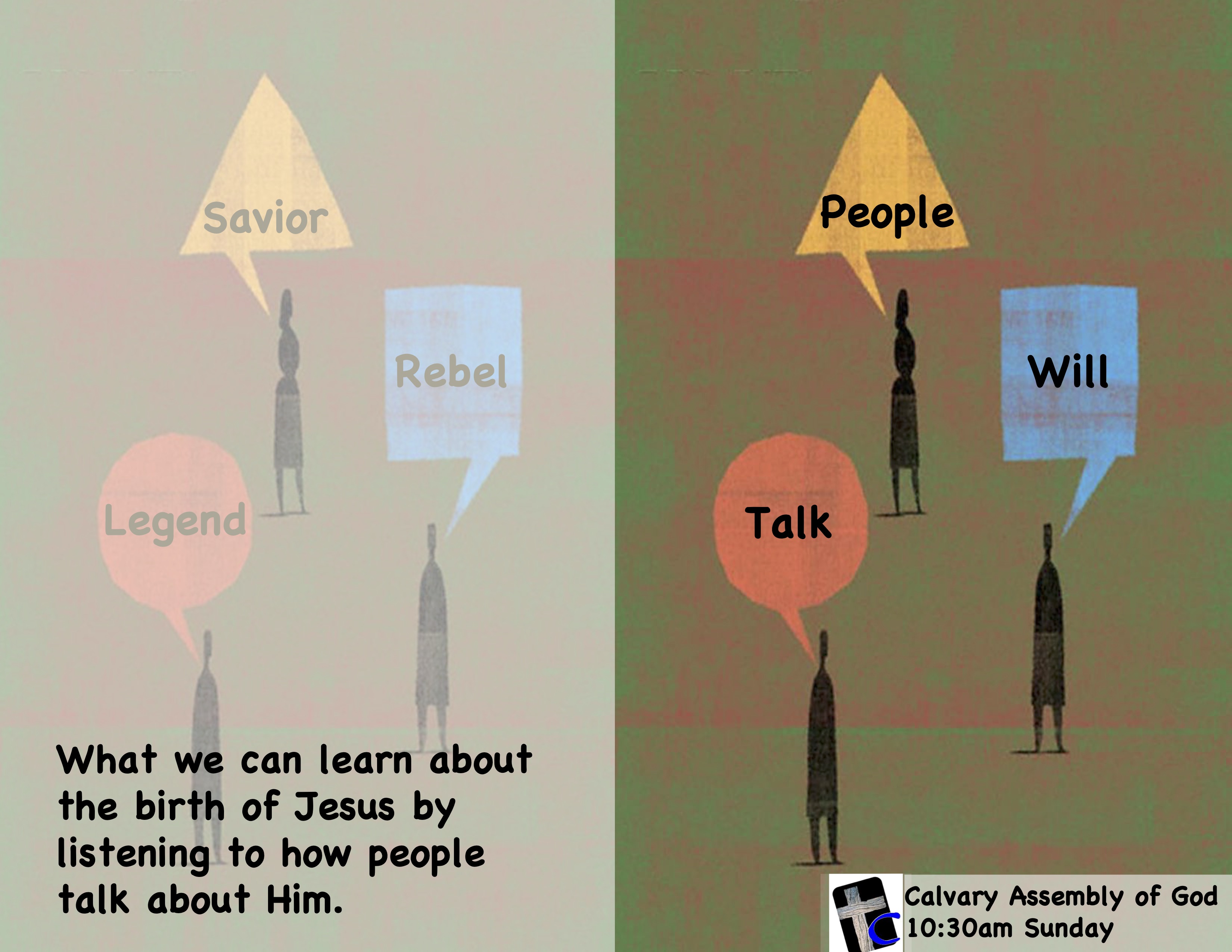
People Will Talk—Sometimes celebrities and other people in the public spotlight will hire a publicist to help promote their cause, build their brand, or present them in the best possible light. If you wanted to stretch the terms, you could say that some of the Old Testament prophets and the New Testament disciples could have been viewed as the “publicists” for Jesus. At least, that’s what critics might point to. But despite the best efforts and high salaries of publicists—both ancient and modern—they cannot control the “word on the street.” What people are actually saying about the one in the spotlight is usually the best evidence of who that person truly is. As we celebrate this Advent season, we are going to look at what the people on the street were saying about Jesus at the time of His birth. Before He ever performed a miracle or presented a parable—before any of His “publicists” could try to make Him look good—people were already talking. And what they said about Him is truly enlightening.

We will be returning to a couple of these series in 2022, and we’ll be launching some brand new ones as well. In either case, if you don’t have a home church in the northern Kent County area, I would love to have you join us! 

Complaining To God

Listen to the podcast of this post by clicking on the player below, and you can also subscribe on AppleSpotify, or Audible.

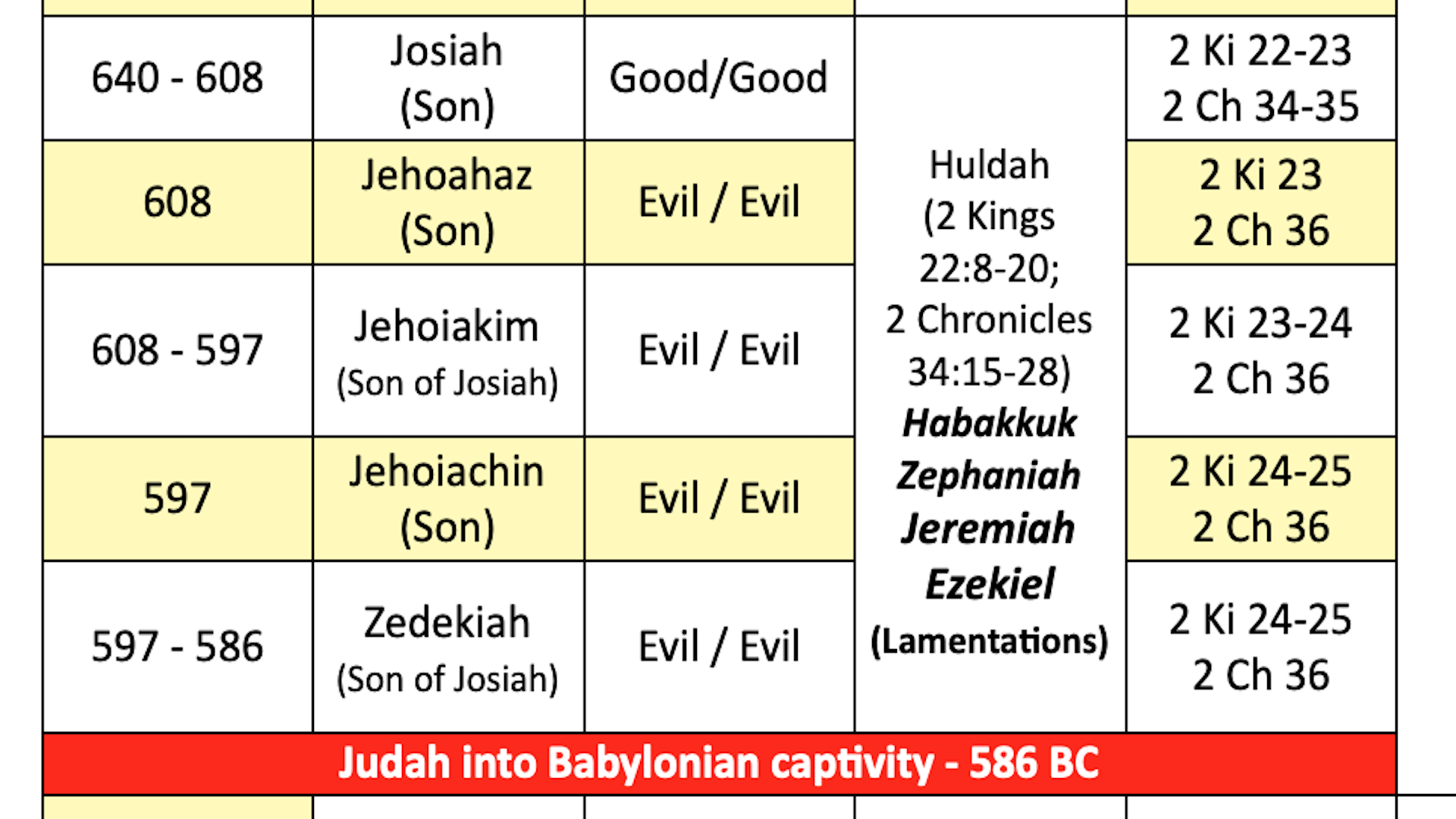
One of the things I love about the minor prophets is the reminder of the historicity of the Bible. Habakkuk, and the other prophets, lived in an actual moment of history. Check out some of the key dates during the ministry of Habakkuk: 

  • 605 BC—Nebuchadnezzar invades Judah and carries off Daniel and his friends 
  • 597 BC—the Babylonians attack Judah again and take 10,000 exiles back to Babylon, including the prophet Ezekiel 
  • 586 BC—Judah is besieged and defeated, and all remaining residents are exiled to Babylon 

Jeremiah, a contemporary of Habakkuk, preached to faithless Israelites, imploring them to return to God, while Habakkuk attempted to encourage faithful Israelites to continue to trust Jehovah. 

Habakkuk recognized that he was delivering a heavy word. When he opens this book by saying this is “the oracle” that he received from God, that word is better translated “burden.” Part of this burden may have been due to the fact that Habakkuk had something on his heart that we often have: a complaint. 

Can we complain to God? 

Habakkuk complained to God—twice!—and God doesn’t reprimand him, so there must be a right way to vent about our frustrations and confusions. Here’s what we can learn from Habakkuk’s two complaints: 

  1. Instead of making accusations, ask questions. Habakkuk asks God eight questions in his two complaints. I think this is an attitude issue. Complaints are saying, “God I disagree with what You’re doing,” while questions seem to be more like, “God, I don’t understand what You’re doing.” 
  2. Desire God’s glory to be seen. At the conclusion of both of Habakkuk’s complaints he uses the word “therefore” (1:4, 16). His conclusion is something along the lines of, “God, if You let this continue, it appears that Your glory is being obscured by the activities of wicked people.” 
  3. After your complaint, close your mouth and open your eyes and ears. After Habakkuk’s first complaint, God tells him to “look” at all He is going to do. And after the second complaint, God tells him to “write down the revelation” God gives him and then “wait for it” to be fulfilled” (2:2, 3). 

Then Habakkuk does something that isn’t seen anywhere else in the Bible outside of the book of Psalms: he calls for us to Selah pause three times! 

Habakkuk shows us that our best response to what God reveals to us should be worship: 

  • Selah (3:3)—pause to consider what God has done 
  • Selah (3:9)—pause to stand in awe of His very present glory 
  • Selah (3:13)—pause in anticipation of His righteous justice and awesome glory that will be revealed 

Key phrases from Habakkuk are quoted in the New Testament, and at least three of them are directly tied to these Selah pauses:

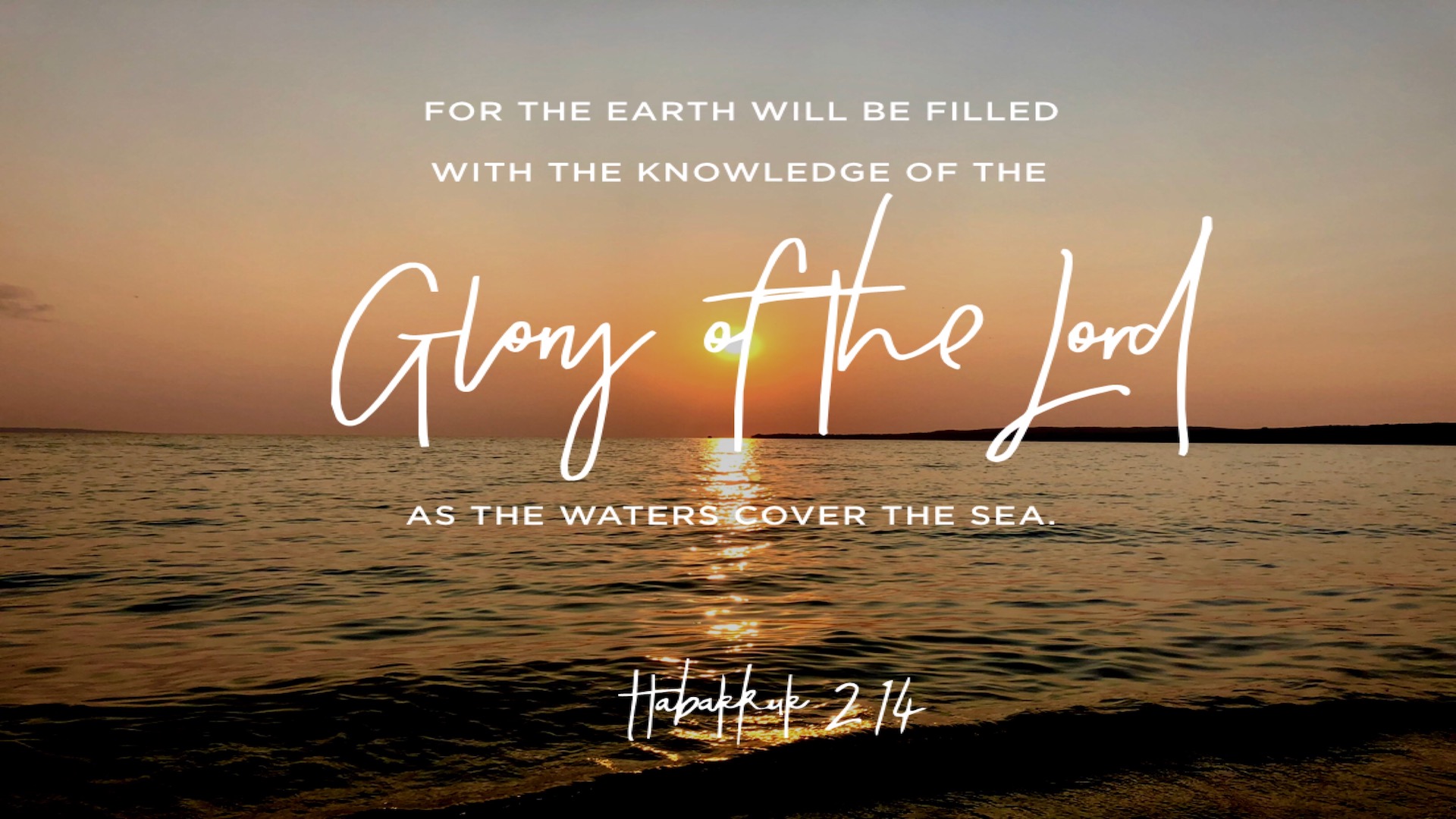
  • The earth WILL be filled with the knowledge of the glory of the Lord” (2:14), is echoed in the way all of humanity will see the glory of the risen Jesus.  
  • The righteous WILL live by his faith” (2:4), is quoted as a Christian’s ongoing interaction with the indwelling Holy Spirit. 
  • I WILL rejoice in the Lord my God … I WILL be joyful in God my Savior” (3:17-18) figures prominently in Mary’s song after she realizes that she is pregnant with the soon-to-be-born Savior. 

(Check out all of the above biblical references: Habakkuk 2:14, 2:4, 3:17-18; Revelation 1:5-8; Romans 1:17; Galatians 3:11; Hebrews 10:37-39; Luke 1:46-47, 54-55) 

Can you air your complaints to God? Yes, but do it the right way. Then silently listen, patiently wait, and then eagerly tell others about the coming judgment that they can avoid by having their sins forgiven through faith in Jesus our Savior. Only then can we also echo the “I will” statements of Habakkuk that are echoed in the New Testament—I will live by faith, I will look forward to the glory of God being fully revealed, I will continue to rejoice in God my Savior every day, and I will tell others how they, too, can live this way themselves! 

If you’ve missed any of the messages in our series looking at the major lessons we find in the minor prophets, you can find the complete list by clicking here. 

►► Would you please prayerfully consider supporting this ministry? ◀︎◀︎

Abiding In God’s Omnipresence

Listen to the podcast of this post by clicking on the player below, and you can also subscribe on AppleSpotify, or Audible. 

Why do Christians say things like, “Let’s go to church” or “Let’s go meet with God”? 

Do we forget that Jesus said He would never leave us, or that He sent the Holy Spirit to be our constant Companion, or that our very heart is the temple of God’s presence (Matthew 28:20; John 14:16; 1 Corinthians 3:16)? We are naturally self-focused creatures. It takes discipline on our part to keep reminding and re-reminding ourselves that God is always with us. 

Psalm 84 and its two Selahs is one way of re-reminding ourselves of God’s abiding presence. The Selahs are reminders to pause and consider, “Where am I?” and to know that the answer can always be, “Surely I am in God’s presence!” 

This psalm is divided into three 4-verse stanzas. Stanzas 1 and 2 end with the call to Selah, and all three stanzas feature a powerful name for God: LORD Almighty. When we see LORD in all capital letters, that is God’s covenant name: Yahweh or Jehovah, which means that He is the “I AM that I AM.” Almighty signifies that He is the invincible, un-defeatable Captain of angel armies. 

In these two combined titles, we have the personal intimate God of love and the unstoppable God of limitless power! If He were just the God of love, we may not be able to trust His power. If He were just the God of power, we may not be able to approach Him. He is the All-Loving, Ever-Approachable Power. 

Another important recurring theme in Psalm 84 is the word blessed. It’s used three times in this psalm, more than in any other single psalm. This word means God’s unmerited favor, and the word either begins or ends each of the three stanzas.  

In stanza 1 (vv. 1-4), twice we have that combined title of LORD Almighty. But we must always remember that our God is not distant and unapproachable, but the sons of Korah call Him “my King” and “my God.” At the end of this first stanza, we are invited to Selah—a pause to praise our glorious King! 

Stanza 2 (vv. 5-8) begins with that reminder that we are blessed. The psalmists tell us that God’s blessings flow even in my Valley of Baca (or weeping). With God’s presence surrounding me, I can go fromstrength to strength” because the LORD Almighty hears my prayer and responds to my prayer! So at the end of this stanza, we are again invited to Selah—this time it’s a pause to pray to our listening God. 

In stanza 3 (vv. 9-12), another important word is featured that reminds us that our God is not a stingy King, but One who delights in His children and wants to lavishes them with His blessings: the word is favor. We read, “look with favor on Your anointed one” and “the LORD bestows favor and honor; no good thing does He withhold from those whose walk is blameless.” God’s favorable blessings flow toward us as eternally as He exists! 

This psalm is circular: it begins as it ends, so it invites us to continue to praise, continue to pray, and continue to abide in His presence. We’re called not just to know about God’s presence, but to rejoice in His presence. 

It’s one thing to know about God’s omnipresence, but it’s an entirely different thing to abide in God’s omnipresence! 

This isn’t something that happens overnight. Brother Lawrence reminds us that this is a progressive revelation for Christians: “One does not become holy all at once. … The more one knows Him, the more one desires to know Him. And as knowledge is commonly the measure of love, the deeper and more extensive our knowledge shall be, the greater will be our love: and if our love of God were great we should love Him equally in pains and pleasures.” 

I encourage you to Selah frequently so that you can move from mere head knowledge of God’s presence to becoming intimately aware of His closeness! 

If you’ve missed any of the messages in our series looking at the Selahs in the Psalms, you may find the full list by clicking here. 

►► Would you please prayerfully consider supporting this ministry? ◀︎◀︎

Perspective On Persecution

Listen to the podcast of this post by clicking on the player below, and you can also subscribe on AppleSpotify, or Audible.

Around the world we hear of Christians being persecuted for their faith in Jesus: Afghanistan … N. Korea … China … even in the USA, Christians like Jack Phillips and Barronelle Stutzman are being persecuted for standing up for what they believe. 

Here’s an important principle to keep in mind: In times like these, we need to remember there have always been times like these. Especially because the psalmist Asaph, Jesus, and the apostle Paul all forewarned us about persecution (Psalm 83; Mark 13:9, 12-13; 2 Timothy 3:12-13). 

Jesus said that our persecution should only come “on account of Me.” And Asaph notices the same thing in his prayer, using phrases like “Your enemies,” “Your foes,” “they conspire against Your people,” and “they form an alliance against You.” 

Asaph also recognized that times like these call for a Selah pause—a pause to calmly consider. (You may also be interested in this flowchart on persecution.) 

I think the first thing we need to consider is our part in bringing on the persecution. I need to ask the Holy Spirit to reveal if I may have been the trigger to the anger of these wicked people. If I have done something, I need to repent, ask forgiveness, and see what I can do to make restitution. 

Next, we need to Selah to consider this: It might look desperate, but God has handled these kinds of evil people before. Asaph mentions several enemies of God’s people whom God decisively defeated in the past. Our Selah pause will help us recall that God is the same today as He was yesterday—He is more than able to handle these persecutors. 

With all of these bullies ganging up on Israel, you can understand why Asaph cries out for God’s strong action against them. But I want you to notice that the call for judgment is NOT vindictive but redemptive. Asaph asks for punishment “so that men will seek Your name, O LORD” and that they may “know that You, whose name is the LORD—that You alone are the Most High over all the earth. 

In other words, this isn’t a “Get ‘em, God” prayer, but a “Save ‘em, God” prayer! 

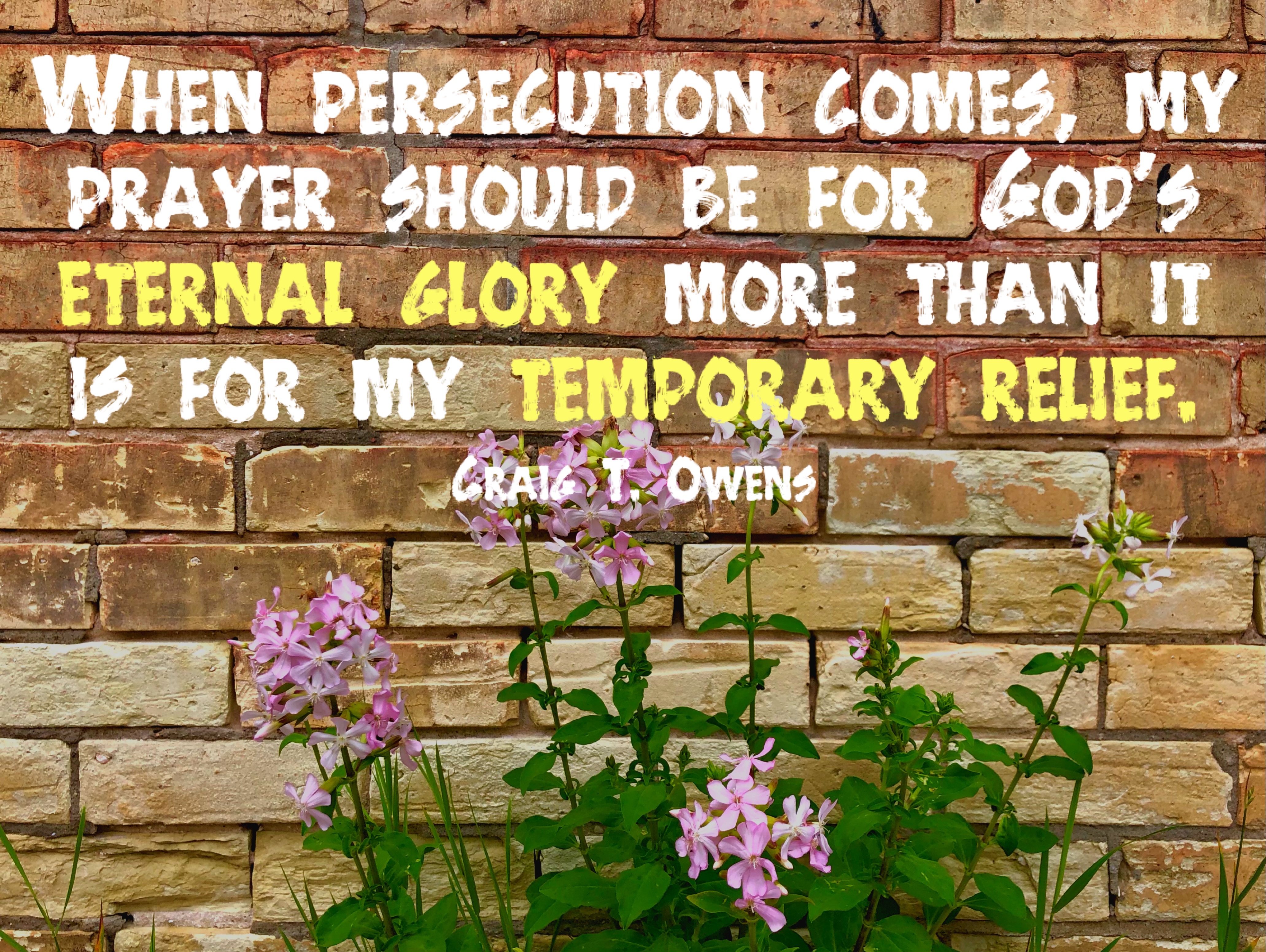
We’re not looking for relief for ourselves—that’s only temporary—but we’re looking for glory for God—that’s eternal!

Jesus and the apostle Peter both tell us that God’s desire is for no one to perish apart from a relationship with Him through Jesus Christ (John 3:16-17; 2 Peter 3:9). 

The reason we need to Selah and ask that introspective question about our words or actions triggering our persecutor’s anger is because God will use our righteous response to persecution as a testimony. 

Jesus said our persecution should be because of Him, but He also told us that there would be a blessing in it (Matthew 5:11-12; Mark 13:13; Luke 21:17-19). And Paul tells us that this reward isn’t just a silver lining to a dark cloud, but a reward beyond compare (Romans 8:18). 

Asaph went to prayer when Israel was attacked, and that should be our first response too. 

But let’s Selah in that prayer to make sure we’re not the trigger, and then may our prayer be more for God’s eternal glory than it is for our temporary relief. 

If you’ve missed any of the messages in our series looking at the Selahs in the Psalms, you can access the full list by clicking here.

►► Would you please prayerfully consider supporting this ministry? ◀︎◀︎

Judging Like God

Listen to the podcast of this post by clicking on the player below, and you can also subscribe on AppleSpotify, or Audible.

I may have heard more confusion, bad preaching, and even heresy based on Psalm 82 than almost any other passage! Most of the confusion comes from just verses 1 and 6, but if we read the entire psalm, I think confusions are quickly cleared up.

The biggest point of confusion is the use of the word “gods.” The Hebrew language doesn’t have capital and lowercase letters like we do. So the word God (with or without a capital “G”) is the same Hebrew word—el (singular) or elohiym (plural)—which means mighty One or mighty ones. Humans can be mighty ones, but only Yahweh is the Mighty One. 

Further adding to the confusion for some people is that Yahweh God is sometimes referred to in the plural in Hebrew: elohiym. This is understandable because we believe God is Three-in-One. Not three gods, but one God in three Persons. 

Bible translators have to use context clues to determine whether the biblical authors are referring to Yahweh or a pretend deity. Thankfully, English Bible translators have helped us out:

  • when the Hebrew word is Yahweh, most Bibles print it LORD 
  • when the Mighty One is implied in the text it’s God (with a capital “G”), and when it’s just a mighty person it’s typed god/gods (with lowercase a “g”). 
  • the NIV translators really helped us in Psalm 82 by designating the false deities in quotation marks (“gods”), almost as if they’re saying “the so-called gods.” 

When we were looking at the Selah in Psalm 81, I pointed out the importance of remembering that context is king. Clearly, from the context in Psalm 82, these are false gods (lowercase “g” and inside quotation marks).  

Asaph only speaks in the first and last verses of this psalm, but notice his commentary that “God presides…He gives judgment.” As in, God gets the final and decisive word. In fact, God does the most speaking in this psalm (in verses 2-7). God indicts wicked people for…

  • defending the unjust 
  • showing partiality to the wicked 
  • knowing nothing, understanding  nothing, walking around in darkness 
  • and notes “you will die like mere men” 

Now notice what the Selah pause connects. This is a pause for us to contrast two things: the righteous way and the wicked way. Or maybe we could say the contrast is between the way of the righteous Mighty One and His followers, and the way of wicked mighty ones. 

The Selah really begs an important question, “How long will your pride keep you doing these wicked things?” Notice what God calls on people to do in opposition to what the wicked are doing:

  • the wicked defend the unjust vs. the righteous are to defend the weak and fatherless 
  • the wicked show partiality to the wicked vs. the righteous maintain the rights of the poor and oppressed 
  • the wicked are concerned only about themselves vs. the righteous rescue the weak and needy from the hand of the wicked 

The Selah is intended to prompt us to ask ourselves: “Which are we? What am I doing or not doing?” 

The word for rendering a judgment is used four times in Psalm 82: 

  • God gives judgment on the activities of the “gods” 
  • the wicked defend the unjust, meaning that they condone their unjust activities 
  • the righteous defend the weak, meaning they speak up for those being oppressed by the “gods”
  • finally, Asaph declares in verse 8 that God renders the final and decisive judgement 

God wants us to exercise His righteous judgment on the earth. We have to Selah to examine ourselves first (see Matthew 7:1-5 and this short video), but then we need to act boldly and righteously (see Micah 6:8; Leviticus 5:1; Proverbs 31:8-9). 

We can judge like we are “gods,” or we can judge, defend, and speak up like ambassadors of the Mighty One—the Ultimate Judge.

Wicked people are punished for judging like “gods.” Righteous people are rewarded for judging like God. 

If you’ve missed any of the messages in our series exploring the Selahs in the Psalms, you can access the full list by clicking here. 

►► Would you please prayerfully consider supporting this ministry? ◀︎◀︎

Listening To Obey

Listen to the podcast of this post by clicking on the player below, and you can also subscribe on AppleSpotify, or Audible. 

Have you ever been confronted by someone claiming, “The Bible is full of contradictions”? 

How about this one: God says, “I tested you at the waters of Meribah” (Psalm 81:7) vs. at Meribah…[the Israelites] tested the LORD (Exodus 17:7)? 

Whenever we see a possible contradiction, remember this: Context is king. We have to look at these two accounts in their proper context. 

In the Exodus account, the Israelites have just been delivered out of slavery in Egypt and crossed the Red Sea on dry ground. The pursing Egyptian army tried to follow them, but the waters closed back over them and they drowned. Three days later we find the Israelites grumbling over a lack of drinkable water, which God miraculously supplies. A month after that they are complaining about their food supply, which God miraculously supplies. And right on the heels of that they are again complaining about not having water to drink, which God miraculously supplies (see Exodus 15-17). 

It is after this second miraculous supply of water that we read that phrase we are considering: the Israelites tested God. The Hebrew word for “tested” is nasa which equates to, “Oh yeah? Prove it!” or “I’ll believe it when I see it!” or as The Message paraphrase puts it, “Is God here with us, or not?” 

In Psalm 81, God Himself is speaking in vv. 6-16, so He is the One who claims, “I tested them at Meribah.” The Hebrew word for “tested” in this instance is bahan. This means to investigate closely, to spot and bring out the impurities in fine metals. God not only makes the claim, “I tested them,” but He is also the One who tells us to Selah—pause and calmly consider. 

Consider what? After the first instance of grumbling about water in Exodus 15, we read, “There the Lord made a decree and a law for them, and there He tested them. He said, ‘If you will listen carefully to the voice of the Lord your God and do what is right in His eyes, if you pay attention to His commands and keep all His decrees, I will not bring on you any of the diseases I brought on the Egyptians’” (Exodus 15:25-26). 

Notice the words decree, law, and commands. Asaph says something similar in Psalm 81:4, “This is a decree for Israel, an ordinance of the God of Jacob. He established it as a statute for Joseph when He went out against Egypt.” 

God is talking about laws before the Ten Commandments are given. What is the law He desires to be obeyed above all else? In a word: Listen. 

  • If you will listen carefully to the voice of the Lord your God and do what is right in His eyes (Exodus 15:25). 
  • I tested you at the waters of Meribah. Selah. Hear, O My people, and I will warn you—if you would but listen to Me, O Israel! (Psalm 81:7-8) 

God brings us to these moments of tests to see how we will respond. He doesn’t need to know, but we need to know how we will respond. When we find ourselves wringing our hands, or grumbling, or saying, “Is God here with us, or not?”, what does that tell us about our own heart? He wants us to be wholly His, so He has to bring out the impurities. That same word bahan is used when God speaks this word: “I will refine them like silver and test them like gold. They will call on My name and I will answer them; I will say, ‘They are My people,’ and they will say, ‘The Lord is our God’” (Zechariah 13:9). 

Asaph uses the Hebrew word for “listen” five times in Psalm 81. This word means listening with an attitude to obey. In order for us to hear God’s voice, we have to listen with an attitude toward obedience. This is not, “Oh yeah? I’ll believe it when I see it!” but “Oh yeah! I will obey it so I will see it!” 

As I pondered this, the Holy Spirit dropped these questions on my heart which I encourage you to ponder as well: 

  • God is always speaking to me. Am I making quiet time to listen to His voice?  
  • God sometimes has to discipline me. Am I open to His purifying? 
  • God has wise counsel for me. Am I obeying it?
  • God knows the best path for me. Am I walking in it?
  • God wants to subdue my enemies. Am I asking Him to do it?
  • God has abundant blessings for me. Am I listening to obey?

God will only speak a new word to me when I have obeyed His previous word to me.

When I am in distress, I need to train myself to Selah so that I can say, “God has brought me to this test, what do I need to learn? Am I listening to God’s voice with an attitude to obey?” 

May our heart’s posture always be, “Speak, Lord, for Your servant is listening and ready to obey whatever You speak to me.” 

If you’ve missed any of the messages in our Selah series, you can access the full list by clicking here. 

►► Would you please prayerfully consider supporting this ministry? ◀︎◀︎