Links & Quotes

We have a culture where respect for others is eroding quickly. The Bible makes it clear that reverence for God results in respect for people, and respect for people helps us reverence the God who created them.

I have a lot of new video content on my YouTube channel every week. Please check it out and subscribe so you don’t miss anything.

AI models can develop brain rot just as assuredly as humans can. You are what you consume!

“The real great man is the man who makes every man feel great.” —G.K. Chesterton

Dr. Louis A. Markos has an insightful article on the works of C.S. Lewis that help us learn how to stay human. “Christians today who are committed to restoring a proper view of man have an ally in the greatest apologist of the twentieth century, C.S. Lewis (1898–1963). Though Lewis offers much help in his best-known apologetics books (Mere Christianity, The Problem of Pain, The Screwtape Letters, The Great Divorce) and his beloved Chronicles of Narnia, we would do well to expand our reading of Lewis to include his searing critique of modern educational philosophy (The Abolition of Man) and his anthropologically incisive science fiction novels, The Ransom (or Cosmic) Trilogy: Out of the Silent Planet, Perelandra, That Hideous Strength.

The ICR has an article about a fascinating new dinosaur that was unearthed. “Even now in the twenty-first century, paleontologists are still at a loss as to the origin of the dinosaurs. As recently as 2024, five evolutionists stated, ‘Today, inspired by clues from fossils and footprints from a lost world, scientists continue to piece together the puzzle of how various dinosaur groups arose, behaved, and diversified.’ In contrast, the creation model argues that all dinosaur kinds were created during the same period—specifically on Day 6 of the creation week—several thousand years ago. From this perspective, the lack of definitive transitional forms or ancestral precursors in the fossil record aligns with the expectation that dinosaur kinds appeared fully formed and distinct, as observed in the fossil record.”

Axis’ Culture Translator discusses an article posted in Harper’s: “Many have written about how porn warps the expectations users have for relationships; this article demonstrates that, for young men in particular, pornography is often willingly embraced as a complete replacement for human connection. … Woven throughout this subculture is also conscious self-degradation; as the Harper’s article points out, ‘ruin your mind,’ ‘go deeper,’ and ‘give up on life’ are embraced as the movement’s rallying cries. Many young men and women are trapped in this spiritual prison, convinced there is nothing better to live for. Who will show them the way out?” Two helpful resources are Fight The New Drug and Pure Desire.

Leaders need to learn that disagreement on your team is normal and can be healthy. Disagreement doesn’t mean people distrust their leader, but it may mean that they want the bring out the best in their leader. Check out the full conversation Greg and I had on this subject.


Secondhand Problems

Peter shared the gospel with a group of Gentiles at Cornelius’ house, and not only did they receive Jesus as their Savior, but they were all baptized in the Holy Spirit as well. 

A group of Jews approached Peter and were angry with him because of a secondhand report they heard. To their credit, they listened respectfully to Peter’s full account of what happened and ended up changing their minds after they heard the firsthand story. 

But Peter began speaking and proceeded to explain to them in orderly sequence…. When they heard this, they quieted down and glorified God, saying, “Well then, God has granted to the Gentiles also the repentance that leads to life.” (Acts 11:4, 18) 

There’s a wonderful lesson here for all of us to apply: Verify secondhand reports. 

I unpack this more in my book When Sheep Bite in discussing gossip and slander.

Respectful Boldness

Listen to the podcast of this post by clicking on the player below, and you can also subscribe on AppleSpotify, or Audible. 

As we near the crucifixion of Jesus, we begin to see how politics plays a role in so many decisions. The Sanhedrin is trying to balance their popularity with the Jewish people and their standing with powerful leaders in the Roman government. Pontius Pilate is trying to balance how the Sanhedrin portrays him to the Jewish people and what those in Rome are telling Caesar Tiberius about him. King Herod Antipas also has issues with balancing the pressure from the Sanhedrin with the popularity of Jesus. 

Luke gives us a very telling statement about the politics of the day when he writes, “That day Herod and Pilate became friends—before this they had been enemies” (Luke 23:12). How did they become friends over this issue of what to do with Jesus? Remember that the Sanhedrin is a common thorn-in-the-side for both of them, and the political axiom that still holds to this day says, “The enemy of my enemy is my friend.” 

I point out all of the political maneuverings during this pivotal time because these political balancing acts are still being played out today and Christians will end up in the crosshairs. 

Pilate was trying to appease the Sanhedrin but there was no Roman law that Jesus had broken that was deserving of the death penalty they were demanding. So twice Pilate tells these religious leaders, “I will punish Him and then release Him.” In fact, without waiting for their approval, Pilate subjects Jesus to the tortuous punishment known as flagellation (Luke 23:13-22; John 19:1-11). 

I think Pilate believed that if they saw Jesus so humiliated and beaten down they would back off from their desire for His death. But Pilate miscalculated their commitment to seeing Jesus eliminated from the scene. 

Pilate finally gives in and says, “You take Him and crucify Him. As for me, I find no basis for a charge against Him.” But the Jewish religious leaders insisted, “We have a law, and according to that law He must die, because He claimed to be the Son of God.” 

If you have ever watched a movie about the gladiatorial games in the Roman Colosseum, you’ve probably viewed the scene where one combatant is disarmed and helpless. Before the victor strikes his deathblow he will look to Caesar in the stands. The Roman Caesar will either give a thumbs-up signal to pardon the victim or he will give a thumbs-down signal to send the defeated one to their death. 

Pilate has this same authority here in the region of Judea. The Sanhedrin knew Pilate had the power of life and death, so did the convicted prisoner Barabbas, and so did Jesus. 

Pilate asks Jesus, “Don’t You realize I have power either to free You or to crucify You?” 

There was another king who called himself “king of kings” but God called him “My servant.” He was King Nebuchadnezzar of Babylon. Daniel, an exile from Israel who was Nebuchadnezzar’s prime minister, reminded him where his authority originated, “The Most High is sovereign over all kingdoms on earth and gives them to anyone He wishes” (Daniel 4:17). 

In the same way, Jesus addressed Pilate, “You would have no power over Me if it were not given to you from above.” 

John Piper wrote: “This does not intimidate Jesus because Pilate’s authority over Jesus is subordinate to God’s authority over Pilate. Jesus gets His comfort at this moment not because Pilate’s will is powerless, but because Pilate’s will is guided. Not because Jesus isn’t in the hands of Pilate’s fear, but because Pilate is in the hands of Jesus’s Father.” 

Jesus shows us an important principle: Should we respect our leaders (even the ungodly ones)? Yes! Should we fear them? No! 

We don’t fear them because their power is limited to just this life and is under the control of the Most High God (Luke 12:4). Peter and John learned this lesson well, as we see in their interaction with the same Sanhedrin that turned Jesus over to Pilate (see Acts 4:1-10). What Jesus and these apostles demonstrate for us is respectful boldness.

In light of this, here are five things Christians should keep in mind. When persecution comes against us, we should respond like this: 

  1. Be prepared—Matthew 5:11-12; John 15:20
  2. Be respectful—1 Peter 2:17 
  3. Be loving—Matthew 5:44
  4. Be prayerful—Acts 4:27-30
  5. Be bold—Acts 4:18-20

(Check out all of the above Scriptures by clicking here.)

Jesus taught us there is a time for eloquent silence, but when the Holy Spirit needs us to speak, He will give us the respectfully bold words to share. Jesus said, 

On My account you will be brought before governors and kings as witnesses to them and to the Gentiles. But when they arrest you, do not worry about what to say or how to say it. At that time you will be given what to say, for it will not be you speaking, but the Spirit of your Father speaking through you. (Matthew 10:18-20)

Respectful? Yes. Fearful? No. Respectful, loving, prayerful boldness is how we will glorify the Most High God in the face of persecution. 

If you’ve missed any of the other messages in our series of Bold Claims, you can find them all here. 

►► Would you please prayerfully consider supporting this ministry? My Patreon supporters get behind-the-scenes access to exclusive materials. ◀︎◀︎

The Joy Of Understanding

Then Ezra read from the Book of the Law in the open square… (Nehemiah 8).

I love the simplicity of this! No sermon; just a straightforward reading of God’s Word. And look at how everyone responded…

  • “The ears of all the people were attentive to the Book of the Law”
  • There was a respect for the Word of God and the God of the Word—“When he opened it all the people stood up…[then] they bowed their heads and worship the Lord with their faces to the ground”
  • The religious leaders “helped the people to understand the Law”
  • “So they read distinctly from the book, in the Law of God; and they gave the sense, and helped them understand the reading”

The result—“And all the people went their way to eat and drink, to send portions [to those in need] and rejoice greatly, because they understood the words that were declared to them.

A mark of a godly leader is one who helps people make sense of God’s Word.

And when the people understand the Word, they are more likely to joyfully put it into practice.

This is Part 10 in my series on godly leadership. To read my other posts, please click here.

Bill Hybels’ 10 Rules Of Respect

My mind and heart were expanded once again at this year’s Global Leadership Summit! Bill Hybels opened the conference with a call to leaders to promote civility in our areas of influence. Here are a few notes I jotted down.

“The solution to incivility must begin with me.” —Bill Hybels

“Christians do not get to chose whom they will respect [1 Peter 2:17].” —Bill Hybels

Bill Hybels’ 10 rules of respect:

  1. Leaders must set the standard of how to disagree without demonizing the other person.
  2. Leaders must allow spirited conversations without it getting personal.
  3. Leaders must not interrupt others who are talking.
  4. Leaders must limit their volume level and eliminate belittling words.
  5. Leaders must set the example of being courteous.
  6. Leaders must never stereotype.
  7. Leaders must apologize immediately if they are wrong.
  8. Leaders must form opinions carefully.
  9. Leaders must set the example of showing up on time and doing what they say they will do.
  10. Leaders must set rules of respect for the organization and enforce them relentlessly.

Bill Hybels closed with this challenge—“When was the last time I reflected deeply on my own convictions about respecting others?”

5 More Quotes + 2 Graphics From “The Beauty Of Intolerance”

This is the fourth set of quotes I’ve shared from Josh McDowell and Sean McDowell’s book The Beauty Of Intolerance. You can check out the other quotes here, here, and here; and if you missed my review of this book, please click here to read that.

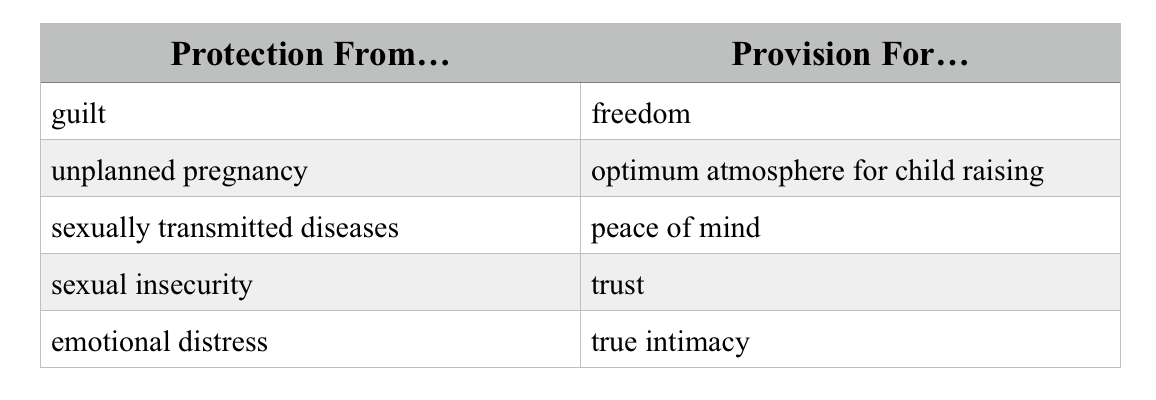
“Respecting the boundaries of sexual morality and prohibitions for extramarital and premarital sex does bring protection and provision. Here are just a few ways it does this:

boi-protection-and-provision

“Although sin has separated us from God, His original intent for us and the reality that we were created in His image have not changed. What we do or don’t do may distort that image, but our worth to God as human beings never changes.”

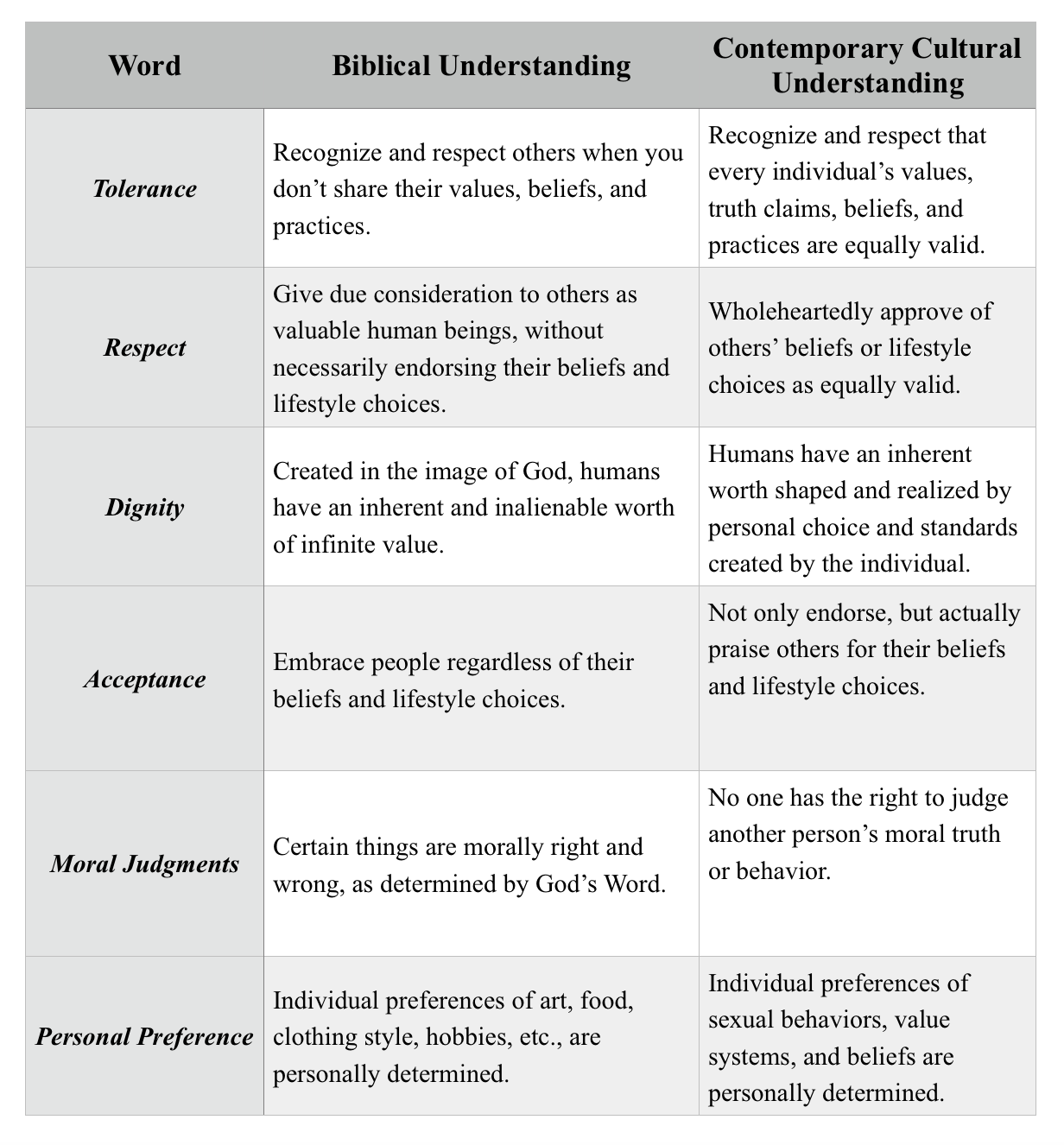
 “So how has Christ loved you? He values all people for their inherent worth and offers grace freely to all people without exception. Cultural tolerance, on the other hand, claims to accept everyone’s differing beliefs, values, and lifestyles, yet it qualifies that acceptance. …  What distinguishes God’s unconditional acceptance from that of our culture is authentic love. His love is intended to make the security, happiness, and welfare of another as important as His own. It is other-focused, not performance-focused. … Real valuing of another’s personhood expressed in the context of authentic love separates doing from being and sees the acts of sin distinct from the sinner (which, by the way, is all of us).”

“The beauty of intolerance is its opposition to wrong and evil in the world—in alignment with God’s righteous and perfect standard of justice, equality, human rights, and caring for others. Intolerance of evil is not mean-spirited and condemnatory; it is actually the only way to be loving and caring. Far from being judgmental, it advances God’s righteous kingdom.”

“Most people in America subscribe to a view of morality called ‘cultural ethics.’ In other words, they believe that whatever is acceptable in that culture is moral; if the majority of people say a thing is right, then it is right. … But there’s a problem with that. If that is true, then how can we say the ‘aborting’ of six million Jews in the Holocaust was wrong? In fact, the Nazis offered that very argument as a defense at the Nuremberg Trials. They argued, ‘How can you come from another culture and condemn what we did when we acted according to what our culture said was acceptable?’ In condemning them, the tribunal said that there is something beyond culture, above culture, that determines right and wrong.”

“We are all entitled to our own beliefs, but this doesn’t mean each of us has our own truths. Our beliefs describe the way we think the world is. Truth describes the objective state of the world regardless of how we take it to be. Beliefs can be relative, but truth cannot. … Moral truth was never meant to be spoken or understood outside of a loving relationship. Being like Christ and speaking the truth in love are synonymous.”

boi-definitions

Christlike Wives And Husbands

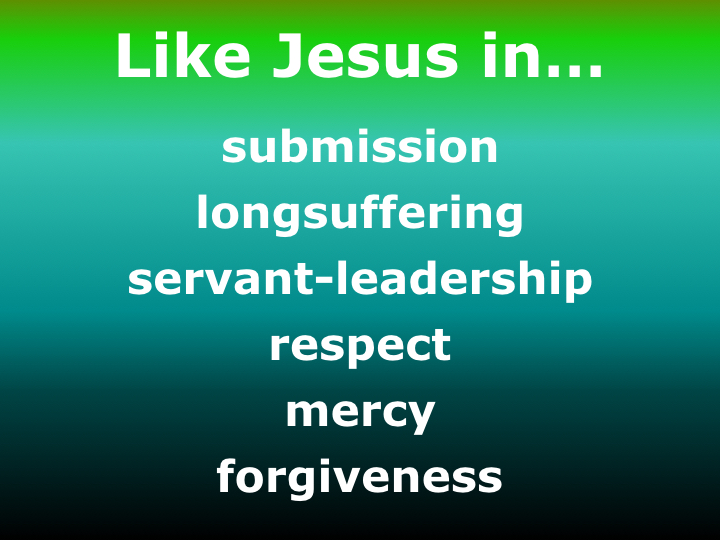
like-jesusTime after time Peter calls Christians to live a counter-cultural lifestyle. The most countercultural example we have ever seen is Jesus Christ.

Peter shows us how Jesus—in the most excruciating situation possible—lived. Heading into the torture of crucifixion

  • He was submissive to His Father’s will
  • He remained focused on the future glory, not just the immediate pain
  • He continued to be a servant-hearted leader
  • He spoke to those around Him respectfully
  • He extended mercy to His tormentors
  • He prayed for (and purchased with His blood) His tormentors’ forgiveness

Peter then tells Christian wives and husbands they are to behave in the same way as Jesus. Wow!

More specifically Peter challenges Christlike wives to be:

  1. Submissive to their husbands—I like how the Amplified Bible says this in verse 1: “subordinate, not as inferior, but out of respect for the responsibilities entrusted to husbands and their accountability to God, and so partnering with them.
  2. Christlike in their behavior.
  3. Distinctive by their purity.
  4. Reverent to God, by honoring the image of God in their husbands.
  5. Beautiful from the inside out.
  6. Consistently doing what is right
  7. Not swayed by fear—“do what is right without being frightened by any fear [that is, being respectful toward your husband but not giving in to intimidation, nor allowing yourself to be led into sin, nor to be harmed]” (v. 6 AMP).

Likewise Peter challenges Christlike husbands to be:

  1. Submissive to their wives—remember the in the same way phrase? That applies to the men too. Submit to one another out of reverence for Christ. … Husbands, love your wives, just as Christ loved the church and gave Himself up for her (Ephesians 5:21, 24).
  2. Considerate of her—the King James Version says, “dwell with them according to knowledge.” That word for knowledge means to study your wife and know what she likes and doesn’t like.
  3. Respectful in the way he treats his wife.
  4. Treating her as a partner and heir in your spiritual heritage.
  5. Understanding the part she plays in your spiritual development—“The same goes for you husbands: Be good husbands to your wives. Honor them, delight in them. As women they lack some of your advantages. But in the new life of God’s grace, you’re equals. Treat your wives, then, as equals so your prayers don’t run a ground” (v. 7 MSG).

Here are two questions I think Christian wives and husbands need to seriously consider: Are you thinking about your role as a husband or wife in biblical terms or cultural terms? If you are thinking in cultural terms, are you willing to try it God’s way?

Our Christian marriages should be “alien” to the way the world operates; they should be counter-cultural. That kind of marriage is what points people to a relationship with Jesus!

If you’ve missed any messages in this series, you may find the complete list by clicking here.

5 Ways To Be A Christlike Employee

Work like JesusHave you ever had a bad boss? One who was harsh, unreasonable, overly demanding, or just a plain meany? Do you think working for a “bad boss” means that you get to lower your standards?

Not if you are a Christian!

Christians are on Earth to represent Jesus. We are aliens and strangers here for a short time, but here to also point people toward Heaven. One place we have tremendous opportunity to do this is on our jobs.

Think about it: most people will work 30-40 hours per week, and probably work 40-50 years of their life. That’s a lot of hours in which to show that living for Jesus makes all the difference in the world. 

Peter addresses our work situation in his first epistle. In essence he says, “You may not be able to control your boss’s actions, but you can control your reactions. A Christian has a different attitude about workplace employers than Earthlings do.”

The two things that set Christian employees apart is their submission and their respect.

Submission means understanding the proper order. This isn’t just showing up on time, wearing the right uniform and checking off the right things on your job description. All of those things can be done with a lousy attitude, with an attitude that’s nothing like Christ’s attitude.

Submission means viewing our employers differently—

  • Obeying them like we would obey Jesus (Ephesians 6:5).
  • Being sincere when we say, “Yes, I’d be happy to do that” (Ephesians 6:5).
  • Working hard even when our employer isn’t watching us (Ephesians 6:6).

With that in mind, here are five ways to be an “alien employee.” That is, someone who honors God on-the-job…

  1. Work for God.
  2. Trust God to be your Provider, not your employer.
  3. Trust God to keep perfect records of your faithful service.
  4. Pray for God’s blessing on your employer.
  5. Pray for your employer to see Jesus in your work ethic.

Here’s a great question to ask yourself: If Jesus were filling out my employee evaluation, what would He say about my work ethic? 

If you’ve missed any messages in this series, you may find the complete list by clicking here.

Misbehaving Government

Misbehaving governmentChristians are to have an “alien” response to earthly governments. Simply stated: the Bible says we should not rail against governing authorities the way Earthlings do. Christians should respond with proper submission (check this out).

But what if those earthly governors are misbehaving? What then?

We can still be in God-honoring submission to them in the way we call out their misbehavior. 

Look at some examples—

  • Daniel asked permission to go against the king’s wishes (Daniel 1:8), proposed an alternative plan (v. 12), but ultimately agreed to submit to the authority’s decision (v. 13).
  • Shadrach, Meshach and Abednego didn’t argue with King Nebuchadnezzar (Daniel 3:16-18), but respectfully took their stance for God (notice the use of the phrase “O king” as a title of respect).
  • Peter and John simply stated, “We must obey God rather than human authority” (Acts 5:29).

This is exactly what Jesus told us to do when He said, “Give to Caesar what is Caesar’s, and to God what is God’s” (Luke 20:25). Jesus said something very similar to Pilate, when that governor said, “Don’t you realize I have the power to set You free?” Jesus said, “You would have no authority over Me if it were not given to you from above” (John 19:10-11).

So how do we respond to misbehaving governors?

[1] With respect to their office.

[2] With reverent fear of God (see 1 Peter 2:17). “Because we reverence God as the Lord of history, we see beyond the fear and intimidation of the moment.” —James W. Thompson

[3] Leaving the results to GodDaniel 3:26-29, 6:16-27; Acts 5:40-42.

[4] With lots of prayer1 Timothy 2:1-4.

Throughout history, Christians have always had the opportunity to confront ungodly governors. HOW they did it is what set them apart from the Earthling response, and what brought glory to God.

Here’s the video of my full message on this topic—

Next Sunday, November 8, is a day of prayer for those facing persecution for their Christian faith around the world. Join us in a time of prayer for them. If you’ve missed any messages in this series, you may find the complete list by clicking here.

Alien Government

Are we submittingPerhaps you can relate to one or more of these quotes about our government:

  • “Government is like a baby: …a big appetite at one end and no sense of responsibility at the other.” —Ronald Reagan
  • “If you ever injected truth into politics you have no politics.” —Will Rogers
  • “The word ‘politics’ is derived from the word ‘poly,’ meaning ‘many,’ and the word ‘ticks,’ meaning ‘blood sucking parasites.’” —Larry Hardiman
  • “Politics have no relation to morals.” —Nicolo Machiavelli

But if you are a Christian, the Bible calls you to not give in to the cynicism that many feel toward our government. As aliens and strangers on Earth, we are called to to interact with government officials in a peculiar way.

In a single word, the Bible calls us to submit. The Greek word that both Peter (1 Peter 2:13) and Paul use (Romans 13:1, 5) has a couple of definitions. On the one hand it carries a military meaning to arrange troops under the command of a leader. On the other hand, it’s also a voluntary attitude of cooperating, assuming responsibility, and carrying a burden for the common good.

No where does submission imply letting leaders abuse us, or remaining silent and uninvolved if their activities are immoral or unbiblical. Instead submission recognizes that government officials have been placed in their positions by God (Daniel 4:25, 32the Most High is sovereign over all the kingdoms of men, and gives them to anyone He wishes), and that they are God’s servants (Romans 13:4, 6) who have to give an accounting to God for their actions.

Our alien response of properly submitting is our way of supporting them in their God-given responsibilities. How do we do this?

  1. Treat them with respect (Romans 13:7; 1 Peter 2:17).
  2. Separate the person [loved by God] from the policy [may or may not line up biblically], then disagree with the policy, not with the person.
  3. Pray for them (1 Timothy 2:1-4).

This way of interacting with them will bring glory to God (1 Timothy 2:3; 1 Peter 2:15).

Here’s a good question to ask ourselves: Are we submitting like servants of the King of kings?

If you’ve missed any messages in this series, you may find the complete list by clicking here.

You may also be interested in my video The Church should be pre-political.