Links & Quotes

“Years ago, I tried to top everybody, but I don’t anymore. I realized it was killing conversation. When you’re always trying for a topper you aren’t really listening.” —Groucho Marx

I don’t know about you, but it gets my attention when a physicist says that “dark matter makes up 25 per cent of the Universe and we have no idea what it is!” I love some of the discoveries that are being made and theories that are being proposed concerning black holes. None of this in any way shakes my belief in a Creator who spokle everything into existence. If you would like to consider the  beginning of the universe from a different perspective, check out Starlight And Time.

A reminder from a class I recently taught: you don’t have to go to a church building to be the Church of Jesus Christ—

“When the Holy Spirit is ignored or rejected, religious people are forced either to do their own creating or to fossilize completely. A few churches accept fossilization as the will of God and settle down to the work of preserving their past—as if it needed preserving. Others seek to appear modern and imitate the current activities of the world with the mistaken idea that they are being creative.” —A.W. Tozer

“Entomologists have discovered powerful antibiotics in their [paper wasps’] venom, and there is also an indication the venom may be used as a possible cancer treatment.” Whoa!

Dr. Kristin Collier is a professor of internal medicine at the University of Michigan and director of the school’s Program on Health, Spirituality and Religion. In a recent keynote address to medical students, she had some wise words: “The risk of this education and the one that I fell into is that you can come out of medical school with a bio-reductionist, mechanistic view of people and ultimately of yourself. You can easily end up seeing your patients as just a bag of blood and bones or human life as just molecules in motion. You are not technicians taking care of complex machines, but human beings taking care of other human beings. Let’s resist a view, of our patients and ourselves, that strips us of our humanity, and takes away from the very goal of why we went into this profession in the first place: to take care of human beings entrusted to our care in their moments of greatest need.”

The power of trusting God for our daily needs—

Dan Reiland shared a great post for leaders: 5 steps on a lifelong path to spiritual authority.

This is a short clip from a full-length video I provided exclusively for my Patreon supporters. Would you prayerfully consider supporting this ministry for just $5/month? All new supporters through the end of September will get access to both my content and access to all of the content I have already published.
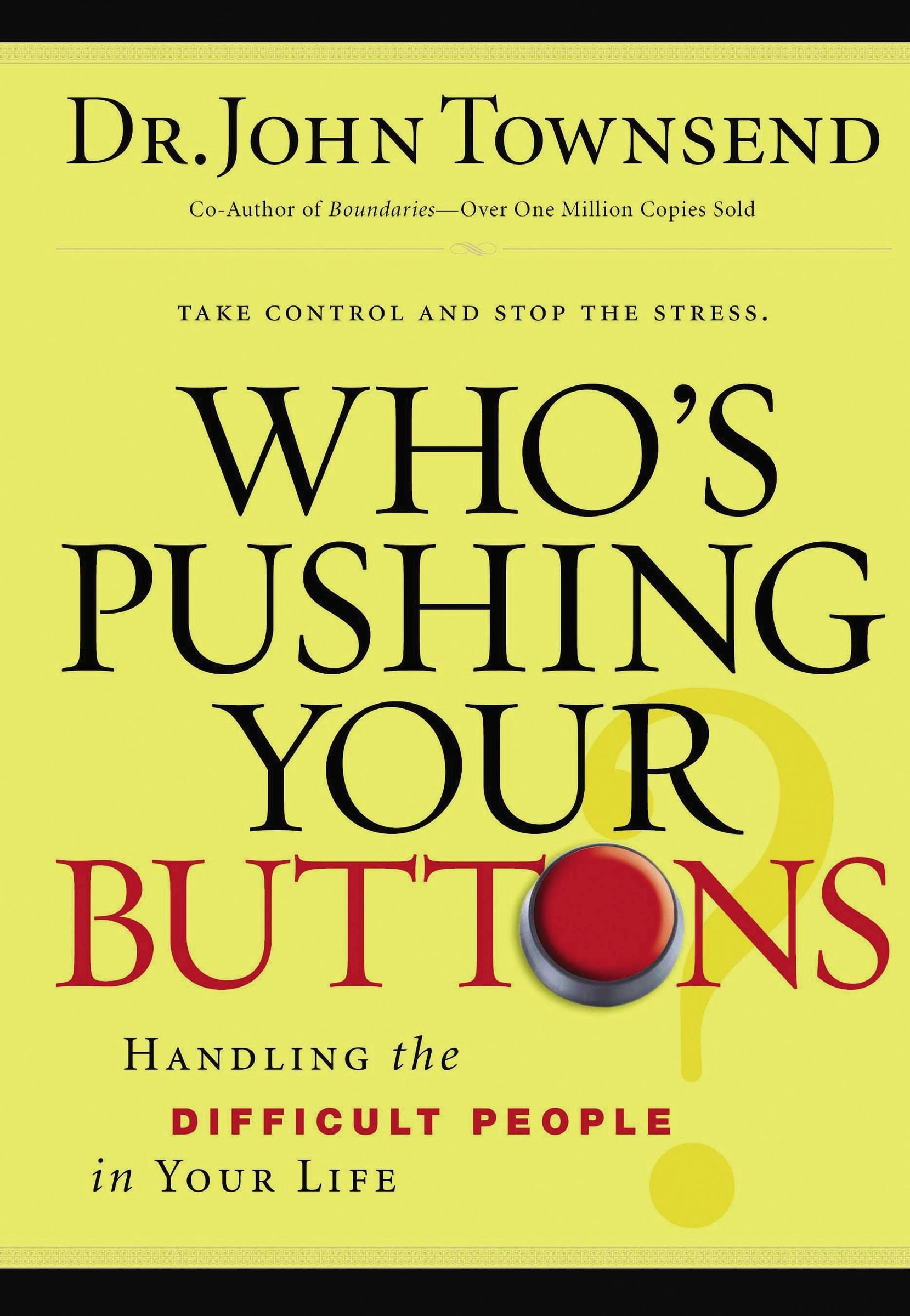
Who’s Pushing Your Buttons? (book review)

Listen to the podcast of this post by clicking on the player below, and you can also subscribe on Apple, Spotify, or Audible. 

Ever since the Boundaries book by Drs. Henry Cloud and John Townsend came to my attention, I have always tried to get my hands on anything these psychologists write. The most recent read for me is John Townsend’s Who’s Pushing Your Buttons? 

We all have experienced button pushers in our life—those folks who seem to always know how to get us riled up. Maybe you even have a button pusher or two in your life right now. Dr. Townsend’s book is not to help us avoid these people, nor even to navigate around them, but to get to a place where our relationship with these folks can become productive and healthy. 

The book begins with an inside look at what makes button pushers button pushers. In order words, there is more below the surface than we can see, and we have to begin to understand more if we are ever going to move forward. Dr. Townsend also holds up a mirror to his readers to help us realize if our button pushers are pushing our buttons because we pushed theirs first. 

Next, Dr. Townsend helps us change our paradigm toward our button pushers. It’s likely that you have already tried to deal with this relationship. The results may have been mixed or they may have been wholly unsuccessful. Dr. Townsend wants to help us move beyond the past to get a clearer vision of what could be. 

The bulk of this book is comprised of seven resources to which we all have access, and which can help us be successful in our button-pushing relationships. This is not wishful thinking, but it is the firm belief of Dr. Townsend that God can help you employ these resources to truly turn a difficult relationship into a productive relationship. 

This book is filled with enough practical insights, actual stories from Dr. Townsend’s counseling practice, and biblical principles to fortify your prayer life and personal involvement that can lead to newfound success in these difficult relationships. 

For all of us who live or work with people who push our buttons, Who’s Pushing Your Buttons? is a wonderful resource. 

►► Would you please prayerfully consider supporting this ministry? My Patreon supporters get behind-the-scenes access to exclusive materials. ◀︎◀︎

Links & Quotes

John Stonestreet wrote, “The moment Roe v. Wade was overturned last month, desperate activists began to dust off the oldest and oddest arguments for abortion. These “gotcha” scenarios are supposed to prove that pro-lifers don’t really value human life or consider preborn babies from the earliest stages of development to be human. Instead, these pretend scenarios demonstrate that pro-lifers are simply hypocrites.” Check out the rest of his post.  

“When the facts are not clear [in a relationship issue] it is better to consider someone innocent until proven guilty. That is the law of mercy, which we all want applied to us as well.” —Dr. John Townsend, Who’s Pushing Your Buttons

Pornography is contributing to the over-sexualization of young people, which is reaping some painful consequences…

I love when archeology confirms yet another facet of the historicity of the Bible! Check out this archeological biography of King Menahem.

Just a reminder that YOU were made on purpose …

A good friend of mine, Pastor Kristi Rhodes, is in a battle with cancer and I’m fighting alongside her! If you want to join Team Kristi, join the team by clicking here.

Giving Preference To Others

Listen to the podcast of this post by clicking on the player below, and you can also subscribe on Apple, Spotify, or Audible.

“Be kindly affectionate to one another with brotherly love, in honor giving preference to one another” (Romans 12:10). 

What does it mean to give preference to a friend or loved one? Here are a few suggestions to get the ball rolling. 

Giving preference means I am…

  1. …speaking their “language.” I am a classic Doer, which means my style is, “Ready, Fire! aim.” I need to give grace to those who move a bit slower than me.
  1. …moving at their “speed.” My temperament is highly choleric, so I get fired up quickly and attack situations head-on. I need to give grace to those temperaments that are less emotional and want to handle things more strategically. 
  1. …sensitive to their “fears.” It’s insensitive for me to say, “It’s no big deal” about something that troubles them. Empathy is important so I can see and feel things like they see and feel them. 
  1. …helping them battle their “demons.” Perhaps viewing pornography isn’t a temptation for me, but it may be for someone else. So I need to seek out resources and accountability to help them fight this battle like I was fighting my own battle. 
  1. …avoiding their “stumbling blocks.” Perhaps I can watch certain genres of movies without compromising my Christian testimony, but it may cause my brother or sister a lot of grief. If I am going to prefer them in love, I will avoid talking about those movies in their presence, and I certainly won’t try to get them to “lighten up” to see things my way. 

Agape love is never selfish—it doesn’t want “my way” but it wants others to be edified. So, ultimately, what it means to give preference to another is to only promote those things that will build them up. Remember: saints is always plural in the New Testament, so we must build each other up to bring out the saintliness in all of us. 

►► Would you please prayerfully consider supporting this ministry? My Patreon supporters get behind-the-scenes access to exclusive materials. ◀︎◀︎

Links & Quotes

How would you respond to someone who asked, “Why would God punish Jesus for what I did?” Here’s a thoughtful reply from cold-case detective J. Warner Wallace.

“It were a good strife amongst Christians, one to labor to give no offense, and the other to labor to take none. The best men are severe to themselves, tender over others.” —Richard Sibbes

What can archeology tell us about the place where Pilate sentenced Jesus to death by crucifixion?

Doug Clay shares some thoughts on what the resurrection of Jesus means for us today.

Wow, check out this photo from the Hubble Space Telescope. It is the most distant star yet photographed.

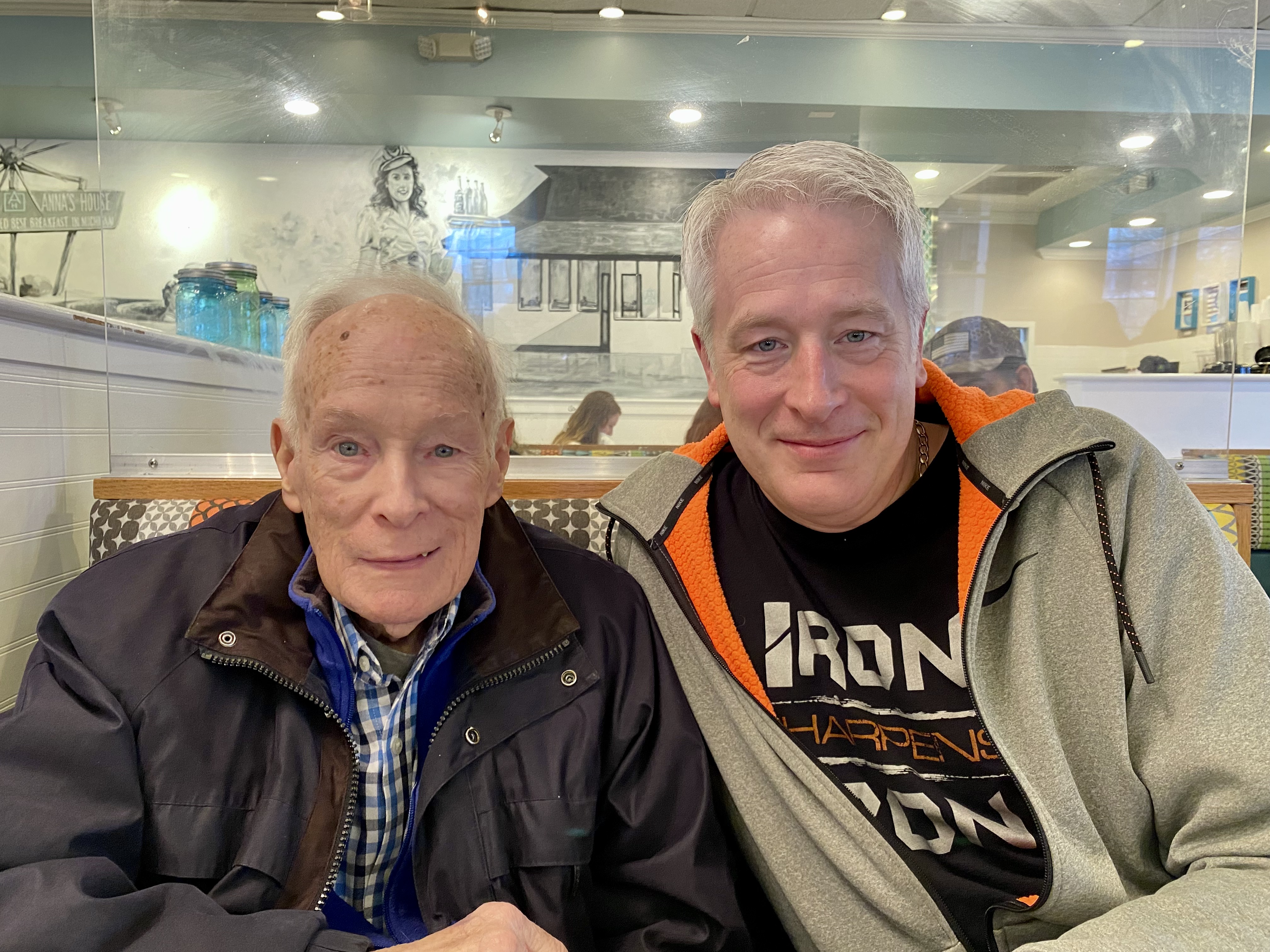
Celebrating my Dad’s 90th birthday!

Fight The New Drug shares the benefits of quitting porn from people who actually quit using pornography.

The Danger In Multitasking

Listen to the podcast of this post by clicking on the player below, and you can also subscribe on Apple, Spotify, or Audible. 

Peter Drucker noted, “It wasn’t until the twentieth-century that we pluralized the word priority. For most of its history, the word has been singular.” 

If we have too many priorities, we can frequently find them in conflict with each other. This forces us to make an extremely difficult decision: Which priority has a higher priority?! 

My friend Greg Heeres and I recently addressed this in an episode of our leadership podcast called The Craig And Greg Show.  

Ultimately, whatever business or industry or profession we are in, we are in the people business. All of our efforts fail without good investment in people. So our overriding priority must be on the people God has placed around us.

(I wrote post earlier about this called “Am I interruptible?” which is worth your time to check out.)

Marcus Buckingham noted, 

“The human brain is simply not designed to multitask. You can get by doing multiple things at once, but you can’t do them well. Your brain is physically unable to process more than one set of instructions at a time, so while you are juggling all of those actions at once, your brain is scrambling to keep up. Through a variety of experiments measuring brain activity, scientists have discovered that the constant switching back and forth from one activity to another energizes regions of the brain that specialize in visual processing and physical coordination, while simultaneously disrupting the brain regions related to memory and learning. According to the research, ‘We are using our mental energy to concentrate on concentrating at the expense of whatever it is that we’re supposed to be concentrating on.’ Got that? 

“More simply: when we multitask we’re dumber. How much dumber? A recent study for Hewlett Packard exploring the impact of multitasking on performance revealed that the average worker’s functioning IQ drops ten points when multitasking…. (The analogy the researchers used is that a ten-point drop in IQ is equivalent to missing one night of sleep.)” —Marcus Buckingham  

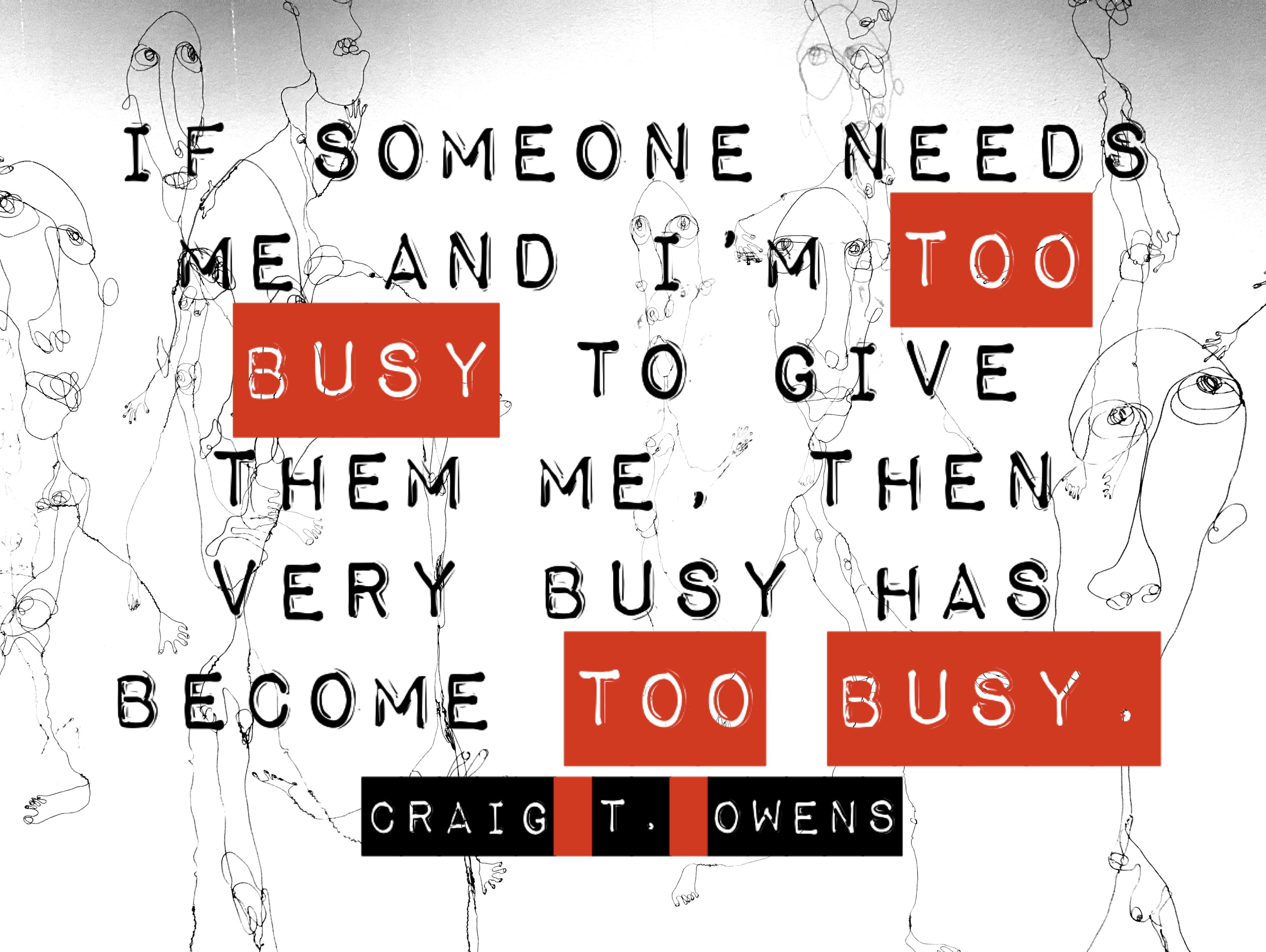
The biggest victim of attempting to multitask is your relationships. Those closest to you suffer the most. If someone needs me and I’m too busy to give them me, then very busy has become too busy and it’s time for me to evaluate who—not what—is my highest priority.

►► Would you please prayerfully consider supporting this ministry? My Patreon supporters get behind-the-scenes access to exclusive materials. ◀︎◀︎

The Power Of Both-And Thinking

Friends, this is something that helped me with the apparent controversies not only in the Bible but in conversations with those who have differing opinions from me. I hope this helps you too!

You can help me help others by becoming one of my Patreon supporters. As my thanks for that support, you will receive exclusive content that only my supporters get access to. Please check out my Patreon page and support this ministry at just $5/month.

A Leader’s Health

Listen to the podcast of this post by clicking on the player below, and you can also subscribe on Apple, Spotify, or Audible. 

I had a great time on the Ailbe Podcast with Rusty Rabon.

Rusty noted how I had used the description of the early life of Jesus from Luke’s Gospel—And Jesus grew in wisdom and stature, and in favor with God and man (Luke 2:52)—and then how I created a pyramid of health for shepherd leaders to follow. 

I think that Dr. Luke, under the inspiration of the Holy Spirit, listed those four items in a very specific order. It begins with the growth of our mind, which helps us make healthy choices for our physical body, which allows us to concentrate on our spiritual growth. But ultimately the real proof of our God-honoring healthiness is seem in how we interact and react with other people. 

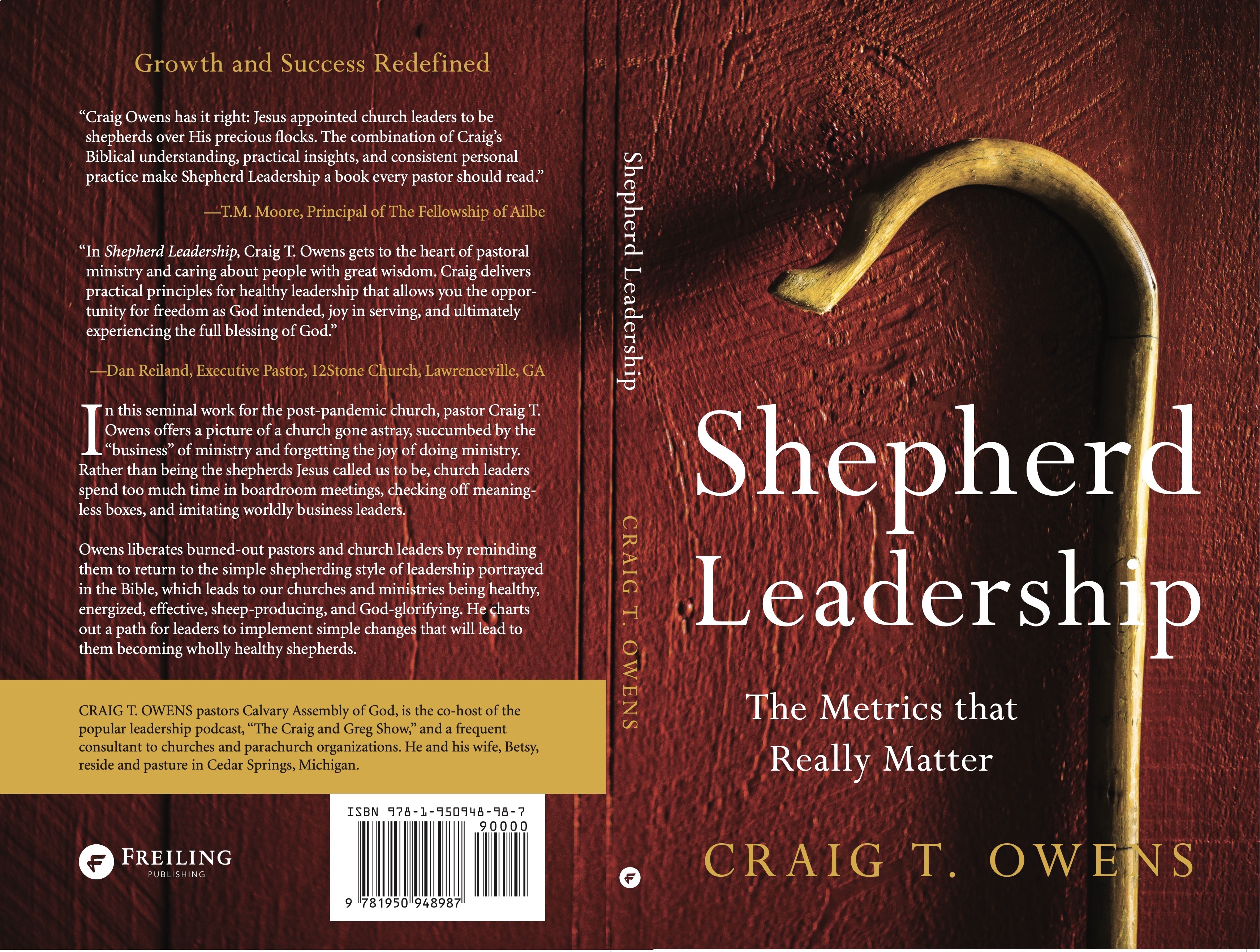
In my book Shepherd Leadership: The Metrics That Really Matter I take five chapters to unpack the various aspects of a leader’s health, and I offer some practical first steps for anyone to address areas where their health is not at its best. 

I’ll be sharing more clips from this interview soon, so please stay tuned. Shepherd Leadership: The Metrics That Really Matter is now available in print or ebook, and in audiobook through either Audible or Apple. 

►► Would you please prayerfully consider supporting this ministry? ◀︎◀︎

Links & Quotes

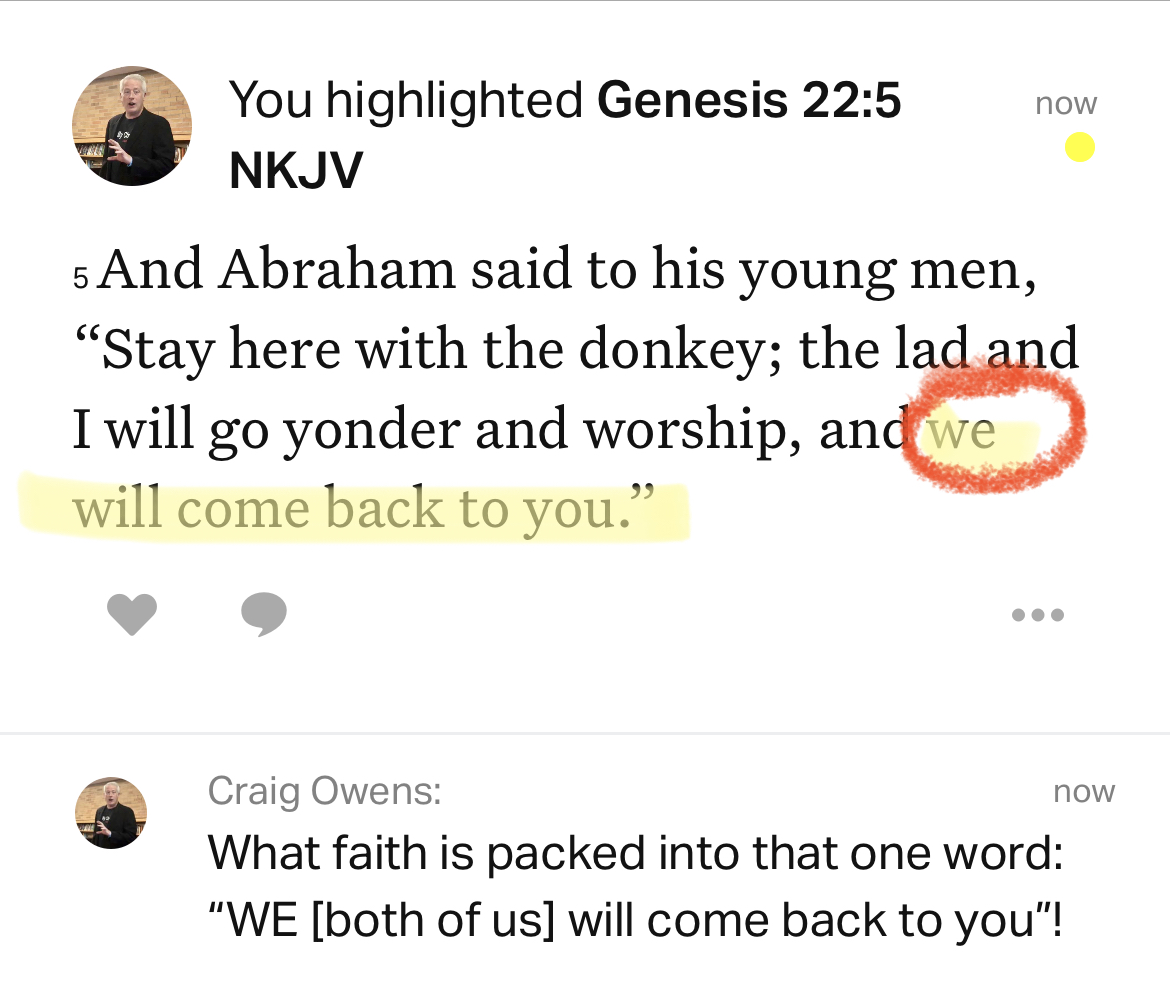
Abraham is commanded by God to sacrifice his son Isaac. Look at Abraham’s faith in just one word: “WE will come back to you.”

Follow me on YouVersion so we can share more thoughts on God’s Word with each other.

Wil Robinson shares a fable from Leo Tolstoy with the three most important questions everyone should ask themselves. The three questions are: How can I learn to do the right thing at the right time? Who are the people I most need, and to whom should I, therefore, pay more attention than to the rest? And, what affairs are the most important and need my first attention?

T.M. Moore reminds us how the promises of God can build courage in us. Check out all of the posts in his series called Brave Heart.

“Faithfulness is displayed in both word and deed—seen best by combining the Great Commission’s instruction to ‘make disciples’ with the second greatest commandment to ‘love thy neighbor.’ The beauty of the Gospel is found in both proclamation and demonstration. Neither comes first; neither comes second. Like the perfect marriage, it’s the duty of the Christians to take on each, giving 100 percent effort to both.” —Gabe Lyons, The Next Christians 

Fight The New Drug shared the results of a study of over 11,000 releationships, the five things the happiest couples have in common, and how pornography can undermine those relationships.

“Oh, that the eyes of sinners may be speedily opened—that they may see the difference of things, the beauty which is in holiness, and the astonishing madness that is in sin!” —Thomas Watson

Science is an important component in seeking truth. The Institute for Creation Research has an excellent perspective on the role of science for a Christian: “While the pursuit of science is certainly noble, it should be situated in its proper context and tackle matters within its empirically defined framework.”

John Piper observes, “The number-one reason why people in such seemingly hopeless situations purchase scratch-offs is because things already look so hopeless for improvement that the so-called ‘stupidity’ of wasting this dollar won’t really make anything worse.” This post elaborates on how the lottery preys on the poor.

Wholly Healthy Leaders

Have you ever heard someone describe Jesus as “healthy”? 

Dr. Luke noticed how completely healthy Jesus was—mentally, physically, spiritually, and relationally—and then told us how we, too, can be wholly healthy. 

Leaders, you cannot give to others what you do not possess yourself. If you want the people around you to be healthy, you must first get healthy yourself. 

I have five chapters in Shepherd Leadership: The Metrics That Really Matter where I talk about a leader’s health.