Have you ever heard someone describe Jesus as “healthy”?
Dr. Luke noticed how completely healthy Jesus was—mentally, physically, spiritually, and relationally—and then told us how we, too, can be wholly healthy.
Leaders, you cannot give to others what you do not possess yourself. If you want the people around you to be healthy, you must first get healthy yourself.
Listen to the podcast of this post by clicking on the player below, and you can also subscribe on Apple, Spotify, or Audible.
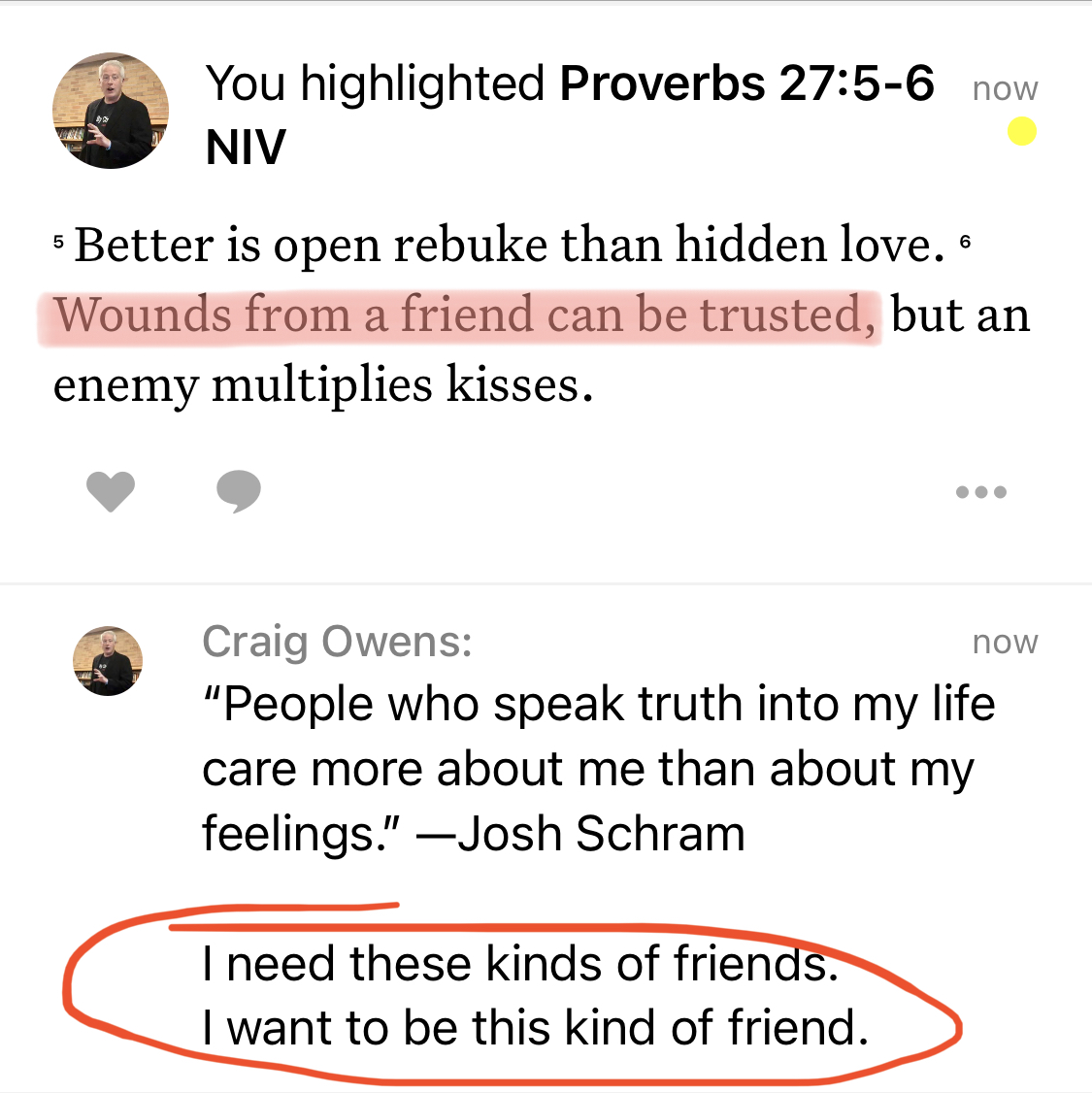
Wounds from a sincere friend are better than many kisses from an enemy (Proverbs 27:6 NLT).
Proverbs 27 may have more wisdom about our friends than any other chapter in this book. But sprinkled throughout the entire book of Proverbs is outstanding wisdom about our closest relationships. Allow me to share just a few observations with you.
Friends love me through my worst moments (17:17) because they have committed to stick closer than a brother to me (18:24).
I must be careful not to make friends with a hot-tempered person (22:24), and to be cautious of people who want to be friends with me only for what I can give them (19:4).
My true friends will wound me in love to help me become the best that God intended me to be (27:5-6, 9, 17), so I must never forsake these friends (27:10).
False friends will gossip to me and about me, but my true friends will guard my secrets and guard my reputation (16:28; 17:9).
In order to have true friends, I first have to be a true friend.
David was the gold standard for every king of Israel who followed him. Numerous times throughout the history of Israel, we will see a note that a certain king either followed God like David, or turned from God unlike David. Yet there exists a wart on David’s portrait: an adulterous affair with the wife of a man in his inner circle, and then subsequent lies and a murder to cover up the affair. “The thing David had done displeased the Lord” (see 2 Samuel 11).
But I’d like to turn your attention to when this affair occurred: “In the spring, at the time when kings go off to war…David remained in Jerusalem” (2 Samuel 11:1). He was without his usual comrades. The men who knew David best, who could probably sense if something was amiss, weren’t around to warn him. When David tried to find out the identity of the bathing beauty on the roof next door to his palace, an unnamed attendant tried to remind him, “Isn’t that Bathsheba, the wife of Uriah?” but David dismissed him.
Elijah was arguably the most forceful and fearless prophet in Israel’s history. Not only did he stand up to the evil kings of Israel, but he spoke out against the kings of surrounding nations, too. In answer to Elijah’s prayer, God brought a drought on the land, and again in answer to Elijah’s prayer, God sent rain. Elijah challenged the 450 prophets of the god Baal and the 400 prophets of the goddess Asherah to a duel to the death, which ended up in a decisive victory for Yahweh. Yet, shortly after this massive victory, Elijah was depressed to the point that he wanted to die.
What led to Elijah’s depression? Something very similar to David’s slide into adultery: He was alone. Elijah ran away from Queen Jezebel’s death threat, left his servant behind, and proceeded all by himself into the desert. It was when he was without a comrade that he prayed to God, “I’ve had enough. Take my life” (see 2 Kings 17–19).
And what about Peter? He boldly claimed his loyalty to Jesus, even to the point of wielding a sword at the guards who came to arrest his Master. But when Peter was alone, after the other disciples fled, he denied three times that he knew Jesus (Matthew 26:33, 51, 69–75).
God designed us to be in relationship with others. His statement to Adam in some of the earliest words of the Bible—“It is not good for you to be alone”—are words for us still today. —from the chapter “Going Farther”
We need true, God-fearing friends close to us. Ask God to bring those friends around you, and ask the Holy Spirit to make you into that kind of friend for those He does bring around you.
Greg confesses a leadership mistake he had to correct in himself [9:20]
character is vital in emerging leaders [10:59]
compassion is valuable in emerging leaders [11:44]
consistency helps emerging leaders develop into solid leaders, and it helps the team leader to excel … great insight from Patrick Lencioni about being present [12:15]
teams must embrace diversity and find commonality [13:08]
I elaborate on Greg’s point about a leader’s presence and consistency [14:10]
the team leader has to take the initiative in identifying and raising up new leaders [15:47]
leaders need to continue to replenish themselves [17:22]
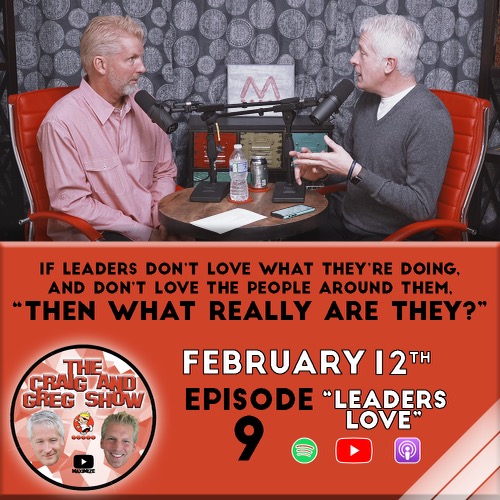
Check out this episode and subscribe on YouTube so you can watch all of the upcoming episodes. You can also listen to our podcast on Spotify and Apple.
Greg wonders why leaders get trapped using metrics of success that don’t really matter [4:10]
I talk about why the subtle shift from “servant leadership” to “shepherd leadership” is important [4:50]
Greg and I discuss the tension between a leader’s confidence and a leader’s humility [6:25]
I explain how my wife helped me see my leadership in a better light [8:00]
my favorite definition of humility comes from C.S. Lewis [9:45]
Greg asks how leaders can develop the right kinds of relationships that will help them continue to grow [10:35]
I share the dangers when leaders try to fly solo [11:40]
Greg talks about the vital need for leaders to refresh themselves [14:00]
who will benefit from reading Shepherd Leadership? [14:50]
I share a humorous story of a way I advised a church to grow their numbers overnight [16:54]
Check out this episode and subscribe on YouTube so you can watch all of the upcoming episodes. You can also listen to our podcast on Spotify and Apple.
Check out this episode and subscribe on YouTube so you can watch all of the upcoming episodes. You can also listen to our podcast on Spotify and Apple.
Listen to this post as a podcast by clicking here:
If it is true that I have gone astray, my error remains my concern alone (Job 19:4).
Why do we find it necessary to stick our noses in where they are not wanted? Why do we feel like the other person needs to hear our opinion?
The law dictionary defines “standing” as the right to file a lawsuit or file a petition under the circumstances. In legal terms, Job’s three friends had no standing to bring charges against him. Job himself even said he didn’t want to hear their opinions. Instead, all Job asked for was, “Have pity on me, my friends, have pity.” He goes on to ask, “Why do you pursue me as God does? Will you never get enough of my flesh?”
And then Job gives this warning: “If you say, ‘How we will hound him, since the root of trouble lies in him,’ you should fear the sword yourselves.” Despite this warning, Zophar still begins his argument by stating, “I hear a rebuke that dishonors me so I have to speak up.”
There are indeed times when our friends may be going astray and the loving thing we can do for them is speak a word of truth, but that is something entirely different than feeling compelled to share an opinion or sticking our noses in where they don’t belong. A good question to ask ourselves before speaking: Do I have standing here?
Far better for us to apply the Golden Rule this way: Treat others in their condition the way I would want to be treated in the same condition. And if I do feel as though I have standing, and need to speak a loving word, I need to examine myself first.
Job tells his friends, “You are miserable comforters, all of you!” (16:2). One of the best things they did for him was to simply sit silently in mourning alongside him. It was when they felt compelled to argue that they not only disappointed Job, but they dishonored God too.
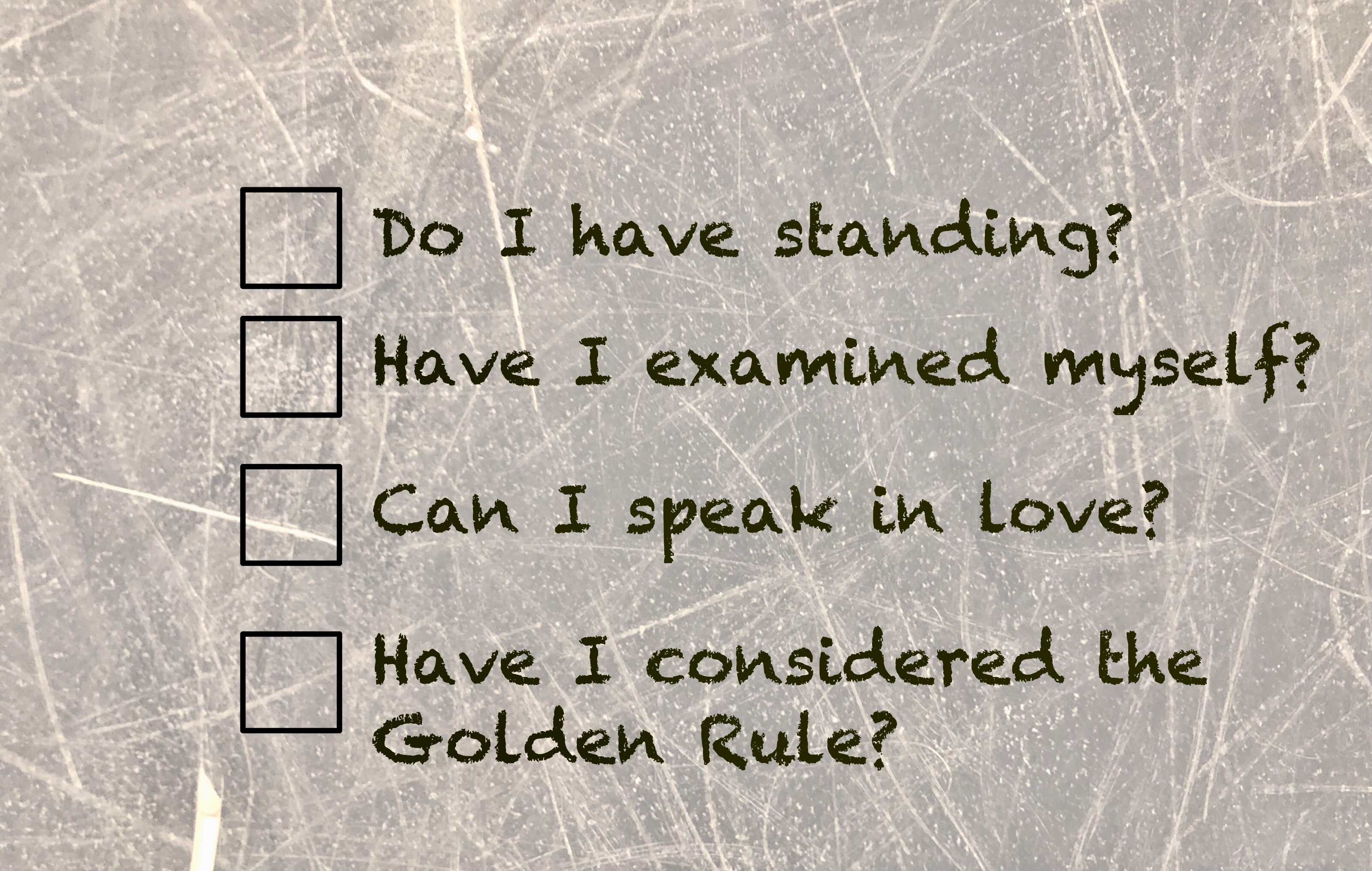
My checklist before speaking:
Do I have standing?
Have I examined myself?
Can I speak truth in love (and not just air my opinion)?
Have I considered the Golden Rule?
If I can answer “Yes” to all four questions, then speak; otherwise, it’s far more loving to remain silent.
Here’s the seed thought for this episode of Think On This…
Do not answer a fool according to his folly, or you yourself will be just like him. Answer a fool according to his folly, or he will be wise in his own eyes. (Proverbs 26:4-5)
Think on this:
Do I have a solid relationship with this person?
Do I need to respond for their benefit?
Can I ask any clarifying questions before I speak?