10 Quotes From “Alive To Wonder”

Alive To WonderIn this collection of essays John Piper shares how C.S. Lewis impacted his thinking about God. You can read my book review (and get the link to download the free ebook version of this book) by clicking here.

I could have highlighted and underlined nearly the entire book, but here are some of my favorite quotes—

“I shall not demean my own uniqueness by envy of others. I shall stop boring into myself to discover what psychological or social categories I might belong to. Mostly I shall simply forget about myself and do my work.” —Clyde Kilby

“Although Lewis owned a huge library, he possessed few of his own works. His phenomenal memory recorded almost everything he had read except his own writings—an appealing fault. Often when I quoted lines from his own poems he would ask who the author was. He was a very great scholar, but no expert in the field of C.S. Lewis.” —Walter Hooper

“The work of a charwoman and the work of a poet become spiritual in the same way and on the same condition.” —C.S. Lewis 

“God is not worshipped where He is not treasured and enjoyed. Praise is not an alternative to joy, but the expression of joy. Not to enjoy God is to dishonor Him. To say to Him that something else satisfies you more is the opposite of worship. It is sacrilege.” —John Piper

“How sweet all at once it was for me to be rid of those fruitless joys which I had once feared to lose…! You drove them from me, You who are true, the sovereign joy. You drove them from me and took their place, You who are sweeter than all pleasure, though not to flesh and blood, You who outshine all light, yet are hidden deeper than any secret in our hearts, You who surpass all honor, though not in the eyes of men who see all honor in themselves. … O Lord my God, my Light, my Wealth, and my Salvation.” —Augustine

“Would it not be an encouragement to a subject, to hear his prince say to him, ‘You will honor and please me very much, if you will go to yonder mine of gold, and dig as much gold for yourself as you can carry away’? So, for God to say, ‘Go to the ordinance, get as much grace as you can, dig out as much salvation as you can; and the more happiness you have, the more I shall count Myself glorified.’” —Thomas Watson

“Consider this question: In view of God’s infinite power and wisdom and beauty, what would His love for a human being involve? Or to put it another way: What could God give us to enjoy that would prove Him the most loving? There is only one possible answer: Himself.” —John Piper 

“We praise what we enjoy because the delight is incomplete until it is expressed in praise.” —John Piper

“You cannot hope and also think about hoping at the same moment; for in hope we look to hope’s object and we interrupt this by (so to speak) turning round to look at the hope itself. … The surest means of disarming an anger or a lust is to turn your attention from the girl or the insult and start examining the passion itself.” —C.S. Lewis 

“God is glorified in His people by the way we experience Him, not merely by the way we think about Him. Indeed the devil thinks more true thoughts about God in one day than a saint does in a lifetime, and God is not honored by it. The problem with the devil is not his theology, but his desires. Our chief end is to glorify God, the great Object. We do so most fully when we treasure Him, desire Him, and delight in Him so supremely that we let goods and kindred go and display His love to the poor and the lost.” —John Piper

11 Quotes From “Alone”

AloneAlone should be read and discussed by parents and teens to help find the right balance of technology usage in our lives. You can read my book review by clicking here. Below are some of the quotes that stood out to me from Alone.

“Maybe God created Adam to be needy. … Maybe Adam’s relationship with God was not built in fullness but contained a hole God created inside of humanity so we might recognize the importance of each other. It was (and is) brilliant.”

“Friendship has to be accompanied by experience. … The illusion of friendship is making everyone in the world think we’re perfect. … Instead of time spent experiencing life together, we’ve turned our world into a self-shaped, self-regulated, self-indulgent, me-centered life.”

“We are now a culture that wants to deal with relationships on our time. … Relationships are work. They’re inconvenient. They’re exciting and spontaneous. You can’t apply some formula for relationships and expect to walk out of the room with a load of friends.” 

“When you realize what role you have to play here on the planet, the most beautiful sense of belonging begins to awaken inside your soul. The world begins making sense. No matter what you’re doing, if God has gifted you in it, you’re going to have a high level of functioning.”

“Don’t get me wrong: Hard work and dedication are important factors as we help people understand significance, but in the end, our short lives are shaped by the relationships we make along our own journey. And if those relationships are filled with people who believe in us, the lonely factor fades away and we are recognized for the abilities we do have rather than the ones we don’t. Paul said it clearly: ‘I remind you to fan into flame the gift of God, which is in you through the laying on of my hands’ (2 Timothy 1:6). What can you do to fan someone else’s flame? Who in your life fans yours?”

“Maybe it’s because we’ve replaced the idea of risk and adventure with the idea of wealth and comfort. Loneliness begins to creep into a man’s life when adventure and risk are taken out of the equation, when men have to replace their God-given desires with something ‘more responsible.’ … Men need to sense that what they are doing in the world is courageous. They need to feel the sense of responsibility and freedom. They need to have opportunities to express their manhood.”

“There is no perfect girlfriend. There is no perfect employee. There is no perfect friend. There is no perfect body type or student or athlete. There’s no such thing as a perfect woman who finds the perfect role for her perfect situation. Those who continue to assign a high value to that mythical person who has it all together are driving themselves mad with the idea that they can achieve her. It’s from this feeling of failure, of never measuring up, that the loneliness sets in.” 

“The first step in understanding true joy is defining what joy actually is. It’s a feeling. It’s an emotion. It’s a state of mind. It’s the ability to know that the desires of your heart are being fulfilled. It’s not happiness. It’s not the constant state of euphoria. It’s not everything lining up perfectly. … In modern times, joy happens when we interact with each other. When we see a friend’s smile giving us validation that he or she is interested in being with us: joy. When we hear the words ‘How are you?’ in an honest tone, with honest body language behind it: joy. When we have an opportunity to rest in the fact that someone else wants us to be the person God created us to be: ultimate joy.”

“The quickest way to initiate friendship is to give people freedom to be themselves.”

“‘Oh, you did sooo well in your game,’ she said, walking past, rolling her eyes. Versus … ‘I can’t believe you! You’re the most awesome basketball player I’ve ever seen,’ she said, putting her arm around her friend in celebration. See the difference? Authentic versus agenda-driven. Caring for someone versus using someone. When a tribe is built … When experience glues relationships together … When you can rest in the joy that certain relationship gives you … Loneliness starts to fade away. But you can’t do that on Facebook.”

“If we can take the value of the social networking scene and combine it with real-time relationships, we might see this trend of loneliness take a positive direction. What would life look like if we could really experience life together? Community is important. To be able to contribute to the life of the community is even more fulfilling.” 

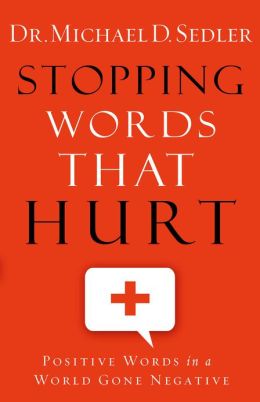
15 Quotes From “Stopping Words That Hurt”

Stopping Words That HurtThere was so much for me to process in Stopping Words That Hurt by Dr. Michael Sedler (you can read my full book review by clicking here). If you’ve ever been hurt by someone else’s words about you, there is help for you in this book. If you’ve ever hurt someone else with the words you’ve spoken, there is help for you in this book.

Bottom line: this book can help cut-off hurtful words and evil reports before they gain momentum. Please read this book!

Here are just a few quotes that stood out to me—

“We are so brainwashed into believing that it is permissible to violate one another verbally that it takes a concentrated effort to begin to have a new thought pattern.”

“It is imperative that you understand this truth: Just listening to an evil report can do tremendous damage to your perspective, viewpoint and overall spirit. … Joining in a negatively-driven conversation, no matter how small the participation, may destroy the testimony of a life. Listening to grumbling and ungodly attitudes eventually contaminates the spirit. The more we allow discontent to be taken in by our spirits, the greater the tendency to compromise our own speech patterns. We are being called to a high standard of living where the rewards for our faithfulness are eternal.”

“It is usual for most of us to listen without questioning. We oftentimes want to support a friend, supervisor or person of influence. In fact, a messenger may single us out because she knows we will not disagree with or question her. Are we being used because of our own gullibility and blindness to negative speech patterns?”

“We must have our antennas up and be prepared when we hear negative comments and subtle innuendos about others.”

“If we are unable to recognize the potential destruction caused by negative words, we will eventually cause injury to those around us. And, sadly, we often deceive ourselves into believing there was justification for our actions.”

“It is rude to knowingly be a part of gossip. It is not good manners to listen to verbal assaults and blatant character assassinations of people who are not present to defend themselves. It is foolishness and ignorance. We must open our eyes and discern when we are listening to evil reports in order to be accepted by the crowd.”

“A bold positive response can put out the fire.”

“Learn to avoid the trap of falling into emotional identification by getting information for yourself. Compare your feelings and thoughts with the Bible’s guidelines. Look for corroboration or contradictions as you assess the situation. And, finally, give a little more weight to the perspective of those who have been faithful, trustworthy and proven people of integrity than the words of a stranger or ‘expert’ who has no track record of honesty.”

“Fear can draw us toward God or pull us away. It can create a desire in us to cling to the truth or alter our perception of the truth. While satan wants to use fear to rob us of our faith in God, we need to continue to speak words of truth and confidence regarding our place with Christ.”

“Impurity occurs when we hear evil reports with our natural ears and minds without seeking spiritual wisdom and understanding. If we accept the words of others as truth, we will become filled with a mixture of philosophies, attitudes and beliefs.”

“A person who has responsibility over others also has great influence. If he or she shares a negative report with the general population, those with unguarded spirits will become contaminated.”

“I speak a strong word of caution to husbands and wives, significant others and close family members. We often take on the offense when a loved one is wronged or slighted. And though they may work through the issue, we still hold on to the anger and bitterness.”

“It is difficult to ‘have ears that hear’ at this point in the process. First of all, we do not see ourselves as defiled or polluted. We think we are right and can handle everything ourselves. We are suspicious about counsel. We question the motives of those giving it. We actually fight the process of cleansing using words such as manipulating, self-centered and controlling to describe the interventions of others. We accuse even our closest friends and supporters of being insensitive and uncaring. Whereas once we received challenges and guidance from others, now we meet each comment or suggestion with disdain and animosity. It is during this phase that people have a tendency to reject the process of cleansing, choosing instead to walk away from purity and to blame and curse others for their lack of support and love.”

“In order to heal with words, we must be willing to be persistent with them. Jesus frequently verbalized His love for His disciples. Once is not enough! Encouragement, praise and positive words continue to feed the soul in the same way water moistures the soil. Soil will eventually dry out and need another dose of fresh water.”

“Great people of God find a way to speak hope into others. They give a sense of purpose, of calling, of future, of destiny to those around them.”

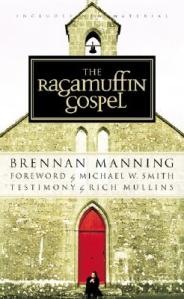
22 Quotes From “The Ragamuffin Gospel”

Ragamuffin GospelThe Ragamuffin Gospel by Brennan Manning really resonated with me. You can read my full book review by clicking here, but below are some of the quotes I especially appreciated.

“The institutional church has become a wounder of the healer rather than a healer of the wounded.” 

“Personal responsibility has replaced personal response. We talk about acquiring virtue as if it were a skill that can be attained, like good handwriting or a well-grooved golf swing. In the penitential seasons we focus on overcoming our weaknesses, getting rid of our hang-ups, and reaching Christian maturity. We sweat through various spiritual exercises as if they were designed to produce a Christian Charles Atlas. Though lip service is paid to the gospel of grace, many Christians live as if only personal disciplines and self-denial will mold the perfect me. The emphasis is on what I do rather on what God is doing. In this curious process God is a benign old spectator in the bleachers who cheers when I show up for morning quiet time.”

“God has a single relentless stance toward us: He loves us. He is the only God man has ever heard of who loves sinners. False gods—the gods of human manufacturing—despise sinners, but the Father of Jesus loves all, no matter what they do.” 

“Jesus comes not for the super-spiritual but for the wobbly and the weak-kneed who know they don’t have it all together, and who are not too proud to accept the handout of amazing grace.”

“The Word we study has to be the Word we pray.”

“We must never allow the authority of books, institutions, or leaders to replace the authority of knowing Jesus Christ personally and directly. When the religious views of others interpose between us and the primary experience of Jesus as the Christ, we become unconvicted and unpersuasive travel agents handing out brochures to places we have never visited.”

“Whatever past achievements might bring us honor, whatever past disgraces might make us blush, all have been crucified with Christ and exist no more except in the deep recess of eternity.” 

“It is unimaginable to picture a wooden-faced, stoic, joyless, and judgmental Jesus as He reclined with ragamuffins.”

“We miss Jesus’ point entirely when we use His words as weapons against others. They are to be taken personally by each of us.” 

“The saved sinner is prostrate in adoration, lost in wonder and praise. He knows repentance is not what we do in order to earn forgiveness; it is what we do because we have been forgiven. It serves as an expression of gratitude rather than an effort to earn forgiveness. Thus the sequence of forgiveness and then repentance, rather than repentance and then forgiveness, is crucial for understanding the gospel of grace.”

“Maybe this is the heart of our hang-up, the root of our dilemma. We fluctuate between castigating ourselves and congratulating ourselves because we are deluded into thinking we save ourselves. We develop a false sense of security from our good works and scrupulous observance of the law. Our halo gets too tight and a carefully disguised attitude of moral superiority results. Or we are appalled by our inconsistency, devastated that we haven’t lived up to our lofty expectations of ourselves. The roller coaster ride of elation and depression continues. Why? Because we never lay hold of our nothingness before God, and consequently, we never enter into the deepest reality of our relationship with Him. But when we accept ownership of our powerlessness and helplessness, when we acknowledge that we are paupers at the door of God’s mercy, then God can make something beautiful out of us.” 

“Honesty is such a precious commodity that it is seldom found in the world or the church. Honesty requires the truthfulness to admit the attachment and addictions that control our attention, dominate our consciousness, and function as false gods. I can be addicted to vodka or to being nice, to marijuana or being loved, to cocaine or being right, to gambling or relationships, to golf or gossiping. Perhaps my addiction is food, performance, money, popularity, power, revenge, reading, television, tobacco, weight, or winning. When we give anything more priority than we give to God, we commit idolatry. Thus we all commit idolatry countless times every day.”

“To be alive is to be broken. And to be broken is to stand in need of grace. Honesty keeps us in touch with our neediness and the truth that we are saved sinners. There is a beautiful transparency to honest disciples who never wear a false face and do not pretend to be anything but who they are. … Getting honest with ourselves does not make us unacceptable to God. It does not distance us from God, but draws us to Him—as nothing else can—and opens us anew to the flow of grace.” 

“When we wallow in guilt, remorse, and shame over real or imagined sins of the past, we are disdaining God’s gift of grace. Preoccupation with self is always a major component of unhealthy guilt and recrimination. … Yes, we feel guilt over sins, but healthy guilt is one which acknowledges the wrong done and feels remorse, but then is free to embrace the forgiveness that has been offered.”

“The evil one is the great illusionist. He varnishes the truth and encourages dishonesty. ‘If we say, “We have no sin,” we are deceiving ourselves, and the truth has no place in us’ (1 John 1:8). satan prompts us to give importance to what has no importance. He clothes trivia with glitter and seduces us away from what is real. He causes us to live in a world of delusion, unreality, and shadows.” 

“At Sunday worship, as in every dimension of our existence, many of us pretend to believe we are sinners. Consequently, all we can do is pretend to believe we have been forgiven. As a result, our whole spiritual life is pseudo-repentance and pseudo-bliss.”

“The way we are with each other is the truest test of our faith. How I treat a brother or sister from day to day, how I react to the sin-scarred wino on the street, how I respond to interruptions from people I dislike, how I deal with normal people in their normal confusion on a normal day may be a better indication of my reverence for life than the antiabortion sticker on the bumper of my car.” 

“A little child cannot do a bad coloring; nor can a child of God do bad in prayer.”

“The call asks, Do you really accept the message that God is head over heels in love with you? I believe that this question is at the core of our ability to mature and grow spiritually. If in our hearts we really don’t believe that God loves us as we are, if we are still tainted by the lie that we can do something to make God love us more, we are rejecting the message of the Cross.” 

“There are some real problems with projecting the perfect image. First of all, it’s simply not true—we are not always happy, optimistic, in command. Second, projecting the flawless image keeps us from reaching people who feel we just wouldn’t understand them. And third, even if we could live a life with no conflict, suffering, or mistakes, it would be a shallow existence. The Christian with depth is the person who has failed and who has learned to live with it.”

“We project into the Lord our own measured standard of acceptance. Our whole understanding of Him is based in a quid pro quo of bartered love. He will love us if we are good, moral, and diligent. But we have turned the tables; we try to live so that He will love us, rather than living because He has already loved us.” 

“No greater sinners exist than those so-called Christians who disfigure the face of God, mutilate the gospel of grace, and intimidate others through fear. They corrupt the essential nature of Christianity.”

20 Quotes From “The Highest Good”

The Highest GoodSome of my most highlighted books are Oswald Chambers’ books, so The Highest Good was no exception. It was difficult to narrow down, but here are 20 of my favorite quotes from this book. (If you would like to read my book review of The Highest Good, click here).

“If I am a child of God, distress will lead me to Him for direction. The distress comes not because I have done wrong, it is part of the inevitable results of not being at home in the world, of being in contact with those who reason and live from a different standpoint.” 

“Spiritual insight is not for the purpose of making us realize we are better than other people, but in order that our responsibility might be added to.”

“God expects us to be intercessors, not dogmatic fault-finders, but vicarious intercessors, until other lives come up to the same standard.” 

“In times of prosperity we are apt to forget God, we imagine it does not matter whether we recognize Him or not. As long as we are comfortably clothed and fed and looked after, our civilization becomes an elaborate means of ignoring God. … But remember God’s blessing may mean God’s blasting. If God is going to bless me, He must condemn and blast out of my being what He cannot bless. ‘Our God is a consuming fire.’ When we ask God to bless, we sometimes pray terrible havoc upon the things that are not of God. God will shake all that can be shaken, and He is doing it just now.”

“God intends our attention to be arrested, He does not arrest it for us. … We are apt to pay more attention to our newspaper than to God’s Book, and spiritual leakage begins because we do not make the effort to lift up our eyes to God.” 

“The majority of us do not enthrone God, we enthrone common-sense. We make our decisions and then ask the real God to bless our god’s decision.”

“When I wish I was somewhere else I am not doing my duty to God where I am.” 

“Let us not be so careful as to how we offend or please human ears, but let us never offend God’s ears.”

“We have not only lost Jesus Christ’s idea of righteousness, but we laugh at the Bible idea of righteousness; our god is the conventional righteousness of the society to which we belong.” 

“It is so absurd to put our Lord as Teacher first, He is not first a Teacher, He is a Savior first. He did not come to give us a new code of morals: He came to enable us to keep a moral code we had not been able to fulfill. … If He is a Teacher only, then He is a most cruel Teacher, for He puts ideals before us that blanch us white to the lips and lead us to a hell of despair. But if He came to do something else as well as teach—if He came to re-make us on the inside and put within us His own disposition of unsullied holiness, then we can understand why He taught like He did.”

“The only way to get out of our smiling complacency about salvation and sanctification is to look at Jesus Christ for two minutes and then read Matthew 5:43-48 and see Who He tells us we are to be like, God Almighty, and every piece of smiling spiritual conceit will be knocked out of us for ever, and the one dominant note of the life will be Jesus Christ first, Jesus Christ second, and Jesus Christ third, and our own whiteness nowhere. Never look to your own whiteness; look to Jesus and get power to live as He wants; look away for one second and all goes wrong.”

“For the past three hundred years men have been pointing out how similar Jesus Christ’s teachings are to other good teachings. We have to remember that Christianity, if it is not a  supernatural miracle, is a sham.”

“The point is that Jesus saw life from God’s standpoint, and we don’t. We won’t accept the responsibility of life as God gives it to us, we only accept responsibility as we wish to take it, and the responsibility we wish to take is to save our own skins, make comfortable positions for ourselves and those we are related to, exert ourselves a little to keep ourselves clean and vigorous and upright; but when it comes to following out what Jesus says, His sayings are nothing but jargon. We name the Name of Christ but we are not based on His one issue of life, and Jesus says, ‘What shall it profit a man, if he shall gain the whole world’—and he can easily do it—‘and lose his own soul.’” 

“It is remarkable how little Jesus directed His speech against carnal and public sins, though He showed plenty of prophetic indignation against the sins of a wholly different class, He preached His grandest sermon to a bad, ignorant woman (John 4:10-14), and one of His most prominent disciples was a publican named Matthew. The one man He ever said He wanted to stay with was another publican called Zaccheus, and some of the most fathomless things He said were in connection with a notoriously bad woman (Luke 7:36-50). … Jesus aroused the conscience of the very worst of them by presenting the highest good.”

“Ask yourself, then, what is it that awakens indignation in your heart? Is it the same kind of thing that awakened indignation in Jesus Christ? The thing that awakens indignation in us is the thing that upsets our present state of comfort and society. The thing that made Jesus Christ blaze was pride that defied God and prevented Him from having His right with human hearts.” 

“If we know that we have received the unmerited favor of God and we do not give unmerited favor to other people, we are damned in that degree.”

“‘If ye then, being evil…’ (Luke 11:13). Jesus Christ is made to teach the opposite of this by modern teachers; they make out that He taught the goodness of human nature. Jesus Christ revealed that men were evil, and that He came that He might plant in them the very nature that was in Himself. He cannot, however, begin to do this until a man recognizes himself as Jesus sees him.” 

“The holiest person is not the one who is not conscious of sin, but the one is more conscious of what sin is. … The purer we are through God’s sovereign grace, the more terribly poignant is our sense of sin. … Sin destroys the capacity of knowing what sin is. … We shall find over and over again that God will send us shuddering to our knees every time we realize what sin is, and instead of increasing hardness in us towards the men and women who are living in sin, the Spirit of God will use it as a means of bringing us to the dust before Him in vicarious intercession that God will save them as He has saved us.”

“‘God is able to make all grace abound toward you.’ Have you been saying, ‘I cannot expect God to do that for me’? Why cannot you? Is God Almighty impoverished by your circumstances? Is His hand shortened that it cannot save? Are your particular circumstances so peculiar, so remote from the circumstances of every son and daughter of Adam, that the Atonement and the grace of God are not sufficient for you? Immediately we ask ourselves these things, we get shaken out of our sulks into a simple trust in God. When we have the simple, childlike trust in God that Jesus exhibited, the overflowing grace of God will have no limits, and we must set no limits to is.” 

“The love of God rakes the very bottom of hell, and from the depths of sin and suffering brings sons and daughters to God.”

Plastic Donuts (video review)

Plastic DonutsHere is a video review Waterbrook Multnomah Press asked me to do on Plastic Donuts. This review is especially for other pastors, but I think you’ll see how much I liked this book. If you would like to read my full book review, you may do so by clicking here, you may also read some of my favorite quotes from the book by clicking here.

Calvary Assembly of God, get ready … you’re going to hear more about Plastic Donuts soon. And I’ve got a special gift for you too! Stay tuned.

The Holy Spirit’s Power

Holy Spirit as powerHere are some of the quotes I used in my message this morning…

“The Holy Spirit is not a luxury, not something added now and again to produce a deluxe type of Christian once in a generation. No, He is for every child of God a vital necessity, and that He fill and indwell His people is more than a languid hope. It is rather an inescapable imperative.” —A.W. Tozer

“There is nothing so still and gentle as the checks of the Holy Spirit if they are yielded to, emancipation is the result; but let them be trifled with, and there will come a hardening of the life away from God. Don’t quench the Spirit. … Guard as your greatest gift the anointing of the Holy Spirit.” —Oswald Chambers

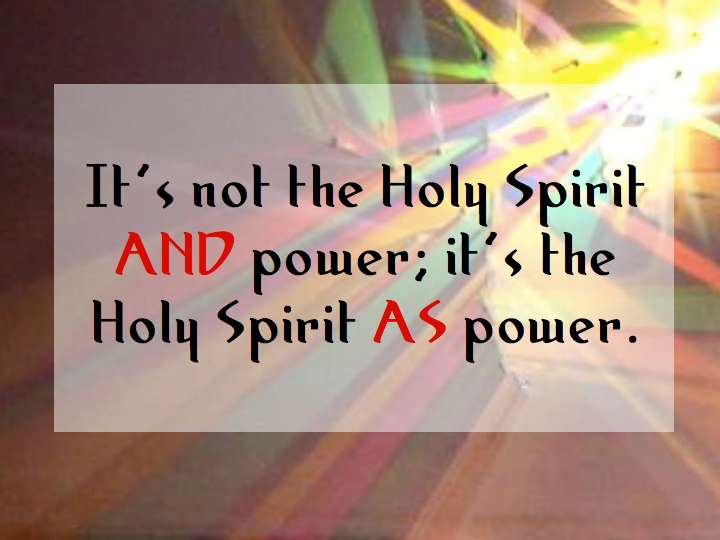
“Jesus doesn’t say we will baptized with the Holy Spirit and power (see Acts 1:8), but that we will be baptized with the Holy Spirit AS power. There’s a huge difference! It means we will have everything we need to always overcome, to never be at a loss!” —CTO

Politics In The Pulpit

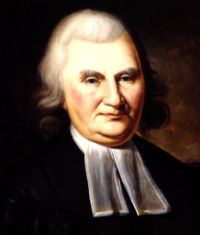
John Witherspoon

John Witherspoon

Is there right time to address politicized topics from the pulpit? I believe there is, but I believe we must make sure we’re not promoting our opinion but standing up for biblical principles.

Pastors were pivotal in swaying public opinion prior to the American Revolution and in the abolition of slavery in the United States. One pastor that spoke forcefully and biblically about the independence of the thirteen colonies was John Witherspoon—

“If your cause is just—you may look with confidence to the Lord and intreat [sic] Him to plead it as His own. You are all my witnesses, that this is the first time of my introducing any political subject into the pulpit. At this season however, it is not only lawful but necessary, and I willingly embrace the opportunity of declaring my opinion without hesitation, that the cause in which America is now in arms, is the cause of justice, of liberty, and of human nature.”

Commenting on the decision of Rev. Witherspoon to address this topic from the pulpit, theologian T.M. Moore wrote—

“Preachers tend to stay away from sticky moral and political issues, simply because they know it riles up certain folks for them to do so. Witherspoon spoke out in his day because the cause of the nation was just. But so many unjust causes are afoot in our nation at the moment, that for pastors not to speak up and equip their people to understand the times and know what we as communities should do, is not only a betrayal of our Founders, but a betrayal of their calling and of the Word of God (Ezekiel 33).”

That’s a strong statement: Pastors that don’t speak out on the immoral issues of our time are betraying their calling. I tend to agree with him. What do you think? Is there a time and place for politics in the pulpit?

You may also want to check out my videos How Christians can live biblically in an election season and The Church should be pre-political

10 Quotes From “Plastic Donuts”

Plastic DonutsPlastic Donuts is a fresh look at the biblical concepts of tithing and giving offerings. You can read my full book review by clicking here. These are some of the quotes that caught my eye—

“What I didn’t realize was that my lifestyle had frozen my giving at the 10 percent level. When it came to my finances, my lifestyle had all the influence. The issue is not about my needing to sacrifice my lifestyle. The issue is about my giving a gift that is connected to my heart.”

“In His Sermon on the Mount, Jesus provided instructions on giving, praying, and fasting. For each, He focused on the heart standard but did not provide an amount standard (see Matthew 6:1-18).”

“David praised God seven times a day. Daniel prayed to God three times a day. Moses fasted from food and water twice, for forty days straight. Daniel fasted twenty-one days from rich foods and wine. Where did these faith heroes get their standards? They determined them. It’s human nature to seek something that is concrete, an inviolable guideline, clear marching orders. … But let’s be honest. Are we looking for a rule to follow so we can check it off the list? Or does a strict rule help to soothe a sense of guilt and confusion? It’s always easier to follow rules than to follow a living God. The absence of rules can cause tension in determining the amount of our gifts. Shouldn’t there at least be a minimum? If not, suddenly it’s wide open. Multiple options appear.”

“God is not looking for the same gift from all His children. He wants a personal gift.”

“You may not think you have the ability to give. But if you pay attention, you’ll be surprised at just what abilities you really do have.”

“Tapping your true giving ability will require countercultural lifestyle choices—such as debt-free living or a reduction in your spending.”

“If you want to grow your faith, grow your gratitude. To grow your gratitude, take time to count your blessings.”

“No matter what your ability or inability, God can be pleased with your gift.”

“Could it be that a giving lifestyle apart from love and obedience to God is simply philanthropy?”

“In the end, it is the condition of the giver’s heart that makes the gift pleasing to God.”

14 Quotes From “It Is Finished”

It Is FinishedIt Is Finished was an amazingly confronting and encouraging book. You can read my full book review by clicking here, but below are some of the quotes from David Wilkerson that especially caught my attention…

“Jesus was speaking as co-signer of the covenant. He said, ‘Now I am no longer in the world, but these are in the world, and I come to You. Holy Father, keep through Your name those whom You have given Me, that they may be one as We are’ (John 17:11). He was saying to the Father, ‘We agreed that I could bring into Our covenant everyone who trusts in Me. Now, Father, I ask You to bring these beloved ones under the same covenant promises You made to Me.”

“The covenant, cut before the world was formed, has in it the sworn oath of almighty God to save and deliver His people from the power and dominion of satan. Faith in Christ brings us into God’s covenant oath to keep us as faithfully as He kept His own Son.”

“This is an ongoing problem with many Christians. We look to the Holy Spirit as some kind of booster shot to empower or energize our human will. We expect Him to build up our supply of grit and determination, so we can stand up to temptation the next time it comes. We cry, ‘Make me strong, Lord! Give me an iron will, so I can withstand all sin.’ But God knows this would only make our flesh stronger, enabling it to boast. … Scripture says the Spirit of God actually ‘subdues’ our sins and turns us from them: ‘He will again have compassion on us, and will subdue our iniquities. You will cast our sins into the depths of the sea’ (Micah 7:19). Think of it! Not I, but my God, will subdue and conquer all my sins, by the inner working of the Holy Spirit.”

“God’s Spirit will accomplish in us what our flesh never has been able to do. How? By indwelling us. The New Covenant is all about the Holy Spirit coming to live and work in us, by promise in answer to faith.”

“It is vital for every follower of Jesus not to judge God’s New Covenant promises according to past experiences.”

“God says, ‘There is one work the Spirit must perform in you before any of these others. He is going to put in you the true fear of God concerning sin. He will implant in you a profound awe of My holiness so you will not depart from My commands. Otherwise, your sin will always lead you away from Me.’ Very simply, the Holy Spirit changes the way we look at our sin. … So He shows us how deeply it grieves and provokes Him.”

“Many flesh-driven Christians try to shake off the guilt that God’s convicting arrows produce. They do not want to feel the dread of their sin, so they constantly claim the verse, ‘There is therefore now no condemnation to those who are in Christ Jesus’ (Romans 8:1). But they neglect to read the last part of this verse: ‘who do not walk according to the flesh, but according to the Spirit.’ If you continue in sin, you are walking in the flesh—and you have no claim on God’s promise of ‘no condemnation.’ The guilt we feel under Holy Spirit conviction is actually a work of God’s grace. It is meant to expose the deceitfulness of sin in us.”

“Ask the Holy Spirit to accomplish in you the precedent work of instilling godly fear in you, to keep your heart open and accepting of God’s Word. When you do, the Spirit promises to give you a soft heart, one that is pliable in His hand. … The implantation of godly fear by the Holy Spirit is designed to produce obedience through surrender, rather than through discipline.”

“God the Father gave His Son, Jesus, access to all of His own riches and wealth. In other words, He invested in Him all the wisdom, knowledge, power and glory of Heaven. And by being made wealthy in all these things, Jesus became the only One worthy to be co-signer of the covenant. ‘By so much more Jesus has become a surety [guarantor, sponsor, co-signer] of a better covenant’ (Hebrews 7:22). Could there be any greater mercy than this? God so loved us that He made His Son rich beyond all comprehension. Then He made Him both our kinsman and our co-signer. He has become the person responsible to settle all our debts. He pays when we cannot.”

“In this covenant, God pledges to do the following four things:

  1. He swears to write His law on our hearts and minds.
  2. He takes an oath that He will be God to us, and that we will be His children.
  3. He promises we will know Him and His ways because we will be taught by the Holy Spirit.
  4. He pledges to be merciful to our unrighteousness, forgiving all our sins and iniquities.”

“A stronghold is an accusation planted firmly in your mind. satan establishes strongholds in God’s people by implanting in their minds falsehoods and misconceptions, especially regarding God’s nature.”

“The only weapon that scares the devil and his armies is the same one that scared him in the wilderness temptation of Jesus. That weapon is the truth of the New Covenant—the living Word of God. Only the Lord’s truth can set us free.”

“This is the doctrine of God’s preventing goodness: He has anticipated all our struggles—all our battles with sin, flesh and the devil—and in His mercy and goodness, He has paid our debt before it can even come due. Through the covenant, He has prepaid for all our failures and relapses. His covenant oath assures us of His preventing goodness in our lives.”

“In God’s eyes, our problem is not sin, it is trust. Jesus settled our sin problem once and for all at Calvary. He does not constantly harp on us now, barking, ‘What have you done this time?’ or ‘Now you’ve gone too far,’ or ‘This time you’ve crossed the line.’ No, never! Our Lord’s attitude toward us is just the opposite. His Spirit is constantly wooing us, reminding us of the Father’s lovingkindness—even in the midst of failure.”