Thursdays With Oswald—God Builds My Character

This is a weekly series with things I’m reading and pondering from Oswald Chambers. You can read the original seed thought here, or type “Thursdays With Oswald” in the search box to read more entries.

God Builds My Character 

     Character is the whole trend of a man’s life, not isolated acts here and there, and God deals with us on the line of character building. 

     Remember, then, that we have the power to fix the form of our choice. “Delight yourself also in the Lord; and He shall give thee the desires of thine heart” [Psalm 37:4]. Desire embraces both determination and design. Some people when they read this verse, behave before God as people do over a wishing-bone at a Christmas dinner. They say, “Now I have read this verse, I wonder what I shall wish for?” That is not desire. Desire is what we determine in outline in our minds and plan and settle in our hearts; that is the desire which God will fulfill as we delight ourselves in Him. 

From Biblical Psychology

God is not a cosmic slot machine, where I drop in the coins of Bible reading, prayer time, church attendance, and a few good deeds here and there, and then I can select which reward I would like God to dispense for me. But I’ve met way too many people who feel that it should work that way!

The Holy Spirit changes me from the inside out. He builds my character piece by piece, conforming me to the image of Jesus Christ. There are certainly blessings along the way, but I shouldn’t go into this character-building process with the goal of getting rewarded for my efforts.

When I determine to fix my thoughts on God’s Word, to tune into the Spirit’s direction, then I will experience the reward of God’s approval. And there is no greater reward than knowing my Master says, “Well done, good and faithful servant!”

My prayer: Father, I want to delight only in You. I am determined to allow Your Spirit to build the character of Jesus in my heart and mind. I am committed. I am ready.
Thursdays With Oswald—Guard Your Heart With Your Head

This is a weekly series with things I’m reading and pondering from Oswald Chambers. You can read the original seed thought here, or type “Thursdays With Oswald” in the search box to read more entries.

Guard Your Heart With Your Head

     The Bible puts the head in the prominent position, not the central position; the head is the “finish off,” the manifestation of what the heart is like; the outward expression of the heart, as a tree is the outward expression of the root. This is the relationship between the head and the heart which the Bible reveals. …

     In dealing with the Bible the danger is to come to it with a preconceived idea, to exploit it, and take out of it only what agrees with that idea. If we try, as has been tried by psychologists, to take out of the Bible something that agrees with modern science, we shall have to omit many things the Bible says about the heart. According to the Bible the heart is the center: the center of physical life, the center of memory, the center of damnation and of salvation, the center of God’s working and the center of the devil’s working, the center from which everything works which molds the human mechanism. 

From Biblical Psychology

Oswald Chambers was a holistic thinker: he knew the role of the Holy Spirit and the role of psychologists; he saw how the mind, spirit, and soul worked interdependently with each other. He never suggested that psychological issues be repaired with spiritual methods, nor that spiritual concerns be addressed by psychology.

But he also saw how easy it was to make heart matters (spiritual) concerns which should be addressed as head matters (psychological). The Bible says, “Above all else guard your heart, for from it flow all of the issues of life” (Proverbs 4:23).

So how do I guard my heart? Part of guarding my heart does start with my head: I need to think about what’s going into my heart. But, as Oswald Chambers says, the head is just the “finish off” of what is happening in the heart. So ultimately, to keep my head in the right place, I need to guard my heart. I need to make my heart exclusively the home of the Holy Spirit, and allow Him free access to all of the concerns in my heart.

This is the only way I can “finish off” the right way.

Thursdays With Oswald—Seeing And Hearing “Holy”

This is a weekly series with things I’m reading and pondering from Oswald Chambers. You can read the original seed thought here, or type “Thursdays With Oswald” in the search box to read more entries.

Seeing And Hearing “Holy” 

     The Bible places in the heart everything that the modern psychologist places in the head. … 

     God does alter the desire to look at the things we used to look at; and we find our eyes are guarded because He has altered the disposition of our soul life. …I will always hear what I listen for, and the ruling disposition of the soul determines what I listen for, just as the ruling disposition either keeps the eyes from beholding vanity or makes them behold nothing else. 

From Biblical Psychology

Solomon wrote, “Above all else, guard your heart, for it is the wellspring of life” (Proverbs 4:23). This is where Chambers gets the thought about our hearts doing what psychologists want our heads to do.

The more I fill my heart with God’s Word (Psalm 119:11), the more the Holy Spirit can remind me of that Word (John 14:26). The more I am tuned in to that sanctifying instruction of the Holy Spirit (Ephesians 5:26), the more holy I will live (Romans 8:4; Galatians 5:16; 1 Thessalonians 4:7).

This “tuning in” in the spiritual realm (the heart) absolutely affects the physical realm (the head). I have written before about the reticular activating system (RAS) in our brains (you can read about this here and here). The combination of the Word and the Spirit reprograms our RAS so that our eyes and ears are looking and listening for what pleases and glorifies God.

Do you want to live a holy life? Start by guarding your heart. You do this by filling your heart with the Word of God.

Thursdays With Oswald—My Spiritual Personality

This is a weekly series with things I’m reading and pondering from Oswald Chambers. You can read the original seed thought here, or type “Thursdays With Oswald” in the search box to read more entries.

Spiritual Personality

     When we receive the Holy Spirit, He so energizes our spirit that we are able to detect things that are wrong, and we are able to rectify them if we ‘mind’ the Holy Spirit. This is the Scotch use of the term ‘mind,’ and it means ‘remember to obey.’ It carries with it the meaning of another Scotch word, ‘lippen,’ that is, ‘trust.’ Mind the Holy Spirit, mind His light, mind His convictions, mind His guidance, and slowly and surely the sensual personality will be turned into a spiritual personality. 

From Biblical Psychology

It’s not too often that I think of personality in a spiritual light. But God created me as a unique person, complete with my own personality. He gave me the personality He did on purpose: to glorify Him.

Left to myself, my personality is highly self-serving. But when I “mind” the Holy Spirit, He helps me live out my God-given personality in a way that is more and more God-serving and God-glorifying.

I love Chambers’ list:

  • Mind the Holy Spirit
  • Mind His light [illumination]
  • Mind His convictions
  • Mind His guidance

I’m working on “minding” better. How about you?

Book Reviews From 2011

Here is the complete list of books I read in 2011. Click on each title to be taken to my review…

7 Habits Of Highly Effective Teens

A Collection Of Wednesdays

A Treasury Of A.W. Tozer

Abandon The Ordinary

Average Joe

Be A People Person

Be The People

Biblical Ethics

Biblical Psychology

Bonhoeffer: Pastor, Martyr, Prophet, Spy

Bringing Sons Unto Glory

Chazown

City On Our Knees

Costly Grace

Doing Virtuous Business

Elite Prayer Warriors

Enemies Of The Heart

Experiencing The Spirit

Fasting

For Men Only

From The Library Of A.W. Tozer

Galileo

Generation iY

George Washington Carver

Get Off Your Knees And Pray

Go For Gold

God Is The Gospel

Has God Spoken?

Home And Away

How The Mighty Fall

How To Read The Bible

How To Win Friends And Influence People

I Knew Jesus Before He Was A Christian

In Visible Fellowship

Leadership Gold

Leadership Is Dead

Leadership Prayers

Lee: A Life Of Virtue

Letters From Leaders

MacArthur: America’s General

Max On Life

Me, Myself & Bob

Never Surrender

Night

On The Verge

Peach

Plugged-In Parenting

Radical Together

Remember Why You Play

Say It With Love

Secure Daughters, Confident Sons

Sherman: The Ruthless Victor

Smith Wigglesworth On Faith

Soul Work

Soulprint

Stuff Christians Life

Sun Stand Still

The Blessing Of Adversity

The Church In Exile

The Heart Of A Great Pastor

The Hour That Matters Most

The Next Christians

The Seed

Toxic Committees & Venomous Boards

untamed

Upside

Wandering In The Wilderness

We Shall See God

Whale Done

What The Bible Says About The Holy Spirit

Why God Won’t Go Away

Why Great Men Fall

You Were Born For This

Looking forward to sharing more great reads with you in 2012! Let me know if there are any books you would like me to review.

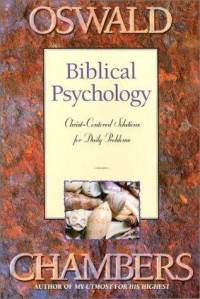
Biblical Psychology (book review)

I’m not one who’s into psycho-babble, but I do like trying to understand human nature a little better. A great book to help on this learning journey is Oswald Chambers’ Biblical Psychology.

As you might imagine, Chambers has a heavy emphasis on the biblical part. In fact, he makes the case that no one can really know themselves. But we can know God better, and He will reveal our real selves to us. Chambers delves into Scripture to teach how our body, soul, and spirit interact with each other, with outside influences, and with the Spirit of God.

It was an absolutely fascinating book to read. This is one of Oswald Chambers’ longest books, and also one of his most technical books. So be forewarned that you will have to really concentrate and apply yourself to grasp all he discusses, but if you persevere through it, you will be richly rewarded.

Codependent?

Modern psychologists have coined the term codependent to mean someone who allows their life to be controlled by another person, much like the moon controls the tides on the earth’s oceans. Almost always this relationship ends up being a lose-lose relationship: both the person being controlled and the person doing the controlling are headed the wrong way.

Codependent is not a biblical term.

But there is a concept in Scripture that is the anti-codependent. I would call it interdependent. Here’s a couple of verses to back it up…

Dear brothers and sisters, if another believer is overcome by some sin, you who are godly should gently and humbly help that person back onto the right path. And be careful not to fall into the same temptation yourself. Share each other’s burdens, and in this way obey the law of Christ. (Galatians 6:1-2)

Wounds from a friend can be trusted, but an enemy multiplies kisses. (Proverbs 27:6)

It is absolutely clear that God has called you to a free life. Just make sure that you don’t use this freedom as an excuse to do whatever you want to do and destroy your freedom. Rather, use your freedom to serve one another in love; that’s how freedom grows. (Galatians 5:13)

God has given each of you a gift from His great variety of spiritual gifts. Use them well to serve one another. (1 Peter 4:10)

This isn’t excusing bad behavior, or winking at poor choices, or rescuing someone from the consequences of sin. Excusing, winking, and rescuing are symptoms of codependency.

Interdependency is saying, “I need you to be stronger—to be healthy—because I may need to lean on you someday.”

Christians try to get stronger and develop their own spiritual gifts so that they can help a friend-in-need get stronger and develop his/her spiritual gifts.

The Body of Christ needs you to be interdependent, which completely trumps codependent.

Spread It Out

What do you do when you get bad news? Scientists know that when we hear bad news, our stress hormone cortisol immediately surges into our bloodstream. This hormone unleashes a bunch of other things in our bodies: blood pressure goes up, heart rate increases, pupils dilate, sugar stores are released. In other words, your body prepares for action.

What about your brain? What does it do? Immediately your brain starts searching for a way to cope with the stress of the bad news. And the typical response is to return to well-worn pathways. In other words, do what I’ve always done before.

So perhaps the question is better stated: What have you done before when you got bad news?

  • Did you sulk?
  • Did you cry or get angry?
  • Did you get paralyzed, not knowing what to do?
  • Did you call a friend?
  • Did you just shake your head and try to ignore it?
  • Did you spread it out before God?

Huh? Judah’s King Hezekiah got some very bad news from a very mean general named Sennacherib. What did he do? He did what he had done before…

Hezekiah received the letter from the messengers and read it. Then he went up to the temple of the LORD and spread it out before the LORD…. “Give ear, LORD, and hear; open Your eyes, LORD, and see; listen to the words Sennacherib has sent to ridicule the living God.”

Hezekiah had the same physiological and psychological responses that you and I would have when facing such a huge threat. But his first response was his well-worn response. He did what he had always done before with bad news: he spread it out before the Lord.

We can start making a new pathway for our brain to follow. Instead of fight-or-flight, or ignoring, or paralysis, or calling a friend—take it to God and spread it out there. He knows your situation better than anyone else and He wants to help you.

Start making new neural pathways in your brain today by taking everything to God—even the so-called “little” things—so that when the really bad news comes, your brain will tell you to do what you always do: spread it out before the Lord.

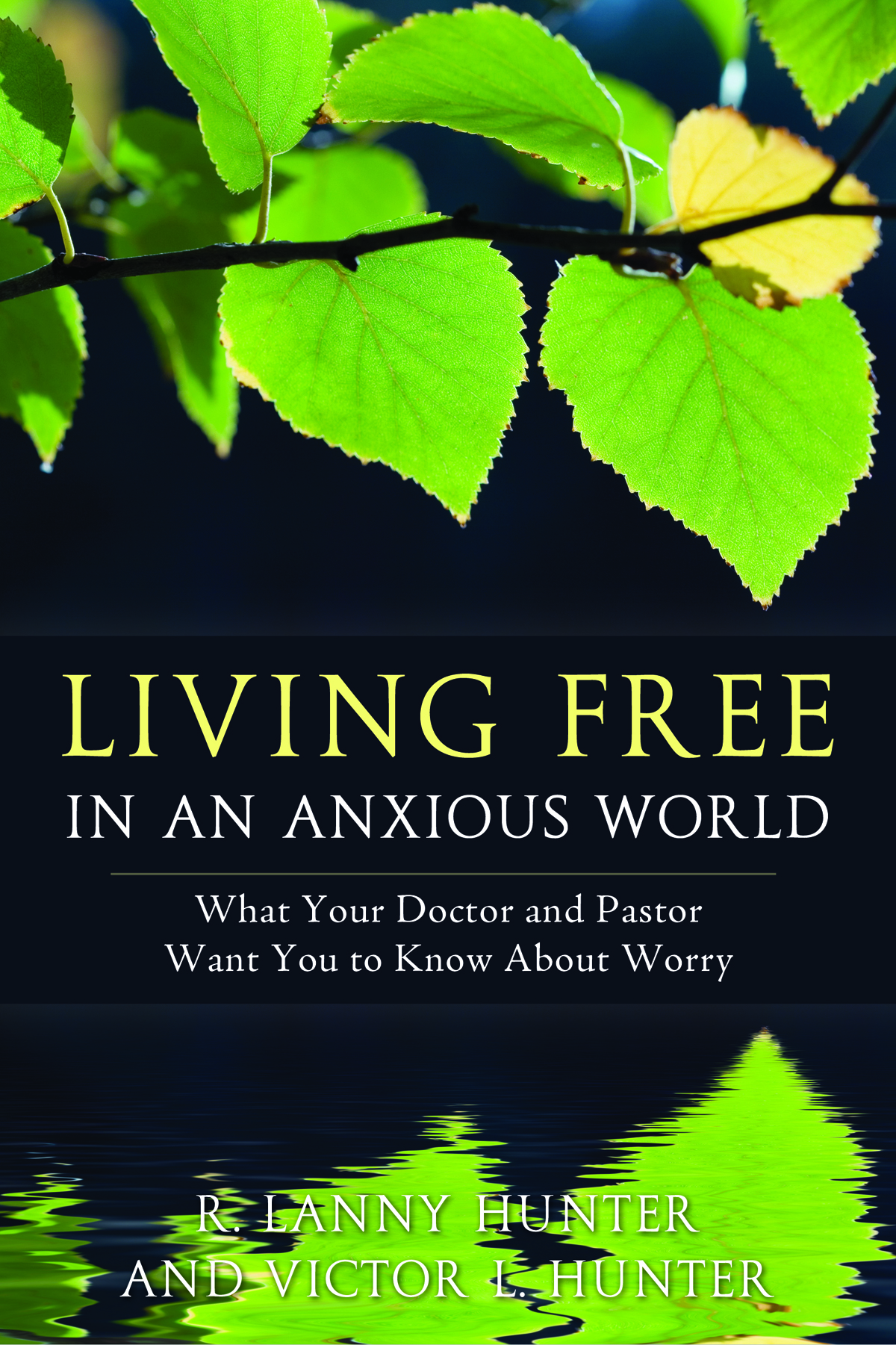
Living Free In An Anxious World (book review)

When I say that more people today are worried, or stressed-out, or suffering from anxiety attacks, I’m not saying anything that you don’t already know. But in Living Free In An Anxious World authors R. Lanny Hunter and Victor L. Hunter give us a whole new way of looking at worry and anxiety.

Many times I’m frustrated by some author’s one-size-fits-all approach to dealing with worry and anxiety. The fact is, we are complicated and we are individuals. But more than that, many authors tend to focus on just one part of the human, when in fact we are a three-part being. There is a physical component, an emotional/mental component, and a spiritual component.

The Hunter brothers are well trained to address the effects of worry in all its forms, as one brother is a medical doctor and the other is a pastor who received specialized training in both religion and psychiatry. They both bring their specialties to this book in a way that I found both informative and comforting.

One of the first concepts they address is that the key is to not eliminate worry from our lives. That, they say, is impossible. The goal is to not worry in a self-destructive way. Right from the first chapter, I found myself buying into their insights which were so real and applicable.

The Hunter brothers explore the biblical, scientific, and even philosophic origins of worry, and provide very real solutions for even a layman like me. This book wasn’t “over my head” nor did it over-simply the very real and challenging task of dealing with worry the right way.

Since 6.5 million Americans suffer from general anxiety disorder every year, chances are good that you are going to have to confront worry in your life or in the life of a loved one. So I highly recommend this book to you.

I am an Abilene Christian University Press book reviewer.