Listen to the podcast of this post by clicking on the player below, and you can also subscribe on Apple, Spotify, or Audible.
“…If you do not stand firm in your faith, you will not stand at all” (Isaiah 7:9).
These words were spoken to King Ahaz and his people when they heard that enemies had allied themselves to attack. Their immediate response was, “And his people were shaken, as the trees of the forest are shaken by the wind” (v. 2). These are the people to whom God says, “If you do not stand firm in your faith, you will not stand at all.”
In Hebrew this phrase is really just the same Hebrew word repeated twice: aman aman. It amounts to this: if you don’t stand, you won’t stand.
Stand on what? Your faith.
Faith in what? Isaiah tells us, “This is what the Sovereign Lord says” (v. 7). Jehovah Adonai is the final word. He calls the two conspiring enemies “smoldering stubs of firewood,” and He states definitively of their plans, “It will not take place, it will not happen” (vv. 4, 7). Fittingly, several English translations of this verse say, “Their plans will not stand.”
When God speaks his final and decisive word, my faith-filled response should be exactly what He commanded the Israelites: “Be careful, keep calm, and don’t be afraid. Do not lose heart” (v. 4).
I must deliberately and repeatedly silence the saber rattling of the enemy by standing in faith on God’s decisive word. My faith comes from hearing God’s word (Romans 10:17).
This is why I am a huge proponent of not only reading God’s word, but turning His decisive word into prayer. Reminding myself—and repeatedly re-reminding myself—of what Jehovah Adonai has said is the only way to stand firm in faith. If I don’t stand firm in faith on His word, I will not be able to stand at all.
I recently shared some faith-filled decisive promises from God’s word in another post. If I can help you find a word of God on which you can stand in faith, please reach out to me.
This is a weekly series with things I’m reading and pondering from Charles Spurgeon. You can read the original seed thought here, or type “Thursdays With Spurgeon” in the search box to read more entries.
Listen to the podcast of this post by clicking on the player below, and you can also subscribe on iTunes or Spotify.
Walking Preachers
For we walk by faith, not by sight. (2 Corinthians 5:7)
Walking is a position that…signifies activity. You would suppose from the way some Christians deport themselves, that their whole life was spent in meditation. It is a blessed thing to sit ‘with Mary at the Master’s feet.’ But we walk as well as sit. We do not merely learn, but we practice what we know. We are not simply scholars, but, having been taught as scholars, we go on to show our scholarship by working in the vineyard or wherever else the Master may be pleased to place us. …
You would gather indeed from what others say, that the whole life of a Christian is to be spent in prayer. Prayer, it is true, is the vitality of the secret parts of Christian life, but we are not always on our knees! We are not constantly engaged in seeking blessings from heaven. We do continue in prayer, but we are also engaged and showing forth to others the blessings that we have received and in exhibiting in our daily actions the fruits that we have gathered on the mountaintop of communion with God. We walk, and this implies activity. …
‘We walk.’ This is more than some can say. They can affirm, ‘We talk. We think. We experience. We feel.’ But true Christians can say with the apostle Paul, ‘We walk.’ Oh, that we may ever be able to say it too! Here, then, is the activity of the Christian life.
From Faith Versus Sight
Edgar A. Guest captured this idea well in his poem “Sermons We See.” The first stanza says,
I’d rather see a sermon than hear one any day;
I’d rather one should walk with me than merely show the way.
The eye’s a better pupil and more willing than the ear;
Fine counsel is confusing, but example’s always clear.
And the best of all preachers are the men who live their creeds.
For to see the good in action is what everybody needs.
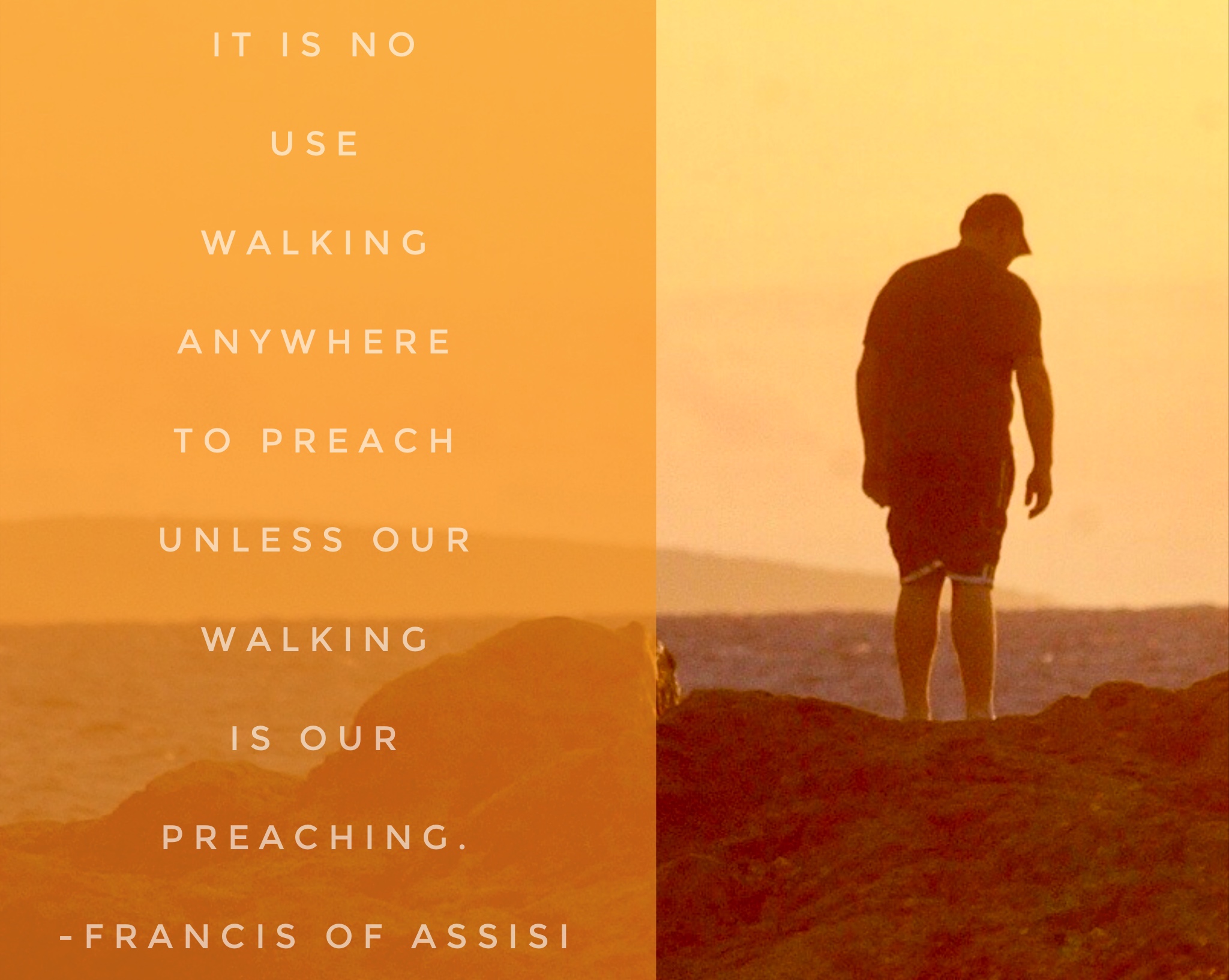
Or as Francis of Assisi noted, “It is no use walking anywhere to preach unless our walking is our preaching.”
So a fantastic question for every Christian to ask themselves is this: Do people know that I’m walking with Jesus even if I never open my mouth to tell them?
This is a weekly series with things I’m reading and pondering from Charles Spurgeon. You can read the original seed thought here, or type “Thursdays With Spurgeon” in the search box to read more entries.
Listen to the podcast of this post by clicking on the player below, and you can also subscribe on iTunes or Spotify.
Holy Familiarity
All these thirteen years, so far as Scripture informs us, Abram had not a single visit from his God. We do not find any record of his either doing anything memorable or having so much as a single audience with the Most High. Learn from this that if we once forsake the track of simple faith, once cease to walk according to the purity that faith approves, we strew our path with thorns, cause God to withhold the light of His countenance from us, and pierce ourselves through with many sorrows.
But mark, beloved, the exceeding grace of God: The way to recover Abram from his backsliding was that the Lord should appear to him…. This brings to my remembrance the words in the book of Revelation concerning the church in Laodicea: ‘You are neither cold nor hot. I could wish you were cold or hot. So then, because you are lukewarm, and neither cold nor hot, I will vomit you out of My mouth’ (Revelation 3:15-16)—a very solemn declaration. But what follows? ‘Behold, I stand at the door and knock. If anyone hears My voice and opens the door, I will come in to him and dine with him, and he with Me’ (Revelation 3:20). That means just this: For recovery out of a horrible state of languishing and lukewarmness there is no remedy but the coming of Jesus Christ to the soul in near and dear communion! …
Distance from God’s presence always means sin. Holy familiarity with God engenders holiness. The more you think of God, the more you meditate on His works, the more you praise Him, the more you pray to Him, the more constantly you talk with Him and He with you by the Holy Spirit, the more surely are you on the road to thorough consecration to His cause!
From Consecration To God
I’ve often said that one of the most powerful prayers we can pray is simply, “God, help!” In those two words we acknowledge our helplessness and His omnipotence, our sin and His forgiveness, our shortcomings and His desire to restore us.
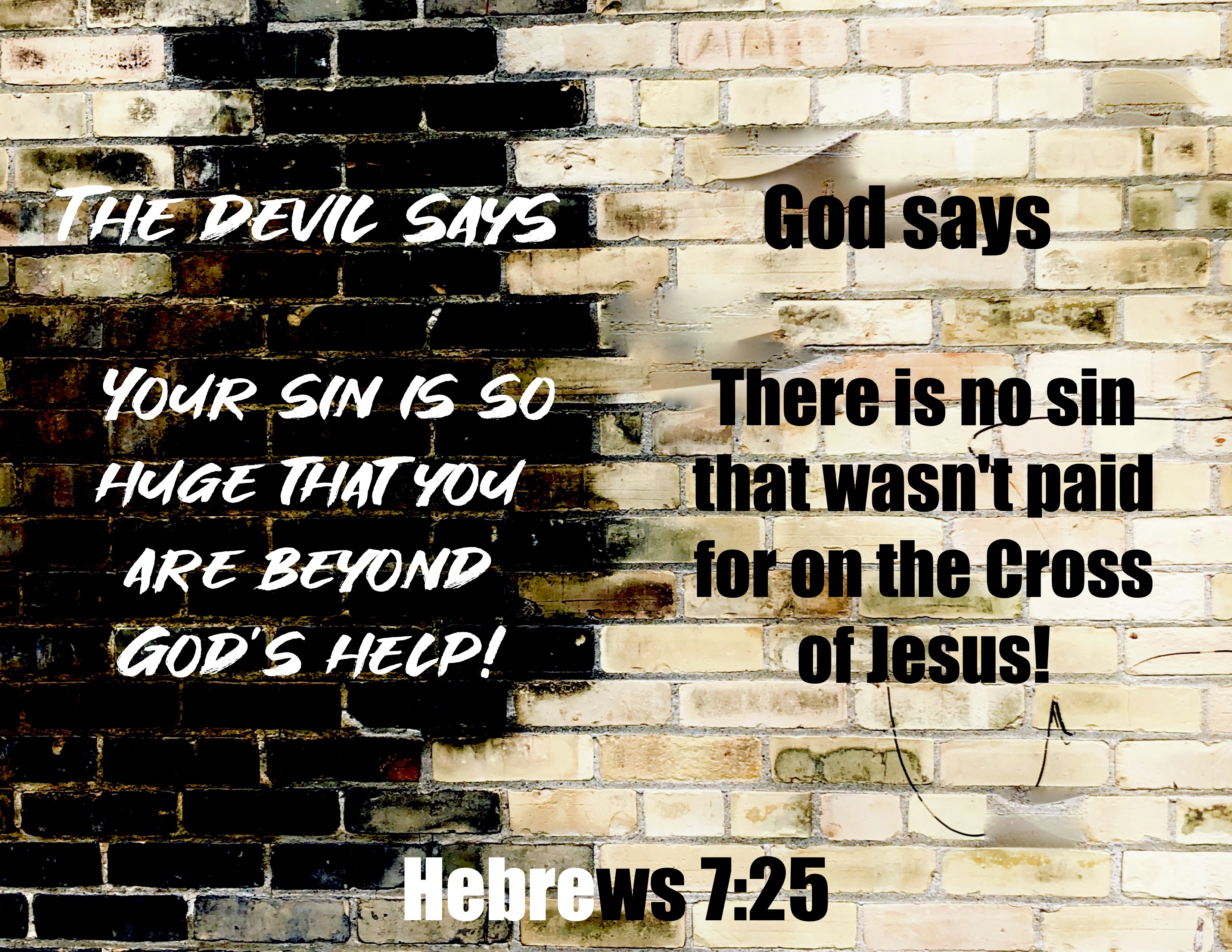
The devil lies! He loves to whisper the condemning words of, “You’ve messed up one too many times. You’re too far away for God to rescue you now. This time you exhausted God’s mercy.”
Once again, by simply crying out, “God, help!” you are calling out satan’s lies. Jesus paid too high of a price for Him to ever let you go. Near the end of this sermon, Charles Spurgeon spoke a powerful reminder: “The blessings of grace are not given today to be taken back tomorrow, but are eternal blessings [Genesis 17:7, 13, 19].” Amen!
My friend, cry out to God today—He loves you and He’s longing to restore you!
Listen to the podcast of this post by clicking on the player below, and you can also subscribe on Apple, Spotify, or Audible.
A heart that devises wicked schemes… (Proverbs 6:18).
This is the item listed in the exact middle of the list “there are six things the Lord hates, seven that are detestable to Him.” Check out the whole passage:
There are six things the Lord hates, seven that are detestable to Him: [1] haughty eyes,[2] a lying tongue, [3]hands that shed innocent blood, [4] a heart that devises wicked schemes, [5] feet that are quick to rush into evil, [6] a false witness who pours out lies and [7] a man who stirs up dissension among brothers. (vv. 16-18)
Now let’s follow this progression from the middle item outward:
…it begins in a devious heart—[4]
…it moves to the actions of the hands and feet—[3] and [5]
…it is excused or justified by lies—[2] and [6]
…it hardens into unrepentant pride that divides a community—[1] and [7]
The heart is the heart of the matter!
Verse 18 is also the middle verse of this whole 6th chapter of Proverbs—
it is a heart issue that leads to making rash vows (vv. 1-5)
it is a heart issue that causes a poor work ethic (vv. 6-11)
it is a heart issue that prompts double-talk, equivocation, and a lack of integrity (vv. 12-15)
it is a heart issue that takes a person spiraling down into adultery (vv. 20-35)
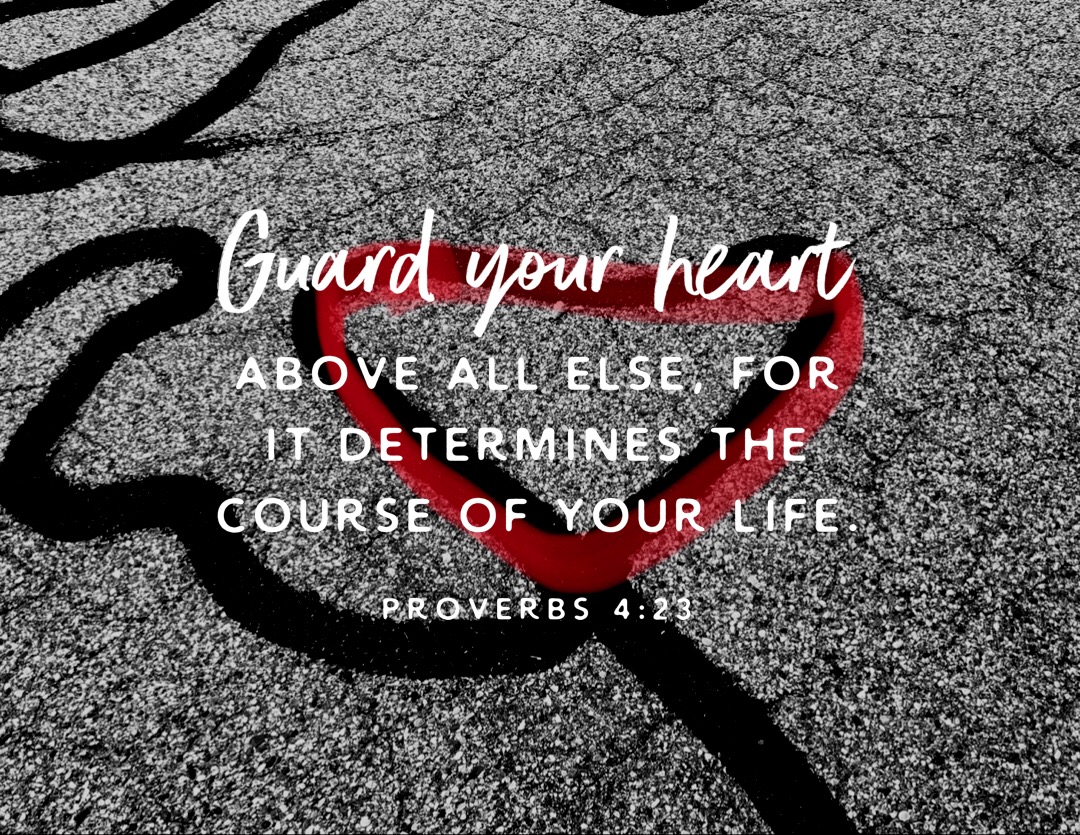
Let me repeat this principle: The heart is the heart of the matter! This is why Solomon told us in an earlier chapter, “Guard your heart above all else, for it determines the course of your life” (Proverbs 4:23).
But a wise person, who allows the Holy Spirit to correct sinful thoughts, can see a different outcome. With the Spirit’s help, it could look like this:
…it begins in a heart sensitive to the Holy Spirit’s prompting—[4]
…it moves to the actions of the hands and feet—[3] and [5]
…it is demonstrated in truthful, loving words—[2] and [6]
…it promotes the humility that unites a community—[1] and [7]
Let’s make this our prayer: Holy Spirit, help me to guard my heart today. No compromising, no justifying, but just a quick obedience to Your prompts to repent and soften my heart.
Let it start in your heart and just watch what happens. The heart IS the heart of the matter!
Listen to the podcast of this post by clicking on the player below, and you can also subscribe on Apple, Spotify, or Audible.
My heart is resting, O my God—
I will give thanks and sing;
My heart is at the secret source
Of every precious thing.
Now the frail vessel Thou hast made
No hand but Thine shall fill
For the waters of the Earth have failed,
And I am thirsty still.
I thirst for springs of heavenly life, And here all day they rise— I seek the treasure of Thy love, And close at hand it lies. And a new song is in my mouth To long-loved music set Glory to Thee for all the grace I have not tasted yet.
Glory to Thee for strength withheld, For want and weakness known— And the fear that sends me to Thy breast For what is most my own. I have a heritage of joy That yet I must not see; But the hand that bled to make it mine Is keeping it for me.
There is a certainty of love That sets my heart at rest— A calm assurance for today That to be poor is best— A prayer reposing on His truth Who hath made all things mine, That draws my captive will to Him, And makes it one with Thine.
I will give thanks for suffering now, For want and toil and loss— For the death that sin makes hard and slow, Upon my Savior’s Cross— Thanks for the little spring of love That gives me strength to say, If they will leave me part in Him, Let all things pass away.
Sometimes I long for promised bliss, But it will not come too late— And the songs of patient spirits rise From the place wherein I wait; While in the faith that makes no haste My soul has time to see A kneeling host of Thy redeemed, In fellowship with me.
There is a multitude around Responsive to my prayer; I hear the voice of my desire Resounding everywhere. But the earnest of eternal joy, In every prayer I trace; I see the glory of the Lord: On every chastened face.
How oft, in still communion known, Those spirits have been sent To share the travail of my soul, Or show me what it meant! And I long to do some work of love No spoiling hand could touch, For the poor and suffering of Thy flock Who comfort me so much.
But the yearning thought is mingled now With the thankful song I sing; For Thy people know the secret source Of every precious thing. The heart that ministers for Thee In Thy own work will rest; And the subject spirit of a child Can serve Thy children best.
Mine be the reverent, listening love, That waits all day on Thee, With the service of a watchful heart Which no one else can see— The faith that, in a hidden way No other eye may know, Finds all its daily work prepared, And loves to have it so.
My heart is resting, O my God, My heart is in Thy care I hear the voice of joy and health Resounding everywhere. “Thou art my portion,” saith my soul, Ten thousand voices say, And the music of their glad Amen, Will never die away. —Anna Laetitia Waring
On September 28, 2021, you can purchase the print version and the audiobook. But if you don’t want to wait any longer, the Kindle version is available now—just click here.
As I wrote in the Preface to Shepherd Leadership, “My prayer is that this book liberates you! I want to see all of us get back to the simple shepherding style of leadership that the Bible has portrayed for us, so that our ministries are healthy, energized, effective, sheep-producing, and God-glorifying.”
If you pick up a copy, I’d love for you to post a review on Amazon for me. Thank you!
Listen to the podcast of this post by clicking on the player below, and you can also subscribe on Apple, Spotify, or Audible.
Why do Christians say things like, “Let’s go to church” or “Let’s go meet with God”?
Do we forget that Jesus said He would never leave us, or that He sent the Holy Spirit to be our constant Companion, or that our very heart is the temple of God’s presence (Matthew 28:20; John 14:16; 1 Corinthians 3:16)? We are naturally self-focused creatures. It takes discipline on our part to keep reminding and re-reminding ourselves that God is always with us.
Psalm 84 and its two Selahs is one way of re-reminding ourselves of God’s abiding presence. The Selahs are reminders to pause and consider, “Where am I?” and to know that the answer can always be, “Surely I am in God’s presence!”
This psalm is divided into three 4-verse stanzas. Stanzas 1 and 2 end with the call to Selah, and all three stanzas feature a powerful name for God: LORD Almighty. When we see LORD in all capital letters, that is God’s covenant name: Yahweh or Jehovah, which means that He is the “I AM that I AM.” Almighty signifies that He is the invincible, un-defeatable Captain of angel armies.
In these two combined titles, we have the personal intimate God of love and the unstoppable God of limitless power! If He were just the God of love, we may not be able to trust His power. If He were just the God of power, we may not be able to approach Him. He is the All-Loving, Ever-Approachable Power.
Another important recurring theme in Psalm 84 is the word blessed. It’s used three times in this psalm, more than in any other single psalm. This word means God’s unmerited favor, and the word either begins or ends each of the three stanzas.
In stanza 1 (vv. 1-4), twice we have that combined title of LORD Almighty. But we must always remember that our God is not distant and unapproachable, but the sons of Korah call Him “my King” and “my God.” At the end of this first stanza, we are invited to Selah—a pause to praise our glorious King!
Stanza 2 (vv. 5-8) begins with that reminder that we are blessed. The psalmists tell us that God’s blessings flow even in my Valley of Baca (or weeping). With God’s presence surrounding me, I can go from “strength to strength”because the LORD Almighty hears my prayer and responds to my prayer! So at the end of this stanza, we are again invited to Selah—this time it’s a pause to pray to our listening God.
In stanza 3 (vv. 9-12), another important word is featured that reminds us that our God is not a stingy King, but One who delights in His children and wants to lavishes them with His blessings: the word is favor. We read, “look with favor on Your anointed one” and “the LORD bestows favor and honor; no good thing does He withhold from those whose walk is blameless.” God’s favorable blessings flow toward us as eternally as He exists!
This psalm is circular: it begins as it ends, so it invites us to continue to praise, continue to pray, and continue to abide in His presence. We’re called not just to know about God’s presence, but to rejoice in His presence.
It’s one thing to know about God’s omnipresence, but it’s an entirely different thing to abide in God’s omnipresence!
This isn’t something that happens overnight. Brother Lawrence reminds us that this is a progressive revelation for Christians: “One does not become holy all at once. … The more one knows Him, the more one desires to know Him. And as knowledge is commonly the measure of love, the deeper and more extensive our knowledge shall be, the greater will be our love: and if our love of God were great we should love Him equally in pains and pleasures.”
I encourage you to Selah frequently so that you can move from mere head knowledge of God’s presence to becoming intimately aware of His closeness!
Listen to the podcast of this post by clicking on the player below, and you can also subscribe on Apple, Spotify, or Audible.
Around the world we hear of Christians being persecuted for their faith in Jesus: Afghanistan … N. Korea … China … even in the USA, Christians like Jack Phillips and Barronelle Stutzman are being persecuted for standing up for what they believe.
Jesus said that our persecution should only come “on account of Me.” And Asaph notices the same thing in his prayer, using phrases like “Your enemies,” “Your foes,” “they conspire against Your people,” and “they form an alliance against You.”
I think the first thing we need to consider is our part in bringing on the persecution. I need to ask the Holy Spirit to reveal if I may have been the trigger to the anger of these wicked people. If I have done something, I need to repent, ask forgiveness, and see what I can do to make restitution.
Next, we need to Selah to consider this: It might look desperate, but God has handled these kinds of evil people before. Asaph mentions several enemies of God’s people whom God decisively defeated in the past. Our Selah pause will help us recall that God is the same today as He was yesterday—He is more than able to handle these persecutors.
With all of these bullies ganging up on Israel, you can understand why Asaph cries out for God’s strong action against them. But I want you to notice that the call for judgment is NOT vindictive but redemptive. Asaph asks for punishment “so that men will seek Your name, O LORD” and that they may “know that You, whose name is the LORD—that You alone are the Most High over all the earth.”
In other words, this isn’t a “Get ‘em, God” prayer, but a “Save ‘em, God” prayer!
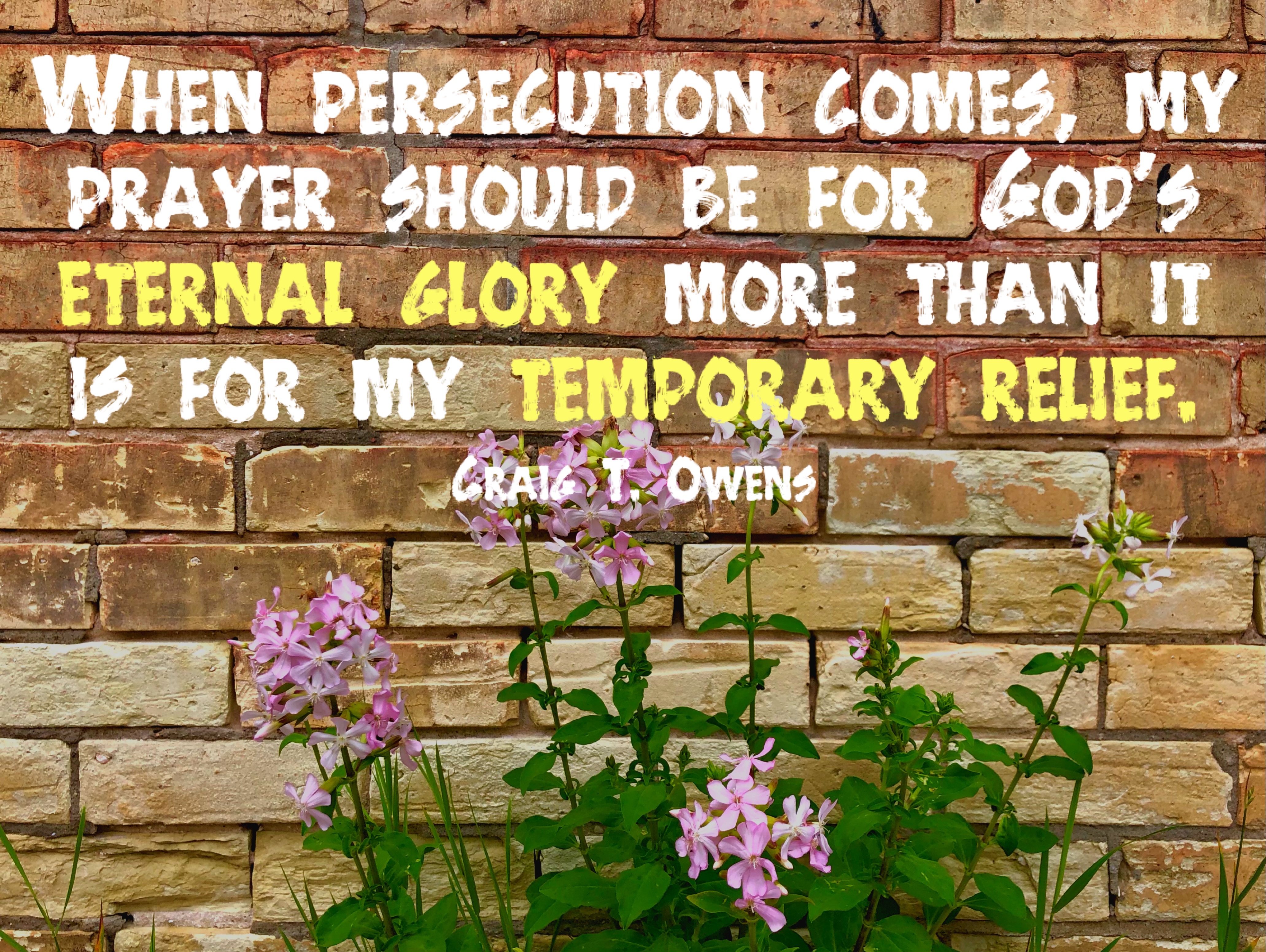
We’re not looking for relief for ourselves—that’s only temporary—but we’re looking for glory for God—that’s eternal!
Jesus and the apostle Peter both tell us that God’s desire is for no one to perish apart from a relationship with Him through Jesus Christ (John 3:16-17; 2 Peter 3:9).
The reason we need to Selah and ask that introspective question about our words or actions triggering our persecutor’s anger is because God will use our righteous response to persecution as a testimony.
Jesus said our persecution should be because of Him, but He also told us that there would be a blessing in it (Matthew 5:11-12; Mark 13:13; Luke 21:17-19). And Paul tells us that this reward isn’t just a silver lining to a dark cloud, but a reward beyond compare (Romans 8:18).
Asaph went to prayer when Israel was attacked, and that should be our first response too.
But let’s Selah in that prayer to make sure we’re not the trigger, and then may our prayer be more for God’s eternal glory than it is for our temporary relief.
Listen to the podcast of this post by clicking on the player below, and you can also subscribe on Apple, Spotify, or Audible.
Do you keep a journal? I’m not talking about a diary of your daily events, but a journal of your ongoing dialogue with God. This is a discipline I began over 25 years ago, and it’s been immensely helpful to me.
Every time you read the history of Israel in the Old Testament, you are really reading a written history—a journal—of what God did for His people.
In Luke 1:46-55, we read Mary’s song about the soon-to-be-born Jesus that someone journaled to record for posterity. The same thing is true for Zechariah’s song about his son John in Luke 1:67-79. I am sure that many people found great comfort in reading and recalling these songs, perhaps even Jesus Himself and John the Baptist.
Journaling has helped me at so many crucial points in my life. Especially when I needed to look back to be reminded of something God had spoken to me. I shared one example of this in my book Shepherd Leadership: The Metrics That Really Matter—
The board was making a major decision. They were considering a change in their leadership to one who had completely different credentials and training from all of their previous leaders. Because this change would be so momentous, the board interviewed me for more than four hours. When they finally felt they had deliberated long enough, they asked me to leave the room while they prayed and voted. I stepped out into the lobby for just a couple of minutes when the door opened again and they asked me to step back inside.
“Well, Craig,” the spokesman began, “we prayed and we feel you are the one God has selected for this position.” I told them I would be happy to accept their offer. After they prayed over me, I began to pack up my things to head home.
“Hold on a minute,” one of the board members said to me, “we’re about to discuss the budget, and we think it would be good for you to be a part of this discussion.” I agreed and resumed my seat at the table.
I was handed both the year-to-date financial report and the projected income and expenses for the remaining quarter of the year. “As you can see,” the treasurer began, “we are projecting a $70,000 loss for this year.” Then he turned to me and asked, “What are you going to do about that?”
I gulped, tried not to show that my stomach was doing flips, and said, “Honestly, I don’t know.” I paused, and since no one else said anything, I continued, “But I’ll let you know what we come up with.”
All the way home, I kept thinking, “What have I gotten myself into? I’m walking away from a successful business to oversee an organization that’s going to go bankrupt before I even get started?!” But then I began to remind myself of something else: God chose me.
When I returned home, I immediately went to my journal. I flipped to the page where I had written down all of the reasons why I had concluded that God chose me for this position. I looked at the way God had spoken to me and to my wife, and the way friends who knew nothing about this decision spoke a confirming word to me. I looked at the pages where I had written down the vision I believed God had given me for this new organization, and how the board chairman’s handwritten vision for the organization matched mine thought-for-thought. Looking at these words—at the specific dates and ways God had spoken, and confirmed, and re-confirmed His direction—gave me the confidence to step into this assignment, even when facing such a huge financial mountain. (excerpt from chapter 5 “A Humble Leader’s Attitude Adjustment”)
If you haven’t journaled in the past, I encourage you to begin this spiritual discipline today. I can tell you from both what I read in the Bible and my own personal experience how valuable this will be for you.



 “…If you do not stand firm in your faith, you will not stand at all” (Isaiah 7:9).