Pentecost for over 1500 years was a celebration in Jerusalem that brought in Jews from all over the world. But on the Day of Pentecost that came just ten days after Jesus ascended back into heaven, the meaning of Pentecost was forever changed!
Followers of Jesus—now empowered by an infilling of the Holy Spirit—began to take the good news of Jesus all over the world. These Spirit-filled Christians preached the Gospel and won converts to Christ even among hostile crowds, performed miracles and wonders, stood up to pagan priests and persecuting governmental leaders, and established a whole new way of living as Christ-followers.
We, too, can be Pentecostal followers of Jesus Christ today. We can experience an anointing and an empowering in our lives that turns ordinary Christianity into extraordinary Christianity!
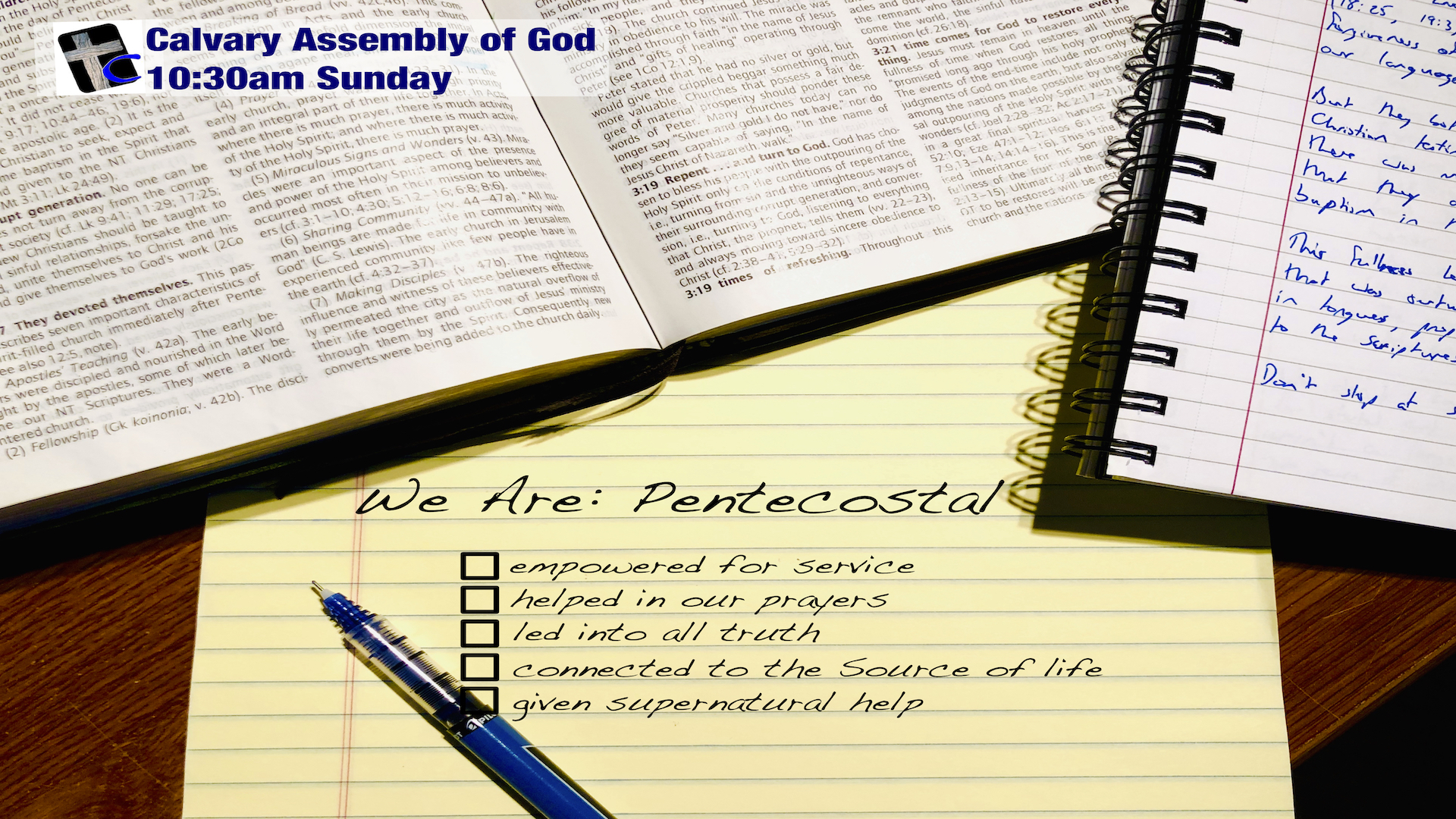
Please join me this Sunday as we continue a series of messages we started last year called We Are: Pentecostal. You can check out what I taught in this series in 2019 by clicking here. And our current messages include:
Ten years ago God called me to pastor at Calvary Assembly of God, and we have so thoroughly enjoyed our time in Cedar Springs! One of the really cool things I get to do is teach an amazing group of people every Sunday. Here’s a recap of the series and messages from 2019.
Boldly Praying—As a general rule, God would like us to pray much more boldly than we typically do. Jesus told us that we could pray mountain-moving prayers, but C.S. Lewis rightly observed, “If we consider the unblushing promises of reward and the staggering nature of the rewards promised in the Gospels, it would seem that our Lord finds our desires, not too strong, but too weak.”
Christ’s Passionate Journey—In action movies, the crucial moment usually is filmed in slow motion. The Gospels do the same as Jesus approaches the Cross. For example, Mark doesn’t mention anything about the birth of Jesus and only gives us one verse to tell about satan’s temptation of Jesus in the wilderness. But he uses nearly 40% of his writing to describe the last week of Christ’s life.
We Are: Pentecostal—Pentecost for over 1000 years was a celebration in Jerusalem that brought in Jews from all over the world. But on the Day of Pentecost that came just ten days after Jesus ascended back into heaven, the meaning of Pentecost was forever changed!
Is this in the Bible: “This is how you should take Communion”? No. Not How But Who
Selah—When you see this word in the Bible it can mean either a pause from the noise to reflect on something, a preparation for an exciting accent, or a reflective time of consideration. We are working our way through the Selahs in the Psalms.
Major Lessons From Minor Prophets—The five major prophets consist of 182 chapters, whereas the 12 minor prophets only have 67 chapters. The volume of these prophets writing may be minor, but their content carries major messages of meteoric power!
Fading Gratitude—Looking back at the history of God’s people in the Bible, there is a distinct up-and-down cycle. I believe their slipping away from God can be directly linked to their forgetfulness. If there is a peril in our forgetfulness, there is also a power in our thankfulness!
The Carols Of Christmas—How many “old familiar carols” have you heard Christmas after Christmas until the words have almost lost their meaning? If we’re not careful, any song repeated too often can lose the richness of its original intent.
We will be returning to a couple of these series in 2020, and we’ll be launching some brand new ones as well. In either case, if you don’t have a home church in the northern Kent County area, I would love to have you join us!
…Gentile—to Jews, Gentiles were just the fuel to stoke the fires of hell.
…resident of the city of Caesarea—since this was the headquarters of the Roman government for Palestine, not many Jews would venture there.
…Roman—historians say only 10% of Romans in this era were monotheistic.
…centurion—not just any centurion, but an extremely powerful centurion from the Italian Regiment (not just a local mercenary who was in it for the money). And he took his name from Cornelius Sulla, a Roman general known both for his mercy and his ruthlessness.
All of this makes Cornelius a fully self-sufficient and a well-to-do man who was not likely to look for help from God. Nor was he the type of person that a Christian missionary might seek out.
But clearly, something was missing in Cornelius’ life because he was completely countercultural in his pursuit after God. Not just his pursuit of God, but his quick understanding of exactly who Jesus was.
Luke the historian describes Cornelius as:
…devout and God-fearing. The Greek word for devout literally means “a right worshipper.” It’s a word Luke only uses three times in Acts, and two of those times are describing Cornelius.
…prayerful. The word Luke uses for him means someone who makes prayer personal and ongoing.
…generous. Cornelius took care of people who couldn’t take care of themselves.
When Peter came to Cornelius’ house, twice he said “as you know” (vv. 36, 37), showing us that Cornelius was aware that there was not only one true God, but that a relationship with Jesus was the only way to be in right relationship with God. As Peter spoke with Cornelius, his family, his relatives, his close friends, and even his fellow soldiers, the Holy Spirit baptized them just as He had done with the disciples of Jesus on the day of Pentecost.
So here are 3 vital lessons for all men to learn from the life of Cornelius the centurion—
Your devotion to God is influential. People around you do notice your devoted pursuit of God.
Your openness to all that God has puts your family, friends, and coworkers in a place to receive God’s blessings too.
God’s blessings flowing through you have lasting and far-reaching results. The outpouring of the Holy Spirit on Cornelius may have opened the door for Christian evangelism to Gentiles unlike anything that had happened before.
Dads, be devoted to God. Desire all He has for you, and all He has for those around you. Pursue Him no matter how many “strikes” there may be against you.
According to Paul, there are only two ways people can live: in the flesh or in the Spirit. That is—(1) operating separate from God, or (2) with a soul/body that is operating with God’s full involvement.
The trouble is: we’re always—as long as we’re alive—still in the flesh because we need these bodies to carry around our soul and spirit. But changes begin to occur first at salvation (when the connection of our spirit to God’s Spirit is reestablished), and even more so after being baptized in the Holy Spirit (when we are not trying to work out things on our own).
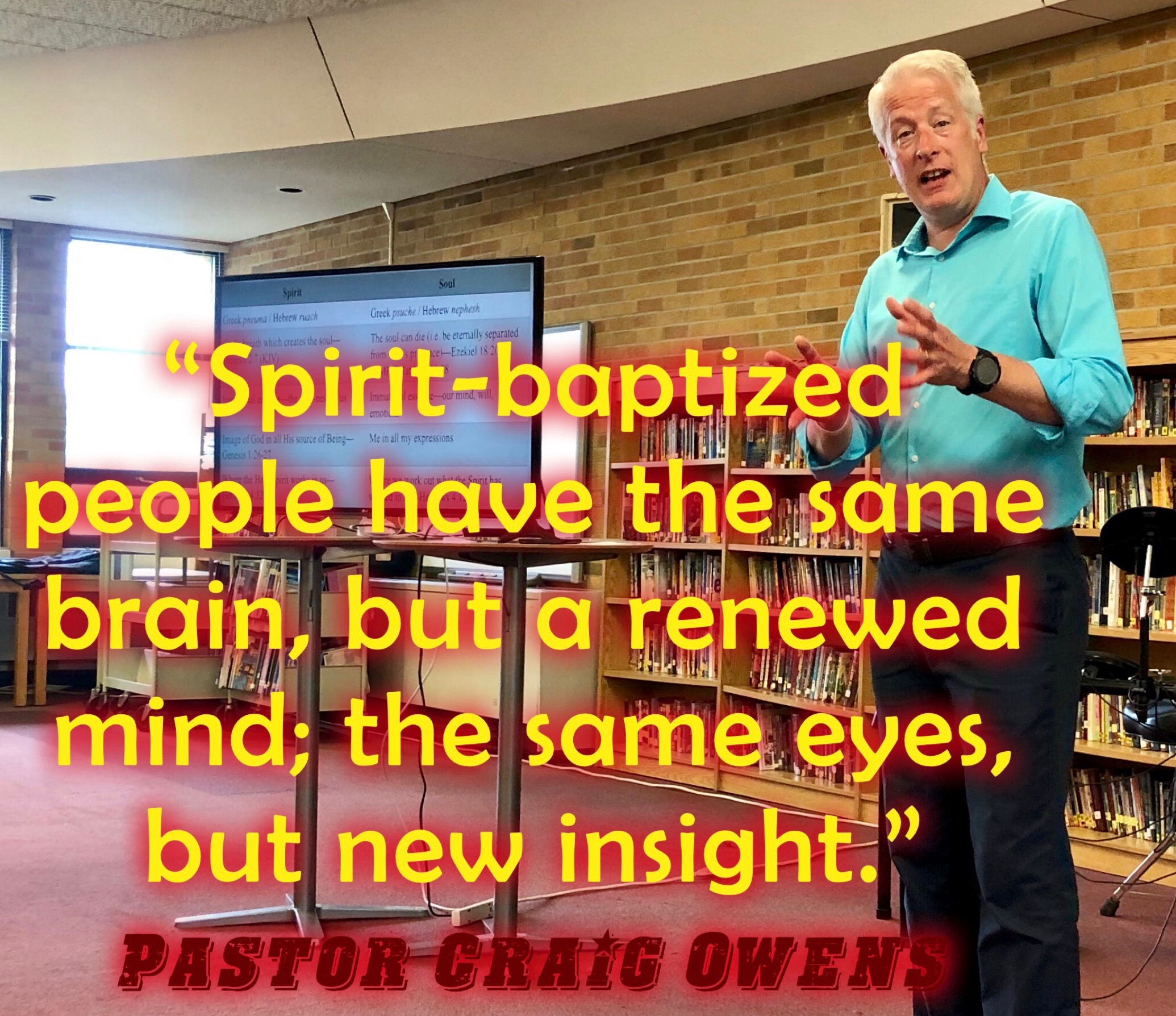
As a result, we have the same brain, but a mind that is being renewed; the same eyes, but insight that is being expanded; the same ears, but learning new ways to hear what the Holy Spirit is saying.
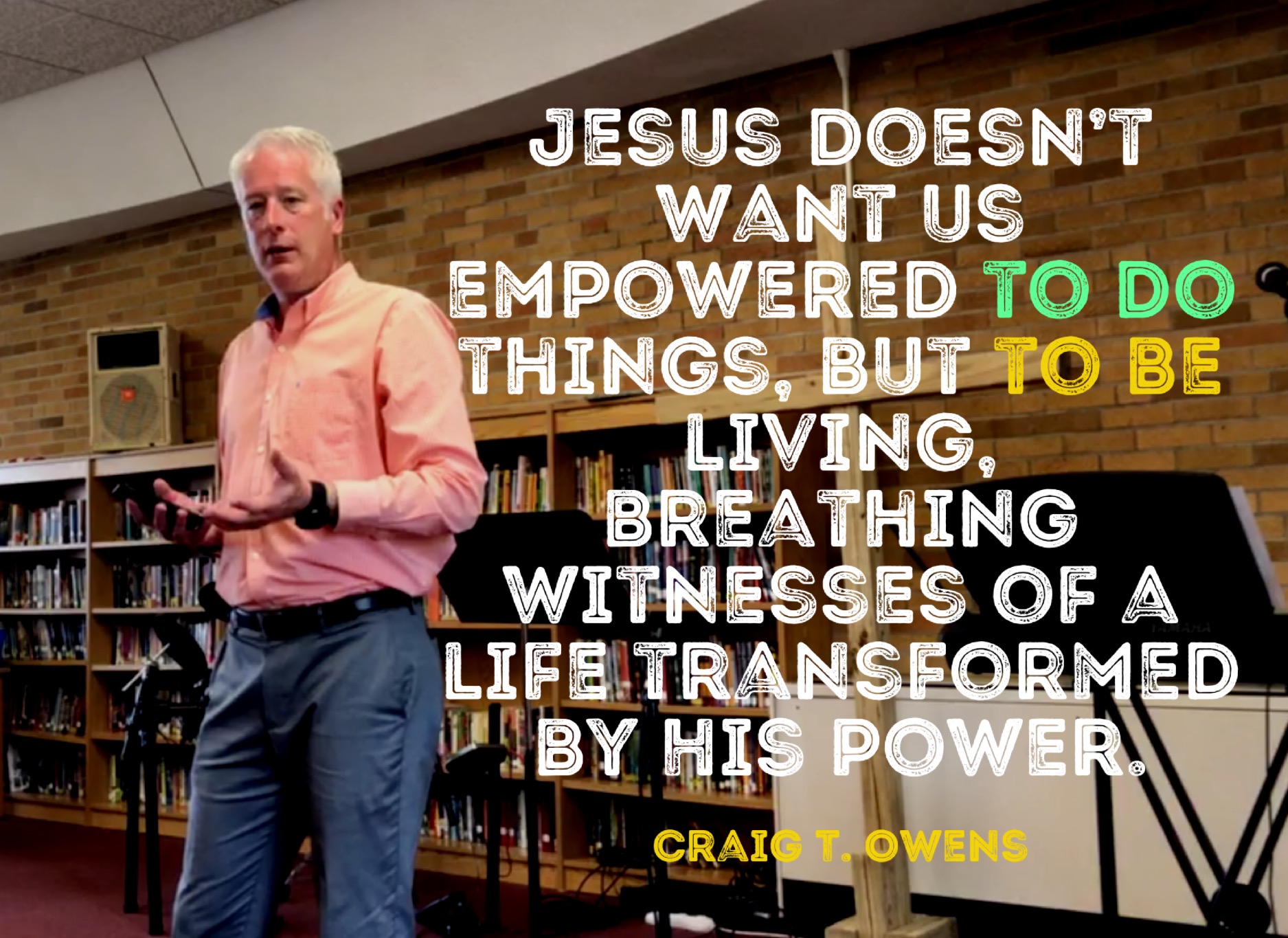
Remember that Jesus promised that the baptism in the Holy Spirit would empower us TO BE His witnesses (Acts 1:8). Not just to do things differently, but to have our spirit so enlivened by the Holy Spirit that we are living, breathing, walking, talking witnesses of a life transformed.
Have you noticed that there wasn’t a steep “learning curve” for the disciples of Jesus following Pentecost? Part of that is due to four key habits that the Holy Spirit helped form in their lives.
Correct biblical application—We immediately see people going from “They didn’t understand from the Scriptures” to quickly applying biblical texts to their current situations. This is exactly what Jesus promised would happen (John 20:6-9; Acts 2:16, 25, 34; John 14:26).
Intercessory prayer—To intercede is to take someone else’s needs to God on their behalf. The Holy Spirit can help us apply Scripture to our prayers, and can even help us without words at all (Acts 4:24-26; Romans 8:26-27).
Healthy conflict resolution—We’re all different, so not seeing eye-to-eye is bound to happen, but Spirit-empowered Christians will be able to resolve conflicts faster and with better results (Acts 6:1-8; Acts 15:1-31).
“Your life as a Christian should make unbelievers question their disbelief in God.” —Dietrich Bonhoeffer
Amen! Your life as a Christian that is living out daily habits that have been empowered by the Spirit should make everyone around you want to go deeper and deeper into all that the Holy Spirit has in store for them too.
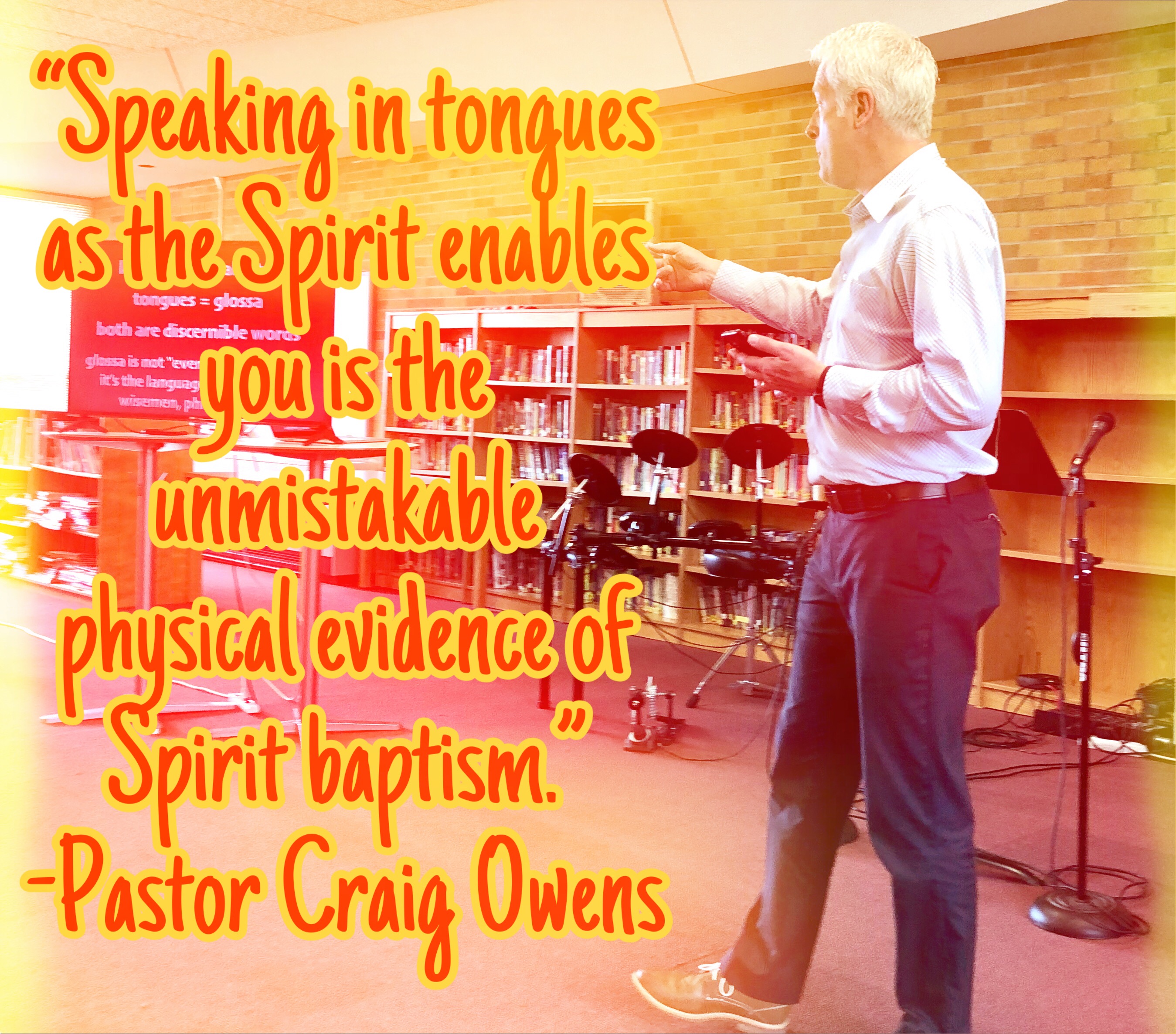
Speaking in tongues as the Spirit enables you is the unmistakable, objective, outward, initial physical evidence. The Bible makes clear that continuing to pray in tongues has huge benefits for both our personal prayer lives and for the corporate church body. But don’t stop there!
The initial, outward evidence is primarily for the individual Christian—it’s a way of knowing that you know that you have indeed been baptized in the Spirit. But there also needs to be some everyday evidence for others that testifies to them that something is different about your life.
Consider the disciples of Jesus before and after being baptized in the Holy Spirit…
Their vocabulary
Before being baptized in the Spirit they said stupid things because they didn’t know what to say (Mark 9:5-6) But after being baptized in the Spirit there was no more foot-in-mouth disease. Just as the Holy Spirit enabled them to praise God in an unlearned tongue, He also empowered their natural dialect. The same Greek word is used in Acts 2:4 (enabledby the Holy Spirit), 2:14 (Peter addressed the crowd), and 26:25 (what I am saying is true and reasonable).
Before they argued about who was the greatest. Afterward, they gladly gave all that they had to others (Mark 9:33-34; Acts 2:44-45).
Their boldness in the face of adversity
Before they abandoned Jesus, ran away, and hid in locked rooms. Afterward, there was no intimidating or silencing them (Acts 4:8, 13, 18-20).
Their understanding of Scripture
Before they had virtually no understanding of Scripture’s application. Afterward, they understood how to apply God’s Word in almost every situation (Acts 2:16, 33-35; 4:24-26).
Jesus promised that the baptism in the Holy Spirit would empower us TO BE His witnesses (Acts 1:8). Not just to do things for Him. There’s nothing wrong about doing Jesus-glorifying things, but in themselves, they are too short-sighted. Jesus doesn’t want us empowered to do things, but TO BE a living, breathing, walking, talking witness of a life transformed by His power. That’s the reason why I say to you again and again: Don’t stop at salvation. Press on and press in to be baptized in the Holy Spirit so that you can BE an empowered, transformed and transforming witness for Jesus!
That Pentecost Sunday immediately following Christ’s resurrection forever changed what Pentecost stood for. From this point forward, Christians who have encountered the Holy Spirit as those 120 followers of Jesus did now call themselves Pentecostal. (Check out Acts 2:1-12, 16, 22-24, 37-39.)
If you had been present on that day, there were three pieces of evidence you would have noticed:
Wind—this is the Greek word pneuma, which is the same as the Hebrew word ruach. This is the impartation of the Spirit that brings a true life connection to the Trinity (Genesis 2:7). This power was foretold by Jesus when He promised, “you will receive power when the Holy Spirit comes on you…” (Acts 1:8a).
Fire—this was foretold by John (Luke 3:16). This fire was to light up our witness to a dark world (Matthew 5:14-16). Again Jesus promised, “you will receive power to be My witnesses…” (Acts 1:8b).
Tongues—this fulfilled the promise of Jesus, “to be My witnesses…to the ends of the earth” (Acts 1:8c).
Some have tried to call this speaking in tongues an “ecstatic utterance,” or just nonsensical gibberish. But notice the descriptions Luke gives: each one heard them speaking in his own language(v. 6), each of us hears them in his own native language (v. 8), and declaring the wonders of God in our own tongues (v. 11). Luke lists visitors from over 15 different places around the world that heard their native tongue being spoken by these native Galileans. Luke pointed out that these Spirit-baptized Christians spoke like this as the Spirit enabled them (v. 4b).
Two types of vocabulary are happening here—language (vv. 6, 8), which is the Greek word dialektos, and tongues (vv. 4, 11), which is the Greek word glossa.
Dialektos is a learned language. Glossa can also be learned, but it’s not something that one just casually picks up. The Greeks said glossa is “not a word of everyday speech but one belonging to dignified and elevated discourse.” The Greeks called glossa the language of prophets, wisemen, and philosophers.
“But,” you might say, “speaking in tongues sounds weird!” Yes, it does. As N.T. Wright said:
“God acts completely unexpectedly—as He always said He would.”
Remember this—God is God. He is uncontainable, indefinable. If we can define Him, He is not God, but we are. He always does things “out of the box”—at least out of our box, not His! Like sending His Son born of a virgin, and empowering Jesus to restore sight to one born blind, and enabling Jesus to cure someone who contracted leprosy, and even reversing the laws of biology to bring Jesus back to life!
So it’s not unexpected that the baptism of the Holy Spirit is accompanied by someone praising God in a dialect they have never learned.Speaking in tongues as the Spirit enables you is the unmistakable, objective, outward, initial physical evidence of the baptism in the Holy Spirit.
Jesus wants us to have rivers of living water flowing—bursting!—out of us. This living water can flow out of anyone who has the Spirit IN them! Don’t wait another day: be baptized in the Holy Spirit.
The Holy Spirit is vital in everything concerning a Christian’s life.Dr. Donald Stamps emphatically said it this way:
“It is essential that believers recognize the importance of the Holy Spirit in God’s redemptive purpose. Many Christians have no idea what difference it would make if there were no Holy Spirit in this world. Without the Holy Spirit there would be no creation, no universe, no human race (Genesis 1:2; Job 33:4). Without the Holy Spirit there would be no Bible (2 Peter 1:21), no New Testament (John 14:26; 15:26-27; 1 Corinthians 2:10-14), no power to proclaim the gospel (Acts 1:8). Without the Holy Spirit there would be no faith, no new birth, no holiness, no Christians at all in the world.”
Sometimes I think we have in our mind that the “old” in Old Testament somehow means outdated or no longer applicable to our lives, and the “new” in New Testament should be our sole focus. But Jesus affirmed again and again that all of the Scriptures—what we now refer to as the Old Testament—all point to Him.
The outpouring of the Holy Spirit on that Pentecost Sunday was not something new to the New Testament Christians. He was always a part of a believer’s life. Even 1000 years before Christ’s public ministry, David knew the importance of the Holy Spirit in both salvation, and in living a consistently holy lifestyle (Psalm 51:10-12, 143:10).
If Jesus needed the baptism in the Spirit to empower Him, direct Him, and give Him success, how much more do we need this?! That’s why Jesus imparted the Holy Spirit to His followers at their moment of salvation, but then admonished them to eagerly expect the baptism in the Holy Spirit as well (John 20:22; Luke 24:49; Acts 1:8).
Quite simply Jesus is saying—DON’T STOP AT SALVATION
Jesus didn’t, the apostles didn’t, Paul didn’t, Apollos didn’t, the Ephesian Christians didn’t, I didn’t, and you shouldn’t either!
The Feast of Pentecost was an annual celebration for Jewish people for a long time, with nothing really noteworthy happening. Until…
…on the Day of Pentecost that took place just 10 days after Jesus ascended into heaven, a new breed of Christian was unleashed on the world. Those followers of Jesus who were baptized in the Holy Spirit on that day begin living a lifestyle that we now refer to as Pentecostal.
Most people were familiar with water baptism is an outward sign of an inward commitment. It’s not something that was new to Christianity: Greek philosophy teachers and Jewish rabbis baptized their followers. So did John the baptizer (or the Baptist).
But John, as the forerunner of Jesus, promised that there would be something more—a baptism in the Holy Spirit that Jesus would bring. Jesus Himself said this baptism was so important that He didn’t want His followers to even attempt to begin to evangelize the world until they received this baptism (Luke 3:3, 16; 24:44-49; Acts 1:4-8).
What is important about this Holy Spirit baptism? What are its origins? To answer these questions, we have to go back to the very beginning of Time itself. When God created humans, the Holy Spirit was breathed into us, giving us a living soul (Genesis 1:26, 2:7). This Spirit-breath set us apart from all other living creatures (Job 33:4, 32:8; Proverbs 20:27).
We were created to be intimately connected with God, but our sin severed that. Our hearts became sin-calloused and selfish and stone-hard toward God.
The Cross of Jesus allowed us to be reconciled to God. By placing our faith in what Jesus did for us on the Cross, we could receive forgiveness of our sins. We were now saved from the penalty of our sins, but Jesus wanted more for us—He wanted us also to be saved to a new life that was as intimately connected to God’s heart as His life was.
So Jesus told His followers to wait and pray for the promised baptism in the Holy Spirit.
They prayed. And on that Day of Pentecost, they were indeed baptized in the Holy Spirit (Acts 2:1-4). Actually, the word filled literally means “fulfilled”—the baptism in the Holy Spirit fulfilled what Jesus had promised.
From that day forward, those who are baptized in the Holy Spirit are called Pentecostal people. I know there are some who would argue that was only for “back then,” but let me tell you from personal experience that there is no other way that I would try to live the Christian life than by being an unashamed Pentecostal!
Jesus wants us to not only be water baptized to announce our faith in Him for forgiveness of sins, but also to be baptized in the Holy Spirit to empower us to live holy, extraordinary, fulfilling lives. If you haven’t been baptized in the Holy Spirit, you can be simply by asking God (Luke 11:13).
Pentecost for over 1500 years was a celebration in Jerusalem that brought in Jews from all over the world. But on the Day of Pentecost that came just ten days after Jesus ascended back into heaven, the meaning of Pentecost was forever changed!
Followers of Jesus—now empowered by an infilling of the Holy Spirit—began to take the good news of Jesus all over the world. These Spirit-filled Christians preached the Gospel and won converts to Christ even among hostile crowds, performed miracles and wonders, stood up to pagan priests and persecuting governmental leaders, and established a whole new way of living as Christ-followers.
We, too, can be Pentecostal followers of Jesus Christ today. We can experience an anointing and an empowering in our lives that turns ordinary Christianity into extraordinary Christianity!
Please join me this Sunday as we begin a series of messages called We Are: Pentecostal. You can find a map here, or if you live too far away to join us in person, be sure to check out our Facebook Live broadcasts every Sunday morning.
“Some time after Pentecost a group of believers met to pray for strength and power to meet the emergency then facing them, and to enlist the help of God on their behalf. ‘And when they had prayed, the place was shaken where they were assembled together; and they were all filled with the Holy Ghost, and they spake the Word of God with boldness’ (Acts 4:31). Some of these were of the original number filled at Pentecost. It is hardly conceivable that God acted contrary to His own will in filling them again after Pentecost. Still other outpourings are recorded in Acts 8, Acts 10 and Acts 19. All these occurred some years after the original act.
“In brief, the teaching of the New Testament is that the outpouring at Pentecost was the historic beginning of an era which was to be characterized by a continuous outpouring of the Holy Spirit. …
“This anti-emotionalism, though it is sponsored by some good people and travels in pretty orthodox company, is nevertheless an unwarranted inference, not a scriptural doctrine, and is in violent opposition to psychology and common sense. Where in the Bible are feeling and faith said to be at odds? The fact is that faith engenders feeling as certainly as life engenders motion. We can have feeling without faith, it is true, we can never have faith without feeling. Faith as a cold, unemotional light is wholly unknown in the Scriptures. …
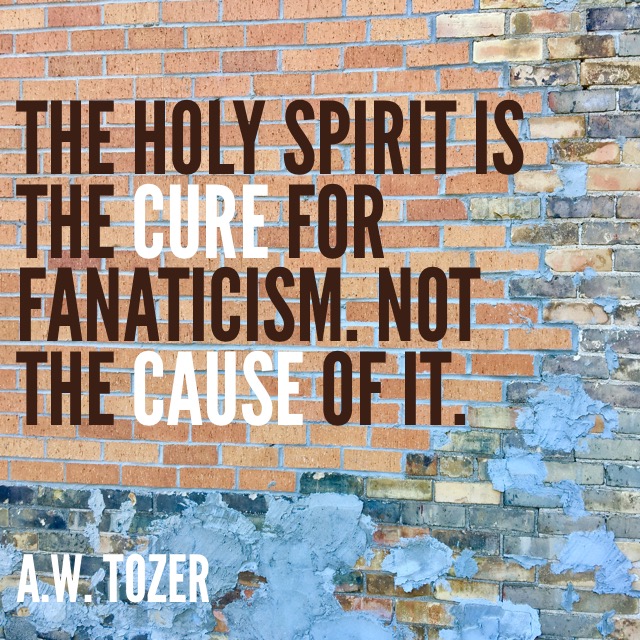
“The Holy Spirit is the cure for fanaticism. Not the cause of it.”



 Pentecost for over 1500 years was a celebration in Jerusalem that brought in Jews from all over the world. But on the Day of Pentecost that came just ten days after Jesus ascended back into heaven, the meaning of Pentecost was forever changed!








 Craig T. Owens