Review Your History

Listen to the podcast of this post by clicking on the player below, and you can also subscribe on AppleSpotify, or Audible.  

We saw in part one of this two-part series that we quickly go into crisis mode when we forget that God is in control, so we need to remain full of thanks all the time (Ephesians 5:20 AMPC). We called gratitude our inoculation against the pull from contentment to crisis, but inoculation doesn’t mean that we never experience some pangs of anxiety when a moment of darkness hits. Maturing Christians are learning how to spot the beginning of anxiety and move back into the contentment zone earlier and earlier (Romans 5:3-5; James 1:2, 12). 

(Check out all of the Scriptures in this post by clicking here.)

James says we “will receive the crown of life” from Jesus. There’s no doubt about that! In a trial, it’s important to be reassured that the trial can never cause us to lose out with our Heavenly Father (Romans 8:38-39). 

Psalm 107 starts out with this same assurance—“those He redeemed” (v. 2) is in the perfect tense. It’s complete and irrevocable! We walk out our redemption in circumstance after circumstance in a way that bring glory to God and draws others to Him as well. “Let the redeemed of the Lord say” is in the imperfect tense, which means giving thanks is an ongoing practice (v. 1). 

Redeemed once, but giving thanks always! 

Romans 8 gives a little snapshot of some of the situations that could have sent us spiraling into crisis mode, but remember the conclusion: None of those things can separate from God’s love. 

Last week we saw how the psalmist linked prayer and gratitude in a repeated theme. This practice is backward looking (vv. 7-8, 14-15, 20-22, 29-32). When we look back to see how God has moved and then we contemplate Who He is (Hebrews 13:8; Isaiah 59:1). 

Look at the closing verse (v. 43): 

  • heed = guard, watch over attentively; this is an imperfect verb—which means we keep on doing it 
  • consider = discern: to take apart the evidence and harvest the lessons 
  • great love = God’s limitless lovingkindness 

I love this verse in the New Living Translation: Those who are wise will take all this to heart; they will see in our history the faithful love of the Lord.
That means we… 

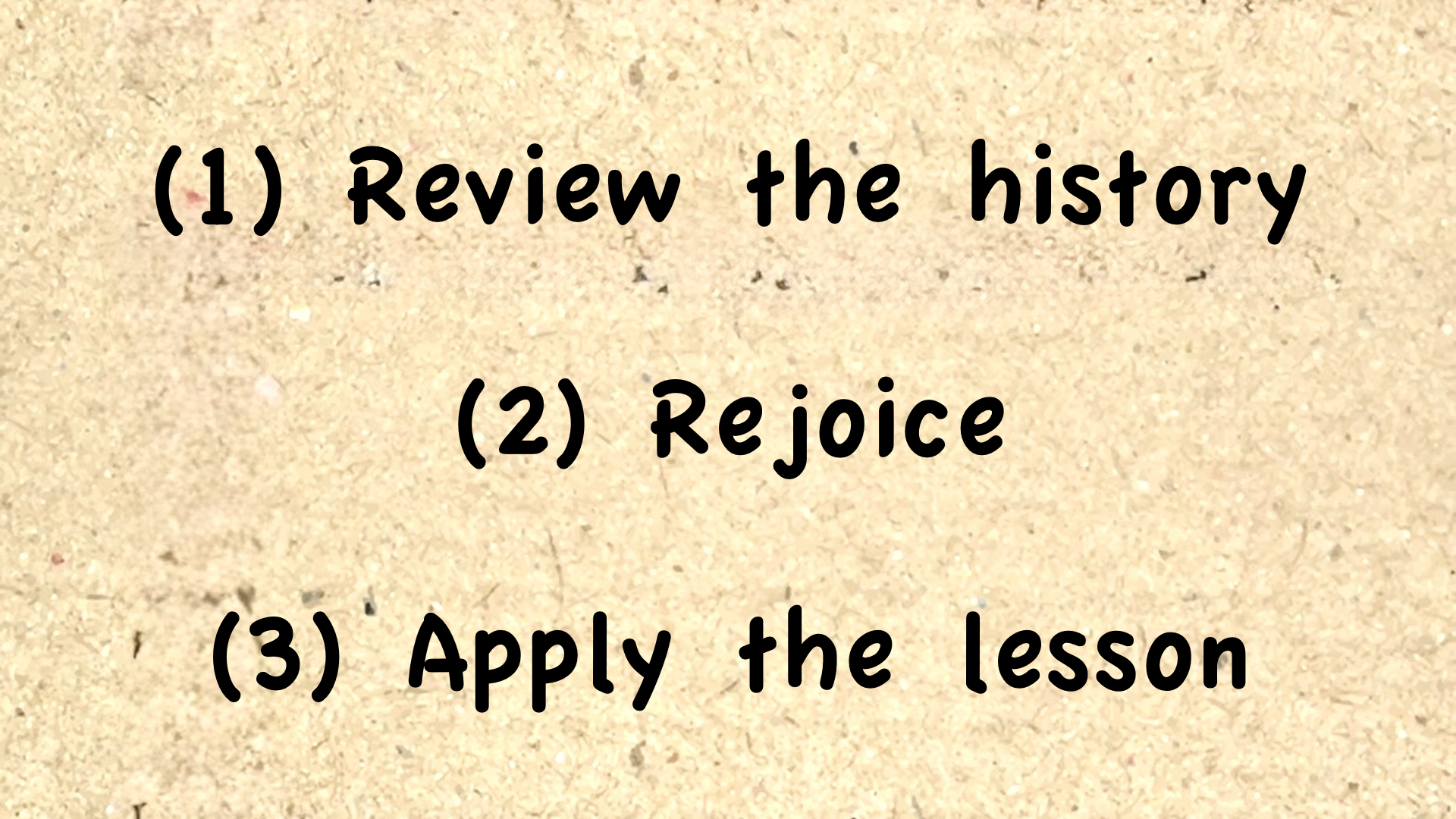
  1. Review the history of God’s faithfulness 
  2. Rejoice over it 
  3. Apply it to your current circumstance 

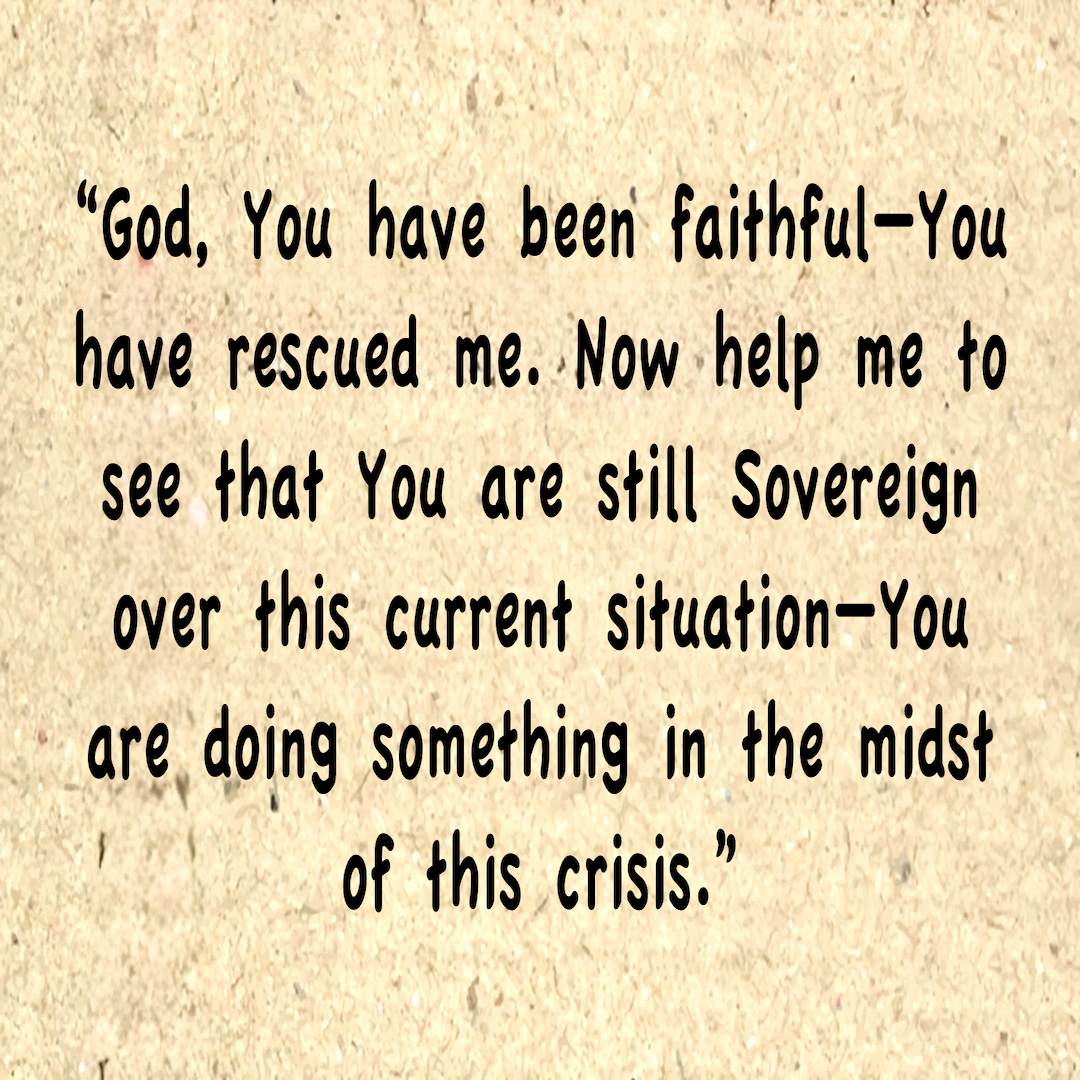
We can pray, “God, You have been faithful—You have rescued me. Now help me to see that You are still Sovereign over this current situation—You are doing something in the midst of this crisis.” 

In Romans 8:28, Paul tells us that God is working together all of our circumstances for His glory and our our good. Oswald Chambers noted, “In the Christian life we have no aim of our own, and God’s aim looks like missing the mark because we are too shortsighted to see what He is aiming at.” Reviewing our history and then giving thanks helps assure our anxious heart that God is going to hit the mark (Philippians 1:6). 

Praise the Lord! I will thank the Lord with all my heart as I meet with His godly people. How amazing are the deeds of the Lord! All who delight in Him should ponder them. Everything He does reveals His glory and majesty. His righteousness never fails. He causes us to remember His wonderful works. How gracious and merciful is our Lord! (Psalm 111:1-4 NLT) 

►► Would you please prayerfully consider supporting this ministry? My Patreon supporters get behind-the-scenes access to exclusive materials. ◀︎◀︎

Links & Quotes

Have you felt under attack spiritually lately? Especially when things are going well, we need to stay on guard because the enemy of our soul is always looking for an opening. Don’t give him any opening at all—stay vigilant!

I have a lot of new video content on my YouTube channel every week. Please check it out and subscribe so you don’t miss anything.

“All men are ordinary men; the extraordinary men are those who know it.” —G.K. Chesterton

I thoroughly enjoy reading the words of Oswald Chambers (check out my lengthy Thursdays with Oswald feature). Dr. Steve Nichols shared a mini-biography about this extraordinary pastor on his 5 Minutes In Church History podcast.

Over a week before the assassination of Charlie Kirk, Abdu Murray had a chilling prediction in his commentary From Cancel Culture to Assassination Culture.

“Practice, which some regard as a chore, should be approached as just about the most pleasant recreation ever devised.” —Babe Didrikson Zaharias 

Using a question about the recreational uses of marijuana, John Piper notes something deeper: “The church for a long time has leaned too heavily on the overlap between the state and the church for the strength of our conviction concerning what is right and wrong.” This post is a call for Christians to dig into the Scriptures for what we believe, and not just follow what society says.

“The man who thinks he can live without others is mistaken; the one who thinks others can’t live without him is even more deluded.” —Hasidic Proverb 

This 12-minute video from Daniel Pink has some solid insights on higher productivity.

Let’s Grow Together

Listen to the podcast of this post by clicking on the player below, and you can also subscribe on AppleSpotify, or Audible. 

We’ve now learned about all three circles that help us discover our God-implanted gifts: 

  • Passion—what thrills you? 
  • Pain—what kills you? 
  • Proficiency—what fulfills you? 

What do you do with these gifts? What’s the whole purpose in learning about them? I think the goal as saints is to help the Body of Christ mature in ways that brings God glory (Ephesians 4:12-16). 

(Check out all of the Scriptures in this post by clicking here.) 

Solomon also gives a great word picture of friends using their gifts for each other—“As iron sharpens iron, so a friend sharpens a friend” (Proverbs 27:17 NLT). 

In an earlier message in this series, I talked about the thousands of enzymes in our human bodies. Each enzyme has just one task, and each task is indispensable to the health of the whole body. It is exactly the same in the Body of Christ—your gift-in-action is indispensable to the health of the whole Body.

How do you squander your grace gift? I think these are five basic ways:

  1. Not discovering it—“I have a gift?” 
  2. Devaluing it—“My gift is nothing special.” 
  3. Overvaluing it—“My gift is super-important.” 
  4. Laziness—“My gift is fine just the way it is.” 
  5. Selfishness—“My gift is just for me.” 

We need to discover our own gifts, but then we need to work on making the switch from “me” to “we.” I want to excel in using my gift so that I can help you excel in using your gift so that we can help another brother or sister excel in using their gift. 

Oswald Chambers said, “The Book of God is insistent on this: we cannot develop a holy life alone, it would be a selfish life, without God in it and wrong. … Beware of isolation; beware of the idea that you have to develop a holy life alone. It is impossible to develop a holy life alone, you will develop into an oddity and a peculiarism, into something utterly unlike what God wants you to be. The only way to develop spiritually is to go into the society of God’s own children, and you will soon find how God alters your set.” 

Frequently we need another brother or sister in Christ to help nudge us into discovering and using our gifts. For example, look how…

  • Mordecai assured Esther (Esther 4:13-14) 
  • Matthias was chosen by those in the upper room (Acts 1:21-26) 
  • The first deacons were unanimously chosen by the Church (Acts 6:3-6) 
  • Barnabas and Saul were chosen by the Holy Spirit and confirmed by other prophets and teachers in the church (Acts 13:1-3) 
  • Paul encouraged his proteges to appoint elders who were recognized by others in the church (Titus 1:5; 1 Timothy 3:1f) 

Consider this poem—

For want of a horseshoe nail the shoe was lost.
For want of a shoe the horse was lost.
For want of a horse the rider was lost.
For want of a rider the message was lost.
For want of a message the battle was lost.
For want of a battle the kingdom was lost.
And all for the want of a horseshoe nail.


Listen to the Holy Spirit. Listen to the confirming words from fellow saints—words like “You are gifted,” “You are so good at…,” and “How did you know how to do that?” Then step out of your comfort zone and soar into your gift zone! 

If you’ve missed any of the other messages in our Living in your gift zone series, you can check them all out here. 

►► Would you please prayerfully consider supporting this ministry? My Patreon supporters get behind-the-scenes access to exclusive materials. ◀︎◀︎

Links & Quotes

Leaders may have to talk about people on their team, but how do we do this without crossing the line into gossip? Greg and I discussed this on a recent episode of our leadership podcast.

I have lots of new content every week, which you can check out on my YouTube channel.

“The Christian ideal has not been tried and found wanting. It has been found difficult; and left untried.” —G.K. Chesterton

“Christianity does not consist in telling the truth, or walking in a conscientious way, or adhering to principles; Christianity is something other than all that, it is adhering in absolute surrender to a Person, the Lord Jesus Christ.” —Oswald Chambers, in Baffled To Fight Better 

I really like the He Gets Us campaign! Here is a recent one.

“Critics may nitpick the Scriptures upon which we base our beliefs, but each year, the Lord will increasingly demonstrate that His Word contains no errors, exaggerations, or omissions. … We won’t feel ashamed of our hope. It will unfold just as the Lord has promised. We will be nourished, guided, blessed, and comforted. Our Lord will return, and then our days of sorrow will be over. How we will exult in the Lord, who first gave us a vibrant hope and then fulfilled that which we hoped for!” —Charles Spurgeon 

Links & Quotes

You are more likely to act yourself into good feelings than you are to feel yourself into action. Leaders need to get moving and keep moving! Check out this full conversation from The Craig and Greg Show.

I have lots of new content every week, which you can check out on my YouTube channel.

In news that’s not surprising at all, many recent paleontological discoveries confirm to exactly what would be expected if we take the biblical account of Creation and a global Flood literally.

John Piper was asked to weigh-in on the value of repetitive phrases in worship songs. He said, “The issue’s not repetition per se but whether there is enough substance, enough rich content of truth about God woven into the repetitions to justify them, to warrant them. That’s the issue. There’s a difference between repetitions that are called forth by the repeated crescendo of new, glorious truth, and repetitions that serve as a kind of mantra without sufficient truth that is simply used to sustain or intensify a mood. Moods in worship should be awakened and sustained primarily by truth, assisted by music—not primarily by music with a little truth thrown in to justify the singing.”

Pastor John Piper used Psalm 136 as an example in the post above. T.M. Moore also shared this thought about Psalm 136: “The term most frequently used to describe this everywhere-present-and-always-at-work love of God is translated as ‘lovingkindness’ or, in some versions, ‘steadfast love.’ Especially Psalm 136, with its antiphonal arrangement of verses, insists that the cosmos is upheld, sustained, and pervaded by the lovingkindness of God. … It would improve our learning to pray without ceasing if we simply took some time out during the day to thank the Lord for the many ways His steadfast love surrounds, sustains, and swarms us at every moment!”

“When people refer to a man as a man of the Book, meaning the Bible, he’s generally found to be a man of multitudinous books, which simply isolates the one Book to its proper grandeur. The man who reads only the Bible does not as a rule know it or human life.” —Oswald Chambers

Men’s Health magazine shared an interview with Jeremy Renner, who was nearly killed in a tragic accident. I love his attitude about making today better than yesterday. His words remind me of a poem my grandma used to use to motivate me to keep “besting” what I had already done.

Christopher Ash writes about reading the Psalms through the lens of Jesus. He concludes this way: “I remember seeing on the wall of a church the words of Psalm 20:4: ‘May [the Lord] grant you your heart’s desire and fulfill all your plans!’ How wonderful, you might think. The Bible promises me all that my heart desires. Until you read the psalm and realize that Psalm 20 is a prayer for the king in David’s line. Ultimately, it is a prayer that Jesus will have His heart’s desire granted and that His plans will be fulfilled. And they will! The Psalms are not all about me. If I think they are, I will end up disillusioned. But when I grasp that they are all about Christ, my heart lifts in joy that He is the blessed Man and I belong to Him.”

Power-Packed Sermons

Listen to the podcast of this post by clicking on the player below, and you can also subscribe on AppleSpotify, or Audible. 

Jesus began to speak to them in parables… (Mark 12:1). 

What Jesus relates here in the 12th chapter of Mark’s Gospel is only the fourth parable that Mark records, and as the final parable that Jesus shares, it brings His public ministry to a close. 

Jesus concludes this parable by quoting from Psalm 118. This Psalm is the last of the “Hallel Psalms” that were sung at the conclusion of the Passover celebration. This song specifically looks eagerly forward to the arrival of the Messiah. It contains the words that the crowd used on Palm Sunday: “Lord, save us! Lord, grant us success! Blessed is He who comes in the name of the Lord” (Psalm 118:25-26). By quoting from the same Psalm—that was perhaps hundreds of years old, but had just been sung and shouted by the crowd—Jesus was claiming to be the Messiah longed for in that Hallel Psalm. 

As you may recall, these shouts from the crowd and the activities of Jesus as He cleansed the temple got the religious leaders riled up! They, in essence, asked Jesus, “Who do You think You are?!” His answer is contained in this parable of Mark 12. 

At the conclusion of this parable, the religious leaders “knew He had spoken this parable against them” (Mark 12:12).

Mark’s observation about the response of the religious leaders is, in a nutshell, the essence of a Holy Spirit-anointed sermon. The connection of Scripture to current events is powerful! The Holy Spirit is also the One who brings the application of Scripture to bear on the hearts of the audience.

Pastors, if you want to deliver soul-shaking, life-transforming, eye-opening, heart-melting sermons, you must follow this example of Jesus: Stick with the Scripture! 

We don’t need to try to be clever or witty or even memorable. We just need to speak the Word of God that is inspired by the Holy Spirit, and then allow the Holy Spirit to illuminate that inspired Word to each person’s needs. As Randy Pope noted, “Preaching is not talking to people about the Bible; it is talking to people about themselves from the Bible.” 

I don’t want to try to make my voice impress people, but I am desperate for God’s voice to impact people. Nearly every week as I prepare a sermon, I’ll pray this prayer from Oswald Chambers: “In my preaching, cause Thy glorious voice to be heard, Thy lovely face to be seen, Thy pervasive Spirit felt.” My dear pastor, I would encourage you to make this your prayer as well. 

►► Would you please prayerfully consider supporting this ministry? My Patreon supporters get behind-the-scenes access to exclusive materials. ◀︎◀︎

The Sovereign King

Listen to the podcast of this post by clicking on the player below, and you can also subscribe on AppleSpotify, or Audible. 

What people were saying about Jesus right from His birth—before He preached a sermon, performed a miracle, or stepped on the toes of religious or political leaders—was revealing the truth. 

As the Gospel of Matthew’s account of Christ’s birth begins, Persian Magi came from Babylon, having been keepers of the Truth handed down to them for over 500 years from Belteshazzar the Chief of Magician. This was the Babylonian name given to the Hebrew exile Daniel. 

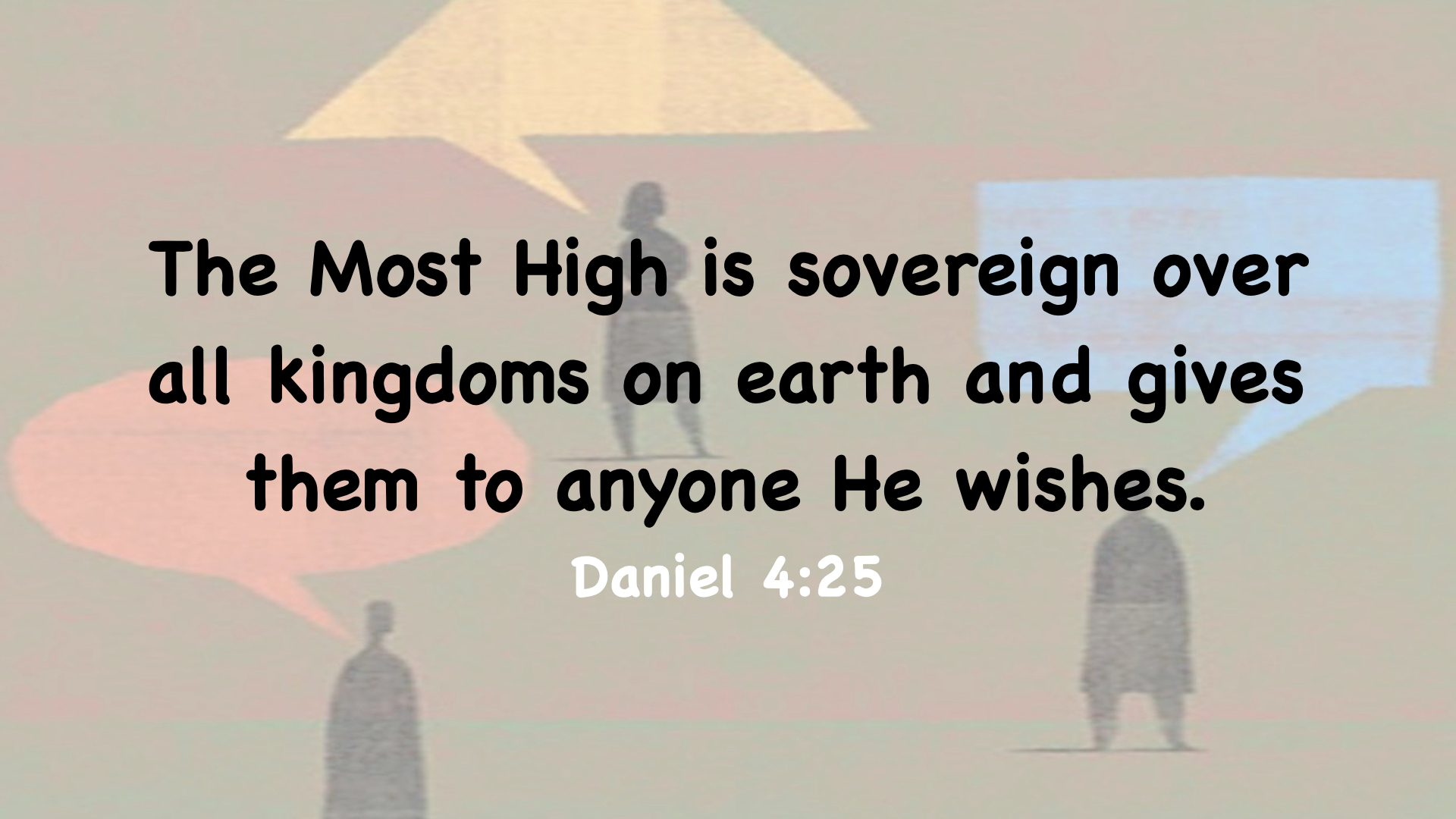
Daniel served under multiple kings, even as the regimes changed from Babylonian, to Median, to Persian. He never waiver in his adherence to the Truth that God had spoken. He fearlessly told these world leaders, “The Most High is sovereign over all kingdoms on earth and gives them to anyone He wishes” (Daniel 4:25). 

Most leaders forget this the moment they obtain power. Such is the case of the man the Magi met: King Herod the Great. Listen to how William Barclay describes this monarch: 

“Herod the Great was always despised by the pure-blooded Jews because he was half an Edomite; and we can see the importance that even Herod attached to these genealogies from the fact that he had the official registers destroyed, so that no one could prove a purer pedigree than his own. … 

“He had made himself useful to the Romans in the wars and civil wars of Palestine, and they trusted him. He had been appointed governor in 47 B.C.; in 40 B.C. he had received the title of king. … 

“But Herod had one terrible flaw in his character. He was almost insanely suspicious. He had always been suspicious, and the older he became the more suspicious he grew, until, in his old age, he was, as someone said, ‘a murderous old man.’ … He murdered his wife Mariamne and her mother Alexandra. His eldest son, Antipater, and two other sons, Alexander and Aristobulus, were all assassinated by him. Augustus, the Roman Emperor, had said, bitterly, that it was safer to be Herod’s pig than Herod’s son. … 

“When he was seventy he knew that he must die. … He gave orders that a collection of the most distinguished citizens of Jerusalem should be arrested on trumped-up charges and imprisoned. And he ordered that the moment he died, they should all be killed. He said grimly that he was well aware that no one would mourn for his death, and that he was determined that some tears should be shed when he died.” 

Lord Acton famously said, “Power tends to corrupt and absolute power corrupts absolutely. …  Despotic power is always accompanied by corruption of morality.” This is so obvious in Herod! So we can understand why the city of Jerusalem was disturbed when the Magi arrived! Whether Herod knew the prophecy of the coming Messiah or not, it’s inescapably true that his days and his legacy were numbered (see Isaiah 9:2-7). 

When King Herod heard the announcement from the Magi, his reaction was violent. Perhaps Herod lashed out so ferociously because these words of Truth from the Magi reminded him his end was near, his power was not absolute, he had to answer to The Most High who is sovereign over all. 

We are no better. Oswald Chambers defines sin as “my claim to my right to myself.” We want absolute sovereignty over ourselves, but Jesus will allow no rival to His throne! He is either King over all or else He is not King at all. 

Beware of your own reaction when the Holy Spirit convicts you of a rival to Christ’s throne in your heart. If you lash out like Herod, dismiss it, or try to justify it, that is proof that you needed to hear that word of Truth. Don’t delay: Repent and allow Christ to have His rightful throne.

Jesus came as a Baby and a Savior at his First Advent. He opened the way for us to enter the presence of The Most High God, but it will cost us something to enter. Oswald Chambers tells us: 

“Redemption is easy to experience because it cost God everything, and if I am going to be regenerated it is going to cost me something. I have to give up my right to myself. I have deliberately to accept into myself something that will fight for all it is worth, something that will war against the desires of the flesh, and that will ask me to go into identification with the death of Jesus Christ, and these things produce a struggle in me.” 

Christ’s Second Advent will be as the conquering King and righteous Judge of all humanity. We have precious little time to tell others the good news. People may react violently like Herod did, but that is simply proof that they needed to hear that Truth. 

If you’ve missed any of the messages in our series People Will Talk, you can find the complete list by clicking here. 

►► Would you please prayerfully consider supporting this ministry? ◀︎◀︎

Poetry Saturday—Mental Depression

Listen to the podcast of this post by clicking on the player below, and you can also subscribe on AppleSpotify, or Audible.

Depressed and weary sank the mind in gloom, 
Gloom deep as night in which there is no moon; 
      Times rushing down its darkening cloisters past
      Conflicting thoughts, unhindered, blast on blast,
Until the very brain did shriek and rave in turn,
Reason’s control in madness by it spurned.
      Sudden it ceased, one mighty wrench, then fled
      And stillness o’er the whole its silence spread;
Whilst from the fullness of the immortal soul
Deep tender music did its charm unroll.
      Lifting the burden from the anguished heart
      Sent forth its floods and healed the inward smart;
So! in the midst is heard the Saviour’s voice,
Soulfully sweet, inviting to rejoice;
      And there resounds divinely full and free,
      “Sad, weary heart, be still and come to Me.”
Soon in the soul the sound of quiet rest
Breathes real and low and draws us to His breast,
      Where Jesus, looking in our faces smiled,
      Soothes us to sleep because He loves His child. —Oswald Chambers
 

►► Would you please prayerfully consider supporting this ministry? ◀︎◀︎

Poetry Saturday—Wait

Listen to the podcast of this post by clicking on the player below, and you can also subscribe on AppleSpotify, or Audible.

Cease from disquietude,
Fret not, this is unto thee a preparation time;
Thou must be made in likeness unto Him thou wouldest serve.
Wait, the diamond must be cut ere from its tiny facets
Flash the glory of the sun’s pure ray.
Rain must descend,
Else from yon dull grey bulb springeth no sweet perfumed flower.
Be silent upon God, thy time for service has not come;
Patience, this waiting trial is by Him who loves thee sent;
Be still—He knoweth all, thou knowest that His will is best. —Oswald Chambers

►► Would you please prayerfully consider supporting this ministry? ◀︎◀︎

Poetry Saturday—Why Art Thou Weary?

Listen to the podcast of this post by clicking on the player below, and you can also subscribe on AppleSpotify, or Audible.

Sad heart, why art thou weary
With anxious strivings drear?
Thou hast no cause for sadness,
No cause for restless fear.
Thou longest for thy Master,
Then cease and be at rest;
For shall not He who made thee
Know what for thee is best? —Oswald Chambers

►► Would you please prayerfully consider supporting this ministry? ◀︎◀︎