The Value Of The Old Testament

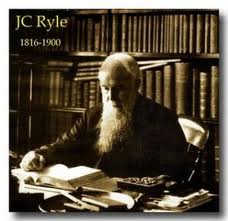
“Jesus exalted the law of God, and made its importance more evident even than it had been before. In a word, ‘He magnified the law and made it honorable’ (Isaiah 42:21). …

“Let us beware of despising the Old Testament under any pretense whatever. Let us never listen to those who bid us throw it aside as an obsolete, antiquated, useless book. The religion of the Old Testament is the embryo of Christianity. The Old Testament is the Gospel in the bud. The New Testament is the Gospel in full flower. The Old Testament is the Gospel in the blade. The New Testament is the Gospel in full ear. …

“Let us, for another thing, beware of despising the law of the Ten Commandments. Let us not suppose for a moment that it is set aside by the Gospel, or that Christians have nothing to do with it. The coming of Christ did not alter the position of the Ten Commandments one hair’s breadth. If anything, it exalted and raised their authority (Romans 3:31). …

“In the last place, let us beware of supposing that the Gospel has lowered the standard of personal holiness, and that the Christian is not intended to be as strict and particular about his daily life as the Jew. … The more light we have, the more we ought to love God. The more clearly we see our own complete and full forgiveness in Christ, the more heartily we ought to work for His glory. …

“Jesus shows us that the law, as expounded by Him, was a far more spiritual and heart-searching rule than most of the Jews supposed.” —J.C. Ryle, in Expository Thoughts On The Gospels

What Do The Good Works Of Jesus Mean?

“Jesus was well-known for His many good works, which were primarily works of restoration. The good works of Jesus restored a measure of the good order God intended when He created the world and all things, and point forward to a day of complete renewal, of heaven and earth and all things. People, who are the image-bearers of God, were not meant to be deaf or blind, bent or beset by demons, riven with diseases, or at one another’s throats. Indeed, they were not even meant to die.

“Good works were an essential component of Jesus’ plan for restoring the goodness of creation, and He promised His followers that they would do many more good works than He had done, as they seek His Kingdom and live in the power of His Spirit (John 14:12). …

“And Jesus told His followers to tune up a similar harmony of words and works in their own lives, to follow Him as His witnesses, living and speaking the truth in love. For it is in such harmony, consistently sung into the world by every follower of Christ, that the Kingdom of God and His goodness advances on earth as it is in heaven.” —T.M. Moore

Thursdays With Oswald—Jeremiah 29

Oswald ChambersThis is a weekly series with things I’m reading and pondering from Oswald Chambers. You can read the original seed thought here, or type “Thursdays With Oswald” in the search box to read more entries.

Jeremiah 29

[These are notes from Oswald Chambers’ lecture on Jeremiah 29.] 

     The great message of the prophets is that evil and tyranny are there by the permissive will of God, there is never any room for thinking that these things happen by chance (cf. Isaiah 45:7). Never tie God up in His own laws; He is never guided by precedence. If a prophet is more concerned with logic than with loyalty to God, he will always mislead. … 

     We have no control whatever over external history; God has, and as saints we have to wait in patience wherever we are placed in the providential order of tyranny. …  

     Build houses and settle down; plant gardens and eat what they produce. Marry and have sons and daughters; find wives for your sons and give your daughters in marriage…. Also, seek the peace and prosperity of the city to which I have carried you into exile. Pray to the Lord for it, because if it prospers, you too will prosper (Jeremiah 29:5-7). Jeremiah commands the people to obey God’s order in the dust and dirt of captivity. When we become rightly related to God we are loosened from everything around us, and the danger is to imagine we have to get out of the world. Our Lord did not pray that His disciples should be taken out of the world, but that they should be kept from the evil. It is nothing but unmitigated cowardice to get out of the world; we have to remain unspotted in the midst of it. “Do you mean to tell me I can live a holy life there?” If you cannot, the grace of God is a fiction. External surroundings make no difference to our inner life, but our inner life makes a telling difference on our surroundings (see Philippians 2:15). … 

     Our problem is not one of proportion: how much worldliness can I live in? but of spiritual insight which will enable me to live a holy life in the midst of worldliness, looking for the fulfillment of God’s promises. 

From Notes On Jeremiah

Christians living here on earth are truly “temporary residents” or “aliens and strangers,” as Peter calls us. As such, we sometimes feel a bit perplexed about the evil all around us and how we’re supposed to respond to it and to the Earthlings who question us about it. 

Chambers reminds us that God is not surprised by the evil, nor is He surprised where we are. All of these things are under His sovereign control. 

We are not to give in to evil, compromise with evil, or even try to pretend that evil doesn’t really exist. We are to live with our eyes fixed on Jesus regardless of our evil surroundings. This is the only way we will shine like stars in our evil world, and point the way for Earthlings to have a relationship with Christ for themselves. 

Shine on! 

Thursdays With Oswald—Jeremiah 27-28

Oswald ChambersThis is a weekly series with things I’m reading and pondering from Oswald Chambers. You can read the original seed thought here, or type “Thursdays With Oswald” in the search box to read more entries.

Jeremiah 27-28

[These are notes from Oswald Chambers’ lecture on Jeremiah 27-28.] 

     God does not act according to His own precedents, therefore logic or a vivid past experience can never take the place of personal faith in a personal God. … God is constantly stirring up our nests that we may learn that the only simplicity there is is not the simplicity of a logical belief, but “the simplicity that is in Christ” [2 Corinthians 11:3]. … 

     Never try to explain God until you have obeyed Him…. The only bit of God we understand is the bit we have obeyed. … Never be surprised if there our whole areas of thinking that are not clear, they never will be until you obey (John 7:17). …

     We never gain any knowledge by intellectual curiosity, but only as a relationship of simplicity to God is it maintained. In John 9 Our Lord was dealing with religious teachers who had known God’s way in the past but they were blind to His ways in the present. … Our Lord’s phrase “blind leaders of the blind” was used of those who built their teaching as to how God would act in the future on their knowledge of how He had acted in the past, instead of on a personal knowledge of God. …  

     We have to keep in unbroken touch with God and give every soul the same freedom and liberty before God as God gives us. …

     No silence is so profound as the silence that falls on a soul that has quenched the Spirit of God by concentration on religious convictions. … Our only safety is in concentration on God with nothing between.

From Notes On Jeremiah

God is infinitely creative—He never has to repeat Himself. For proof, just look at the billions of unique snowflakes! 

We must be very careful not to say, “God, You worked just like this last time so I expect You to work exactly the same way this time.” Let God be God; let Him do what He knows is best to do. Don’t tell God how He’s supposed to work, and don’t teach others to interact with God the same way you have interacted with God. 

Let God be God—unique, inimitable, creative, sovereign, omnipotent, personal—with you and with others. 

11 Quotes From “Notes On Jeremiah”

Oswald Chambers gives us some unparalleled insights into the Book of Jeremiah. This is a must-read for serious students of the Bible. Check out my full book review of Notes On Jeremiah by clicking here.

“Very few of us understand why clouds of darkness come. It is God trying to get us into line with the prophets and apostles. It is the Holy Spirit seeking to bring us into the place of vicarious intercession, and we nearly always misunderstand it and say, ‘I must have sinned,’ or ‘I must get out of this, I have got the blues.’” 

“We do not need a new Gospel; what we need is the old truth re-stated to hit the things that are wrong today.” 

“Few of us realize the power God has given us to grip on the threshold of the mind as in a vice the things that ought not to be there.” 

“The Cross of Jesus Christ is not a martyrdom, it does not procure salvation; it is the only salvation.” 

“Beware of ever saying to yourself, ‘God’s law is not exactly binding to me, I am under grace.’ To be under grace should mean that we can fulfill the law of God gracefully.” 

“Prosperity that does not spring from a godly motive is the external sign of having forsaken God.” 

“We cannot answer God’s call collectively (John 6:68-70). Never get disturbed out of hearing God’s voice by saying other people have not heard it.” 

“Human nature hates God’s message that there is a bad tendency inside that has to be plucked out, and unless it is it will damn us.” 

“Jesus Christ’s salvation is the destruction of the sinner in the man, not of the man.” 

“The measure of my misery when I turn from God is proportioned to my knowledge of Him when I walked with Him.” 

“Our Lord Jesus Christ and the Old Testament prophets are inseparable from one another, for in the Person and the teaching of our Lord all that the prophets taught is in part fulfilled, and will be completely fulfilled.” 

Every week I post longer passages from Oswald Chambers’ books in my “Thursdays With Oswald” feature. 

Notes On Jeremiah (book review)

Oswald Chambers always gives me unique perspectives on passages of Scripture—even ones that I thought I already knew quite well. He does this again as he dives deep into one of the major prophets in his book Notes On Jeremiah.

These Notes are really his lecture notes from his classes at the Bible Training Institute. Once again, these classes were cut short by the outbreak of The Great War (what we now call World War I), so we only have his brilliant insights through Jeremiah chapter 29. 

Chambers himself noted, “The conception of these studies is that man must look higher for the source of life and salvation than the experience of life. … Jesus Christ is the only One Who can throw light on the prophecies of Isaiah, and He is the only One Who throws any kind of light on the acute suffering and amazing misery of this prophet [Jeremiah].” 

Indeed, many of Chambers’ lectures start with “the experience of life” that most of us have had (or are having at present), and then he tries to take us both higher and deeper. Using Jeremiah’s prophesies like a searchlight, Chambers shows how these Old Testament words find their ultimate relevance and fulfillment in the dazzling Advent of Jesus Christ. 

Jeremiah was prophesying in the darkest days of Judah, just before the city was overthrown by the Babylonians. In the face of this darkness, Jeremiah shines out a light of Ultimate Hope. This is a valuable resource for Christians today who are living in sin-darkened days.

If you are looking for a great companion resource for your Bible reading time in Jeremiah, please add Notes On Jeremiah to your library. 

6 Quotes From “Jesus Calling For Christmas”

Sarah Young helps Christmas come alive as she speaks in the voice of Jesus in her book Jesus Calling For Christmas, helping us to see the First Advent in a whole new light. Check out my full book review by clicking here. 

“I am the greatest Gift imaginable! When you have Me, you have everything you need—for this life and the next. I have promised to meet all your needs according to My glorious riches. Yet My loved ones sometimes fail to enjoy the riches I provide because of an ungrateful attitude. Instead of rejoicing in all that they have, they long for what they do not have. As a result, they become discontented.” 

“Though I was rich, for your sake I became poor, so that you might become rich. No Christmas present could ever compare with the treasure you have in Me! I remove your sins as far as the east is from the west—freeing you from all condemnation. I gift you with unimaginably glorious Life that will never end!” 

“The hope I offer is not wishful thinking. It is absolutely certain…. It is utterly secure because I Myself obtained it through My finished work on the Cross.” 

“During this season of giving and receiving presents, remember that the ultimate present is eternal life.” 

“Do not be like a spoiled child on Christmas Day—hastily tearing open all the presents and then saying, ‘Is that all?’ Every single day is a precious gift from Me! Search for Me within the boundaries of this day, and you will surely find Me. I am present not only in pleasant things but also in unwanted circumstances. My Joy is sufficient for all situations, and I adjust it according to your need. When things are going your way, My gladness intensifies your delight. When you encounter hard things, I give you a deep, bold Joy that clings to Me for help.” 

“One of the most precious gifts imaginable is My robe of righteousness—to cover your sins. This glorious garment of salvation is a priceless blessing for all who trust in Me as Savior. The gift of eternal righteousness, purchased through My blood, provides a firm foundation for both Peace and Joy.” 

10 More Quotes From “The Christian In Complete Armour”

The Christian In Complete Armour is a classic work about a Christian’s spiritual warfare. Check out my review of this amazingly insightful book by clicking here, and check out other quotes I’ve shared from this book by clicking here. 

“When you see men of power and intellect using their talents against God, weep for their souls.”

“God permits satan’s temporary reign in order to increase the saint’s eternal joy.”

“If you see someone taking along, treacherous journey alone and unprotected, you conclude he expects no thieves on the road and you might well question his wisdom. Many pretenders to Christianity travel in a similar fashion. They tell you they are on their way to heaven, yet they show little inclination to travel in the company of the saints—as if they had no need of fellowship on the journey! Most of them go unfortified, without anything even resembling armor. Others brandish some vain, flighty hopes of the mercy of God, without so much as a single Scripture for ammunition. Such ‘hope’ is a rusty pistol and will fly in the fool’s face when he tries to use it.”

“Do you think for a moment your Heavenly Father would give His archenemy a sword too mighty for you, His own child, to overcome?”

“Let this encourage those of you who belong to Christ: The storm may be tempestuous, but it is only temporary the clouds that are presently rolling over your head will pass, and then you will have fair weather, an eternal sunshine of glory.”

“Trusting in your own goodness will eventually destroy it. Inherent grace is weak. Force it to endure the yoke of the law, and sooner or later it will faint by the wayside, unequal to the task of pulling the heavy load of your old nature. What you need is Christ’s yoke, but you cannot take it until you shed the one that harnesses you to works.” 

“How we would ridicule the man who, when the sun shines in at his window, tries to trap the sunbeams indoors by closing the shutters. But we are just as foolish to take our present joy, then turn away from God’s presence, supposing that we have all we need. You can feel the heat from the sun only when you stand beneath its rays; you can feel God’s comfort only as you keep your face turned toward Him.”

“Watchfulness is more important for the Christian soldier than any other. In temporal battles soldiers fight against men who need sleep the same as themselves, but the saint’s enemy, satan, is always awake and walking his rounds. Since the devil never sleeps, the Christian puts himself in grave danger by falling asleep spiritually—that is, by becoming secure and careless. … The weakest temptation is strong enough to foil a Christian who is napping in security.”

“A thief is just getting up when honest men are going to bed. The devil, I am sure, begins to tempt when saints cease to watch.”

“While the Holy Spirit is a comforter, He is also a convincer: He comforts us by teaching us.”

Jesus Calling For Christmas (book review)

I love how Sarah Young turns Scripture into Jesus addressing us in the first-Person! As we are approaching the Christmas season when we celebrate Christ’s First Advent on Earth, Sarah has used her God-given talent to tell us what Jesus Himself says about His Advent, and what the joyful implications are for us today, in her newest book Jesus Calling For Christmas. 

Most people usually think of Christmas as a time of joy, peace, and celebration. But this season should carry even greater meaning for Christians who know that we are celebrating Joy and Peace personified in Jesus Christ. So Sarah, reminding us of what Jesus would say, tells us, “In the midst of this busy Advent season, keep bringing your focus back to My holy Presence. Remember that Immanuel has come, and rejoice!” 

This book is easily readable around a family dinner table, or as a bedtime reading with children. The Christmas scenery captured in this book is beautiful, the words of Jesus are easy to understand, and the corresponding Scriptures make it easy to see how Christ’s arrival on Earth fulfilled all that was prophesied about Him. 

Children already seem to have a wide-eyed wonder about Christmas time, and adults would do well to learn from them. In fact, Sarah writes Jesus saying, “Gaze at the Glory of My birth, just as the shepherds did, and respond with childlike wonder.”

Children of all ages—even the “grownup” ones!—can experience Christ’s Advent in a whole new way by reading Jesus Calling For Christmas together this season. 

I am a Thomas Nelson book reviewer. 

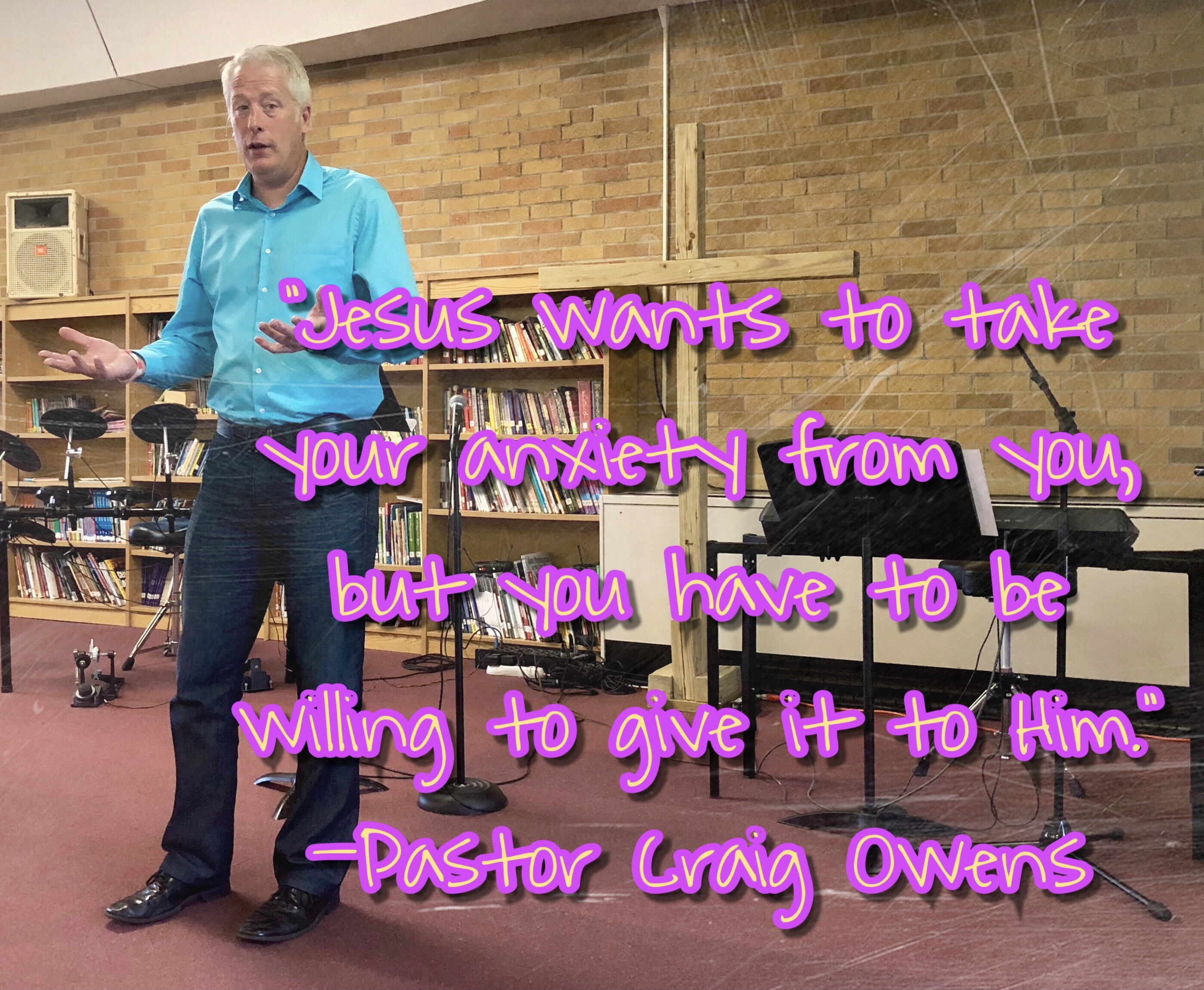
Alien Anxiety

“A recent survey of primary care physicians in the United States revealed that at least one-third of office visits were prompted by some form of anxiety.” —Lanny Hunter & Victor Hunter 

The Greek word for anxiety means to be pulled in different directions. In the context of “Aliens and Strangers,” it means being pulled between Earth’s way and Heaven’s way. Other biblical definitions for anxiety that the Amplified Bible brings out include—

  • being perpetually uneasy…about your life (Matthew 6:25) 
  • a troubled mind unsettled, excited, worried, and in suspense (Luke 12:29) 
  • drawn in diverging directions, his interests are divided and he is distracted from his devotion to God (1 Corinthians 7:34) 

Unchecked anxiety can negatively impact our physical, emotional, mental, and even spiritual health, so it’s imperative—if we are going to live differently than Earthlings—that Christians handle their anxiety in an alien way. 

Peter gives us an alien response to our feelings of worry and anxiety—

Cast all your anxiety on [Jesus] because He cares for you. (1 Peter 5:7)

Notice that Peter doesn’t say, “Don’t be anxious,” but he does say, “Here’s what to do with your anxiety.” Being anxious is not a sin, but hanging on to your anxiety may cause you to behave in a sinful way. 

So what do we do with our anxiety? In a word cast it off—throw it somewhere else! The verse tense here means it’s something we must keep on doing, so Peter is really saying keep on casting your anxiety on Jesus. 

Why can we keep on casting our anxieties on Jesus? Because He cares for you. Jesus has taken charge of your care; He’s made it His goal that you aren’t missing out on the abundant life He paid for! This verb is in what’s called the indicative mood. That means it is something that has happened in the past, and it is happening now, and it will continue to happen forever and ever! 

Even if you cast an anxiety on Jesus 30 seconds earlier, you can do it again right now because that’s how much He cares for you! 

At the risk of oversimplifying it, here is the prescription for anxiety in four steps: 

  1. Recognize that you are anxious—admit it to yourself and to God. 
  2. Remind yourself that Jesus cares for you. 
  3. Reject your anxieties by counteracting your worry with God’s truth—I like to read something like Psalm 23.
  4. Repeat steps 1-3. 

“Your natural tendency when you’re feeling anxious is to focus on yourself and your problems. The more you do this, the more you forget about Me and all the help I can supply. This worldly focus only increases your anxiety! Let the discomfort you feel at such times alert you to your neglect of Me. Whisper My Name, and invite Me into your difficulties. … A problem-preoccupation makes you anxious. So I urge you to cast all your anxiety on Me—trusting that I care for you. You may have to do this thousands of times daily, but don’t give up! Each time you cast your worries and concerns on Me, you are redirecting your attention from problems to My loving presence.” —Sarah Young, in Jesus Always 

Join me next week as we continue our series called Aliens and Strangers. If you’ve missed any messages in this series, you may find the complete list by clicking here.