Walking Away From A Fight

Listen to the podcast of this post by clicking on the player below, and you can also subscribe on AppleSpotify, or Audible. 

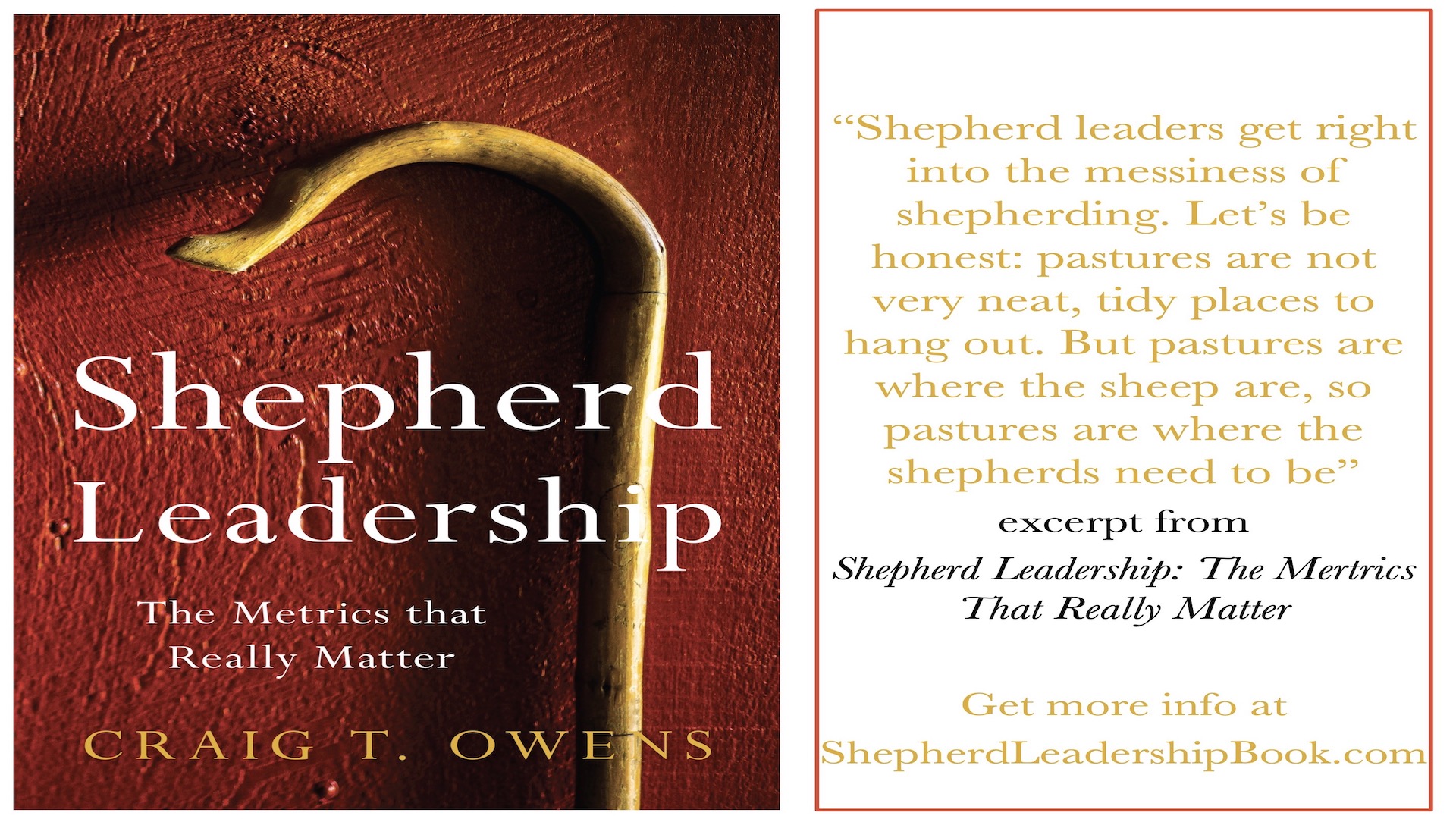
People get into fights for lots of silly reasons. But one thing that causes many hurt feelings and harsh responses is gossip. This is one of the “sheep bites” I discuss in great detail in my book When Sheep Bite. 

In the chapter “When Sheep Gossip About You,” I wrote—

     The first part of the antidote when you have heard gossip spoken about you is to remember that God has also heard the gossip spoken about you. This is what Jesus demonstrated for us. Peter, who was there to hear all of the gossip spoken about Jesus, wrote, “He did not retaliate when He was insulted, nor threaten revenge when He suffered. He left His case in the hands of God, who always judges fairly” (1 Peter 2:23 NLT). … 

     There was no need for Moses to respond to these gossipers because the One “who always judges fairly” said to these gossipers, “Why then were you not afraid to speak against My servant Moses?” (Numbers 12:8). When God takes up our cause, let’s not try to take it out of His perfectly just hands. … 

     Just because God has called you to be His under-shepherd, and just because you may have been innocent of wrongdoing, you don’t have license to “lord it over” those who have gossiped about you. Moses described himself as humble—more humble than anyone else. He wasn’t bragging, but he wrote those words under the inspiration of the Holy Spirit. An insecure leader feels the need to defend himself against any slight against his character, whether it is a real or perceived attack. But the humble leader knows that God’s calling comes with God’s protection. 

Solomon wrote, “Avoiding strife is an honor for a person, but any fool will quarrel” (Proverbs 20:3). 

Anyone can start a fight—it’s not hard at all! Especially when someone has spoken foolishly, ignorantly, or even maliciously against you in their gossip. 

But only strong people can walk away from a fight. 

Only wise people can remain quiet when a fool tries to provoke them into an argument. 

Only God-fearing people can entrust themselves to the One who keeps perfect records of the insults and slander thrown at them—just as Jesus did. 

Be that kind of leader! 

If you are a pastor, you know the painful bites of gossip. This is just one of several sheep bites I diagnose to help shepherd leaders find a healing, biblical response. Please check out my book When Sheep Bite. 

►► Would you please prayerfully consider supporting this ministry? My Patreon supporters get behind-the-scenes access to exclusive materials. ◀︎◀︎

Faith Starts Walking

Listen to the podcast of this post by clicking on the player below, and you can also subscribe on AppleSpotify, or Audible. 

Sometimes the way that we show our faith in Jesus is that we hit the road! Check out this important lesson in faith from a loving father.

Check out this episode of The Podcast.

This story of the faith-filled father is found in John 4:46-53, and the prayer that I shared from King David is in Psalm 5:3.

I wrote more about this prayer of David in Prayer Preparation and Prayer Expectation. And I wrote about another man’s faith-filled walking in When Your Walking is Your Praying.

Here are a bunch of ways to get in touch with me and follow along with other projects on which I am involved.

►► Would you please prayerfully consider supporting this ministry? My Patreon supporters get behind-the-scenes access to exclusive materials. ◀︎◀︎

Takin’ Him To The Samaritans

Listen to the podcast of this post by clicking on the player below, and you can also subscribe on AppleSpotify, or Audible. 

Jesus sent us to all nations—to all the streets in all the world (Luke 24:47-49; Acts 1:8). We are to begin in Jerusalem and move outward. As we have seen, Jerusalem is like out Main Street, where there are more similarities than differences between us and the people to whom we are taking the Good News of Jesus. Judea is our Lombard Street & Rodeo Drive, where we are starting to see more differences. 

Then we move to Samaria where there are now way more differences than similarities. But still, let’s never forget that Jesus sent us and the Holy Spirit empowers us to be effective in our witness on every street—even those with whom we have very little in common. 

Jesus literally traveled to Samaria in John 4.

Jesus was baptizing in the Judean countryside (John 3:22) and now He is heading back to Galilee. “The shortest route from Judea in the south to Galilee in the north went through Samaria. The journey took three days if one wanted to travel the direct route. The Jews often avoided Samaria by going around it along the Jordan River. The hatred between the Jews and Samaritans went back to the days of the exile” (Dr. Henry Halley). 

There were wide differences between Jesus and this woman of Sychar:

  1. Cultural differences—The Jews considered the Samaritans to be no longer “pure” Jews, but half-breeds and traitors (vv. 5-9). 
  1. Personal differences—She was female, Jesus was male; she was a divorcée, Jesus was single (vv. 9, 16-18). 
  1. Religious differences—The Samaritans only recognized the Pentateuch; the Jews recognized the entire Old Testament Scripture. And the Samaritans saw Mt. Gerizim as the center of worship and the place the Messiah would reign; the Jews believed Jerusalem to be the center of worship (vv. 19-20). 

Our first task is to find common ground with whoever we can. Jesus used the word “whoever” three times in John 3:16, 18, 36, saying that whoever believed in Him would have eternal life. We need to have this same mindset. It’s not His desire that any should perish—not even the Samaritans!—but that all should come to know Him as Savior. 

In his book Winning With People, John Maxwell presents The 101% Principle: Find the 1% we can agree upon and give that 100% of your effort. 

Jesus found the 1% and gave 100% to it. For He and this Samaritan woman their common connection was water and worship (John 4:9-15, 21-26). Jesus used both of those things to open a conversation about eternal matters. 

Who are the Samaritans in my life? They are people…

  • …I have very little in common with 
  • …I go out of my way to avoid talking to 
  • …I think are never going to “get it” 
  • …who make me angry, defensive, or combative 

But they are also people…

  • …for whom Jesus died
  • …who are dearly loved by our Heavenly Father 
  • …who need to hear the Gospel 
  • …to whom I have been sent 

Our prayer should be this: 

Holy Spirit, help me to notice the people to whom I have been blind or whom I have been avoiding. Help me to find the 1% on which we can agree, and then empower me to give 100% of my effort to that 1%. I want my heart to beat with the heart of my Savior: Whoever believes on Him will not perish but will have eternal life.

If you’ve missed any of the others messages in our Takin’ Him to the Streets series, you can find them all by clicking here. 

►► Would you please prayerfully consider supporting this ministry? My Patreon supporters get behind-the-scenes access to exclusive materials. ◀︎◀︎

Jesus The Gentleman

Listen to the podcast of this post by clicking on the player below, and you can also subscribe on AppleSpotify, or Audible. 

Have you every thought of Jesus as a gentleman? 

Consider this question He asked of a Samaritan woman, “Will you give Me a drink?” (John 4:7). 

As a Man, Jesus could have demanded to be served, but instead He asked her if she was willing to serve Him. He gave her dignity. 

Jesus was tired and thirsty (v. 6), so He gave her an opportunity to be a blessing to Him. When Samaritans were so often overlooked or avoided or even derided by Jews, Jesus gave her a chance to help someone truly in need. 

Jesus offered her living water. She was used to an angry look or a striking hand, not an offer of a blessing. He said, “I would like to bless you with living water, if you will just ask Me for it” (v. 10). 

Once again, Jesus affirmed her dignity by giving her the option to take His blessing—it was right there for the asking. He didn’t force anything upon her, but allowed her to choose. 

Jesus didn’t talk down to her. He didn’t demean her as a woman, a Samaritan, or a divorcée. He didn’t scold her for her religious beliefs. He treated her with love as a person of value and great worth. 

Jesus is love. 

Jesus is gentle. 

Jesus wants to show us His favor. 

And Jesus wants us to show His favor to others. 

Are you treating others in this gentle, Christ-honoring way? 

It’s an important question for you to ask and honestly listen to the answer from the Holy Spirit. Let’s be the kind of gentlemen and gentlewomen that represent Jesus well. 

►► Would you please prayerfully consider supporting this ministry? My Patreon supporters get behind-the-scenes access to exclusive materials. ◀︎◀︎

Our Gracious God

Answer me when I call, God of my righteousness! You have relieved me in my distress; be gracious to me and hear my prayer. … But know that the Lord has set apart the godly person for Himself; the Lord hears when I call to Him. (Psalm 4:1, 3)

I can’t come into God’s presence in my own strength. But when I am clothed in the righteousness of Jesus, the distress of my sin is relieved and I am joyfully welcomed into the awesome presence of my Heavenly Father! He longs to hear my voice, and He loves to be gracious to me!

Takin’ Him To Rodeo Drive

Listen to the podcast of this post by clicking on the player below, and you can also subscribe on AppleSpotify, or Audible. 

Jesus has sent us on-mission (which means we are missionaries) to every street. We don’t go in our power, but we are empowered by the baptism of the Holy Spirit (see Luke 24:46-49). 

Jesus said our missionary work would take us to every street, starting with Jerusalem—which we have called Main Street. These are people very similar to us. Then our mission will expand into all Judea (Acts 1:8). These are people that have less in common with us. Last week we talked about taking the message of Jesus to Lombard Street: Talking with people who have knowledge of the Bible, but tend to twist and turn with the popular traditions of the day. 

Remember that our mission is to be witnesses—share the Scripture and our personal story. It’s not our responsibility to try to open people’s minds so they can repent, but the Holy Spirit opens minds and calls people to repentance. 

The apostle Paul reminded us that, “The god of this age has blinded the minds of unbelievers” (2 Corinthians 4:4). The Holy Spirit uses our witness as the catalyst to open minds. This clash of light and darkness creates acceptance and anger. Notice these contrasts in one short segment of Paul and Silas’ missionary journey in Acts 16:13-24 and 17:1-13:

  • Acceptance—Acts 16:13-15 
  • Anger—16:16-24 
  • Acceptance—17:1-4 
  • Anger—17:5-6 
  • Acceptance—17:10-12 
  • Anger—17:13 

The opposition in Philippi brought Paul and Silas to Thessalonica, and the opposition in Thessalonica brought them to Athens. 

Athens was named for the goddess Athena, and it has been called “the university city of the Roman world.” Philo (a Jewish historian) called the Athenians “keenest in intellect.” It was the center of art, literature, and philosophy 

I’m going to call Athens “Rodeo Drive.” 

Rodeo Drive is called “the intersection of luxury, fashion and entertainment.” Kay Monica Rose, the Rodeo Drive Committee President, said, “There is nothing in the world comparable to Rodeo Drive. The legendary street’s magic continues thanks to the exemplary craftsmanship from today’s greatest fashion houses and brands, the architect-designed boutique spaces, the spectacular window displays, artist collaborations and pop ups, and our unrivaled customer service. At the heart of my vision for Rodeo Drive is the preservation and advancement of an unmatched legacy.”  

A marketing professor once told me, “When advertising, you have to remember that everyone has radio station WIFM playing in their head—What’s in it for me?” The people on Rodeo Drive are self-focused and self-assured. 

How do we take the message of Jesus to those Judeans on Rodeo Drive? Let’s learn from Paul’s time there (Acts 17:16-34). 

  1. Control your anger. Even though Paul was “greatly distressed,” he didn’t let his anger control him, but he kept his distress under control. 
  2. Use measured words. Paul “reasoned” with the people there, which means he engaged in meaningful dialogue with them.  
  3. Don’t argue. Some to the Athenians “disputed with him [Paul]” but he didn’t dispute back. Instead he was preaching the good news about Jesus and the resurrection. 
  4. Start where they are. Paul noted that the Athenians were “very religious.”  He doesn’t condone their idolatry, but he simply uses it as a conversation starter. 
  5. Move to the eternal issue. He then proceeds to point them to Jesus as the “unknown god” that they are worshiping, bringing everything back to His resurrection from the dead.  
  6. Be ready for acceptance and anger. As in Philippi and Thessalonica, there were some who accepted the Gospel message and some who got angry when they heard it.  

Remember: We don’t change minds—the Holy Spirit does by using our words as a catalyst. 

If you’ve missed any of the other “Streets” we have discussed in this series, please click here to get caught up. 

►► Would you please prayerfully consider supporting this ministry? My Patreon supporters get behind-the-scenes access to exclusive materials. ◀︎◀︎

Profound Humility

When something is recorded in all four Gospels, we should really take note.

Look at the profound humility of John! His birth was foretold by an angel, his ministry was so powerful that people wondered if he was the Messiah or possibly Elijah, yet he never let all these accolades go to his head. 

“I am such a lowly servant of Jesus that I don’t even have the right to take off His sandals.” 

As C.S. Lewis said, “Humility is not thinking less of yourself, it’s think of yourself less.” John was too focused on making sure people saw Jesus that he had no time to think about himself. 

Jesus said John was the greatest of the prophets (Matthew 11:11; Luke 7:28). The applause of the world means nothing. All that matters is the applause from nail-scarred hands, and the voice of the Master saying, “Well done, good and faithful servant.”

Links & Quotes

The devil wants us to remember what we’ve done or what we still need to do, but Jesus wants us to remember what He has already done. There is a huge difference! Check out this whole message here. I have lots of new content every week, which you can check out on my YouTube channel.

“The most likely man to go to hell is the man who has nothing to do on earth. Idle people tempt the devil to tempt them.” —Charles Spurgeon

“What were we made for? To know God. What aim should we have in life? To know God. What is the eternal life that Jesus gives? To know God. What is the best thing in life? To know God. What in humans gives God most pleasure? Knowledge of Himself.” —J.I. Packer

The Bible Archeology Report shares the Top 10 archeological discoveries related to the resurrection of Jesus.

We can learn childlike faith by simply watching and listening to how young children interact with their loving parents. This video is a clip from one of the message in our series called Kingdom Praying.

Technological advancements abound all around us. How are Christians supposed to interact with technology: embrace it? ignore it? This is a thoughtful message to give us a biblical paradigm for our daily use of technology. 

“We must quit bending the Word to suit our situation. It is we who must be bent to that Word, our necks that must bow under the yoke.” —Elizabeth Elliot

“The things you pray about are the things you trust God to handle. The things you neglect to pray about are the things you trust you can handle on your own.” —H.B. Charles 

“Learning to pray doesn’t offer us a less busy life; it offers us a less busy heart.” —Paul Miller

Who Looks Good?

Listen to the podcast of this post by clicking on the player below, and you can also subscribe on AppleSpotify, or Audible. 

The Gospel of John introduces John the baptizer to us like this, “He himself was not the Light; he came only as a witness to the Light” (John 1:8). 

  • John had a similar birth announcement as Jesus had (Luke 1:11-14, 28-33) 
  • John’s birth prompted a Holy Spirit-inspired song from his father that resonates with Mary’s Magnificat (Luke 1:46-55, 68-70) 
  • The early years of John are described in much the same terms as how Luke describes the early years of Jesus (Luke 1:80, 2:52) 
  • John quoted Scripture and taught with very similar authority as Jesus did (Matthew 3:1-12; Luke 3:1-19) 

Yet for all their similarities, John knew that he was only a herald of Jesus (John 1:19-27). 

John was not the Light—he was only a witness to the Light.

I am not the Light—I am only a witness to the Light. 

You may think that this statement is pretty obvious, and I did too. But as I read these words from John 1:8 again, it caused me to reevaluate just how much I really believe this. 

Do I remember this when no one compliments my sermon? Do I remember this when what I thought was an insightful comment on a verse of Scripture gets hardly any “likes” on my social media channels? Do I remember this when I am complemented and my posts are appreciated? 

Who exactly am I trying to make look good: me or Jesus?

I want John’s desire to become my desire and my prayer: “Jesus must increase, but I must decrease” (John 3:30). 

(Please check out all of the Scriptures I referenced in this post by clicking here.)

►► Would you please prayerfully consider supporting this ministry? My Patreon supporters get behind-the-scenes access to exclusive materials. ◀︎◀︎

Just Knowing Or Really Knowing?

Listen to the podcast of this post by clicking on the player below, and you can also subscribe on AppleSpotify, or Audible. 

I wonder how well you know the word “know”? Let’s find out.

Check out this episode of The Podcast.

Here are some helpful resources from this episode:

The Scriptures I referenced are 1 Samuel 2:12-17, 22; Genesis 2:25; John 1:4-5; Psalm 119:18; Ephesians 1:17.

I mentioned a blog post and video in this podcast about the work Jesus did on our behalf on the Cross. That was called Right Remembering.

My new book When Sheep Bite is available for pre-order!

Here are a bunch of ways to get in touch with me and follow along with other projects on which I am involved

►► Would you please prayerfully consider supporting this ministry? My Patreon supporters get behind-the-scenes access to exclusive materials. ◀︎◀︎