George Whitefield On Developing Godly Attributes

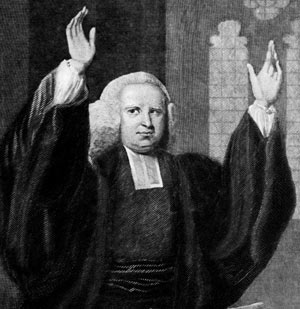
George Whitefield“The fruit of the Spirit (Galatians 5:22-23) do not automatically become evident in our lives. If we are not discerning enough to recognize their availability to us, to desire them, and then to nourish them in our thoughts, they will never become embedded in our nature or behavior. Every further step of spiritual growth in God’s grace must be preceded by acknowledging our lack of a godly attribute and then by exhibiting a prayerful determination to obtain it. …

“Today many people are attempting to use their mental capacity and logical thinking to obtain sanctification, yet this is nothing but a religious fabrication. They believe that if they just mentally put themselves on the altar and believe the altar provides the gift of sanctification, they can then logically conclude they are fully sanctified. Then they go happily on their way, expressing their flippant, theological babble about the ‘deep’ things of God.

“Yet the heartstrings of their old nature have not been broken, and their unyielding character, which they inherited from Adam, has not been ground to powder. Their soul has not throbbed with the lonely, gushing groans of Gethsemane. Having no scars from their death on Calvary, they will exhibit nothing of the soft, sweet, gentle, restful, victorious, overflowing, and triumphant life that flows like a spring morning from an empty tomb.” —George Whitefield

The Blessing Of Humility (book review)

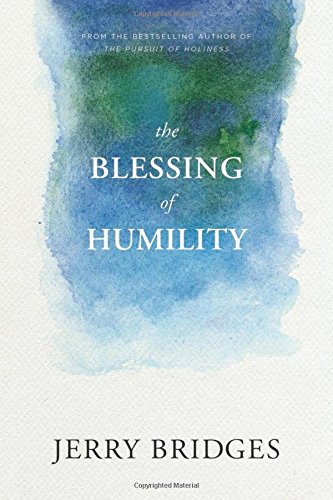
The Blessing Of HumilityIt’s not very often that someone would describe humility as a “blessing,” but Jerry Bridges solidly makes the case that Jesus taught and exemplified humility as one of the greatest blessings of all. As with every other Jerry Bridges book I have read, The Blessing Of Humility is a paradigm-changer.

Bridges introduces the topic of his book like this: “The character trait of humility is the second-most frequently taught trait in the New Testament, second only to love. At one time I counted fifty instances of love taught, either by precept or example, in the New Testament; I counted forty instances of humility. I regard these two traits as the foundational stones of Christian character. All other character traits, in one way or another, are built upon love and humility” (emphasis mine).

The longest recorded sermon from Jesus in the gospels is the Sermon on the Mount (Matthew 5-7). This sermon begins as Jesus is addressing His followers, and He lists eight “blessed are” statements which we now call The Beatitudes. Jerry Bridges believes that each of the Beatitudes point us to the lovingly humble lifestyle that should characterize all Christians. So one-by-one, Bridges unpacks each Beatitude, showing us how Jesus lived it out, and how His followers can too.

In fact, Bridges says, “Our guide will be Jesus Himself, Who began His longest recorded sermon with a litany of countercultural blessings known to us as the Beatitudes. Taken together, they offer a portrait of humility in action, something which God commands and which God promises to bless.”

This book isn’t very long, and probably could be read through quite quickly. However, if you will read this book slowly, allowing time to “soak in” each Beatitude and its implications for your life, I believe your spiritual heart will be unalterably changed.

I am a Tyndale book reviewer.

7 Quotes From “Hope … The Best Of All Things”

HopeJoni Eareckson Tada knows what it is to battle darkness and depression. And she also know the power of hope in those dark places. Hope … The Best Of All Things is an encouraging book for anyone going through a difficult place (please check out my book review here).

Here are some of the quotes from Hope which especially stood out to me.

“People are angry; cynicism and despair are on the rise, and the nightly news reminds us we are only one terrorist plot away from another national nightmare. Oh, how we need to grasp the soul-settling hope found in the pages of God’s Word—not only grasp it, but allow the hope of God to fill and overflow our hearts, transforming us into people who are confident and at peace with themselves, their God, and their circumstances.”

“For me, suffering is still that jackhammer breaking apart my rocks of resistance every day. It’s still the chisel that God is using to chip away at my self-sufficiency and my self-motivation and my self-consumption. Suffering is still that sheepdog snapping and barking at my heels, driving me down the road to Calvary where otherwise I do not want to go. My human nature, my flesh, does not want to endure hardship like a good soldier (2 Timothy 2:3) or follow Christ’s example (1 Peter 2:21) or welcome a trial as friend. No, my flesh does not want to rejoice in suffering (Romans 5:3) or be holy as He is holy (1 Peter 1:15). But it is at Calvary, at the Cross, where I meet suffering on God’s terms.”

“Do you know who the truly handicapped people are? They are the ones—and many of them are Christians—who hear the alarm clock go off at seven-thirty in the morning, throw back the covers, jump out of bed, take a quick shower, choke down breakfast, and zoom out the front door. They do all this on automatic pilot without stopping once to acknowledge their Creator, their great God Who gives them life and strength each day. Christian, if you live that way, do you know that James 4:6 says God opposes you? ‘God opposes the proud, but gives grace to the humble.’”

“Take up your cross daily and follow the Lord Jesus (Luke 9:23). I must qualify that statement. Please know that when I take up my cross every day I am not talking about my wheelchair. My wheelchair is not my cross to bear. Neither is your cane or walker your cross. Neither is your dead-end job or your irksome in-laws. Your cross to bear is not your migraine headaches, not your sinus infection, not your stiff joints. That is not your cross to bear. My cross is not my wheelchair; it is my attitude. Your cross is your attitude about your dead-end job and your in-laws. It is your attitude about your aches and pains. Any complaints, any grumblings, any disputings or murmurings, any anxieties, any worries, any resentments or anything that hints of a raging torrent of bitterness—these are the things God calls me to die to daily.”

“You see, we are to God the fragrance of Christ. The world can’t see Jesus endure suffering with grace because He’s not here on earth, but you and I are. And we can fill up in our flesh what is lacking in His afflictions (Colossians 1:24), and in so doing become that sweet fragrance, that perfume, that aroma of Christ to God.”

“God mandates that we go out into the streets and the alleys and the highways and the byways. He mandates that we find the poor, the blind, the disabled, and the lame, and help them get busy living, because misery might love company, but joy craves a crowd. And the Father and the Son and the Holy Spirit crave a crowd of joy, joy spilling over and splashing and filling the hearts of thirsty people in this world who are absolutely dehydrated from a lack of hope.”

“The hope we wait for is our only hope, the blessed hope, the glorious appearing of our great God and Savior, Jesus Christ (Titus 2:13). It is Jesus for Whom we have prevailed through all of this suffering, and, oh, for the sweetness of melding one heart into His in that intimacy that is so precious. … Our hope is for the Desire of the nations. Our hope is the Healer of broken hearts, the Friend of sinners, the God of all encouragement, the Father of all comfort, the Lord of all hope. And it is my prayer that the eyes of your heart might be enlightened so that you might know this hope to which He has called you.”

Jon Bloom On Humility

Jon Bloom“Humble people view other people as God’s marvelous image-bearers, windows to God’s glory, not as mirrors that enhance or diminish their own self-image. But this also means they aren’t absorbed by how others view them. …

“Humble people are unusually unaffected by this pressure to conform. They can be hard to categorize because they often don’t fit neatly into any cultural mold. They tend to eschew using trendy fashions or interests or social media as means of personal branding. They have preferences about those things, but they hold those preferences as ways of enjoying God’s manifold goodness rather than image-enhancers. …

“One of the things that can surprise us about truly humble people, which can sometimes be mistaken for pride, is that they can be quite offensive. Humble people, being without guile, say it like it is. And saying it like it is can sting, and even sound condemning. … But there is a qualitative difference between the offensiveness of the proud and the offensiveness of the humble. The proud offend to exalt or defend themselves and control or manipulate others. The humble offend in order to advance the truth for the glory of God and ultimate good of others. Humble offensiveness may not be popular, but it’s always loving.” —Jon Bloom

Lettie Cowman On Prayer

Lettie Cowman“Often it is simply the answers to our prayers that cause many of the difficulties in the Christian life.

“We pray for patience, and our Father sends demanding people our way who test us to the limit, ‘because…suffering produces perseverance’ (Romans 5:3). …

“We pray to be unselfish, and God gives us opportunities to sacrifice by placing other people’s needs first and by laying down our lives for other believers. …

“We pray to the Lord, as His apostles did, saying, ‘Increase our faith!’ (Luke 17:5). Then our money seems to take wings and fly away; our children become critically ill; an employee becomes careless, slow, and wasteful; or some other new trial comes upon us, requiring more faith than we have ever before experienced.

“We pray for a Christlike life that exhibits the humility of a lamb. Then we are asked to perform some lowly task, or we are unjustly accused and given no opportunity to explain….

“We pray for gentleness and quickly face a storm of temptation to be harsh and irritable.

“We pray for quietness, and suddenly every nerve is tested to its limit with tremendous tension so that we may learn that when He sends His peace, no one can disturb it.

“We pray for love for others, and God sends unique suffering by sending people our way who are difficult to love and who say things that get on our nerves and tear at our heart. …

“The way to peace and victory is to accept every circumstance and every trial as being straight from the hand of our loving Father.” —Lettie Cowman

8 Ways Pastors Can Minister Like The Apostle Paul

PreachingThe Apostle Paul reminded the Thessalonians of how he ministered among them (“You know…” [1 Thessalonians 2:1]). This gives all of us pastors now an example of how to minister.

(1) “With the help of God we dared to tell you His gospel” (v. 2). I cannot minister out of my own strength; everything must flow from God’s strength.

(2) The message “does not spring from error or impure motives, nor are we trying to trick you” (v. 3). I must constantly allow the Holy Spirit to check my motives and check my theology.

(3) “We speak as men approved by God to be entrusted with the gospel”( v. 4a). I am merely a vessel that God chooses to use to share His gospel. This must keep me humble.

(4) “We are not trying to please men but God, Who tests our hearts” (v. 4b). I minister only for God’s approval, only for the applause of Nail-Scarred hands. “We were not looking for praise from men” (v. 6).

(5) “We were gentle among you, like a mother caring for her little children … We dealt with each of you as a father deals with his own children, encouraging, comforting and urging you to live lives worthy of God” (vv. 7, 11, 12).

(6) “We loved you so much that we were delighted to share with you not only the gospel of God but our lives as well” (v. 8). Paul didn’t just show up to preach, but he was in day-to-day interaction with the saints.

(7) “We worked night and day in order not to be a burden to anyone while we preached the gospel of God to you” (v. 9). My salary should not be too much of a burden for my congregation.

(8) “Holy, righteous and blameless we were among you” (v. 10). My life of integrity adds weight to the message that I preach (v. 5).

May all of us who are pastors live and minister like this!

Billy Graham’s Humility

BillyGraham

This story was shared by Max Lucado—

I witnessed an example of this humility last October. I partnered with Michael W. Smith for a ministry weekend near Charlotte, NC. The retreat was held at “The Cove,” a beautiful facility that is owned and maintained by the Billy Graham Association.

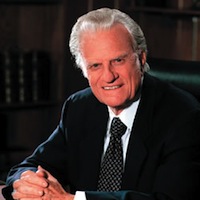
A few hours before the event, Michael and I met to go over the weekend schedule. But Michael could hardly discuss the retreat. He was so moved by what he had just experienced. He had just met with Billy Graham for the purpose of planning Rev. Graham’s funeral. The famous evangelist was, at the time, 94 years old. He was confined to a wheelchair, on oxygen. His mind was sharp and spirits were high. But his body was seeing its final days. So he called for Michael. And he called for his pastor. He wanted to discuss his funeral. He told them that he had a request.

“Of course,” they said. “Anything you want. What is it?”

“Would you not mention my name?”

“What?”

“Can you not mention my name? Just mention the name of Jesus.”

Is Christ Real To Me?

John WesleyJohn Wesley was deeply introspective about his faith in Jesus Christ. He once wrote—

“I did go thus far for many years…using diligence to eschew all evil, and to have a conscience void of offense; redeeming the time; buying up every opportunity of doing all good to all men; constantly and carefully using all the public and all the private means of grace; endeavoring after a steady seriousness of behavior, at all times, and in all places; and, God is my record, before Whom I stand, doing all this in sincerity; having a real design to serve God; a hearty desire to do His will in all things; to please Him who had called me to ‘fight the good fight,’ and to ‘lay hold of eternal life.’ Yet my own conscience beareth me witness in the Holy Ghost, that all this time I was but almost a Christian.”

To help keep himself on the right path, Wesley came up with this list of questions he regularly asked himself. This is a list any Christian would do well to read through regularly—

  1. Am I consciously or unconsciously creating the impression that I am better than I am? In other words, am I a hypocrite?
  2. Am I honest in all my acts and words, or do I exaggerate?
  3. Do I confidentially pass onto another what was told me in confidence?
  4. Am I a slave to dress, friends, work, or habits?
  5. Am I self-conscious, self-pitying, or self-justifying?
  6. Did the Bible live in me today?
  7. Do I give it time to speak to me everyday?
  8. Am I enjoying prayer?
  9. When did I last speak to someone about my faith?
  10. Do I pray about the money I spend?
  11. Do I get to bed on time and get up on time?
  12. Do I disobey God in anything?
  13. Do I insist upon doing something about which my conscience is uneasy?
  14. Am I defeated in any part of my life?
  15. Am I jealous, impure, critical, irritable, touchy or distrustful?
  16. How do I spend my spare time?
  17. Am I proud?
  18. Do I thank God that I am not as other people, especially as the Pharisee who despised the publican?
  19. Is there anyone whom I fear, dislike, disown, criticize, hold resentment toward or disregard? If so, what am I going to do about it?
  20. Do I grumble and complain constantly?
  21. Is Christ real to me?

Thursdays With Oswald—The People God Can Do Nothing With

Oswald ChambersThis is a weekly series with things I’m reading and pondering from Oswald Chambers. You can read the original seed thought here, or type “Thursdays With Oswald” in the search box to read more entries.

The People God Can Do Nothing With

     We say, “It seems out of all proportion that God should choose me—I am of no value”; the reason He chooses us is that we are not of any value. It is folly to think that because a man has natural ability, he must make a good Christian. People with the best natural equipment may make the worst disciples because they will “boss” themselves. It is not a question of our equipment, but of our poverty; not what we bring with us, but what He puts in us; not our natural virtues, our strength of character, our knowledge, our experience; all of that is of no avail in this matter; the only thing that is of avail is that we are taken up into the big compelling of God (1 Corinthians 1:26-28). His comradeship is made out of men who know their poverty. God can do nothing with the men who think they will be of use to Him. 

From The Place Of Help

God cannot impart wisdom to a know-it-all, but He can impart it to someone hungry to learn.

God cannot use someone who believes the world revolves around them, but He can use someone who believes the world revolves around Him.

Which are you?

This Is My Doing

This is My doing“My child, I have a message for you today. Let me whisper it in your ear so any storm clouds that may arise will shine with glory, and the rough places you may have to walk will be made smooth. It is only four words, but let them sink into your inner being, and use them as a pillow to rest your weary head: this is My doing [1 Kings 12:24].

Have you ever realized that whatever concerns you concerns Me too? For whoever touches you touches the apple of My eye [Zechariah 2:8]. You are precious and honored in My sight [Isaiah 43:4]. Therefore it is My special delight to teach you. I want you to learn when temptations attack you, and the enemy comes in like a pent-up flood [Isaiah 59:15], that this is My doing and that your weakness needs My strength, and your safety lies in letting Me fight for you.

Are you in difficult circumstances, surrounded by people who do not understand you, never ask your opinion, and always push you aside? This is my doing. I am the God of circumstances. You did not come to this place by accident—you are exactly where I meant for you to be. Have you not asked Me to make you humble? Then see that I have placed you in the perfect school where this lesson is taught. Your circumstances and the people around you are only being used to accomplish My will.

Are you having problems with money, finding it hard to make ends meet? This is My doing, for I am the one who keeps your finances, and I want you to learn to depend upon Me. My supply is limitless and I will meet all your needs [Philippians 4:19]. I want you to prove My promises so that no one may say you did not trust the Lord your God [Deuteronomy 1:32].

Are you experiencing a time of sorrow? This is my doing. I am a Man of sorrows, and familiar with suffering [Isaiah 53:3]. I have allowed your earthly comforters to fail you, so that by turning to Me you may receive eternal encouragement and good hope [2 Thessalonians 2:16].

Have you longed to do some great work for Me but instead have been set aside on a bed of sickness and pain? This is my doing. You were so busy I could not get your attention, and I wanted to teach you some of My deepest truths. They also serve who only stand and wait. In fact, some of My greatest workers are those physically unable to serve, but who have learned to wield the powerful weapon of prayer.” —Your loving Heavenly Father (as recorded by Laura A. Barter Snow)