7 Quotes from “The Baptism With The Holy Spirit”

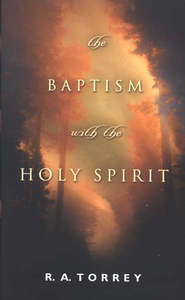
Baptism with the Holy SpiritR.A. Torrey’s book The Baptism With The Holy Spirit is a great study on this often overlooked member of the Trinity. You can read my full book review by clicking here. Below are some quotes that especially caught my eye…

“The baptism of the Holy Spirit is not for the purpose of cleansing from sin, but for the purpose of empowering for service.” 

“I fell into another error, namely, that anyone who received the baptism with the Holy Spirit would receive power as an evangelist or as a preacher of the Word. … There are three evils arising from the mistake just mentioned. First, disappointment. Many will seek the baptism with the Holy Spirit, expecting power as an evangelist, but God has not called them to that work and the power that comes from the baptism with the Holy Spirit manifests itself in another way in them. … The second evil is graver than the first, presumption. A man whom God has not called to the work of an evangelist or minister rushes into it because he has received, or thinks he has received, the baptism with the Holy Spirit. … The third evil is still greater, indifference.”

“While the baptism with the Spirit imparts power, the way in which that power will be manifested depends upon the work to which God has called us, and that no efficient work can be done without it. … It is not for us to select some field of service and then look to the Holy Spirit to impart to us power in that field which have chosen. It is rather for us to recognize the divinity and sovereignty of the Spirit, and to put ourselves unreservedly at His disposal.” 

“There are certainly few greater mistakes that we are making today, than that of setting men to teach Sunday school classes, and do personal work, and even to preach the Gospel, simply because they have been converted and received a certain amount of education—perhaps including a college and seminary course—but have not as yet been baptized with the Holy Spirit. Any man who is in Christian work, who has not received the baptism with the Holy Spirit, ought to stop his work right where he is, and not go on with it until he has been ‘clothed with power from on high.’”

“There are many who hold back from this total surrender because they fear God’s will. They are afraid God’s will may be something dreadful. Remember who God is. He is our Father. Never an earthly father had so loving and tender a will regarding his children as He has toward us. ‘No good thing will He withhold from them that walk uprightly’ (Ps. 84:11). ‘He that spared not His own Son, but delivered Him up for us all, how shall He not with Him also freely give us all things?’ There is nothing to be feared in God’s will. God’s will will always prove in the final outcome the best and sweetest thing in all God’s universe.” 

“One of the subtlest and most dangerous snares into which satan leads us is seeking the Holy Spirit, this most solemn of all gifts, for our own ends.”

“If we would continuously know the power of God, we should go often alone with Him, at the close of each day at least, and ask Him to show us if any sin, anything displeasing in His sight, has crept in that day; and if He shows us that there has, we should confess it and put it away then and there.” 

The Baptism With The Holy Spirit (book review)

Baptism with the Holy SpiritR.A. Torrey was successful as an evangelist, a pastor, a theologian, and an author. In The Baptism With The Holy Spirit he brings all four of these disciplines to bear on this major theological doctrine.

This book is fairly short, but if you take time to read all of the Scriptures that Rev. Torrey references, and if you take the time to contemplate all of his profound reasoning, there is enough here to keep you occupied for quite some time. I am a fourth generation Pentecostal (which means I grew up with these doctrines of the Holy Spirit being adhered to throughout my lifetime) and I still found quite a bit on which to think and search more deeply.

I sincerely appreciated the academic approach that Rev. Torrey brought to this book, and I would encourage anyone who wants to grow deeper in their relationship with God to take the time to really digest the material he has presented us.

Thursdays With Oswald—Overcoming Temptation

This is a weekly series with things I’m reading and pondering from Oswald Chambers. You can read the original seed thought here, or type “Thursdays With Oswald” in the search box to read more entries.

Overcoming Temptation

     In the silent years Our Lord learned how to be; at His Baptism He had revealed to Him what He had to do; in the Temptation what to avoid

     …The word “temptation” is built on a Latin word meaning “to stretch.” … Temptation is the test by an alien power of the possession held by a personality. 

     …Every temptation of satan is perfectly wise. The wisest, shrewdest, subtlest things are said by satan, and they are accepted by everybody as the acme of human philosophy; but when the Spirit of God is at work in a man, instantly the hollow mockery at the heart of what satan is trying to do, is seen. When we understand the inwardness of the temptation we see how satan’s strategy is turned into confusion by the Spirit of God. 

From Bringing Sons Unto Glory

We must always remember that the Holy Spirit led Jesus into the wilderness to be tempted by satan (see Luke 4:1-2). The Spirit would only do this after Jesus was ready to successfully face satan’s subtle temptations.

We, just like Jesus, can be victorious over these temptations by doing what Jesus did. (1) He was fully submitted to His Heavenly Father, (2) He was sensitive to go where the Holy Spirit led Him, and (3) He uncovered the shrewd and subtle arguments of satan by using the Word of God.

The One who overcame satan’s temptations wants to help you overcome as well—

For because He Himself [in His humanity] has suffered in being tempted (tested and tried), He is able [immediately] to run to the cry of (assist, relieve) those who are being tempted and tested and tried [and who therefore are being exposed to suffering]. (Hebrews 2:18, Amplified Bible)

He Shall Glorify Me (book review)

He Shall Glorify MeI am continually astounded at the insight Oswald Chambers has on the Scripture and its practical applications to our lives! In He Shall Glorify Me, Chambers elaborates on the immensely important role the Holy Spirit plays in the lives of Christians.

The title of the book is taken from a statement Jesus made about the Holy Spirit: He will glorify Me because it is from Me that He will receive what He will make known to you (John 16:14). Chambers begins with the advent of the Holy Spirit, leads us through a thorough doctrine of the Spirit, and then shares practical applications for Spirit-directed living.

These were originally lectures he gave at college, then they were turned into articles for a magazine, and finally complied into a book form. As far as we know, Oswald Chambers didn’t plan for these lectures to be published as a book, so he had no say in a proposed title. But the title—He Shall Glorify Me—is perfect, as every single lecture/chapter shows us how the Holy Spirit wants to bring out of our lives only what will bring glory to Jesus.

For anyone serious about allowing the Holy Spirit to work more deeply in their lives, He Shall Glorify Me is an indispensable resource.

Such Wondrous Love

CrossAs I am preparing both a Good Friday message and an Easter message, I am immersed in the details of Christ’s passion for us. There are so many thoughts swirling through my head about the amazing, unequaled, undeserved, overflowing love that Jesus has for us.

See from His head, His hands, His feet / Sorrow and love flow mingled down! / Did e’er such love and sorrow meet, / Or thorns compose so rich a crown? (Isaac Watts, When I Survey The Wondrous Cross)

You see, at just the right time, when we were still powerless, Christ died for the ungodly. Very rarely will anyone die for a righteous person, though for a good person someone might possibly dare to die. But God demonstrates His own love for us in this: While we were still sinners, Christ died for us. (Romans 5:6-8)

That Christ should join so freely in the scheme / Although it meant His death on Calvary / Did ever human tongue find nobler theme / Than love divine that ransomed me?

Such love, such wondrous love / Such love, such wondrous love / That God should love a sinner such as I / How wonderful is love like this!

That for a willful outcast such as I / The Father planned, the Savior bled and died / Redemption for a worthless slave to buy / Who long had law and grace defied (C.Bishop, Such Love)

Because of the joy awaiting Him, Jesus endured the Cross, disregarding its shame. Now He is seated in the place of honor beside God’s throne. (Hebrews 12:2)

I hope this week you will reflect on God’s amazing grace, Christ’s great love, and the Holy Spirit’s persistent drawing of your heart. Jesus died for us so that we could be brought into a loving relationship with our Heavenly Father!

If you are in the Cedar Springs area, please join me in celebrating with our churches our combined Good Friday service, or our Easter morning breakfast drama called Conspiracy!

Total Victory!!

Listen to the podcast of this post by clicking on the player below, and you can also subscribe on AppleSpotify, or Audible. 

“People outside the Christian tradition spend their time arguing the divinity of Christ. People inside the Christian tradition spend their time arguing the humanity of Christ.” —Jesus: A Theography by Leonard Sweet & Frank Viola

Jesus came to earth fully human. This cannot be overstated, as it is crucial to how we can defeat temptation.

Our First Parents (Adam and Eve) listened to the tempting words of the devil, which caused them to sin against God. By this treachery, they handed over the dominion of earth to satan, and he has used that to keep people bound in deathly fear since that time (see Hebrews 2:14-15). But at the moment of sin—even as God was pronouncing judgment—there was an implicit promise made of the salvation Jesus would bring. God’s promise was that Eve’s offspring would crush satan under His foot (Genesis 3:15).

This is why it was so important that Jesus be totally human in His work on earth, that He share in our humanity in every way (Hebrews 2:14, 17).

The devil has three weapons he uses: the lust of the flesh, the lust of the eyes, and the pride of life (1 John 2:16). Notice how he used these in his successful temptation of Adam and Eve—

  • The fruit was good for food = the lust of the flesh.
  • The fruit was pleasant to the eyes = the lust of the eyes.
  • The fruit was desirable to make one wise…to be like God = the pride of life.

Because this was successful for him, satan tempted the Second Adam (Jesus) using the exact same strategy—

  • Turn these stones to bread = the lust of the flesh.
  • I will give you the kingdom of the world and their glory = the lust of the eyes.
  • Cast yourself down from here and angels will protect you = the pride of life.

Jesus didn’t overcome these temptations because He was God. Jesus overcame them as a Man anointed by the Spirit of God! Jesus used the same weapons that are available to us: the Word of God and the anointing of the Holy Spirit. Not only do we have these two weapons, but we also have a victorious Savior who is helping us!

Because Jesus overcame temptation as a Man, He is able to help those who are being tempted (Hebrews 2:18).

For we do not have a high priest who is unable to empathize with our weaknesses, but we have One who has been tempted in every way, just as we are—yet He did not sin. (Hebrews 4:15)

Therefore He is able to save completely those who come to God through Him, because He always lives to intercede for them. (Hebrews 7:25)

Because Jesus overcame the temptations of satan as a man, you can too! 

To Him who is able to keep you from stumbling and to present you before His glorious presence without fault and with great joy—to the only God our Savior be glory, majesty, power and authority, through Jesus Christ our Lord, before all ages, now and forevermore! Amen. (Jude 24-25)

If you have missed any of the messages in this series called Who Is Jesus?, you can find them all here.

►► Would you please prayerfully consider supporting this ministry? My Patreon supporters get behind-the-scenes access to exclusive materials. ◀︎◀︎

Thursdays With Oswald—Bitter, Dogmatic, Intolerant, And Utterly Un-Christlike

This is a weekly series with things I’m reading and pondering from Oswald Chambers. You can read the original seed thought here, or type “Thursdays With Oswald” in the search box to read more entries.

Oswald ChambersBitter, Dogmatic, Intolerant, And Utterly Un-Christlike

     Spiritual maturity is not reached by the passing of the years, but by obedience to the will of God. Some people mature into an understanding of God’s will more quickly than others because they obey more readily, they more readily sacrifice the life of nature to the will of God, they more easily swing clear of little determined opinions. 

     It is these little determined opinions, convictions of our own that won’t budge, that hinder growth in grace, and makes us bitter and dogmatic, intolerant, and utterly un-Christlike. 

From Bringing Sons Unto Glory 

Ouch! It’s so important that I read God’s Word with a heart ready to obey whatever the Holy Spirit shows me, even if it means sacrificing what I’ve always thought to be true. I must not cling to my own “little determined opinions” if I want to grow in spiritual maturity.

The contrast is crystal clear: Either I am maturing through complete obedience to God, or I am becoming bitter and dogmatic, intolerant, and utterly un-Christlike.


A Checklist For Growth

Listen to the podcast of this post by clicking on the player below, and you can also subscribe on AppleSpotify, or Audible. 

Take just a moment to read these words from the apostle Peter—

So then, dear friends, since you are looking forward to this, make every effort to be found spotless, blameless and at peace with Him. … Therefore, dear friends, since you have been forewarned, be on your guard so that you may not be carried away by the error of the lawless and fall from your secure position. But grow in the grace and knowledge of our Lord and Savior Jesus Christ…. (2 Peter 3:14, 17-18)

How do I know I’m looking forward and growing? Here’s a checklist that needs to be reviewed regularly:

  • Am I spending more time preparing for my future than I am repairing my past?
  • Do I know that growth is both hard and rewarding work?
  • Do even the littlest of sins disturb me, rob me of peace, and send me quickly to confession and repentance?
  • Do I filter all my reading, studying, and learning through the standard of Scripture?
  • Is my faith stronger now than it was a year ago?
  • Am I exhibiting more Christ-like characteristics—grace, forgiveness, patience—now than I was last year?
  • Am I thrilled every time I get to learn more about Jesus?
  • Am I more reliant on the Holy Spirit now than I have been in the past, and do I converse with Him more frequently?
  • Would those closest to me say that I am becoming more like Jesus?

I hope we can all answer “Yes” to more and more of these items!

Growth is not automatic—this is especially true for spiritual growth. Growth must be intentional or it will not happen. I want to keep going forward in Christ!

May we add our “Amen” to Peter’s prayer: May God give you more and more grace and peace as you grow in your knowledge of God and Jesus our Lord (2 Peter 1:2).

►► Would you please prayerfully consider supporting this ministry? My Patreon supporters get behind-the-scenes access to exclusive materials. ◀︎◀︎

Responding To The Voice

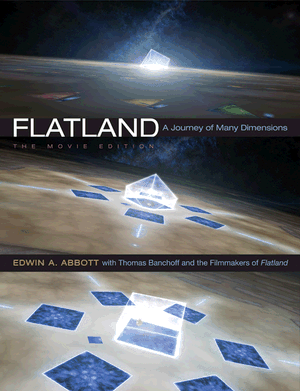
FlatlandIn 1880, Edwin A. Abbott wrote Flatland, a book that would later become a favorite of Albert Einstein. Abbott was a college-trained mathematician and a theologian; in fact he was actually better known for his theological writings than for Flatland. Later on Einstein would say that “things should be made as simple as possible, not simpler.” In other words, don’t dumb-down the concept, but state it on a level where more people can grasp it. That’s why, I believe, Einstein loved Flatland.

Flatland is told through the eyes of Square, a two-dimensional shape that lives in Flatland. Square has length and width, but no height. So the inhabitants of Flatland can move back-and-forth, and side-to-side, but not up-and-down. To get an idea of this, put your eye right on the level of a tabletop, and look at an item on the table. Imagine you can only see what is touching the tabletop (but nothing that rises any higher or lower than that), and you will get an idea of Square’s two-dimensional world.

One day Sphere visits Flatland. Sphere is three-dimensional, so he can move up-and-down. This means that Square can only see the part of Sphere that happens to be in his line of sight at that immediate moment. So he sees just a “slice” or “layer” of Sphere as Sphere moves through Flatland. Sometimes Sphere is nothing more than a disembodied voice when he is hovering above Flatland.

This gives us a little bit of an idea of how we perceive God. He exists in dimensions that we cannot fully comprehend, so we only see “slices” of Him as He passes though our line of sight. Sometimes He is just a disembodied Voice—or as the Bible calls Him, the Word of God.

But the Word of God compressed Himself into our dimension (John 1:14). All of the fullness—all of the other-dimension-ness—of His omnipotence, omnipresence, omniscience came to our “level” in the Person of Jesus Christ (Philippians 2:6-7). The Word was the complete and total fullness of God (John 1:1-3; Colossians 2:9). But unlike Square who couldn’t fully know Sphere, God is fully knowable in The Word—in Jesus Christ!

The question is: What are you going to do with The Word? The Word of God (the Bible) allows us to fully know The Word of God (Jesus). But we need to be willing to let the Holy Spirit strip away our puny, smaller-dimensioned, finite thinking of God.

Alvin TofflerAlvin Toffler wrote, “The illiterate of the future are not those who cannot read or write, but those who cannot learn, unlearn, and relearn.”

I would modify this to say, “Those illiterate of The Word (Jesus) are not those who cannot read The Word (the Bible), but those who won’t let the Holy Spirit help them learn, unlearn, and relearn who God is.” 

There is so much more to learn about The Word (Jesus), so let the Holy Spirit guide you in your reading of The Word (the Bible). I pray as Paul did that you will begin to experience more of the multi-dimensional-ness of God as revealed in The Word—

I pray that out of God’s glorious riches He may strengthen you with power through His Spirit in your inner being, so that Christ may dwell in your hearts through faith. And I pray that you, being rooted and established in love, may have power, together with all the Lord’s holy people, to grasp how wide and long and high and deep is the love of Christ, and to know this love that surpasses knowledge—that you may be filled to the measure of all the fullness of God. (Ephesians 3:16-19)

If you have missed any of the messages in this series called Who Is Jesus?, you can find them all here.

Thursdays With Oswald—Venting In Prayer

This is a weekly series with things I’m reading and pondering from Oswald Chambers. You can read the original seed thought here, or type “Thursdays With Oswald” in the search box to read more entries.

Venting In Prayer 

     When you are worked up to a pitch emotionally, read some of the Psalms, and the Spirit of God will gradually teach you how to form a spiritual nous*, a mind whereby you will not only understand but will slowly and surely get to the place where you can express your spirit, you will have a totally new language. 

* To read what Chambers means by the Greek word nous, click here. 

From Biblical Psychology 

Sometimes we’re too timid in our prayers. We think we need to hold back, or not really say what’s on our mind. We probably think that some of the language we use might be too offensive for God’s ears.

Have you ever read some of the Psalms? As Oswald Chambers suggests, this is a great place to form your prayer vocabulary. David really “lets loose” in some of his prayers, calling his enemies all sorts of names, and basically saying, “Get ‘em, God!”

So you don’t want to say those kinds of things to God? Don’t you think He already knows what you’re thinking? Wouldn’t it be much more effective to “vent” in prayer—in the safe presence of your loving Heavenly Father? It’s really only after you “get it out” that the Holy Spirit can help you work it out.

Express yourself—vent in God’s presence instead of the presence of those who are troubling you—and then listen to how God’s Spirit will help you slowly and surely get a brand new perspective on your situation.

UPDATE: I have a whole chapter called ‘Your Emergency Release Valve’ about these types of prayers in my book When Sheep Bite.