Gratitude Is A Medicine

Listen to the podcast of this post by clicking on the player below, and you can also subscribe on AppleSpotify, or Audible. 

Gratitude is our shield against the negativity, and gratitude is also our sword against the ambushers. But using these pieces of our armor is exhausting, which means we also need a way to recover from the attacks of negativity. 

Jesus began His public ministry with a sermon that prompted Luke to record that “everyone spoke well of Him.” But in less than 60 seconds, after Jesus outlined how His ministry would unfold, Jesus is being criticized to the point where those same praising people are now ready to throw Jesus off a cliff (Luke 4:18-29)! 

Elbert Hubbard wrote, “If you have something others don’t, know something others don’t, or do something others aren’t doing, then, rest assured, you will be criticized. … To avoid criticism say nothing, do nothing, and be nothing.” 

Even though Hubbard is probably right, Christians don’t have the option to “say nothing, do nothing, be nothing,” because Jesus has called us to go into all the world, preach the Good News, and be salt and light. That means we will be victims of criticism. We can use our shield and sword of gratitude, but we are also going to need some medicine to help us recover too.

“Sticks and stones may break my bones but words will never hurt me” is a lie. Words do hurt. 

Jesus told us these stinging words would be thrown at us like sticks and stones in Luke 6:22. When we are criticized, we have to be careful not to get embittered. How does that happen? We are naturally self-protective, so criticized people become critical and cynical unless they can be healed and have joy restored. If we hold on to our hurts, bitterness can fester in our hearts (Hebrews 12:14-15). 

Look at David in Psalm 69. He acknowledged the attacks from his enemies and how it made him feel, but then he applies the healing medicine of gratitude—

But as for me, afflicted and in pain—may Your salvation, God, protect me. I will praise God’s name in song and glorify Him with thanksgiving. (Psalm 69:29-30) 

Our healing is in our thanking! 

Medical research has shown that gratitude improves physical health—it reduces stress and resets the heart’s healthy rhythm. This is just as true spiritually: gratitude is our medicine. 

You may be thinking, “How can I bless critical people? How can I be grateful when I’m surrounded by such hostility?”  

David also wrote Psalm 23 for us. This is the psalm that begins, “The Lord is my Shepherd, I shall not be in want.” But notice especially the words of verse 5: “You prepare a table before me in the presence of my enemies. You anoint my head with oil; my cup overflows.” 

It is precisely in the presence of enemies that God invites us to abide with Him and to receive His medicine of anointing. But I also see that our Good Shepherd doesn’t just give us adequate blessings, but overflowing blessings—enough for me and more to share with those around me. 

In the New Testament Greek, one word for “bless” is eulogeo which literally means “good words.” Jesus, Paul, and Peter all tell us that when we are victims of the sticks and stones of negative words, we are to respond by saying good words both to God and to those who are hurling evil words at us (Matthew 5:43-44; 1 Corinthians 4:12; 1 Peter 3:9). 

Peter shows us exactly how Jesus did this when He was hanging on the Cross and enduring the sneers, mocking words, and insults from those surrounding Him (1 Peter 2:21-23; Luke 23:35-39). Instead of throwing evil words back at them, Jesus blessed them by saying, “Father, forgive them for they do not know what they are doing” (Luke 23:34). 

Learn a lesson from our Lord
Often silence cuts like a sword
When we stand upon the Rock
We needn’t bother when fools mock

Bantering with fools just won’t do
Unless you want to be foolish too
To the wisest words they won’t listen
But joy in airing their own opinion

Our Lord knew just what to do
When mockers hurled words untrue
He entrusted things to the King
Who perfectly records everything

Help us follow the example You gave
To not engage with those who rave
May not our hasty words undo

Because we have been forgiven, we can forgive. Because we have been blessed with overflowing blessings, we can bless. Our healing is in our thanking! 

If you’ve missed any of the messages in this series on power of gratitude, you can check them all out by clicking here. 

►► Would you please prayerfully consider supporting this ministry? My Patreon supporters get behind-the-scenes access to exclusive materials. ◀︎◀︎
Gratitude Is A Sword

Listen to the podcast of this post by clicking on the player below, and you can also subscribe on AppleSpotify, or Audible. 

It would be nice if complainers were satisfied just complaining to themselves, but they’re not. Do you know the cliché misery loves company? It’s just as true for complainers: They really want others to join them in their bellyaching! 

I think a good word for what these negative people do is ambush. The dictionary says that means to lie in wait with hostile intent. Jesus told His followers that this ambushing behavior was going to happen. In Luke 6:22, He uses the word “when” not “if”—

Blessed are you when people hate you, when they exclude you and insult you and reject your name as evil, because of the Son of Man. 

We see this vividly portrayed in the life of Daniel. This man had done nothing but helpful things since the moment he arrived in Babylon. He faithfully served foreign kings, never wanted any recognition for himself, saved lives, interpreted dreams, and explained confusing things. He had a great work ethic and impeccable integrity. But the complainers still wanted to ambush him (see Daniel 6:1-5). 

One psalmist described these ambushers in terms of a hunting lion: His mouth is full of lies and threats; trouble and evil are under his tongue. He lies in wait near the villages; from ambush he murders the innocent. His eyes watch in secret for his victims (Psalm 10:7-8). 

Doesn’t this sound like what the devil does too? Be alert and of sober mind. Your enemy the devil prowls around like a roaring lion looking for someone to devour (1 Peter 5:8). 

I already shared with you that gratitude is our shield for defense, but the Bible tells us that gratitude is also our sword for offense! 

Jerusalem was surrounded by three armies that were lying in wait to ambush the Israelites. After God told the people of Jerusalem that He would deliver them, King Jehoshaphat sent out his army with the worshippers at the front of the ranks. Then listen to how worship not only thwarted the ambushers but boomeranged their evil plans back on themselves—

As they began to sing and praise, the Lord set ambushes against the men of Ammon and Moab and Mount Seir who were invading Judah, and they were defeated. The Ammonites and Moabites rose up against the men from Mount Seir to destroy and annihilate them. After they finished slaughtering the men from Seir, they helped to destroy one another. (2 Chronicles 20:22-23) 

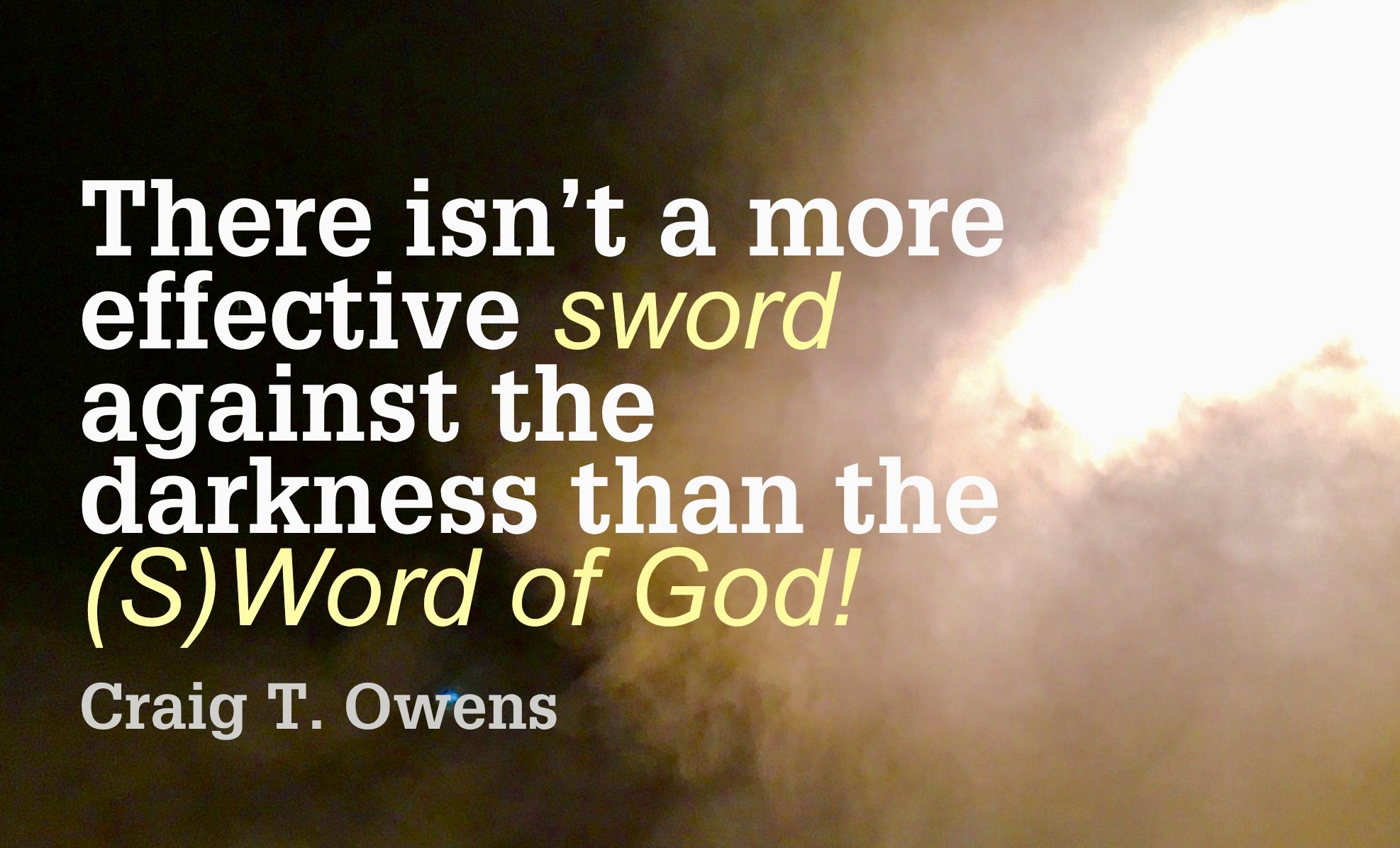
When we worship God and sing our grateful praise to Him, we put the sword of God in our mouths. And there isn’t a more effective sword against the darkness than the (S)Word of God (Hebrews 4:12; Revelation 1:16; Ephesians 6:17)! 

Paul told the church at Colosse that singing our praise to God with other saints was an encouragement to all who heard those worshipful songs (Colossians 3:15-17). 

So when the ambushers are surrounding you, use your thankful songs as a shield, as a sword, and as an encouragement to others! 

If you’ve missed any of the other messages in our series The Great Attitude of Gratitude, you can find them all here.

►► Would you please prayerfully consider supporting this ministry? My Patreon supporters get behind-the-scenes access to exclusive materials. ◀︎◀︎

Gratitude Is A Shield

Listen to the podcast of this post by clicking on the player below, and you can also subscribe on AppleSpotify, or Audible. 

Gratitude is a great attitude. It sets you apart from the crowd of complainers, and it causes people to ask, “What do you know that we don’t know?”      

Wouldn’t you just love to silence the complainers in your life? Maybe you can relate to this poem by Shel Silverstein called Complainin’ Jack

This morning my old jack-in-the-box
Popped out—and wouldn’t get back-in-the-box.
He cried, “Hey, there’s a tack-in-the-box,
And it’s cutting me through and through.
“There also is a crack-in-the-box,
And I never find a snack-in-the-box,
And sometimes I hear a quack-in-the-box,
‘Cause a duck lives in here too.”
Complain, complain is all he did—
I finally had to close the lid.

Since, as Christians, we can’t really “close the lid” on the complaining people around us, maybe there’s something else we can do. I can think of three possibilities. 

  1. We could entirely avoid complaining people. But to do this wouldn’t allow us to live our lives as the salt and light Jesus called us to (Matthew 5:13-16). After all, in order for salt to season or light to drive away darkness, the salt and light have to be in close proximity to those they are helping. 
  1. We could simply ignore the negativity. Be around it, but do nothing about it. But both Paul and Jesus call us to engage with people in a way that points them to the Good News of the Gospel (Philippians 2:14-16; Matthew 28:19). 
  1. If we cannot avoid complainers nor remain apathetic about them, we must find a way to engage them but protect our hearts in the process. 

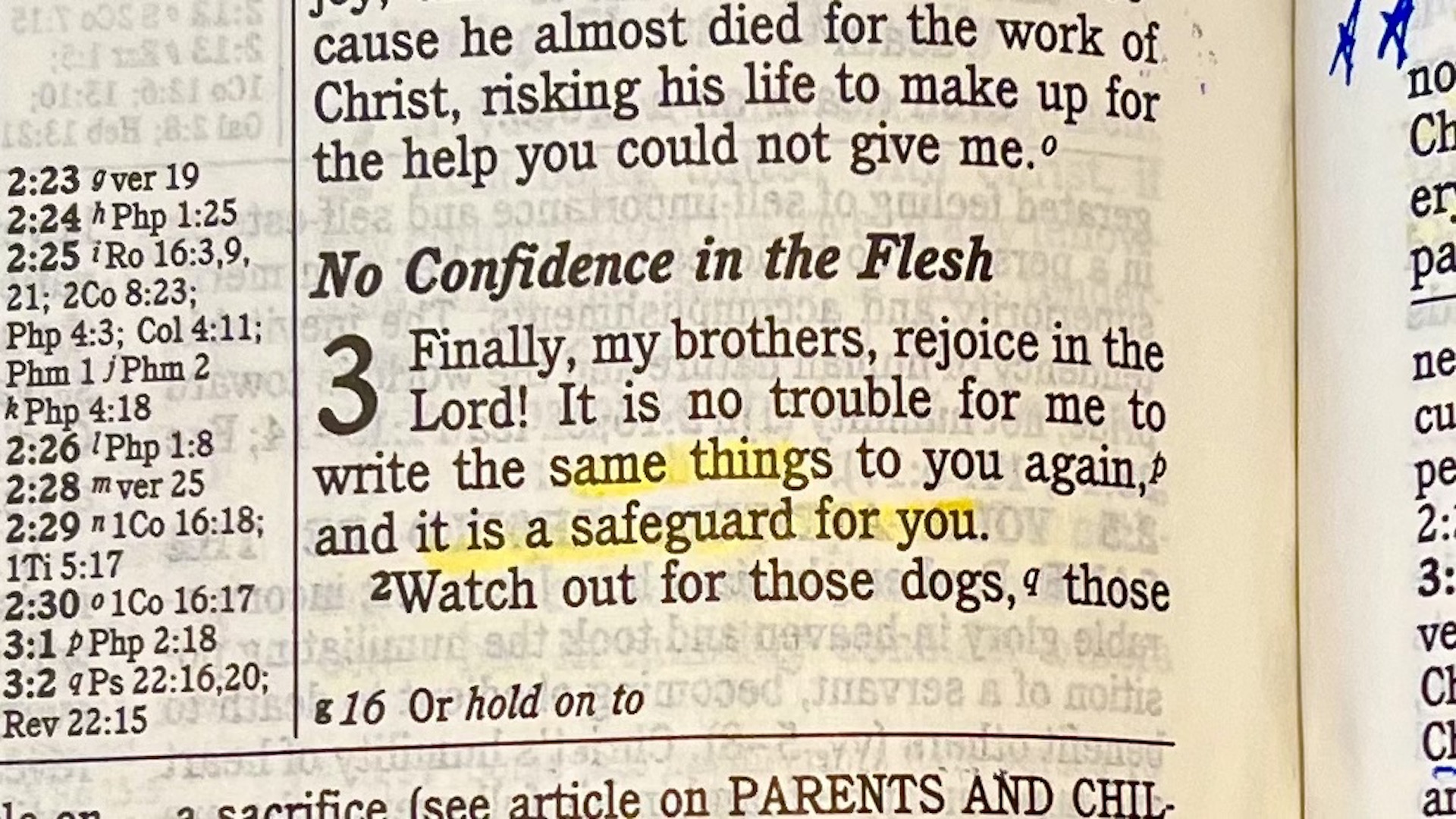
We learn from the apostle Paul’s letter to Philippi that gratitude is our shield against anything that would seek to steal our joy! “Further, my brothers and sisters, rejoice in the Lord! It is no trouble for me to write the same things to you again, and it is a safeguard for you” (Philippians 3:1). 

In the Greek, the root word for “safeguard” means “fail.” But when we add the prefix it becomes cannot fail! So rejoicing makes us secure, firm, reliable.

Quite simply that means that gratitude is our attitude protector because gratitude is our shield against anything that would seek to steal our joy!

Jesus used the same word for rejoicing even when we are facing insults, exclusion, and persecution—

Blessed are you when people hate you, when they exclude you and insult you and reject your name as evil, because of the Son of Man. Rejoice in that day and leap for joy, because great is your reward in heaven. For that is how their ancestors treated the prophets. (Luke 6:22-23) 

Both Jesus in this passage and Paul in Philippians 3:1 remind us that our rejoicing is IN the Lord. We are not expected to rejoice in our circumstances, but in who God is for us. Matthew Henry noted, “The more we rejoice in Christ the more willing we shall be to do and to suffer for Him, and the less danger we shall be in of being drawn away from Him.” 

I also like both the proactive and reactive use of rejoicing that John Henry Jowett identifies when he says, “Gratitude is a vaccine, an antitoxin, and an antiseptic.” Rejoicing is never supposed to be a one-and-done action, but it is an ongoing lifestyle. As Paul wrote to the Christians in Philippi just a few verses later, “Rejoice in the Lord always. I will say it again: Rejoice!” (Philippians 4:4). 

Gratitude is a shield—a vaccine, an antitoxin, and an antiseptic—but it doesn’t protect us unless we use it!

In order to use this shield whenever it’s needed, we have to be constantly reminded to be grateful. This is where we can leverage the power of our brain’s reticular activating system. I shared a short video about how to do this on The Podcast last week—check it out here. 

Gratitude is a great attitude, and grateful people are a winsome testimony of God’s love and provision to those “complainin’ Jacks” we all encounter. Try it and see what a difference it will make with those you are around this week. 

To check out all of the sermons in this series, please click here. 

►► Would you please prayerfully consider supporting this ministry? My Patreon supporters get behind-the-scenes access to exclusive materials, like this exclusive video in which I take my supporters behind the scenes of my thought process in designing my confrontation flowchart. ◀︎◀︎

The Great Attitude Of Gratitude

There’s something about gratitude that distinguishes people. Think about it: would you rather hang around with grumblers or grateful people? 

The gratitude of Paul and Silas certainly made them stand out from the crowd when they were in Philippi. Wrongly accused, beaten, and thrown in prison, but instead of bellyaching, they were praising God. Later on, when Paul wrote his letter to the Christians in Philippi, the theme of gratefulness permeates his letter. 

The distinguishing mark is actually in the title: The GReat ATTITUDE spells out GRATITUDE! 

Join us this Sunday as we rejoin a series of messages perfectly timed for this season of Thanksgiving where we’ll be learning how great the attitude of gratitude truly is! We would love to have you join us in person, but you can also check out the messages at 10:30 each Sunday morning on Facebook and YouTube. 

You can check out the messages we shared in this series last year by clicking here.

If you’ve missed any of the messages this year, you will be able to check them out here:

How To Be Thankful Everyday

Listen to the podcast of this post by clicking on the player below, and you can also subscribe on AppleSpotify, or Audible. 

I learned an important message about thankfulness from an Indiana Jones movie!

Check out this episode of The Podcast.

Some resources to go along with this video:

►► Would you please prayerfully consider supporting this ministry? My Patreon supporters get behind-the-scenes access to exclusive materials, like this exclusive video in which I take my supporters behind the scenes of my thought process in designing my confrontation flowchart. ◀︎◀︎

Year-End Review (2022 Edition)

Listen to the podcast of this post by clicking on the player below, and you can also subscribe on AppleSpotify, or Audible.

The apostle Peter said he wrote two letters to the church “as reminders to stimulate you to wholesome thinking” (2 Peter 3:1). And Paul reminded his young friend Timothy to “keep reminding [your congregation] of these things” (2 Timothy 2:14). 

In the spirit of those great apostles, I have made it a practice to take time at the end of each year to look back on all that we have learned in the previous year, and then to look forward to where God may be leading Calvary Assembly of God in this upcoming year.

Clicking on each series title will take you to a list of all of the sermons in that series. 

Awesome—Jesus told us that we could pray in His name and expect amazing things (see John 14:13-14, 15:16, 16:23-24). This does not mean that simply adding the phrase “in Jesus’ name, Amen” to the end of a prayer unlocks a secret code. Rather, it means that the more we understand just how awesome our Savior is, and that He is the Key to God’s storeroom, the more we will being to align our prayers with the will of God. Jesus desires for His Father’s glory to be seen on earth through the answers to our prayers. The writer of Hebrews opens his letter by reminding us that Jesus is “the radiance of God’s glory and the exact representation of His being, sustaining all things by His powerful word” (Hebrews 1:3).

Is That In The Bible? (part 1 and part 2)—A meme that makes me chuckle every time I see it is a “quote” attributed to Abraham Lincoln in which he says, “The problem with quotes found on the internet is that they are often not true.” (Not to spoil the joke for you, but unless Lincoln knew how to time travel to the future, I don’t think he knew about the modern internet! 😂). I love this meme because it captures something that so many people fall into: a quick acceptance of a statement without verifying its source or thinking through the implications of the statement’s truthfulness. I think you may be surprised to discover just how many phrases we call biblical aren’t, and how many phrases there are that we never realized are actually in the Bible.

Christmas Unwrapped At Easter—Remember as a kid when you would unwrap a gift and discover it wasn’t something you really wanted, but then your parents explained that it was something you needed? The birth of Jesus in Bethlehem was a little like that—it wasn’t exactly what people were hoping for, but it was exactly what they needed. The real meaning of that Christmas gift wasn’t realized until after Jesus was crucified and resurrected back to life.

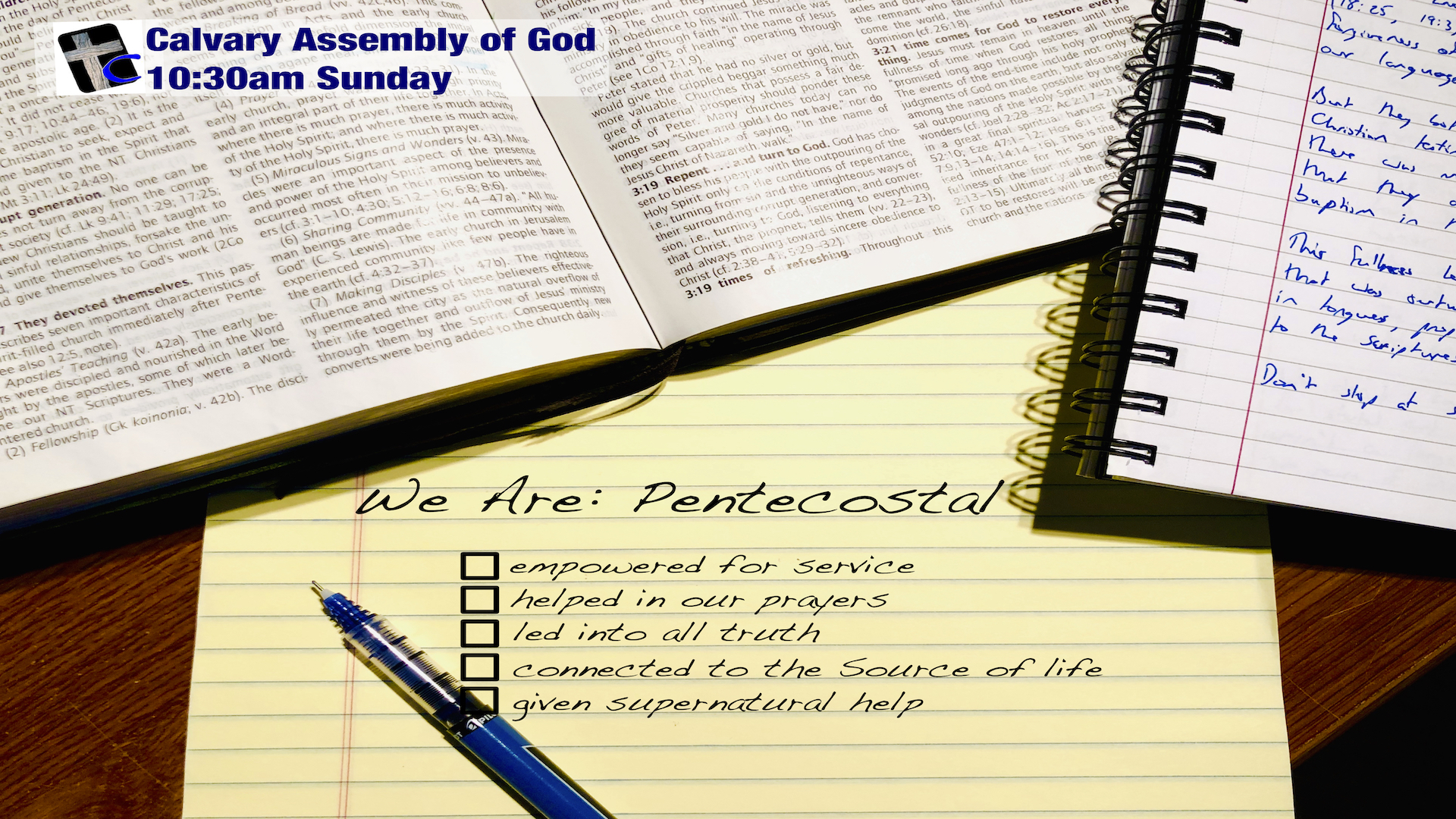
We Are: Pentecostal—Pentecost for over 1500 years was a celebration in Jerusalem that brought in Jews from all over the world. But on the Day of Pentecost that came just ten days after Jesus ascended back into heaven, the meaning of Pentecost was forever changed! Followers of Jesus—now empowered by an infilling of the Holy Spirit—began to take the good news of Jesus all over the world. These Spirit-filled Christians preached the Gospel and won converts to Christ even among hostile crowds, performed miracles and wonders, stood up to pagan priests and persecuting governmental leaders, and established a whole new way of living as Christ-followers. We, too, can be Pentecostal followers of Jesus Christ today. 

Selah—The word Selah appears nearly 70 times in the Bible, almost exclusively in the Psalms. Although it is primarily a musical term, it applies beautifully to our summer series. It means a pause. Throughout the Psalms, Selah appears at the end of a verse, at the end of the psalm, or sometimes even mid-sentence. But each one of them is perfectly placed by the Spirit-inspired authors to get us to take a breath and deeply contemplate what we just read or sang. 

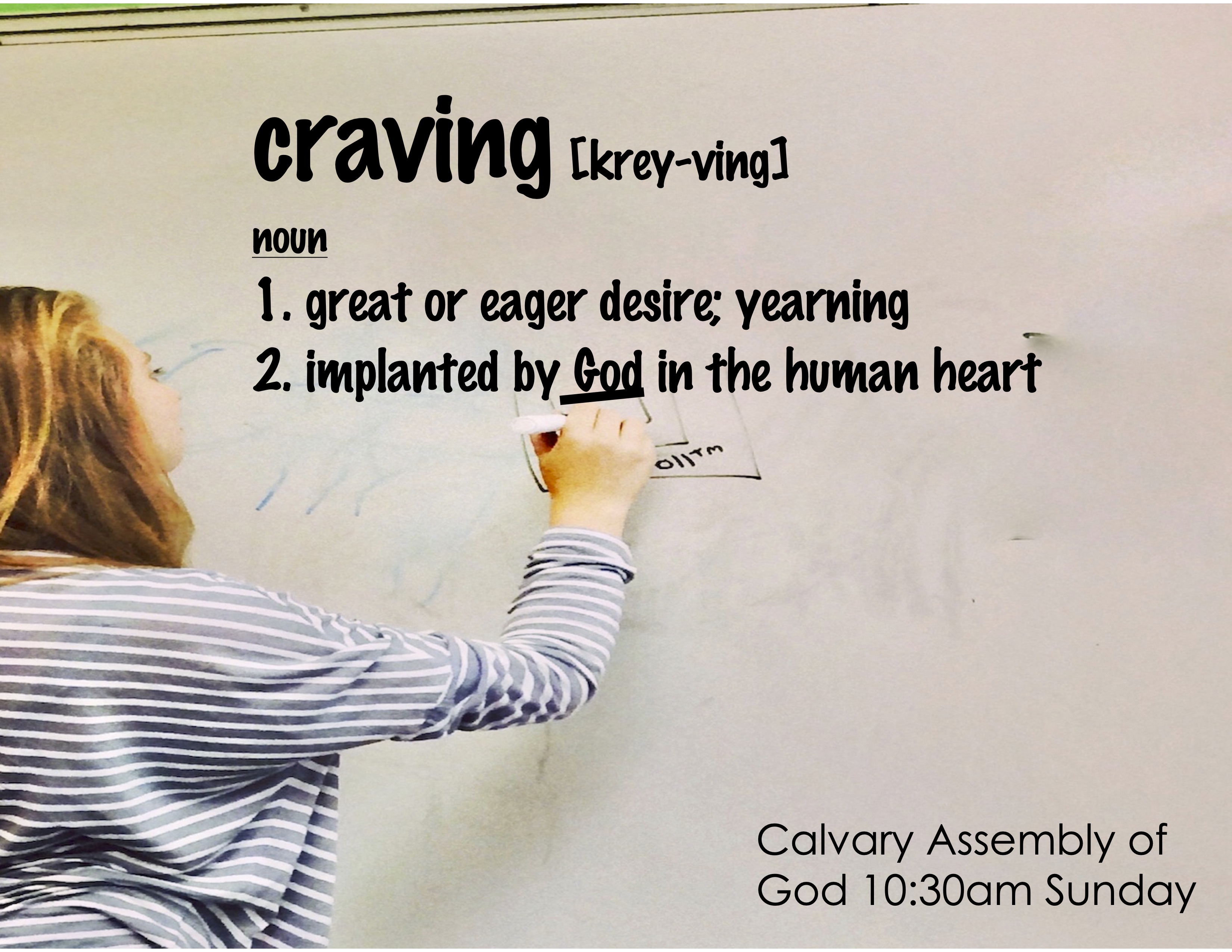
Craving—Doesn’t it seem like far too many Christians think of their relationship with Jesus as bland? After all, we’ve been told that any cravings we have should be quickly downplayed so that they don’t carry “good Christians” away. But what we discover in the Bible is that God made us to be craving creatures—He wants us to long deeply and find ultimate satisfaction for those longings. In short, God created us to long after the things that only He can fulfill. As we dive into this new series, I think you will find it quite eye-opening and heart-lifting. 

The Great Attitude Of Gratitude—There’s something about gratitude that distinguishes people. Think about it: would you rather hang around with grumblers or grateful people? The gratitude of Paul and Silas certainly made them stand out from the crowd when they were in Philippi. Wrongly accused, beaten, and thrown in prison, but instead of bellyaching, they were praising God. Later on, when Paul wrote his letter to the Christians in Philippi, the theme of gratefulness permeates his letter. The distinguishing mark is actually in the title: The GReat ATTITUDE spells out GRATITUDE!

Bethlehem Is Proof—The prophet Micah foretells that the Messiah will arrive in dark times. Enemies will surround Israel, and Israel’s ruler will receive a nasty punch to the jaw. Demonic strongholds, witchcraft, and idolatry will appear to be gaining the upper hand. And then Micah turns his attention to a small village just south of Jerusalem—a village so small that it is often overlooked—a village from which no one would expect Israel’s Deliverer. And yet, Micah writes, “But you, Bethlehem Ephrathah, though you are small among the clans of Judah, out of you will come for Me One who will be Ruler over Israel, Whose origins are from of old, from ancient times” (Micah 5:2). Jesus the Deliverer was born in the little town of Bethlehem, and His birth there 700 years after Micah foretold it is our proof that God always gets the last word, the decisive word, and the best word!

We will be returning to a couple of these series in 2023, and we’ll be launching some brand-new ones as well. If you don’t have a home church in the northern Kent County area, I would love to have you join us! 

►► Would you please prayerfully consider supporting this ministry? My Patreon supporters get behind-the-scenes access to exclusive materials. ◀︎◀︎
Links & Quotes

“But friendship is precious; not only in the shade, but in the sunshine of life.” —Thomas Jefferson

“People are just about as happy as they make up their minds to be.” —Abraham Lincoln

“Humility is the foundation of all the other virtues hence, in the soul in which this virtue does not exist there cannot be any other virtue.” —Augustine

When you praise God, despite your surroundings, you magnify Him. And when you magnify God, you invite others to magnify Him with you!

“Manhood first and then gentleness.” —Ralph Waldo Emerson

I have blogged quite a bit about the historicity of the Bible. The Bible Archeology Report has a very informative post of the top 10 historical references to Jesus outside the Bible. These sources are from the first or second century AD, and specifically mention Jesus of Nazareth, not just Christians.

Dan Reiland wrote, “Church leadership always carries with it seasons of success and setbacks, momentum and grind, joy and discouragement. Yet, we all do better through those seasons when we have learned the rhythms of resilience—the lifelines we need.” Check out the 6 sustaining lifelines for leaders that he shared.

The Institute for Creation Research reported, “Two separate studies claim massive tsunamis and earthquakes from an asteroid impact profoundly affected the rock record. … [Yet] these global phenomena are better explained by the global Flood described in Genesis.”

“Anger makes dull men witty, but it keeps them poor.” —Francis Bacon

Thursdays With Spurgeon—Beware Of Grumblers

This is a weekly series with things I’m reading and pondering from Charles Spurgeon. You can read the original seed thought here, or type “Thursdays With Spurgeon” in the search box to read more entries.

Listen to the podcast of this post by clicking on the player below, and you can also subscribe on AppleSpotify, or Audible. 

Beware Of Grumblers 

     None is so wise as the man who knows nothing. His ignorance is the mother of his impudence and the nurse of his obstinacy; and though he does not know a bee from a bull’s foot, he settles matters as if all wisdom were at his fingers’ ends—the pope himself is not more infallible. Hear him talk after he has been at a meeting and heard a sermon, and you will know how to pull a good man to pieces if you never knew it before. He sees faults where there are none; and if there be a few things amiss, he makes every mouse into an elephant. … 

     Those who know nothing are confident in everything; hence they are bullheaded beyond measure. Every clock and even the sundial must be set according to their watches. … Venture to argue with them, and their little pots boil over in quick style; ask them for a reason, and you might as well go to a sandpit for sugar. … 

     Faultfinding is dreadfully catching: One dog will set a whole kennel howling, and the wisest course is to keep out of the way of a man who has the complaint called the grumbles. … Dogs, however, always will bark; and what is worse, some of them will bite, too. But let decent people do all they can, if not to muzzle them, yet to prevent them from doing any great mischief.

From John Ploughman’s Talks of Plain Advice For Plain People

Charles Spurgeon—the prince of preachers—could also use a sarcastic tone to a great effect when it was needed! This whole book was supposed to be a sort of “shop talk” to the everyday working man. These are not flowery sermons, but straight-shooting for decent people. 

I have just completed a short series of messages on the distinct ways grateful people stand out from the crowd. But isn’t it just as true that those who constantly grumble about anything and everything also stand out from the crowd? 

Spurgeon was right that grumbling and faultfinding are dreadfully catching! King Solomon says that we waste our time trying to reason with such foolish people who believe themselves to be smarter than the rest of us. So Solomon’s advice is to simply leave them alone. 

Indeed, the best way to avoid catching the contagion of grumbling is to stay away from grumblers. If you have the misfortune of living with a grumbler or perhaps working next to a grumbler, the best way to “walk away” is to simply not engage in their faultfinding “barking.” Maybe you could even answer their complaint by pointing out something for which you are grateful. 

Let’s all make sure we’re not the grumbling, barking, growling dogs that Spurgeon identifies in this passage, and then let’s do all we can to keep the contagion of a grumbler contained. To paraphrase the apostle Paul, “Don’t be overcome by grumbling, but overcome grumbling by walking away or with gratitude” (Romans 12:21).

►► Would you please prayerfully consider supporting this ministry? My Patreon supporters get behind-the-scenes access to exclusive materials. ◀︎◀︎

The Gratitude That Influences

Listen to the podcast of this post by clicking on the player below, and you can also subscribe on AppleSpotify, or Audible. 

Last week I mentioned over-dramatic kids complaining, “I’m starving!” Or people with expensive phones complaining about a slow internet connection. We’re really good at expressing what we want, aren’t we? In fact, we’re really good at loudly letting everyone around us know that we want something. 

But here’s a good question: Are we just as quick to loudly express our gratitude?     

It’s innate human nature to behave this way. No one has to teach a child to express their desires—loudly! But we do have to teach our children to say, “Thank you.” And sometimes it takes even more prompting to get them to say it loud enough for others to hear, and sincere enough for others to believe that they are truly grateful. 

So why would we expect it to be any different just because we happen to be older? That’s why we’ve noted that the attitude of gratitude is a great attitude, and it’s also an attitude that makes the grateful person stand out from the crowd. 

G.K. Chesterton noted, “In life you can take things one of two ways: you can take them for granted or you can take them with gratitude.” Sadly, it seems that “for granted” is what is typically exhibited. In fact, I think the granted-to-grateful ratio is 10-to-1. 

Luke alone tells a story in his Gospel about ten men with leprosy (Luke 17:11-19). All ten lepers had no problem calling out their need for healing “in a loud voice.” And they called out to the right Person, as they called Jesus “Master.” This word shows that they believed He could do something no one else could do. Indeed, Jesus shows His authority over leprosy with just the word, “Go” and “as they went, they were cleansed.” 

All ten were quick to loudly express their desire for healing and to call on the authority of Jesus, but only “one of them…came back, praising God in a loud voice.” Both Luke and Jesus affirm that all ten men were cleansed on the outside—their skin no longer showed the ravages of leprosy, but only to the one grateful man did Jesus say, “Your faith has healed and saved you” (v. 19 MSG). 

The Greek word here is sōzō. This is the same word used for the eternal salvation that Jesus alone can bring. Check out John 3:17, John 10:9, Acts 2:21, and Romans 10:9. This is better than just physical cleansing, it’s wholeness that lasts for eternity! 

E.M. Bounds wrote, “Gratitude and murmuring never abide in the same heart at the same time.” Sadly, the ratio of grumblers-to-praisers is only going grow as we move closer and closer to the end of the age, culminating in people who have the outward appearance of godliness (like the nine cleansed lepers) but ignore the true power of God for salvation (see 2 Timothy 3:1-5). 

In this take-everything-for-granted, focus-on-the-outward culture, those 1-in-10 stand out. Those who have gone beyond skin-deep cleaning to soul-deep salvation, and who loudly express their gratitude, are the ones the apostle Paul declares shine brightly and influence those around them (Philippians 2:14-16). 

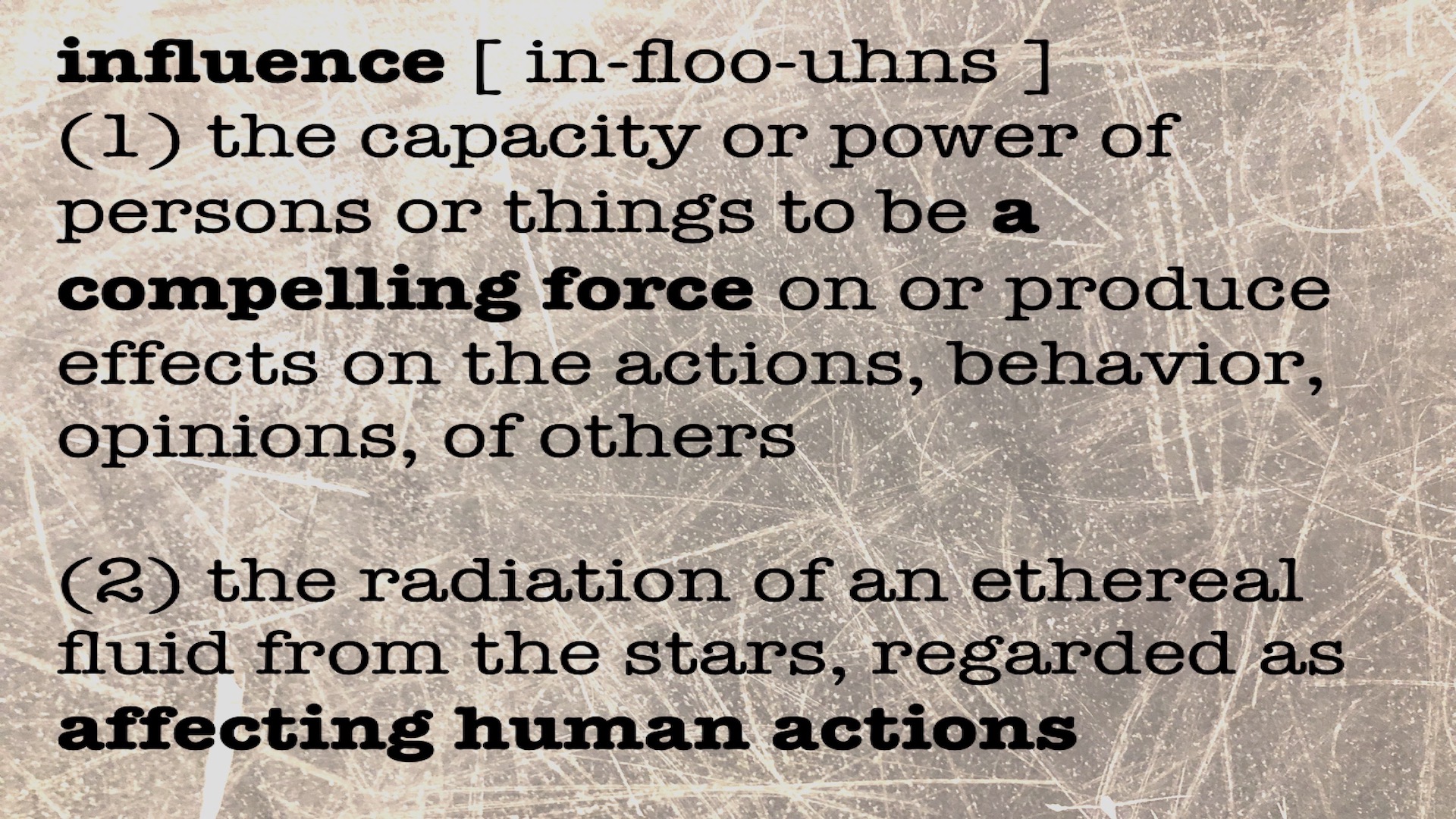
The origin of the word influence comes from a power people thought those bright stars had to affect the lives of humans. So your consistent gratitude is influencing those around you, and giving them a star to chart their course, more consistently than almost anything else you can do. 

So shine on! Praise God loudly, quickly, and sincerely for what He has done for you! Be the 1-in-10! And then watch your influence impact everyone who encounters you.

If you’ve missed any of the messages in our series The Great Attitude of Gratitude, you can find a list of all of the messages by clicking here. 

►► Would you please prayerfully consider supporting this ministry? My Patreon supporters get behind-the-scenes access to exclusive materials. ◀︎◀︎

Thanksgiving 365

Listen to the podcast of this post by clicking on the player below, and you can also subscribe on AppleSpotify, or Audible.

Happy Thanksgiving Eve! I am so thankful for you and the many ways you encourage and inspire me. 

I’ve got a challenge for you: How can you make the Thanksgiving spirit a 365-days-per-year thing instead of just one Thursday in November? 

Your gratitude expressed to others could be the lifeline that they need! 

►► Would you please prayerfully consider supporting this ministry? My Patreon supporters get behind-the-scenes access to exclusive materials. ◀︎◀︎