8 Quotes From “The Blood Of The Cross”

The Blood Of The CrossAs I said in my book review of The Blood Of The Cross by Horatius Bonar (which you can read by clicking here), I have never read such a penetrating look at the beyond-all-measurement value of the blood Jesus Christ shed on the Cross. An absolutely fascinating read! There are way too many quotes from this book to share them all now, so this is the first set of quotes I’d like to share with you.

“Nothing now will keep us, but certainty. Such a storm will need a sure anchor. A man may cheat his soul into tranquility when days are prosperous and skies are blue. He may say, ‘I hope it will go well with me at last,’ and sit down contented with his meager hope. But when heaven and earth are shaken, he cannot but tremble. His peace gives way at the first ruffle of the tempest. He had no certainty to lean upon, and his false security was broken in an hour. … It is not yet too late. The Cross is still standing on the earth. The Crucified One is still upon the mercy seat. If the favor of God has hitherto been a dark uncertainty, it may yet been made sure. The way of reconciliation through the blood is as open as ever.”

“If God and we, then, are at variance, how is this variance to cease? Is it by His adopting our judgment, or by our adopting His? It cannot be the former. … What thank you, then, of the blood of Christ? Is that which is so precious in God’s eyes as precious in yours? Has the controversy between Him and you upon this point been solidly adjusted? And are you at one with Him in His estimate of the blood of His dear Son? If so, it is well. For this is faith; and it is by this faith that you are saved.”

“Most men imagine that they know its value sufficiently already, and that what they need is not a higher estimate of the blood, but a deeper impression wrought in them by the estimate which they now possess. But is it so? Is this the whole evil? Is this its root? No. Whatever they may now suppose that they have, let them know this, that it is just in their estimate of the blood that they are deficient.”

“The new estimate which God enables us to form of this at once infuses peace. If that estimate which God had given of it be true, then all that is needful for our peace has been accomplished. That infinitely precious blood sheds peace and sunshine into our souls. We see that blood as God sees it, and our consciences are unburdened—our souls are set at rest. … The blood of His Cross has finished our peace. And that finished peace is all we need to banish every fear.”

“What does God thinks of this blood? He counts it as infinitely precious—more precious than all corruptible things such as gold and silver. Its value can only be measured by the greatness of Him from Whom it flowed.”

“If a sinner of old might come into the courts of the Lord as an accepted worshipper, simply because presenting to God the blood of bulls and goats, may not a sinner now come into the real, the immediate presence of Jehovah, with still greater certainty of acceptance, simply making mention of that divine blood which has flowed from the Lamb of God—the Word made flesh—Who made His soul an offering for sin, and gave His life a ransom for the sins of many (Isaiah 53:10; Matthew 20:28)?”

“And now it is safe for the sinner to enter in, and it is honorable for God to admit him. The sanctuary is not defiled by his entrance, for the blood is there to prevent this. He does not need to be alarmed, or shrink back, for that blood which opens the way gives him also liberty and boldness in coming in, removing that terror of a guilty conscience which would keep him back, and enabling him to come ‘with a true heart, and in full assurance of faith, having his heart sprinkled from an evil conscience, and his body washed with pure water’ (Hebrews 10:22).”

“It is the sprinkling of the blood upon the soul (which takes place so soon as we take God’s Word for its efficacy) that makes it fit for being the tabernacle of the Holy One. It is the sight of this blood that makes the sinner feel safe and happy in such near contact with God; for otherwise how could he feel at home with such a Guest—the unholy with the Holy?”

** Look for another set of quotes from this book later this week. **

Links & Quotes

link quote

“Long-term studies have measured the substantial impact of marriage on financial stability, as well as relationship longevity and health outcomes.” Read more in 5 Facts About Cohabitation You May Not Know.

“Since the beginning of the war on poverty, marriage has declined sharply. In 1964, 7 percent of U.S. children were born outside marriage. Today, the number is 41 percent. Society is dividing into two castes. In the top half, children are raised by married couples with college education; in the bottom half, children are raised by single mothers with a high-school degree or less. When compared to children in intact married homes, children raised by single parents are more likely to have emotional and behavioral problems; be physically abused; smoke, drink, and use drugs; be aggressive; engage in violent, delinquent, and criminal behavior; have poor school performance; be expelled from school; and drop out of high school.” Read more in How The Welfare State Penalizes Parents Who Marry.

Parents, check this out: A Letter To My Children About Fifty Shades Of Grey.

“Do you desire God and His way and His promises more than anything, and do you believe that He can and will honor your faith and obedience by being unashamed to call Himself your God, and to use all His wisdom and power and love to turn the path of obedience into the path of life and joy? That is the crisis you face now: Do you desire Him? Will you trust Him? The Word of God to you is: God is worthy and God is able.” —John Piper

“But this is the badge of a true child of God: that a man endures to the end.” —Charles Spurgeon

Kids with Down Syndrome aren’t likely to be singers, as the strain on vocal chords and fine motor skills to move their mouth isn’t usually possible. But Madison defies the odds. And the song she picked to memorize and sing is perfect. Click this link to read more behind-the-scenes information, and then watch this―

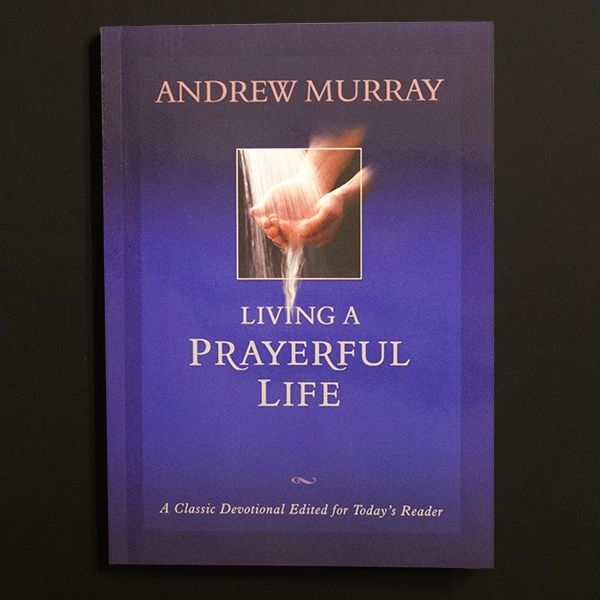
10 Quotes For Pastors From “Living A Prayerful Life”

Living A Prayerful LifeAs I mentioned in my book review of Andrew Murray’s A Prayerful Life, this book was written as a response to pastors who were concerned about the lack of effectiveness in their ministry. Pastor Murray called out the sin of prayerlessness as the main factor in their struggles. Here are some quotes from this book specifically to pastors.

“The enemy uses all his power to lead the Christian—and above all, the minister—to neglect prayer. satan knows that however admirable the sermon may be, however attractive the service, however faithful the pastoral visitation, none of these things can damage him or his kingdom if prayer is neglected.”

“The pastor’s highest calling is not preaching, or speaking, or church visitation, but it is to cultivate the life of God in himself daily, and to be a witness of what the Lord teaches him and accomplishes in him.”

“Here on earth I may expend my time in exchange for money or learning. The minister exchanges his time for divine power and the spiritual blessings to be obtained from heaven. That, and nothing else, makes him a man of God and ensures that his preaching will be in the demonstration of the Spirit and power.”

“Many pray for the Spirit that they may make use of Him and His power for their work. This is an entirely wrong concept. It is He Who must use you. Your relationship toward Him must be one of deep dependence and utter submission. The Spirit must have you completely and always and in all things under His power.”

“When the Lord promised the apostles that they would receive power when the Holy Spirit came upon them, and commanded them to wait for Him, it was as though He said: ‘Do not dare to preach without this power. It is the indispensable preparation for your work. Everything depends on it.’”

“Little time in the Word together with little prayer is death to the spiritual life. Much of the Word but little prayer yields a less than healthy spiritual life. Time spent in prayer with little time in the Word yields life, but without steadfastness. A full measure of the Word and much prayer each day produces a healthy and powerful life.”

“The preacher must come to see that his preaching is comparatively powerless to bring new life until he begins to take time for prayer.”

“All you who long for blessing in your ministry, He calls you to abide in Him. Let it be the greatest delight of your life to spend time with God; it will be the surest preparation for fruitful service.”

“As a minister of the gospel, have you ever considered why you have a salary and a place to live, and so are freed from the need of holding a regular job? The reason is so that you can continue in prayer and the ministry of the Word. These will give you the necessary wisdom and anointing for your work. And that is the secret of a fruitful ministry. No wonder there are often complaints about the ineffective spiritual life of a minister and his congregation. That which is of prime importance—perseverance in prayer—does not occupy its rightful place.”

“The great question is: Shall we earnestly set ourselves to win back again the weapon of believing prayer that satan has, at least in a measure, taken away from us? Let us set before ourselves the serious importance of this conflict. As far as each minister is concerned, everything depends on whether or not he is a man of prayer—one who in the inner room is clothed each day with power from on high.”

To read some of the other quotes I shared from this book, please click here. And to read my full book review of Living A Prayerful Life, click here.

Links & Quotes

link quote

The folks from The Overview Bible Project have a huge infographic about the 12 tribes of Israel. Check it out!

“The God who in the old creation did all this, can He not work today? He made the world out of nothing, can He not make new creatures without the aid of human will? His Word fashioned the creation of old, and His Word can work marvels still.” —Charles Spurgeon

“This verse [Psalm 119:67] shows that God sends affliction to help us learn His Word. We should ask how affliction helps us understand God’s Word and keep it. There are innumerable answers, as there are innumerable experiences. But here are five: (1) Affliction takes the glibness of life away and makes us more serious so that our mindset is more in tune with the seriousness of God’s Word. (2) Affliction knocks worldly props from under us and forces us to rely more on God, which brings us more in tune with the aim of the Word. (3) Affliction makes us search the Scriptures with greater desperation for help, rather than treating it as marginal to life. (4) Affliction brings us into the fellowship of Christ’s sufferings so that we fellowship more closely with Him and see the world more readily through His eyes. (5) Affliction mortifies deceitful and distracting fleshly desires, and so brings us into a more spiritual frame which fits God’s Word more.” —John Piper

[VIDEO] Duane from DW Video has a new project for any organizations operating in Michigan called “Buy Local.” I did a promotional video for the En Gedi Youth Center which turned out pretty nice. (By the way, if you’re in Michigan and you would like to have a free promo done by Duane for your organization, please click here.)

What Does God Want Me To Do?

BibleI often hear people say, “I’m waiting for a word from God” when they are making a decision. Or sometimes someone will say, “I’m not sure what God wants me to do here.”

Many years ago the phrase WWJD―what would Jesus do?―was all the rage. It came from a renewed interest in Charles Sheldon’s book In His Steps. In order to do what Jesus would do (and say), we must be familiar with what Jesus did (and said). Jesus Himself said that the Holy Spirit would remind us of everything He had done and said (John 14:26).

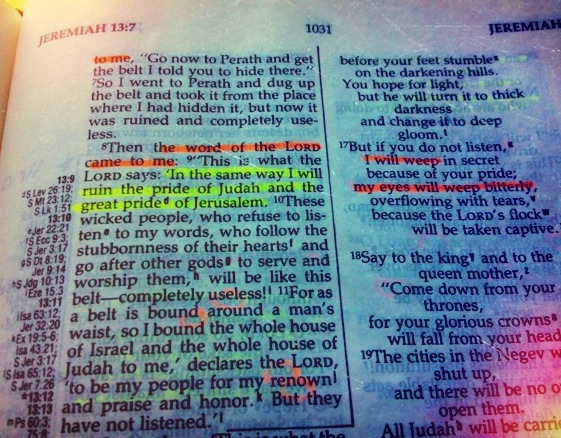
Jeremiah was one of the most prolific prophets of Israel, with his writings making up the longest book in the Bible. Yet one thing clearly stands out―over 420 times Jeremiah uses phrases like:

  • The Word of the Lord came to me
  • Declares the Lord
  • The Lord said to me
  • What the Lord says
  • Hear the word of the Lord
  • Open your ears to the words of His mouth

It’s hard to know what Jesus would do, or the direction God would have you go, or the God-honoring decision that you should make if you haven’t read His Word! He has so much to say to you, and the Holy Spirit is just waiting to help you apply God’s Word to your particular situation.

If you want to make better decisions, and do and say things more like Jesus did and said, be like Jeremiah and be immersed in God’s Word more and more.

The Illustrated Guide To The Authors Of The Bible (book review)

The Illustrated Guide To The Authors Of The BibleI have been a big fan of The Overview Bible Project ever since I discovered Jeffrey Kranz’s amazing Bible-based infographics and study tools. In The Illustrated Guide To The Authors Of The Bible Jeffrey and his wife Laura give us a helpful and beautiful way of learning more about the men whom God used to write His Word.

I recently had a chance to ask Jeffrey & Laura a few questions about this ebook.

Jeffrey, why do you think that it’s important for students of the Bible to learn about the biblical authors?

One of the most important things to know about any message is where it comes from. We know this from life. If you get a “happy anniversary” card from your spouse, it’s a loving gesture. If you get the same card from an ex … well, you get the picture. The whole message hinges on who sends it!

It’s that way with the Bible, too. If we’re going to understand what the authors of the Bible were trying to get across, we should spend a little time getting to know them: who they are, where they’re from, what they’ve been through, and even what time period they’re writing from.

So what was one of the most surprising discoveries you made while researching this book?

As I went into this project, I hadn’t expected so many of the authors to be from the tribe of Levi. But they are! About 42% of our Bible was written by Levites—45% if you count Matthew. No other tribe comes close.

I had expected a little more of a mix, but then I remembered a certain prophecy. Right before Israel enters the promised land, Moses blesses the nation tribe by tribe. When he gets to Levi, Moses says, “They shall teach Your ordinances to Jacob, And Your law to Israel. They shall put incense before You, And whole burnt offerings on Your altar.” (Dt 33:10)

And indeed they did.

Laura, what was your inspiration for giving a “face” to the biblical authors? How do you think this will help someone learn about these authors?

Actually, the initial idea was Jeffrey’s. He was working on pulling together the information on the authors, and asked me if I’d be willing to do an art series to go with it. I thought it would be a great way to help people connect the facts to actual people. There’s a lot of information to digest, and I hope that having images to go with it allows more of the personhood of each author to sink in. I also thought it would be a nice way to help visual learners simply find the facts about who wrote the Bible to be more interesting. Obviously, the pictures are hypothetical—we don’t know much at all about how these guys looked—but using the stats and stories Jeffrey compiled to try to draw out personalities and faces was a really fun challenge.

Can the two of you give us any hints on what you next book and/or art project might be?

We have a few in the works:

  1. For the new year, we’re launching a special email course that sends people a 3–minute summary of a book of the Bible every week. This will help new students of the Word to get an idea of what each book is about, and it should be a nice refresher for the seasoned Bible geeks out there.
  2. Thus far our readers have really enjoyed these character surveys, so we’re thinking of launching an illustrated guide to the 40 most important characters of the Bible.
  3. In 2015 Laura and I hope to collaborate with more people in the Bible geekery space. One project on the table is a book of illustrations for the Songs of Ascent (Ps 120–134), which would include more of our friends in the Christian art community.
  4. And of course, plenty of infographics, a few study guides, and possibly some video and music!

I strongly encourage you to download the FREE ebook The Illustrated Guide To The Authors Of The Bible by clicking here. Then also subscribe via RSS feed or email to the great stuff Jeffrey & Laura produce and share at The Overview Bible Project.

O Come, All Ye Faithful

Who is GodPastor Tom Kaastra continued our series The Carols Of Christmas by looking at the well-known Christmas hymn O Come, All Ye Faithful. The line he especially highlighted comes from the third stanza—Word of the Father, now in flesh appearing.

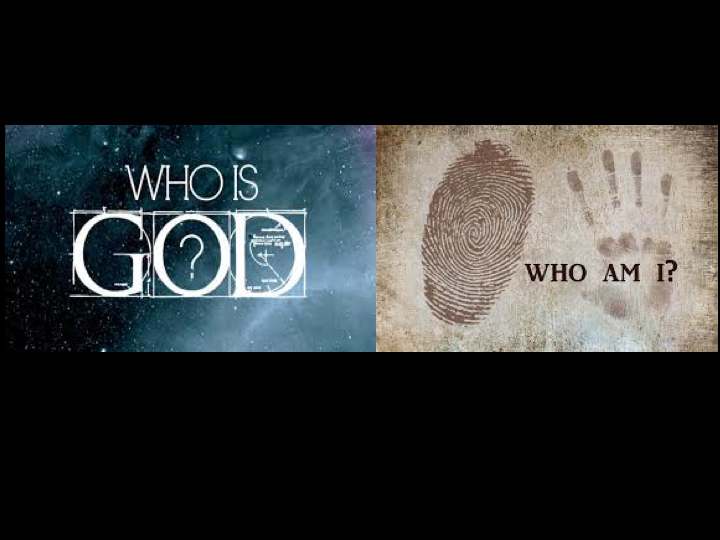
It is so vital that we keep both of those aspects of Jesus Christ in mind: He is both the Word of the Father and the Word become flesh. As Tom pointed out, this fact helps us answer the two most vital questions that humans have:

  • Who is God?
  • Who am I?

I can learn more about who I am when I know more clearly Who God is. And when I know this, I can more fully—as the song says—come and adore Christ the Lord.

Jesus is fully God:

Jesus revealed to us the Father’s love; after all, God is love (1 John 4:16). Jesus came to show us the love of God.

Jesus is fully Man:

  • He got tired and hungry (John 4:6)
  • He limited Himself to do only what the Father told Him to do (John 5:19-20)
  • He limited Himself to say only what the Father told Him to say (John 12:49)
  • He felt anguish and pain (Luke 22:44)

As C.S. Lewis said, “The Son of God became a man to enable men to become sons of God.” And as sons of God, we have access to the Heavenly Father—

Those who are led by God’s Spirit are God’s children. For the Spirit that God has given you does not make you slaves and cause you to be afraid; instead, the Spirit makes you God’s children, and by the Spirit’s power we cry out to God, “Abba! My Father! (Romans 8:14-15)

Word of the Father now in flesh appearing is cause for adoration because Jesus has made it possible for us to become sons and daughters of God!

O come let us adore Him!!

If you’ve missed any of the messages in this series, you may check them out by clicking here.

Setting The Example For Us

FundraiserWhen Paul was writing to his young protege Timothy he said, “Don’t let anyone look down on you because you are young, but set an example for the believers in speech, in life, in love, in faith and in purity” (1 Timothy 4:12). I was so proud of a couple of young people who did this for us at Calvary Assembly of God yesterday!

Savannah has been raising money for childhood cancer research. She shared with us how this is the least-funded form of cancer research, and that every three minutes a child is diagnosed with cancer. “That is unacceptable,” Savannah said. So in an amazing example-setting move for all of us, Savannah and two of her coworkers worked to bring in over $3000 in donations for childhood cancer research, and they shaved their heads as a sign of solidarity with the children undergoing cancer treatments. By the way, you can still donate to this noble cause by clicking here.

Then Josh brought us a challenging message entitled Are You Growing? Taking his text from 1 Corinthians 3:6, Josh reminded us that God makes things grow, but we can put ourselves in a place for Him to do that. Just as with a plant, our spiritual growth requires:

  • Sunshine—basking in God’s presence.
  • Water—soaking up God’s Word.
  • Nutrients—surrounding ourselves with the people and things that encourage growth.
  • Time—the dedication and investment in God’s process.

I am so proud of Josh and Savannah for setting an example for us to follow!

Good Coveting

Covet GodIf we simply state the last of the Ten Commandments like this—You shall not covet—we have missed the true intention of that commandment. You see, God created us to covet. The issue is not if we will covet, but what we will covet.

The word covet means (1) long for greatly, (2) take pleasure in, or (3) find desirable. Throughout the Old Testament this word is used twice as many times in the positive sense as in the negative. The Bible, in fact, encourages us to covet after a deeper relationship with God; to covet God’s ways; to covet our spouse … to covet all of the good and moral things God created for us.

The tenth commandment prohibits us from coveting immorally.

If we restate the first commandment like this—I am the Lord your God. You shall covet a relationship with Me alone—then we will immediately be able to obey all of the other commandments. But if we break the tenth commandment by coveting things other than God, we are liable to break every commandment.

Check this out:

  • Adam & Eve—their immoral coveting led to violating commandments 1, 5 and 8.
  • Achan—his immoral coveting led to violating commandments 2, 8 and 6.
  • David—his immoral coveting led to violating commandments 7, 8, 9 and 6.
  • Judas Iscariot—his immoral coveting led to violating commandments 1, 9, 3 and 6.

Augustine said, “I call the love to God the motion of the soul toward the enjoyment of God for His own sake, and the enjoyment of one’s self and of one’s neighbor for the sake of God.” Coveting God is good!

We were made to covet Him. satan wants us to covet our neighbor’s house, spouse, lifestyle, and possessions, but if we listen to him, we will end up miserable.

God coveting = good coveting!

If you have missed any of the messages in our series The Love In The Law, you can find them all by clicking here.

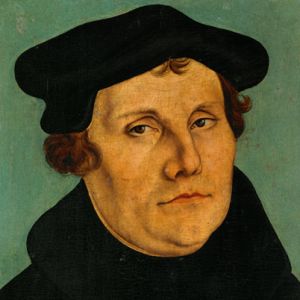
Martin Luther On Prayer

Martin LutherSome powerful quotes from Martin Luther on prayer—

“Behold, Lord, and empty vessel that needs to be filled. My Lord, fill it. I am weak in the faith; strengthen me. I am cold in love; warm me and make me fervent, that my love may go out to my neighbor. I do not have a strong and firm faith; at times I doubt and am unable to trust You altogether. O Lord, help me. Strengthen my faith and trust in You.”

“Almighty God, grant us grace to hear Jesus Christ, the Heavenly Bread, preached throughout the world and truly to understand Him. May all evil, heretical and human doctrines be cut off, while Your Word as the Living Bread be distributed.”

“Lord God, You have placed me in Your church. You know how unsuitable I am. Were not for Your guidance I would long since have brought everything to destruction. I wish to give my heart and mouth to Your service. I desire to teach your people, and long to be taught Your work. Use me as Your work man, dear Lord. Do not for sake me; for if I am alone I show bring all to naught.”

“I have to hurry all day to get time to pray.”