O Come, All Ye Faithful

Who is GodPastor Tom Kaastra continued our series The Carols Of Christmas by looking at the well-known Christmas hymn O Come, All Ye Faithful. The line he especially highlighted comes from the third stanza—Word of the Father, now in flesh appearing.

It is so vital that we keep both of those aspects of Jesus Christ in mind: He is both the Word of the Father and the Word become flesh. As Tom pointed out, this fact helps us answer the two most vital questions that humans have:

  • Who is God?
  • Who am I?

I can learn more about who I am when I know more clearly Who God is. And when I know this, I can more fully—as the song says—come and adore Christ the Lord.

Jesus is fully God:

Jesus revealed to us the Father’s love; after all, God is love (1 John 4:16). Jesus came to show us the love of God.

Jesus is fully Man:

  • He got tired and hungry (John 4:6)
  • He limited Himself to do only what the Father told Him to do (John 5:19-20)
  • He limited Himself to say only what the Father told Him to say (John 12:49)
  • He felt anguish and pain (Luke 22:44)

As C.S. Lewis said, “The Son of God became a man to enable men to become sons of God.” And as sons of God, we have access to the Heavenly Father—

Those who are led by God’s Spirit are God’s children. For the Spirit that God has given you does not make you slaves and cause you to be afraid; instead, the Spirit makes you God’s children, and by the Spirit’s power we cry out to God, “Abba! My Father! (Romans 8:14-15)

Word of the Father now in flesh appearing is cause for adoration because Jesus has made it possible for us to become sons and daughters of God!

O come let us adore Him!!

If you’ve missed any of the messages in this series, you may check them out by clicking here.

Setting The Example For Us

FundraiserWhen Paul was writing to his young protege Timothy he said, “Don’t let anyone look down on you because you are young, but set an example for the believers in speech, in life, in love, in faith and in purity” (1 Timothy 4:12). I was so proud of a couple of young people who did this for us at Calvary Assembly of God yesterday!

Savannah has been raising money for childhood cancer research. She shared with us how this is the least-funded form of cancer research, and that every three minutes a child is diagnosed with cancer. “That is unacceptable,” Savannah said. So in an amazing example-setting move for all of us, Savannah and two of her coworkers worked to bring in over $3000 in donations for childhood cancer research, and they shaved their heads as a sign of solidarity with the children undergoing cancer treatments. By the way, you can still donate to this noble cause by clicking here.

Then Josh brought us a challenging message entitled Are You Growing? Taking his text from 1 Corinthians 3:6, Josh reminded us that God makes things grow, but we can put ourselves in a place for Him to do that. Just as with a plant, our spiritual growth requires:

  • Sunshine—basking in God’s presence.
  • Water—soaking up God’s Word.
  • Nutrients—surrounding ourselves with the people and things that encourage growth.
  • Time—the dedication and investment in God’s process.

I am so proud of Josh and Savannah for setting an example for us to follow!

Good Coveting

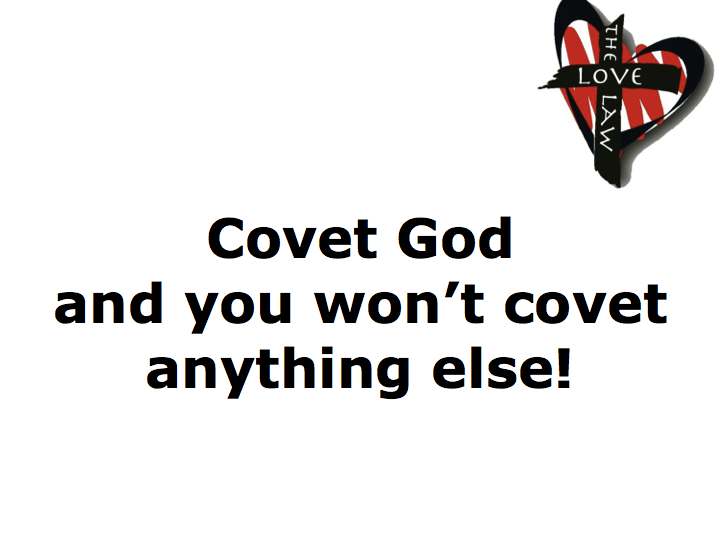
Covet GodIf we simply state the last of the Ten Commandments like this—You shall not covet—we have missed the true intention of that commandment. You see, God created us to covet. The issue is not if we will covet, but what we will covet.

The word covet means (1) long for greatly, (2) take pleasure in, or (3) find desirable. Throughout the Old Testament this word is used twice as many times in the positive sense as in the negative. The Bible, in fact, encourages us to covet after a deeper relationship with God; to covet God’s ways; to covet our spouse … to covet all of the good and moral things God created for us.

The tenth commandment prohibits us from coveting immorally.

If we restate the first commandment like this—I am the Lord your God. You shall covet a relationship with Me alone—then we will immediately be able to obey all of the other commandments. But if we break the tenth commandment by coveting things other than God, we are liable to break every commandment.

Check this out:

  • Adam & Eve—their immoral coveting led to violating commandments 1, 5 and 8.
  • Achan—his immoral coveting led to violating commandments 2, 8 and 6.
  • David—his immoral coveting led to violating commandments 7, 8, 9 and 6.
  • Judas Iscariot—his immoral coveting led to violating commandments 1, 9, 3 and 6.

Augustine said, “I call the love to God the motion of the soul toward the enjoyment of God for His own sake, and the enjoyment of one’s self and of one’s neighbor for the sake of God.” Coveting God is good!

We were made to covet Him. satan wants us to covet our neighbor’s house, spouse, lifestyle, and possessions, but if we listen to him, we will end up miserable.

God coveting = good coveting!

If you have missed any of the messages in our series The Love In The Law, you can find them all by clicking here.

Martin Luther On Prayer

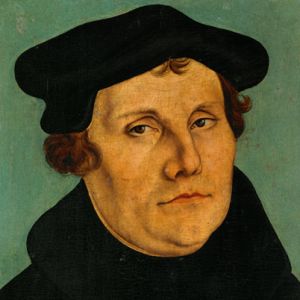
Martin LutherSome powerful quotes from Martin Luther on prayer—

“Behold, Lord, and empty vessel that needs to be filled. My Lord, fill it. I am weak in the faith; strengthen me. I am cold in love; warm me and make me fervent, that my love may go out to my neighbor. I do not have a strong and firm faith; at times I doubt and am unable to trust You altogether. O Lord, help me. Strengthen my faith and trust in You.”

“Almighty God, grant us grace to hear Jesus Christ, the Heavenly Bread, preached throughout the world and truly to understand Him. May all evil, heretical and human doctrines be cut off, while Your Word as the Living Bread be distributed.”

“Lord God, You have placed me in Your church. You know how unsuitable I am. Were not for Your guidance I would long since have brought everything to destruction. I wish to give my heart and mouth to Your service. I desire to teach your people, and long to be taught Your work. Use me as Your work man, dear Lord. Do not for sake me; for if I am alone I show bring all to naught.”

“I have to hurry all day to get time to pray.”

Links & Quotes

link quote

Some good reading from today…

“Go to bed seasonably, and rise early. Redeem your precious time… that not one moment of it may be lost. Be much in secret prayer. Converse less with man, and more with God.” —George Whitefield 

“Lord, let me not live to be useless.” —John Wesley

Jon Bloom looks at narcissism in a different way: Beware The Mirror.

“To be specific, the self-sins are self-righteousness, self-pity, self-confidence, self-sufficiency, self-admiration, self-love and a host of others like them. They dwell too deep within us and are too much a part of our natures to come to our attention till the light of God is focused upon them.” —A.W. Tozer

“Confession isn’t a punishment for sin; it’s an isolation of sin so it can be exposed and extracted.” —Max Lucado

We must learn to tell ourselves the truth on the basis of God’s Word.” —Oswald Chambers

During the cold & flu season, here is a great reason to kiss your sweetie: Kissing helps boost your immune system.

Links & Quotes

link quote

Some good reading from today…

15 good quotes from Soren Kierkegaard.

For the singles, here is 10 guys you should never date and 8 types of women you should never date.

“I can neither teach nor live by the faith of others. I must live by my own faith as the Spirit of the Lord has taught me through His Word.” —Menno Simons

Pretty cool! We just landed a robot on a comet!

Coaches & Parents, Tim Elmore tells us how athletes hide behind their talent and what we can do about it.

Human touch is just as nutritious as the food we eat. So go hug someone!

“The notion that the careless sinner is the smart fellow and the serious-minded Christian, though well-intentioned, is a stupid dolt altogether out of touch with life will not stand up under scrutiny. Sin is basically an act of moral folly, and the greater the folly the greater the fool.” —A.W. Tozer

Thursdays With Oswald—The Discipline In Faith

Oswald ChambersThis is a periodic series with things I’m reading and pondering from Oswald Chambers. You can read the original seed thought here, or type “Thursdays With Oswald” in the search box to read more entries.

The Discipline In Faith

     The element of discipline in the life of faith must never be lost sight of, because only by means of the discipline are we taught the difference between the natural interpretation of what we call good and what God means by “good.” …

     At times it appears as if God has not only forsaken His word, but has deliberately deceived us. We asked Him for a particular thing, or related ourselves to Him along a certain line, and expected that it would mean the fullness of blessing, and actually it has meant the opposite—upset, trouble and difficulty all around, and we are staggered, until we learn that by this very discipline God is bringing us to the place of entire abandonment to Himself.

From Not Knowing Where

Probably every follower of God has experienced what Oswald Chambers describes: We follow God wholeheartedly, fully believing He called us to something, only to get knocked around by trouble.

I’ve been there and done that. It was a whole lot of no-fun while I was in it. And now, looking back on it, I still can’t say that I enjoyed those times. But here’s what I do enjoy now:

  • A closer intimacy with my Savior
  • A greater empathy for others in troubling times
  • An increased sensitivity to the voice of the Holy Spirit
  • A deeper appreciation for God’s Word
  • A strength I wouldn’t have gained without going through that time
  • Discernment and insight I wouldn’t have learned without that trouble

If God calls you, He will not leave you. No matter how painful or difficult your circumstances, if He called you to walk through it, He will do something in it. Discipline yourself to remain totally abandoned to God!

12 Additional Quotes From “Transforming Grace”

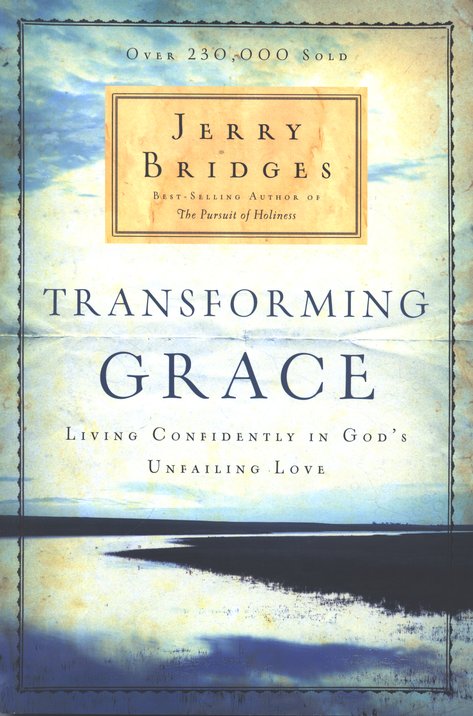
Transforming GraceI already shared a few quotes from Transforming Grace by Jerry Bridges (you can read them by clicking here). Bridges also extensively quoted other authors in this amazing book, so I wanted to share a few of those quotes as well.

“Grace ceases to be grace if God is compelled to bestow it in the presence of human merit…. Grace ceases to be grace if God is compelled to withdraw it in the presence of human demerit…. Grace is treating a person without the slightest reference to desert whatsoever, but solely according to the infinite goodness and supper and purpose of God.” —Dr. C. Samuel Storms

“The most shining deeds and valuable qualities that can be found among men, though highly useful and truly excellent, when set in their proper places, and referred to suitable ends, are, as to the grand article of justification treated as nonentities…. For divine grace disdains to be assisted in the performance of that work which peculiarly belongs to itself, by the poor, imperfect performances of men. Attempts to complete what grace begins, betray our pride and offend the Lord; but cannot promote our spiritual interest. Let the reader, therefore, carefully remember, that grace is either absolutely free, or it is not at all: and, that he who professes to look for salvation by grace, either believes in his heart to be saved entirely by it, or he acts inconsistently in affairs of the greatest importance.” —Abraham Booth

“Perhaps the most difficult task for us to perform is to rely on God’s grace and God’s grace alone for our celebration. It is difficult for our pride to rest on grace. Grace is for other people—for beggars. We don’t want to live by a heavenly welfare system. We want to earn our own way and atone for our own sins. We like to think that we will go to heaven because we deserve to be there.” —R.C. Sproul 

“A lawdriver insists with threats and penalties; a preacher of grace lures and incites with divine goodness and compassion shown to us; for he wants no unwilling works and reluctant services, he wants joyful and delightful services of God.” —Martin Luther, commenting on Romans 12:1

“The great mistake made by most of the Lord’s people is in hoping to discover in themselves that which is to be found in Christ alone.” —Arthur W. Pink

“In the person of Christ God beholds a holiness which abides His closest scrutiny, yea, which rejoices and satisfies His heart; and whatever Christ is before God, He is for His people.” —Arthur W. Pink

“Only what God has commanded in His Word should be regarded as binding; in all else there may be liberty of actions.” —John Owen

“Let us never surrender our judgments or our consciences to be at the disposal and opinions of others, and to be subjected to the sentences and determinations of men. … It is my exhortation therefore to all Christians to maintain their Christian freedom by constant watchfulness. You must not be tempted or threatened out of it; you must not be bribed or frightened from it; you must not let either force or fraud rob you of it. … We must not give up ourselves to the opinion of other men, though they be never so learned, never so holy, merely because it is their opinion. The apostle directs us to try all things and to hold fast that which is good (1 Thessalonians 5:21). It often happens that a high esteem of others in respect of their learning and piety makes men take up all upon trust from such, and to submit their judgments to their opinions, and their consciences to their precepts. This should not be so.” —Samuel Bolton (1645)

“So God supplies perfectly measured grace to meet the needs of the godly. For daily needs there is daily grace; for sudden needs, sudden grace; for overwhelming needs, overwhelming grace. God’s grace is given wonderfully, but not wastefully; freely, but not foolishly; bountifully, but not blindly.” —John Blanchard

“For men have no taste for God’s power till they are convinced of their need of it and they immediately forget its value unless they are continually reminded by awareness of their own weakness.” —John Calvin

“Yet the duties God requires of us are not in proportion to the strength we possess in ourselves. Rather, they are proportional to the resources available to us in Christ. We do not have the ability in ourselves to accomplish the least of God’s tasks. This is a law of grace. When we recognize it is impossible for us to perform a duty in our own strength, we will discover the secret of its accomplishment. But alas, this is a secret we often fail to discover.” —John Owen

“Christian humility does not consist in denying what there is of good in us; but in an abiding sense of ill-desert, and in the consciousness that what we have of good is due to the grace of God.” —Charles Hodge

You can read my full review of Transforming Grace by clicking here.

Thursdays With Oswald—New Healthy Habits

Oswald ChambersThis is a periodic series with things I’m reading and pondering from Oswald Chambers. You can read the original seed thought here, or type “Thursdays With Oswald” in the search box to read more entries.

New Healthy Habits

When the Spirit of God brings a Word of God to us, are we going to wake up and lay hold [Ephesians 5:14-18] of it, or remain in the condition St. Augustine was in—“a little more worldliness; a little less intensity”? … When God tells us to do a thing He empowers us to do it, only we must do the doing. … All we need is grit and gumption and reliance on the Holy Spirit. We must bring the same determined energy to the revelations in God’s Book as we bring to earthly professions. Most of us leave the sweat of brain outside when we come to deal with the Bible. …

When in your soul’s vision you see clearly what God wants, let me advise you to do something physical immediately. If you accompany a moral or spiritual decision with a physical effort you give the necessary initiative to form the new habit. …

How are we going to find out the will of God? “God will communicate it to us.” He will not. His will is there all the time, but we have to discover it by being renewed in our minds, by taking heed to His Word and obeying it. If we are not going to be “conformed to this world; but transformed,” we must use our brains. God does the spiritual, powerful part we cannot do; but we have to work it out, and as we do the obeying we prove… “what is that good, and acceptable, and perfect, will of God” [Romans 12:1-2].

From The Moral Foundations Of Life

Everything we need to form new, healthy, God-pleasing habits has already been given to us in the Bible. Now we need to put our brains and our bodies to work—

God’s Word + Holy Spirit revelation + Concentration + Physical obedience = 

New God-honoring habits

The Love In The Law

Love In The LawWhen I say “Law” what sort of words come to your mind. Do you think of words like: restrictive? killjoy? barriers? hindrances? no fun?

If you’re a Christian, perhaps the same descriptive words come to mind when you think of biblical commandments. Maybe you think, “Don’t do that” (or for those of you who think in King James English: Thou shalt not).

But if we think of the law/commandments that way, that also means we have to think of the Lawgiver that way. In other words, God becomes a Policeman. He is closely watching to see who will break His laws so that He can dispense the appropriate punishment. After all, if the laws are a bunch of no-nos, then Someone has to be watching for law-breakers and handing out the penalties.

If that’s the case, what do we do with the Bible’s description of God that says “God is love”? If the Lawgiver is Love, how does that change our view of the laws themselves?

It must mean that God’s laws are an expression of His love. It must mean that His love is in the laws He has given us.

It must mean that God’s laws are NOT no-nos, BUT yes-yeses. 

Join us this Sunday at Calvary Assembly of God as we talk about The Love In The Law. We’ll be working our way through the Ten Commandments, especially looking at God’s love that make each commandment a giant YES for our lives. Prayerfully, this series will completely change how we view God’s laws and commands.

If you have missed any of the messages in this series, check them out here: