Listen to the podcast of this post by clicking on the player below, and you can also subscribe on Apple, Spotify, or Audible.
►► Would you please prayerfully consider supporting this ministry? ◀︎◀︎
Listen to the podcast of this post by clicking on the player below, and you can also subscribe on Apple, Spotify, or Audible.
►► Would you please prayerfully consider supporting this ministry? ◀︎◀︎
Listen to the podcast of this post by clicking on the player below, and you can also subscribe on Apple, Spotify, or Audible.
►► Would you please prayerfully consider supporting this ministry? ◀︎◀︎
Listen to the podcast of this post by clicking on the player below, and you can also subscribe on Apple, Spotify, or Audible.
One of the things I enjoy about my Apple Watch is the connection I have with others who also use an Apple Watch. For instance, I get notified when my wife has finished a workout, and one of the pre-set replies I could choose is, “I’ve got questions!” That’s a funny way of me saying, “How did you complete that workout?!”
In Psalm 75 and Psalm 76, Asaph tells us how God will deal with the wicked. But then Psalm 77 begins with Asaph using words like, “My soul refused to be comforted, my spirit is overwhelmed,” and then he launches into the tough questions like: “How long is this going to last? Has God forgotten me? Have I fallen out of favor with God? Has His mercy dried up? Can God keep what He has promised? Is God angry with me?” When I read all this, I feel like saying, “Asaph, I’ve got questions!”
Yet, these complaints of Asaph ring true to real life. Like when a friend called me last week and started our conversation by asking, “Why can’t things just go easy for me?”
Here’s the simple answer: The Story isn’t over yet. We are in a battle, and the enemy of our soul is still trying to take us out, or at least shut us up.
In Psalm 77, Asaph tells his story to Jeduthun (a Levite worship leader whose name means praising) in four chapters, with a Selah for each of the breaks between the chapters.
Chapter 1—Distress (vv. 1-3)
The word distress means confronted by an adversary. Ever been there? Every follower of God has been, so Asaph invites us to Selah: pause to contemplate things like (a) Is this distress causing me to reevaluate the foundation on which I stand? (b) What is it God is shaking in my life? When God shakes things up, it is to cause us to remember and muse about the ONLY sure foundation that can withstand any storm (see Matthew 7:24-27).
Chapter 2—Questioning (vv. 4-9)
Notice the words Asaph uses: thought, remembered, mused, inquired. He is asking those tough questions, but he is asking them in a way that he can carefully consider the answers. That means he is really taking a Selah pause with each question. I think he has come to this conclusion: “Aren’t all these really just rhetorical questions? And isn’t the answer to all of them a resounding ‘NO!’?” If you aren’t sure the answer to all of these questions is no, please read Romans 8:31-39.
Chapter 3—Recalling (vv. 10-15)
Notice the continuation of the words: thought, remember, meditate, consider. He also asks another question in v. 13 which he then answers in the next two verses. His call to Selah here is another pause to reflect: “Has God lost His power? Has He changed His mind?” And once again the answer is a loud and clear, “NO!” (see Isaiah 59:1; Hebrews 13:8)
One of the important takeaways from this stanza of Psalm 77 is this: Looking back in gratitude at what God has done allows me to look forward in hope to what He is still going to do. My remembering what God has done in the past leads to:
Chapter 4—Hope (vv. 16-20)
Asaph says, “Look what God did! And since He is the same today as He was yesterday, guess what He’s still able to do!” We know this because the Bible says, “For no matter how many promises God has made, they are ‘Yes’ in Christ. And so through Him the ‘Amen’ is spoken by us to the glory of God” (2 Corinthians 1:20).
Remember I said earlier that God isn’t done telling His story yet? God isn’t done yet, He knows His Story, and His Story is still being told. But He’s also already told us how His story will end (see Revelation 21:4-6). And the end of His story is really just the beginning of the Real Story!
C.S. Lewis said it this way in the closing words of The Last Battle:
“And for us this is the end of all the stories, and we can most truly say that they all lived happily ever after. But for them it was only the beginning of the real story. All their life in this world and all their adventures in Narnia had only been the cover and the title page; now at last they were beginning Chapter 1 of the Great Story, which no one on earth has read; which goes on forever; in which every chapter is better than the one before.”
When you find yourself saying, “I’ve got questions: How long is this going to last,” Selah to remember that the Story isn’t over yet. The Storyteller knows how it ends, and He promises us: But what of that? For I consider that the sufferings of this present time—this present life—are not worth being compared with the glory that is about to be revealed to us and in us and for us and conferred on us! (Romans 8:18 AMP)
If you have missed any of the messages in our Selah series, you can find the complete list by clicking here.
►► Would you please prayerfully consider supporting this ministry? ◀︎◀︎
Listen to the podcast of this post by clicking on the player below, and you can also subscribe on Apple, Spotify, or Audible.
Psalm 119 is divided into twenty-two 8-verse segments, with each verse of the segments beginning with its own Hebrew letter. Lamedh is found in verses 89-96, and lamedh is the tallest of all the Hebrew letters, so that means it stands out.
Lamedh shows us big proportions. Words like eternal, boundless, established, enduring, and forever are prominent in these eight verses. The psalmist is inviting us to climb up into God’s Word and get a bigger view, a higher vantage point of who God is.
Consider the opening verse of this section: Your Word, O LORD, is eternal; it stands firm in the heavens. Eternal—think of the implications! If what God says—His Word—is eternal, then…
At every single moment in my life, my eternal, enduring, limitless God knows the outcome or consequence of each option I could choose. His Word can so transform my mind that I can always choose the most Christ-glorifying option. The Spirit of Truth—my eternal Counselor—can guide me with God’s Word.
I never have to be at a loss. I am never stumped. I always have access to eternal Truth.
The psalmist got this: If Your law had not been my delight, I would have perished in my affliction (v. 92).
Through God’s firmly-established Word I have—
And you have all of this, too, through God’s Word!
Psalm 119 is a great place to start to make Bible reading a daily habit. Scientists tell us that you only need 21 days to make a new habit, and in Psalm 119 you have 22 days of daily reading that will transform your heart and mind.
►► Would you please prayerfully consider supporting this ministry? ◀︎◀︎
Listen to the podcast of this post by clicking on the player below, and you can also subscribe on Apple or Spotify.
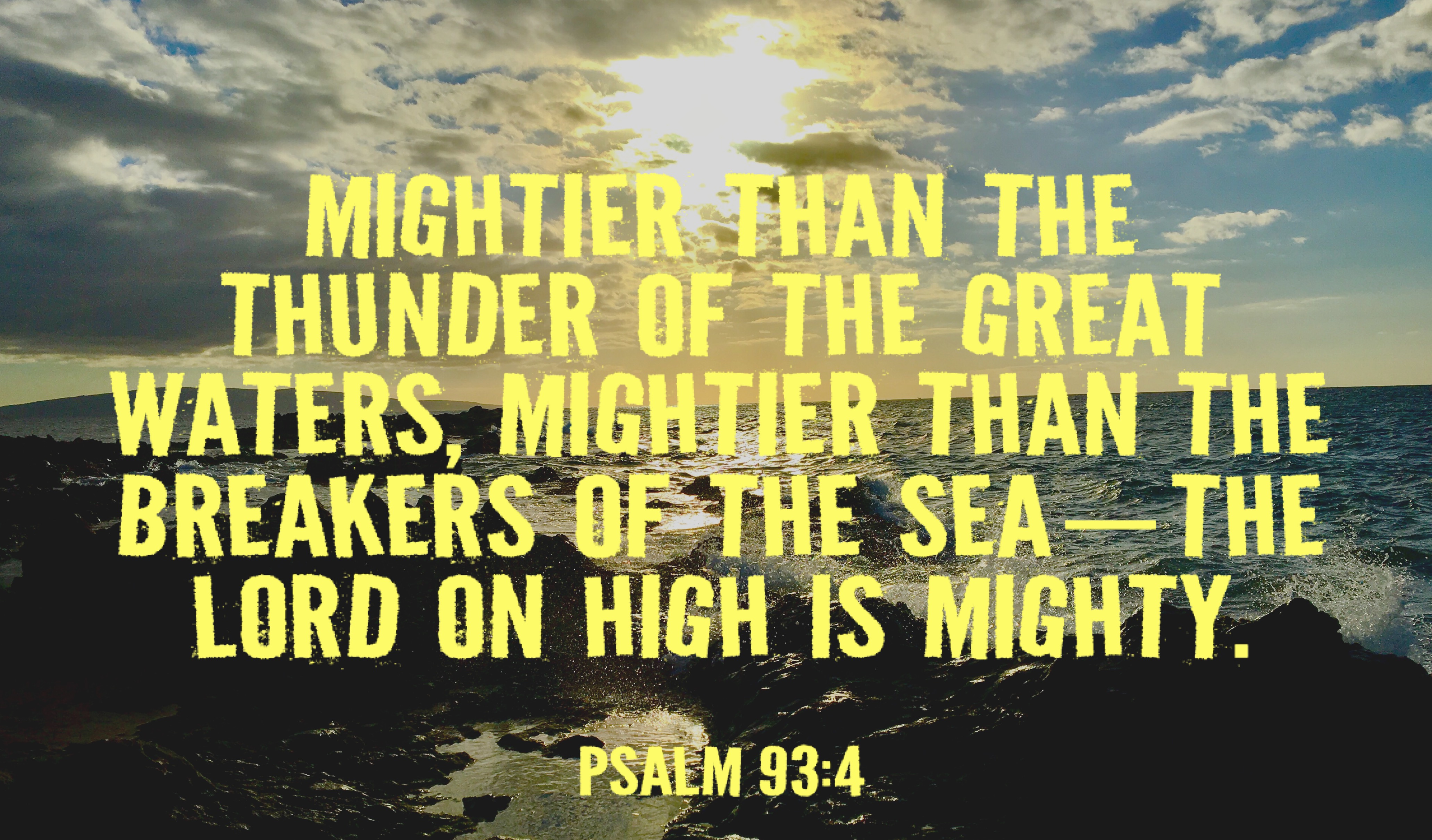
Psalm 93 opens with these powerful words: The LORD reigns.
Consider this: When we see the word LORD in all capital letters in our English translations of the Bible, we are reading God’s covenant name—Yahweh or Jehovah. This Limitless Power allows us to call Him by His personal name!
How can our finite minds even begin to fathom this? Listen to the psalmist’s words—
The LORD reigns, He is robed in majesty; the LORD is robed in majesty and is armed with strength. The world is firmly established; it cannot be moved. Your throne was established long ago; You are from all eternity. The seas have lifted up, O LORD, the seas have lifted up their voice; the seas have lifted up their pounding waves. Mightier than the thunder of the great waters, mightier than the breakers of the sea—the LORD on high is mighty. Your statutes stand firm; holiness adorns Your house for endless days, O LORD.
You can almost hear this psalmist struggling to help us comprehend the majesty of God. But how does a molecule comprehend the vastness of a planet? Creation sometimes roars and sometimes thunders, but even that only shows us a small glimpse of the Creator.
Do you see how established, orderly, firm, and secure this universe is? Even it had a starting point. Its Creator, however, has existed for all of eternity!
Have you ever been to the ocean and felt the pounding of the waves and heard the deafening roar of the breakers? That’s barely a toe-tapping of the might of Yahweh.
In the closing verse of this psalm, we read these words: “Your statutes stand firm.” Jehovah has given us a way to begin to comprehend Him. He has given us His statutes. This God who is unlimited in power has given us words we can live by. We can rely on them because they are backed by this limitless God! His promises stand firm forever. Nothing can shake God or His Word, so that means nothing can shake me when I stand on Him.
Standing on God’s Word means we are standing on Limitless Love and Limitless Strength.
►► Would you please prayerfully consider supporting this ministry? ◀︎◀︎
Listen to the podcast of this post by clicking on the player below, and you can also subscribe on Apple or Spotify.
►► Would you please prayerfully consider supporting this ministry? ◀︎◀︎
Listen to the podcast of this post by clicking on the player below, and you can also subscribe on Apple or Spotify.
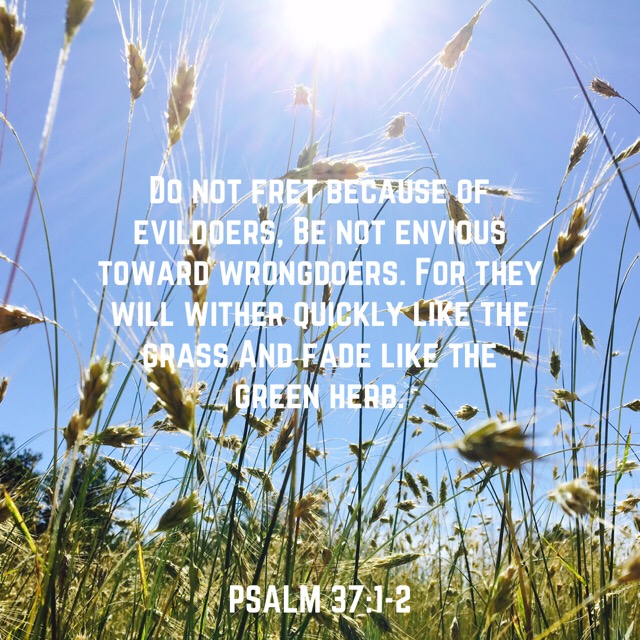
The wicked plot…but the Lord laughs… (Psalm 37:12).
The wicked may hatch all sorts of evil plots that appear to benefit themselves, but God always gets the final word and the last laugh!
This 37th Psalm is filled with the contrasts of the temporary advantages of evil versus the eternal rewards of righteousness. Wicked people may flourish for a moment in time, but righteous people have both an inheritance that lasts forever and God’s help every single day too! In other words, the righteous get to securely live in a win-win relationship.
With this in mind, David instructs the righteous how to live out their days:
Righteous people can live securely every single day because they know that not only does God holds them securely today, but He will continue to hold them securely for all of eternity. Secure people are empowered to live a joy-filled, others-centered, God-glorifying life.
If you know Jesus as your Savior, you can say “Amen!” to this secure way of living.
►► Would you please prayerfully consider supporting this ministry? ◀︎◀︎
This is a weekly series with things I’m reading and pondering from Charles Spurgeon. You can read the original seed thought here, or type “Thursdays With Spurgeon” in the search box to read more entries.
Listen to the podcast of this post by clicking on the player below, and you can also subscribe on iTunes or Spotify.
Blessed be the God and Father of our Lord Jesus Christ, who has blessed us with every spiritual blessing in the heavenly places in Christ, just as He chose us in Him before the foundation of the world, that we should be holy and without blame before Him in love, having predestined us to adoption as sons by Jesus Christ to Himself, according to the good pleasure of His will. (Ephesians 1:3-5)
It is at once a doctrine of Scripture and of common sense that whatever God does in time, He predestined to do in eternity. …
Adoption is that act of God whereby men who were by nature the children of wrath, even as others, and were of the lost and ruined family of Adam, are from no reason in themselves, but entirely of the pure grace of God, translated out of the evil and dark family of satan and brought actually and virtually into the family of God. … This is an act of pure grace. …
[God] found a rebellious child, a filthy, frightful, ugly child. He took him to His bosom and said, ‘Evil though you are, you are comely in my eyes through my Son Jesus. Unworthy though you are, yet I cover you with His robe, and in your Brother’s garments I accept you.’ …
His only begotten and well-beloved Son was quite enough for Him. … And His own omnipotence was adequate enough to have created a race of beings far superior to us. He stood in no need whatever of any to be His darlings. It was, then, an act of simple, pure, gratuitous grace—and of nothing else—because He will have mercy on whom He will have mercy and because He delights to show the marvelous character of His condescension.
From Adoption
I love that thought that “whatever God does in time, He predestined to do in eternity.” When Adam and Eve sinned, God wasn’t scrambling to fix the sin problem. When He said that a remedy for sin was coming (Genesis 3:15), He was talking about a plan that was already in place.
When John the Baptist said of Jesus, “Behold the Lamb of God who takes away the sin of the world!” (John 1:29), he was only announcing what was a fact from before time began, where the apostle John described Jesus as “the Lamb slain from the foundation of the world” (Revelation 5:12, 13:8)! And the apostle Paul said God “chose us in [Jesus] before the foundation of the world”!
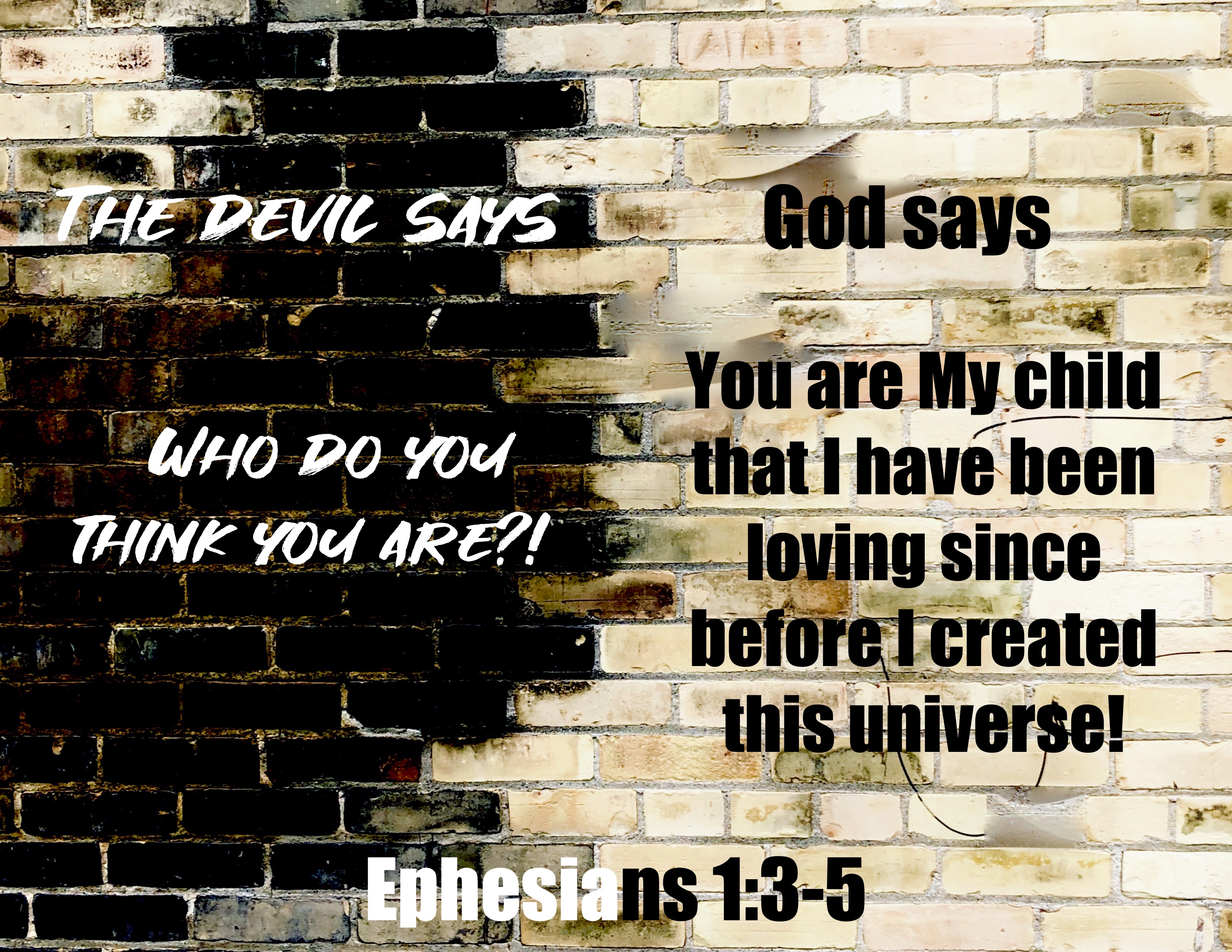
Friends, think of what this means: God saw a relationship with you—saw you adopted into His family—before you were born, even before the universe was created! What indescribable love! What amazing grace!
Do you realize your value in God’s eyes? He didn’t have to send Jesus, but He did. He didn’t have to lavish His love on you, but He does. He didn’t have to adopt you into His family, but what He has done in time, He predestined to do in eternity—from before He even said, “Let there be light” at the moment of creation.
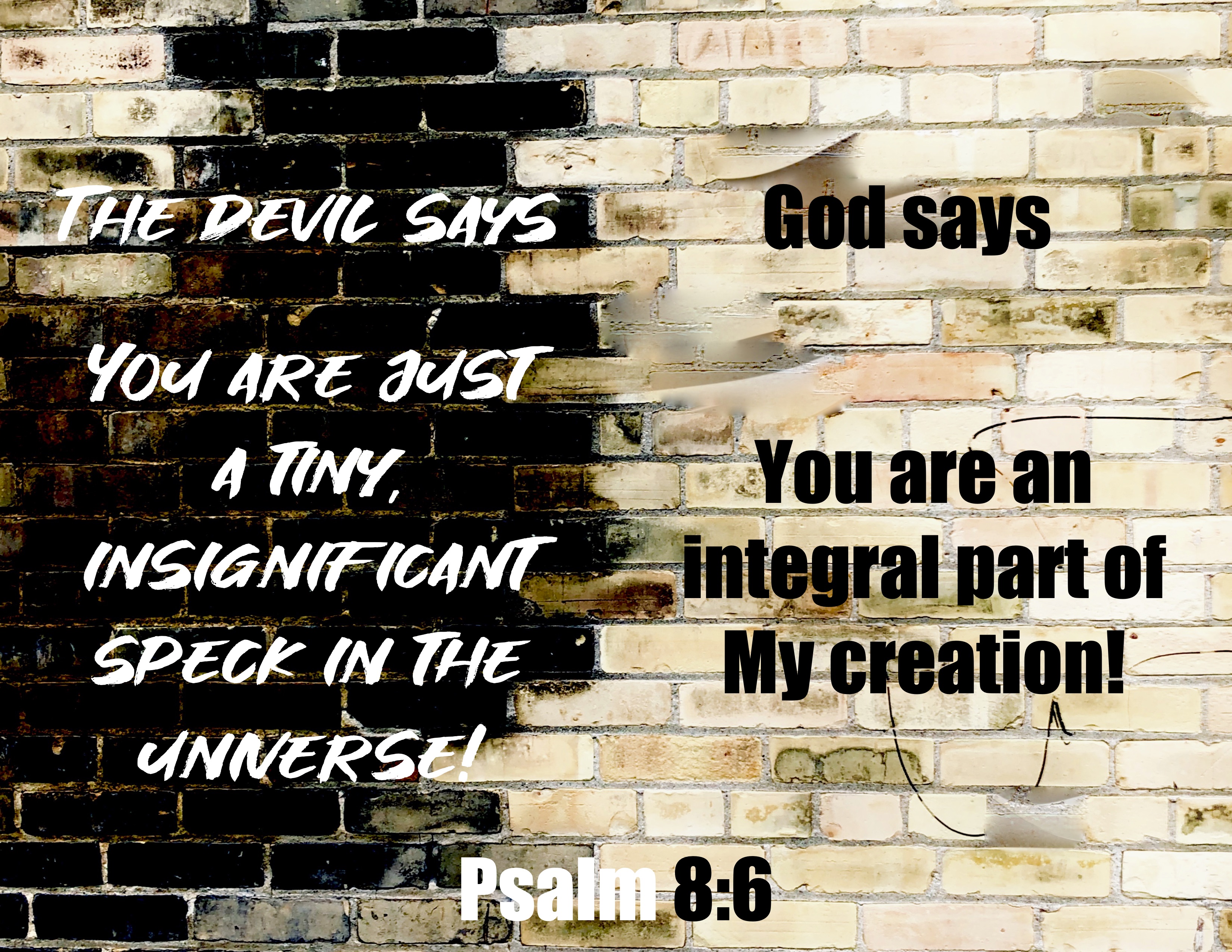
Don’t ever buy into the lies of satan that you’re nothing special, when, in fact, you mean more to God than you can possibly comprehend!
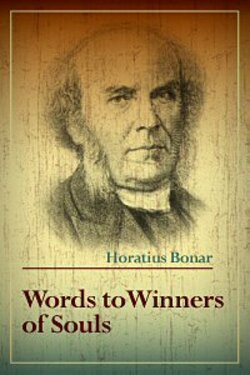
I don’t say this very often, but Words To Winners Of Souls by Horatius Bonar is a must-read for those in pastoral ministry. You can check out my full book review by clicking here.
“The question, therefore, which each of us has to answer to his own conscience is, ‘Has it been the end of my ministry, has it been the desire of my heart to save the lost and guide the saved? Is this my aim in every sermon I preach, in every visit I pay? Is it under the influence of this feeling that I continually live and walk and speak? Is it for this I pray and toil and fast and weep? Is it for this I spend and am spent, counting it, next to the salvation of my own soul, my chiefest joy to be the instrument of saving others? Is it for this that I exist?’”
“It is not opinions that man needs: it is truth. It is not theology: it is God. It is not religion: it is Christ. It is not literature and science; but the knowledge of the free love of God in the gift of His only-begotten Son.”
“Our power in drawing men to Christ springs chiefly from the fullness of our personal joy in Him, and the nearness of our personal communion with Him.”
“Why so many meetings with our fellow men, yet so few meetings with God?”
“Our life has not been a lying-in-wait for the voice of God. ‘Speak, Lord; for Thy servant heareth,’ has not been the attitude of our souls, the guiding principle of our lives. Nearness to God, fellowship with God, waiting upon God, resting in God, have been too little the characteristic either of our private or our ministerial walk. Hence our example has been so powerless, our labors so unsuccessful, our sermons so meager, our whole ministry so fruitless and feeble.”
“It is easier to speak or write about revival than to set about it. There is so much rubbish to be swept out, so many self-raised hindrances to be dealt with, so many old habits to be overcome, so much sloth and easy-mindedness to be contended with, so much of ministerial routine to be broken through, and so much crucifixion, both of self and of the world, to be undergone. As Christ said of the unclean spirit which the disciples could not cast out, so we may say of these: ‘This kind goeth not out but by prayer and fasting.’”
“These must be days of strenuous, ceaseless, persevering, and, if God bless us, successful toil. We shall labor till we are worn out and laid to rest.”
“It is unbelief that makes ministers handle eternal realities with such irreverence. It is unbelief that makes them ascend with so light a step ‘that awful place the pulpit,’ to deal with immortal beings about heaven and hell.”