Anger That Crosses The Line

Last night in our Bible study we looked at some words that David penned when he was angry. He was on the run from his son Absalom, and it seemed like everywhere he turned people were after him, or slandering him, or just doing their best to make him miserable. Yet in two back-to-back Psalms David says, “I lay down every evening and get a great night of rest.”

His sweet sleep comes from a moment of reflection before dozing off. He says:

In your anger do not sin; when you are on your beds, search your hearts and be silent. Selah.

  • Did my anger today cross the line into sin?
  • Am I allowing the time for the Holy Spirit to search my heart?
  • When the Holy Spirit points out where my anger crossed the line, do I justify my anger, or am I silent?

How do we know if our anger has not crossed that line and become sin?

Aristotle wrote, “Anybody can become angry—that is easy; but to be angry with the right person, and to the right degree, and at the right time, and for the right purpose, and in the right way—that is not within everybody’s power and is not easy.”

Being angry is not the issue. David said it (and Paul quoted it in Ephesians 4:26): “Be angry; just don’t sin.” God gets angry, but He does not sin. Jesus, in His public ministry, got angry, but He did not sin. We need to search our hearts to make sure our anger has not crossed the line to sin. We have to be angry in a godly way.

I see at least four ways to become angry without crossing the line into sin:

1.  Selfless Anger = anger at sin, but not angry at the sinner.

Love is not rude, it is not self-seeking, it is not easily angered, it keeps no record of wrongs. Love does not delight in evil but rejoices with the truth. (1 Corinthians 13:5, 6)

2.  Slow Anger = lengthen your fuse a bit.

Do not be quickly provoked in your spirit, for anger resides in the lap of fools. (Ecclesiastes 7:9)

My dear brothers, take note of this: Everyone should be quick to listen, slow to speak and slow to become angry, for man’s anger does not bring about the righteous life that God desires. (James 1:19, 20)

Good advice from Thomas Jefferson: “When angry, count to ten before you speak; if very angry, a hundred.”

3.  Protective Anger = when sinners entice others to join them in their sin. God is sad when people leave Him; He is angry at them when they take others with them.

But they put God to the test and rebelled against the Most High; they did not keep His statutes. Like their fathers they were disloyal and faithless, as unreliable as a faulty bow. They angered Him with their high places; they aroused His jealousy with their idols. When God heard them, He was very angry; He rejected Israel completely. (Psalm 78:56-59)

4.  Righteous Anger = against those who are keeping others from coming closer to God.

For I endure scorn for Your sake, and shame covers my face. I am a stranger to my brothers, an alien to my own mother’s sons; for zeal for Your house consumes me, and the insults of those who insult You fall on me. (Psalm 69:7-9)

This verse was recalled by Jesus’ disciples when they saw Him get angry and clear out the Temple in Jerusalem. Jesus was angry because of the religious clutter that was keeping God’s house from being a house of prayer for all nations.

I think everyone is familiar with the acrostic WWJD = What Would Jesus Do?

I’d like to propose something similar: WGGA = Would God Get Angry?

This is a great question to ask to make sure our anger does not cross that line into sin. Get angry—in a godly way—and do not sin.

Appropriate Language

Just wondering:

If the Bible says this…

Let no foul or polluting language, nor evil word nor unwholesome or worthless talk ever come out of your mouth, but only such speech as is good and beneficial to the spiritual progress of others, as is fitting to the need and the occasion, that it may be a blessing and give grace (God’s favor) to those who hear it. (Ephesians 4:29 AMP)

…does my texting, blogging, Facebooking, and Tweeting line up?

Does yours?

Wow!

Devilish Scheming

If you’ve ever locked horns with the devil in spiritual warfare, you know that he’s a schemer. Paul wrote to the church at Corinth to remind them that we shouldn’t be unaware of his scheming. And Peter said that the devil is always on the prowl, like a scheming lion looking for a place to attack.

So it should come as no surprise that since my message was about unity in the Body of Christ that the devil’s scheming would be to bring about disunity. There was just a weird mood happening yesterday. In fact, in our pre-service prayer time, I felt prompted to pray out loud that God would knock down any distractions to what the Holy Spirit wanted to do.

I saw it coming … I prayed hard against it … and my prayers knocked down the enemy before he could fully implement his devilish scheme.

Well, not exactly.

Yes, I did feel prompted to pray against distractions, but I should have been praying against disunity too. As a result, I could feel the fight all morning. It would be more accurate to say that I could feel something all morning. It wasn’t until I got home and commented to Betsy about what I had been feeling that I got clued in. She said, “What did you expect? You were talking about unity today, so obviously the devil is going to attack that very thing.”

Duh! Why didn’t I see that? I’m so grateful for a godly wife who catches these things for me.

But I learned something yesterday. I learned that my prayers need to be more specifically-targeted prayers. Sort of like the “smart bombs” our military uses that are laser-guided right on target. Like Paul said, I’m not going to be unaware of the devilish scheming.

Spiritual warfare is always hard work, which is why in Paul’s teaching on spiritual warfare he told us to keep on praying for each other.


God’s Math

I’m preparing for a wedding this weekend, and I love God’s math that shows up in the marriage relationship. Very simply it looks like this:

1 + 1 = 1

One man + One woman = One marriage.

God said, “Let the husband and wife be joined together. And the two will become one flesh.”

A husband can have his oneness—his uniqueness—enhanced by his wife. So too can a wife have her oneness—her uniqueness—beautified by her husband.

This is why God is for healthy marriages: It gives us a better picture of the oneness that we can have with Jesus Christ. He brings out the oneness—the uniqueness—in all of His followers.

I love it!

Yeah, But…

You know the story, or maybe you’ve even seen it portrayed on the big screen, where God appears to Moses in the burning bush. God handpicks Moses to lead His people to freedom. He assures Moses, “I AM the One who is sending you with My authority.” God shows Moses these miracles that He is going to do through him.

And how does Moses respond? “Yeah, but….” Sadly, this is how I usually respond too.

“Yeah, but who am I that You would handpick me?”

  • I don’t have the right credentials.
  • My family is dysfunctional.
  • I’m not comfortable with risk.
  • I’ve never done anything like this before.

“Yeah, but how do I really know this is You, God?”

  • I need a sign.
  • I’ve made mistakes before when I thought I was following You.
  • Have I mentioned I’ve never done anything like this before?

“Yeah, but what if this doesn’t work out?”

  • I need assurance.
  • I want to know where this is going to end up before I get started.
  • What happens next?

“Yeah, but how will I know what to say or do?”

  • I don’t want to look like a fool.
  • I don’t want to be embarrassed.
  • I want to be in control.

It’s interesting to see that God patiently answered all of Moses’ “Yeah, but” questions. It was only when Moses reached the conclusion “You’ve got the wrong guy” that God became angry.

Moses’ first response was his best response: Here I am.

This is what usually happens to me. God calls me to do something or say something for Him, and I immediately say, “Here I am.” Then I begin to think about what I just committed to. It’s then that I come up with all my “Yeah, but” reasons why I can’t be the guy God thinks I am. In other words, I think my way out of God’s plan for me.

Here’s what I need to remember: If God calls me, it’s only because He has already equipped me.

For we are God’s workmanship, created in Christ Jesus to do good works, which God prepared in advance for us to do. (Ephesians 2:10)

No more “Yeah, but” second-guessing, I’m just sticking with “Here I am.”

He Gave His Own Blood

I just read an amazing story about a West Michigan doctor working in Haiti. You can read the full article here, but let me highlight one section:

At a small health clinic east of capital city Port-Au-Prince, a teenage boy with a broken pelvis was dying from loss of blood.

West Michigan orthopedic surgeon Gregory Golladay sized up the options, then acted.

“He was the same blood type as me. He had a hemoglobin level of 5. You don’t have that and live long. His heart rate was 150. His blood pressure was 80 and going south. He was going to die.”

“I gave as much as I could into an IV bag and he lived,” recalled Golladay, 39, who is among a rotating group of physicians from Orthopedic Associates of Michigan offering critically needed medical care in Haiti.

“It is indescribable really. To see him survive was a very emotional experience. We said we were brothers and I believe it.”

Sounds just like Jesus, doesn’t it?

We were dying. Crushed by sin. There wasn’t much time left. Then Jesus came to earth to die on a Cross for you and me. He gave us His blood so that we could live:

For God so loved the world that He gave His one and only Son. That whoever would believe on Him should not die but have everlasting life. (John 3:16)

And now, when we accept what Jesus did for us, we are His brothers and sisters:

God decided in advance to adopt us into His own family by bringing us to Himself through Jesus Christ. This is what He wanted to do, and it gave Him great pleasure. (Ephesians 1:5)

Naked Before God

Imagine: You and your wife are the only people on the face of the earth. No bills, no employer, no economic downturn, no kids, no school, no traffic. Just you and God. That was Adam and Eve in the Garden of Eden. The Bible gives this commentary, “Now the man and his wife were both naked, but they felt no shame.”

Nothing to hide from God. Nothing to hide from each other. A perfect relationship with God. A perfect relationship with each other.

Then the temptation, and the bite of the forbidden fruit. Sin enters. Now, something changes when God comes to talk with His favorite couple: “Then the man and his wife heard the sound of God as He was walking in the garden in the cool of the day, and they hid from God among the trees.”

“Why are you hiding from Me?” God asks.

“Uh,” Adam stammers, “because we’re naked.”

Sin made mankind uncomfortable in God’s presence. Sin made them want to hide from God. They knew He was there, but they tried to pretend He wasn’t. This is why I think many of us don’t come into God’s presence in prayer: we’re uncomfortable because of our sin.

We should not run away from God, instead, we should run to Him. “If we confess our sins to Him, He is faithful and just to forgive us our sins and to cleanse us from all wickedness” (1 John 1:9).

What happens when we’re forgiven? We’re re-clothed. God Himself clothes us. He made clothes for Adam and Eve, and He clothes us, too, in the righteous robes of Jesus. “And all who have been united with Christ in baptism have put on Christ, like putting on new clothes” (Galatians 3:27).

And when we’re clothed in Christ, we no longer have to hide from God, nor feel uncomfortable in His presence. Instead, we can “come boldly to the throne of our gracious God. There we will receive His mercy, and we will find grace to help us when we need it most” (see Ephesians 3:12 and Hebrews 4:16).

Perhaps the reason we don’t spend enough time in prayer is that we feel self-conscious, sinful, uncomfortable… naked.

You don’t have to be naked. You can be clothed in Christ. You can enter into God’s presence without shame and find the mercy and grace and help that you need.

Nothing Left But Ashes

In the “Your Gift To God” series at Calvary Assembly of God, we have been following the pattern of the gifts that the Magi gave to Jesus as a pattern for the gifts that we, too, should give to God.

First, the Magi gave gold. The king of metals for the King of kings. They acknowledged that this was the Eternal King. Gold is a gift for a king.

The second gift is a bit of a head-scratcher gift: frankincense. This type of incense was used in the Old Testament in worship and sacrifices in the Tent Of Meeting. Incense is a gift for a priest. But would the Magi give a priestly gift to a king?

Jesus came as both King, Priest, and Sacrifice. The frankincense was used as the high priest went from the Holy Place to the Most Holy Place to offer the sacrifice of atonement. But look what the Bible says about Jesus:

…Christ loved us and gave Himself up for us as a fragrant offering and sacrifice to God.

And because of what Jesus did for us:

And so, dear brothers and sisters, we can boldly enter heaven’s Most Holy Place because of the blood of Jesus.

When we offer a sacrifice of frankincense to Jesus our High Priest, we’re saying, “I trust You with this. I don’t want to carry this any longer. I give it to You completely.” That means what we offer to Him is completely consumed.

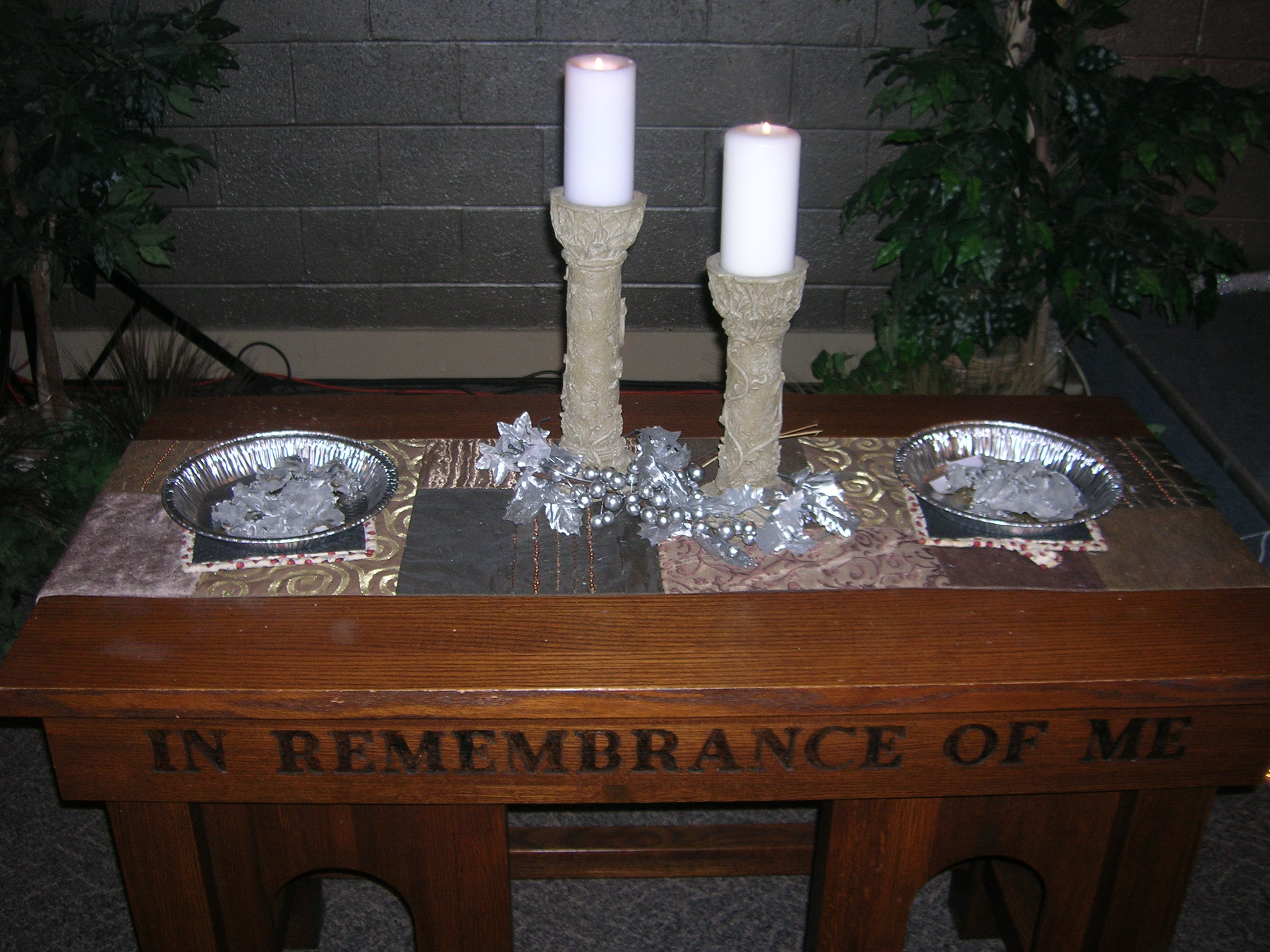
Yesterday our congregation wrote down their burdens and concerns and challenges on a slip of paper. Then we brought those concerns to Jesus and burned them up like frankincense in His presence. As I smelled the aroma, I could only imagine the incredible scent that Jesus detected.

All of the concerns people wrote down were reduced to ash yesterday morning!

I believe people were set free! The concerns were burned up like a sacrifice before our High Priest! No longer do they have to carry these heavy loads:

Casting the whole of your care [all your anxieties, all your worries, all your concerns, once and for all] on Him, for He cares for you affectionately and cares about you watchfully.

Your greatest gift to God could be all of the things that have burdened you for way too long. Give them to Him because He cares for you. Let them be consumed completely, and never pick them up again.

Live free!

Thanksgiving Challenge


Yesterday I began a two-part series at Calvary Assembly of God sandwiched around Thanksgiving Day. The series is simply called Thanks and is based on the premise that thankfulness is the soil for healthy growth.

Have you ever grown a garden? If you have, you know that even though you plant the best seeds in the best soil, if you simply leave it unattended, weeds will find their way into your well-manicured garden. If you leave your garden unattended for long enough, the weeds will eventually take over.

It’s just as true for our minds. We can cultivate the best soil in our minds and plant only the finest seeds. But if we do nothing more, the weeds will take over and eventually choke out anything good that was growing there.

A spirit of continual thankfulness will keep the soil free from the choking weeds. But pulling out weeds by our thankfulness must be a continual process. So I gave our church the 365/730/1095 challenge.

Start a thanksgiving journal. If you just write down one unique thing every day for which you are thankful, you will have recorded 365 things in a year. More challenging: write down two things every day, or even—are you brave enough to attempt this?—three things every day. If you find two things each day, you will have 730 weed busters by the end of the year, or three items will give you 1095 weed busters.

Are you ready for the challenge?

I’m going to attempt to find three unique things each day for the next year. I hope this is encouraging to you, and I hope you will accept the 365/730/1095 challenge too.

Satisfied Service

I started a conversation last week about being a servant (you can catch up here).

Serving should be a two-way street. Contrary to the way that some people look at servanthood, being a servant is not the same thing as being a doormat. Consider two key verses:

  • Each of you should look not only to your own interests, but also to the interests of others. (Philippians 2:4)
  • Submit to one another out of reverence for Christ. (Ephesians 5:21)

We should look equally to others’ needs as well as our own needs. Zig Ziglar says it this way, “You can have everything in life you want, if you will just help other people get what they want.”

This can be manipulation if you’re simply looking to someone else’s interests as a form of flattery or as a quid pro quo. But if you are truly serving—if you truly have the other person’s best interests in mind—if you are willing to submit to them out of reverence for Christ, serving can be liberating.

Last week Rick Warren tweeted, “The more self-centered I am, the more unsatisfied I’ll be.” I retweeted with this addition, “So the more I serve, the more satisfied I’ll be.” I believe that.

Try it for yourself—it works!