Pentecost for over 1500 years was a celebration in Jerusalem that brought in Jews from all over the world. But on the Day of Pentecost that came just ten days after Jesus ascended back into heaven, the meaning of Pentecost was forever changed!
Followers of Jesus—now empowered by an infilling of the Holy Spirit—began to take the good news of Jesus all over the world. These Spirit-filled Christians preached the Gospel and won converts to Christ even among hostile crowds, performed miracles and wonders, stood up to pagan priests and persecuting governmental leaders, and established a whole new way of living as Christ-followers.
We, too, can be Pentecostal followers of Jesus Christ today. We can experience an anointing and an empowering in our lives that turns ordinary Christianity into extraordinary Christianity!
Please join me this Sunday as we continue a series of messages we started last year called We Are: Pentecostal. You can check out what I taught in this series in 2019 by clicking here. And our current messages include:
Is death the #1 fear people have? The simple and complicated answer is: It depends. Fear of dying is a BIG fear in those that statistically are the least likely to die: the young. But fear of dying is very LOW for those on death row, the elderly, and the terminally ill.
I hope to convince you of a fourth group that shouldn’t fear death. It’s a group that all of us can be a member of: Those who understand that physical death is not the end.
In the Garden of Eden, God planted one tree that was off-limits, and He said that the penalty for eating from this tree was death (Genesis 2:16-17). satan tried to get Adam and Eve to doubt what God said, and after they ate the fruit, it appeared satan was correct—they didn’t die. At least not physically.
But their sin did something far, far worse—it separated them from God’s presence. Now when God appeared, Adam and Eve hid in fear. In fact, Jesus even told His followers that the greatest fear wasn’t physical death but spiritual death (Luke 12:4-5).
Jesus came to lift our hope to something beyond this physical world. He said, “God so loved the world that He sent His one and only Son, that whoever believes in Him would not die, but would have eternal life” (John 3:16).
Famed atheistBertrand Russell said, “I would never die for my beliefs because I might be wrong.”
On the other hand, Jesus DID die for His beliefs and proved He was right by His resurrection!
Friend, listen to me—We’re definitely not living our best life now. We are all terminal. Unless Jesus returns, the chances of our physical death are 1-in-1.
But physical death is not the end! Death of the body means freedom for the soul. Jesus has defeated Death once for all! “Do not be afraid. I am the First and the Last. I am the Living One; I was dead, and now look, I am alive for ever and ever! And I hold the keys of death and Hades,” Jesus said (Revelation 1:17-18)
Death has been swallowed up in victory. Where, O death, is your victory? Where, O death, is your sting? The sting of death is sin, and the power of sin is the law. But thanks be to God! He gives us the victory through our Lord Jesus Christ. (1 Corinthians 15:54-57)
Invite Jesus into your life right this moment!!
Once you have invited Jesus into your life, and your sins have been forgiven, and your destiny following your physical death is assured, this is how you should now live:
Live in joyful hope. Not optimism—that’s just the belief in what you think you can do. But hope is the belief in what you know Jesus has already done!
Live free of all anxiety and the fear of death. Because nothing can separate you from God’s love and presence (Romans 8:38-39).
Live telling others about your Risen Savior. It’s the most loving thing that you could do for anyone.
I don’t think it’s a stretch to say that to be a Christian and to be fearful of death is a sin. A fearful Christian gives God no praise, robs Him of glory, and paints God in a bad light. A happy, secure Christian knows the Lord is his strength, his comfort, his supply. A happy Christian lifts God high and invites others to know this All-Good, All-Happy God too!
We can live this way because Jesus died to pay the penalty for your sins that separated you from God, and He was resurrected back to life to assure you that your eternal home in God’s presence is secure!
In 1948, World War II had come to a close and the nuclear age had dawned. The Cold War was beginning to ratchet up and the fear of nuclear annihilation was gripping people’s hearts.
In this environment, C.S. Lewis wrote an essay entitled On Living In An Atomic Age. I have changed the word “atomic” for “COVID-19,” and I think you will see the relevance.
In one way we think a great deal too much of the COVID-19 virus. “How are we to live in a COVID-19 age?” I am tempted to reply: “Why, as you would have lived in the sixteenth century when the plague visited London almost every year, or as you would have lived in a Viking age when raiders from Scandinavia might land and cut your throat any night; or indeed, as you are already living in an age of cancer, an age of syphilis, an age of paralysis, an age of air raids, an age of railway accidents, an age of motor accidents.”
In other words, do not let us begin by exaggerating the novelty of our situation. Believe me, dear sir or madam, you and all whom you love were already sentenced to death before the COVID-19 virus was invented: and quite a high percentage of us were going to die in unpleasant ways. We had, indeed, one very great advantage over our ancestors—anesthetics; but we have that still. It is perfectly ridiculous to go about whimpering and drawing long faces because the scientists have added one more chance of painful and premature death to a world which already bristled with such chances and in which death itself was not a chance at all, but a certainty.
This is the first point to be made: and the first action to be taken is to pull ourselves together. If we are all going to be destroyed by the COVID-19 virus, let that virus when it comes find us doing sensible and human things—praying, working, teaching, reading, listening to music, bathing the children, playing tennis, chatting to our friends over a pint and a game of darts—not huddled together like frightened sheep and thinking about viruses. They may break our bodies (a microbe can do that) but they need not dominate our minds.
For Christians, I would urge you to think in ways in which I am certain C.S. Lewis would agree:
Set your minds on things above, not on earthly things. (Colossians 3:2)
Finally, brothers and sisters, whatever is true, whatever is noble, whatever is right, whatever is pure, whatever is lovely, whatever is admirable—if anything is excellent or praiseworthy—think about such things. (Philippians 4:8)
Be joyful because you have hope. Be patient when trouble comes, and pray at all times. (Romans 12:12)
A.W. Tozer helps us think long and deep about the greatness of God, opening windows of insight that many have not contemplated previously. Check out my full book review of The Knowledge Of The Holy by clicking here.
“With our loss of the sense of Majesty has come the further loss of religious awe and consciousness of the divine presence. … The decline of the knowledge of the holy has brought on our troubles. A rediscovery of the majesty of God will go along way toward curing them.”
“What comes into our minds when we think about God is the most important thing about us.”
“The man who comes to a right belief about God is relieved of ten thousand temporal problems, for he sees at once that these have to do with matters which at the most cannot concern him for very long; but even if the multiple burdens of time may be lifted from him, the one mighty single burden of eternity begins to press down upon him with a weight more crushing then all the woes of the world piled one upon another. …
“But unless the weight of the burden is felt, the gospel can mean nothing to the man; and until he sees a vision of God high and lifted up, there will be no woe and no burden. Low views of God destroyed the gospel for all who hold them.”
“Among the sins to which the human heart is prone, hardly any other is more hateful to God than idolatry, for idolatry is at bottom a libel on His character. … The essence of idolatry is the entertainment of thoughts about God that are unworthy of Him.”
“The heaviest obligation lying upon the Christian Church today is to purify and elevate her concept of God until it is once more worthy of Him—and of her.”
“When the Spirit would acquaint us with something that lies beyond the field of our knowledge, He tells us that this thing is like something we already know, but He is always careful to phrase His description so as to save us from slavish literalism.”
“An attribute of God is whatever God has in anyway revealed as being true of Himself.”
“We might be wise to follow the insight of the enraptured heart rather than the more cautious reasonings of the theological mind.”
“If we ever think well it should be when we think of God.”
“The harmony of His being is the result not of a perfect balance of parts but of the absence of parts.… An attribute, then, is not a part of God, it is how God is…. The divine attributes are what we know to be true of God. He does not possess them as qualities; they are how God is as He reveals Himself to His creatures.”
One definition of a Christian mystic is someone who engages in deep, prayerful pondering of the nature of God, as He is revealed in the Scriptures, and then emerges from those intimate encounters to share with us what he or she has learned. I would put A.W. Tozer in this category, especially in his book The Knowledge Of The Holy—The Attributes of God: Their Meaning in the Christian Life.
Tozer himself described the Christian mystic more fully than I could in his book The Christian Book Of Mystical Verse. In that book, Tozer shared some poetic verses from some of his favorite mystical thinkers. He noted, “The hymns and poems found here are mystical in that they are God-oriented; they begin with God, embrace the worshipping soul, and return to God again.”
In The Knowledge Of The Holy, Tozer takes us on his own personal journey into the immeasurable depths of God’s greatness. Whereas many theologians tend to focus on one attribute of God at a time, Tozer has a God-given ability to help us see all of God’s attributes operating in their infinite fullness.
Even as Tozer plunges deep into the attributes of God’s self-existence, self-sufficiency, omniscience, omnipotence, omnipresence, love, mercy, justice, grace, and sovereignty, he reminds us, “Because God is immutable He always acts like Himself, and because He is a unity He never suspends one of His attributes in order to exercise another.”
This is not a book you can ready lightly or casually, or even quickly. This is a book that invites you to read slowly and reverently each of the short chapters, and then to meditate long on the immenseness of an All-Powerful, All-Loving God who wants to reveal Himself to you.
The Knowledge Of The Holy is a soul-expanding book!
In the 1940s, C.S. Lewis presented a series of radio talks which became the book Mere Christianity. It was in this book that Lewis went beyond any denominationalism to the basic tenants of Christianity as outlined in the Bible. T.M. Moore persuasively warns us today of the trend away from “mere” Christianity to what he terms “near Christianity.” The Gospel of the Kingdom is an important book for those who desire to “contend for the faith that was once for all entrusted to God’s holy people” (Jude 3).
An increasing number of people who call themselves Christians—and even more alarmingly, those who are in positions of church leadership—aren’t living or preaching the full Gospel as presented in the Scriptures. Moore sounds the clarion call: “We are in danger, I believe, of having embraced, not the Gospel Jesus and the Apostles proclaimed, and for which our forbearers in the faith lived and died, but another gospel, a shallow, self-centered, merely sentimental gospel, which ‘assures’ us of heaven but does not equip us for the kingdom of God.”
The followers of near Christianity tout how they have been saved from hell, but their profession and lifestyle don’t go beyond that. In other words, there is very little—if any—evidence that Jesus has become the Sovereign of their lives, and that they are living as citizens of God’s Kingdom. “Near Christianity, therefore, produces little in the way of kingdom evidence in the lives and churches of those who embrace it,” says Moore.
In The Gospel of the Kingdom, Moore fully defines the imposter known as near Christianity, and then systematically details the characteristics of the Kingdom of God that should be evidenced in the lives of those who call themselves Christians. This isn’t just Moore’s opinion, but this short book is thoroughly cross-referenced with over 100 biblical passages.
All Christians—and especially those in the pastorate or other leadership roles—would do well to digest this book. If we aren’t vigilant, near Christianity may dominate the landscape of our churches, which really isn’t Christianity at all.
“The man who says, ‘I want to go to heaven, but I don’t want to live a pure life; I want to be free to continue with my present life. I will change a little and do better, but I have no desire to be pure,’ or the man who says, ‘I want to escape hell and make heaven my home at last, but I have no particular desire to cease to live as I have lived’ is deceiving himself. You are hearing the language of a moral fool. This is not the language of wisdom, but the folly of the damned. …
“The penitent man wants to be changed. If you are still sufficiently in love with yourself and all you want is a little improvement, I see no possibility of faith approaching your heart. Unless a man comes to Christ seeking to be a different person, to be humble, meek, and self-effacing, he is not coming to Christ at all. Unless we hate evil and love righteousness, at least to the degree we are able at the moment, we are still in the bonds of iniquity and the enemies of righteousness. …
“Join me in this prayer: “Oh, I want to be other than what I am. I want to be different. I want to change. I am not satisfied. I want to believe in Thee, and trust in Thee, and throw myself boldly on Thee, and I want to be made like Thyself. I do not want only to escape hell, I want to escape sin. I not only want to go to Heaven at last, but I want to have Heaven in my heart now. I not only want to dwell with the redeemed, I want to be like the redeemed here on earth. I want to be another kind of person.” —A.W. Tozer, in The Wisdom of God
Listen to the podcast of this post by clicking on the player below, and you can also subscribe on Apple, Spotify, or Audible.
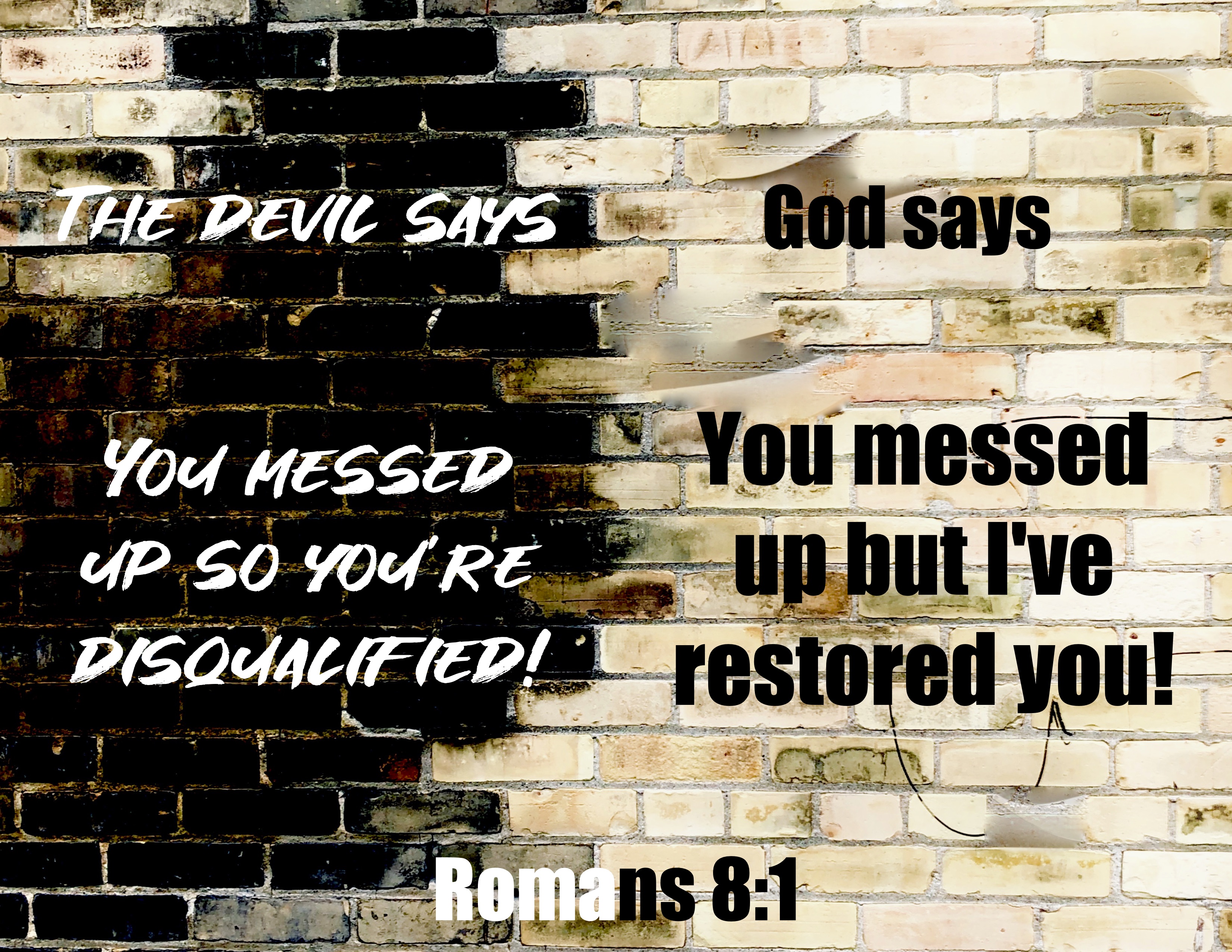
Twice the 80th psalm declares—Restore us, O Lord God Almighty; make Your face shineupon us, that we may be saved (Psalm 80:19).
But if we are already a Christian that has been saved from the penalty of our sin and saved to an eternal reward, then that also means that God’s face IS already shining on us, He HAS already restored us, and He HAS already given us His favor.
I like how the Amplified Bible renders this verse: Restore us, O Lord God of hosts; cause Your face to shine in pleasure, approval, and favor on us, and we shall be saved!
What we have received is too wonderful for us to keep to ourselves, so we must let His pleasure, approval, and favor now shine out of us!
“If the result of our experience of God does not compel and propel us into global mission, it is doubtful whether we have really encountered the God of the Bible.” —Dick Brogden
Jesus stated His mission simply and then sent us out on the exact same mission (Luke 4:18-19; John 20:21). We do this best by living closely among people so they can also see us shine with God’s favor.
Paul called us to shine as well: Live clean, innocent lives as children of God, shining like bright lights in a world full of crooked and perverse people (Philippians 2:15). I believe this is a perfect definition of the word influence.The origin of the word meant the supposed flowing of ethereal fluid from the stars thought to affect the actions of men.Christians that let their good deeds shine in the darkness can influence the entire culture around them!
“Radical Christianity is not going on a missions trip or a big conference. Radical Christianity is staying steady for decades.” —Mike Bickle
Being a person that shines with favorable influence requires staying involved for the long haul so that you can build trustworthiness. It’s being in visible places not to get glory, but to let people see God’s glory. When they see His glory shine on you and out of you, they will want what you have too!
Solomon said, By the blessing of the influence of the upright and God’s favor—because of them the city is exalted (Proverbs 11:11). So, my fellow Christian, let me ask you:
Has God shined on you?
Are you letting Him shine out of you?
Are you living a noteworthy, trustworthy, visible life in your dark community?
“It’s your choice: You can be a part of your city’s elevation or its deterioration.”
“It is the personal element that Christian discipleship needs to emphasize. ‘The gift without the Giver is bare.’ The call of this age is a call for a new discipleship, a new following of Jesus, more like the early, simple, apostolic Christianity when the disciples left all and literally followed the Master. Nothing but a discipleship of this kind can face the destructive selfishness of the age, with any hope of overcoming it. … But if our definition of being a Christian is simply to enjoy the privileges of worship, be generous at no expense to ourselves, have a good, easy time surrounded by pleasant friends and by comfortable things, live respectably, and at the same time avoid the world’s great stress of sin and trouble because it is too painful—if this is our definition of Christianity, then surely we are a long way from following the steps of Him who trod the way with tears of anguish for a lost humanity.” —Rev. Maxwell in Charles Sheldon’s In His Steps (emphasis mine)
For a man who preached up to 10 times per week for nearly 40 years, you would think that people knew all about Charles Spurgeon’s personal life. Although he frequently used some small personal examples in his sermons, he still kept much of his personal life personal. In reading Spurgeon’s Autobiography, I expected to get an inside look, but that was not what I found.
Like his sermons, Spurgeon’s Autobiography was fascinating. Like his sermons, his recollections of his past are thoroughly steeped in Scripture. I love this! This shows us that this Prince of Preachers didn’t just put on a performance when he stepped into his pulpit, nor did he simply teach Christian principles for others to apply only to their lives; instead, we see a man who truly patterned his life after the Bible.
I also love the honesty in Spurgeon’s stories. He tells of his struggles before and after his conversion. He talks openly of his disagreements with some “church” people that didn’t behave very Christ-like. He discusses his battles with depression, and with those who were outright critics of his ministry. In other words, Spurgeon reveals himself without putting himself on some sort of pedestal.
Charles Spurgeon’s sermons are always a delight to read, but I think you will find in his Autobiography a living sermon that we can all emulate.