Sherman (book review)

I find biographies of leaders fascinating. And few Civil War leaders are a more fascinating study than William Tecumseh Sherman, as portrayed in Sherman: The Ruthless Victor by Agostino Von Hassell and Ed Breslin.

Sherman was a man driven by two forces which almost seem contradictory: (1) the desire to make a name for himself, without the help of other; and (2) the almost debilitating fear of trying to attempt anything that wasn’t guaranteed to be successful. Whereas the first might drive him to be something of an entrepreneur, the second would seem to keep him satisfied with the status quo. Ultimately the entrepreneurial force drove him forward.

In fact, it drove him forward so ruthlessly and mercilessly, that his name is still uttered as a curse word in the South, and one of the most fearsome military machines—the Sherman tank—was so aptly named after him.

As I read this biography, I couldn’t help feeling sorry for General Sherman. For a man who had been given so many advantages and opportunities, he seemed not only ungrateful for them, but almost contemptuous of them. In the end, the only thing that gave him satisfaction was totally annihilating everything in his path; including his marriage, his family, and his friends. Sad!

But Sherman is still an important read for any student of leadership. I can’t help but wondering how history might have been different if a mentor might have come alongside Sherman to help him use his God-given talents in a more judicious and beneficial way.

I am a Thomas Nelson book reviewer.
The Next Christians (book review)

If you’re anything like me, you might feel that a lot of recently-released books and the current research results seem to paint a rather bleak picture of the church. Reading these works makes it sound like the church is in decline, it has lost its authority in the community, and people are finding Christianity less and less relevant in their lives. But Gabe Lyons has “the good news about the end of Christian America” in his book The Next Christians.

Where many Christians are either withdrawing from mainstream society, or are selling-out to it in an attempt to be accepted (Gabe calls these the Separatists or Culturals, respectively), Gabe happily points out that the next Christians coming to the forefront are Restorers. These Christians are not running away from culture, but are running to it in a way that makes the Gospel both relevant and appealing.

Gabe points out that the Restorers are defined by six descriptive phrases:

  • Provoked, not offended when they confront the unbiblical in culture
  • Creators, not critics of what mainstream culture is producing
  • Called, not just employed in “a job”
  • Grounded in Christian disciplines, not distracted by the tasks around them
  • Committed to their community, not isolating themselves from it
  • Countercultural, without attempting to become “relevant”

The Next Christians made me stand up and cheer, “Yes! This is how I want to live!” I could hardly put this book down. Now that I’ve finished reading it, I’ll be referring to these concepts again and again, both in my personal life, and in my calling as a pastor.

If you are ready to see Christians reassume their place in society like the Bible describes it, you will love reading The Next Christians.

I am a Doubleday book reviewer.

In Visible Fellowship (book review)

This is the second book that Jon Walker has written as a modern-day commentary of a classic Dietrich Bonhoeffer work. This time around Jon takes a look at Bonhoeffer’s Life Together in his book called In Visible Fellowship. (Jon’s first book is Costly Grace, looking at Bonhoeffer’s The Cost Of Discipleship. You can read my review of that book by clicking here.)

In visible fellowship is a phrase that Dietrich Bonhoeffer used to describe the importance of how Christians interact with each other. To Bonhoeffer, it wasn’t so much how Christians behaved in church on Sundays, but how they interacted with each other the other six days of the week. He wanted those outside of the Christian community to see something so attractive and appealing about the way the Christian community operated “in visible fellowship” with each other.

In Visible Fellowship is an excellent companion piece to Life Together. Whereas Costly Grace could almost stand on its own, In Visible Fellowship is probably best read in conjunction with Life Together. In other words, I would highly recommend that both be read at the same time.

Since Jon notes, “There is no such thing as independent study in the curriculum of Christ,” I would further recommend that In Visible Fellowship and Life Together be read with other Christians. A small group could read Life Together, and then use In Visible Fellowship as their study guide as they gather together. Toward this end, each chapter has some excellent questions that should really stimulate lively conversations.

I’m a huge fan of Dietrich Bonhoeffer, and Jon Walker has done an excellent job in bringing some thought-provoking contemporary views to these classic works. I recommend In Visible Fellowship (especially when read with Life Together).

I am an ACU Press book reviewer.

Has God Spoken? (book review)

The Bible has quite a bit to say about apologetics — defending what you believe. Paul tells Christians to study God’s Word so that we won’t be ashamed of it, and Peter tells Christians to always be prepared to answer anyone who questions our faith in Christ. But how do we know the Bible is true? Hank Hanegraaff’s latest book, Has God Spoken?, is an excellent resource to help you answer that question.

You may know Hank as host of the Bible Answer Man, and have come to appreciate his wit and wisdom. In Has God Spoken? you will be well-armed to answer any critics who claim that the Bible is not all that Christians claim it to be.

And I love the format that Hank uses to share all of his wisdom. Just like musicians learned their musical notes through such statements as, “Every Good Boy Deserves Fudge,” Hank uses a variety of acrostics to make his evidence so easy to recall. In addition, this book is fully documented, with nearly 100 pages of endnotes, so you can dig a little deeper into the evidence and proofs that he presents.

The puritan pastor Thomas Watson wrote, “The Bible is a rock of diamonds, a chain of pearls, the sword of the Spirit; a chain by which the Christian sails to eternity; the map by which he daily walks; the sundial by which he sets his life; the balance by which he weighs his actions.” But if someone ever doubts the accuracy, inspiration and inerrancy of the Bible, he will never know the treasures and life resources within its pages. That’s why this book is so valuable, and I highly recommend it to both Bible believers and Bible skeptics.

I am a Thomas Nelson book reviewer.
The Hour That Matters Most (book review)

I’ve been a big fan of the relationship-strengthening books from Drs. Les & Leslie Parrott for quite awhile. In The Hour That Matters Most they combine together two of my favorite topics: family and food.

I have always appreciated family meal times. Especially as my kids have gotten older—and busier—the dinner hour seems to be the one oasis during the day when we can all reconnect. This is exactly the point that the Parrotts, and co-authors Stephanie Allen and Tina Kuna, are trying to make. And they do an excellent job making their point using statistics, research, tips, stories, and even recipe ideas.

First the statistics. Research has shown that families that eat together:

  • Get along with each other better.
  • Handle stress better.
  • Have lower rates of drug abuse, alcoholism, premarital sex, depression, eating disorders, and suicide.
  • Have students who perform better in school academically and socially.

Then there are the conversation-starters. The authors give ample suggestions of how to draw everyone into a conversation around the dinner table, to gain insight into what is happening in each family member’s day.

And finally, but certainly not insignificantly, there are the recipe. Some mmm, mmm good recipes! Sprinkled throughout the book—and in full color in the middle of the book—are some easy-to-make, hard-to-resist recipes. After all, it’s hard to have a family meal without the meal!

Whether you want to enhance your family dinner times, or you are ready to (re)establish a time for your family to connect over a meal, The Hour That Matters Most is an excellent read.

I am a Tyndale book reviewer.

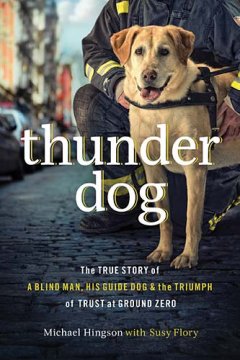
Thunder Dog (book review)

I love the fact that my children enjoy reading almost as much as me! Here is a review from our resident pet lover.

[Guest book review by Samantha Owens]

Thunder Dog is the courageous story of Michael Hingson and his guide dog Roselle during their escape from the twin towers on 9/11. This book written by Michael offers his unique perspective of the events of that frightful day. He also explores the challenges and triumphs of growing up blind.

Nonfiction is usually not my first choice when picking a book. But I would recommend this book to anyone! I always felt a part of the story while I read, and often lost track of time. I also enjoyed learning more about the things that blind people learn to do, and the technology that helps them. I loved the fact that Michael’s parents never treated him like he was blind; he was encouraged to try new things and to learn and grow like any other kid.

I also liked how Michael’s love for God and his faith in Him had a major part in this book. Throughout, he prays to God and trusts Him to lead them in the correct path. Michael has such an assurance in God, and I think that made the story so much more powerful.

I would recommend this book to anyone, but not for younger children, due to its challenging words and graphic topic. I think that Michael does a good job not making this book graphic, but you are still very aware of what’s going on. There is no inappropriate content. The only foul language is a comment of “it’s a living hell.” In all, I would read this book again and again, and I hope that you all read it as well.

I am a Thomas Nelson book reviewer.

Leadership Prayers (book review)

There are few things that will lead someone to prayer more than being placed in a leadership position! To help leaders pray, Richard Kriegbaum offers some powerful prayers in his book (appropriately titled) Leadership Prayers.

One of the best ways to learn how to pray is to stop talking about prayer and simply start praying. This is one of the things I appreciated about this book. You won’t find sections on why leaders should pray, or even how they should prayer. You will simply find prayers.

Each chapter in Leadership Prayers is devoted to a particular leadership challenge. From leading change in the organization, to dealing with a board of directors, to casting vision, to handling disappointment. Each chapter presents a short verse of Scripture, and then dives right into a prayer. Finally, each chapter is concluded with Mr. Kriegbaum’s reflection on how he learned to pray that particular prayer.

Short. Sweet. Practical. Helpful.

I liked this book a lot!

Say It With Love (book review)

There is a verse in the Bible that tells us to speak the truth in love. And that’s exactly what Howard Hendricks lives by in Say It With Love: The art and joy of telling the Good News.

For Professor Hendricks, the good news about Jesus Christ is not something that is just shared by a pastor on Sundays, but it’s something all Christians should be sharing all the time. And not just with words either, but with our very lives.

Dr. Hendricks challenges us to know why we are sharing the message of God’s love; to put ourselves in a position to share that message effectively; and then to live that message out in all of the roles of our life. This third section was the most impactful for me. Dr. Hendricks talks persuasively about living the message…

  • …with God
  • …with your mate
  • …with your children
  • …in your church
  • …in your neighborhood
  • …in your daily contacts

This is both a hopeful book and a convicting book. It’s an easy read with lots of Dr. Hendricks’ personal stories sprinkled in as examples. If you want to do a better job communicating the message of the gospel, you should check out this book.

God Is The Gospel (book review)

John Piper is always a challenging read for me. He stretches my horizons, challenges my paradigms, and forces me to dig deeper into Scripture. In God Is The Gospel, I felt like he was writing to me specifically in my role as a pastor of a growing church.

The gospel is good news, right? But good news about what? Or more importantly: Who? Here’s how Pastor John himself describes why he wrote this book:

“The point of this book is that the Christian gospel is not merely that Jesus died and rose again; and not merely that these events appease God’s wrath, forgive sin, and justify sinners; and not merely that this redemption gets us out o Hell and into Heaven; but that they bring us to the glory of God in the face of Jesus Christ as our supreme, all-satisfying, and everlasting treasure. ‘Christ… suffered once for sins, the righteous for the unrighteous, that He might bring us to God’ (1 Peter 3:18).”

Too many times as a pastor I’m guilty of pointing people to the gifts of salvation, and not to the Giver of salvation. The gifts are wonderful, but the Giver of the gifts is supremely important!

This is a book about glorifying God. This is a book about worshiping God for Who He is, and not for what He gives.

Everyone will benefit from reading this book. But I would most recommend it to those who are called to preach the gospel of Jesus Christ.

Be A People Person (book review)

John Maxwell’s insights into leading people perpetually astound me. He always finds such simple ways to explain what I know I should already be doing. In one of his earliest books, Be A People Person, I (re)discovered some more great people principles.

Be A People Person perfectly describes this book: It’s all about being a person who is trusted and accepted by other people. This, in turn, puts this people-person in a place to be an effective leader. So Dr. Maxwell talks about confidence, motivation, encouragement, empathy, trustworthiness, mentorship, and so many other people principles.

Because this was one of his earlier books, I see many of the seed thoughts that have become books in their own right later on. But that still didn’t take away from the refreshing insights that I uncovered.

Unless you are a solitary hermit, there is so much to discover in this book to help you grow stronger and more effective relationships with family members, coworkers, and friends.