A Christlike Response To Skeptics

Listen to the podcast of this post by clicking on the player below, and you can also subscribe on AppleSpotify, or Audible. 

God is precise in His promise making and promise keeping. He doesn’t just fulfill promises in a vague way or in “the spirit of the law,” but He attends to the jots and tittles of every single detail.  

Last week we saw the example of Jesus going into a dark place to bring the light of hope. It’s the same for us: God uses circumstances to direct our steps into dark places because people need to see the light. 

But people living in darkness sometimes don’t like the light. 

When we feel like our message of hope is being ignored or rejected (or we’re even being persecuted for sharing the truth) we have a natural emotional response that begins to bubble up. That emotion is anger. How do I know this? Because Jesus experienced this too. 

We can do two things with our anger: 

  1. We can blast skeptics with righteous judgment <or> 
  2. We can follow the example of Jesus  

In The Pilgrim’s Progress, Faithful told how a man came and beat him because he had broken the law. Even when Faithful begged for mercy the man said, “I don’t know how to show mercy to anyone.” This man was Moses the Lawgiver. Faithful explained what finally gave him relief: “He would have finished me off, but then One came by, and told Him to stop. I did not know Him at first, but as He went by, I saw the holes in His hands and in His side and I concluded that He was Jesus.” 

Moses had every right to be angry, and he expressed it a way that tried to finish off Faithful. 

Jesus also got angry, but let’s see what He did with it. 

(Check out all of the Scriptures I list below by clicking here.)

In Matthew 12:9-10 we see the motive of the skeptics: catch Jesus doing something wrong. This opposition came from the religionists—they weren’t interested in the truth, they were interested in proving themselves right and righteous. 

As they are asking their entrapping question, Luke tells us that “Jesus knew what they were thinking” (Luke 6:8). And Mark tells us that Jesus then asked a question of His own (Mark 3:4-5). These religionists refused to answer His question, and their stubborn hearts made Jesus deeply angry! 

So Jesus answered His own question, concluding that the Sabbath was the day that god intended for healing and helping. To prove this point, Jesus then healed the shriveled hand of the man who stood before Him (Matthew 12:11-14). In response to this, the Pharisees plotted with the Herodians on how to kill Jesus (Mark 3:6). 

Matthew then writes, “Aware of this, Jesus withdrew from that place (Matthew 12:15). He didn’t withdraw in fear, but in complete awareness of His Father’s plan. Part of that plan was not for Jesus to win argument, but for Him to win souls. 

Perhaps in His anger in the moment, Jesus would have spoken words that were too harsh. There is a time to speak, but it’s usually not in the heat of the moment. In fact, Laurence J. Peter rightly said, “Speak when you are angry, and you will make the best speech you’ll ever regret.” 

So in fulfillment of another prophetic word given in Isaiah 42, Jesus withdrew to continue His teaching and healing ministry (Matthew 12:17-21). 

What does this mean for us today? I think we can see five important responses in these prophetic words: 

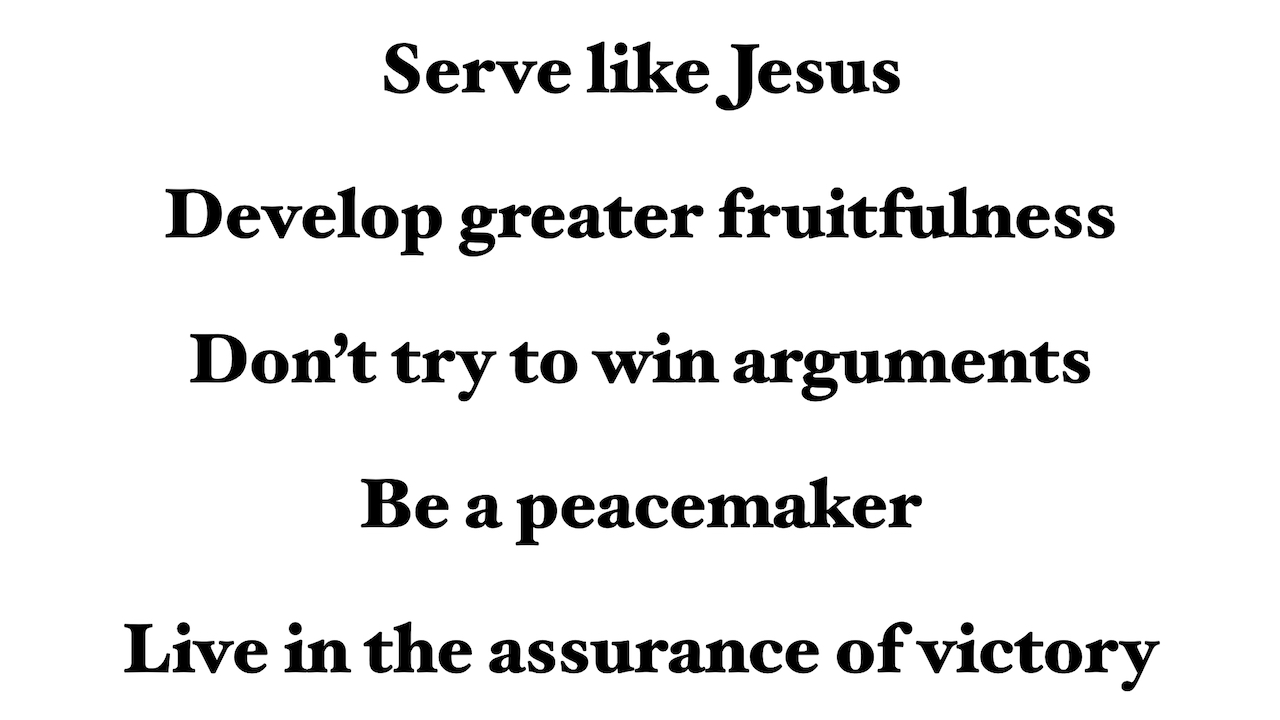
  1. I am to serve others as Jesus did—even those who want to silence me.  
  2. I can let the Holy Spirit use this opposition to bring greater fruitfulness out of my life (Galatians 5:19-26).  
  3. I don’t need to win an argument with skeptics. 
  4. I can be a peacemaker that points people to the Prince of Peace (1 Peter 2:8-12). 
  5. I should live in the assurance of ultimate victory, just as Jesus did (1 Peter 2:23).  

God gets the final word, the decisive word, and the best word, so I don’t have to try to win arguments with skeptics. Like Jesus, I can love and serve in a way that leaves them an unmistakable testimony. 

To check out the other messages in this series called Jots and Tittles: Why it matters that God is in the smallest of details, please click here. 

►► Would you please prayerfully consider supporting this ministry? My Patreon supporters get behind-the-scenes access to exclusive materials. ◀︎◀︎

The Bitter Helps The Sweet

Listen to the podcast of this post by clicking on the player below, and you can also subscribe on AppleSpotify, or Audible. 

Have you ever been going through a difficult time in your life and wondered to yourself, “What in the world is going on here?” I might have a different way for you to think about that!

Check out this episode of The Podcast.

Some resources from this episode:

The Scriptures I reference: Romans 5:3-5; James 1:2-4; 1 Peter 1:7; Romans 8:28

Here are a couple of blog posts with some additional thoughts on this: Hard Times and Probably Not a Straight Path.

And this video—How can Christians best process difficulties?  

My new book When Sheep Bite is available for pre-order!

Here are a bunch of ways to get in touch with me and follow along with other projects on which I am involved

►► Would you please prayerfully consider supporting this ministry? My Patreon supporters get behind-the-scenes access to exclusive materials. ◀︎◀︎

What The Bible Doesn’t Say

Listen to the podcast of this post by clicking on the player below, and you can also subscribe on AppleSpotify, or Audible. 

We would do well to pay attention to what the Bible doesn’t say—especially when we have to interact with ungodly leaders. 

Check out this episode of The Podcast.

Some resources from this episode:

Here are a bunch of ways to get in touch with me and follow along with other projects on which I am involved

►► Would you please prayerfully consider supporting this ministry? My Patreon supporters get behind-the-scenes access to exclusive materials. Like this exceptional Bible study tool to help with Creation apologetics. ◀︎◀︎

Done With Intentional Sinning

The writer of Hebrews assures us that Jesus had to be made like us in every way so that He could experience every temptation that plagues us.

If Jesus hadn’t come to earth in the flesh and lived here victoriously over sin, we would have a loophole to keep on sinning. But He did indeed live a sinless life, die to pay our penalty, and was resurrected to indwell and empower us to overcome sinful lusts. 

So, since Christ suffered in the flesh for us, for you, arm yourselves with the same thought and purpose—patiently to suffer rather than fail to please God. For whoever has suffered in the flesh—having the mind of Christ—is done with intentional sin—has stopped pleasing himself and the world, and pleases God—so that he can no longer spend the rest of his natural life living by his human appetites and desires, but he lives for what God wills. (1 Peter 4:1-2 AMPC)

What a gift Jesus has purchased for us: Freedom from the ensnaring power of sin!

Gratitude Is A Medicine

Listen to the podcast of this post by clicking on the player below, and you can also subscribe on AppleSpotify, or Audible. 

Gratitude is our shield against the negativity, and gratitude is also our sword against the ambushers. But using these pieces of our armor is exhausting, which means we also need a way to recover from the attacks of negativity. 

Jesus began His public ministry with a sermon that prompted Luke to record that “everyone spoke well of Him.” But in less than 60 seconds, after Jesus outlined how His ministry would unfold, Jesus is being criticized to the point where those same praising people are now ready to throw Jesus off a cliff (Luke 4:18-29)! 

Elbert Hubbard wrote, “If you have something others don’t, know something others don’t, or do something others aren’t doing, then, rest assured, you will be criticized. … To avoid criticism say nothing, do nothing, and be nothing.” 

Even though Hubbard is probably right, Christians don’t have the option to “say nothing, do nothing, be nothing,” because Jesus has called us to go into all the world, preach the Good News, and be salt and light. That means we will be victims of criticism. We can use our shield and sword of gratitude, but we are also going to need some medicine to help us recover too.

“Sticks and stones may break my bones but words will never hurt me” is a lie. Words do hurt. 

Jesus told us these stinging words would be thrown at us like sticks and stones in Luke 6:22. When we are criticized, we have to be careful not to get embittered. How does that happen? We are naturally self-protective, so criticized people become critical and cynical unless they can be healed and have joy restored. If we hold on to our hurts, bitterness can fester in our hearts (Hebrews 12:14-15). 

Look at David in Psalm 69. He acknowledged the attacks from his enemies and how it made him feel, but then he applies the healing medicine of gratitude—

But as for me, afflicted and in pain—may Your salvation, God, protect me. I will praise God’s name in song and glorify Him with thanksgiving. (Psalm 69:29-30) 

Our healing is in our thanking! 

Medical research has shown that gratitude improves physical health—it reduces stress and resets the heart’s healthy rhythm. This is just as true spiritually: gratitude is our medicine. 

You may be thinking, “How can I bless critical people? How can I be grateful when I’m surrounded by such hostility?”  

David also wrote Psalm 23 for us. This is the psalm that begins, “The Lord is my Shepherd, I shall not be in want.” But notice especially the words of verse 5: “You prepare a table before me in the presence of my enemies. You anoint my head with oil; my cup overflows.” 

It is precisely in the presence of enemies that God invites us to abide with Him and to receive His medicine of anointing. But I also see that our Good Shepherd doesn’t just give us adequate blessings, but overflowing blessings—enough for me and more to share with those around me. 

In the New Testament Greek, one word for “bless” is eulogeo which literally means “good words.” Jesus, Paul, and Peter all tell us that when we are victims of the sticks and stones of negative words, we are to respond by saying good words both to God and to those who are hurling evil words at us (Matthew 5:43-44; 1 Corinthians 4:12; 1 Peter 3:9). 

Peter shows us exactly how Jesus did this when He was hanging on the Cross and enduring the sneers, mocking words, and insults from those surrounding Him (1 Peter 2:21-23; Luke 23:35-39). Instead of throwing evil words back at them, Jesus blessed them by saying, “Father, forgive them for they do not know what they are doing” (Luke 23:34). 

Learn a lesson from our Lord
Often silence cuts like a sword
When we stand upon the Rock
We needn’t bother when fools mock

Bantering with fools just won’t do
Unless you want to be foolish too
To the wisest words they won’t listen
But joy in airing their own opinion

Our Lord knew just what to do
When mockers hurled words untrue
He entrusted things to the King
Who perfectly records everything

Help us follow the example You gave
To not engage with those who rave
May not our hasty words undo

Because we have been forgiven, we can forgive. Because we have been blessed with overflowing blessings, we can bless. Our healing is in our thanking! 

If you’ve missed any of the messages in this series on power of gratitude, you can check them all out by clicking here. 

►► Would you please prayerfully consider supporting this ministry? My Patreon supporters get behind-the-scenes access to exclusive materials. ◀︎◀︎

Gratitude Is A Sword

Listen to the podcast of this post by clicking on the player below, and you can also subscribe on AppleSpotify, or Audible. 

It would be nice if complainers were satisfied just complaining to themselves, but they’re not. Do you know the cliché misery loves company? It’s just as true for complainers: They really want others to join them in their bellyaching! 

I think a good word for what these negative people do is ambush. The dictionary says that means to lie in wait with hostile intent. Jesus told His followers that this ambushing behavior was going to happen. In Luke 6:22, He uses the word “when” not “if”—

Blessed are you when people hate you, when they exclude you and insult you and reject your name as evil, because of the Son of Man. 

We see this vividly portrayed in the life of Daniel. This man had done nothing but helpful things since the moment he arrived in Babylon. He faithfully served foreign kings, never wanted any recognition for himself, saved lives, interpreted dreams, and explained confusing things. He had a great work ethic and impeccable integrity. But the complainers still wanted to ambush him (see Daniel 6:1-5). 

One psalmist described these ambushers in terms of a hunting lion: His mouth is full of lies and threats; trouble and evil are under his tongue. He lies in wait near the villages; from ambush he murders the innocent. His eyes watch in secret for his victims (Psalm 10:7-8). 

Doesn’t this sound like what the devil does too? Be alert and of sober mind. Your enemy the devil prowls around like a roaring lion looking for someone to devour (1 Peter 5:8). 

I already shared with you that gratitude is our shield for defense, but the Bible tells us that gratitude is also our sword for offense! 

Jerusalem was surrounded by three armies that were lying in wait to ambush the Israelites. After God told the people of Jerusalem that He would deliver them, King Jehoshaphat sent out his army with the worshippers at the front of the ranks. Then listen to how worship not only thwarted the ambushers but boomeranged their evil plans back on themselves—

As they began to sing and praise, the Lord set ambushes against the men of Ammon and Moab and Mount Seir who were invading Judah, and they were defeated. The Ammonites and Moabites rose up against the men from Mount Seir to destroy and annihilate them. After they finished slaughtering the men from Seir, they helped to destroy one another. (2 Chronicles 20:22-23) 

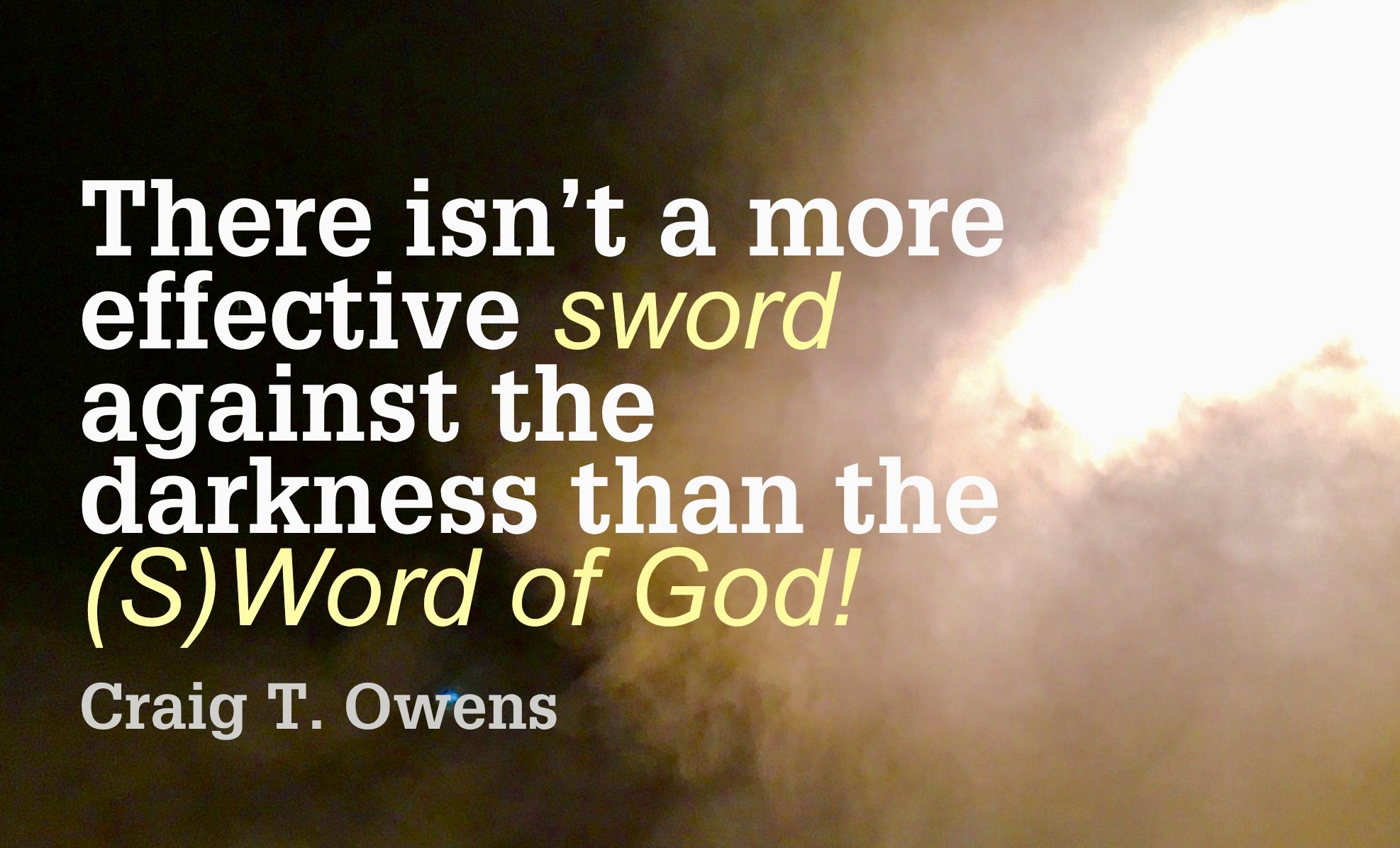
When we worship God and sing our grateful praise to Him, we put the sword of God in our mouths. And there isn’t a more effective sword against the darkness than the (S)Word of God (Hebrews 4:12; Revelation 1:16; Ephesians 6:17)! 

Paul told the church at Colosse that singing our praise to God with other saints was an encouragement to all who heard those worshipful songs (Colossians 3:15-17). 

So when the ambushers are surrounding you, use your thankful songs as a shield, as a sword, and as an encouragement to others! 

If you’ve missed any of the other messages in our series The Great Attitude of Gratitude, you can find them all here.

►► Would you please prayerfully consider supporting this ministry? My Patreon supporters get behind-the-scenes access to exclusive materials. ◀︎◀︎

Praying For Our Governments

Listen to the podcast of this post by clicking on the player below, and you can also subscribe on AppleSpotify, or Audible. 

You may have heard it said that Christians are supposed to pray for those who are in governmental leadership positions over them. Is that really true? And if it is, what exactly are we supposed to pray for them?

Check out this episode of The Podcast.

Resources mentioned in this video:

►► Would you please prayerfully consider supporting this ministry? My Patreon supporters get behind-the-scenes access to exclusive materials. Become a supporter today and get access to all of my previous posts plus have instant access to all of the new materials that are being posted weekly. ◀︎◀︎

Are You Getting Enough Sleep?

Listen to the podcast of this post by clicking on the player below, and you can also subscribe on AppleSpotify, or Audible. 

Doctors and scientists have repeatedly shown how important sleep is for us physically, mentally, emotionally, and even spiritually. So it’s an important question to ask: Are you getting enough sleep?

Check out this episode of The Podcast.

Resources mentioned in this video:

►► Would you please prayerfully consider supporting this ministry? My Patreon supporters get behind-the-scenes access to exclusive materials, like a map and an app I just shared to help with your personal Bible study time. ◀︎◀︎

Spotting The Attitude That Derails

Listen to the podcast of this post by clicking on the player below, and you can also subscribe on AppleSpotify, or Audible. 

There is an attitude that can derail almost everything. I’d like to help you spot it ahead of time.

Check out this episode of The Podcast.

Resources mentioned in this video:

►► Would you please prayerfully consider supporting this ministry? My Patreon supporters get behind-the-scenes access to exclusive materials. ◀︎◀︎
Sin Is Never Manageable

Listen to the podcast of this post by clicking on the player below, and you can also subscribe on AppleSpotify, or Audible. 

King Herod Antipas was the son of King Herod the Great. Herod the Great is the one who tried to kill Jesus shortly after He was born, and in the process murdered numerous infant boys in and around Bethlehem (Matthew 2:16). 

Herod Antipas seduced his sister-in-law Herodias (who was married to his brother Philip), who then divorced her husband to marry Antipas, who had also divorced his own wife (Matthew 14:3). This is also the Herod who so desperately wanted to see Jesus perform a miracle (Luke 9:7-9, 23:6-10). 

Antipas was no choir boy! And yet he had a strange fascination with spiritual matters. Not only did he want to see Jesus, but he liked hearing John the Baptist preach. At the same time, he hated John’s message that said he was living in sin (Mark 6:17-18; Leviticus 20:21). Herod wanted John dead, but he also feared the backlash from the people who thought John was God’s prophet. Later on, he tried to protect John from death, but in trying to save face with his guests, he had to have John killed (Mark 6:26; Matthew 14:5). 

Herod Antipas continually flirted with sin—never killing it, never running away from it. And this eventually caught up with him.

The Gospel of Mark records, “Finally the opportunity came” (Mark 6:21). Herodias’ daughter performed a seductive dance for Herod on his birthday, which cause him to say in front of everyone, “I’ll give you whatever you want.” Prompted by her mother, this young lady seized the opportunity and said, “I want the head of John the Baptist on a platter!” Following in his father’s footsteps, Herod Antipas became a murderer. 

If sin is left close, it will kill you. The Bible tells us sin is crouching nearby, always looking for an opportunity, always a part of the devil’s scheming plan to destroy us (Genesis 4:7; Luke 4:13; Ephesians 6:11; 1 Peter 5:8). 

Sin is never manageable. The little compromises eventually strengthen and blossom, and we are undone by our sin. No matter how “little” we may think our sin is, “little sins” are anything but harmless indiscretions. That’s why as soon as any sin comes to light, it must be killed instantly!

Let us not make the same fatal mistake that Herod Antipas made by flirting with our sin instead of killing it. Paul wrote, “So put to death the sinful, earthly things lurking within you. Have nothing to do with sexual immorality, impurity, lust, and evil desires. … [N]ow is the time to get rid of anger, rage, malicious behavior, slander, and dirty language” (Colossians 3:5, 8).

Or, as John Owen put it, “Be killing sin, or it will be killing you.” 

►► Would you please prayerfully consider supporting this ministry? My Patreon supporters get behind-the-scenes access to exclusive materials, like this recent post about building trust. ◀︎◀︎