A Checklist For Growth

Listen to the podcast of this post by clicking on the player below, and you can also subscribe on AppleSpotify, or Audible. 

Take just a moment to read these words from the apostle Peter—

So then, dear friends, since you are looking forward to this, make every effort to be found spotless, blameless and at peace with Him. … Therefore, dear friends, since you have been forewarned, be on your guard so that you may not be carried away by the error of the lawless and fall from your secure position. But grow in the grace and knowledge of our Lord and Savior Jesus Christ…. (2 Peter 3:14, 17-18)

How do I know I’m looking forward and growing? Here’s a checklist that needs to be reviewed regularly:

  • Am I spending more time preparing for my future than I am repairing my past?
  • Do I know that growth is both hard and rewarding work?
  • Do even the littlest of sins disturb me, rob me of peace, and send me quickly to confession and repentance?
  • Do I filter all my reading, studying, and learning through the standard of Scripture?
  • Is my faith stronger now than it was a year ago?
  • Am I exhibiting more Christ-like characteristics—grace, forgiveness, patience—now than I was last year?
  • Am I thrilled every time I get to learn more about Jesus?
  • Am I more reliant on the Holy Spirit now than I have been in the past, and do I converse with Him more frequently?
  • Would those closest to me say that I am becoming more like Jesus?

I hope we can all answer “Yes” to more and more of these items!

Growth is not automatic—this is especially true for spiritual growth. Growth must be intentional or it will not happen. I want to keep going forward in Christ!

May we add our “Amen” to Peter’s prayer: May God give you more and more grace and peace as you grow in your knowledge of God and Jesus our Lord (2 Peter 1:2).

►► Would you please prayerfully consider supporting this ministry? My Patreon supporters get behind-the-scenes access to exclusive materials. ◀︎◀︎

Visioneering (book review)

VisioneeringWhat a great word! Visioneering: A blueprint for developing and maintaing personal vision by Andy Stanley is how God want to use you to help engineer the vision He has birthed in you.

Andy Stanley is an author that I thoroughly enjoy reading. His wisdom is profoundly practical, which means he uncovers things I never would have seen, but does it in a way that I can immediately apply. Visioneering uses the story of Nehemiah in the Bible as the template to guide us through the steps necessary to see a God-breathed vision become a reality.

Andy uncovers in the life of Nehemiah the things that are universal to anyone who has a burning desire to see things around them taken to a higher level. Things like: second-guessing whether God actually spoke that particular vision, the first steps to take, how to handle criticism, pulling together a team to work together on fulfilling the vision, handling setbacks, keeping all of the team members aligned behind the vision, and what the ultimate purpose of a God-given vision really is.

Each chapter concludes with some thought-provoking questions, and a place to record your answers to those questions. These guides help put “feet” to the concepts shared in each chapter.

After reading Visioneering you will be more energized and equipped to do the great things God is calling you to do.

I am a Multnomah book reviewer.

Check out some quotes from this book here.

Responding To The Voice

FlatlandIn 1880, Edwin A. Abbott wrote Flatland, a book that would later become a favorite of Albert Einstein. Abbott was a college-trained mathematician and a theologian; in fact he was actually better known for his theological writings than for Flatland. Later on Einstein would say that “things should be made as simple as possible, not simpler.” In other words, don’t dumb-down the concept, but state it on a level where more people can grasp it. That’s why, I believe, Einstein loved Flatland.

Flatland is told through the eyes of Square, a two-dimensional shape that lives in Flatland. Square has length and width, but no height. So the inhabitants of Flatland can move back-and-forth, and side-to-side, but not up-and-down. To get an idea of this, put your eye right on the level of a tabletop, and look at an item on the table. Imagine you can only see what is touching the tabletop (but nothing that rises any higher or lower than that), and you will get an idea of Square’s two-dimensional world.

One day Sphere visits Flatland. Sphere is three-dimensional, so he can move up-and-down. This means that Square can only see the part of Sphere that happens to be in his line of sight at that immediate moment. So he sees just a “slice” or “layer” of Sphere as Sphere moves through Flatland. Sometimes Sphere is nothing more than a disembodied voice when he is hovering above Flatland.

This gives us a little bit of an idea of how we perceive God. He exists in dimensions that we cannot fully comprehend, so we only see “slices” of Him as He passes though our line of sight. Sometimes He is just a disembodied Voice—or as the Bible calls Him, the Word of God.

But the Word of God compressed Himself into our dimension (John 1:14). All of the fullness—all of the other-dimension-ness—of His omnipotence, omnipresence, omniscience came to our “level” in the Person of Jesus Christ (Philippians 2:6-7). The Word was the complete and total fullness of God (John 1:1-3; Colossians 2:9). But unlike Square who couldn’t fully know Sphere, God is fully knowable in The Word—in Jesus Christ!

The question is: What are you going to do with The Word? The Word of God (the Bible) allows us to fully know The Word of God (Jesus). But we need to be willing to let the Holy Spirit strip away our puny, smaller-dimensioned, finite thinking of God.

Alvin TofflerAlvin Toffler wrote, “The illiterate of the future are not those who cannot read or write, but those who cannot learn, unlearn, and relearn.”

I would modify this to say, “Those illiterate of The Word (Jesus) are not those who cannot read The Word (the Bible), but those who won’t let the Holy Spirit help them learn, unlearn, and relearn who God is.” 

There is so much more to learn about The Word (Jesus), so let the Holy Spirit guide you in your reading of The Word (the Bible). I pray as Paul did that you will begin to experience more of the multi-dimensional-ness of God as revealed in The Word—

I pray that out of God’s glorious riches He may strengthen you with power through His Spirit in your inner being, so that Christ may dwell in your hearts through faith. And I pray that you, being rooted and established in love, may have power, together with all the Lord’s holy people, to grasp how wide and long and high and deep is the love of Christ, and to know this love that surpasses knowledge—that you may be filled to the measure of all the fullness of God. (Ephesians 3:16-19)

If you have missed any of the messages in this series called Who Is Jesus?, you can find them all here.

Unreached

UnreachedThis really weighs heavily on me…

Our guest this morning began to lay down 3×5 cards with the names of students on them. These students haven’t heard about Jesus yet. Let this weigh on your heart—

There are 150 million unreached students in his area of the world.

If all their names were laid end-to-end on 3×5 cards, the line would stretch 11,500 miles.

If you were flying over these cards in a 747, it would take you 20 hours to cover them all.

Stacked together these cards/names would weigh 190 tons.

If you prayed just 1 second for each name, you would be praying for 4.5 years.

We all need to be praying, giving, or going. Or maybe all three.

  • Praying for our missionaries and the unreached people they are trying to reach
  • Giving financially to missions
  • Going on the mission field yourself

Refrain From Rhetoric

My dear fellow pastor, we should all heed these words—

C.H. Spurgeon“…If some preachers would refrain from rhetoric and tell their plain unvarnished tale, they would succeed better than they do now. Do you think that God meant his ministers to kill themselves in order come out on Sundays with one or two splendid displays of ‘intellect’ and eloquence? Surely this is not God’s way of doing things. I do not believe that Paul ever preached a fine sermon, or that Peter ever dreamed of any display of intellect. I asked the other day of one who had heard a sermon if it was likely that sinners would be converted by it. He said, ‘Oh no; by no means; but it was an intellectual treat.’ Is there anywhere in the Bible a word about intellectual treats, or anything approximating to such an idea?” —Charles Spurgeon

I’m not sure I can add much to this advice from the “prince of preachers” except to say, preach to glorify God, not to impress your earthly audience. Jesus said if we would lift Him up, He will draw everyone to Himself.

Thursdays With Oswald—Venting In Prayer

This is a weekly series with things I’m reading and pondering from Oswald Chambers. You can read the original seed thought here, or type “Thursdays With Oswald” in the search box to read more entries.

Venting In Prayer 

     When you are worked up to a pitch emotionally, read some of the Psalms, and the Spirit of God will gradually teach you how to form a spiritual nous*, a mind whereby you will not only understand but will slowly and surely get to the place where you can express your spirit, you will have a totally new language. 

* To read what Chambers means by the Greek word nous, click here. 

From Biblical Psychology 

Sometimes we’re too timid in our prayers. We think we need to hold back, or not really say what’s on our mind. We probably think that some of the language we use might be too offensive for God’s ears.

Have you ever read some of the Psalms? As Oswald Chambers suggests, this is a great place to form your prayer vocabulary. David really “lets loose” in some of his prayers, calling his enemies all sorts of names, and basically saying, “Get ‘em, God!”

So you don’t want to say those kinds of things to God? Don’t you think He already knows what you’re thinking? Wouldn’t it be much more effective to “vent” in prayer—in the safe presence of your loving Heavenly Father? It’s really only after you “get it out” that the Holy Spirit can help you work it out.

Express yourself—vent in God’s presence instead of the presence of those who are troubling you—and then listen to how God’s Spirit will help you slowly and surely get a brand new perspective on your situation.

UPDATE: I have a whole chapter called ‘Your Emergency Release Valve’ about these types of prayers in my book When Sheep Bite.

Who Is Jesus?

JesusSome call Him Savior. Some call Him a moral teacher. Some call Him a prophet. Some only call His name as a curse word. Regardless of what people call Him, Jesus is almost universally known.

Despite what people call Him, and as much as people claim to know about Jesus, there are still so many questions that swirl around—

  • Who is this Man?
  • How can someone be both God and Man at the same time?
  • Did Jesus just show up in Bethlehem, or was He around earlier?
  • Was He really perfect? Could He really live His whole life without sinning once?
  • How could He die and yet come back to life?
  • Better yet: why did He have to die at all?
  • Does it really matter whether or not He was resurrected from the dead?

As we approach this Easter season, more and more people’s thoughts will be turning toward this Man. Please join me as we consider this simple, yet profound question: Who Is Jesus? The answer to that one simple question will be life-changing!

Check out all of the sermons in this series:

Drifting

Listen to the podcast of this post by clicking on the player below, and you can also subscribe on AppleSpotify, or Audible.

It’s a funny story that I love to tell, but my wife doesn’t enjoy it so much (please forgive me, dearest!).

We were visiting my father-in-law in northern California and he took us sailing on a huge sailing ship. Being novice sailors, Betsy and I were excited to learn and to experience all of the thrills of hoisting sails, coming about, and the like. After we had been in the Monterey Bay for awhile, heading out toward the Pacific Ocean, it was Betsy’s turn to pilot the ship. I was busy with all of my other sailing responsibilities, when I looked up and asked, “Weren’t we headed toward the ocean? Why are we heading back toward land?” Betsy had thought she was keeping the ship pointed straight, but in all of her concentration, we had slowly made a 180-degree turn.

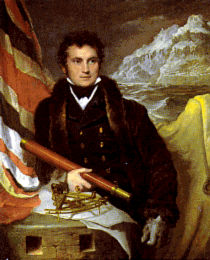
She is in good company! A similar thing happened to Sir William Edward Parry, the famous English naval officer and record-setting explorer of the Arctic. He made one of the first attempts to reach the North Pole and, in doing so, set a record for pushing farther north than anyone else, a record that was his for nearly fifty years.

On one of his trips to the Arctic, Parry and his men were trekking across the ice toward the North Pole. Admiral Parry stopped to calculated their position by using the stars. Hours later when the exhausted explorers stopped to rest, Parry again calculated their position and discovered something he could hardly believe. After hours of heading north, they were actually farther south than when he made his previous calculation! Fortunately, Parry quickly discovered the problem: they were on a gigantic ice floe that was moving south faster than they were sledding north. Much like Betsy’s experience on the sailing ship, the ice floe was so big and moving so slowly that the arctic team’s loss of position was barely perceptible until Parry recalculated.

This is why recalculations and realignments are so vital for Christians too.

So, if you think you are standing firm, be careful that you don’t fall! (1 Corinthians 10:12)

Let a man thoroughly examine himself…. (1 Corinthians 11:28)

Search me, O God, and know my heart; test me and know my anxious thoughts. Point out anything in me that offends You, and lead me along the path of everlasting life. (Psalm 139:23-24)

Don’t ever assume you’re still on the right course. Stop, listen to the Holy Spirit’s voice, recalculate your position by the perfect standard of God’s Word, and make the adjustments you need to. Otherwise, you may end up someplace you never intended to go!

►► Would you please prayerfully consider supporting this ministry? My Patreon supporters get behind-the-scenes access to exclusive materials. ◀︎◀︎

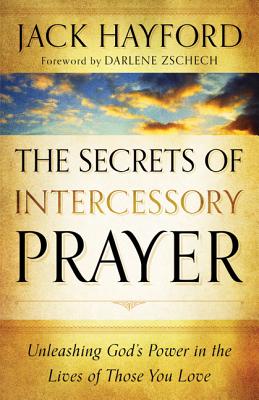
11 Quotes From “The Secrets Of Intercessory Prayer”

The Secrets of Intercessory PrayerJack Hayford’s latest book is reenergizing the way I pray for my family members. If you want to know why prayer for your family is so powerful, if you’re feeling a bit discouraged in the seemingly unanswered prayers for your family, or if you just want to “take it up a notch” as you pray, The Secrets Of Intercessory Prayer is for you (you can read my full book review by clicking here). These are a few quotes that especially caught my eye from this book.

“Prayer in all regards takes a new frame of reference when we understand the war between God’s Kingdom and satan’s dark hordes. This battle, insofar as it involves earth, is one in which God has called us to engage, enlisting us as ‘knee-soldiers’ whose prayer-call for the ‘incoming’ of God’s Kingdom will welcome a barrage of God’s power to break through the darkness and bring deliverance to people we know.”

“Let this truth grip you with hope: If the promise of God concerning His coming Messiah, His own Son, was interrupted by the failure of humanity (in this case, the later generations of David’s offspring) and God bridged and reconnected that ‘cut-off,’ then He wants us to understand this as a power-principle for prayer. Just as God navigated that failure and brought the tender plant out of the stump that had been cut off, so He is inviting you to pray and believe that He will do the same in your relationships.”

“Let the Holy Spirit shine a searchlight in your own heart and cleanse anything that restricts the power and liberty of your intercessory role in the family. I know that I am neutralized for effective prayer to the degree that negativity characterizes my attitude toward anyone for whom I pray.”

“We refuse to sustain that spirit of death and separation through any kind of ‘labeling.’ … Without such integrity of heart before God we may unwittingly be preventing our families and friends from receiving the flow of God’s life and love.”

“Praying for those we love is not a substitute for their need to hear God’s Word of truth—the Gospel. But many of those we find resisting already know it, and for them the ‘pushiness’ of a relative deepens resistance. On the other hand—as you abide in continual prayer—the truth that they may most need at the present is a sense of your acceptance of them, even as they understand that acceptance is not approval of sinful behavior. While it is painful to see a loved one persist in sin, especially if it is self-destructive, God’s Spirit has spoken or is speaking to them about their need to turn to Him. Our prayer for them is pivotal in this regard. But it is also our job to leave God’s part for Him to achieve, as only He can.

“The greatest tool of evangelism when it comes to loved ones is to be genuinely loving and friendly to them without the taint of manipulation. … Winning people to Christ is not conquering them or verifying yourself. It is about showing so much of Jesus that they cannot resist Him.”

“The deeper we move into the last days, the greater the need for our young people to have the shelter and the shield, the presence and the power, the wisdom and the discernment of the Holy Spirit! …The literal word for perilous used in the Greek text of 2 Timothy 3:1 describes the last days as ‘evil, ferocious, lion-like and demon-filled.’”

“Here is a key point for us to embrace as we persevere in prayer for our loved ones: Jesus wants to minister through us.”

“We are capable of compromising our discipleship under Jesus’ Lordship, not by the values we hold but by the spirit in which we respond to those whose values offend Him. …If I am unwilling to pray with a heart of passion for sinners who indulge in the perverse, the shameful and the corrupt and who do it with glee, will my passion be driven by my anger or by my sense of God’s broken heart for such warping of one of His own creation, for such satanic bondage in a being He longs to know the beauty of His original purpose?”

“Instead of yielding to fatalism, hear the call: ‘Keep praying, even when tough stuff happens,’ and do this by invading the difficult with thanksgiving, because the truth larger than the problem is that God’s power can transform any mess when He is invited into it.”

“That is what the will of God is for us: to lift up praise to Him with gratitude for His nature, which does not plan the evil, the injurious or the painful, but who—in these things—is the only One able to address them in love, resolve them in wisdom, provide for them in grace and transform then by His power. Give thanks in song for that!

Did God Send Me Into This?!

Listen to the podcast of this post by clicking on the player below, and you can also subscribe on AppleSpotify, or Audible. 

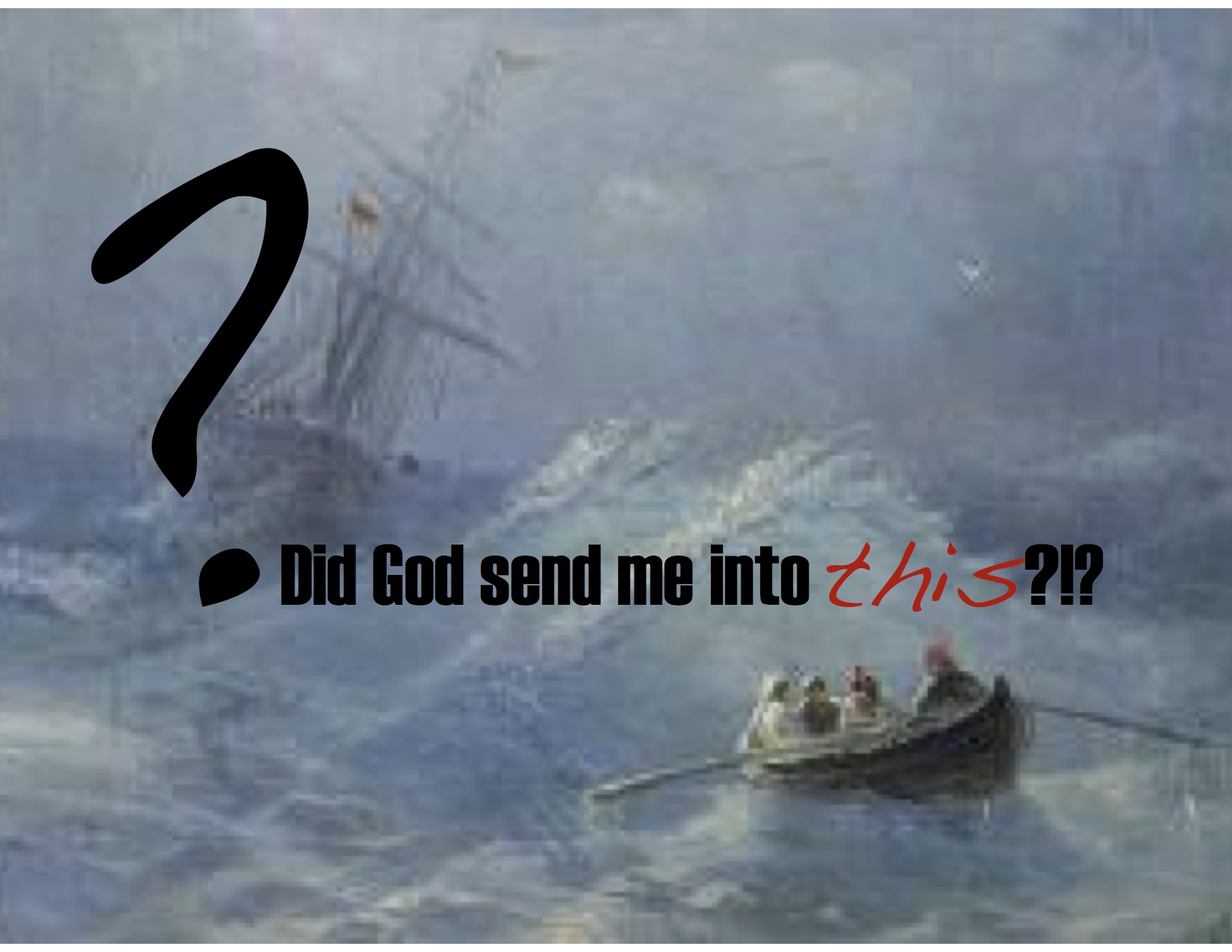
Have you ever experienced this? You are certain that God has spoken to you. You’ve launched out in obedience, things are sailing along smoothly, and then <wham!> a storm threatens to swamp you. And you begin to second-guess what you thought God said to you. You begin to wonder if perhaps you misunderstood the directions God spoke: “Did God send me into this?!”

Ever been there?

The disciples of Jesus must have felt that way. Jesus says, “Let’s get into the boat and head over to the other side of the lake.” The disciples obeyed Jesus only to have a huge storm come crashing down on them, to the point that their boat was about to be swamped (see Luke 8:22-25).

What were they thinking then? What would you have been thinking? Perhaps you might have thought, “Did I miss something God said?”

I love this thought from Oswald Chambers—

You say, “If I had not obeyed Jesus I should not have got into this complication.” Exactly. The problems in our walk with God are to be accounted for along this line, and the temptation is to say, “God could have never told me to go there, if He had done so this would not have happened.” We discover then whether we are going to trust God’s integrity or listen to our own expressed skepticism. 

God knows what He’s doing. He knows what He needs to accomplish.

Too many times I get focused on the destination, while God is focusing on the process. I often will learn more about my faith, and about the power and faithfulness and love of my God, during these storms than I will in an incident-free journey.

If you are on a journey on which God sent you and your boat’s rocking, don’t second-guess what God said. Keep your eyes on Jesus, and watch to see what He’s developing in you during your stormy trip.

You may also like to check out:

►► Would you please prayerfully consider supporting this ministry? My Patreon supporters get behind-the-scenes access to exclusive materials. ◀︎◀︎