 Once again, Tim Elmore has given us invaluable insight into the emerging youth culture. If you have kids or work with kids, you must read Marching Off The Map. You can check out my full book review by clicking here. Below is the first set of quotes I want to share with you, but there will be plenty more coming in the future, so stay tuned!
“Thanks to technology, information streams into their lives 24/7 and often has no filter on it, even for young children. When we determined not to censor content in the media, we had no idea (understandably) how it would affect our kids. We’re removing the opportunity for them to experience innocence and wonder. However, because they’re still maturing emotionally, socially, cognitively and biologically in their first 25 years, we have now begun to witness a strange paradox in our young: the extinction of childlikeness and the extension of childishness. …
“Since they are exposed to so much adult information, so early in their lives, they can prematurely lose (1) their sense of innocence, (2) their sense of wonder and (3) their sense of trust …
“Biologically, the graduate is an adult. Emotionally, the graduate may be unprepared for the adult world.”
“If you think our kids are pitifully impulsive on social media—just look at the adult population. … If you think teens are addicted to Facebook, just study the hours their mothers spend on it. If you think young athletes on the Little League baseball field act childish, just look at their dads. The behavior of adults and children has become more and more similar. Society has baptized ‘youthfulness.’ We want to look young, feel young, dress young, talk young and act young. We argue with our children’s teachers. We push our kid’s coaches to get them special treatment. We are not good at delaying gratification, and we frequently don’t keep commitments we make … very much like children. The result? Adulthood has lost much of its aura and authority.”
“As you stand in front of your classroom or your own children—you are, in a sense, Galileo. You are Magellan. You are Christopher Columbus. You are Lewis and Clark. You are Neil Armstrong. Ready or not, they need you to play this role.
“Our world is both expanding and shrinking. Our past maps and methods are antiquated. Like it or not, we’re moving into unfamiliar territory and many think it’s too difficult to explore. We have fallen in love with our old maps. …
“For educators, our role must change as we teach a generation of students who don’t need adults to get information.
“For parents, our role must change as we raise kids in a time of terrorism, economic recession, racial unrest, underemployment and ubiquitous technology.
“For coaches, our role must change as we train young athletes who have eight-second attention spans, and may arrive at practice with little resilience or grit.
“For youth workers, our role must change as we mentor students who have few life skills or values because adults either over-functioned or were absent.
“For employers, our role must change as we onboard young employees who may have never had a real job before, and may ask when ‘spring break’ will be.”
“Adults must enable the students to leverage what is new, yet at the same time, hold on to what is ancient, yet valuable. We must be both timeless and timely. So, our job as we serve the next generation is two-fold:
- To adopt or adapt. We must seize what is new and help kids leverage it well.
- To explain and equip. We must relate to them the timeless ideals every generation needs.”
“I believe we must cultivate one significant skill set in ourselves: we must be able to either adapt to the new world that’s emerging, or we must explain why a timeless virtue or value is still relevant in our 21st century world.”
“A third of young Americans say they don’t belong to any religion. I’ve found, however, they’ve traded in one God for many gods. They want to ‘feel’ spiritual, so they’ve created a buffet—seeking something to satisfy their soul. I often hear students say, ‘I don’t believe in religion, but I want to be a spiritual person.’ Today—pluralism is expanding across the landscape. It’s easier to say ‘no’ to one and enjoy a mixture of many.”
“A third of young Americans say they don’t belong to any religion. I’ve found, however, they’ve traded in one God for many gods. They want to ‘feel’ spiritual, so they’ve created a buffet—seeking something to satisfy their soul. I often hear students say, ‘I don’t believe in religion, but I want to be a spiritual person.’ Today—pluralism is expanding across the landscape. It’s easier to say ‘no’ to one and enjoy a mixture of many.”
“The Latin root word for ‘educate’ is ‘ducere’ which means to ‘push out.’ … We should not put students in a passive mode as we teach. We must be inspirers of learning. We must help pull ambition out of them, not push information into them.”
I’ll be posting some more quotes from Marching Off The Map next week.



 For years I have borne about hell in my breast;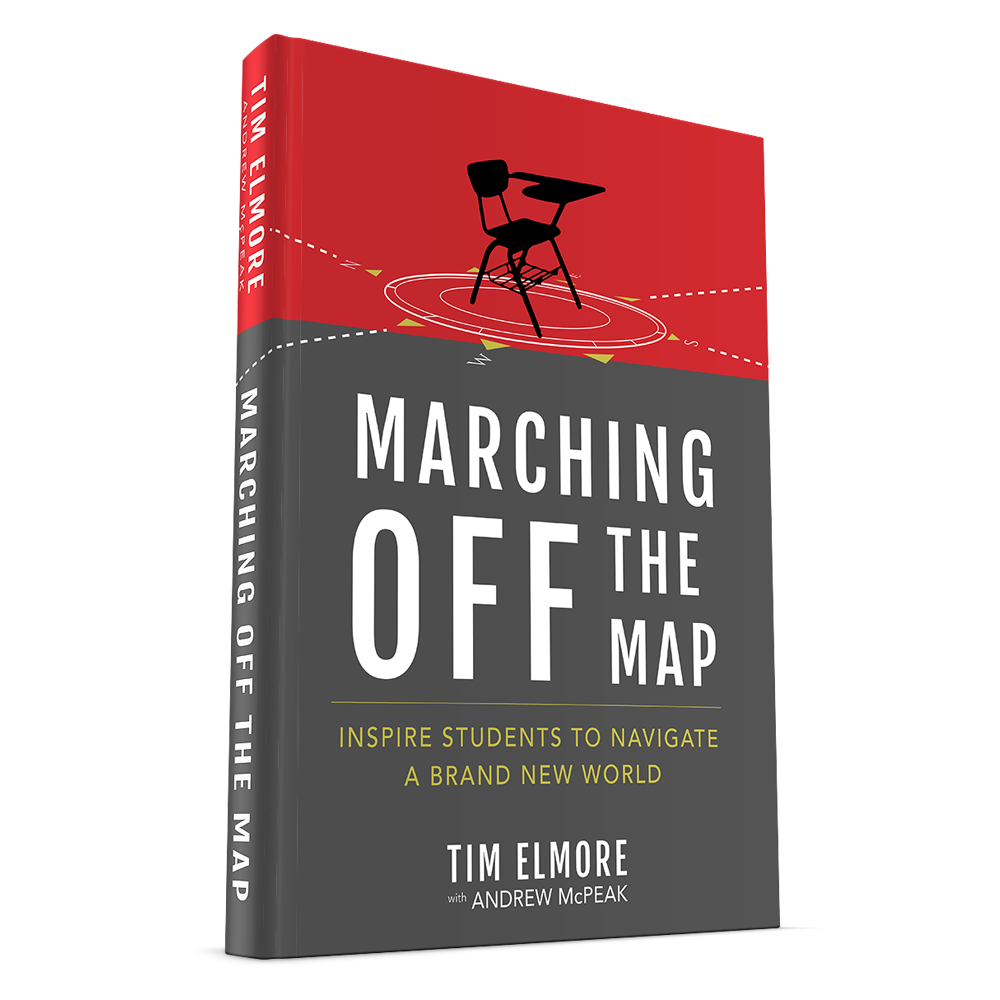



 Craig T. Owens