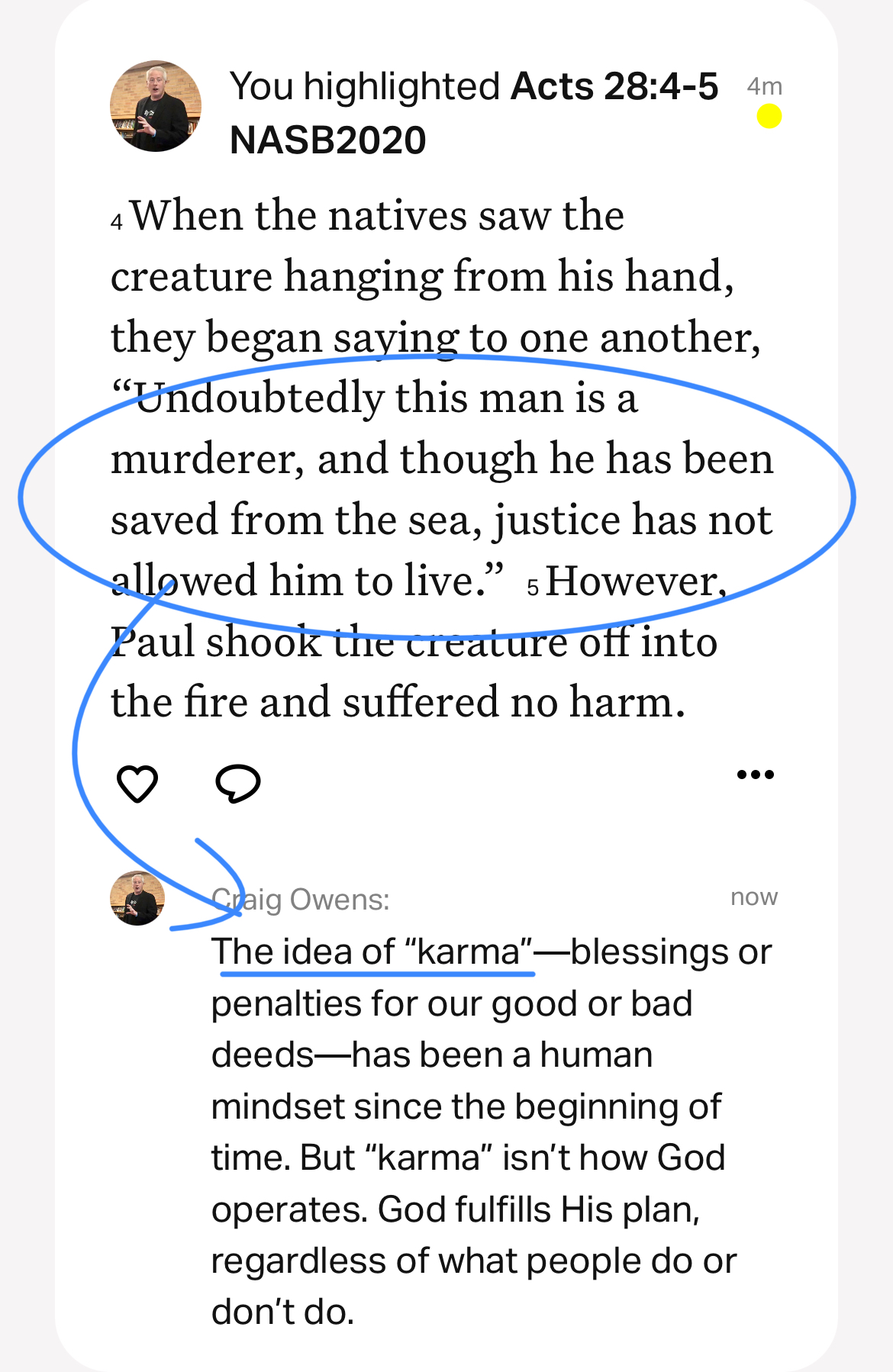
When the natives saw the creature hanging from his hand, they began saying to one another, “Undoubtedly this man is a murderer, and though he has been saved from the sea, justice has not allowed him to live.” However, Paul shook the creature off into the fire and suffered no harm. (Acts 28:4-5)
The residents of Malta thought the apostle Paul was experiencing karma.
The idea of “karma”—blessings or penalties for our good or bad deeds—has been a human mindset since the beginning of time.
This is really the mindset among Job’s three friends: Good things always happen to good people and bad things always happen to bad people. Except Job’s friends were wrong. We know this because we see behind the scenes in Heaven at the beginning of the story, and we hear God reprimand these men at the end of the story.
“Karma” isn’t how God operates. God fulfills His plan, regardless of what people do or don’t do.
In this story in Acts 28, God had promised Paul, “You must testify about Me in Rome,” so Paul was invincible until that promise from God was fulfilled.
To chalk things up to “karma” is to deny God’s sovereign plan. We have to guard our minds against this kind of thinking because it slips in so naturally. A part of renewing our minds (Romans 12:1-2) is not jumping to our conclusion, but trusting that God is sovereignly at work.
You may also want to check out these related blog posts:
Listen to the audio-only version of this podcast by clicking on the player below, or scroll down to watch the video.
It’s no secret that the holiday season becomes extremely busy for us at work and in our personal lives. If we are too busy, we can miss out on the joy of this season. On this episode, Greg and I discuss ways that leaders can help their teammates not just survive but thrive during the holidays.
[0:36] Leaders help their teammates find and set healthy boundaries.
[2:49] A good starting point is simply acknowledging the stress that we or others are feeling.
[4:01] Can we intentionally scale-back some things at work during busy seasons?
[5:06] Leaders also need to talk with their teammates about their personal responsibilities.
[8:43] Leaders need to make sure they are modeling all that they are telling our teams.
[11:02] Stephen Covey had some wise words for us about priorities.
[14:07] Be proactive about some of the strong emotions some of your teammates may be experiencing.
[18:01] Leadership has to be about the people!
[20:33] Here are your leadership takeaways.
Check out this episode and subscribe on YouTube so you can watch all of the upcoming episodes. You can also listen to our podcast on Spotify and Apple.
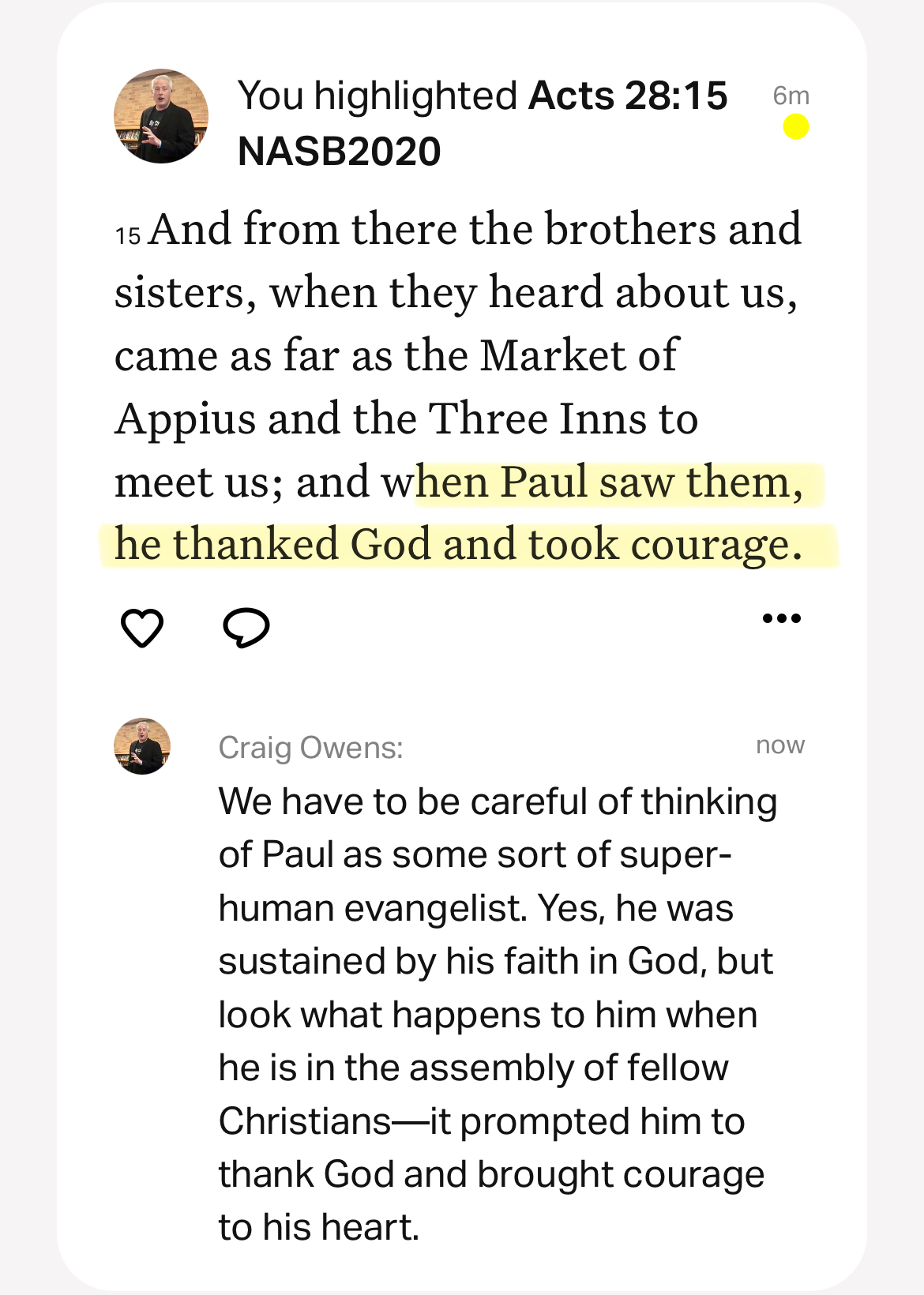
And from there the brothers and sisters, when they heard about us, came as far as the Market of Appius and the Three Inns to meet us; and when Paul saw them, he thanked God and took courage. (Acts 28:15)
We have to be careful of thinking of Paul as some sort of super-evangelist. Yes, he was sustained by his faith in God, but look what happens to him when he is in the assembly of fellow saints—it prompted him to thank God and brought courage to his heart.
Do you have to go to church to be a Christian? Of course not. But you will be encouraged and you will be the source of encouragement to others when you gather together regularly.
As the writer of Hebrews tells us—
Let’s hold firmly to the confession of our hope without wavering, for He who promised is faithful; and let’s consider how to encourage one another in love and good deeds, not abandoning our own meeting together, as is the habit of some people, but encouraging one another; and all the more as you see the day drawing near. (Hebrews 10:23-25)
You may also be interested in these related posts:
When Paul is writing to his friend Titus some instructions for pastors, he uses a Greek word for “authority” three times.
First, in regard to his own calling he says, “Paul, a bond-servant of God and an apostle of Jesus Christ, for the faith of those chosen of God and the knowledge of the truth which is according to godliness … but at the proper time revealed His word in the proclamation with which I was entrusted according to the commandment of God our Savior” (Titus 1:1, 3 NASB).
The phrase “chosen of God” in verse 1 literally means the same thing he says in verse 3: “according to the commandment of God.”
The third usage of this word is when Paul tells Titus that he has this same authority: “These things speak and exhort, and rebuke with all authority. No one is to disregard you” (Titus 2:15).
Interestingly, Paul uses this Greek word a total of seven times in his letters, with three of those times being in this short letter to Titus.
Paul also uses this word three times in his two letters to the saints in Corinth (1 Corinthians 7:6, 25; 2 Corinthians 8:8). But in all of three of these instances, Paul says, “I choose not to use my God-given authority on this, but I’m asking you to make a good choice.”
The only other time Paul uses this word in a letter is found in his closing remarks to the saints in Rome, with the emphasis there on the authority of the Word of God which he preaches—
Now to Him who is able to establish you according to my gospel and the preaching of Jesus Christ, according to the revelation of the mystery which has been kept secret for long ages past, but now has been disclosed, and through the Scriptures of the prophets, in accordance with the commandment of the eternal God, has been made known to all the nations, leading to obedience of faith. (Romans 16:25-26 NASB)
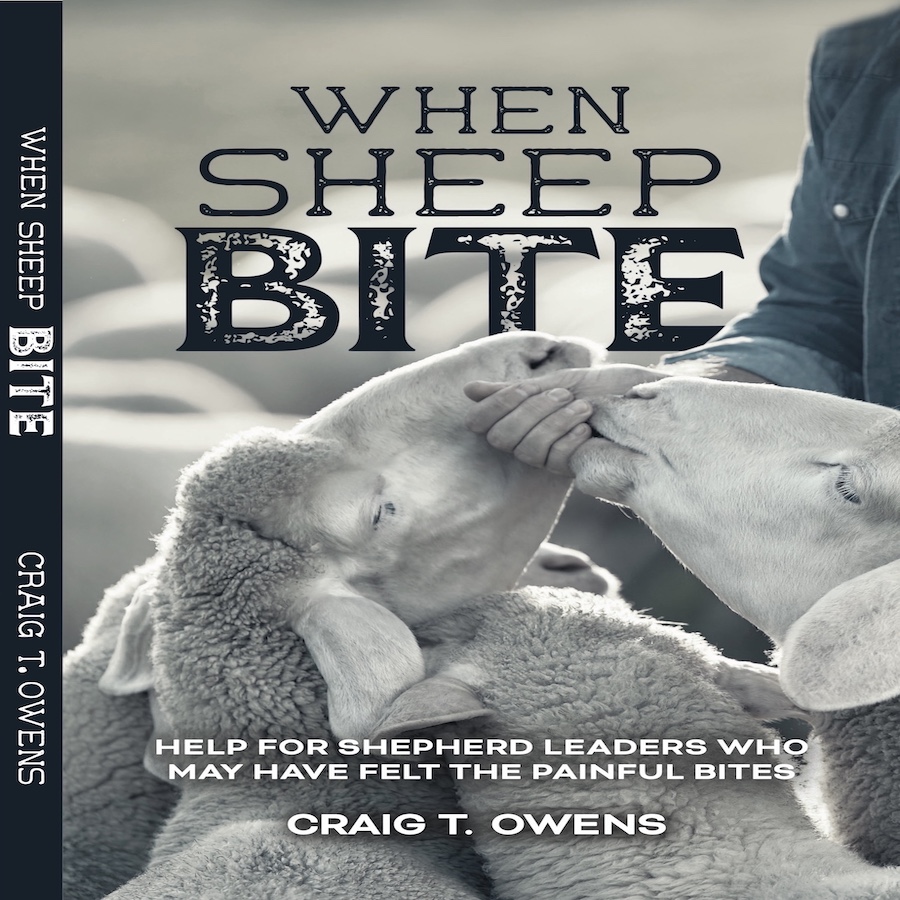
Questioning of our pastoral authority is one of the sheep bites I discuss in my book When Sheep Bite. Here is one passage from that chapter—
When our conversation with criticizing sheep hasn’t gone well, and when those unhealthy sheep begin to gossip and then slander, it’s inevitable that they will eventually began to question your authority as a shepherd. Perhaps they think you’re too young and naive, or too old and out of touch. They may question your motives, or the vision you’ve imparted for the church, or your ability to follow through on what you have already shared. Whatever the case, these biting sheep seem to be implying that they know better than you do how this pasture should be run.
During times like these, it is tempting to want to “prove” that we are qualified, that we do know what we’re doing, and that we can indeed successfully pursue the vision we’ve articulated for them. Once again, it’s natural to want to say, “I’ll show you just how qualified I am!”
Before we respond, we need to recognize the source of our authority. There is a certain authority that comes with a position or an office. For instance, a parent can say to a child who is questioning a rule, “Because I’m the parent and I say this is how it is going to be.” We see similar positional authority for CEOs, police officers, school teachers, and pastors. But like the little boy we met at the beginning of this book, people may say to a positional leader, “I may be obeying you on the outside, but on the inside I’m questioning everything you’re saying!”
Far greater than positional authority is moral authority. This is authority that comes not merely from a title or position, but from who conferred that title or position on the leader. If God has called us and appointed us to this pasture, that is all the authority we need.
Let me wrap up with four takeaways for shepherd leaders:
A godly leader’s authority is imparted by God. Keep in mind these three powerful words, “God chose me.” That means you have nothing to prove.
As a godly leader, you are “entrusted” with your authority and that means you have to give an account to God for its application. Don’t let the pain of the moment tempt you to react in a shortsighted way.
There are times to use God’s authority to hold the line; specifically when addressing issues which are biblical or unbiblical (Titus 1:9-14, 3:1-8).
Being a godly shepherd leader is not for the faint of heart! But God has called YOU which means He has also equipped YOU to respond appropriately in each situation.
My book When Sheep Bite is packed with biblical examples, personal experiences, practical applications, and prayers for each of these biting problems you will face. I hope you will pick up a copy today.
Listen to the podcast of this post by clicking on the player below, and you can also subscribe on Apple, Spotify, or Audible.
We lit the candle of Hope last week and today we light the candle of Peace.As we saw, hope is what allows us to experience peace and joy: “May the God of hope fill you with all joy and peace as you trust in Him, so that you may overflow with hope by the power of the Holy Spirit” (Romans 15:13).
But notice the phrase “as you trust in Him” in that verse. Peace doesn’t come just because we want it to, but it only comes as we trust in the One called the Prince of Peace.
Light drives out darkness and exposes sin, and often people don’t like it (John 1:9-11). In fact, Jesus Himself said that He was first coming with a sword to do battle against all of the things that rob us of lasting peace (Matthew 10:34).
Oswald Chambers described it this way, “The coming of Jesus Christ is not a peaceful thing; it is overwhelmingly and frantically disturbing, because the first thing He does is to destroy every peace that is not based on a personal relationship to Himself.”
Peace is only possible when the war is over. Modern-day diplomats use a phrase “sue for peace,” but this can only be done when one side admits defeat. God is at war with sin and He only gives peace to those who throw up their hands in total surrender to Him (Isaiah 57:14-21).
Jesus said He was the Light of the world and the only way to peace with the Father. The apostle Paul elaborates on that idea—
Remember that at that time you were separate from Christ, excluded from citizenship in Israel andforeigners to the covenants of the promise, without hope and without God in the world. But now in Christ Jesus you who once were far away have been brought near by the blood of Christ. For He Himself is our peace, who has made the two groups one and has destroyed the barrier, the dividing wall of hostility, by setting aside in His flesh the law with its commands and regulations. His purpose was to create in Himself one new humanity out of the two, thus making peace, and in one body to reconcile both of them to God through the Cross, by which He put to death their hostility. He came and preached peace to you who were far away and peace to those who were near. For through Him we both have access to the Father by one Spirit. Consequently, you are no longer foreigners and strangers, but fellow citizens with God’s people and also members of His household. (Ephesians 2:12-19)
That’s what Jesus provided for us at His First Advent. Now, as we live between the Advents of Jesus, we can expect to have trouble in the world, but never peacelessness (John 14:27, 16:33).
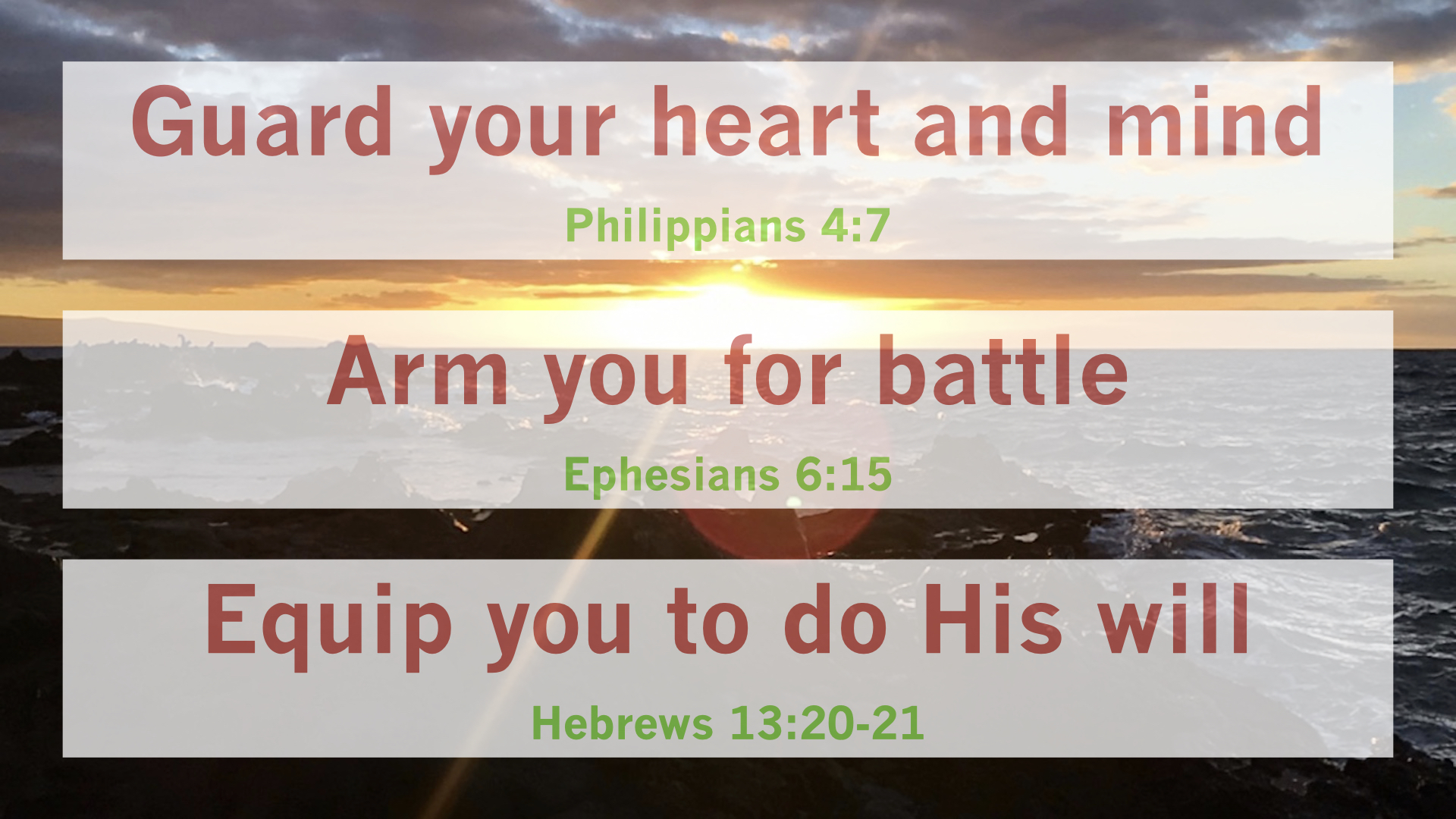
The Messiah’s peace will:
Guard your heart and mind—Philippians 4:7
Arm your for battle against the enemy—Ephesians 6:15
Equip you to do His will—Hebrews 13:20-21
As our hearts are guarded, we are prepared to stand firm in spiritual battle, and we are equipped to do God’s will, we can live in peace concerning Christ’s Second Advent.
Jesus will appear again to fulfill one of the first promises made about the peace He would bring. God told satan that Jesus would crush his head, and then Paul tells us, “The God of peace will soon crush satan under your feet” (Genesis 3:15, Romans 16:20)!
So we have no fear of Death or Hell because the Prince of Peace has forever defeated those things for those who “trust in Him” (Revelation 20:10, 14; 21:1-5).
Christians aren’t celebrating just one Advent, but two. The First Advent of Jesus gives us cause to celebrate, but the expectation of His Second Advent gives us reason to anticipate. Let’s make sure we are always celebrating both of Christ’s Advents. Check out the full sermon on hope.
I have lots of new content every week, which you can check out on my YouTube channel.
“When we elevate the end over the means, we miss out, because often God does some of His greatest work along the way. For Him, it’s all about the process, and less about the final destination.” —The King Is Coming reading plan on YouVersion
“If you want a religion to make you feel really comfortable, I certainly don’t recommend Christianity.” —C.S. Lewis, in God In The Dock
I had never even heard of the heart cockle until I read this article. This amazing mollusk has a symbiotic partnership with a type of plankton that lives inside the shells. This plant needs photosynthesis to live and produce the food which the heart cockle needs to survive. But how does sunlight get through the solid shell of the heart cockle? Not surprisingly, our All-wise Creator designed the heart cockle with little “windows” perfect for letting in just the right amount of sunlight the S. corculorumrequires. Amazing!
The Reader’s Digest uncovers some bizarre laws surrounding the Christmas season. For instance, “In 1643, England passed an ordinance ‘encouraging’ citizens to treat Christmas as a solemn holiday, rather than a celebratory feast. By the next year, Christmas had been banned altogether. Christmas remained illegal in England until 1660. … In 1659, the Puritan government of the Massachusetts Bay Colony went so far as to outlaw Christmas in order to discourage ‘disorderly’ behavior that might be ‘offensive to God.’ Anyone who failed to show up for work or participated in feasting would be fined five shillings. The Christmas ban lasted until 1681 and Massachusetts didn’t make Christmas an official holiday until 1856.”
“The future of our country and the quality of our lives is not determined primarily by who is in public office. Politicians are the fruit of the tree, they are not the tree. Our future will be determined by the strength of our families, and we all have control over that. Be great husbands, wives, parents, friends, and neighbors. Live for others, and live as if your kids, and God, are always watching. God is always watching, and our kids are watching more than we realize. Find things to be grateful for and resist the temptations to complain. Go out of your way to make someone else’s life better and yours will be too, even if you don’t like who is in the White House. If our joy is dependent upon a political outcome, we’ll never be happy.” —Joseph Backholm
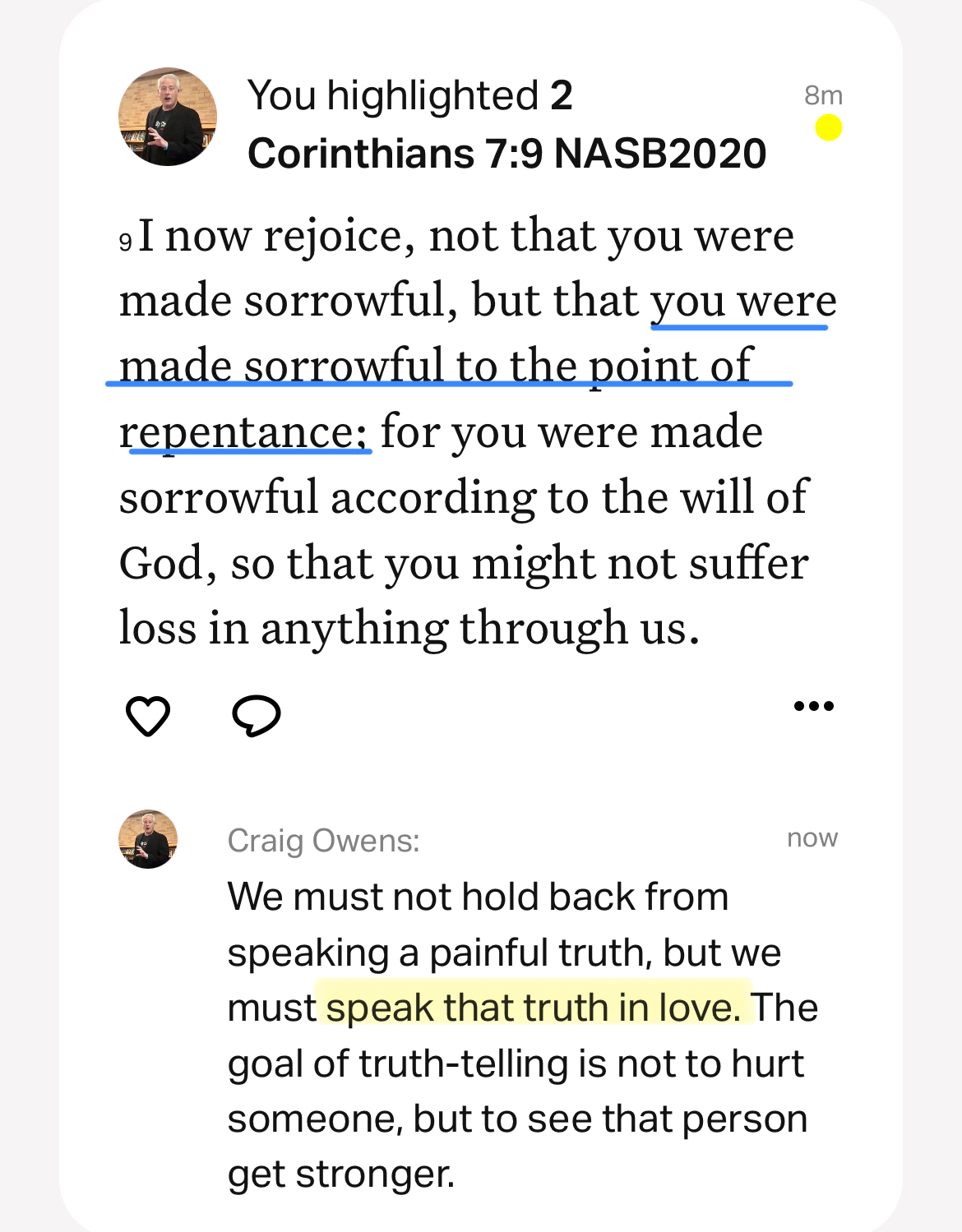
For though I caused you sorrow by my letter, I do not regret it; though I did regret it—for I see that that letter caused you sorrow, though only for a while—I now rejoice, not that you were made sorrowful, but that you were made sorrowful to the point of repentance; for you were made sorrowful according to the will of God, so that you might not suffer loss in anything through us. For the sorrow that is according to the will of God produces a repentance without regret, leading to salvation, but the sorrow of the world produces death. (2 Corinthians 7:8-10 NASB)
Is it okay for you to hurt your friend’s feelings?
I think it is acceptable if those painful words save your friend from a world of hurt.
We must not hold back from speaking a painful truth, but if we do have to share that word, we must ensure that we are speaking that truth in love (Ephesians 4:15). Remember that people don’t care what you know until they know that you care. The goal of truth-telling is not to hurt a friend’s feelings, but to spare that friend a greater pain or to see that friend get stronger.
If you have to speak these words, be sure to water your lovingly truthful words in tears before you share them. As Jesus said, “Remove the plank in your own eye first” (Matthew 7:5).
If you are on the receiving end of painful words, ask yourself, “Is this a friend who loves me and wants the best for me? If so, is there truth in these words?” Even if the words were delivered clumsily, see the love behind the words and find the truth that can help you make a change for the better (Proverbs 27:6, 17).
To dive a little deeper into this topic, check out my video on The Podcast called Speak the truth in love.
Listen to the podcast of this post by clicking on the player below, and you can also subscribe on Apple, Spotify, or Audible.
Gratitude is a great separator for leaders—it gives them a better vantage point from which to lead people and increases their effectiveness as a catalyst for organizational change.
In short, a grateful leader is a great leader.
Check out the full conversation Greg and I had on The Craig and Greg podcast episode We are Grateful.
And you may be interested in a whole series of posts and video where I talked about the psychological, physiological, emotional, and relational benefits of making gratitude our focus. The series was called Be Thankful.
Listen to the podcast of this post by clicking on the player below, and you can also subscribe on Apple, Spotify, or Audible.
Paul’s first visit to Philippi didn’t go so well!
It started off with some success—Lydia and her household accepted Jesus as their Messiah, and a demon-possessed girl was set free—but then things turned sour very quickly! Paul and Silas were falsely accused of subverting Roman law, and without any sort of trial they were beaten and thrown into prison.
Even after the local magistrates realized their mistake in mistreating Roman citizens in this way, they simply asked Paul and Silas to leave town. You can read this story in Acts 16:11-40.
But there were seeds planted in this city. Not just Lydia’s family, but the jailer’s family as well, became followers of Jesus. And what about the girl set free from demonic oppression? I have a hunch she joined with the Christians in praising God too! This group of believers then became the first financial supporters of Paul’s missionary work.
Paul knew that his brief imprisonment in Philippi had resulted in a thriving group of believers. And now as he writes a letter to these saints from a Roman jail, he is once again starting to see what God is going to do through this hardship—
Now I want you to know, brothers and sisters, that my circumstances have turned out for the greater progress of the gospel, so that my imprisonment in the cause of Christ has become well known throughout the praetorian guard and to everyone else, and that most of the brothers and sisters, trusting in the Lord because of my imprisonment, have far more courage to speak the word of God without fear. (Philippians 1:12-14)
Paul was not embittered by his imprisonment, but he was rejoicing in all of the good things God was accomplishing because of his imprisonment.
✅ An attitude of thankfulness allows our eyes to stay open to God’s blessings even in hardships.
❌ A grumbling attitude prevents us from acknowledging what God is doing.
Paul’s trust in God’s provision gave him an attitude of gratitude in a difficult place, and he now encourages his friends to adopt this same mindset. In the next chapter, he writes—
Finally, my brothers and sisters, rejoice in the Lord. To write the same things again is no trouble for me, and it is a safeguard for you. (Philippians 3:1)
Paul knew that in a heart full of gratitude there is no room for grumbling. That’s why always rejoicing in the Lord is “a safeguard” for Christians. Rejoicing in God’s character and God’s blessings keeps our mind on Him, making it very difficult for any temptation to ambush us.
Let’s proactively keep a heart full of gratitude so that no grumbling can seep in. But if we do find ourselves in a dark place that may prompt us to grumble, let’s react quickly to turn any complaints into praying and singing hymns to God, just as Paul and Silas had done in the Philippian jail, and undoubtedly as they were also doing now in their Roman jail.
Listen to the podcast of this post by clicking on the player below, and you can also subscribe on Apple, Spotify, or Audible.
I couldn’t say it any better than the apostle Paul said it—
We live in such a way that no one will stumble because of us, and no one will find fault with our ministry. In everything we do, we show that we are true ministers of God. We patiently endure troubles and hardships and calamities of every kind. We have been beaten, been put in prison, faced angry mobs, worked to exhaustion, endured sleepless nights, and gone without food. We prove ourselves by our purity, our understanding, our patience, our kindness, by the Holy Spirit within us, and by our sincere love. We faithfully preach the truth. God’s power is working in us. We use the weapons of righteousness in the right hand for attack and the left hand for defense.
We serve God whether people honor us or despise us, whether they slander us or praise us.
We are honest, but they call us impostors. We are ignored, even though we are well known. We live close to death, but we are still alive. We have been beaten, but we have not been killed. Our hearts ache, but we always have joy. We are poor, but we give spiritual riches to others. We own nothing, and yet we have everything. (2 Corinthians 6:3-10 NLT)
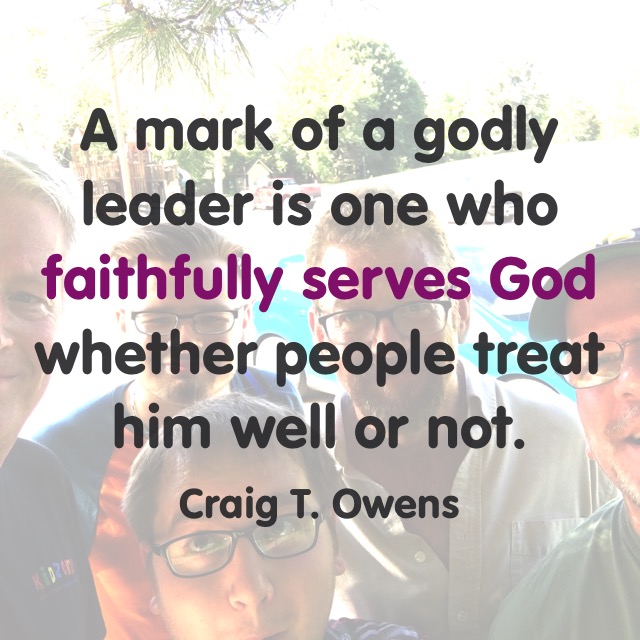
A mark of a godly leader is one who faithfully serves God whether people treat him well or not.
We don’t minister faithfully so we can receive human applause, because cheers can quickly turn to jeers. Just ask Jesus who heard everyone speaking well of Him in one moment, and then in the next moment saw that same group ready to throw Him off a cliff.
Instead, we minister faithfully so that we can hear applause from nail-scarred Hands, and hear His voice saying, “Well done, good and faithful servant.”
In my book Shepherd Leadership, I talk about these metrics of success. And in my book When Sheep Bite, I talk about how we can respond to the slanders and slings that come our way.
This is part 80 in my series on godly leadership. You can check out all of my posts in this series by clicking here.



 When the natives saw the creature hanging from his hand, they began saying to one another, “Undoubtedly this man is a murderer, and though he has been saved from the sea, justice has not allowed him to live.” However, Paul shook the creature off into the fire and suffered no harm. (Acts 28:4-5)





 Craig T. Owens