9 Prayers From “Praying The Promises”

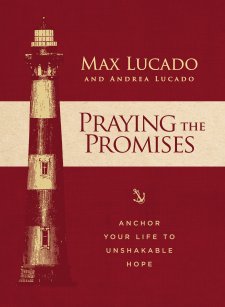
In Praying The Promises, Max Lucado gives us valuable instruction on how to turn Scriptural promises into powerful prayers. Here are a few of those prayers (the biblical reference in brackets is the passage that helped form the prayer). 

Thank you for being a God who wants me to know You.… Your wisdom surpasses all wisdom on this earth. Your ways are so much higher than mine. I could study You and Your Word for the rest of my life and still only scratched the surface of the depths of who You are. You are at once knowable and unknowable.… Deepen my knowledge of You, God. [Psalm 19:1-2; Isaiah 55:8-9; Romans 1:19-20]

Help me rely on Your promise of grace because I have been found righteous through Jesus. When trouble comes, use those troubles to increase my faith and draw me nearer to You. [Hebrews 7:25]

Father, sometimes I convince myself that I need to earn Your salvation. I feel like I should do more, be more, and achieve more. But You simply want my faith. Help me let go of my striving and this need to perform for You and for others. [Romans 4:5; Philippians 3:4-7] 

Guide me during the difficult times. Give me hope as I pray and wait. Remind me of Your power and authority so that I will trust Your ways, even when I can’t see where the path before me is going. [Genesis 50:20-21; Ephesians 1:11-12; Romans 5:3] 

Forgive me when I look for guidance outside of Your Word. When I ask friends what to do before I open my Bible. When I am resistant to reading Your Word because I want to guide myself rather than be guided by You. Renew my desire and passion for reading the Bible. … May I learn something new about You and Your character each time I read it. [Psalm 32:8; 2 Timothy 3:16-17] 

When a worry arises, remind me of Your presence so I will turn to You and not fear. [Psalm 23:1, 4]

Gracious Father, nobody is beyond Your redemption. Because of Your love and mercy, You provided a Redeemer for us in Christ, who graciously stopped us while we were on the path of sin, gave us refuge, and pointed us toward the road of redemption. [Galatians 4:4-5]

Forgive me when I try to fight my own battles. … If I try to fight for myself, I end up feeling exhausted and defeated by my own efforts. You have said You are fighting for me. Help me believe that truth even when I am so tempted to fight for myself. Go before me this week as I face temptation. Go before me as I face anxiety, fear, and uncertainty. Protect me in every spiritual battle. Fight for me and help me surrender each battle to You. [Exodus 14:14; Deuteronomy 1:30; Psalm 20:7-8]

As concerns and questions come up, remind me to turn each of them over to You in prayer. I lift up my family to You. I lift up my work to You. I lift up my to-do list to You. Cover each worry with Your peace. Prioritize my day so that it aligns with Your will and not mine. [1 John 5:14]

You can check out my review of Praying The Promises by clicking here, and you can read some other quotes from this book by clicking here.
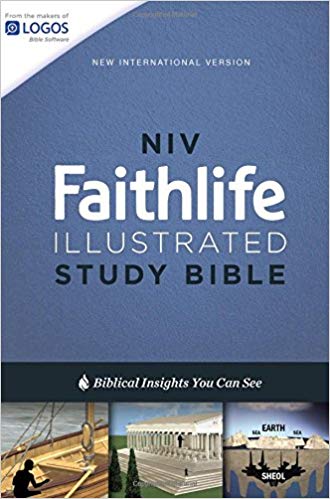
Faithlife Illustrated Study Bible (book review)

If you’ve ever looked at the list of books I’ve read and reviewed at the end of each year, you will quickly discover how much I enjoy reading! I read science, biographies, theological works, philosophy, financial resources, relationship helpers, and on and on. But hands-down, not-even-close to second place, I read the Bible more than anything else. Not only do I read the Bible extensively every day, I then read all of my other books through the lens of Scripture. 

So whenever I come across a resource that helps with Bible reading and study, I’m absolutely thrilled to share it with you. One such resource I’ve been so excited about is the Faithlife Illustrated Study Bible. 

I originally purchased this study Bible because of the “illustrated” part. I glanced through it and found several things that make the biblical accounts more understandable. Things like: 

  • timelines 
  • genealogical records
  • “blueprints” of notable buildings and structures
  • infographics 
  • maps and tables 

Then I was excited to discover the wealth of articles embedded in the notes section next to the biblical texts. 

But the happiest discovery I made was the ability to combine the written text with so much additional online content. Using the Faithlife Study Bible app on my iPhone, I can access all of the content in the print version in addition to more resources that have become available since this study Bible was published. My favorite way to do this is via the “reference scanner” in the app. I use my iPhone camera to take a picture of the part of the Bible I’m studying and then the app pulls up all of the resources associated with nearly everything on that page. Amazing! 

If you already love studying the Bible, this book/app combination will take you to a whole new level. Even if you’re just getting started in a Bible study, you will love how much fullness these resources quickly bring to your fingertips. 

Living Lives That Make Sense

This sounds totally contrary to common sense, but I’ll bet you’ve seen this before—Someone does something unexpectedly nice, and gets criticized for it. 

Why would that be? 

Christians can expect to experience this more frequently. Jesus told His followers to be prepared for persecution from those who didn’t believe in Him. One of Christ’s disciples named Peter added a few other warnings for Christians: 

  • Non-Christians will accuse you of doing wrong even when you’re doing right
  • Non-Christians will think it’s weird that you don’t do the same evil deeds they do
  • Non-Christians will heap abuse on you for not doing the evil deeds they do (1 Peter 2:12; 4:4)

This is because living good, Christ-honoring lives causes a burning in those hearts that don’t know Jesus yet. 

Solomon said there’s an aching void in the heart of every human being. It’s a longing to know what makes sense in life (see Ecclesiastes 3:11). When Christians live their lives focused on God, and they live—as Peter said—“such good lives,” it reminds non-Christians of what they’re missing. 

Christian, you need to remember why we live this way. The belief that Jesus is the Christ, the Son of the living God (Matthew 16:18) is the foundation for our lives. In fact, Peter called Jesus the Living Stone. As His followers, we are also called “living stones” that the Holy Spirit is building together to make a spiritual signpost to point others to Jesus (see 1 Peter 2:4-5, 9, 12). 

We cannot do this under our own power. Jesus Himself reminded us that we need the Scriptures which all point to Him (Luke 24:27, 44-45), and the Holy Spirit which will help us apply the revealed Scriptures (John 14:26) and live “such good lives.” 

So here’s how I’m challenging myself this week, and I’d like to extend this challenge to you too. For the next seven days, just before going to bed I’ll be asking myself these three questions:

  1. Did I read the Word of God today? 
  2. Did I see the God of the Word in the Word of God a little more clearly today?
  3. Did I live a good, Christ-honoring life today that pointed others to Jesus?

Join me this Sunday as we continue our look at how Christians should live as aliens and strangers. If you’ve missed any messages in this series, you may find the complete list by clicking here.

Saturday In The Proverbs—Knowing True & False Riches (Proverbs 22)

[Each chapter in the Book of Proverbs contains thoughts that fit into a theme; they are not just random thoughts gathered together. In this “Saturday In The Proverbs” series, I will share a theme that I see in each chapter. But the cool thing about God’s Word is that you may see an entirely different theme. That’s great! If you do, I would love for you to share it in the comments below.]

…riches… (Proverbs 22:1, 4, 16).

There are earthly riches and there are heavenly riches. There are temporary gains and there is eternal wealth. This Proverb helps direct us to true riches that last forever. 

Good character and a good reputation are better than money (v. 1)

God alone decides what is truly valuable (v. 2)

Prudence helps you avoid bankruptcy (v. 3)

Humbly fearing God is the path to eternal wealth (v. 4)

A perverse pursuit of wealth is a hard and painful path (v. 5)

Better godly children than gobs of money (vv. 6, 15)

Debt enslaves (v. 7)

Cutting corners to make a buck will come back to bite you (v. 8)

Generosity leads to more blessings (v. 9)

Don’t pay attention to those who scoff at God’s ways (vv. 10, 24, 25)

A grace-filled, pure lifestyle will get you noticed and rewarded (v. 11)

God rewards those who do things His way (vv. 12, 17-21)

A good work ethic brings rewards (vv. 13, 29)

Immoral pursuits end in a deep pit (v. 14)

Don’t treat people differently because of their ‘net worth’ (vv. 16, 22, 23; see also James 2:2-4)

Be careful to whom you make financial  commitments (vv. 26, 27)

Don’t encroach on others’ space (v. 28) 

Don’t Throw Out The Message

An important reminder—Don’t throw out the message because of the messenger.

“Beware of seeking out inconsistencies in God’s children in order to evade obeying God’s message yourself. If there comes to you a message on personal holiness, beware of the tendency that puts you on the watch to see if that person is consistent; the reason you watch is that you want to evade obeying God’s message. There is an antipathy to the message of holiness which prides itself on being amazingly shrewd, and whenever a man of God is known to fall, there is a sigh of relief—‘Well, that saves me, I have always been suspicious about this holy life,’ and under the affectation of profound sadness there is a glow of relief on the inside. The trick is as old as the Garden of Eden.” —Oswald Chambers

Thursdays With Oswald—Jeremiah 18

Oswald ChambersThis is a weekly series with things I’m reading and pondering from Oswald Chambers. You can read the original seed thought here, or type “Thursdays With Oswald” in the search box to read more entries.

Jeremiah 18

[These are notes from Oswald Chambers’ lecture on Jeremiah 18.] 

     These people are affecting to be the people of God—“We are the people of God, this is the temple of God…the prophets we like to listen to are those who prophesy smooth things.” … The early aspirations God stirred in them have gone, and now they simply make God and everything in connection with Him an affectation to go on their own ways. …

     There is an obstinacy that deliberately takes the law into its own hand and leaves the source of its life. There needs to be a recognition of where the source of life is and a determination to stay at it. Backsliding is the prevailing human stubbornness after the experimental knowledge of salvation. Backsliding is never spoken of in the Bible as a degenerate tendency, but as a conscious forsaking. …  

     It is no longer “Satisfy us early with Thy mercy,” but “Satisfy us with these other things, we want material prosperity and success.” … Never falter by trying to make anything lesser the cause for what is greater; for instance, trying to make health of body the cause for a right spiritual relationship, or material prosperity the cause for worshiping God, and never make obedience the reason that God is blessing you, obedience is the effect of being rightly related to God. 

From Notes On Jeremiah 

Backsliding occurs when we deliberately try to find loopholes, evasions, or excuses for not obeying the Word of God. 

Whenever the Holy Spirit prompts us to make a change, we have a decision to make: we can obey or we can make excuses (which is conscious disobedience). Obedience shows we are rightly related to God. Our excuses and evasions show we are trying to get God to be rightly related to our way of thinking. 

What God is asking you to obey may be a hard thing, but it is always the best thing! Don’t evade, justify, or make excuses—simply, as the words of the old hymn remind us, trust and obey, for there’s no other way to be happy in Jesus. 

10 Quotes From “Praying The Promises”

There is something special about turning God’s Word into a prayer to our Heavenly Father, and Max Lucado shows us how in his book Praying The Promises. You can check out my full book review by clicking here. 

“We do not need more opinions or hunches; we need the definitive declarations of our mighty and loving God. He governs the world according to these great and precious promises. Let’s be who we were made to be: People of the Promise. Let’s keep these promises handy. Praise Him out loud. Fill our lungs with air and hearts with hope and declare our belief in God’s goodness.” 

“Everything in creation gives evidence of God’s existence. The intricacy of snowflakes, the roar of a thunderstorm, the precision of a honeybee, the bubbling of a cool mountain stream. These miracles and a million more give testimony to the existence of a brilliant, wise, and tireless God (Psalm 19:1-4). Everything shows evidence of a purposeful design. The facts lead to a wonderful conclusion. God is…and God is knowable. … We can know more than simple facts about our Creator; we can know His heart, His joy, His passion, His plan, and His sorrows. … The mark of a saint is that he or she is growing in the knowledge of God.” 

“As we fellowship with God, read His Word, obey His commands, and seek to understand and reflect His character, something wonderful emerges. Or, better stated, Someone wonderful emerges. God comes out of us. We say things God would say. We do things God would do.” 

“When we pray, we engage the power of God against the devil. When we worship, we do what satan himself did not do: we place God on the throne. When we pick up the sword of Scripture, we do what Jesus did in the wilderness. He responded to satan by proclaiming truth (Matthew 4:1-11).… satan will not linger long where God is praised and prayers are offered.” 

“We don’t need a large army. We don’t need abundant resources. God’s presence tilts the scales in our favor.” 

“If you have taken on the name of Christ, you have clout with the most powerful Being in the universe. When you speak, God listens. … Your prayers matter to God because you matter to God.” 

“When nothing quenches your deepest thirsts, when droughts turn your fields into deserts and retirements into pocket change, what can you do? Evaluate your priorities: Is God’s big thing my big thing? 

“Guilt simmers like a toxin in far too many souls, but you don’t need to let it have a place in yours. Internalize this promise: ‘There is now no condemnation for those who are in Christ Jesus’ (Romans 8:1). Not ‘limited condemnation,’ ‘appropriate condemnation,’ or ‘calculated condemnation.’ That is what people give people. God gives His children no condemnation.” 

“The greatest news in the world is not that God made the world but that God loves the world. He loves you. You did not earn this love. And His love for you will not fade if you lose your way. His love for you will not diminish if your discipline does. You have never lived one unloved day. God loves you, and because He does, you can be assured joy will come.” 

“I will fix my eyes on things above. Because I know that this world is not my home, I will keep eternity in sight.” 

These are quotes from the section of Praying The Promises called “unshakable hope.” Stay tuned because I will be sharing soon some of the model prayers Max gave us in this helpful book. 

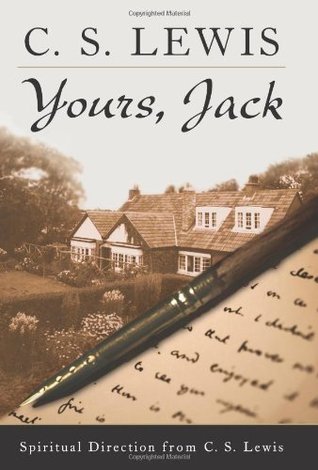
10 More Quotes From “Yours, Jack”

I love reading C.S. Lewis’ books, and I loved learning more about Lewis himself through his personal correspondence. Here are a few more quotes from Yours, Jack. 

“Indeed the best thing about happiness itself is that it liberates you from thinking about happiness—as the greatest pleasure that money can give us is to make it unnecessary to think about money. And one sees why we have to be taught the ‘not thinking’ when we lack as well as when we have.” 

“Read your New Testament (preferably a modern translation) intelligently. Pray for guidance, obey your conscience, in small as well as great matters, as strictly as you can. Don’t bother much about your feelings. When they are humble, loving, brave, give thanks for them: when they are conceited, selfish, cowardly, ask to have them altered. In neither case are they you, but only a thing that happens to you.”

“The Bible itself gives us one short prayer which is suitable for all who are struggling with the beliefs and doctrines. It is: ‘Lord, I believe, help Thou my unbelief.’ Would something of this sort be any good: Almighty God, who art the Father of lights and who has promised by Thy dear Son that all who do Thy will shall know Thy doctrine: give me grace so to live that by daily obedience I daily increase in faith and in the understanding of Thy Holy Word, through Jesus Christ our Lord. Amen.” 

“I would prefer to combat the ‘I’m special’ feeling not by the thought ‘I’m no more special than anyone else’ but by the feeling ‘Everyone is as special as me.’ In one way there is no difference, I grant, for both remove the speciality. But there is a difference in another way. The first might lead you to think, ‘I’m only one of the crowd like anyone else.’ But the second leads to the truth that there isn’t any crowd. No one is like anyone else. All are ‘members’ (organs) in the Body of Christ. All different and all necessary to the whole and to one another: each loved by God individually, as if it were the only creature in existence. Otherwise you might get the idea that God is like the government which can only deal with the people as a mass.” 

“As to the ‘state of the world’ if we have time to hope and fear about it, we certainly have time to pray. I agree it is very hard to keep one’s eyes on God amid all the daily claims and problems. I think it wise, if possible, to move one’s main prayers from the last-thing-at-night position to some earlier time: give them a better chance to infiltrate one’s other thoughts.” 

“One can’t help momentary wishes: guilt begins only when one embraces them. You can’t help their knocking at the door, but one mustn’t ask them in to lunch.” 

“I take it as a first principle that we must not interpret any one part of Scripture so that it contradicts other parts: and specially we must not use an Apostle’s teaching to contradict that of Our Lord.” 

“Any honest workmanship (whether making stories, shoes, or rabbit hutches) can be done to the glory of God.” 

“It is important to keep on giving thanks. Otherwise, as one continues to pray for the others who have not yet been relieved, one simply fails to notice how many of one’s intercessory prayers have been granted—never notices how the list of Thank-you’s grows and perhaps outstrips the list of mere Please’s.” 

“The only thing one can usually change in one’s situation is oneself. And yet one can’t change that either—only ask Our Lord to do so.” 

You can read my review of Yours, Jack by clicking here. And be sure to check out the first set of quotes I shared from this book by clicking here. 

Praying The Promises (book review)

There is no more powerful way to pray than to pray using the Scriptures. If you are a parent, you probably know what it is to have a child say to you, “Mom/Dad, you said….” When we pray to God using God’s Word we’re essentially doing the same thing. A great resource to help you learn how to do this is Max Lucado’s newest book Praying The Promises. 

In the introduction, Max says, “As people who believe God’s promises, we have an advantage. We can determine to ponder, proclaim, and pray the promises of God. We can be like Abraham, who ‘didn’t tiptoe around God’s promise asking cautiously skeptical questions. He plunged into the promise and came up strong’ (Romans 4:20 The Message). We can choose to filter life through the promises of God. For every problem in life, God has given us a promise. When struggles threaten, we can find hope by praying those promises.”

Every chapter contains: 

  • a short “unshakable hope” reminder, 
  • a handful of biblical passages that are the foundation for our unshakable hope, 
  • a model prayer using those passages of Scripture, 
  • a simple declarative “I am” or “I will” statement to carry with you the rest of the day. 

In our hurly-burly, topsy-turvy, anxiety-prone world we need something that can put our feet on solid ground. There can be no more unshakable truth than to know that God keeps His Word, and that we can stand on those rock-solid promises. The prayers in Praying The Promises will, I trust, help you read the Bible in a new light, as you see more and more promises which you can turn into prayer to our All-loving, All-powerful Heavenly Father. 

I am a Thomas Nelson book reviewer.

Let’s Put That In Perspective!

How long is your life? If you’re a man living in the United States on average your life is 689,412 hours. But how long is that really? 

Here’s some perspective—if you drew a timeline 50 feet long that represented all of Earth’s recorded history, your life would cover about the breadth of your hand. But that’s only recorded history—what about the eternity that existed before history started and the eternity that will continue after history ends? 

Twice in Psalm 39, David described our brief life like this: each man’s life is but a breath. 

So what do we do with our breath-long life? Fortunately for us, David gives us godly perspective in five areas. 

  1. Perspective on the weight of my words and my silence (vv. 1-3) 

David had a good start: I will keep my tongue from sin, but what happens when sinful words slip out? I would suggest we count those as a gift. Really?! Yes, because those “slips” make us aware of what’s really in our heart (see Matthew 15:19) so that we can confess them. 

David also suggests putting a muzzle on our mouths when we’re around certain people. In other words, don’t get into petty fights with people who aren’t going to receive the wisdom we may have to share with them. 

  1. Perspective on the use of my time (vv. 4-5)

Why do we procrastinate doing good things? Some of our simple cliches reflect this, like TGIF. Why wait until Friday to get happy? Why not say TGIT—thank God it’s today! Do something memorable today… do something life-altering today… do something for God today.

  1. Perspective on my possessions (v. 6) 

David reminds us that we work so hard to accumulate stuff “not knowing who will get it.” Jesus had another word for someone who only wanted to get stuff to make his life easier: fool (see Luke 12:16-21). Use stuff to serve others. 

  1. Perspective on forgiveness (vv. 7-11)

Why oh why, would we spend one minute longer than we have to with unconfessed, unforgiven sin? I blogged last week about the freedom that immediately comes when we receive forgiveness from our confessed sin. Let’s do this quickly! 

  1. Perspective on the purpose of my life (vv. 12-13)

If I only have a breath-long life, I want to make every moment count. I love what C.T. Studd wrote: “Only one life will soon be past. Only what’s done for Christ will last. … Let us not glide through this world and then slip quietly into heaven without having blown the trumpet loud and long for our Redeemer, Jesus Christ. Let us see to it that the devil will hold a thanksgiving service in Hell when he gets the news of our departure from the field of battle.”

Here’s my prayer for all of us—Lord, help me to know how few days I have so I can live every one for Your glory.