A Leader’s Broken Heart

My heart will cry out for Moab … Therefore my heart shall resound like a harp for Moab, and my inner being for Kir Heres (Isaiah 15:5; 16:11). 

Judgment from God falls on Israel’s enemy and Moab is inconsolable (Isaiah 15:2-4, 5-9; 16:7-8, 10). And yet Isaiah weeps for them!

No gloating.

No “I told you so.”

No smug self-righteousness.

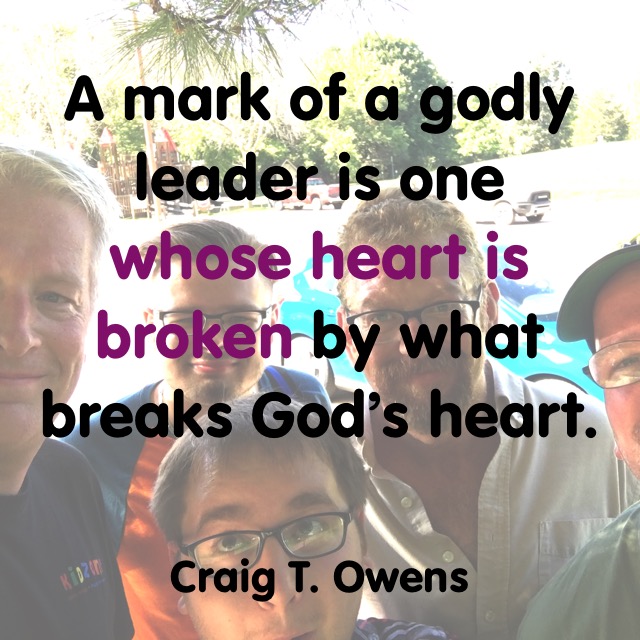
A mark of a godly leader is one whose heart is broken by what breaks God’s heart.

“Do not gloat when your enemy falls; when he stumbles, do not let your heart rejoice” (Proverbs 24:17).

Remember—there, but for the grace of God, go I. 

It is actually God’s mercy that His throne is established and judgment can bring an end to the suffering of punishment (Isaiah 16:5). But in the meantime, we should rescue those careening toward God’s punishment, watering our testimony with our tears.

This is part 27 in my series on godly leadership. You can check out all of my posts in this series by clicking here.

Love Like That (book review)

Over the years, I have gleaned so many helpful relationship lessons from Dr. Les Parrott so I was excited when I heard about Love Like That. But what Dr. Parrott taught in this book was completely unexpected—how to love like Jesus loves. 

The title of the book is taken from The Message paraphrase of a verse in the Bible: Observe how Christ loved us. His love was not cautious but extravagant. He didn’t love in order to get something from us but to give everything of Himself to us. LOVE LIKE THAT (Ephesians 5:2).

Wow! Love like Jesus? How can we do that? Let me jump to the end of the book first. If you’re like me, sometimes you think the meat of the book is in the chapters and there is little value in a conclusion or appendix, but that is definitely not the case in Love Like That. In these two valuable sections, Dr. Parrott answers the question more specifically for us: HOW can I love like Jesus? 

The five main chapters of the book identify five ways Jesus loved. Each chapter has a definition of that trait, a self-test on how you currently measure up (which you can also take online), an example of how Jesus loved like that, the hindrances that keep us from loving like that, and how to overcome those hindrances. 

This book opened my eyes—and my heart—to how I can do a much, much better job of loving like Jesus loves. The way Dr. Parrott presents this information makes it seem like something even I can do. For the sake of others in your life, please read Love Like That.

I am a Thomas Nelson book reviewer. 

Simpatico

Have you ever heard the word simpatico? It means to be like-minded. The idea is being on the same page with someone else, ideally someone that is a positive role model. Peter calls himself a leader in the church (Greek word presbyteros) but then says he is simpatico with us (sympresbyteros). 

And this isn’t just for leaders in the church, because the same appeal he makes to leaders is the same appeal he makes to both young men and to all of you. 

Although Peter didn’t use the phrase servant-leader, that’s exactly what he describes. In fact, for Christians, the words servant and leader are really one-and-the-same idea! Peter says God’s leaders are:

  • shepherds (those who nurture, guide, and guard) 
  • serving leaders
  • serving not because you must, but because you are willing (it’s “want to” not “have to”)
  • eager to serve with a great attitude 
  • not lording it over others
  • realizing people have been entrusted into their care
  • being examples to the flock that are follow-worthy
  • being submissive to others
  • clothing themselves with humility 

Three key concepts that Peter brings out are all seen in the life of Jesus: clothing, example, and humility

Jesus set the example for us when He said the Son of Man did not come to be served, but to serve (Matthew 20:25-28). 

When Jesus was incarnated in human flesh, He literally made Himself nothing, taking the very nature of a servant, which means He put on the clothing of a servant. He completely humbled Himself (Philippians 2:3-8). 

Jesus most clearly demonstrated this when at the last supper He wrapped a towel around His waist (i.e. clothed Himself as a servant) to wash His disciples’ feet, and then told us to follow His example (John 13:2-5; 13-17).

That’s why Peter tells us all of you, clothe yourselves with humility toward one another. The word Peter uses for “clothe” means keep on doing this every single day. 

God opposes the proud [those unwilling to be simpatico with Jesus] but gives grace to the humble [those choose to be simpatico with Jesus].

So here are two questions I’m asking myself—

Q: How do I know when I’m a servant?
A: When someone treats me like one. 

Q: How do I know I have a servant’s attitude? 
A: When I don’t mind being treated like a servant.

If you’ve missed any messages in this series, you may find the complete list by clicking here.

Saturday In The Proverbs—The Best Things Are Hard, But Rewarding (Proverbs 25)

[Each chapter in the Book of Proverbs contains thoughts that fit into a theme; they are not just random thoughts gathered together. In this “Saturday In The Proverbs” series, I will share a theme that I see in each chapter. But the cool thing about God’s Word is that you may see an entirely different theme. That’s great! If you do, I would love for you to share it in the comments below.]

Good things—the best of things—usually require hard work. They don’t just come to us but we have to discover them. However, the good things are always worth the effort!

Things like:

  • Revelation, insight, new discoveries (vv. 2-3)
  • Righteousness (vv. 4-5)
  • Recognition (vv. 6-7)
  • Quality relationships (vv. 8-10)
  • A timely word (vv. 11-13, 25)
  • Good gifts (vv. 14, 21-22)
  • Confrontation that leads to restoration (v. 15)
  • Temperance (v. 16)

The opposite is also true: cutting corners, looking for the quick fix, and not considering long-term consequences bring pain. Things like:

  • Frayed relationships (vv. 17, 20, 24)
  • Provoking anger in others (vv. 18, 23)
  • Distrust (vv. 19, 26)
  • Self-promotion that rankles others (v. 27)
  • Lack of self-control that leads to destruction (v. 28)

Good things are hard, but they’re so worth the effort! 

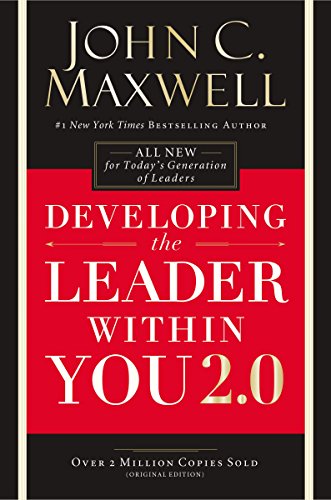
13 Quotes From Others In “Developing The Leader Within You 2.0”

John Maxwell does an excellent job of including insightful words from other authors—past and present—in his books. Developing The Leader Within You 2.0 is no exception. Here are a few of the quotes he shared. 

“There have been meetings of only a moment which have left impressions for life, for eternity. No one of us can understand that mysterious thing we call influence… Yet out of everyone of us continually virtual goes, either to heal, to bless, to leave marks of beauty; or to wound, to hurt, to poison, to stain other lives.” — J.R. Miller 

“The art of being wise is knowing what to overlook.” — William James 

“A man of character will make himself worthy of any position he is given.” —Mahatma Gandhi 

“Nothing is easier than saying words. Nothing is harder than living them, day after day.” —Arthur Gordon 

“We set young leaders up for a fall if we encourage them to envision what they can do before they consider the kind of person they should be.” —Ruth Haley Barton 

“What we achieve inwardly will change outward reality.” — Plutarch 

“Success leads to the greatest failure, which is pride. Failure leads to the greatest success, which is humility and learning.” — David Brooks 

“Our world has replaced the word soul with the word self, and they are not the same thing. The more we focus on our selves, the more we neglect our souls.” — John Ortberg 

“The most effective leaders approach problems through a lens of opportunity.” —Glenn Llopis 

“Face reality, and let your first loss become your last loss.” —Larry Maxwell 

“If we learn to appreciate more of what we already have, we’ll find ourselves having even more to appreciate.” —Michael Angier 

“No one is useless in this world who lightens the burden of it for someone else.” —Benjamin Franklin 

“Everybody can be great, because everybody can serve.” —Martin Luther King Jr 

You can check out my full book review of Developing The Leader Within You 2.0 by clicking here. And you can also read some John Maxwell quotes from this book here. 

Thursdays With Oswald—Jeremiah 22

Oswald ChambersThis is a weekly series with things I’m reading and pondering from Oswald Chambers. You can read the original seed thought here, or type “Thursdays With Oswald” in the search box to read more entries.

Jeremiah 22

[These are notes from Oswald Chambers’ lecture on Jeremiah 22.] 

     “Perfect love drives out fear” [1 John 4:18]—but not love in its beginning. To say “Therefore will we not fear, though…” [Psalm 46:2] is only possible when the love of God is having its way. … 

     Every power of human government that can be used by the devil and self-interest can be reclaimed and used by God. On the other hand, everything that is usable by God is abusable by the devil. … 

     As in the Book of Isaiah, so in Jeremiah, God is revealed as the Controller behind every power of evil; when evil strikes His people it strikes not only by God’s permission but under His direct control (cf. Isaiah 37:29; John 19:11). … 

     Divine fire as opposed to natural fire, burns the fiercer the farther you get away from it; when you get nearer to God, His burning becomes a comfort.

From Notes On Jeremiah

These are good thoughts from Chambers—and good passages of Scripture as well—to keep in mind when we are staring down evil or being persecuted for our faith in Christ. 

Remember:

  • God’s love drives out our fear, but focusing on our fears can drive out God’s love. 
  • God uses; the devil abuses. 
  • No evil can touch you unless God has allowed it, and He only allows it to accomplish something that will bring Him glory. 
  • If the fires seem to be burning hotter, run to God not away from Him!

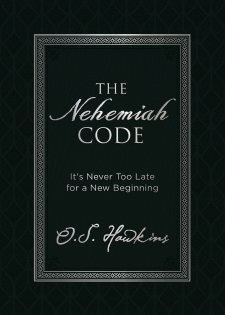
11 Quotes From “The Nehemiah Code”

All of us have opportunities where we need to rebuild something that has fallen apart. O.S. Hawkins uses the example of Nehemiah in the Bible to teach us highly applicable rebuilding principles. You can check out my full book review by clicking here. 

“One never rebuilds until he personally identifies with the need and weeps over the ruins. … Sadly, there are many who are simply not grieved or burdened about the walls in their lives that are broken and in need of rebuilding. It has been far too long since some of us have ‘sat down,’ much less ‘wept, and mourned for many days.’” 

“Those who play the blame game never get the task of rebuilding completed.” 

“True rebuilders identify with the fears and failures of those around them. They take personal responsibility for the situation—even if the problems didn’t begin with them.” 

“Opportunities most often come our way when we are knocking on the door and not simply waiting for an opportunity to knock.” 

“Nehemiah was able to convince the people to adopt his vision because he followed three vital rules in goal setting: they were conceivable, believable, and achievable.” 

“Note the repetition of the plural personal pronouns in his challenge: ‘we … us … we’ (Nehemiah 2:17). Nehemiah was smart enough to incorporate a lot of plural pronouns. He was subtly motivating his people to work with him and not for him.” 

“Nehemiah left us a stellar example to follow by laying out five important principles that are essential to the delegation process: set clear objectives with specific tasks, pick the right person for the right job, be an example yourself, hold others accountable, and be generous in giving genuine pats on the back.” 

“When it comes to personal relationships, we all need someone to whom we are accountable. Someone who will remind us of God’s standards and give a gentle nudge—or shove—when we stray from those standards. Without such a friend, the result is often self-reliance, self-righteousness, self-sufficiency, and self-centeredness, rather than God-centeredness.” 

“The fatigue factor is often at the root of our own failures. We simply give out and become too tired to go on, so we are then tempted to give in and to give up. When fatigue sets in during the rebuilding process, it brings along with it a loss of perspective, and little things often become much bigger than they really are. …Fatigue pulled their focus from their goal and placed it upon the rubbish, which led to frustration.” 

“People have a way of rallying around a cause if they are convinced that God is in the midst of it. Which voice do the troops hear from your mouth? Is it the voice of Sanballat and ‘We won’t’? Is it the voice of Judah and ‘We can’t’? Or is it the voice of Nehemiah and ‘God will!’?” 

“At last, the goal was in sight. The finish line. ‘Mission Accomplished’ just ahead. But be warned: this is the most dangerous point in any rebuilding process. This is when the enemy comes along with one final attempt to divert us from our goal. …It is not so much how long our personal race may be, nor even how difficult the obstacles we face along the way, but it is how we finish that matters most.” 

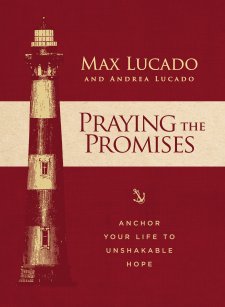
7 More Prayers From “Praying The Promises”

In his book Praying The Promises, Max Lucado shows us how simply we can turn passages of Scripture into intimate and powerful prayers. Here are a few more prayers (the references in brackets are passages that formed the prayer).

Lord, in the midst of my storms, I may doubt Your presence. I may wonder if You are there and if You care. Don’t let me lose hope or lose heart. Deepen my belief in You, even during the storms. Don’t allow doubt to take over. Help me release control of my circumstances and surrender them to You. Jesus is interceding on my behalf, and I am so comforted by this truth. [Luke 22:32; Hebrews 7:25; Matthew 14:23-24]

God, teach me how to live free from condemnation. Teach me how to trust and believe in this promise: in Christ, I am no longer a slave to sin. Free me from guilt and shame. [Romans 3:23-25; Romans 6:6-7; Romans 8:1] 

Lord, thank You for the promise of a temporary tomb. Your power has no limits. You have conquered death. You have promised to make all things new. You are the God of restoration and redemption and regeneration. You are the God of resurrection. In my day-to-day life it can be difficult for me to maintain an eternal perspective. Sometimes I may get bogged down in the worries of today and forget that the best is yet to come. Restore in me the joy of my salvation, God. Renew my mind and my heart so that I will have an eternal perspective of all the worries of my day. They are nothing compared to spending eternity with You. And because of Your promise of resurrection, I do not have to fear death. I will live in faith, knowing that in Jesus, death has been swallowed up in victory. Amen. [Matthew 28:5-6; 2 Corinthians 4:16-18] 

Guide me today, Holy Spirit. Show me where You want me to go, whom You want me to talk to, what decision You want me to make. Help me discern Your voice over my own and others’. Walk closely with me and whisper truth to me. Forgive me when I listen to my own desires and ignore what You are telling me. [John 16:13-15; Galatians 5:25] 

You know all of my needs before I can even ask for them. Sometimes it’s tempting for me to believe I can rely on myself for what I need. Instead of trusting You to provide, I think I can look out for myself. I fear not having enough. And when I do have enough, it never feels like it. But You have promised to meet my needs out of Your glorious riches. Remind me of Your kind and generous provision. Thank You for taking care of me and meeting all of my needs. [Psalm 34:10; Matthew 6:8; Matthew 10:29-31]

Help me to keep eternity in mind, making the most of my days and showing others Your renewing love. [2 Corinthians 4:16-18; 2 Peter 3:13] 

Dear God, You are my unshakable hope. Your promises are unbreakable. You never waiver. You are faithful to the end. My hope cannot be anchored to anything less than Your promises. … Forgive me for those times when I don’t put my hope in You. May I rest in Your promises once again. May any fear, anxiety, or confusion I feel subside in light of You as my anchor. [Isaiah 40:31; Romans 15:13] 

You can check out my review of Praying The Promises by clicking here. I also shared some other prayers here and some quotes from this book here. 

The Nehemiah Code (book review)

I love studying biblical leadership principles, the people who follow or violate those principles, the outcomes of their decisions, and the lessons that we can apply today from those stories. Probably everyone has had something fall apart in their lives that needed to be rebuilt. If so, you will love the biblical leadership principles that O.S. Hawkins reveals in The Nehemiah Code. 

Nehemiah comes on the scene after the Jewish people have been in exile for 70 years, but they are now allowed to return to their homeland. However, there’s an embarrassing problem: the walls around Jerusalem are in utter disrepair and the city gates have been burned away to ash. The returning exiles are wringing their hands over this sorry state of affairs for a long time until a rebuilding leader named Nehemiah comes on the scene. 

O.S. Hawkins shares the leadership principles Nehemiah employs to get the walls rebuilt and the gates rehung—a massive project that he was able to accomplish in just 52 days! But the powerful thing about the way Rev. Hawkins shares these principles is that they are all applicable to rebuilding projects we face today. 

Maybe you don’t have city walls to rebuild, but perhaps your marriage has crumbled, or your status at work has fallen apart, or you’ve done damage to your integrity. Whatever rebuilding project you need to undertake, you will find principles in The Nehemiah Project that you will be able to put into practice today! As Rev. Hawkins says over and over: It’s never too late for a new beginning. 

Whether you have a rebuilding project of your own, you would like to come alongside a friend who is rebuilding something in their own life, or you are simply a God-honoring leader that wants to expand your leadership capacity, this book will help you soar. 

I am a Thomas Nelson book reviewer. 

Life Is Hard! Now What?

Jesus told Peter, and now Peter tells us—Christians are going to be insulted and persecuted for believing in Jesus. So the fact that life is hard shouldn’t come as a surprise. Peter then goes on to elaborate on how Christians should live in spite of the mistreatment. 

“The more Christians are unlike the world, the more it hates us; the more we are like our Lord, the more the world will persecute us.” —Horatius Bonar

How should Christians respond to insults and persecution? Peter outlines the Christian’s response in 1 Peter 4:12-19

dear friends, do not be surprised (v. 12). I like this verse in the Amplified Bible: Do not be amazed and bewildered at the fiery ordeal which is taking place to test your quality, as though something strange (unusual and alien to you and your position) were befalling you. After all, Jesus told us this was coming (see John 15:18-20). 

but rejoice that you participate in the sufferings of Christ (v. 13a). Notice that this should be the sufferings OF Christ, not of our own making. 

—let suffering lead to Spirit-led reflection (notice the if’s in vv. 14-18, and the if’s in what Jesus said in John 15:18-20). We need to make sure our suffering is because we’re standing for Jesus, not because we’re being jerks! David asked God to check if his actions were the cause of his persecution (Psalm 7:3-4) and we should too. If we discover that we’re the one to blame, quickly apologize, ask for forgiveness, and make things right.  

keep your focus on when His glory is revealed (v. 13b). Time is short, and the rewards are sure so don’t remain focused on the immediate pain, but look up to the longterm gain.  

do not be ashamed to suffer for Jesus (v. 16). Jesus told us not to be ashamed of Him because He is not ashamed of us (Luke 9:26; Hebrews 2:11). 

stay committed to your faithful Creator (v. 19a). Staying committed means getting even closer to God in the hard times.

continue to do good (v. 19b). What does continue to do good look like? Peter lists things like being self-controlled, helping others that are being persecuted, showing proper respect, having a good work ethic, not trading insult for insult, and many other commands. Bottom line: doing good means living like Jesus lived while He was on Earth (see Acts 10:38). 

So, Christian, I’ve got two questions for you—

How are you handling insults and persecution? Are you continuing to do good despite the mistreatment? 

Remember Jesus is coming soon, and His rewards are with Him for how we have lived. “Behold, I am coming soon, and I shall bring My wages and rewards with Me, to repay and render to each one just what his own actions and his own work merit.” —Jesus (Revelation 22:12) 

Join me this Sunday as we continue to learn how Christians are to live as aliens and strangers while we visit Earth. If you’ve missed any messages in this series, you may find the complete list by clicking here.