Listen to the podcast of this post by clicking on the player below, and you can also subscribe on Apple, Spotify, or Audible.
I had a great time on the Thriving In Ministrypodcast with Kyle Willis and Dace Clifton.
Kyle asked me a question about how I recharge myself mentally. A key verse in the Bible for me is 2 Corinthians 10:5 where the the apostle Paul counsels us to capture our thoughts. This is extremely hard to do when we are physically or mentally drained.
In my younger years, I used to try to “do nothing” as my recovery time. As I matured, I realized that top athletes had a different way to help their body recover, and I began to adapt those practices to my time of mental recovery. Dace also shares a very helpful tip for his mental recovery time.
In my book Shepherd Leadership: The Metrics That Really Matter I make the case that in order for the sheep to be healthy, the shepherd has to get healthy first. The principle is simple: You cannot give to others what you do not possess yourself. I hope you will pick up a copy of my book to learn how Jesus taught us to be wholly healthy leaders.
I’ll be sharing more clips from this Thriving In Ministry interview soon, so please stay tuned. Shepherd Leadership: The Metrics That Really Matter is available in print or ebook, and in audiobook through either Audible or Apple.
This is a weekly series with things I’m reading and pondering from Charles Spurgeon. You can read the original seed thought here, or type “Thursdays With Spurgeon” in the search box to read more entries.
Listen to the podcast of this post by clicking on the player below, and you can also subscribe on Apple, Spotify, or Audible.
Save Me!
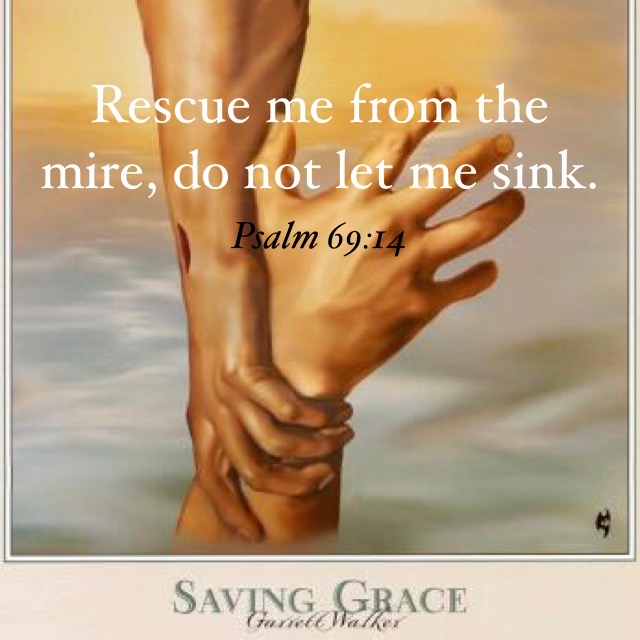
Deliver me out of the mire, and let me not sink (Psalm 69:14).
There have been thousands of eminent saints who have been attacked by unbelief and have been in doubt as to things that they once received as certain truths of God and that still in their heart of hearts they know to be true. They could have died for those truths one day. They could have established them beyond all doubt and question the next day. And yet upon the third they might be compelled, through strong temptation, to sit down and with tears streaming from their eyes, cry bitterly to their Helper, ‘Oh, God, save me from this accursed unbelief that robs me of every comfort and takes the foundations away and lays my glory in the dust! What can I do? If the foundations are removed, what can the righteous do? O settle my soul upon Your Word and establish me in Your truth, O You God of truth.’ …
Certain of my brethren are frequently in trouble. Their whole life is a floundering out of one slough of despond into another. You have a great many losses in business—nothing but losses, perhaps. You have had many crosses, disappointments, bereavements—nothing prospers with you. Well, brother, there is this consolation: You are one of a very large family, for many of God’s people pass through just such tribulation. …
O Lord, grant us divine grace to see much of our sins through the tears of repentance and to see much of the Savior through the eyes of faith, for if we see little of Him we will get into the plight of David when he was in the deep mire and cried, ‘Lord, deliver me out of the mire, and let me not sink.’
From The Believer Sinking In The Mire
David’s cry in verse 14—Deliver me out of the mire, and let me not sink—is certainly understandable in view of all that was going on in his life. Look at how Psalm 69 opens:
Save me, O God! For the waters have come up to my neck.I sink in deep mire, where there is no standing; I have come into deep waters, where the floods overflow me. I am weary with my crying; my throat is dry; my eyes fail while I wait for my God. (vv. 1-3)
Have you been in that deep mire? I have, and here’s what I’ve learned.
Second, God wants to make me victorious in my struggle so that others will be encouraged. As the apostle Peter reminded Christians, “Stand firm against [the devil], and be strong in your faith. Remember that your family of believers all over the world is going through the same kind of suffering you are” (1 Peter 5:9).
In your darkest, most desperate times, stop trying to rescue yourself. Lift up your eyes and call to God, “Deliver me,” and call on one of your Christian brothers or sisters to be by your side in this valley time.
But let’s look at this from another angle: Before there was an Old Testament and a New Testament, what did those who lived in the days of Jesus call what we now refer to as “the Old Testament”? They called it Scripture.
Here’s a clip from a recent sermon where I discuss more in-depth why our New Testament is really the best commentary we have on the Old Testament:
I invite you to check out a couple of other resources:
Shepherding God’s flock is both a blessing and a HUGE responsibility! My book Shepherd Leadership: The Metrics That Really Matter can help. Several people have already told me that they have purchased multiple copies to give as Christmas gifts.
I want to help you give this great gift. Here’s how:
Purchase three or more copies in either the print or ebook formats.
Take a screenshot of your receipt and email it to me along with your mailing address.
I will then send you a FREE autographed copy of Shepherd Leadership for you to add to your library.
I wrote this book knowing that it was going to bring joy and a renewed enthusiasm to pastors. Please get this book into the hands of your pastor for Christmas!
Listen to the podcast of this post by clicking on the player below, and you can also subscribe on Apple, Spotify, or Audible.
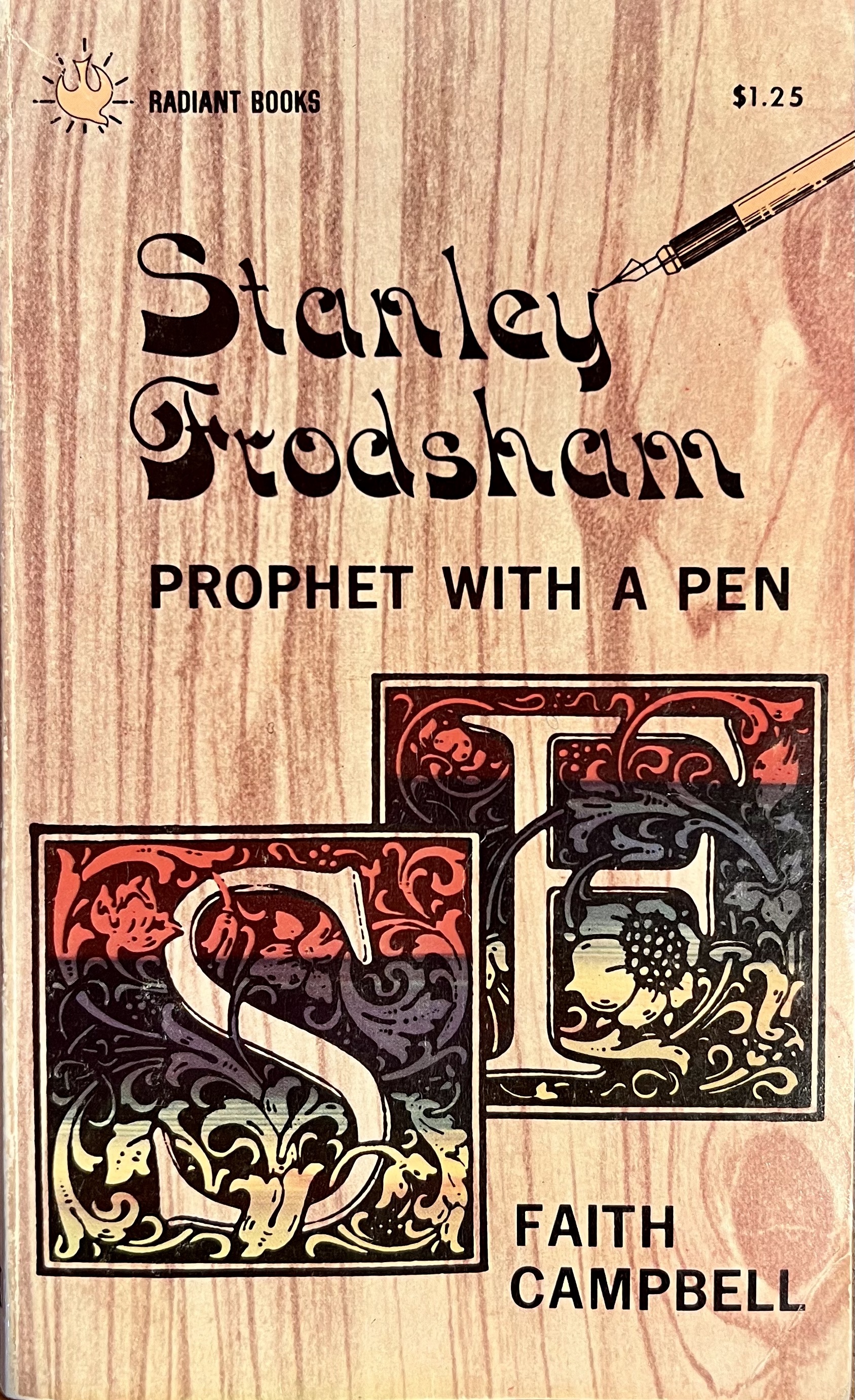
This book is personal for me—it’s a part of my family tree and my spiritual legacy. Prophet With A Pen is the biography of Stanley Frodsham, lovingly told by his only daughter Faith Campbell.
Stanley Frodsham’s pen was truly anointed. From his history of the modern-day Pentecostal movement, to his biography of renown evangelist Smith Wigglesworth, to his editing of the worldwide Pentecostal Evangel magazine, all the way down to his personal correspondence. Frodsham’s pen may have done more for the Pentecostal movement than anyone else’s did.
As a case in point, consider the powerful preaching of Smith Wigglesworth. His sermons were not prepared and written out ahead of time, but they were Holy Spirit-breathed at the moment Wigglesworth was preaching them. Most of those sermons that have been preserved for us in writing were due to the careful shorthand notes of Stanley Frodsham.
In Prophet With A Pen, Frodsham’s daughter tells us his life story through her personal recollections, her extensive library of her father’s letters, and the remembrances of lifelong friends of the Frodshams. It’s an intimate portrait of a man who never sought the limelight, but simply wanted everyone to personally experience the power of Pentecost.
I mentioned that this book is personal for me. Faith Campbell was my great-aunt, and her husband (who was quite an evangelist himself) shared many of these stories with me personally as I was growing up. Reading this collection of remembrances of Stanley Frodsham has reinforced my commitment to honor the heritage that I’ve been given, and to pass on a vibrant spiritual legacy to those who will come after me.
Anyone who enjoys church history will thoroughly enjoy this behind-the-scenes look at the men and women who were so crucial to the early Pentecostal movement.
Listen to the podcast of this post by clicking on the player below, and you can also subscribe on Apple, Spotify, or Audible.
Many in-the-public-spotlight people will hire a publicist to make them look good. Although this publicist can try to direct the public’s opinion, they cannot control the actual word on the street about their client. What people are talking about in their private conversations is closer to the truth than the publicist’s spin.
Some skeptics of the claims of Christianity have tried to claim that the New Testament is really a publicity stunt: That the New Testament authors wrote their documents to try to control the narrative of the story of Jesus. But I find it fascinating what people were saying about Jesus from His birth—before He ever preached a sermon or performed a miracle.
Skeptics may want to claim that what Jesus said or did is a myth. But we need to ask, “Where do myths originate?” Myths come from legends, and legends come from historical facts. J.R.R. Tolkien says in the opening of the Fellowship Of The Ring, “And some things that should not have been forgotten were lost. History became legend. Legend became myth. And for two and half thousand years, the ring passed out of all knowledge.”
There are those that steadfastly cling to Fact long after others have gotten tired of the Legends, and now only see a Myth. Throughout history those that cling to something others think are out-dated have often been able to bring clarity to confusing things that the modern science of the day couldn’t do. Sometimes these Fact-clingers have been called seers or sorcerers or magicians.
Some of these magicians show up shortly after the birth of Jesus:
After Jesus was born in Bethlehem in Judea, during the time of King Herod, Magifrom the east came to Jerusalem and asked, “Where is the One who has been born King of the Jews? We saw His star when it rose and have come to worship Him.” (Matthew 2:1-11)
Some English translations of the Bible translate Magi as “wise men.” This is pretty accurate, but magi can also mean teachers, priests, physicians, astrologers, interpreters of dreams, or magicians. These Babylonian Persians had seen some sort of astronomical occurrence that led them to make a nearly 900-mile journey to Jerusalem.
For over 500 years these magicians had been clinging to a Fact taught to them by the chiefmagician of Babylon. Not a fellow Babylonian, but a Hebrew given the name Belteshazzar. He was one who could…
…tell someone what they had dreamed about and then interpret it
…solve the deepest riddles
…read and translate an unknown language
…call on supernatural powers to shut the mouths of lions
…foretell future world events
Belteshazzar the Magician also saw a vision of the pre-incarnate Jesus before Time even began, One whom he called “the Ancient of Days.” And he even saw all the way to the end of Time when this King of kings would judge the entire world.
These Persian magicians didn’t make an arduous 900-mile journey for a Myth. They didn’t bring gifts fit for a king to honor a Legend. They did all of this because of a Fact: Jesus is Fact.
We meet another magician on Barnabas and Paul’s first missionary journey. He was a man named Elymas. The English version of the Bible calls him a sorcerer, but in Greek the word is magos, the singular of the word magi.
He’s called a sorcerer because he tried to make Jesus a Myth. He worked for the Roman proconsul, a man called Sergius Paulus, whom Luke describes as “an intelligent man.” Elymas in essence said, “Sergius, use your intellect. There may have been someone called Jesus (in fact, my own father had that same name), but the stories about His miracles, death, and resurrection have to be mythical!” Sergius Paulus was convinced that the accounts of Jesus were myth until he heard the words of fact spoken by Barnabas and Paul.
C.S. Lewis wrote in Mere Christianity,
“A man who was merely a man and said the sort of things Jesus said would not be a great man or a moral teacher. He would either be a lunatic—on the level with the man who says he is a poached egg—or else he would be the devil of hell. You must take your choice. Either this was, and is, the Son of God; or else a madman or something worse. You can shut Him up for a fool… or you can fall at His feet and call Him Lord and God. But let us not come with any patronizing nonsense about His being a great human teacher. He has not left that open to us.”
So who do you say Jesus is? Is He a Myth? A Legend? A liar? A lunatic? Or is He the Ancient of Days, the Light of the world, the Lord of all Creation?
Christians, we must have this Fact clear in our own minds, and then—just as the Persian Magi did and as Barnabas and Paul did—let’s clearly tell about this Fact to the world’s skeptics, especially as the world’s modern telling of Christmas seems to be becoming more and more mythical.
Don’t rail on the Myths and Legends, but use them to show others the Fact of Jesus Christ—the Ancient of Days, Savior, and King!
(Watch the full message More Than A Legend by clicking on the link below.)
To catch up on all of the messages in our Advent series People Will Talk, please click here.
Listen to the podcast of this post by clicking on the player below, and you can also subscribe on Apple, Spotify, or Audible.
At a recent Q&A, I was asked how leaders in smaller markets or communities can avoid becoming discouraged if their measurable metrics aren’t continually rising.
I answered this by pointing to a simple three-word phrase that God laid on my heart a number of years ago.
This is an idea that I unpack throughout my book Shepherd Leadership: The Metrics That Really Matter. Please pick up a copy for yourself or as a gift for your friends who are in leadership positions. My book is available in print or ebook, and in audiobook through either Audible or Apple.
This is a weekly series with things I’m reading and pondering from Charles Spurgeon. You can read the original seed thought here, or type “Thursdays With Spurgeon” in the search box to read more entries.
Listen to the podcast of this post by clicking on the player below, and you can also subscribe on iTunes or Spotify.
Forgiven And Forgiving
Forgiving one another, even as God for Christ’s sake has forgiven you. (Ephesians 4:32)
Now observe how the apostle puts it. Does he say, ‘forgiving another’? No, that is not the text. If you look at it, it is ‘forgiving one another.’ One another! Ah, then that means that if you have to forgive today, it is very likely that you will, yourself, need to be forgiven tomorrow, for it is ‘forgiving one another.’ … Let us begin our Christian career with the full assurance that we will have a great deal to forgive in other people, but that there will be a great deal more to be forgiven in ourselves! …
Note again: When we forgive, it is a poor and humble business compared with God’s forgiving us, because we are only forgiving one another—that is, forgiving fellow servants. But when God forgives us, the Judge of all the earth is forgiving, not His fellows, but His rebel subjects, guilty of treason against His majesty! For God to forgive is something great—for us to forgive, though some think it great—should be regarded as a very small matter. … What we owe to God is infinite, but what our fellow creature owes to us is a very small sum. …
If anyone here who is a Christian finds a difficulty in forgiveness, I am going to give him three words that will help him wonderfully… Here they are again: ‘For Christ’s sake.’ …
I do not know how to put this next word I am going to say. It is a paradox. You must forgive or you cannot be saved. But at the same time, you must not do it from compulsion, you must do it freely. … Remember, it is of no use for you to put your money into that offering box as you go out unless you remember, first, to forgive your brother. God will not accept the gifts, prayers, or praises of an unrelenting heart. … The very prayer that teaches you to ask for mercy bids you say, ‘And forgive us our debts, as we forgive our debtors’ (Matthew 6:12). Unless you have forgiven others, you read your own death warrant when you repeat the Lord’s Prayer!
From Forgiveness Made Easy
We honor the forgiveness that God has extended to us by liberally forgiving others. And our forgiveness of others shows them just how loving and forgiving our God is too!
I add my prayer to Charles Spurgeon’s that you would grasp the truth that we can forgive one another for Christ’s sake because God has forgiven us for Christ’s sake. Let’s all grow in this Christian maturity!



 My Dad’s out of town






 Craig T. Owens
The Best Commentary On The Old Testament
December 8, 2021 — Craig T. OwensListen to the podcast of this post by clicking on the player below, and you can also subscribe on Apple, Spotify, or Audible.
But let’s look at this from another angle: Before there was an Old Testament and a New Testament, what did those who lived in the days of Jesus call what we now refer to as “the Old Testament”? They called it Scripture.
Here’s a clip from a recent sermon where I discuss more in-depth why our New Testament is really the best commentary we have on the Old Testament:
I invite you to check out a couple of other resources:
►► Would you please prayerfully consider supporting this ministry? ◀︎◀︎
Share this: