Thursdays With Spurgeon—“All” Means All

This is a weekly series with things I’m reading and pondering from Charles Spurgeon. You can read the original seed thought here, or type “Thursdays With Spurgeon” in the search box to read more entries.

Listen to the podcast of this post by clicking on the player below, and you can also subscribe on iTunes or Spotify.

“All” Means All  

Forgiving one another, even as God for Christ’s sake has forgiven you. (Ephesians 4:32) 

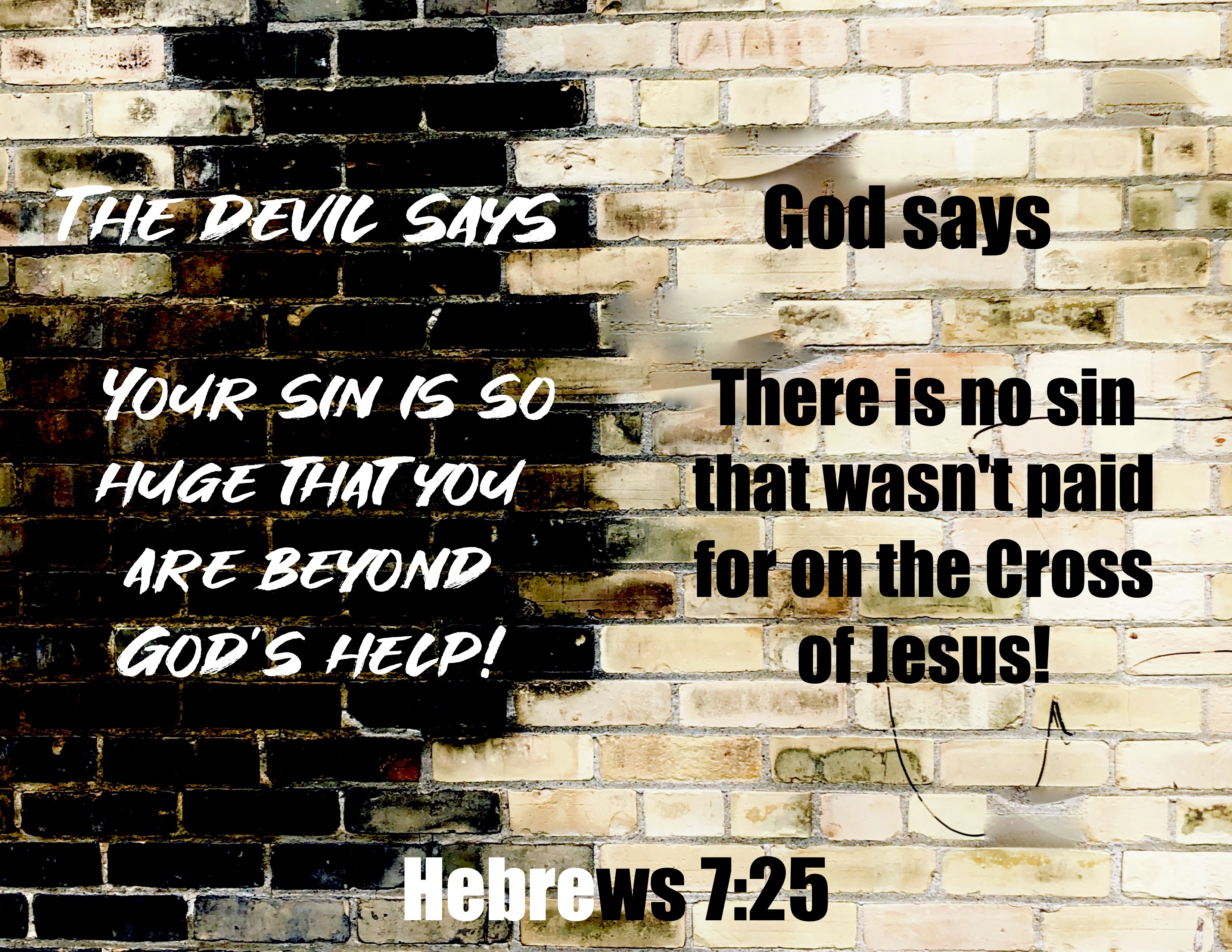
     We pass on to observe what it is that we are told in the text has been done for us and to us, for Christ’s sake: ‘God for Christ’s sake has forgiven you.’ … Have you put your trust in the atoning sacrifice? Then God for Christ’s sake has forgiven you. You have not begun to be a Christian, I hope, with the idea that one day, at some future period, you may obtain forgiveness. No. ‘God for Christ’s sake has forgiven you.’ … Pardon is not a prize to be run for, but a blessing received at the first step of the race. If you have believed in Jesus, your sins are all gone—all gone. All your sins have been erased from the records of the past, never to be mentioned against you forever! …  

     I have sometimes heard it said that we were so forgiven when we first believed that there is no need to ask for further forgiveness. I will reply, we were so completely forgiven when we first believed that we ought continually to ask for the perpetuity of that one far-reaching act, that the Lord may continue to exert toward us that fullness of forgiving grace that absolved us perfectly at the first, that we may continue to walk before Him with a sense of that complete forgiveness, clear and unquestioned. … 

     O you believers, think of this, for the ‘all’ is no little thing. It includes sins against a holy God, sins against His loving Son, sins against gospel as well as against law, sins against man as well as against God, sins of the body as well as sins of the mind, sins as numerous as the sands of the seashore and as great as the sea itself, and all are removed from us as far as the east is from the west!

From Forgiveness Made Easy 

Let me drive home Charles Spurgeon’s point with two passages of Scripture and a stanza from an old hymn. 

[God] does not treat us as our sins deserve or repay us according to our iniquities. For as high as the heavens are above the earth, so great is His love for those who fear Him; as far as the east is from the west, so far has He removed our transgressions from us. (Psalm 103:10-12) 

For I will forgive their wickedness and will remember their sins no more. (Hebrews 8:12) 

When satan tempts me to despair 
And tells me of the guilt within, 
Upward I look and see Him there 
Who made an end of all my sin. 
Because the sinless Savior died, 
My sinful soul is counted free; 
For God the Just is satisfied 
To look on Him and pardon me, 
To look on Him and pardon me. (Charitie Lees Bancroft) 
 

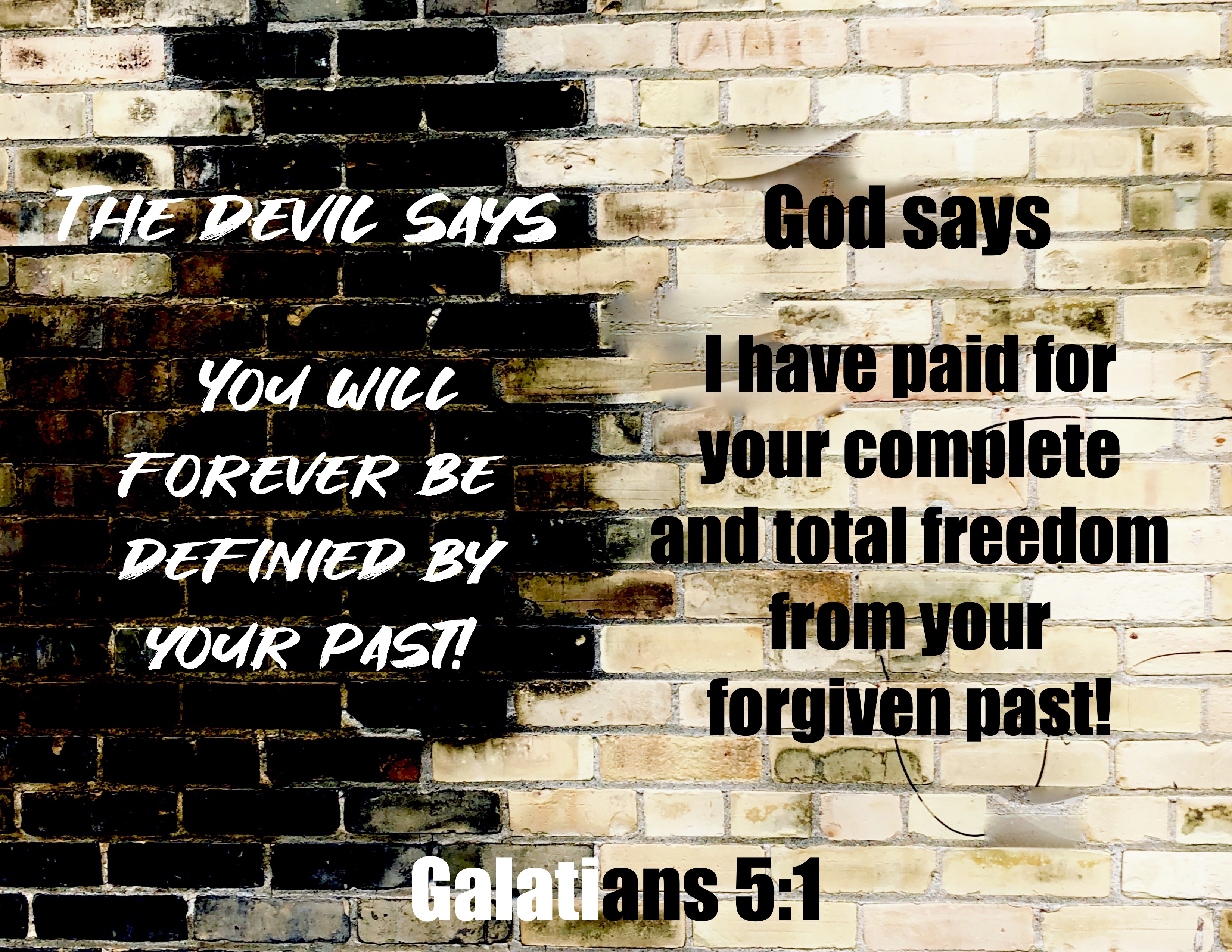
So I think this is a good conclusion—In this freedom Christ has made us free and completely liberated us; stand fast then, and do not be hampered and held ensnared and submit again to a yoke of slavery which you have once put off. (Galatians 5:1 AMP)

►► Would you please prayerfully consider supporting this ministry? ◀︎◀︎
 

A Teaching Tip For Leaders

Listen to the podcast of this post by clicking on the player below, and you can also subscribe on AppleSpotify, or Audible. 

In Proverbs 25–26 Solomon uses the word “like” 18 times. This small word gives leaders a huge teaching lesson. 

Good leaders are constantly conveying to their team the vision that God has given them. We see this throughout the Bible, where past history is connected to the future promise God has given. Unless leaders are able to consistently, and frequently, refocus their people on the vision, the people “cast off restraint” and go their own way (Proverbs 29:18). 

Leaders need to find fresh ways to make their messages stick. All of the Proverbs, but especially these two chapters, give us excellent lessons for this. Solomon makes memorable connections by starting with something that most people have experienced. Things like…

  • a beautiful piece of jewelry 
  • a refreshingly cool drink on a hot day
  • an injured body part 
  • the actions of nature and animals  

Then Solomon connects these observations to a timely piece of wisdom…

  • The right words, delivered at the right time, in the right way are LIKE a beautiful piece of jewelry. 
  • One who delivers timely and helpful words is LIKE a refreshingly cool drink on a hot day. 
  • Trying to move around on an injured foot is LIKE having to rely on someone inconsistent during times of trouble. 
  • Just LIKE honey is good for you in moderation, too much honey—and too much of any good thing—can make you sick. 

This is a great teaching lesson for every leader. We need to continually find new and memorable ways to help our people grasp the vision, mission, and values of the organization. This teaching tip from King Solomon can go a long way in helping our messages stick. 

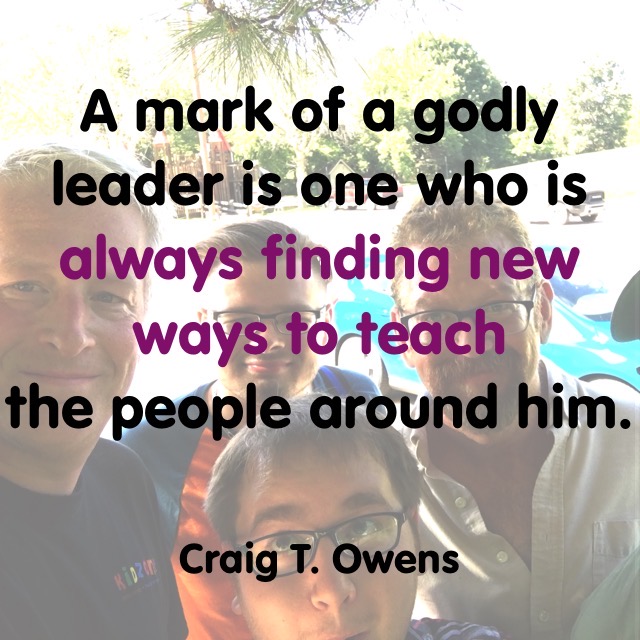
A mark of a godly leader is one who is always finding new ways to teach the people around him. 

This is part 59 in my series on godly leadership. You can check out all of my posts in this series by clicking here.

►► Would you please prayerfully consider supporting this ministry? ◀︎◀︎

The Craig And Greg Show: What Leaders Can Learn From Veterans

Listen to the audio-only version of this podcast by clicking on the player below, or scroll down to watch the video.

On this episode of “The Craig And Greg Show” we talk about: 

  • [0:36] One thing I have learned about veterans that I have appreciated. 
  • [1:35] Giving a shout-out to our favorite veterans. 
  • [2:35] We wonder how many current leaders would agree to step into tough roles if they weren’t getting paid to do so. 
  • [3:35] What intrigues us about volunteers. 
  • [5:15] What else motivates people beside getting a paycheck?  
  • [6:35] Leaders help their people get involved in a bigger cause—they help them see beyond the organization’s “bottom line” as a way to energize their team. 
  • [8:29] Some leadership examples from our military personnel. 
  • [9:18] What any leader should be able to learn from veterans: respect, understanding of the chain of command, innovation while follow the mission plan. 
  • [11:13] How having veterans on your team can benefit your organization. 
  • [13:41] What we can learn from our veterans about defending our values. 
  • [14:00] Greg shares a great quote on defining true heroes. 
  • [15:20] Find a way to invest in your people and unleash their potential.

Check out this episode and subscribe on YouTube so you can watch all of the upcoming episodes. You can also listen to our podcast on Spotify and Apple.

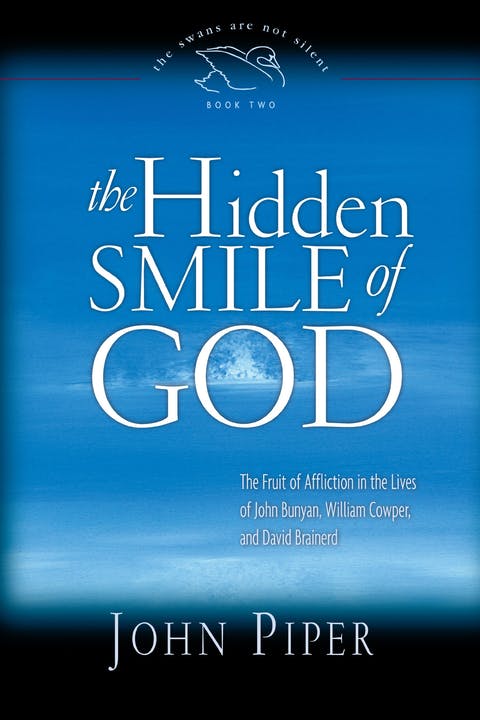
The Hidden Smile Of God (book review)

Listen to the podcast of this post by clicking on the player below, and you can also subscribe on AppleSpotify, or Audible. 

It’s one thing for someone to dispense sound advice, but it’s an entirely different thing for that advice to come from hard-won life experiences. The Hidden Smile Of God is the second book in John Piper’s excellent series of biographies called “The Swans are Not Silent.” 

Each book in this series features biographies and life lessons of three notable saints. Pastor John weaves these character studies together around a common theme. In this book, the lives of John Bunyan, William Cowper, and David Brainerd are examined to see the fruitful ministry that can emerge from a life plagued by affliction. 

John Bunyan, well-known author of The Pilgrim’s Progress, spent over a decade in prison, as well as the balance of his life under severely pressing circumstances. David Brainerd was a missionary to several American Indian tribes, while struggling with failing health and crushing loneliness. And William Cowper was suicidally depressed through nearly all of his life, and yet wrote some of the most intimate and moving poems. 

In fact, it is a line in one of Cowper’s poems from which the title of this John Piper book emerges—

Judge not the Lord by feeble sense, 
But trust Him for His grace; 
Behind a frowning providence 
He hides a smiling face.

Pastor John does more than merely share memorable biographies of these three men, but he extracts insights about suffering and affliction that will enable others to have a new biblical paradigm about their own suffering. Such amazing lessons for any of us struggling through dark times.

Even if you don’t personally struggle with affliction or anxiety or depression, chances are very good that someone around you does. Perhaps you could read this book and share some of these helpful insights with your friends or family members who are struggling. 

If you would like to check out my review of another book in this series—Seeing Beauty and Saying Beautifullyplease click here. 

►► Would you please prayerfully consider supporting this ministry? ◀︎◀︎
Quieting The Storms

Listen to the podcast of this post by clicking on the player below, and you can also subscribe on AppleSpotify, or Audible. 

“Anxiety disorders are the most common mental illness in the U.S., affecting 40 million adults in the United States age 18 and older, or 18.1% of the population every year.” —Anxiety & Depression Association of America 

A multitude of factors go into someone’s anxiety: genetics, temperament, brain chemistry, life experiences. In addition to those factors, we have to keep in mind that humans are a three-part being—with a body, mind, and spirit—and a disease in one area does affect the other two areas. 

All of this means that there is no one-size-fits-all solution for anxiety. But there is one Healer: 

  • He may supernaturally heal your body, mind, or spirit 
  • He may direct you to a medical doctor, a mental health professional, or a spiritual counselor 
  • But always, He will walk through the challenges with you, strengthening you, and preparing you to minister to others going through a similar struggle (Psalm 23:1-6; 2 Corinthians 1:3-4) 

David wrote, “When I am afraid, I put my trust in You” (Psalm 56:3). Notice that he said “when” not “if.” David knows what you probably know too: we can be easily consumed by our anxiety, doubts, and fears. But David also knows (and I hope you do too) that at those moments, we can go to God as our trustworthy First Source. 

One of the dictionary definitions of anxiety is a feeling of disquiet. All of the conflicting thoughts make it hard to concentrate, the abundance of noise makes it difficult to talk to yourself, let alone talk to God. 

I’d like you to consider another psalmist’s words. Look at the first half of Psalm 94:19—

  • When anxiety was great within me… (NIV) 
  • In the multitude of my anxious thoughts… (AMP)
  • When doubts filled my mind… (NLT) 

The setting of this psalm is one of lots of disquieting voices: a desire to see the wrongdoers punished, listening to arrogant words, getting fed up with boasting words, seeing good people being trampled, hearing foolish words uttered about God (vv. 1-8). 

Experiencing anxiety is not sinful, but I do think that we grieve God’s heart when we immediately run to other sources for relief instead of going to our loving Heavenly Father first. After dealing with the disquiet in the opening verses of Psalm 94, the psalmist says, “My anxiety level was sky high!” But then notice how that verse concludes—

  • Your consolation brought me joy (NIV) 
  • Your comforts cheer and and delight my soul (AMP)
  • Your comfort gave me renewed hope and cheer (NLT)

Jesus told us about our Comforter who would always be with us (John 14:1, 16-17). A little further on in these same remarks Jesus also said, “These things I have spoken to you, that in Me you may have peace. In the world you will have tribulation; but be of good cheer, I have overcome the world” (John 16:33 NKJV). 

I like that phrase, “Be of good cheer.” That phrase is just one word in Greek, and sometimes it’s translated “be of good courage.” In every single instance, it’s only used by Jesus and it’s only used when He comes close to anxious people (Matthew 9:2, 9:22, 14:27; Mark 6:50, 10:49; Luke 8:48; John 16:33; Acts 23:11). 

A furious squall battered the boat, almost swamping it. The disciples were—to say the least—disquieted! In their anxious state they notice Jesus peacefully sleeping. They wake Him up with, “Don’t You care that we’re drowning?!” Jesus stands up and says to the storm, “Quiet. Be still.” 

Recall that one of the descriptions of anxiety was being disquieted. That prefix dis- means to be separated: our anxiety would seek to distance us from God’s presence, to make us feel like His help is too far away. But when we go to Jesus, He alone can say, “Quiet” to our disquieting thoughts. He can remove the “dis-” and bring us close to Him. Only His peace can X-out the noise of the storm and bring you to a place of quiet rest. 

After Jesus said, “Quiet. Be still,” notice this: “THEN the wind died down and it was completely calm” (Mark 4:39). And the great thing is this: Even if another storm begins disquieting us just a few minutes after the calm, we can go to Him again. There is no limit: We can continually go to the Eternal Source of peace, to the only One who can speak, “Quiet” to our anxious thoughts. 

Please follow along with us as we learn more about X-ing out our anxieties. 

►► Would you please prayerfully consider supporting this ministry? ◀︎◀︎

Poetry Saturday—Wait

Listen to the podcast of this post by clicking on the player below, and you can also subscribe on AppleSpotify, or Audible.

Cease from disquietude,
Fret not, this is unto thee a preparation time;
Thou must be made in likeness unto Him thou wouldest serve.
Wait, the diamond must be cut ere from its tiny facets
Flash the glory of the sun’s pure ray.
Rain must descend,
Else from yon dull grey bulb springeth no sweet perfumed flower.
Be silent upon God, thy time for service has not come;
Patience, this waiting trial is by Him who loves thee sent;
Be still—He knoweth all, thou knowest that His will is best. —Oswald Chambers

►► Would you please prayerfully consider supporting this ministry? ◀︎◀︎
A Healthy On-And-Off

Listen to the podcast of this post by clicking on the player below, and you can also subscribe on AppleSpotify, or Audible. 

I had a great time on the Thriving In Ministry podcast with Kyle Willis and Dace Clifton. 

The guys asked me a question about how I keep myself healthy, and I pointed them to a principle I observed in the life of Jesus. Check out this excerpt from the chapter “A Healthy Leader’s Sabbath” in my book Shepherd Leadership: The Metrics That Really Matter

     Jesus had a human body just like ours. The demands of ministry caused stress on His body just as it does on our bodies. This is totally natural—this is the way God designed us. Our body helps us meet the demands of each day by releasing a hormone called cortisol. Cortisol helps us by managing how our body uses carbohydrates, fats, and proteins; keeping inflammation down; regulating blood pressure; controlling the sleep-wake cycle; and boosting our energy. … 

     Cortisol is naturally flushed from our bodies by a healthy on-and-off rhythm. God built this into His Creation by giving us daily rhythms of day and night, work and rest, and by providing a weekly Sabbath to rest and reflect. But as most shepherd leaders know, setting aside a consistent Sabbath day is extremely rare. Again, let’s look to Jesus: Do you see Him doing anything—or not doing anything—on the Sabbath day that He didn’t do the other days? On any day of the week, we see Him speaking in a synagogue, healing the sick, teaching crowds of people, giving instructions to His followers, correcting religious leaders, walking with friends, or stopping to eat at someone’s home.  

     Jesus had a healthy on-off rhythm: work-rest, minister-celebrate, expend-refresh. Jesus demonstrated that the Sabbath is not so much a day as it is an attitude of the heart. It’s listening to the Holy Spirit say something like, “You’ve been very busy this afternoon, so it’s time to take a nap” and then obeying that divine prompting. Resting and being refreshed—“sabbathing”—is not a luxury; it’s a necessity! That’s why, after a busy day of ministry, we see Jesus spending time in prayer, or taking a nap while crossing the lake when He didn’t have anyone to teach or heal, or finding time for a retreat with His disciples so they could rest and recuperate. 

I have five chapters in Shepherd Leadership about a leader’s overall health, and two chapters in particular where I talk about practical ways that we can create the time to practice sabbathing.

I’ll be sharing more clips from this Thriving In Ministry interview soon, so please stay tuned. Shepherd Leadership: The Metrics That Really Matter is available in print or ebook, and in audiobook through either Audible or Apple.

►► Would you please prayerfully consider supporting this ministry? ◀︎◀︎

Thursdays With Spurgeon—Love So Amazing

This is a weekly series with things I’m reading and pondering from Charles Spurgeon. You can read the original seed thought here, or type “Thursdays With Spurgeon” in the search box to read more entries.

Listen to the podcast of this post by clicking on the player below, and you can also subscribe on iTunes or Spotify.

Love So Amazing  

Forgiving one another, even as God for Christ’s sake has forgiven you. (Ephesians 4:32) 

     The first phrase to think about is ‘for Christ’s sake.’ We use these words very often, but probably we have never thought of their force. … All the good things that God has bestowed upon us have come to us ‘for Christ’s sake.’ But especially the forgiveness of our sins has come ‘for Christ sake.’ …  

     It is His very love as well as His holiness and His justice that, if I may use such a term, compels Him to severity of judgment so that sin cannot and must not be blotted out till atonement has been presented. There must, first of all, be a sacrifice for sin, that, mark you, the great Father, to show His love, supplies, for it is His own Son who is given to die! And so the Father Himself supplies the ransom through His Son, that Son is one with Himself by bonds of eternal unity, mysterious but most intense. If God demands the penalty in justice, He Himself supplies it in love. … 

     I want you to consider, for a moment, how readily God may now blot out sin since Christ has died. … God, for Christ’s sake, has accepted us in Him, has forgiven us in Him, and looks upon us with infinite love, changeless in Him. This is how all our blessings come to us, in and through Christ Jesus. And if we are indeed in Him, the Lord does not only forgive us our sins, but He bestows upon us the boundless riches of His grace in Him. In fact, He treats us as He would treat His Son. He deals with us as He would deal with Jesus! … 

     And you, big evil sinner, if you will go to God at this moment and say, ‘Lord, I cannot ask You to forgive me for my own sake, but do it out of love for Your dear Son,’ He will do it…. Christ took the shame that He might magnify His Father, and now His Father delights to magnify Him by blotting out the sin.

From Forgiveness Made Easy 

I’ve lost track of the number of times someone has told me, “I’ve messed up for so long—I’ve done such atrocious things—there is no way God could forgive me.” This is one of satan’s lies that keeps people from accepting God’s forgiveness. 

Jesus took your penalty, He paid the price for your sin! The moment you believe that, you are clothed in Christ’s righteousness. So now when the Holy God looks at you, He says, “You look like My Son. I love to bless My Son. I love to do what He asks of Me. For His sake, I have forgiven you. Not only forgiven, but I’ve forgotten everything I’ve forgiven!” 

Don’t wait another moment: If you haven’t asked God to forgive you “for Christ’s sake,” do it right this very minute! I’d love to chat with you about this, so reach out to me and let’s talk more about this amazing new relationship you now have with Almighty God because you are forgiven for Christ’s sake. 

This reminds me of a song by Chris Tomlin—

He became sin Who knew no sin
That we might become His righteousness
He humbled Himself and carried a Cross
Love so amazing!

►► Would you please prayerfully consider supporting this ministry? ◀︎◀︎

 

Check Out My YouTube Channel

Oy!

Listen to the podcast of this post by clicking on the player below, and you can also subscribe on AppleSpotify, or Audible. 

Woe is me!” said the prophet (Isaiah 6:5). 

The Hebrew word for “woe” here is the word “oy!” Although the word “woe” appears 20 times in the English translation of Isaiah, the Hebrew word “oy” is only used four times, and two of those times are Isaiah speaking of himself (6:5; 24:16). “Oy!” is a cry from a profound stab of pain from the realization that my sin has transgressed an All-Holy God. 

Isaiah saw his own sin (6:5) as well a the sin of his people (3:9, 11), and it took his breath away. He stood trembling before a holy God pleading for mercy and cleansing before he could answer the call to be God’s messenger to the people of Israel (6:5-8). 

The other Hebrew word that gets translated into the English word “woe” is “howy.” This is usually uttered from someone in pain because things aren’t going well. It’s a cry of, “Hey! Look! This is painful. This is not good at all.” But unlike “oy” which requires a profound heart change, “howy” can be said with the mouth without any change of the heart. 

Isaiah cried, “Oy!” because his sin deserved the punishment of the Righteous Judge, but his heart posture called on God’s mercy for forgiveness and restoration. Because of his cleansed heart, Isaiah could now call, “Howy!” to the people: “Hey, sinful Israel, look at your sin. Look at how you’ve transgressed against God. Feel that pain, then don’t delay, but cry out ‘Oy!’ to Him now, while mercy may still be found.” 

Isaiah’s “howy” had the impact of godly integrity because he had first cried “oy” in God’s presence. His “howy” was a call to others to do what he had done: see the holiness of God, see their sin, tremble in fear before an All-Holy God, and then cry “oy” to an All-Merciful God for forgiveness and restoration. 

We should do the same thing. When the Holy Spirit convicts you of sin, don’t merely say, “Hey (howy), that hurts!” But say, “Oy! I have sinned, but God is a merciful Forgiver of sin.” Let that stab of pain from the conviction of your sin bring a change in your heart as well as a cry from your lips. God is merciful, and He does forgive. 

►► Would you please prayerfully consider supporting this ministry? ◀︎◀︎