The Divine Jesus

Listen to the podcast of this post by clicking on the player below, and you can also subscribe on AppleSpotify, or Audible. 

I was teaching a class for my team members, and at one of the breaks a new employee came up to me to say how much he was enjoying the day, and to tell me that he would like to do what I was doing. I asked him, “But do you want to do what I did in order to do what I’m doing?” When I explained that I read about 10-12 books for this training time, and that it took me about 40 hours to prepare for our 4-hour class, he didn’t seem as interested. 

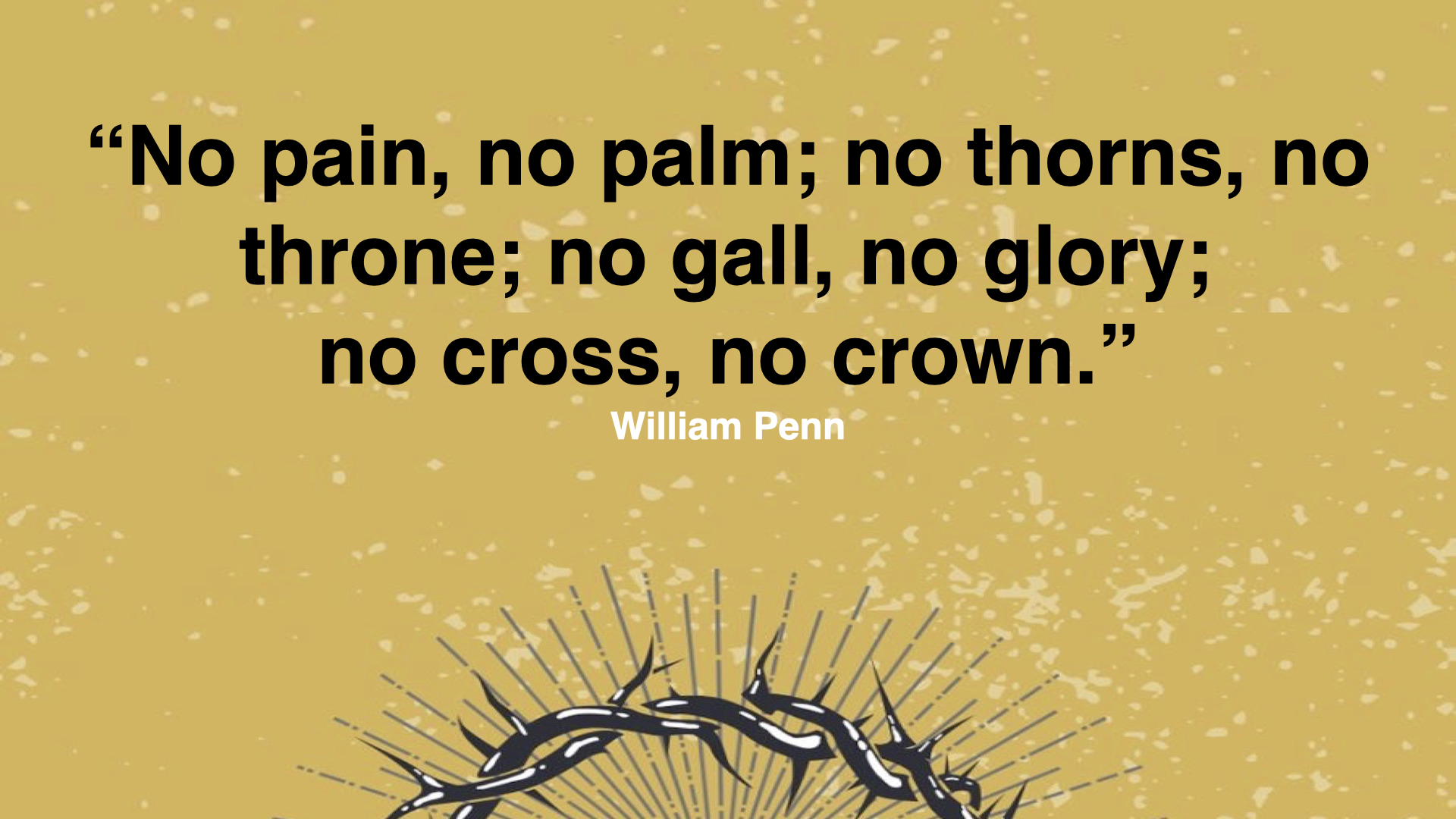
Most people don’t want to put in the work, but they just want the results. As Christians we need to remember these words from William Penn: “No pain, no palm; no thorns, no throne; no gall, no glory; no cross, no crown.” 

The human Jesus understands and empathizes with our painful struggles, and the divine Jesus helps us endure through these painful struggles to get the rewards on the other side. 

What do we mean by divine? The dictionary simply defines it as things relating to God or gods, so we need to use some context to help us understand who this divine Jesus is. After all, the New Testament refers to both Jesus and Artemis as divine (Romans 1:20; Hebrews 1:1-3; Acts 19:27). 

One way we can distinguish is by doing what the writer of Hebrews advised: “Remember your leaders, who spoke the word of God to you. Consider the outcome of their way of life and imitate their faith” (Hebrews 13:7). We see that the so-called worshippers of Artemis were more interested in their own financial gain than they were her divinity (Acts 19:23-27). In contrast, the apostle Paul demonstrated a totally Jesus-focused lifestyle: “However, I consider my life worth nothing to me; my only aim is to finish the race and complete the task the Lord Jesus has given me—the task of testifying to the good news of God’s grace” (Acts 20:24). 

Paul was following Jesus, and called all Christians to do the same. He noted that Jesus gave up all of His divine privileges to become our human Jesus, but because of this obedience, God made the divinity of Jesus shine more gloriously than anything else in creation! Then Paul transitioned to a word specifically for Christians: 

Therefore, my dear friends, as you have always obeyed—not only in my presence, but now much more in my absence—continue to work out your salvation with fear and trembling, for it is God who works in you to will and to act in order to fulfill His good purpose. (Philippians 2:12-13) 

In essence this is like Jesus saying, “I want you to have what I have, but you will have to do what I did to get it: That is, go through the painful struggles of life. But I will be right here with you every single step of the way!” 

The writer of Hebrews echoes this idea by reminding us that Jesus was made perfect through suffering, and so are we. So he calls us to “not throw away your confidence; it will be richly rewarded.” He also reminds us that although the times of suffering are not pleasant, there is an unimaginable reward on the other side (Hebrews 2:9-11; 10:35-39; 12:1-11).
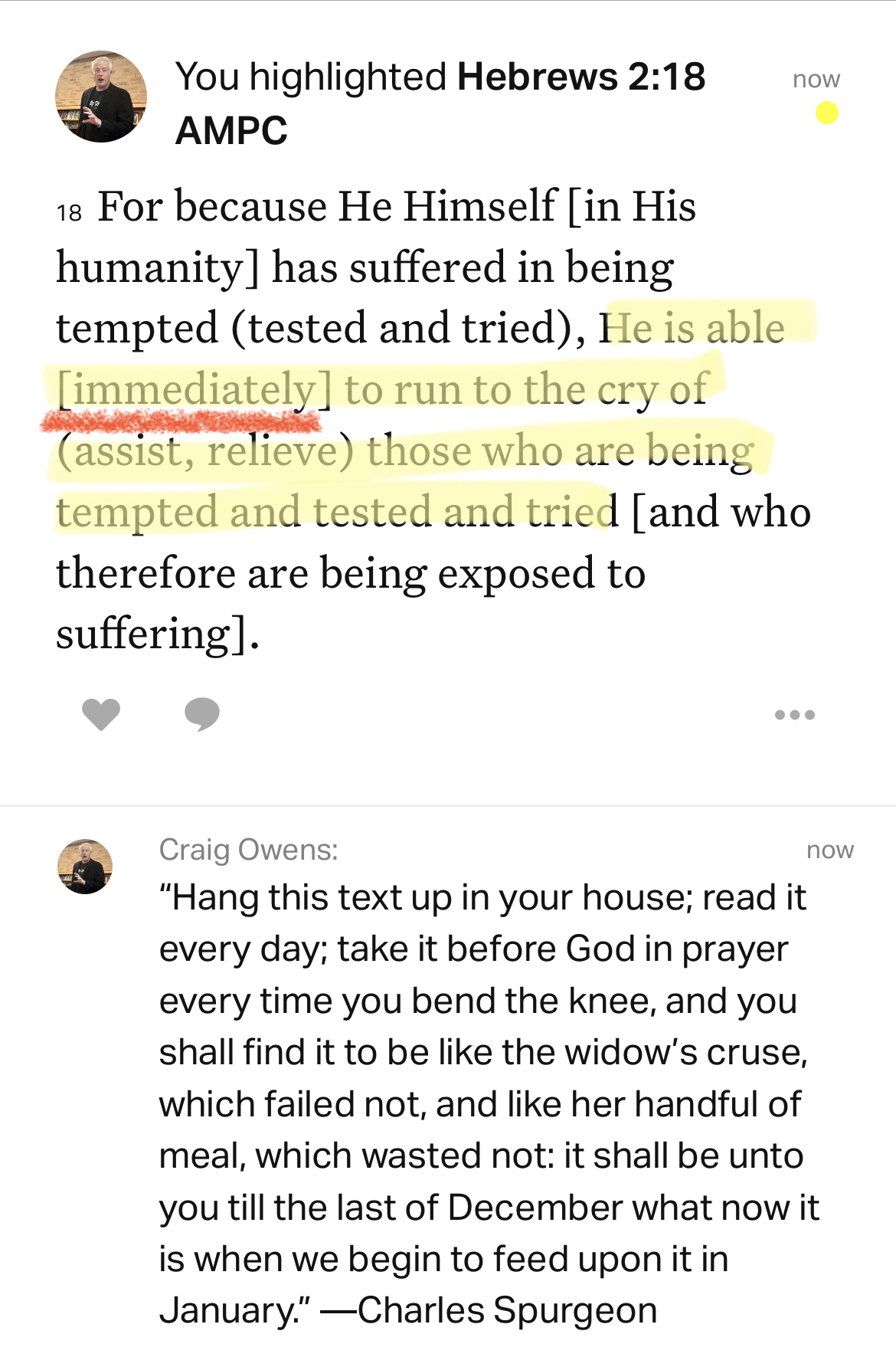
I especially like this conclusion: “No discipline seems pleasant at the time, but painful. Later on, however, it produces a harvest of righteousness and peace for those who have been trained by it” (Hebrews 12:11).

The divine Jesus has made it possible for us to be rewarded as He was rewarded! His divine power leads to our divine nature. And His divine power helps us defeat the world’s weapons (2 Peter 1:3-4; 2 Corinthians 10:4) 

Jesus asks, “Do you want to do what I did in order to do what I’m doing?” The power of the divine Jesus can help us be perfected, but we only get to this perfected place by suffering as He suffered. That’s why we need to know our human Jesus understands, empathizes, and helps. 

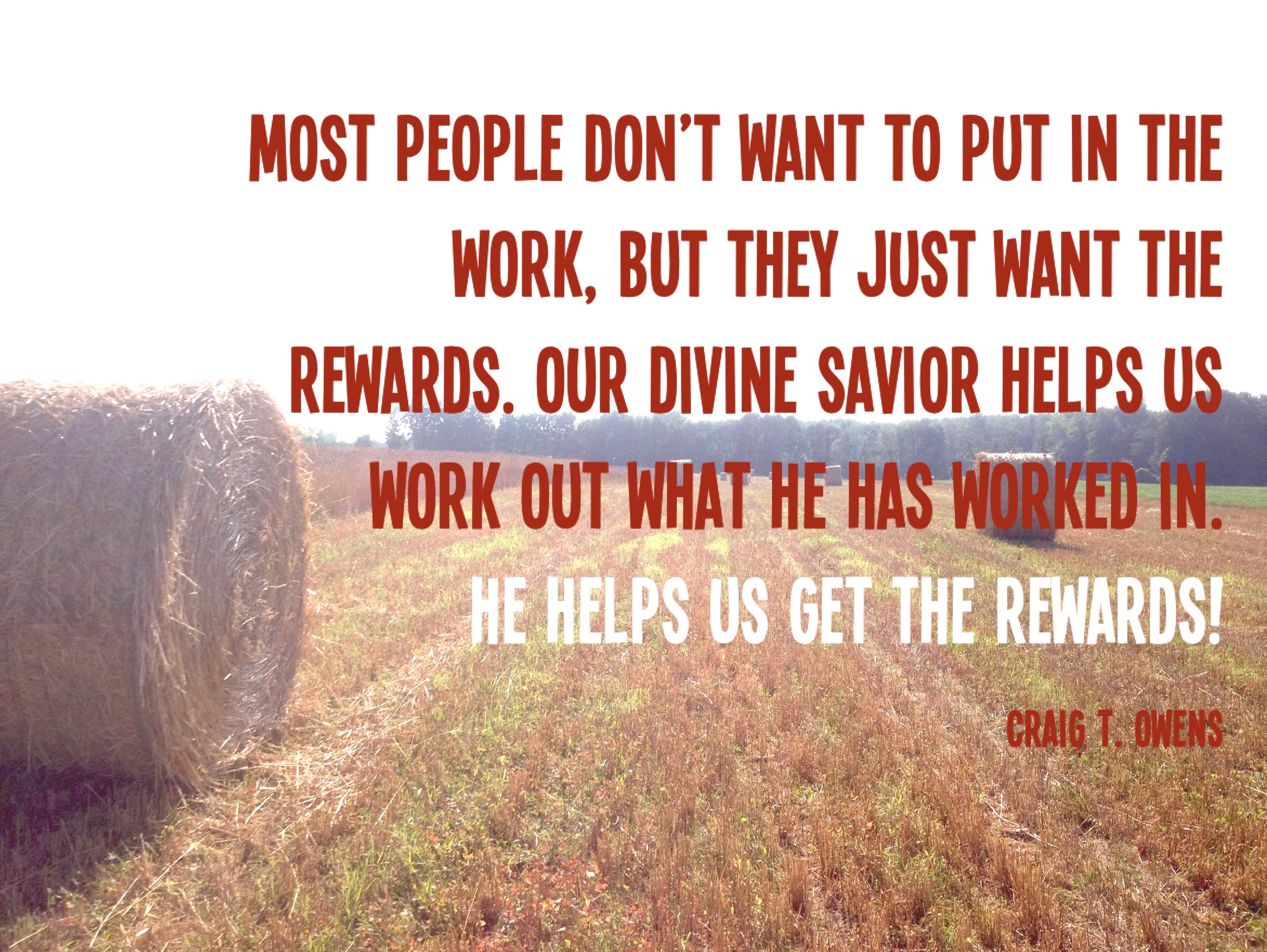
Most people don’t want to put in the work, but they just want the rewards. Our divine Savior helps us work out what God has worked in us. He helps us get the rewards! 

If you’ve missed any of the messages in our series on prayer called Awesome: Learning to pray in the awesome name of Jesus, you can find all of the messages by clicking here. 

►► Would you please prayerfully consider supporting this ministry? My Patreon supporters get behind-the-scenes access to exclusive materials. ◀︎◀︎

The Beautiful Jesus

Listen to the podcast of this post by clicking on the player below, and you can also subscribe on AppleSpotify, or Audible. 

I think we all know the cliche, “Beauty is in the eye of the beholder.” But isn’t that too shallow? Are we really saying that beauty is only what we can see on the surface? Instead, I think we should say, “True beauty is in the heart of the beholder.”   

Where does beauty begin? What is its source? 

Jesus told us, “Love your neighbor as yourself.” I can only love others to the level that I love myself, and that also means that I can only see beauty in others as I see it in myself. But if I try to achieve this by just loving myself or telling myself how beautiful I am, my pride comes in and crumbles the whole foundation. 

So the first thing Jesus told us was to go to the Source—to Love Himself: “Love the Lord your God with all your heart and with all your soul and with all your mind and with all your strength” (Mark 12:30-31). When we come to our Heavenly Father through our beautiful Savior we discover how beautiful we are in Him. We are clothed in the righteous robes of Jesus, which makes us as beautiful as He is. Then our Father sings His love to us (see Song of Songs 2:10, 4:7). 

The dictionary defines beauty this way: “The quality present in a thing or person that gives intense pleasure or deep satisfaction to the mind.” But the word beauty originated from a Latin word that meant good or virtuous. Sadly, our vain world has made beauty something that is only skin deep, and very rarely is someone’s goodness or virtue described as beautiful. 

Let me say it again: “True beauty is in the heart of the beholder.” Peter and Jesus both make this same point, reminding us that something beautiful on the outside can actually be covering up something quite ugly on the inside, or to say it another way: true beauty is far deeper than merely what we see with our eyes (1 Peter 3:3-4; Matthew 23:27). 

On the other hand, Isaiah prophesied about Jesus that, “there was nothing beautiful or majestic about His appearance, nothing to attract us to Him” (Isaiah 53:2 NLT). Outwardly, especially at His crucifixion, Jesus was grotesque, but this ugliness was our ugliness—our sin, and our disease, and our pride that Jesus took on Himself. He willingly took on our ugliness to allow us to exchange ashes for beauty, mourning for rejoicing, and sin for righteousness (Isaiah 53:2-5; 61:1-2, 9-10). 

So in prayer, we go to the One who isn’t beautiful in the eyes of a vain world. Jesus made Himself nothing, taking on the very nature of a servant, He came not to be served but to serve, He washed dirty feet, He hung out with sinners, He didn’t stay at the Ritz (He didn’t even have a home of His own), and He had only one set of clothes to wear. But He willingly took on all of our pain and sin so that He could take away our ugly robes and clothe us in His beautifully perfect robe of righteousness. 

It’s only when I know how beautiful and loved I am in God’s sight that I can begin to love others and see the beauty in them. 

Looking at True Beauty is the only way I can see myself correctly. Looking at True Beauty I can see the intrinsic worth and beauty in others. 

Prayer takes me to the beautiful Savior. Prayer reveals Christ’s beauty in me. Prayer brings His beauty to a vain world. 

“Without prayer the Christian life, robbed of its sweetness and its beauty, becomes cold and formal and dead; but rooted in the secret place where God meets and walks and talks with His own, it grows into such a testimony of divine power that all men will feel its influence and be touched by the warmth of its love.” —E.M. Bounds 

I pray that we will know this truth—that true beauty is in the heart of the beholder—and that we will truly know that Real Beauty is only found when we gaze at our beautiful Savior. 

►► Would you please prayerfully consider supporting this ministry? ◀︎◀︎

If you’ve missed any of the messages in our series on prayer called Awesome: Learning to pray in the awesome name of Jesus, you can find all of the messages by clicking here.

The Awesome Jesus

Listen to the podcast of this post by clicking on the player below, and you can also subscribe on AppleSpotify, or Audible.

Comedian Brian Regan tells a story about people trying to one-up others with their stories. He explains that he has a “social fantasy” that he wishes he was one of the 12 people who have walked on the moon. How nice it must be, he says, that they can top any story!  

It’s one thing to read things, hear things, and even believe things, but it’s something completely different when you experience those things for yourself. 

The one with an experience…

  1. …is never at the mercy of the one with an argument 
  2. …gains the ear of others 
  3. …inspires others to desire a similar experience for themselves 

In the case of prayer, I feel bad for those who have heard that God no longer answers prayer, or no longer does the miraculous for His children. I have personally experienced God’s healing power as a direct result of someone praying for me. In fact, I’m alive today because of the prayers of my two grandmothers! 

When God answers prayer, it is awesome! 

The dictionary defines awesome with three main words: reverence, admiration, and fear. I think we can be a bit more specific with these definitions—

  • for saints: reverence 
  • for seekers: admiration 
  • for sinners: fear 

It is so important for Christians to personally experience the awesome deeds our God has done because we have prayed in the awesome name of Jesus! 

A.W. Tozer wrote, “There’s an awesomeness about God which is missing in our day altogether; there’s little sense of admiring awe in the Church of Christ these days.” 

I think this is because our prayers are too tame. 

The writer of Hebrews tells us about the powerful personal relationship we can have to Almighty God through Jesus Christ. His conclusion is, “Therefore, since we are receiving a kingdom that cannot be shaken, let us be thankful, and so worship God acceptably with reverence and awe, for our ‘God is a consuming fire’” (Hebrews 12:28-29). 

When Christians pray in the awesome name of Jesus, and God does awesome things in response, the saints stand in reverent worship of Him. God told Moses, “The people you live among will see how awesome is the work that I, the Lord, will do for you,” and David exclaimed, “You answer us with awesome and righteous deeds” (Exodus 34:10; Psalm 65:5). 

These awesome answers that we personally experience gain the attention and admiration of seekers. Again, David said, “Come and see what God has done, His awesome deeds for mankind!” (Psalm 66:5). 

But God showing up in His awesome strength will also create fear in sinners. The prophet Joel said, “The day of the Lord is an awesome, terrible thing” (Joel 2:11). The righteous judgment of God is awesome, but so is the love of God: “Lord, the God of heaven, the great and awesome God, who keeps His covenant of love with those who love Him and keep His commandments” (Nehemiah 1:5). We need to use the awesomeness of God as a means to tell both sinners and seekers how they can know the awesome love of God.  

Remember that Tozer said “there’s little sense of admiring awe in the Church of Christ these days.” So I think we need to pray this, “God, forgive us for expectations of You that are too low.” 

I challenge you: 

  • Let’s pray bolder prayers this year to our awesome God. 
  • Let’s worship in reverence of His awesome deeds. 
  • Let’s create a sense of admiration in seekers which will lead them to reverence as saints. 
  • Let’s address the fear of sinners, and lead them to admiration as seekers, and to reverence as saints. 

If you’ve missed any of the messages in our series on prayer called Awesome, you can find all of the messages by clicking here. 

►► Would you please prayerfully consider supporting this ministry? ◀︎◀︎

Links & Quotes

One of the last pictures I took with my Mom ♥

“Love of the Word appears preeminently in our Lord and Savior Jesus Christ. He read it publicly. He quoted it continually. He expounded it frequently. He advised the Jews to search it. He used it as His weapon to resist the devil. He repeatedly said, ‘The Scripture must be fulfilled.’ Almost the last thing He did was to ‘open their minds so they could understand the Scriptures’ (Luke 24:45). I am afraid that man cannot be a true servant of Christ, who has not something of his Master’s mind and feeling towards the Bible.” —J.C. Ryle, Bible Reading 

“The character of our praying will determine the character of our preaching. Light praying will make light preaching. …The preacher must be preeminently a man of prayer. His heart must graduate in the school of prayer. In the school of prayer only can the heart learn to preach.” —E.M. Bounds, Power Through Prayer 

I have blogged several thoughts about the historicity of the Bible. Here’s a post on Breakpoint about yet another archeological discovery that once again vindicates the Bible’s trustworthiness.

“Some pastors and preachers are lazy and no good. They do not pray; they do not read; they do not search the Scripture. … The call is: watch, study, attend to reading. In truth you cannot read too much in Scripture; and what you read you cannot read too carefully, and what you read carefully you cannot understand too well, and what you understand well you cannot teach too well, and what you teach well you cannot live too well. … The devil … the world … and our flesh are raging and raving against us. Therefore, dear sirs and brothers, pastors and preachers, pray, read, study, be diligent.” —Martin Luther

Looking at God’s awesomeness brings a peace that nothing else can.

A very thought-provoking Q&A with Sean McDowell and Dr. Stephen Meyer: Does Science Point to God?

A Step Backwards?

Listen to the podcast of this post by clicking on the player below, and you can also subscribe on AppleSpotify, or Audible. 

God needed to use Philip to steer a God-seeking government official to Jesus Christ. After this brief one-on-one encounter, God removed Philip from the scene and almost entirely from the pages of history.

Philip had just been leading a huge revival in Samaria, but he didn’t count success by the nickels-and-noses metrics of the world. He obeyed God even to the point of “taking a step backwards” in the world’s eyes, but in God’s eyes it was the most successful of moves.

In one of the chapter of Shepherd Leadership: The Metrics That Really Matter I wrote—

     Don’t try to grow your ministry. First, because it’s not yours, it’s His; and second, because your measure of success is probably more slanted toward quantitative measurements than qualitative. Jesus wasn’t concerned about bigger numbers: “What do you think?” He asked, “If a man has a hundred sheep, and one of them goes astray, does he not leave the ninety-nine and go to the mountains to seek the one that is straying?” (Matthew 18:12). … 

     What’s the value of one government official’s life? God says that his value is incalculable. Apparently, God knew that Philip was the perfect shepherd to lead this Ethiopian to the pasture where he would accept Jesus as his Savior. Philip was obedient, a sheep was saved, and God was pleased. … 

     The Chief Shepherd made this commitment to His sheep: “And I will give you shepherds according to My heart, who will feed you with knowledge and understanding” (Jeremiah 3:15). My prayer is that we would much rather feed a few sheep where God has directed us and given us His heart than for us to try to manufacture success that is measured by how many nickels and noses we can count. 

I’ll be sharing more clips from this book signing event soon, so please stay tuned. Shepherd Leadership: The Metrics That Really Matter is available in print or ebook, and in audiobook through either Audible or Apple.

►► Would you please prayerfully consider supporting this ministry? ◀︎◀︎

You Get What You Ask For

On a recent episode of our leadership podcast, Greg Heeres and I were discussing how easy it is for people to slip into a complaining attitude. One of the things I point out is that if we ask for compliments instead of complaints, we can begin to change the culture of our organization. 

Check out all of The Craig And Greg Show episodes on our YouTube channel.

The Supreme Jesus

Listen to the podcast of this post by clicking on the player below, and you can also subscribe on AppleSpotify, or Audible.

Last week here in wintry Michigan we had a couple of snow days (for those of you in non-snow states, that means the roads were too dangerous even for us Michiganders, so the schools were closed). Students and teachers too “work” very hard for snow days. By that I mean they try a bunch of tactics that are supposed to increase the likelihood of school being called off—like flushing ice cubes down the toilet, wearing their PJs inside-out, or even sleeping with a spoon under their pillow. 

But I’ve also noticed it’s not just praying for snow days where people employ some tactics they think will help things go their way. Like saying, “Pretty please with sugar on top” when trying to get special favor, or athletes not saying anything at all to a teammate who’s on the brink of something historic, or business people saying, “Wish me luck” before going into the big meeting. And even Christians who end their prayer with, “In Jesus’ name, Amen” to help make their prayer answerable. 

In case you haven’t noticed, just saying that phrase is not some magical, abracadabra formula for success (for some very notable examples of this check out Matthew 7:21-23 and Acts 19:13-16). 

But still, Jesus does specifically say, “And I will do whatever you ask in My name, so that the Father may be glorified in the Son. You may ask Me for anything in My name, and I will do it” (John 14:13-14). 

This is where context is king. In John 13-16, Jesus is giving His final instructions to His disciples before His arrest and crucifixion. They are clearly anxious about His departure because chapter 14 opens with the words, “Do not let your hearts be troubled.” 

In this passage of John 14, Jesus is giving the disciples the basis for their confident hope in Him. He tells them that He is THE way to the Father (they don’t have to look for another path), and He is THE revelation of the Father (He will make the Father’s will crystal clear to them). 

Jesus tells them that He has been doing His Father’s work, which is verified by the evidence of the miracles—or we could say the answers to His prayers (v. 10-11). Jesus wants His followers to pray this same way, live this same way, and see even greater things done in His name (v. 12). 

So we can infer from this that praying in the name of Jesus essentially means two things:

  1. We pray in harmony with the character of Jesus. That means that we pray prayers that Jesus Himself would pray. If you cannot imagine Jesus asking for what you’re asking for, then it’s not in alignment with His character. 
  2. We pray in faith in the supreme authority of Jesus to do what we ask. Jesus is Supreme over everything else. To pray in His name means we look for answers from no other source.

I think the key to understanding this is found in the small preposition Jesus uses 12 times in this passage: IN. 

Jesus is IN the Father, the Father is IN Jesus, and the Holy Spirit is IN us. This means that we are also IN the Father with Jesus! 

Which means we don’t have to try to be like Jesus or to merely imitate Him, but we let the Holy Spirit sanctify us into the character of Jesus. 

When I talk to my Dad I don’t have to remind myself that I am his son—I just am his son. I don’t have to carefully calculate how I’m going to make requests of him. I know his heart, and I know my inseparable relationship with him, so I just talk to him. 

Have you ever noticed in the Gospels that when Jesus does a miracle, He doesn’t pray the way that we typically pray? When the man with leprosy came to Jesus, He merely said, “Be clean.” I think we might have bowed our heads, closed our eyes, placed our hands on him and said something like, “Dear heavenly Father, if it’s Your will bring Your healing touch to our dear brother. In Jesus’ name we pray, Amen.” But Jesus knew the Father’s heart was to heal this suffering man, so Jesus simply spoke the words. His statement was a prayer that resonated with the heart of His Father, and that prayer was immediately answered. 

The Holy Spirit is sanctifying you to pray this same way: 

  • He wants to mold your heart to be passionate for the things of the Father—John 5:17
  • He wants to transform your mind to think the Father’s thoughts—John 16:13-14
  • He wants to soften your will to be yielded to the will of the Father—Matthew 26:36-44 
  • He wants to settle your emotions to be at peace in the Father—John 14:1
  • He wants to even change your vocabulary to the very words Jesus would use—John 12:49

(read the above verses by clicking here)

When your heart, mind, will, and emotions are being sanctified, the supremacy of Jesus will naturally be at the forefront of everything you feel, think, do, and say. Then you will be naturally praying in the name and character of Jesus for God’s glory to be seen. 

Praying in the name of the Supreme Jesus means that we pray IN God’s will FOR God’s glory. 

To see all of the messages in our series called Awesome: Learning to pray in the awesome name of Jesus, please click here. 

►► Would you please prayerfully consider supporting this ministry? ◀︎◀︎

Links & Quotes

“If a claim to spiritual revelation leads us to depend less on the once-for-allness of the historical Word that comes to us by Jesus Christ through the apostles (Hebrews 2:3), then that claim is dubious.” —John Piper

“God, change me today because I have spent time being exposed to Your thoughts in Scripture. As risky as it is, I want Your Word to cut away everything in me that doesn’t look like Jesus.” —Kenneth Blanchard (see Hebrews 4:12) 

A scrip on my back, and a staff in my hand,
I march on in haste through an enemy’s land;
The road may be rough, but it cannot be long;
And I’ll smooth it with hope, and I’ll cheer it with song. —Henry Francis Lyte


Looking forward to beginning a new series at Calvary Assembly of God this Sunday…

Tension Can Be A Good Thing

Listen to the podcast of this post by clicking on the player below, and you can also subscribe on AppleSpotify, or Audible. 

I had a great time on the Ailbe Podcast with Rusty Rabon.

Usually leaders want their lives and their organizations to be tension-free. But I’m advocating that healthy shepherd leaders actually embrace the tension. 

God has wired us all uniquely, but I’ve found that many leaders are slightly unbalanced in their wiring. That is, most of us are naturally more confident or naturally more humble. God made you that way on purpose, but confident leaders are allowing the Holy Spirit to temper their confidence with humility, and humble leaders are allowing the Holy Spirit to bolster their humility with confidence.

The seed thought for this concept that figures prominently in my book Shepherd Leadership was one that I’ve been wrestling with for over a decade. If you’re interested, you can check out this post.

I’ll be sharing more clips from this interview soon, so please stay tuned. Shepherd Leadership: The Metrics That Really Matter is now available in print or ebook, and in audiobook through either Audible or Apple. 

►► Would you please prayerfully consider supporting this ministry? ◀︎◀︎

Thursdays With Spurgeon—Beautiful Homegoing

This is a weekly series with things I’m reading and pondering from Charles Spurgeon. You can read the original seed thought here, or type “Thursdays With Spurgeon” in the search box to read more entries.

Listen to the podcast of this post by clicking on the player below, and you can also subscribe on AppleSpotify, or Audible. 

Beautiful Homegoing

You shall come to the grave at full age, as a sheaf of grain ripens in its season. (Job 5:26) 

     The Christian’s death is always timely. ‘You shall come to the grave at full age. 

     ‘Ah,’ says one, ‘that is not true. Good people do not live longer than others. The most pious man may die in the prime of his youth.’ But look at my text. It does not say you will come to your grave in old age, but in a ‘full age.’ … All fruits do not get ripe and mellow at the same season. So it is with Christians. They are at a ‘full age’ when God chooses to take them home. … 

     There are two mercies to a Christian. The first is that he will never die too soon. And the second is that he will never die too late. … 

     ‘But,’ say some, ‘how useful might they have been had they lived.’ Ah, but how damaging they might have been! And were it not better to die than to do something afterward that would disgrace them and bring disgrace to the Christian character? Were it not better for them to sleep while their work was going on than to break it down afterward? … 

     Again, the Christian never dies too late. … God is too good a Husbandman to leave His wheat in the field too long and let it shale out. …  

     Now the last thing is that a Christian will die with honor. … I think there are two funerals for every Christian: one is the funeral of the body, and the other of the soul. Funeral, did I say, of the soul? No, I meant not so. I meant not so. It is a marriage of the soul. For as soon as it leaves the body, the angel reapers stand ready to carry it away. They may not bring a fiery chariot as they had for Elijah. But they have their broad spreading wings. I rejoice to believe that angels will come as convoys to the soul across the ethereal plains. … I think the most honorable and glorious thing we will ever behold, next to Christ’s entrance into heaven and His glory there, is the entrance of one of God’s people into heaven.

From The Death Of The Christian

As I mentioned last week, this sermon was so providential in its timing for me because my precious mother went Home to be with Jesus just days before I opened to this sermon from Charles Spurgeon. 

We are comforted by the promises Rev. Spurgeon shares because they are based on the truth in God’s Word. “Good people pass away; the godly often die before their time. But no one seems to care or wonder why. No one seems to understand that God is protecting them from the evil to come. For those who follow godly paths will rest in peace when they die” (Isaiah 57:1-2). 

At my Mom’s graveside committal service I shared this—

One of my favorite authors C.S. Lewis made a comment, “You don’t have a soul. You are a soul. You have a body.” 

This part that we called Claudia Owens was just the body that carried around who she really was. What a beautiful soul that we got to experience for 78 years. What shined through was so sweet and graceful and wonderful. What a glimpse we got! But a joy to know that it was only a glimpse. That the part of my Mom that was so beautiful that we got to see, was only a fraction of her full beauty! The part that was really her, that is at Home with her Savior Jesus now is shining in all its brilliance. … 

We will all miss her and we will grieve our loss. But as the apostle Paul reminded us, we don’t grieve as those who have no hope. We know that to be absent from the body is to be present with the Lord. We know that this body is sown perishable ravaged by the disease of cancer, but that my Mom is now in a place with no more tears or disease. We know that the same Savior that prepared a place for Claudia has prepared a place for us.

And we concluded with this prayer that can be offered up for every Christian who has died at their “full age”: 

Heavenly Father, 

We commit this body to the ground with the full assurance that her soul is in your everlasting presence. Holy Spirit, help us in our grief to be reminded of the hope of eternal life that we all share. Thank You, Jesus, for purchasing this hope on which we stand.

As I mentioned last week, if you don’t have this blessed assurance of the marriage of your soul when you take your last breath here on earth, please don’t hesitate to contact me.

►► Would you please prayerfully consider supporting this ministry? ◀︎◀︎